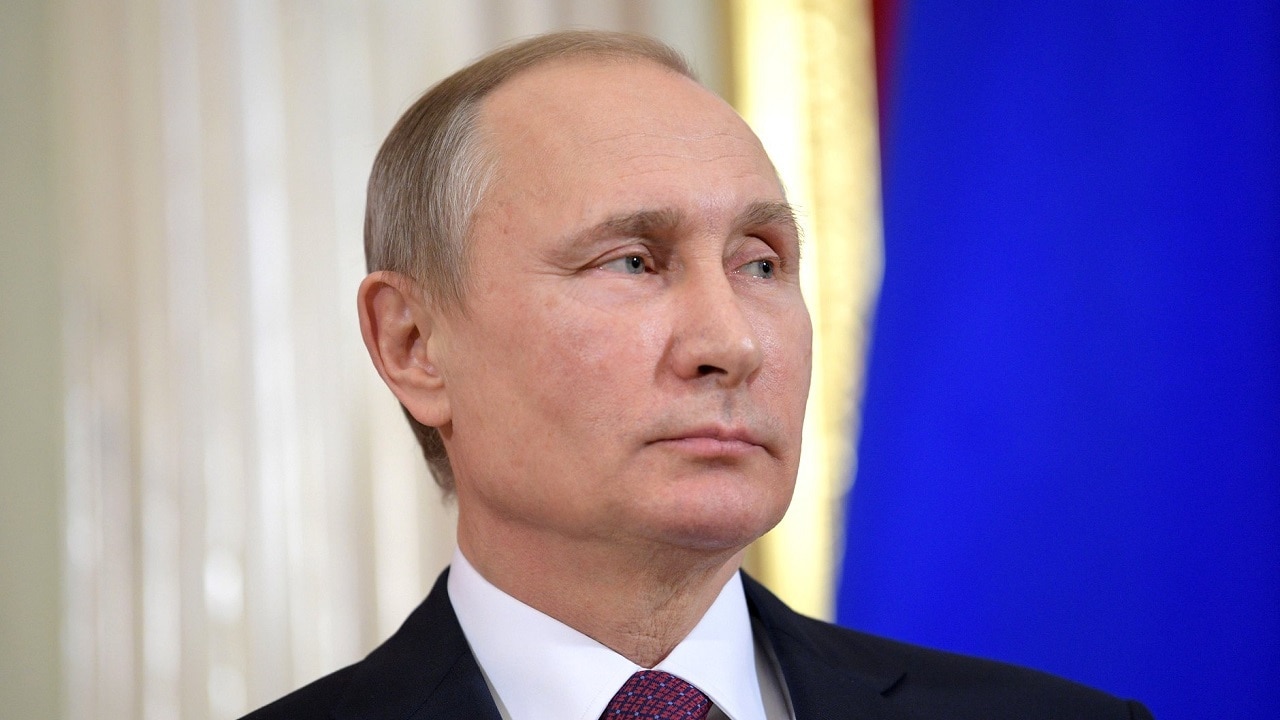
The leader of Russia’s Communist Party just warned Vladimir Putin from the floor of the State Duma that the country could face a “revolutionary situation” reminiscent of 1917 by autumn, the year a popular uprising overthrew the Russian monarchy. The grim warning lands as Russia’s economy contracts, military forces lose ground in Ukraine, and Putin’s approval rating crashes more than 12 points since the start of 2026.
The Ukraine War Is Straining Russia’s Economy and Social Fabric
Stories about Russia’s war in Ukraine destroying its economy and threatening the nation with a collapse of the regime are no longer confined to tabloid publications trying to create sensationalist headlines. That narrative is now being written about in publications like Fortune magazine, and the numbers being brought forward should be ringing alarm bells in the Kremlin.
But it is not just this stalwart US economic and business news outlet pointing to both military and economic indicators trending increasingly unfavorably to Moscow. Some of the individuals now calling out that the sky is falling – or that it will be soon – are people who previously supported the rule of Russian President Vladimir Putin.
Gennady Zyuganov, 81, for decades has been the head of what has been called the “Communist Party of the Russian Federation.” He was famous for, in 1996, when he and his party posed a serious challenge to then-sitting President Boris Yeltsin in the latter’s re-election bid.
But following that election defeat, he became one of the main supporters of what would become Putin’s government after the former KGB Lt. Col. assumed the Russian presidency in 2000.
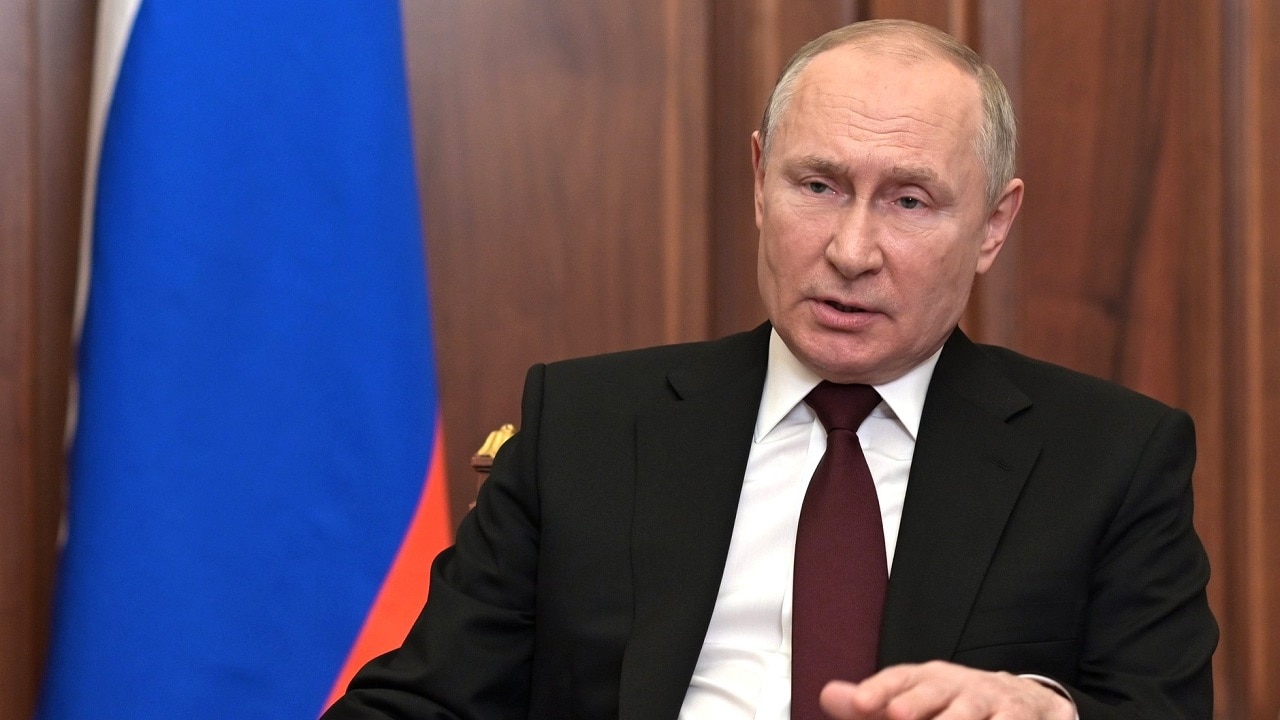
Russian President Putin addressing the nation.
Little has been seen of Zuganov in recent years, but last week he spoke to a plenary session of the State Duma, the lower house of Russia’s state parliament, held before elections due in September. According to a recording of his speech posted on the Duma’s official website, he issued a strong warning of how the war in Ukraine was leading the country into what Vladimir Lenin, the founder of the Soviet Union, would have called a “revolutionary situation.”
“We’re doing everything we can to support [President Vladimir] Putin and his strategy and policies, but you [the government] are not listening,” Zyuganov said last week. He said that
A recent government meeting convened by Putin had been the most pessimistic in years.
“If you [the government] do not urgently adopt financial, economic, and other measures, by autumn a repeat of what happened in 1917 awaits us. We don’t have the right to repeat that. Let’s make some decisions.”
In short, the leader of the Russian Communist Party is warning his nation’s president that a collapse of political authority and a popular revolt like that which brought the communists to power in 1917 could occur due to Russia’s involvement in another catastrophic war. History could repeat itself.
The Economic Collapse and Military Failures
Russia’s Putin has been in denial for years about Russia’s economy – ever since the February 2022 invasion of Ukraine. But he only recently admitted that his nation’s GDP had contracted in the first two months of 2026. And that on the Ukraine front, Russian forces have experienced a net loss of territory in the last month for the first time since 2024.
What has the Russian political elite on edge is that a failing military situation only becomes more pronounced as time goes on – a far cry from the expectations that were created before the war began.
When Russia launched its invasion in February 2022, numerous propagandists in Moscow – along with America’s own Chairman of the Joint Chiefs Gen. Mark Milley – were predicting Ukraine’s fall in three days.
Russian President Putin. Image Credit: Russian Government.
But almost immediately, the Russian army failed to defeat a Ukrainian military that was at first a haphazard collection of units but has since grown into the most powerful army in all of Europe. As of today, Putin’s forces have been unable to take full control of the Donbas region in Ukraine after having invaded this part of the country more than a decade ago.
Once silent and afraid to speak ill of Putin’s rule for fear of being found out and then mysteriously falling out of a 7th-floor window, Russian officials are beginning to voice concerns about the conduct of this war and the need to look for an exit.
“The overall mood is that’s enough already; you’ve been fighting for long enough,” said a Russian official speaking to the Washington Post last week, but nonetheless on condition of anonymity. “It seems to everyone that it’s been going on for longer than World War II, the Great Patriotic War — and at the same time we can’t even take one region [the Donbas].”
At the strategic level, thanks to Western military aid and a string of stunning innovations developed by Ukraine’s domestic defense industry, Kyiv has progressively weakened Russia’s economy and military. Specifically, both airborne and seaborne drones have taken out major oil-export hubs and “shadow fleet” tankers transporting sanctioned crude oil.
Operationally, new drone technology is providing Ukraine with a battlefield advantage. The pervasive presence of Ukrainian drones has negated Moscow’s numerical advantages in troops and military hardware.
Ukraine’s drones have been so effective in so many aspects of the war that last week the Kremlin said it would significantly downsize the annual 9 May Victory in World War II Day parade in Moscow’s Red Square over fears of an attack by Kyiv on the parade. This act is itself a major defeat for Putin, who has long overseen the planning and organization of this parade as one of his personal vanity projects.
Putin’s Sliding Poll Numbers
For the first years of the war, most ordinary Russians were largely unaffected by the economic distress from Moscow’s runaway defense spending. But over the last year, high inflation caused by military mobilizations and surging weapons production has had a significant negative impact on the Russian economy and has been a source of rising discontent.
But aside from the economic ills created from the war, the Russian public has been up in arms over the Putin regime’s crackdown on access to the internet and the use of popular messaging and VOIP platforms like Telegram.
The economic pains and internet restrictions have together had a corrosive impact on the popularity of Putin’s regime, which has seen poll numbers fall to 65.6 percent from 77.8 percent at the start of the year and a prewar rating of well above 80 percent.
The economic deterioration in Russia is becoming so pronounced that government officials have felt compelled to speak out. Last month, the Economy Development Minister Maxim Reshetnikov told a business conference that the economy “is not easy” and called for a serious recalibration of the labor force in Russia as the war continues to exacerbate manpower shortages in almost all industries
“Of course, it’s not easy to find staff, and salaries are rising,” he said. “But nonetheless, we coped with all of that somehow because somewhere in the economy there were reserves. Our current records show that these reserves have largely been used up; this truly is the situation, and the macroeconomic situation is substantially more difficult.”
Non-Payments
In reality, the red lights from overloads in the Russian economy have been flashing for some time now. Last summer, Russian banks warned of a looming debt crisis due to very high interest rates that prevented many borrowers from paying off their loans. Increasing numbers of enterprises were falling into what was being called “a pre-default situation.”
Last December, Russia’s Center for Macroeconomic Analysis and Short-Term Forecasting, a state-financed think tank, said the country could face a banking crisis by October 2026 if these loans default, triggering a bank run.
Then, in early 2026, Russian officials warned Putin that the country could be in the throes of a financial crisis by this summer due to mounting inflationary pressures. More Russian firms are being suffocated by high interest rates, while the public’s consumption rates are dropping.
The end result is predictable: workers are not being paid, some are being laid off or reduced to part-time work, and the public is not spending, so demand for many goods is falling. All indicators suggest an increasing likelihood of a financial sector crash sometime this year.
In 1984, the pre-eminent Russian historian Richard Pipes argued in the American journal Foreign Affairs that the Soviet Union was in a deep, systemic crisis and could not survive in its current form without fundamental structural changes. His overall argument was that the economic failure of the Soviet system and a lack of political legitimacy were the twin perennial defects that led to its downfall.
The USSR collapsed seven years later due to the many ills he identified at the time. But were Pipes still alive today and see the state of Russia under Putin, he would most likely conclude that the state of the nation ruled by Moscow was several orders of magnitude worse and that the situation in 1984 was paradise by comparison.
Today in Russia, there are no institutional safeguards or corrective mechanisms that, back in 1984, were designed to prevent the Soviet system from imploding. Putin himself is the only element holding the nation together at this point – a brittle, increasingly unstable arrangement that shows little chance of improvement and even fewer chances of survival.
About the Author: Reuben F. Johnson
Reuben F. Johnson has thirty-six years of experience analyzing and reporting on foreign weapons systems, defense technologies, and international arms export policy. Johnson is the Director of Research at the Casimir Pulaski Foundation. He is also a survivor of the Russian invasion of Ukraine in February 2022. He worked for years in the American defense industry as a foreign technology analyst and later as a consultant for the U.S. Department of Defense, the Departments of the Navy and Air Force, and the governments of the United Kingdom and Australia. In 2022-2023, he won two awards in a row for his defense reporting. He holds a bachelor’s degree from DePauw University and a master’s degree from Miami University in Ohio, specializing in Soviet and Russian studies. He lives in Warsaw.