
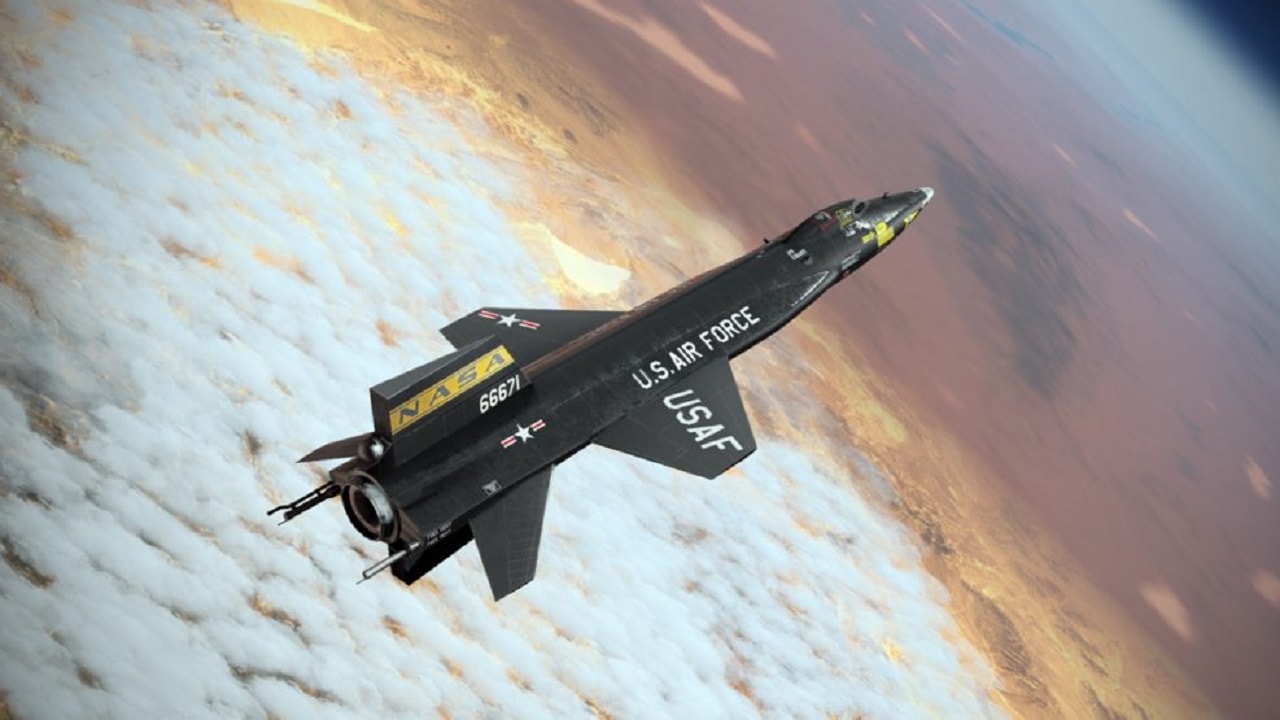
On November 15, 1967, Air Force Major Michael J. Adams was killed when the third X-15 broke apart at Mach 3.93 and 65,000 feet above the Mojave Desert—the only fatality in the entire 199-flight X-15 program and the first American astronaut killed during a flight. The X-15 went on to set hypersonic speed and altitude records, providing the engineering data that made Apollo and the Space Shuttle program technically possible.
X-15 Flight 3-65-97: How The Worst Day In The X-15 Program Did Not Stop One Of The Greatest Flight Research Programs In History
The X-15 was a black, needle-nosed rocket plane built by North American Aviation to fly higher and faster than any aircraft in history. And last summer, I spent about two hours sitting right in front of an X-15 at the National Museum of the U.S. Air Force in Dayton, Ohio. As one of the tour guides at the museum told me: “You are standing next to one of the fastest pieces of aviation in human history.”
Boy, wasn’t that the truth? Three of them flew 199 missions between 1959 and 1968. They reached Mach 6.7 and crossed 354,000 feet. They taught the United States most of what it would need to know about hypersonic flight, atmospheric reentry, and operating crewed vehicles at the edge of space — a body of knowledge that flowed directly into the Mercury, Gemini, Apollo, and Space Shuttle programs.
On November 15, 1967, on Flight 3-65-97 — the program’s 191st free flight — Air Force Major Michael J. Adams was killed when the third X-15 broke apart at Mach 3.93 and 65,000 feet above the Mojave Desert. He was the only fatality in the entire program. He was also the first American astronaut killed during a spaceflight.
This is the story of the X-15 program, what it was, why it was built, what happened to Adams, and why the program — even after that loss — is remembered as one of the most consequential research efforts in the history of American aerospace.
Why The X-15 Was Built
By the late 1950s, American aeronautical research had pushed past every barrier the previous generation had tried to break.
Chuck Yeager had crossed Mach 1 in the X-1 in 1947. The X-2 had carried Iven Kincheloe past Mach 3 in 1956. The next frontier, in the engineering vocabulary of the era, was hypersonic flight — sustained flight at Mach 5 and above, at altitudes high enough that conventional aerodynamics gave way to ballistic mechanics, and where the boundary between aviation and spaceflight effectively dissolved.
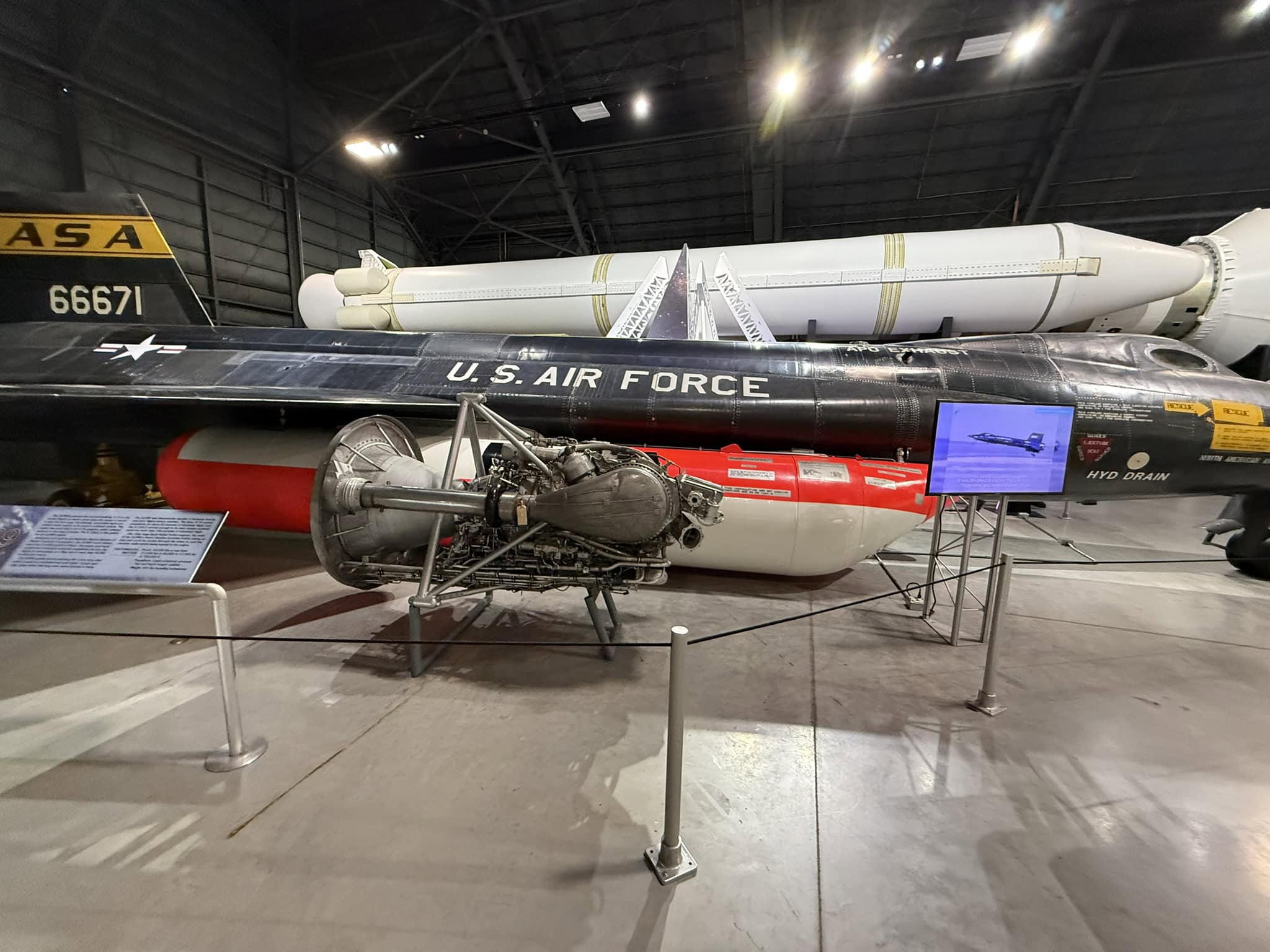
This is an image of the X-15 taken by Editor-In-Chief of 19FortyFive.com Harry J. Kazianis back in 2025 and the National Museum of the U.S. Air Force.
The National Advisory Committee for Aeronautics, the predecessor to NASA, formally identified the requirement in the early 1950s. The U.S. Air Force and the U.S. Navy joined the program. North American Aviation won the airframe contract in 1955. The first X-15 rolled out of the factory in October 1958.
The aircraft was unlike anything that had come before it. Roughly 50 feet long with a 22-foot wingspan, it was constructed from a nickel-chrome superalloy called Inconel X to survive the surface temperatures of hypersonic reentry. It carried no conventional landing gear suitable for runway operations — instead, it had a nose wheel and two rear skids, designed to land on the dry lakebeds of Edwards Air Force Base in California. It was air-launched from a modified Boeing B-52 Stratofortress mothership at approximately 45,000 feet, then ignited its single XLR99 rocket engine to climb into the upper atmosphere. The engine produced approximately 57,000 pounds of thrust for roughly 80 seconds, after which the aircraft coasted ballistically through the apogee of its trajectory before gliding back down through atmospheric reentry to a landing at Edwards.
Three X-15s were built — serial numbers 56-6670, 56-6671, and 56-6672. Twelve pilots flew them across the program’s life. Eight of those pilots — Joseph Walker, Robert White, Joe Engle, William “Pete” Knight, William Dana, John McKay, Bill Rushworth, and Adams — would qualify as astronauts under the Air Force criterion of flight above 50 statute miles.
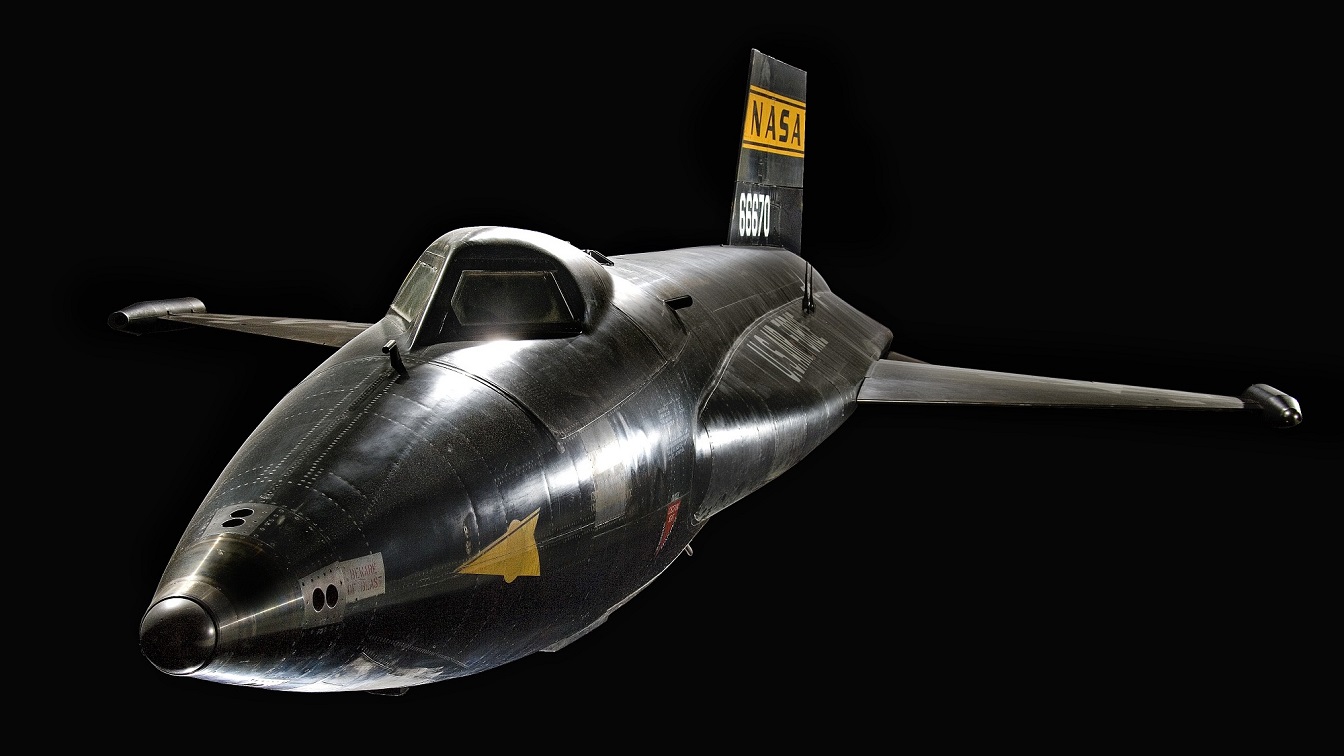
Three-quarter left front view of the North American X-15 (s/n 56-6670) at the Smithsonian National Air and Space Museum, July 10, 2007
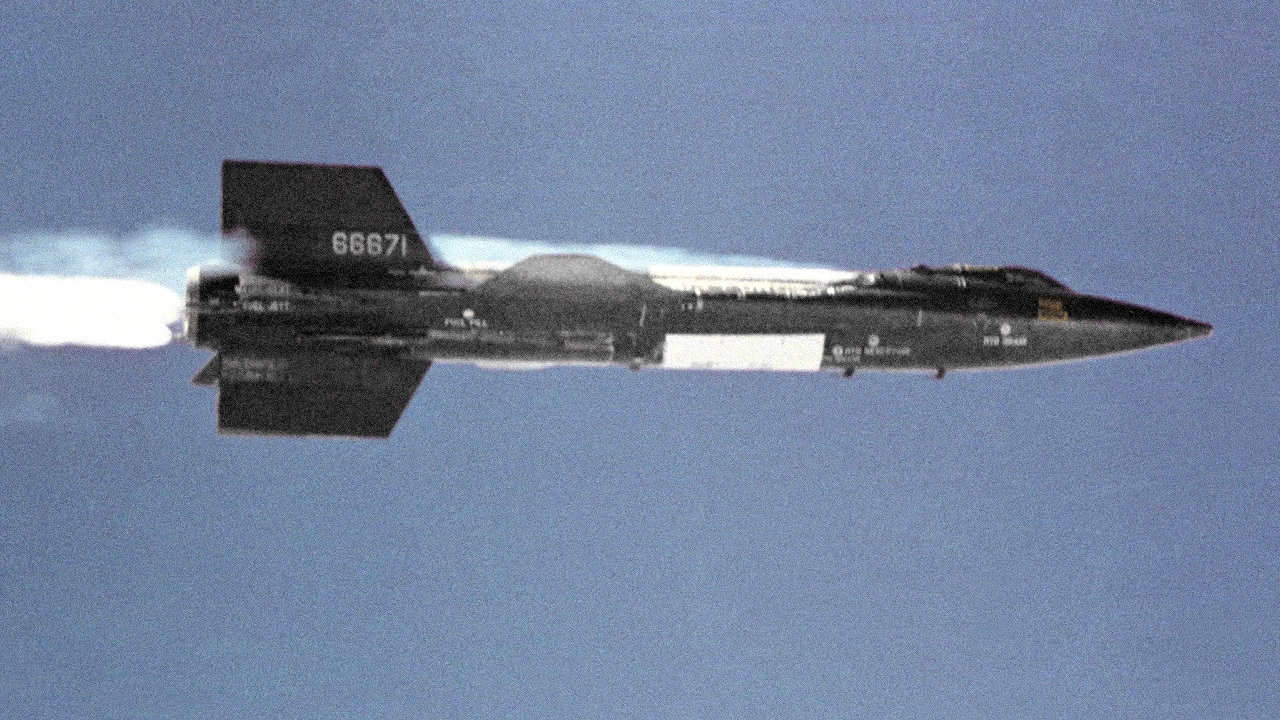
X-15. Image Credit: NASA.
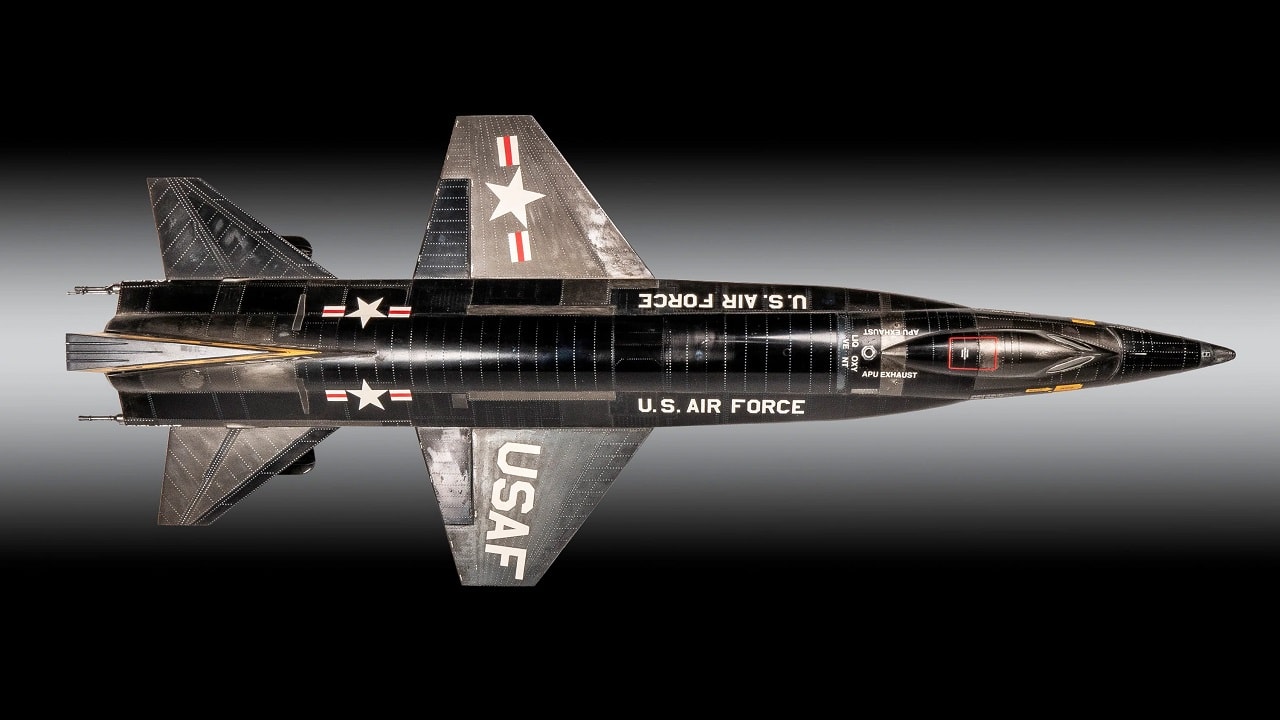
X-15. Image Credit: Creative Commons.
One of the program’s first pilots, North American test pilot A. Scott Crossfield, made the first unpowered glide flight on June 8, 1959. The first powered flight followed on September 17. Another of the original X-15 pilots, NASA aviator Neil Armstrong, would later become the first human to walk on the surface of the Moon.
What The Program Was Trying To Find Out
The X-15 was, in its essence, a flying laboratory. Each mission was structured around specific test objectives that could only be accomplished at the speeds and altitudes the aircraft was uniquely capable of reaching.
The big questions were aerodynamic. Hypersonic flight had been studied in wind tunnels and analyzed mathematically through the 1950s, but no aircraft had actually flown long enough at those speeds to validate the theory.
The X-15 confirmed that hypersonic boundary-layer flow was turbulent rather than laminar, with implications for the design of every subsequent high-speed aircraft and spacecraft. It demonstrated that turbulent heating rates were significantly lower than theoretical predictions had suggested, which meant future thermal protection systems could be lighter and less expensive than 1950s-era engineering had assumed. It produced the first direct measurements of hypersonic skin friction and revealed that skin friction itself was lower than predicted — another finding that reshaped thermal protection design for everything that followed.
The X-15 was also the first crewed aircraft to demonstrate reaction control thrusters for attitude management in space — small hydrogen peroxide jets that allowed the pilot to point the aircraft when atmospheric density was too low for conventional control surfaces to function.
That technology, validated on the X-15, became the standard approach for every subsequent American spacecraft.
The program proved that a pilot could fly a rocket-boosted vehicle through atmospheric exit, function across the transitions between aerodynamic and ballistic regimes, and bring the vehicle home through reentry to a controlled landing. That demonstration was foundational. Without it, the Mercury, Gemini, Apollo, and Space Shuttle programs would have proceeded on substantially less empirical footing.
The X-15 also carried 28 dedicated experimental flights as part of an “X-15 Follow-on Program” approved by the X-15 Committee in March 1962. Those flights conducted solar spectrum measurements, micrometeorite collection, ultraviolet stellar photography, atmospheric density measurements, and high-altitude Earth mapping — research that continued well after the basic flight envelope had been characterized.
By 1967, the program had been operating for eight years, had completed nearly 190 flights, and had turned the X-15 into the most consistently productive flight research aircraft in American history.
X-15 Disaster: What Happened On Flight 3-65-97
Major Michael J. Adams was the twelfth and final pilot accepted into the X-15 program. He came to it in July 1966 from the Air Force’s Manned Orbiting Laboratory program, where he had been selected as a military astronaut before MOL was canceled.
He held an aeronautical engineering degree from the University of Oklahoma, had completed graduate astronautics studies at MIT, and had won the A.B. Honts Trophy as the best scholar and pilot in his class at the Air Force Test Pilot School at Edwards.
His seventh X-15 flight launched at 10:30 a.m. on November 15, 1967. The mothership was Boeing NB-52B serial number 52-008, callsign “Balls 8,” flown by Colonel Joe Cotton. The X-15 was the third aircraft, serial number 56-6672 — the one outfitted with the experimental Honeywell MH-96 Adaptive Flight Control System and the most advanced cockpit instrumentation in the fleet. The drop occurred at 45,000 feet over Delamar Dry Lake in Nevada. Adams’s wife, Frieda, and his mother, Georgia, were watching from the NASA control room at Edwards.
The flight plan called for 79 seconds of engine burn, accelerating the X-15 to Mach 5.10 at 250,000 feet. Seven experiments were aboard — including a test of ablative material developed for the Saturn rocket program, a solar spectrum measurement package, and a micrometeorite collector.
Things began going wrong almost immediately.
At launch, the aircraft’s vibration sensor shut down the engine. Adams’s second ignition attempt succeeded 16 seconds after launch. The X-15 climbed under full power. Adams reached a peak altitude of 266,000 feet — slightly above the planned trajectory, putting him over the 50-mile Air Force astronaut threshold and qualifying him for astronaut wings. He hit Mach 5.20 at apogee.
During the climb, the aircraft began drifting in heading. By the time Adams reached maximum altitude, the X-15 was off heading by 15 degrees to the left. As he came over the top of the trajectory, the drift briefly halted as the nose yawed back toward correct attitude. Then the drift resumed.
Within 30 seconds, the descending flight path was at right angles to the aircraft’s actual orientation.
Adams, descending through 230,000 feet, entered a Mach 5 spin. In the NASA control room, no instrumentation was available to monitor the aircraft’s heading. The engineers monitoring the flight had no immediate way to detect what was happening. Adams reported over the radio that the aircraft “[seemed] squirrelly,” then repeatedly told fellow pilot Pete Knight, who was serving as the NASA-1 flight controller, that he had entered a spin.
There was no documented spin recovery procedure for the X-15 at hypersonic speeds. The aircraft’s behavior in supersonic spins was not well characterized. Adams, working both the conventional flight controls and the reaction control thrusters, managed to recover from the spin at 118,000 feet. The aircraft entered an inverted Mach 4.7 dive at 40 to 45 degrees below horizontal.
Then the MH-96 Adaptive Flight Control System malfunctioned. The system, designed to automatically adjust pitch stability augmentation across the X-15’s wide flight envelope, began commanding aggressive pitch oscillations as the aircraft descended into the rapidly increasing density of the lower atmosphere. The pitch oscillations grew. The aerodynamic loads grew with them.
At 65,000 feet, descending at Mach 3.93, the X-15 was experiencing more than 15 G vertically — both positive and negative — and 8 G laterally. Those forces exceeded the design limits of the airframe.
The aircraft broke apart approximately 10 minutes and 35 seconds after launch. Wreckage scattered along a 10-mile path across the Mojave Desert near Randsburg, California, northeast of Cuddeback Dry Lake. Two hunters in the area heard the breakup and saw the forward fuselage tumbling over a hill. Adams was killed during the breakup or upon ground impact.
He was the only pilot fatality in the 199-flight X-15 program.
The Investigation
NASA and the Air Force convened a joint accident review board chaired by NASA’s Donald R. Bellman. The board took two months to prepare its report.
Ground recovery teams scoured the desert for wreckage, with particular attention to the cockpit camera film that would document what Adams had been seeing on his instruments during the descent. The cassette was located on November 29, two weeks after the crash, by an unofficial NASA Flight Research Center search party. The camera and film proved critical to reconstructing the sequence of events.
The board’s initial 1968 conclusion was that Adams had lost control of the X-15 as a result of distraction, misinterpretation of his instrumentation display, and possible vertigo or spatial disorientation. That finding was the headline conclusion that ran in newspapers and aerospace publications for decades.
A more detailed analysis published in 2019 by NASA’s Engineering and Safety Center substantially revised that picture. The 2019 systems-level analysis concluded that the root cause of the accident was an electrical disturbance originating from one of the experimental packages aboard — specifically a commercial-off-the-shelf component that had not been properly qualified for the X-15’s hypersonic environment.
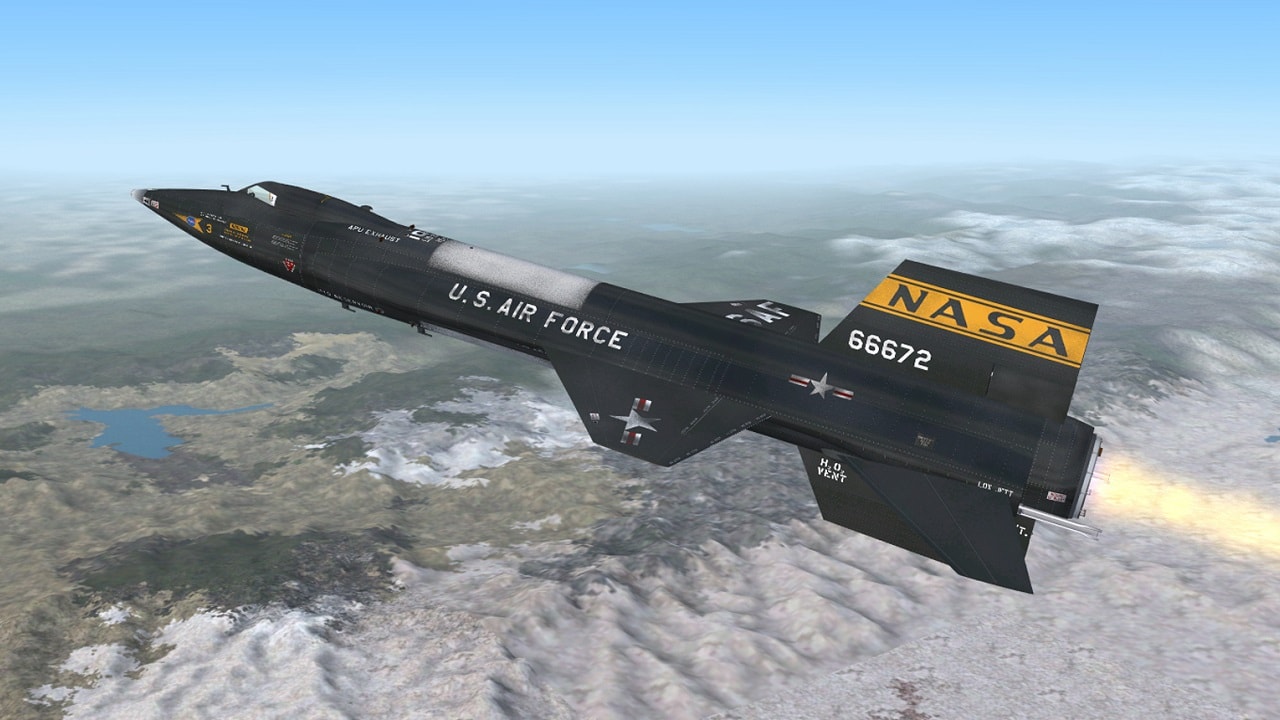
X-15. Image Credit: Artist Rendition – Creative Commons.
That electrical disturbance triggered subsystem failures that affected vehicle dynamics, pilot displays, and ground monitoring instrumentation simultaneously. The 2019 analysis found “no conclusive evidence to support the hypothesis that spatial disorientation was a causal factor” and concluded instead that “poor design of the pilot-aircraft interface and ineffective operational procedures” prevented Adams and the ground controllers from recognizing and isolating the cascading failures in time.
The original 1968 finding had blamed the pilot. The 2019 finding placed the cause squarely on the electrical system, the instrumentation design, and the operational procedures — all elements that had been within the program’s institutional control.
That distinction matters historically because it changes how the program’s leadership decisions in 1967 should be evaluated. Adams was not a pilot who failed to fly the airplane. He was a pilot whose airplane failed him in ways the engineering and operations community did not fully understand at the time, and that took five decades and a comprehensive systems-level reanalysis to characterize correctly.
The End Of The X-15 Program
Adams’s death effectively ended the X-15 program, although flights continued for another 11 months. The X-15-3, the only aircraft equipped with the advanced MH-96 system and the upgraded instrumentation, was destroyed. After the loss of -672, several pilots and engineers left the program, including John A. Manke. The remaining two X-15 airframes — 56-6670 and 56-6671 — flew a reduced schedule for the remainder of 1968.
The 199th and final flight of the program took place on October 24, 1968, with William Dana at the controls. NASA and the Air Force quietly retired the surviving aircraft and ended the program. Two X-15s survived. The first aircraft, 56-6670, is on display at the Smithsonian National Air and Space Museum in Washington, D.C. The second, 56-6671 — modified during the program as the X-15A-2 — is at the National Museum of the United States Air Force at Wright-Patterson Air Force Base in Ohio. And, as I mentioned above, it is an amazing display. You can literally get within inches of the X-15.
Adams was awarded astronaut wings posthumously. His name is inscribed on the Space Mirror Memorial at the Kennedy Space Center.
What The Program Accomplished
By any reasonable metric, the X-15 program was a triumph.
Three aircraft. 199 flights. 196 successful landings — the only two landing accidents were caused by system or structural failures, not pilot error. Mach 6.7 absolute speed record set by Pete Knight on October 3, 1967, that stood until Space Shuttle Columbia’s first reentry in 1981. Altitude record of 354,200 feet set by Joe Walker on August 22, 1963 — Walker became the only X-15 pilot to cross the international Kármán line definition of space, doing so on two separate flights in 1963.
The program’s technical and engineering legacy is broader still. Hundreds of NASA technical reports flowed from the X-15’s flight data. The aerodynamic discoveries — turbulent boundary-layer flow, lower-than-predicted heating rates, hypersonic skin-friction measurements — fed directly into the design of the Apollo command module heat shield and the Space Shuttle’s thermal protection system.

Shuttle Discovery at National Air and Space Museum on October 1, 2022. Image Credit: 19FortyFive.com

NASA’s Space Shuttle Discovery. Image Taken by 19FortyFive.com on October 1, 2022.
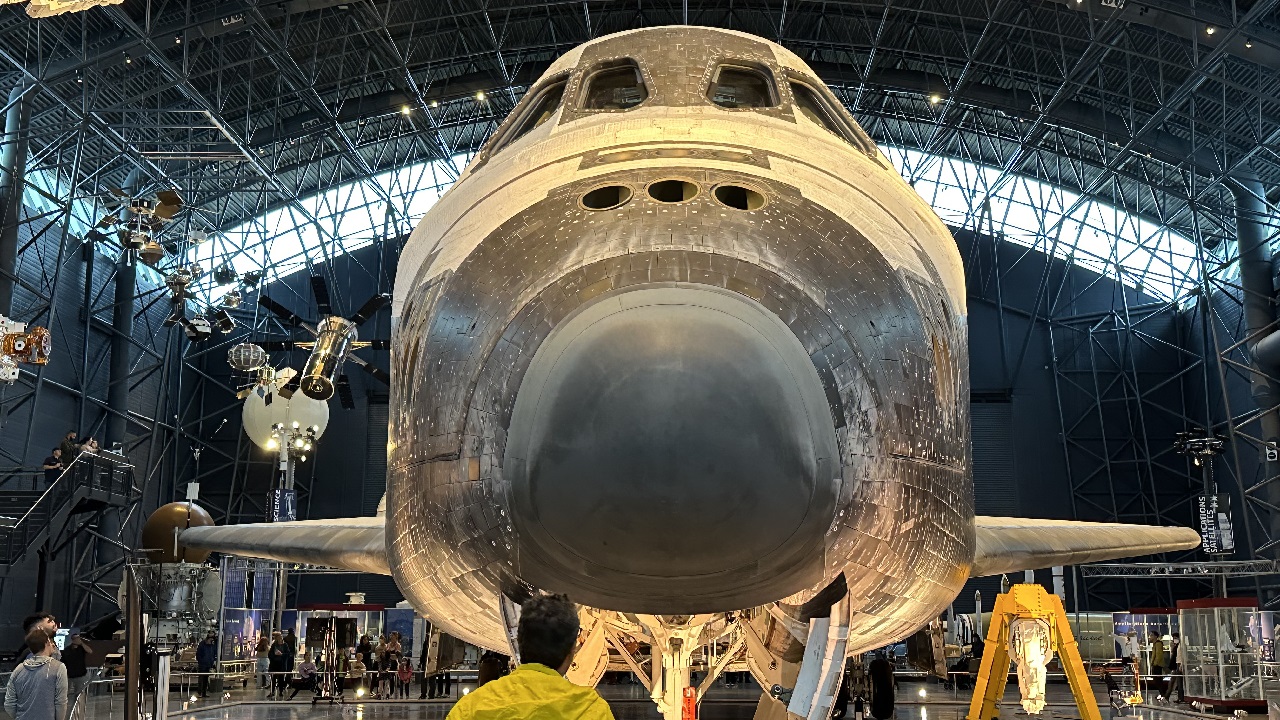
NASA Space Shuttle Discovery. Image Credit: 19FortyFive.com taken on October 1, 2022.
The reaction control thruster technology became the foundation for spacecraft attitude control across the entire American space program. The full-pressure suit developed for X-15 pilots evolved into the EVA suits used in Mercury, Gemini, and Apollo. The program demonstrated that pilots could survive and operate effectively in the hypersonic environment, validating the entire concept of crewed spaceflight that the United States would commit to in the 1960s.
One pilot was killed across nine years of flight operations at the absolute edge of what the technology and physics of the era allowed. That number is remarkably low for a research program operating at the boundary conditions the X-15 explored. Twelve pilots flew the aircraft. Eleven came home from every flight they took. Adams reached the operational floor of space on his final mission and qualified for astronaut wings before the breakup that killed him.
The X-15 program accomplished what it set out to do. It validated hypersonic flight. It produced the engineering data that made the Apollo and Space Shuttle programs technically possible. It trained a generation of test pilots and engineers who carried the lessons of high-speed, high-altitude operations into every subsequent American crewed spaceflight effort.
But the cost was high.
It is the accounting most worth remembering.
About the Author: Harry J. Kazianis
Harry J. Kazianis (@Grecianformula) was the former Senior Director of National Security Affairs at the Center for the National Interest (CFTNI), a foreign policy think tank founded by Richard Nixon based in Washington, DC. Harry has over a decade of experience in think tanks and national security publishing. His ideas have been published in the NY Times, The Washington Post, The Wall Street Journal, CNN, and many other outlets worldwide. He has held positions at CSIS, the Heritage Foundation, the University of Nottingham, and several other institutions related to national security research and studies. He is the former Executive Editor of the National Interest and the Diplomat. He holds a Master’s degree focusing on international affairs from Harvard University. Kazianis is Editor-In-Chief of 19FortyFive.