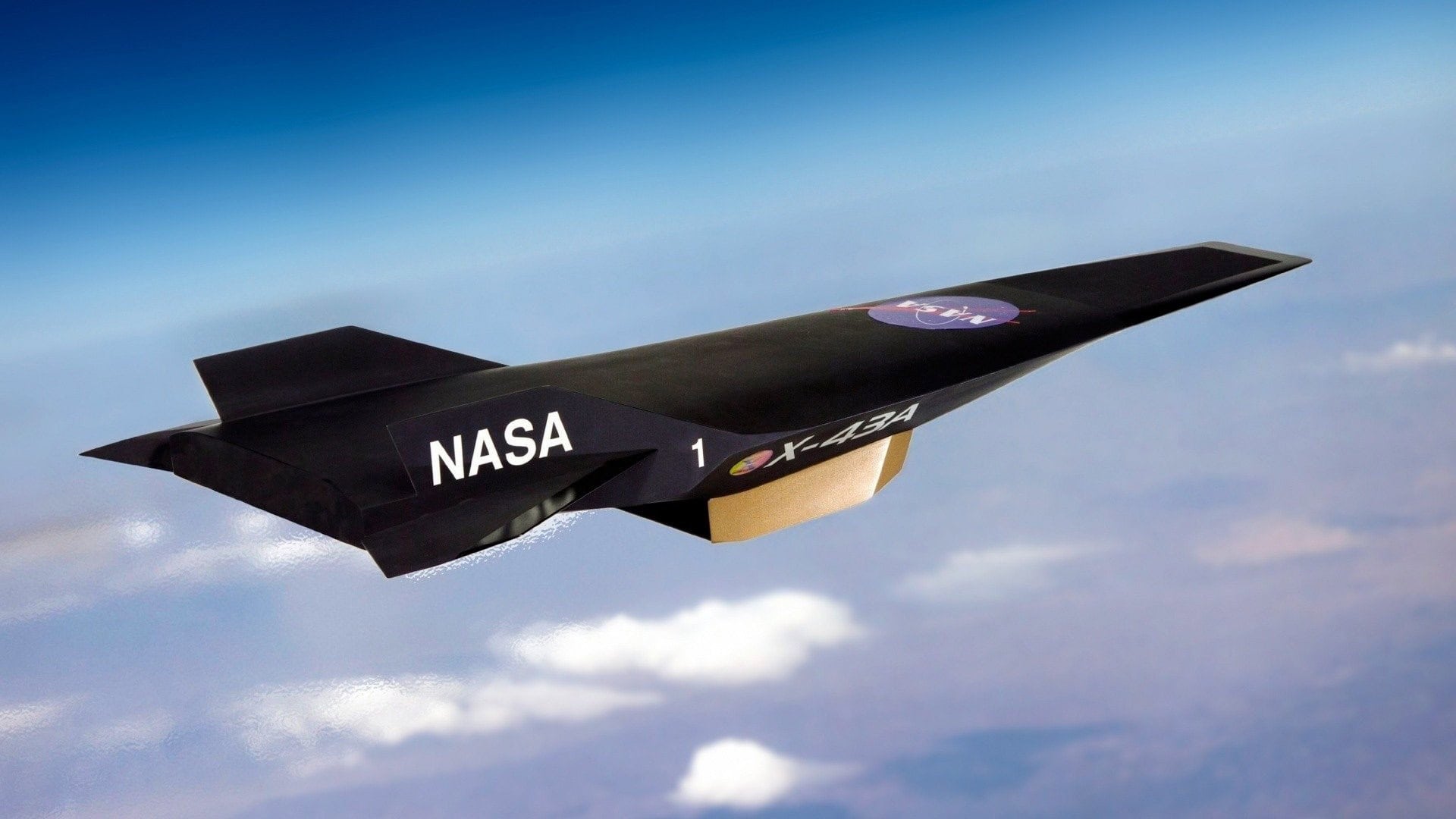
Summary and Key Points: On November 16, 2004, the National Aeronautics and Space Administration’s X-43A experimental hypersonic uncrewed aerial vehicle — a 12-foot-long, 3,300-pound scramjet-powered research aircraft developed as part of NASA’s Hyper-X program — reached a maximum speed of Mach 9.68 (approximately 7,000 miles per hour) at an altitude of 110,000 feet above the Pacific Ocean after being launched from a B-52 Stratofortress mothership via Pegasus rocket booster, setting the world speed record for air-breathing aircraft that remains unbroken more than 21 years later.
The X-43A proved that scramjet propulsion technology works in real flight — using atmospheric oxygen rather than onboard oxidizer tanks to achieve hypersonic velocity — yet the United States subsequently failed to weaponize or operationalize the breakthrough technology, leaving the People’s Republic of China and the Russian Federation to develop and field operational hypersonic weapons while American researchers pursued other priorities.
Not the SR-71: The Aircraft That Still Holds the Record (Meet the X-43A)
What US plane set a record for speed (Mach 9.68) at around 110,000 feet?
Some of you might be thinking about the SR-71 Blackbird. Others might be thinking of another warplane, possibly one of the vaunted fifth-generation warplanes. Your guesses in this case, while informed, would be wrong.
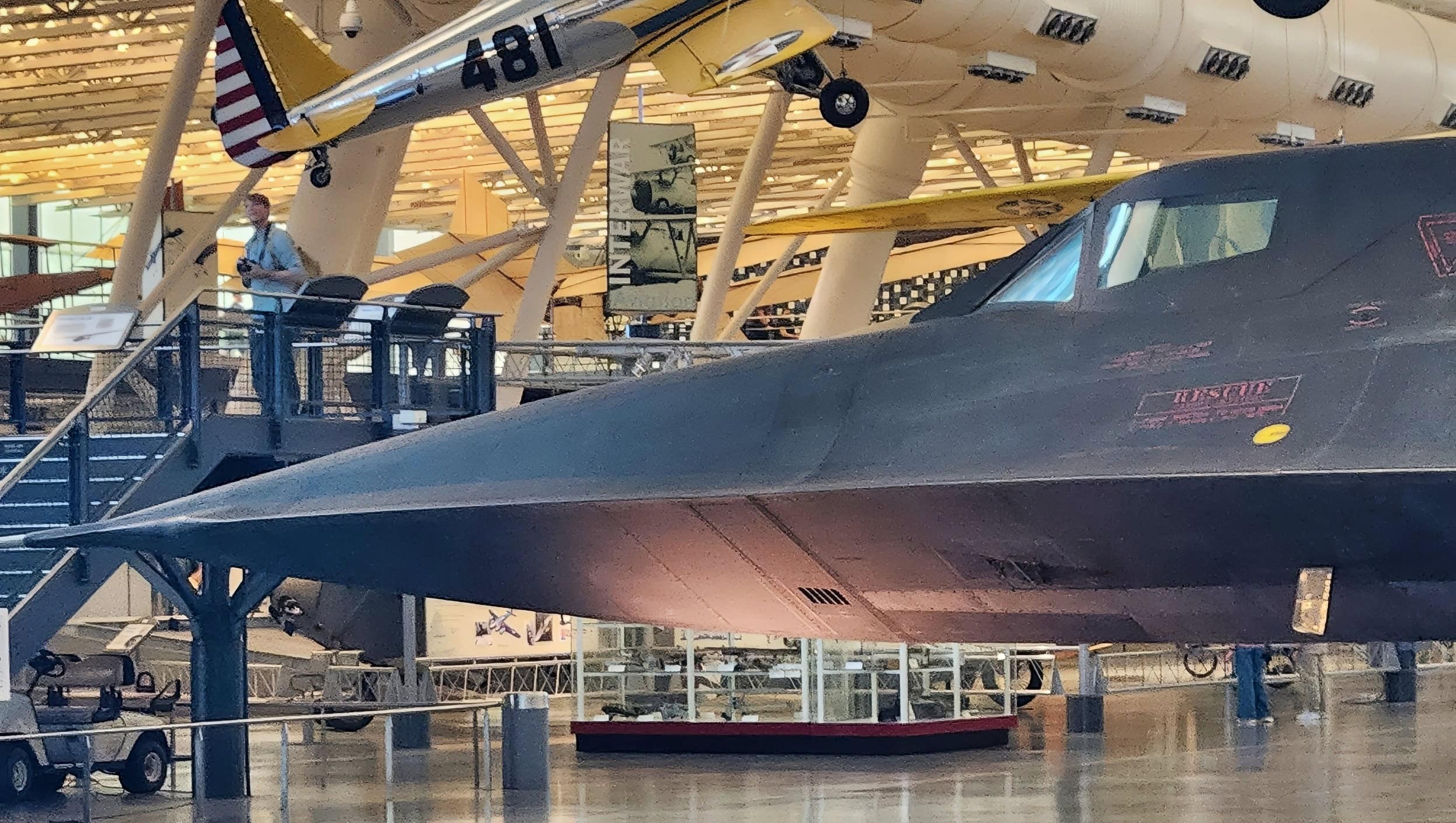
SR-71 Blackbird at Smithsonian. Image Credit: 19FortyFive.com
That honor belongs to the X-43A.
Undoubtedly, many are unaware of what that system is. But it is one of the most important systems the Americans developed for next-generation aerospace that they failed to capitalize on.
Mach 9.68 at 110,000 Feet–and Still Untouched
In November 2004, the X-43A hit Mach 9.68 (around 7,000 miles per hour) at around 110,000 feet.
That ensured the X-43A became the fastest air-breathing aircraft ever built.
In 22 years, no jet or scramjet has surpassed the impressive record set by the X-43A.
Of course, rockets and spacecraft go faster. But that does not count in the category of “air-breathing craft” (last we checked, there’s no air in space).
The key point about the X-43A is that it proved scramjet propulsion works in real flight.
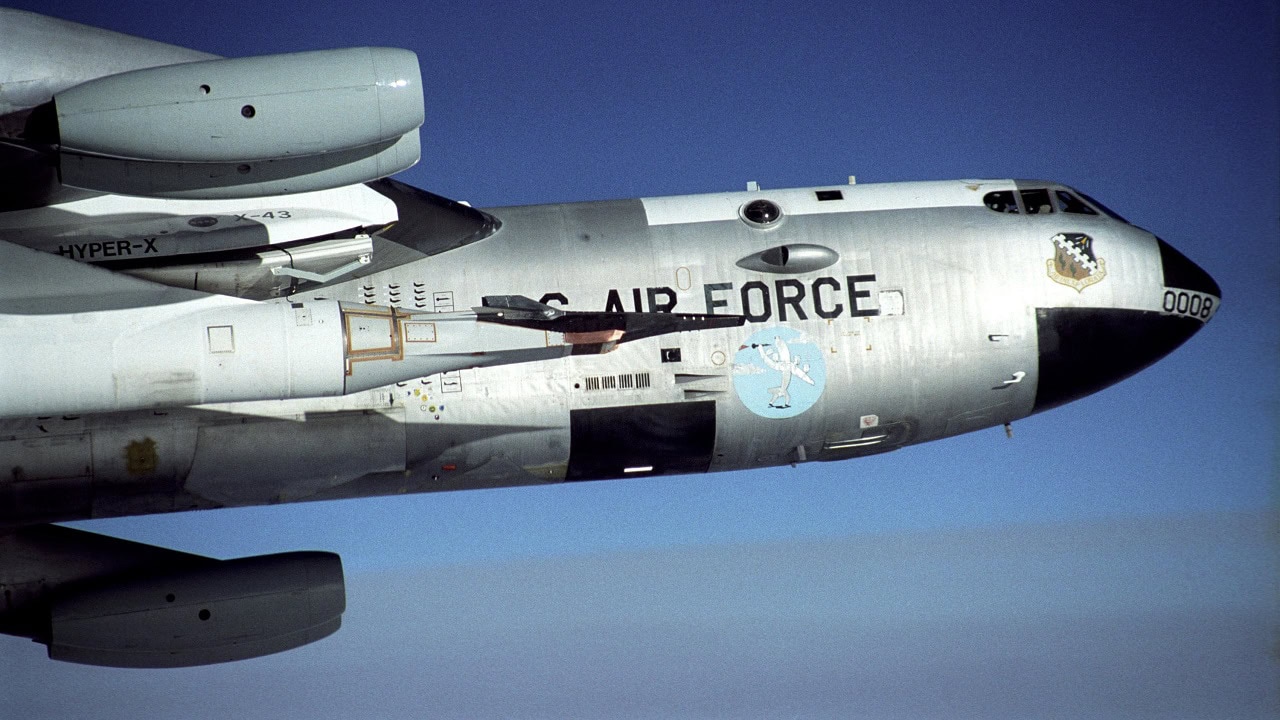
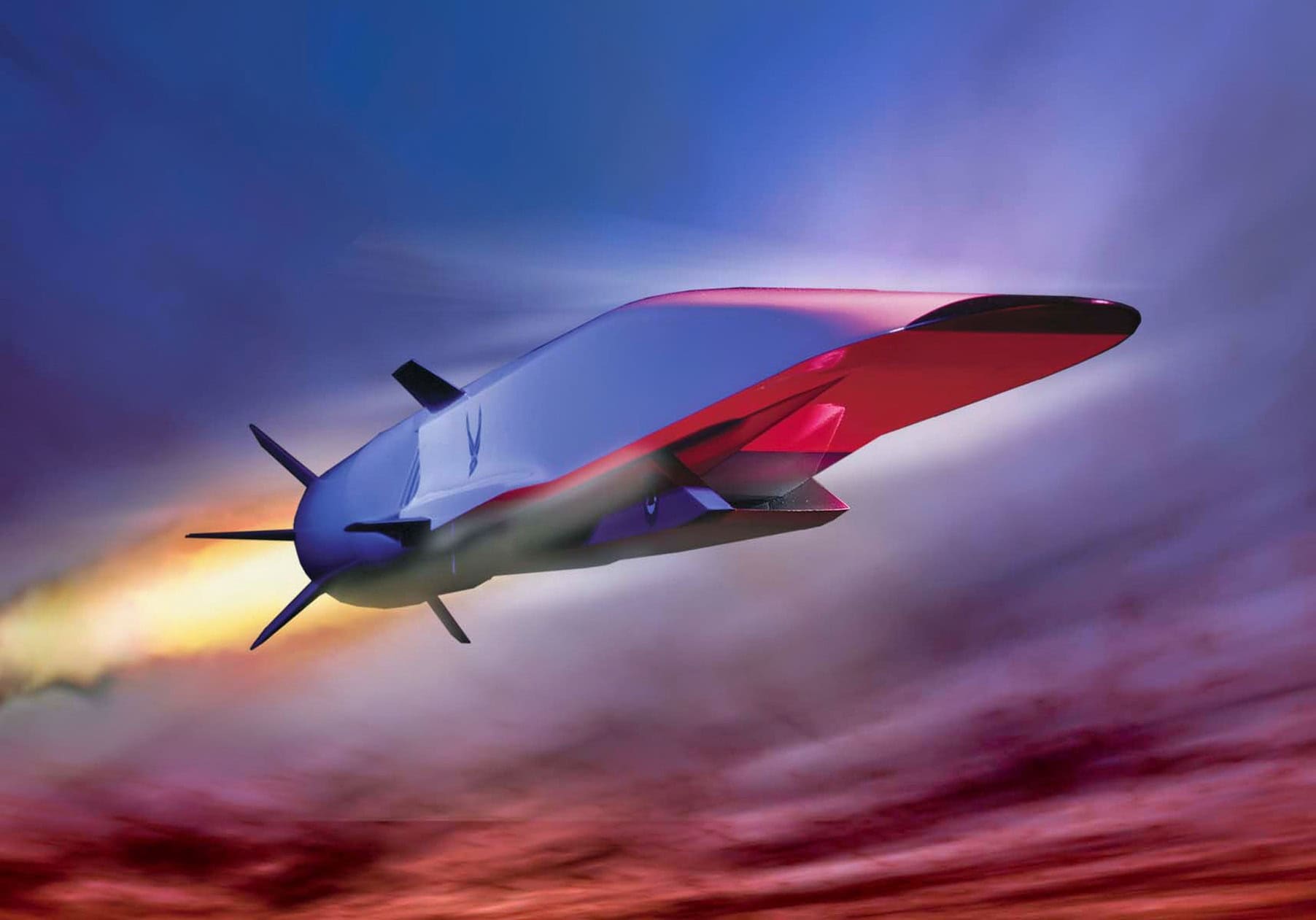
The X-43A was a small experimental research aircraft designed to flight-demonstrate the technology of airframe-integrated supersonic ramjet or “scramjet” propulsion at hypersonic speeds above Mach 5, or five times the speed of sound. Its scramjet engine is an air-breathing engine in which the airflow through the engine remains supersonic.
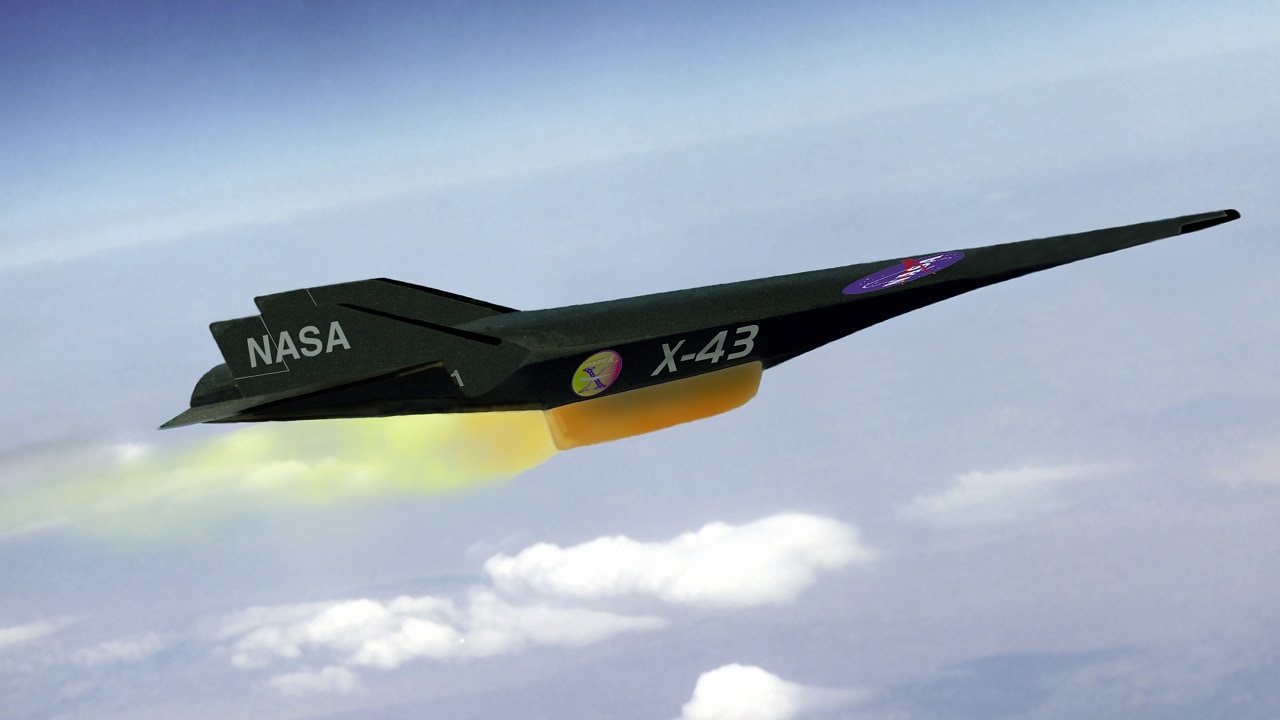
An artist’s conception of the X-43A Hypersonic Experimental Vehicle, or “Hyper-X” in flight. The X-43A was developed to flight test a dual-mode ramjet/scramjet propulsion system at speeds from Mach 7 up to Mach 10 (7 to 10 times the speed of sound, which varies with temperature and altitude).
Air enters the engine at supersonic speed, fuel burns in that airflow, and the engine then produces net thrust at hypersonic velocity. While it all sounds straightforward on paper, engineers have struggled to implement such a simple-sounding technique for years.
The X-43A not only broke records but also opened an entirely new area of aerospace development and research, which the US promptly ignored.
America’s X-43A was an experimental hypersonic uncrewed aerial vehicle (UAV).
It was about 12 feet long and weighed about 3,300 pounds. It was not reusable, and its configuration was in a lifting body, meaning its fuselage generated lift.
What made the X-43A so unique was its hydrogen-fueled scramjet.
The X-43A used the atmosphere itself as an oxygen source (the air-breathing component) rather than onboard tanks.
A Hypersonic Marvel That Barely Flew
While its top speed was around 7,000 mph, its flight time was a mere 12 seconds. In that short time, thanks to the powerful engines onboard, the X-43A blasted through many tens of miles during its “burn” phase.
Traveling at such great speeds comes with its own set of complications for any artificial object, even an unmanned system, like the X-43A.
To counteract the extreme heat that inevitably arose from the Mach 9+ flight, engineers installed a water-cooling system around the engine surfaces to prevent the surfaces from being compromised.
Launched Like a Missile, Not a Plane
Interestingly, the X-43A could not take off under its own power. It had to be shepherded to a high altitude by a potent B-52 Stratofortress (tucked under the wing).
Once in position high above the ground, a Pegasus rocket blasted the X-43A horizontally away from the B-52, ensuring that it reached both the altitude and speed needed to break the records and chart an entirely new path for American aerospace engineers in the 21st century.
Essentially, the flightpath of the X-43A in November 2004 went from a boost phase to separation from the booster, to scramjet burn (during which it set records), to a glide phase on its way down to the surface, ending in a splashdown in the Pacific Ocean.
Because scramjets don’t work above around Mach 4-5, there was no way for the X-43A to launch into aeronautical engineering history on its own. To reach the required speeds, the X-43A needed rocket assistance.
Once at those high speeds, you’re in (literal) melting metal territory. At those speeds, maintaining control of the craft becomes beyond difficult. In 2004, too, there was limited usefulness for military applications.
For those wondering why–or how–the Americans haven’t broken that 2004 X-43A record, that’s why. The US (and others) quickly pivoted to more practical systems, like the X-51 and hypersonic missiles.
The X-51A Waverider is set to demonstrate hypersonic flight. Powered by a Pratt Whitney Rocketdyne SJY61 scramjet engine, it is designed to ride on its own shockwavem and accelerate to about Mach 6. (U.S. Air Force graphic)
Essentially, the flightpath of the X-43A in November 2004 went from a boost phase to separation from the booster, to scramjet burn (during which it set records), to a glide phase on its way down to the surface, ending in a splashdown in the Pacific Ocean.
And with that splashdown, despite new insights folded into other projects, the main purpose of building a system for hypersonic air-breathing flight remained undeveloped for another 20 years.
X-43A: From Breakthrough to Abandonment
America solved the problem of hypersonic air-breathing flight more than 20 years ago. Despite that development, the Pentagon failed to operationalize it. The defense industrial base (DIB) didn’t scale it.
Today, China and Russia are pushing applied hypersonics, whereas the Americans are playing catch-up. America proved the concept worked.
Others, notably America’s strategic rivals, weaponized it.
The X-37A is one of the most important and misunderstood aircraft ever built. American engineers just wanted to know if they could build a system that could fly at Mach 10 using the air itself as fuel. Those US scientists proved they can build such a system. Then, those scientists moved on to other things.
For any other country, such a breakthrough would have immediately led to the creation of an entire scientific and engineering ecosystem based on those findings.
In America, it broke some records, and then everyone got bored. Our inability to concentrate is one of America’s greatest failings.
It could be our undoing now that US rivals have taken these findings and applied them in ways the US failed to do when it first discovered them 20 years ago.
About the Author: Brandon J. Weichert
Brandon J. Weichert is the Senior National Security Editor at 19FortyFive.com. Recently, Weichert became the editor of the “NatSec Guy” section at Emerald. TV. He was previously the senior national security editor at The National Interest. Weichert is the host of The National Security Hour on iHeartRadio, where he discusses national security policy every Wednesday at 8 pm Eastern. He hosts a companion show on Rumble entitled “National Security Talk.” Weichert consults regularly with various government institutions and private organizations on geopolitical issues. His writings have appeared in numerous publications, among them Popular Mechanics, National Review, MSN, and The American Spectator. And his books include Winning Space: How America Remains a Superpower, Biohacked: China’s Race to Control Life, and The Shadow War: Iran’s Quest for Supremacy. Weichert’s newest book, A Disaster of Our Own Making: How the West Lost Ukraine, is available for purchase at any bookstore. Follow him via Twitter/X @WeTheBrandon.