
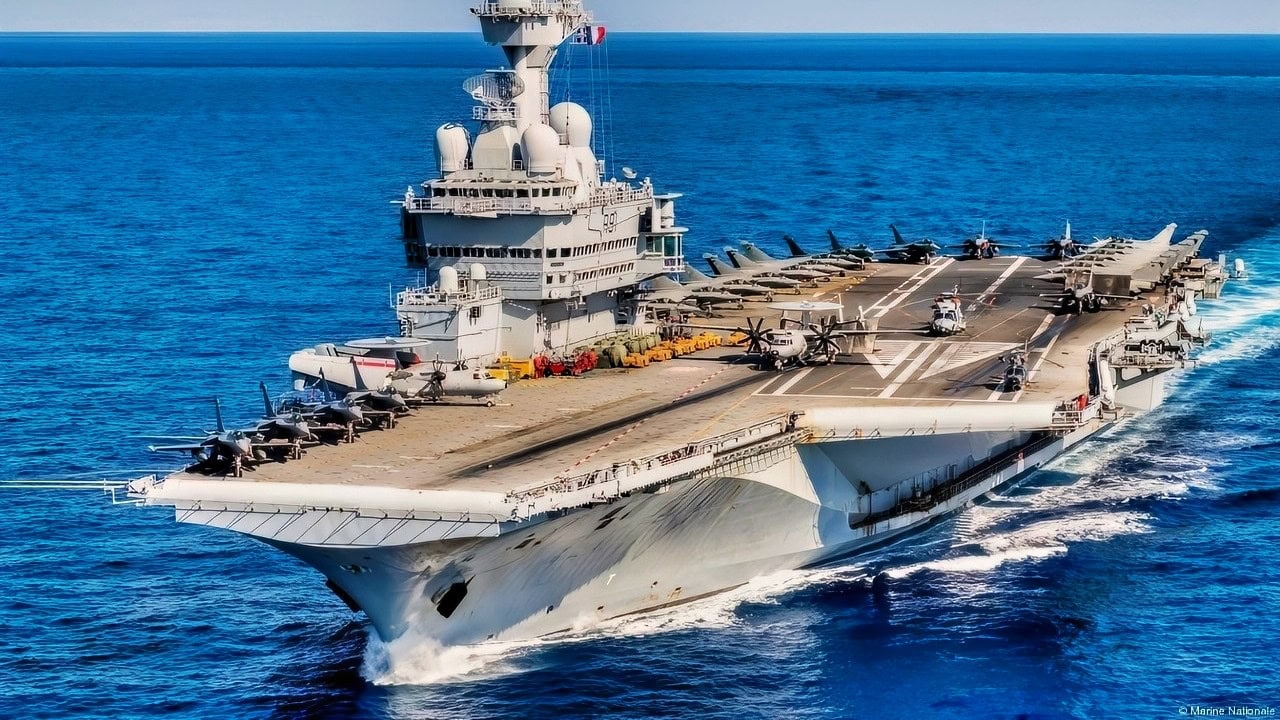
On the night of November 9, 2000, France’s brand-new nuclear aircraft carrier was steaming across the Western Atlantic toward Norfolk, Virginia, on the final sea trial before she entered service, when her port propeller broke. The most expensive warship France had ever built, the only nuclear carrier on earth outside the US Navy, turned around and limped back to Toulon on one screw. The story sounds like satire, and it is entirely true — and it was not even the most embarrassing thing that happened to the Charles de Gaulle during her trials. The ship that suffered both humiliations went on to become the hardest-working carrier in Europe, and she is at war with Iran as this is written, which makes the saga of her catastrophic shakedown worth telling in full.
Nuclear Charles de Gaulle Carrier: The Night The Propeller Broke
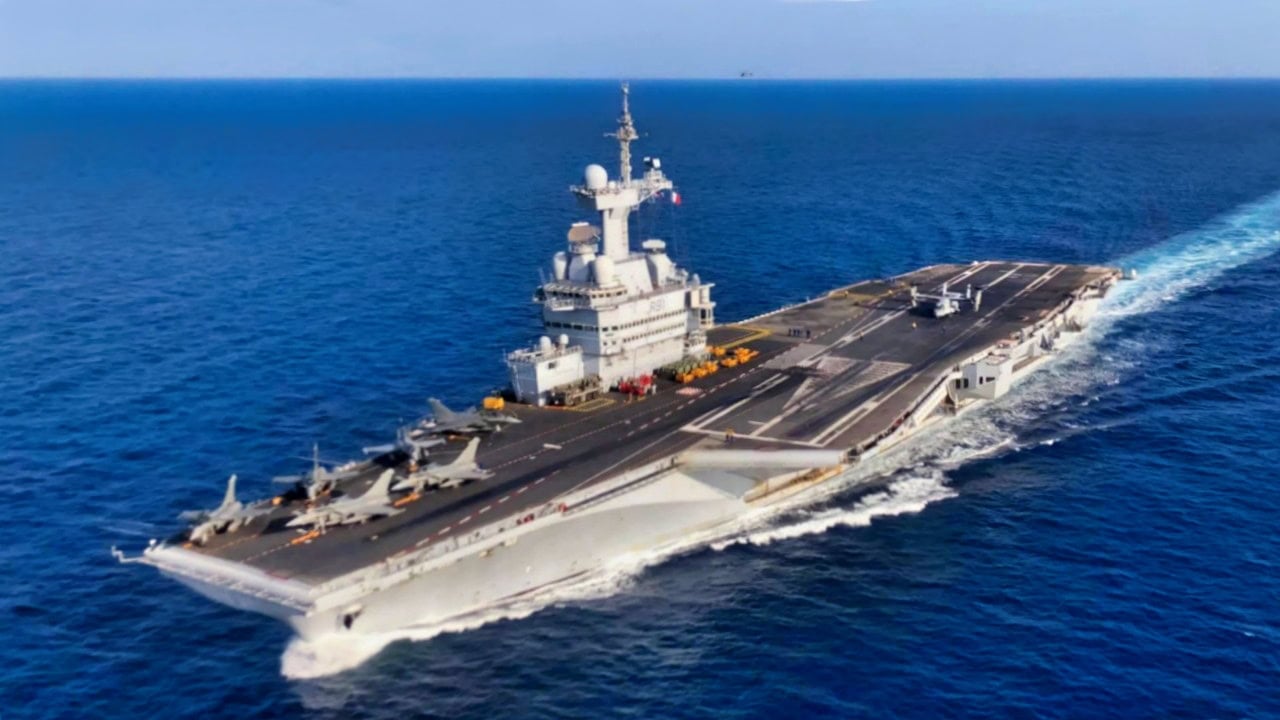
U.S. 5TH FLEET AREA OF OPERATIONS (April 24, 2019) A U.S. Marine MV-22 Osprey assigned to the 22nd Marine Expeditionary Unit sits on the flight deck of France’s Marine Nationale aircraft carrier FS Charles De Gaulle (R 91). This was the second time that Ospreys have landed aboard the French vessel. Marines and Sailors assigned to the 22nd MEU and Kearsarge Amphibious Ready Group are currently deployed to the U.S. 5th Fleet area of operations in support of naval operations to ensure maritime stability and security in the Central region, connecting the Mediterranean and the Pacific through the western Indian Ocean and three strategic choke points. (U.S. Marine Corps photo by Maj. Joshua Smith/Released)
The Charles de Gaulle left Toulon for her fourteenth and final sea trial on October 24, 2000, bound for American waters and the last box to check before commissioning.
Two weeks later, in the Western Atlantic en route to Norfolk, her port propeller broke, and the carrier was forced back to port for a replacement she did not have. The investigation that followed found the failure was no fluke: the one-piece copper-aluminum alloy propellers carried structural flaws — bubbles in the casting near the center — and the same defect showed up in her remaining propeller and in the spares.
The supplier, the foundry Atlantique Industrie, took the blame for poor-quality construction, having already gone out of business.
The defense minister ordered an investigation into the quality-management failure, and shortly afterward, a fire destroyed the supplier’s archives, taking the design and fabrication records with them.
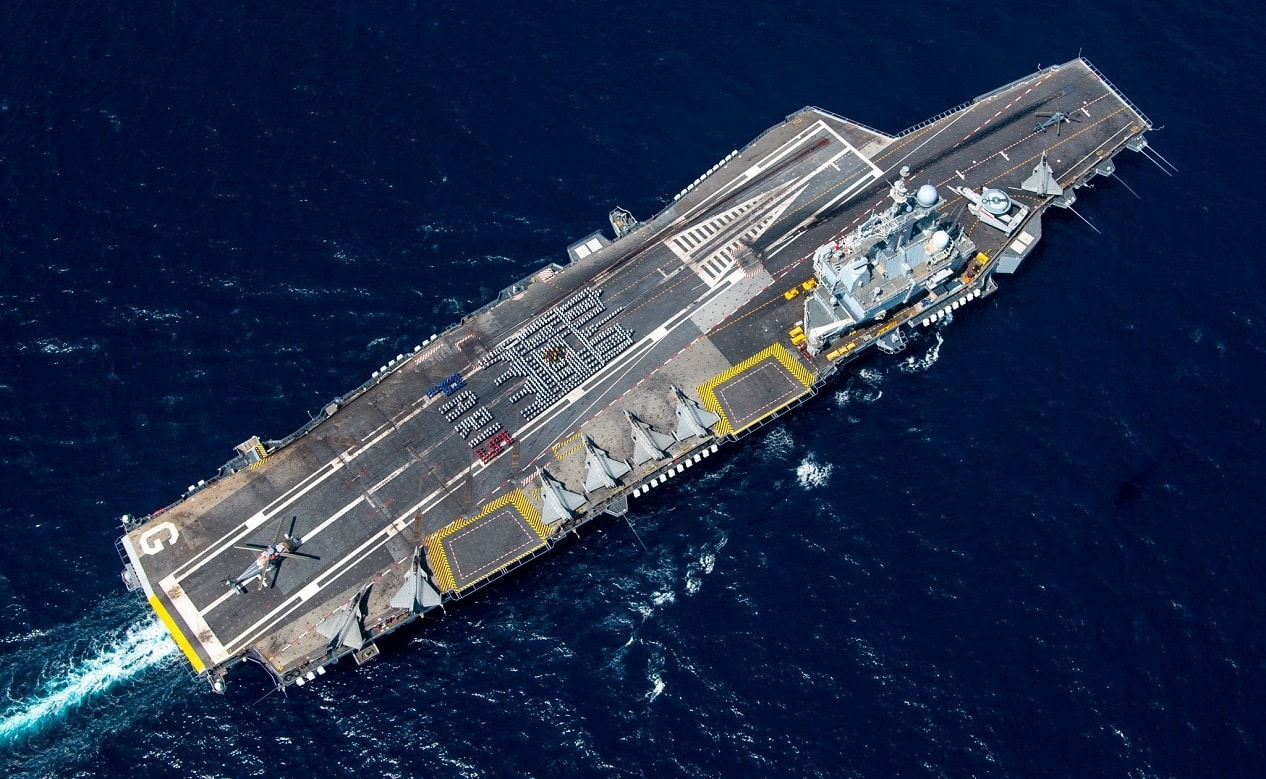
French Aircraft Carrier Charles de Gaulle.
The Navy was left with a hundred-thousand-ton carrier and no sound propellers to turn it.
Sailing On 1960s Spare Parts
The fix is the detail that turns a mishap into a legend. With purpose-built replacements years away, the French Navy pulled the spare propellers off the Clemenceau-class carriers — the conventional ships of the early 1960s that the Charles de Gaulle was built to replace — and bolted her predecessors’ decades-old screws onto her shafts. They worked, after a fashion.
On March 5, 2001, the carrier returned to sea on the vintage propellers and managed about 25 knots, short of her contractual 27, with vibration the price of running antique parts on a modern hull. She sailed that way for years. The purpose-built replacements that let her reach her design speed were not installed until the major refit running from July 2007 to December 2008, by which point France’s nuclear flagship had spent the opening stretch of her career propelled by the spare parts of the ships she had been commissioned to send to the scrapyard.
The Flight Deck Was Too Short For Her Own Aircraft
The broken propeller was the second trial’s embarrassment, not the first, because the earlier one struck at the entire point of an aircraft carrier. During trials, the Charles de Gaulle’s flight deck proved too short to safely operate the E-2C Hawkeye, the radar surveillance aircraft her air wing depended on to see threats at range. The landing deck had to be lengthened by 4.4 meters after the fact so the Hawkeye could land and clear it quickly — a post-construction fix to a ship already built and floating.
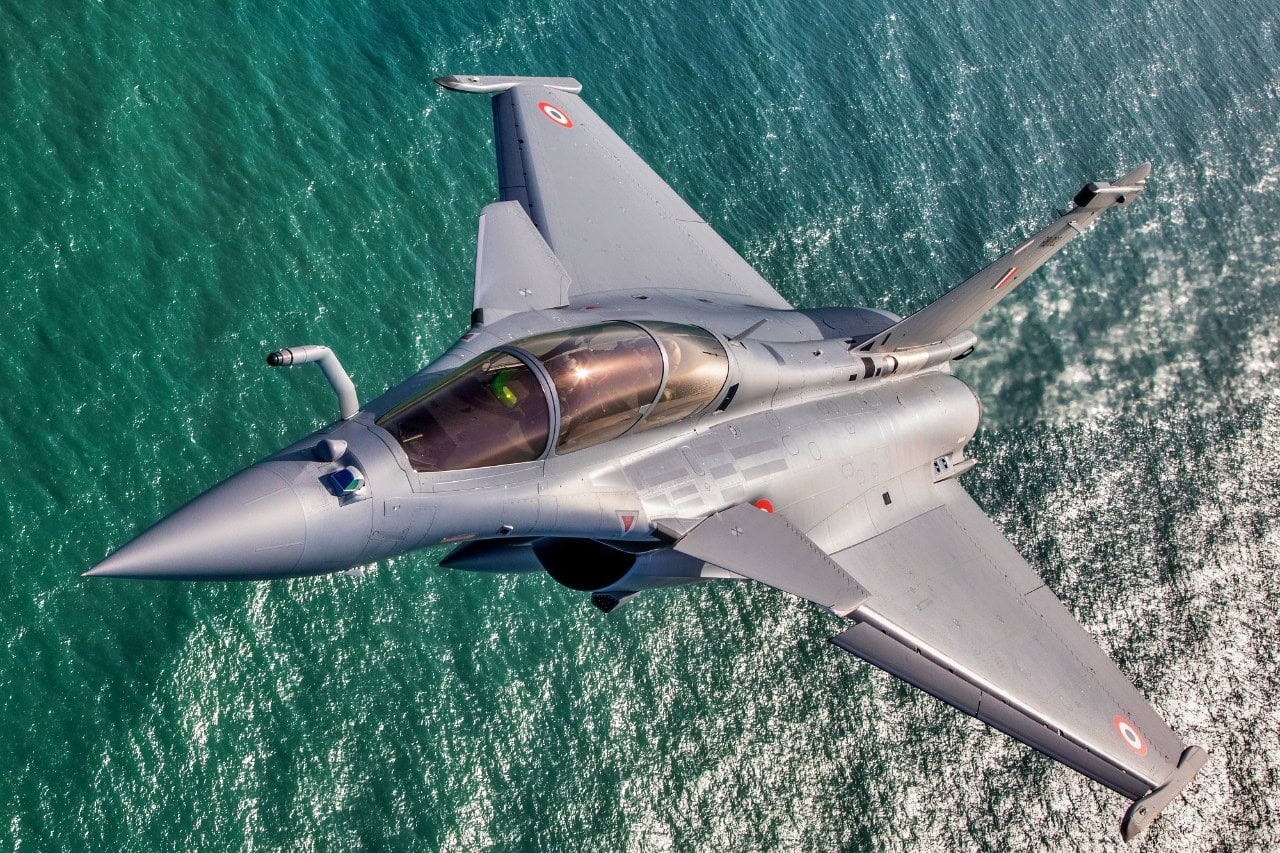
Dassault Rafale. Image Credit: Creative Commons.
The extension itself cost a trivial fraction of the program, but the symbolism stuck: a carrier delivered unable to safely fly one of its most important aircraft, corrected by a measuring tape, the kind of error that defines a reputation, no matter how cheaply it is solved.
Both failures arrived during the same trials period, and together they made the Charles de Gaulle a punchline across the world’s navies before she had fired a shot in anger.
The Flaw No Refit Could Fix: Business & Industrial Challenges
Underneath the fixable troubles sat one compromise that no overhaul would ever cure. To control costs, France powered the carrier with two K15 pressurized-water reactors derived from her ballistic-missile submarines rather than a purpose-built carrier plant, and the decision left her permanently slow — her design speed of about 27 knots trails every American supercarrier, and wind over the deck is launch performance for the aircraft she carries.
The same submarine-derived reactors demand refueling roughly every seven years, each one removing France’s entire carrier capability from service for over a year. The propeller could be replaced, and the deck could be lengthened.
The reactors that made her the slowest carrier of her kind were welded into the design, and they remain her central limitation a quarter century later — which is why her successor, the future France Libre, was given new high-power reactors from the start.
Military Challenge: From Punchline To The Hardest-Working Carrier In Europe
None of the trials humiliations decided what the Charles de Gaulle became. Weeks after she finally entered service, the September 11 attacks sent her to the Arabian Sea, and from December 2001 her aircraft flew combat missions over Afghanistan as part of Operation Enduring Freedom — a maiden combat deployment most carriers never see.
Libya followed in 2011, then years of strikes against ISIS in Iraq and Syria, an Indo-Pacific cruise in 2025, and now the Iran war, where she redeployed to the Eastern Mediterranean in March and has anchored allied operations through contested waters since.
The carrier that could not keep a propeller attached during her shakedown has spent twenty-five years showing up to wars that larger navies watched from port, the only non-American nuclear carrier that consistently deploys into combat.
The fair verdict on the Charles de Gaulle holds both halves at once.
Her trials were a genuine debacle — a sheared propeller, a foundry that failed her and then burned its records, a flight deck too short for her own radar planes, and years spent running on her predecessors’ spare parts — and the budget hawks who mocked her in 2000 were right about every one of those failures.
They were wrong about what she would do with the next two and a half decades.
The ship is steaming off the Iranian coast tonight, flying combat sorties from a deck that had to be lengthened to launch them, and the navies that laughed at her broken propeller have spent twenty-five years watching her go where they could not.
About the Author: Harry J. Kazianis
Harry J. Kazianis (@Grecianformula) was the former Senior Director of National Security Affairs at the Center for the National Interest (CFTNI), a foreign policy think tank founded by Richard Nixon based in Washington, DC. Harry has over a decade of experience in think tanks and national security publishing. His ideas have been published in the NY Times, The Washington Post, The Wall Street Journal, CNN, and many other outlets worldwide. He has held positions at CSIS, the Heritage Foundation, the University of Nottingham, and several other institutions related to national security research and studies. He is the former Executive Editor of the National Interest and the Diplomat. He holds a Master’s degree focusing on international affairs from Harvard University.