
In May, the U.S. Navy commissioned its final Littoral Combat Ship in a ceremony in Cleveland, closing out a program that began in 2008, promising a versatile, affordable fleet of small combatants and ending with decommissioned hulls barely a decade old for want of a usable mission. Six months earlier, the Navy had canceled the Constellation-class frigate outright, its lead ship roughly 12 percent built years after construction started.
Between those two events sits the Zumwalt, a destroyer truncated from 32 ships to three, now having its guns torn out because the ammunition for them was never affordable. Three flagship surface-ship programs of the twenty-first century, three different kinds of failure, and one question the wreckage forces into the open: a generation into the post-Cold War era, can the United States Navy still design and field a new class of warship at all?
The Littoral Combat Ship: $500 Million A Hull For A Mission It Could Not Perform

Littoral Combat Ship from Fleet Week 2025. Image Credit: Stephen Silver/19FortyFive.com
We have been out to the LCS last year at Fleet Week and were impressed, but all is not well with this warship.
The LCS was supposed to be the cheap, fast, flexible answer to the post-Cold War world — a small combatant that swapped mission modules to handle surface warfare, mine countermeasures, and anti-submarine work, built in two competing variants at a price the Navy pegged at $220 million per ship.
The reality came in at more than double that. Each hull ultimately cost roughly $500 million to $600 million, the modular mission packages were unreliable or failed outright, and a 2013 Pentagon testing report judged both variants not survivable in a combat environment — a damning verdict for a ship meant to fight.
What the Navy did with the result is what should sting. The service decommissioned the lead ships of both classes, the USS Freedom and USS Independence, after just 13 and 11 years respectively, concluding that the upgrades they needed cost more than the ships were worth, and has retired seven LCS hulls in total. The May commissioning of the USS Cleveland, the sixteenth and final Freedom-variant boat, put the Navy in the position of welcoming a brand-new warship into a class it was simultaneously sending to the scrapyard.

USS Billings Littoral Combat Ship 2025 Fleet Week. Image by Stephen Silver for 19FortyFive.com
The retired Navy captain who dissected the program in the service’s own professional journal called the LCS a modular mess that ballooned to more than half a billion dollars per hull while failing to perform even basic warfare tasks. Thirty-five hulls were built. The Navy got a fraction of the capability it paid for, and is still paying to dispose of the surplus.
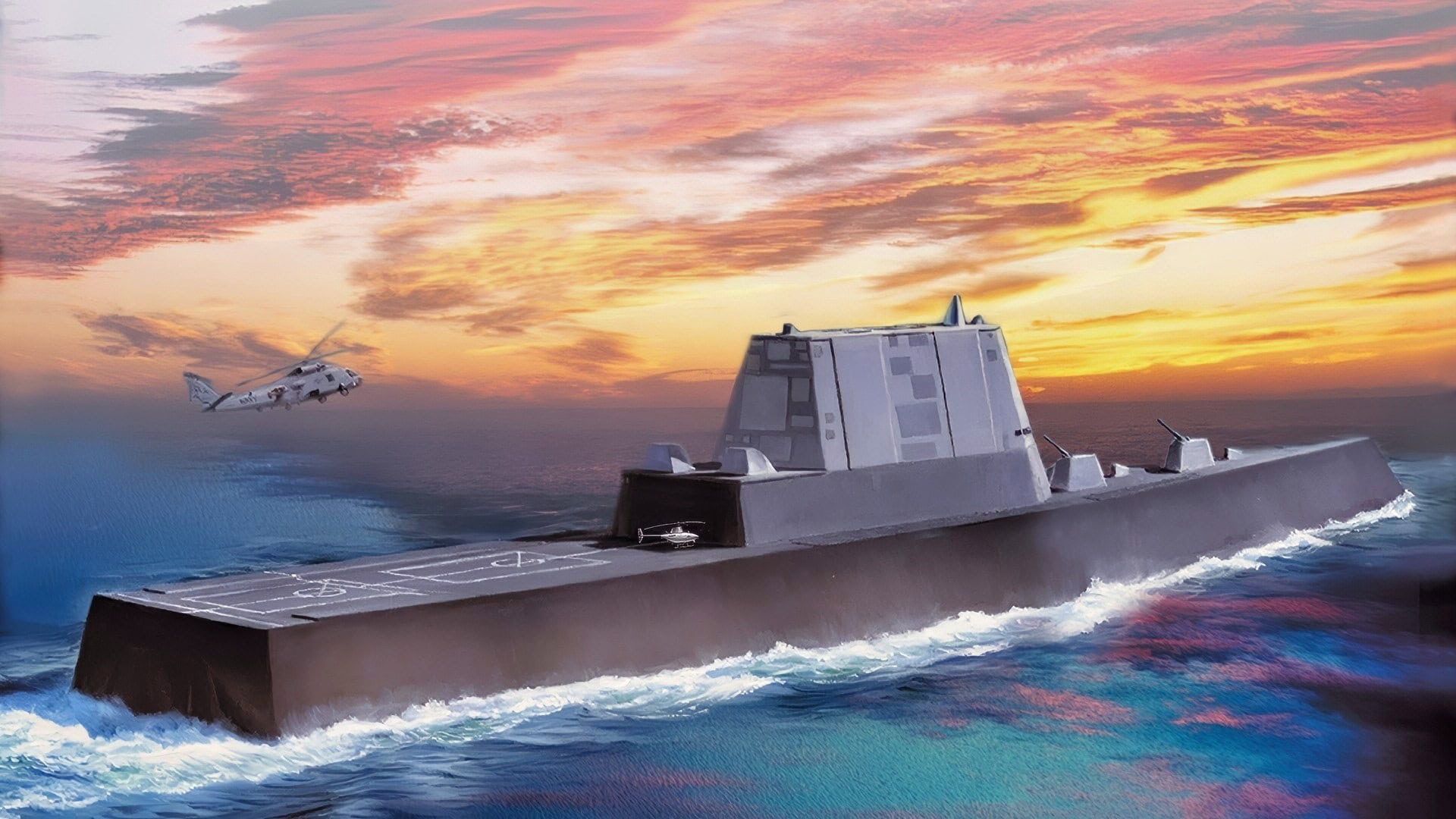
The Zumwalt: A $24 Billion Destroyer Built Around A Gun With No Shells
The Zumwalt began as the future of the surface fleet — a stealthy, electric-drive, next-generation destroyer with an Advanced Gun System designed to rain precision fire on targets ashore. The program promised 32 ships at $1.5 to $1.8 billion each. It delivered three, at a program cost on the order of $24 billion, and the reason the rest were never built is the detail that defines the whole effort: the ammunition contracts for the Advanced Gun System were canceled in 2016 after the price of the guided projectile rose to roughly $800,000 to $1 million per round. The buy was cut so small that the per-round cost of the shells became unsustainable, which left three destroyers carrying 155mm gun mounts for which no economical ammunition would ever exist.
The Navy was left with three of the most advanced surface combatants ever built and no mission for them, nearly $8 billion of stealth warships with their primary weapon system rendered useless before any of them fired a shot in anger.
The service’s answer, rather than scrapping them, has been to rebuild the class around something else entirely: stripping the guns out and installing launch tubes for Conventional Prompt Strike hypersonic missiles, with the lead ship returning to sea in 2026 in that configuration after roughly three years in dry dock and the other two to follow.
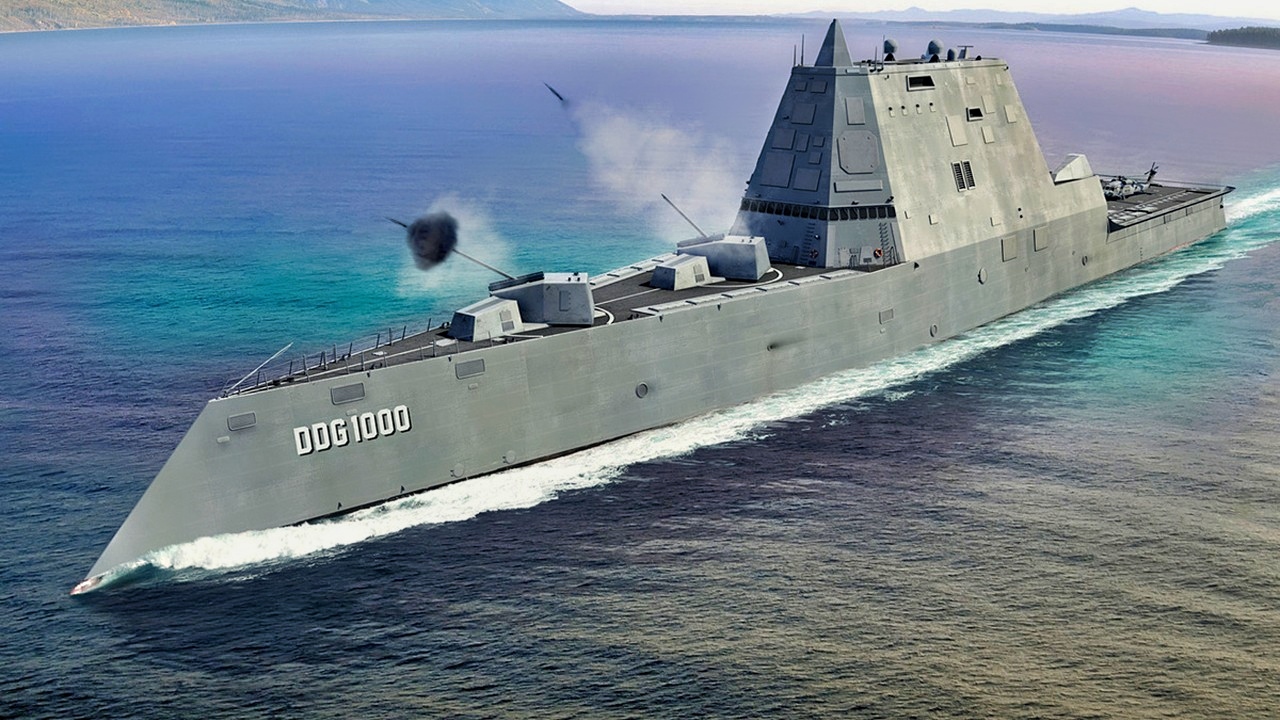
Zumwalt-Class U.S. Navy Destroyer. Image Credit: Creative Commons.
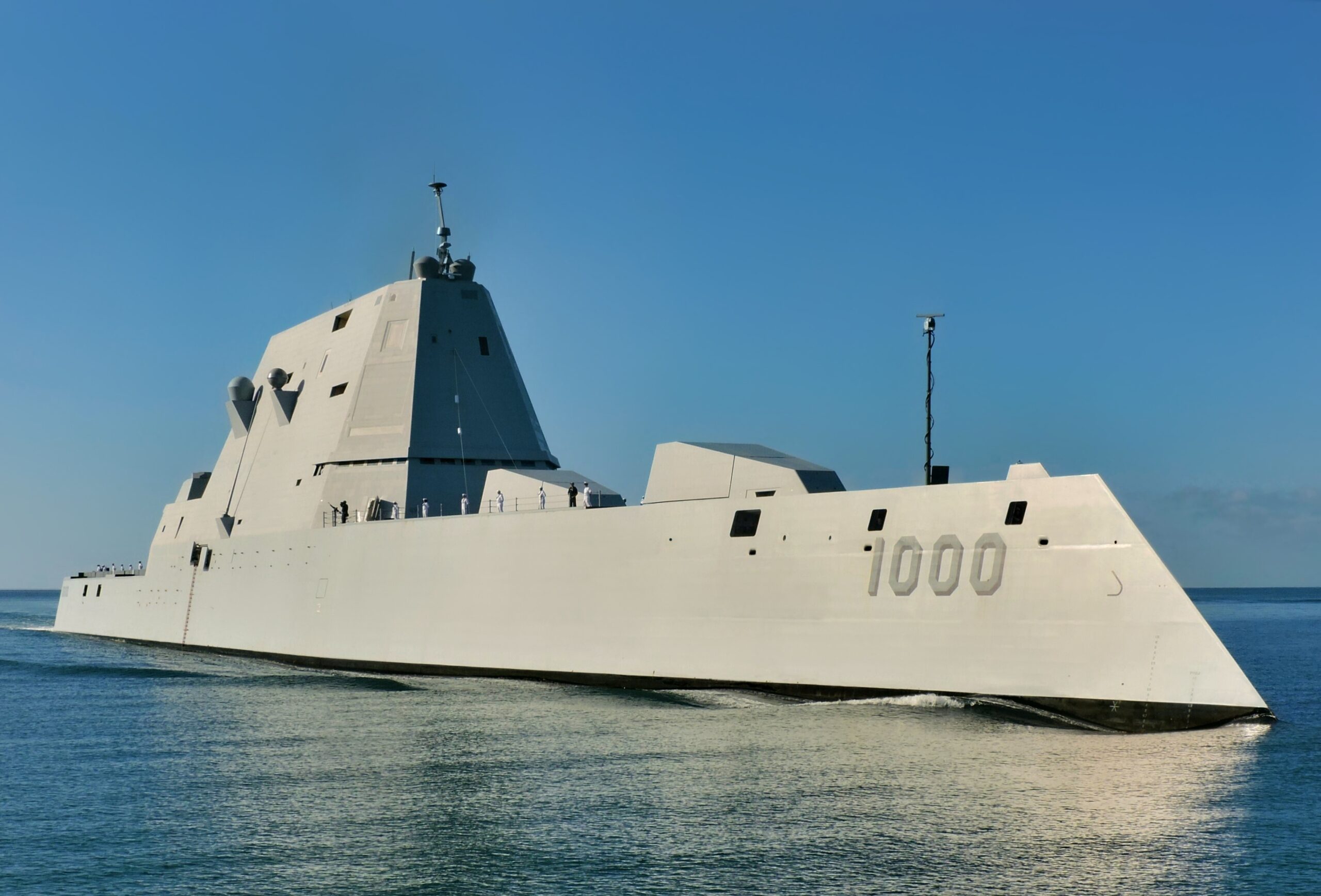
Zumwalt-Class Destroyer U.S. Navy. Image Credit: Creative Commons.
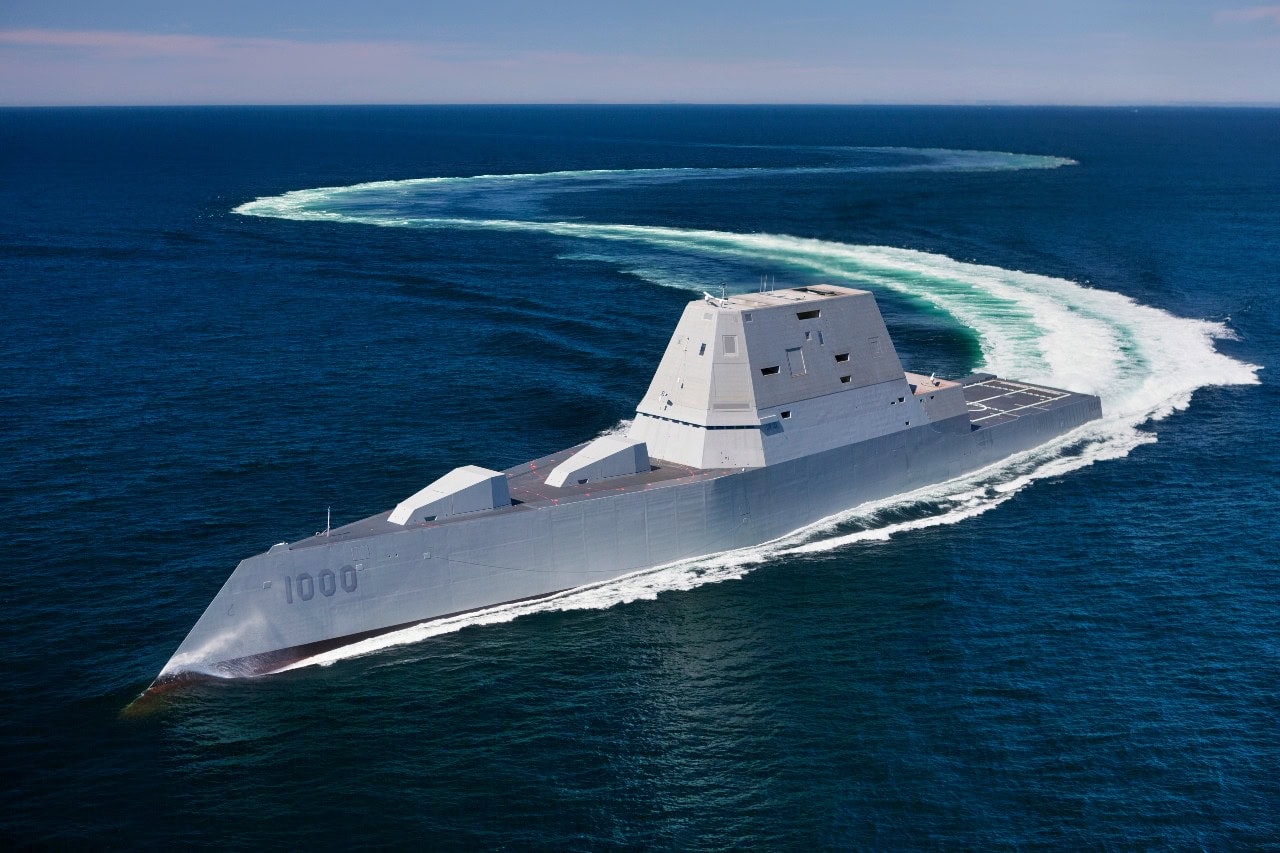
Zumwalt-Class Destroyer U.S. Navy.
The reconfiguration may yet make the ships useful as hypersonic launchers, and the engineering is genuinely advanced.
None of that changes what happened: the Navy spent a generation’s worth of destroyer money to build three ships whose reason for existing evaporated, and is now spending more to invent a second reason after the fact.
The Constellation: The “Safe” Program That Collapsed Anyway
The Constellation-class frigate was meant to be the Navy’s redemption — the program that proved the service had learned its lesson. After the LCS failed to deliver a capable small combatant and the last Oliver Hazard Perry-class frigate retired in 2015, the U.S. Navy deliberately chose the low-risk path: buy a proven, in-service European design, the Franco-Italian FREMM frigate already sailing with two navies, and avoid the first-in-class development risk that had wrecked its other programs. Fincantieri’s Marinette Marine yard in Wisconsin won the contract in April 2020; the lead ship was to be delivered in 2026, and the Navy planned at least 20 of them.
The safe choice was destroyed by the Navy’s own hand. Once design work began, the service modified the FREMM so heavily to meet stricter U.S. survivability standards that little of the proven parent design survived — and the resulting design instability persisted for years.
The Government Accountability Office and CRS oversight found the Navy and shipbuilder still revising core design drawings more than two years into lead-ship construction, a direct violation of the build-after-you-design discipline the program was supposed to embody. The changes drove roughly 759 metric tons of weight growth, nearly 13 percent, eating into the margin the ship needed for future upgrades.
Delivery slipped 36 months, costs grew by an estimated $1.5 billion, the per-hull price climbed past $1.4 billion, and by November 2025, the lead ship was only about 12 percent complete against a contract date that had already passed.
On November 25, 2025, Navy Secretary John Phelan canceled the program. Constellation and Congress, the two hulls under construction, will be completed; the next four ships were terminated for the Navy’s convenience, and the service is starting over with a new FF(X) frigate based on the Legend-class National Security Cutter hull. The Navy sank nearly $9 billion into the frigate program before walking away with two ships to show for it.
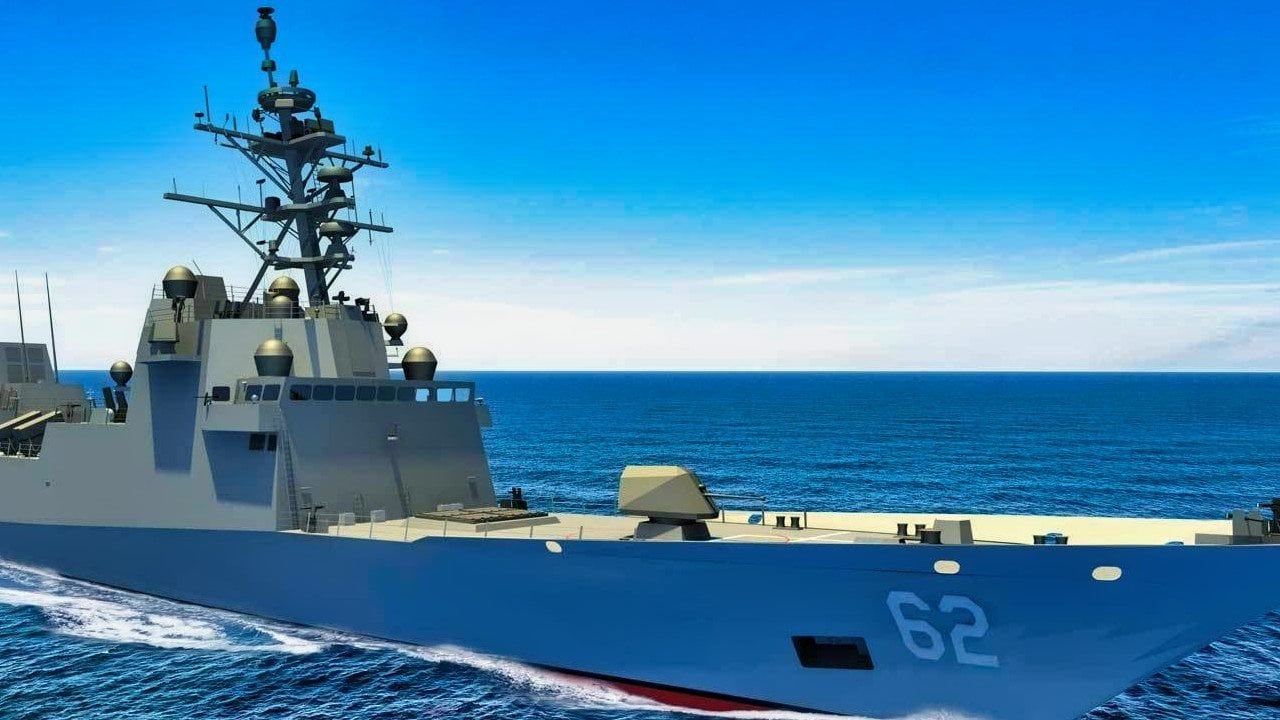
Constellation-Class Frigate. Image Credit: Creative Commons.
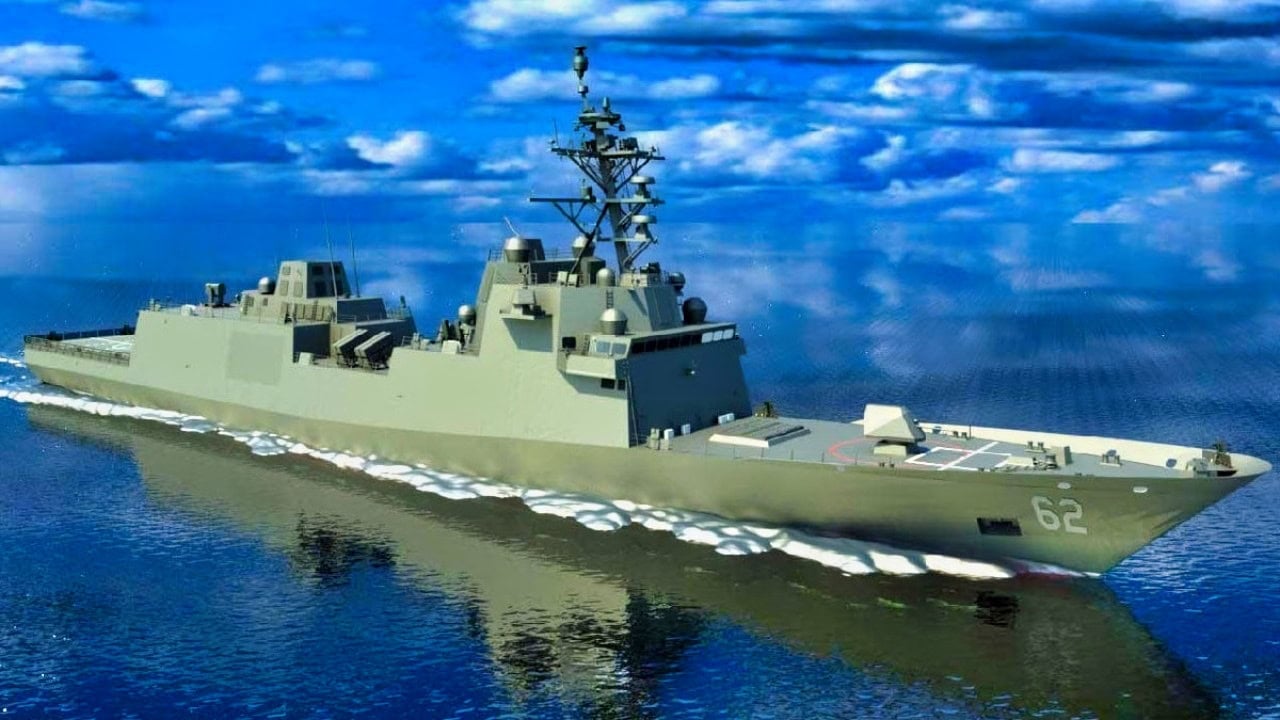
Constellation-Class Frigate. Image Credit: Creative Commons.
The epitaph belongs to the service’s former top acquisition executive, Nickolas Guertin, who observed that modifying someone else’s design turned out to be much harder than it looked, and that sometimes a service is better off designing a new ship from the start. The program built specifically to avoid the Navy’s pattern of failure failed in a new way, and the replacement effort begins the cycle again.
Business & Industrial Problems: One Root Cause Under Three Different Disasters
The three programs failed for three different proximate reasons — a broken modular concept, an unaffordable gun, an unstable design — but they share a single underlying pathology, and the Navy’s own professional literature now names it.
Each program began with requirements that the service could not sustain, layered immature technology onto those requirements, and pursued them through an industrial base too thin and too brittle to absorb the resulting churn. The LCS chased a modularity that did not work.
The Zumwalt chased a gun technology whose economics never closed. The Constellation chased survivability modifications that destroyed the stability of a proven hull. In each case, ambition outran what the Navy could actually design, build, and pay for, and the service discovered the limit only after spending billions.
The pattern extends beyond these three. The same U.S. Navy is stuck at 1.2 Virginia-class submarines a year against a requirement of two, the Ford-class carrier ran years late, and billions over, and the surface and subsurface stories share the same roots: a requirements process that cannot freeze a design, an acquisition system that rewards optimism over realism, and a shipbuilding industrial base hollowed out across three decades of underinvestment.
A Navy that cannot stabilize what it asks for, built by yards that cannot absorb constant change, produces exactly what the past twenty years produced — enormous sums of money converted into a fraction of the promised fleet.
What The U.S. Navy Can Still Do, And What It Has Nearly Lost
The honest accounting has another side, and it matters. The Arleigh Burke-class destroyer is among the most successful warship programs in history, in continuous production since the late 1980s and still the backbone of the surface fleet, proof that the Navy can build a proven design in series superbly when it stops changing the design. The Virginia-class submarine, for all that there are too few of them, is a generation ahead of anything China builds.
The carriers still launch and recover the world’s most capable air wings. And the Constellation cancellation can be read not only as a failure but as belated discipline — a Navy Secretary willing to stop pouring money into a broken program rather than ride it out for another decade of denial, exactly the decision the LCS and Zumwalt eras lacked.
The capability the U.S. Navy has nearly lost is the specific one the question demands: the ability to conceive a genuinely new class of warship and field it on time, on budget, and fit for its mission. Building more Burkes and more Virginias is the service leaning on designs settled decades ago, and that works only until those designs age out of relevance against a Chinese fleet that is now the largest in the world by hull count and growing.
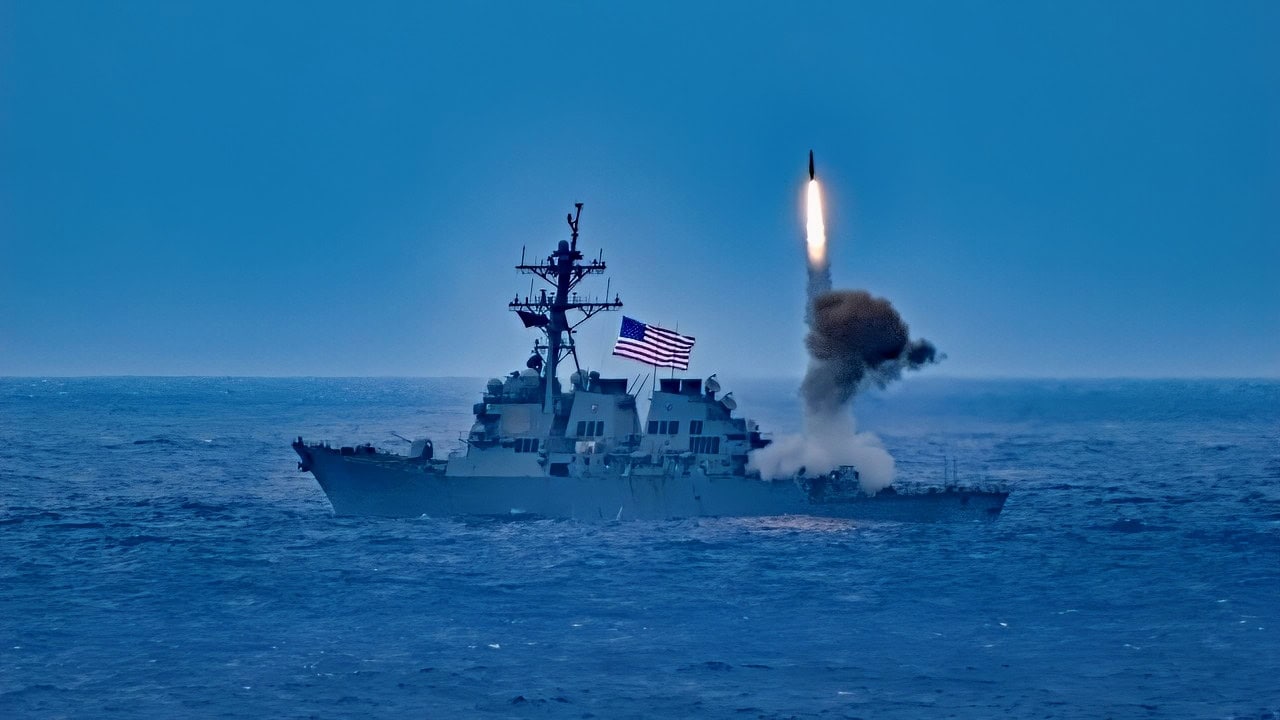
(March 24, 2022) – The Arleigh Burke-class guided-missile destroyer USS Milius (DDG 69) launches a Standard Missile (SM) 2 during Surface Warfare Advanced Tactical Training while operating in the Philippine Sea, March 24, 2022. Milius is assigned to Commander, Task Force 71/Destroyer Squadron (DESRON) 15, the Navy’s largest forward-deployed DESRON and the U.S. 7th Fleet’s principal surface force. (Courtesy photo)
A navy that can only reproduce its existing classes is a navy slowly aging toward obsolescence, and the three programs meant to bring new capability into the fleet this century — the small combatant, the next-generation destroyer, the modern frigate — delivered a retired-early class, three orphaned hulls, and a cancellation.
The FF(X) frigate, now starting from the National Security Cutter hull, is the next test of whether the Navy can break the pattern, and it begins under the shadow of every program that came before it.
The answer to whether the U.S. Navy can still build a navy is narrow and uncomfortable. It can still build the ships it already knows how to build. Whether it can still build the ones it does not yet have — the new classes a changing threat will require — is the question the LCS, the Zumwalt, and the Constellation have answered in the negative three times running, and the one the service has not yet proven it can answer any other way.
China is launching warships at a rate the United States cannot match, and the American advantage has always been quality over quantity.
That advantage holds only as long as the U.S. Navy can maintain that quality. On the evidence of the last twenty years, that is no longer a safe assumption, and the next class will have to prove it the hard way.
About the Author: Harry J. Kazianis
Harry J. Kazianis (@Grecianformula) was the former Senior Director of National Security Affairs at the Center for the National Interest (CFTNI), a foreign policy think tank founded by Richard Nixon based in Washington, DC. Harry has over a decade of experience in think tanks and national security publishing. His ideas have been published in the NY Times, The Washington Post, The Wall Street Journal, CNN, and many other outlets worldwide. He has held positions at CSIS, the Heritage Foundation, the University of Nottingham, and several other institutions focused on national security research and analysis. He is the former Executive Editor of the National Interest and the Diplomat. He holds a Master’s degree focusing on international affairs from Harvard University.

