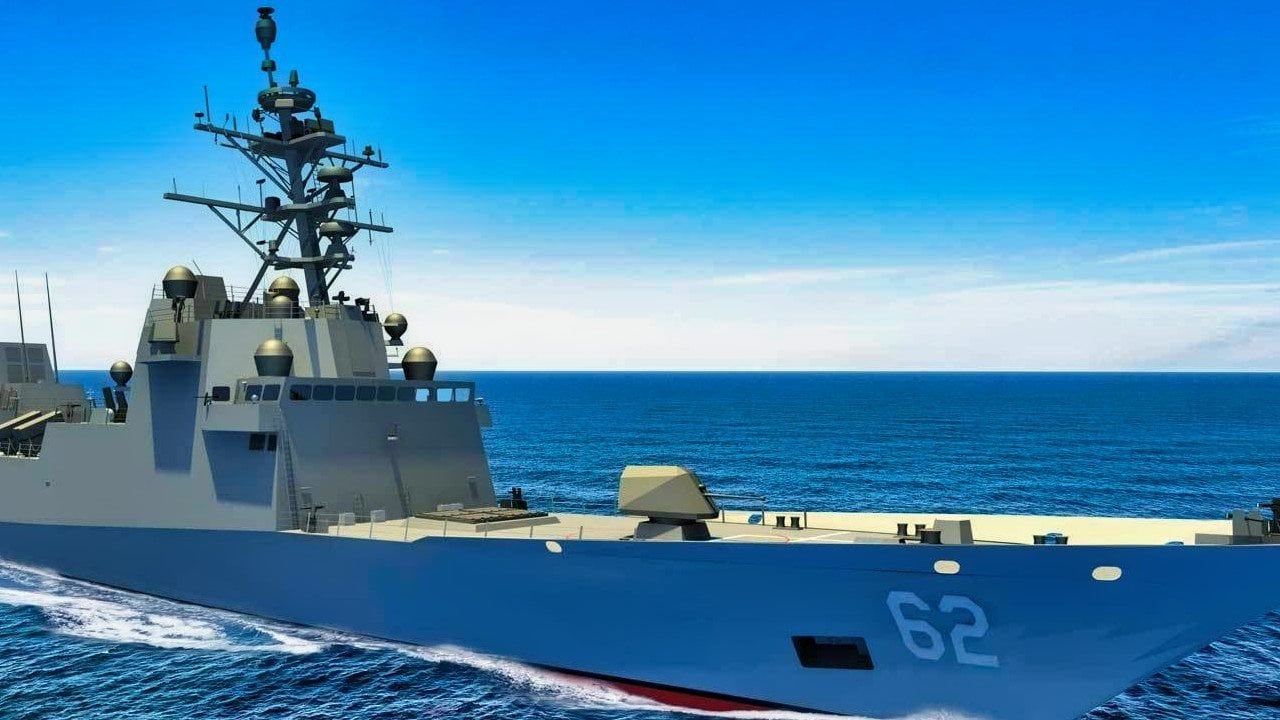
The Navy designed the Constellation-class frigate around a proven European ship specifically to avoid another Zumwalt-class disaster. Then the Pentagon’s acquisitions bureaucracy redesigned 85% of the ship, started construction before the design was finished, and spent $9 billion before Trump canceled the program.
The Constellation-Class Frigate Fail
The United States Navy has struggled to build new ships relevant to the modern battlefield since the end of the Cold War. Whatever reason you want to chalk it up to, the negative impacts of rapid deindustrialization that gutted the US of its naval shipyard capacity that was once the envy of the world, or the natural impacts of the post-Cold War downsizing of the military, or the inherent inefficiency (and corruption) of America’s bloated defense contractors, the United States Navy simply cannot build ships en masse easily or reliably.
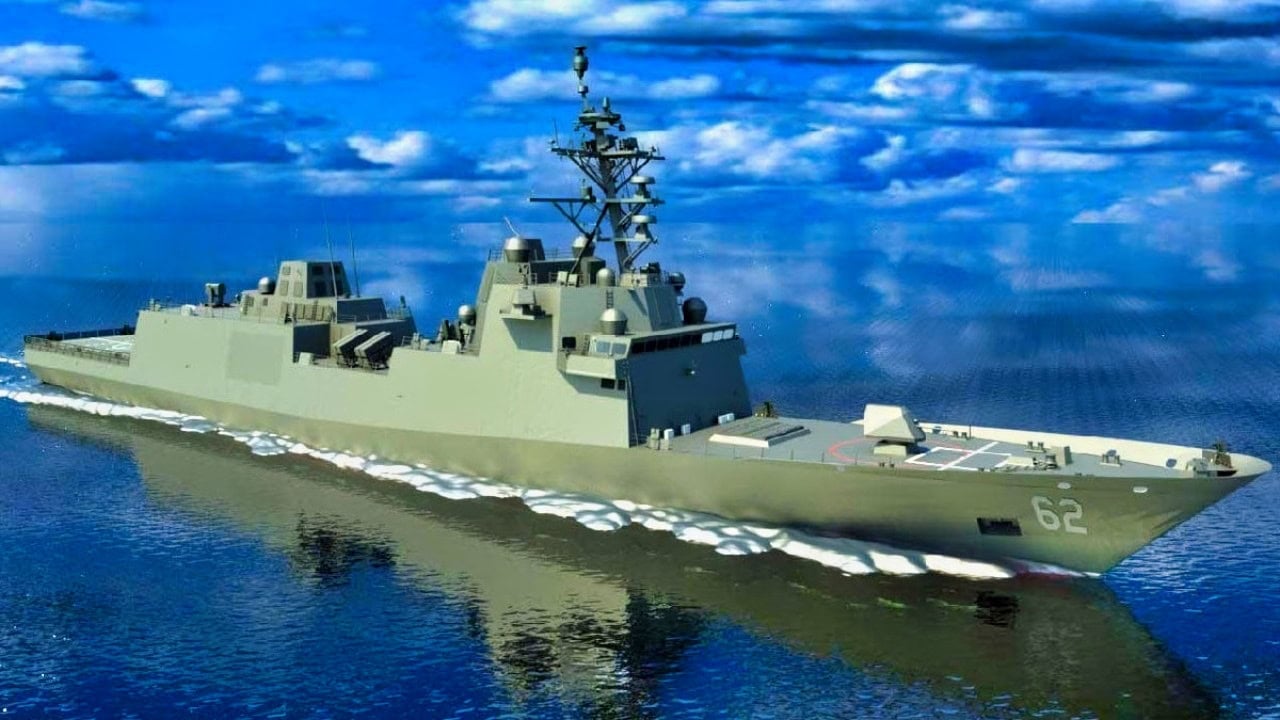
Constellation-Class Frigate. Image Credit: Creative Commons.
The “Safe Bet” That Was Supposed to Fix Everything
Take, for example, the recently canceled Constellation-class frigate. At the time, the Navy called that design a “safe bet” because it incorporated concepts and practices that US allies had refined (the Navy-based Constellation-class on the proven European FREMM frigate). The goal was to produce a fast, cheap, low-risk frigate.
Originally, the Navy planned to build about 20 ships of this class at a cost of about $1 billion per hull.
From FREMM to Failure
Ironically, the Navy’s rationale for structuring the program like Europe’s FREMM program was to avoid the disasters that befell the Navy’s Zumwalt-class and Littoral Combat Ship (LCS) programs. Those ships were boondoggles from start to finish.
They never lived up to their hype (or cost). What’s more, they proved to be a ridiculous drain on the Navy’s resources.
Oh, and the failure of those expensive projects created sizable gaps in the Navy’s overall capabilities and gaps that the Navy is still trying to fill today.
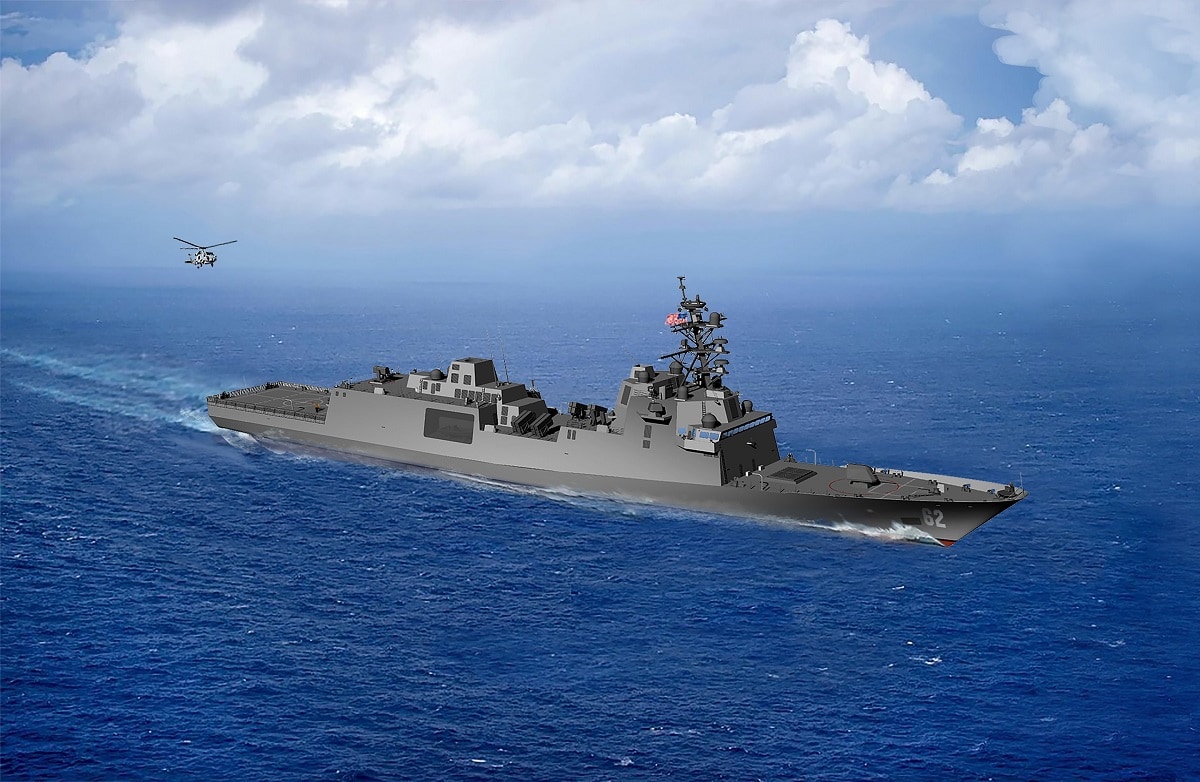
An artist rendering of the U.S. Navy guided-missile frigate FFG(X). The new small surface combatant will have multi-mission capability to conduct air warfare, anti-submarine warfare, surface warfare, electronic warfare, and information operations. The design is based on the FREMM multipurpose frigate. A contract for ten ships was awarded to Marinette Marine Corporation, Wisconsin (USA), on 30 April 2020.
What made the FREMM model so inviting was that the Navy would rigorously adhere to the “off-the-shelf” design that defined the European frigate. Indeed, that would have been the most cost-effective and efficient way for the Navy to move forward.
In fact, it would have made the new American frigate more interoperable with the navies of its European allies, allowing the Navy to eventually make some money by exporting the ship to NATO allies.
Alas, the Navy’s byzantine acquisitions bureaucracy got involved in the design of the Constellation-class frigate. The first thing that the bureaucracy did was insist upon the incorporation of experimental, higher-end systems.
The Pentagon ordered that the proposed frigate incorporate US-specific combat systems; they then changed the survivability standards and modified the propulsion, sensors, and hull design to better comply with the US Navy’s rigid standards.
In essence, the Pentagon bureaucracy had lost sight of the entire purpose of the Constellation-class frigate program. By the time the program had progressed and the Pentagon had sunk its claws into it, there was only a 15 percent commonality with the original FREMM design.
Originally, the Navy had envisioned an 85 percent commonality with its European partners.
The Navy redesigned the ship in real time, ensuring it was no longer interoperable with the European FREMM system and instead became something new. And that newness was the program’s death.
The “500-Ton Problem.”
Under the Navy’s interference, the Constellation gained significant unplanned weight, with some estimates claiming the ship grew by around 10 percent during development. Such changes ensured that the Navy’s new design plan reduced the planned range, speed, and survivability of the Constellation-class.
Moreover, the Pentagon’s last-minute additions to the Constellation-class frigate’s designs limited the ability to add future weapons and other upgrades. All these things compounded into real concerns that the Pentagon was effectively shortening the service life of the Constellation-class.

USS Billings Littoral Combat Ship 2025 Fleet Week. Image by Stephen Silver for 19FortyFive.com
In other words, the ship was literally outgrowing its own design envelope.
Massive Delays
The Navy had originally planned to deliver the first tranche of these ships this year. That target date was changed by three years, to 2029, and it was not a set date. It was more like a recommendation.
An added problem for the frigate’s designers was that construction began before the Navy’s eggheads finalized the design.
Essentially, Fincantieri, the Italian shipbuilder the Pentagon had contracted with, could endure the seemingly endless changes so long as they had not cut the steel for the hull. Once Fincantieri cut that steel, any additions to the design would become burdensome in terms of engineering and, more importantly for American taxpayers, cost.
That constant redesign process led to a vicious cycle in which the shipbuilder would start and stop. This painful cycle delayed the program, complicated the project’s finalization, and ensured it would likely never reach the High Seas in any meaningful timeframe.
What the Constellation-class experienced was a classic Pentagon acquisitions failure that has played out across multiple platforms for decades (from satellites to bombers to aircraft carriers and everything in between).
Building a complex new platform begins; engineers and bureaucrats soon discover problems mid-build; the Pentagon moves in and redesigns the platform, forcing the engineers to rebuild it; and the cycle repeats until the project is a total boondoggle and failure.
You go from building the next Ferrari to building a Pontiac Aztec, at the cost of the Ferrari and with the performance of a Ford Pinto (if you’re lucky).
Cost Explosion
As noted above, the original cost was supposed to be $1 billion per ship (and the Navy wanted around 20 of these warships). Thanks to all the design changes, though, the revised estimate was between $1.4 billion and $1.5 billion per ship (with no guarantee that those costs would increase over time).
The total program would cost more than $20 billion. Upon Trump’s return to the Oval Office, he canceled the program. By the time he canceled it, the US Navy had already spent around $9 billion. The Navy is continuing with only two of the desired 20 ships.
Constellation follows the terrible pattern established by the failed Zumwalt-class and LCS programs, showing how the Navy struggles to build ships on time, control costs, and lock in design before construction begins.
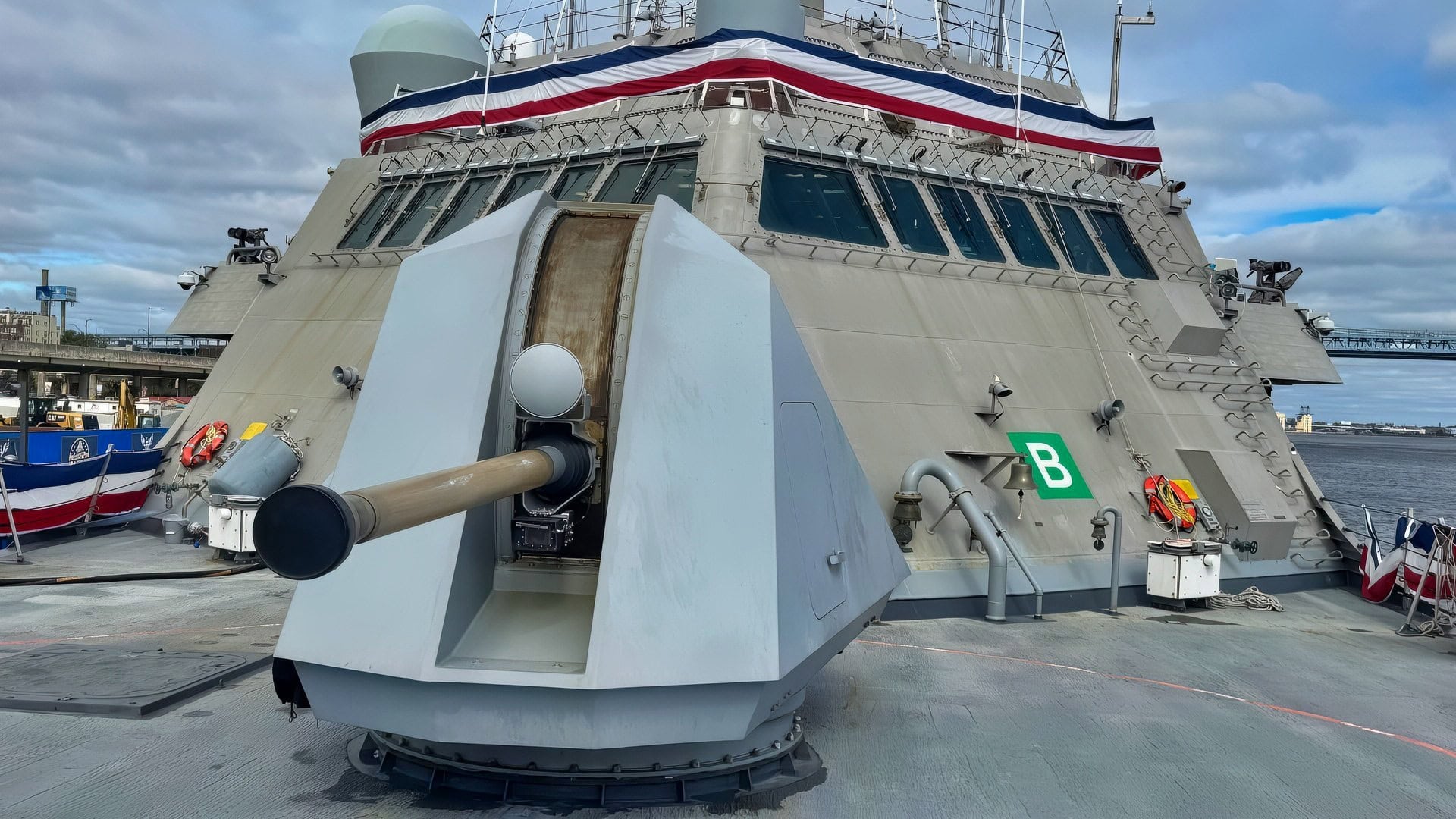
Littoral Combat Ship USS Cooperstown. Image Credit: 19FortyFive.com
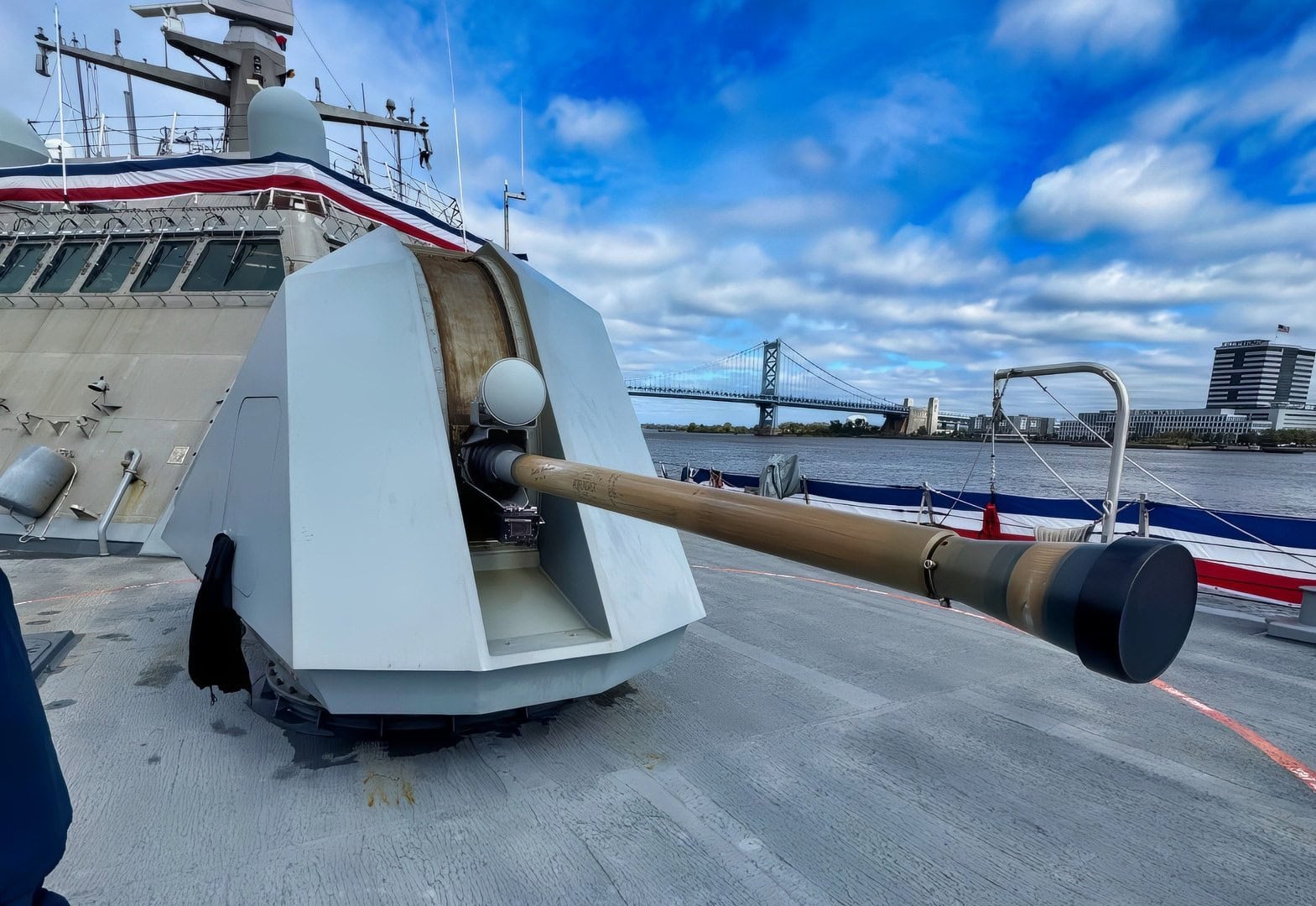
Littoral Combat Ship Deck Gun U.S. Navy. Image Credit: 19FortyFive.com
Strategic Fallout
The Constellation-class failed because the Navy tried to turn a simple, proven ship into a complex, bespoke warship.
The bureaucracy negated the entire design concept, cost the taxpayer billions of dollars, likely further alienated American allies, complicated the already-weakening interoperability between US and partner militaries, and created a real hole in the US Navy’s surface warfare fleet capability that will not be easy to plug anytime soon.
Here again is a classic example of how the Pentagon’s own bureaucracy is its greatest strategic threat.
As these failures become more pronounced in America’s naval production, China continues to grow its fleet into the world’s largest.
At some point, the US will lose its ability to deter the Chinese at sea simply because they’ve depleted what little capabilities they had (and the defense industrial base cannot replace those losses).
About the Author: Brandon J. Weichert
Brandon J. Weichert is the Senior National Security Editor at 19FortyFive.com. Recently, Weichert became the editor of the “NatSec Guy” section at Emerald.TV. He was previously the senior national security editor at The National Interest. Weichert is the host of The National Security Hour on iHeartRadio, where he discusses national security policy every Wednesday at 8 pm Eastern. He hosts a companion show on Rumble entitled “National Security Talk.” Weichert consults regularly with various government institutions and private organizations on geopolitical issues. His writings have appeared in numerous publications, among them Popular Mechanics, National Review, MSN, and The American Spectator. And his books include Winning Space: How America Remains a Superpower, Biohacked: China’s Race to Control Life, and The Shadow War: Iran’s Quest for Supremacy. Weichert’s newest book, A Disaster of Our Own Making: How the West Lost Ukraine, is available for purchase wherever books are sold. He can be followed via Twitter/X @WeTheBrandon.