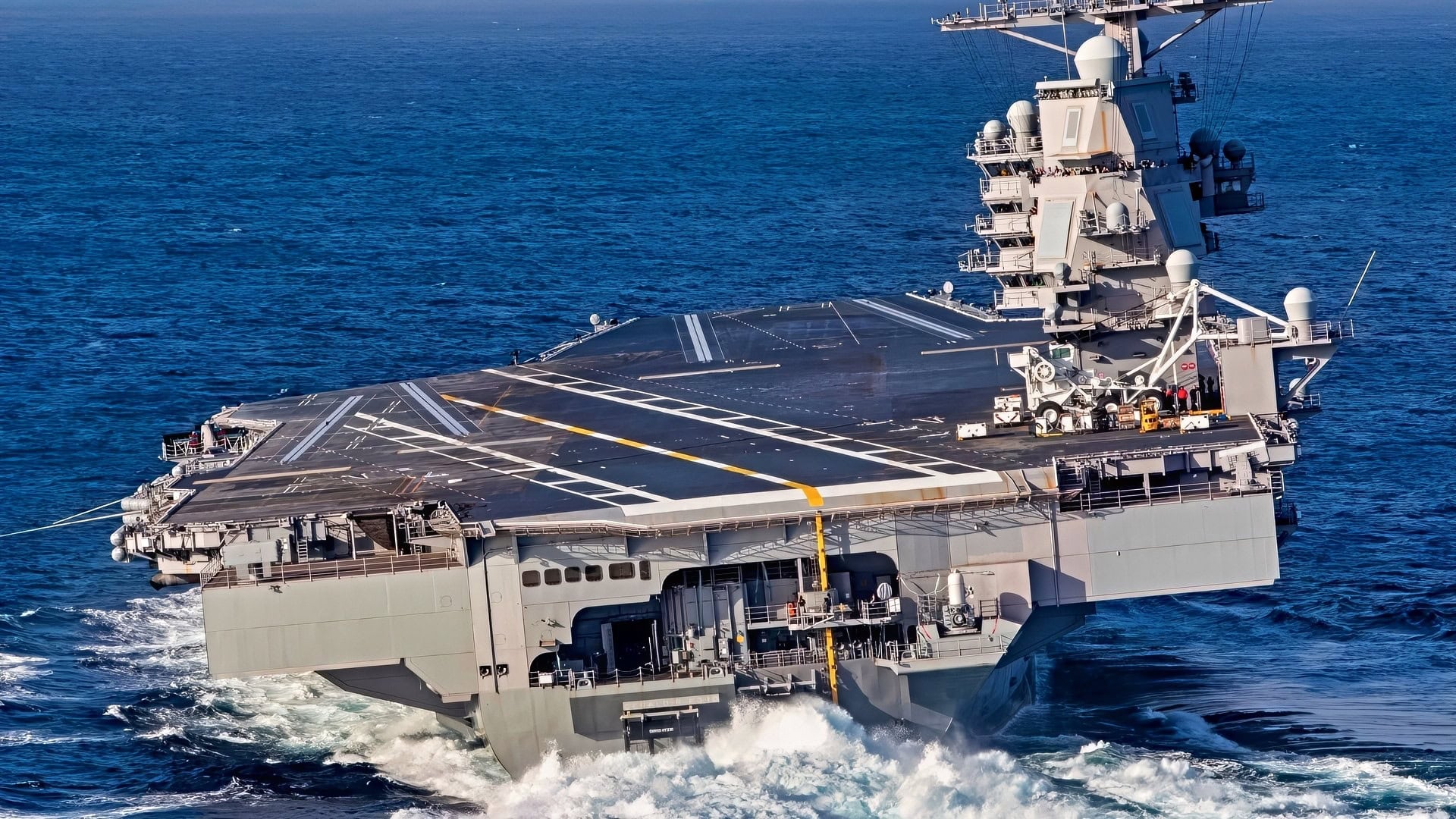
The USS Gerald R. Ford has been plagued by massive technical problems since it first hit the High Seas. From broken electromagnetic catapults to unreliable advanced arresting gear (AAG), the Ford has proven itself a massive $13 billion boondoggle. Since the start of the Iran War, America’s newest carrier has been a series of massive letdowns.
Having struggled through a host of complications, from a sewage system that does not work properly to random laundry fires forcing the ship back to port to an inability to launch the Navy’s F-35C Lightning II fifth-generation warplanes because their jet blast burns through the carrier’s deck, it is increasingly clear that Uncle Sam is not getting his money’s worth from this troublesome carrier.
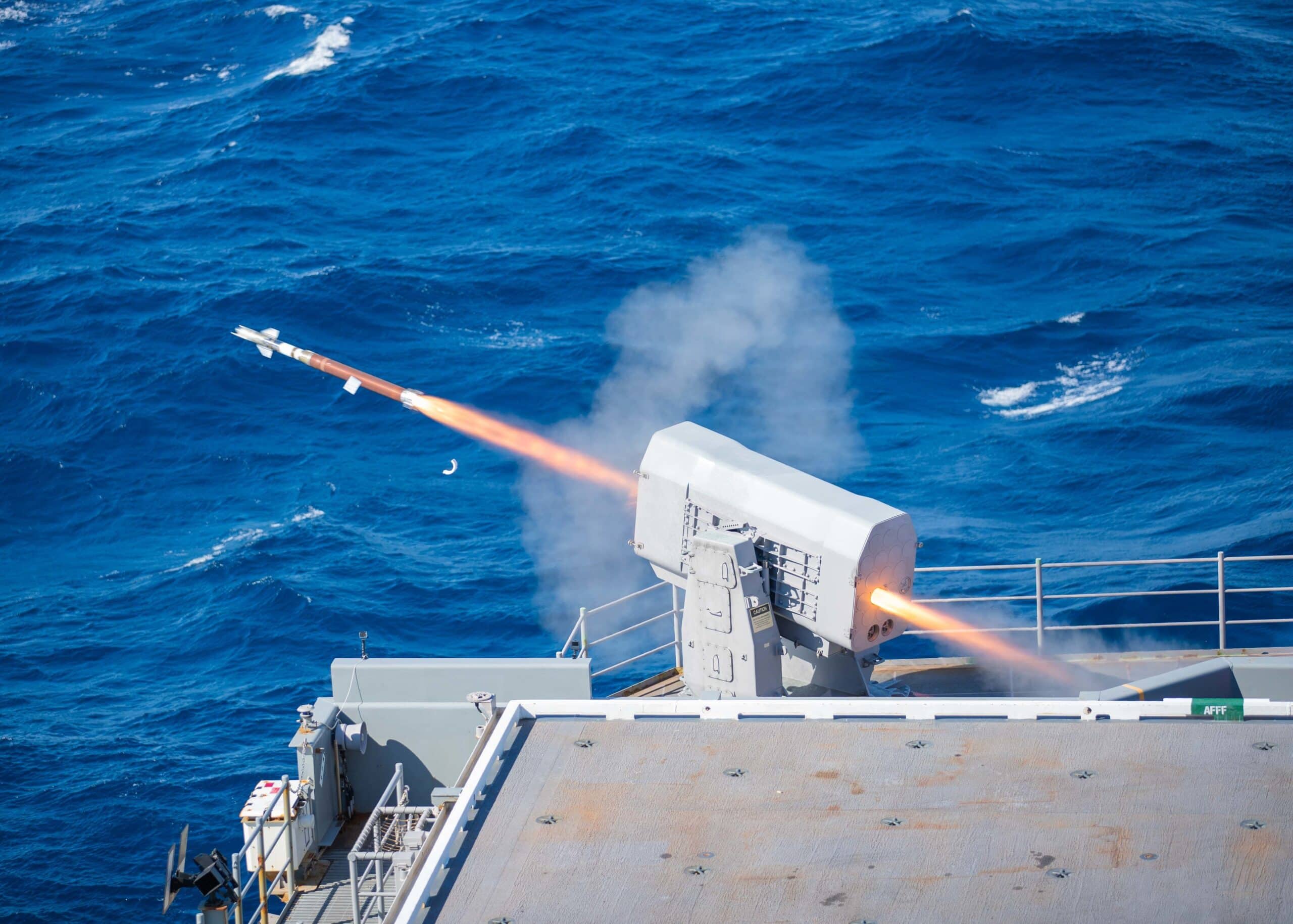
A rolling airframe missile (RAM) launcher fires a RIM-116 missile from USS Gerald R. Ford (CVN 78) during combat systems ship qualification trials (CSSQT), April 16, 2021.CSSQT is a Naval Sea Systems Command requirement to verify that ship personnel can operate and maintain their combat systems in a safe and effective manner. Ford is underway in the Atlantic Ocean conducting its final independent steaming event of post-delivery tests and trials. (U.S. Navy photo by Mass Communication Specialist 3rd Class Robert Stamer)
Record Deployment Meets Mounting Breakdown
To compound matters, the USS Gerald R. Ford has been at sea for nearly 300 days—tying the modern-era record set by the Nimitz-class aircraft carrier USS Abraham Lincoln in 2020.
If the Pentagon extends Ford’s deployment, it will surpass the all-time record set during the Vietnam War by the iconic USS Midway. In fact, that looks certain.
The key point to remember in all this is that Ford’s crew has been underway for almost a year and has had to endure one complication after another—all while on the front lines of a war in which Iran’s anti-ship ballistic missiles (ASBMs) and drones have made those large US carriers tempting targets of opportunity.
Thrown Into War Before It was Ready
Initially, the Ford was redeployed from the Venezuelan operation to the Middle East because it was the newest, most advanced carrier in the fleet.
The Trump administration wanted to demonstrate to the world that our carrier capabilities were second to none.
The Ford was positioned off the coast of Israel ahead of the US and Israeli airstrikes against Iran on February 28. In fact, the carrier conducted flight operations against Iranian targets.
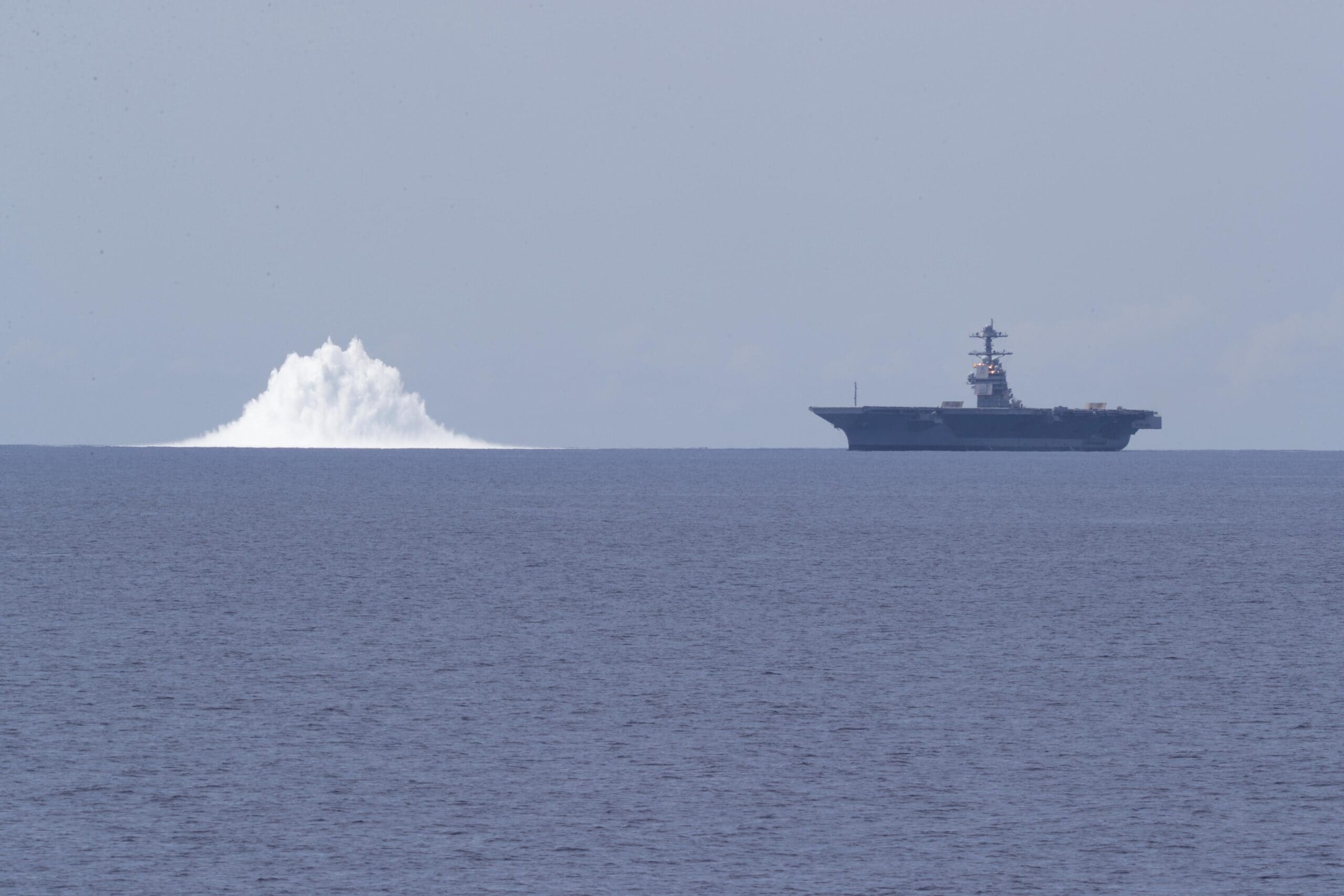
The aircraft carrier USS Gerald R. Ford (CVN 78) completes the first scheduled explosive event of Full Ship Shock Trials while underway in the Atlantic Ocean, June 18, 2021. The U.S. Navy conducts shock trials of new ship designs using live explosives to confirm that our warships can continue to meet demanding mission requirements under harsh conditions they might encounter in battle. (U.S. Navy photo by Mass Communication Specialist 3rd Class Zachary Melvin)
Because the Ford was not ready for major combat operations before it was pushed out of the shipyards, its combat deployment to the Mideast—one of many deployments over a seemingly interminable period for its crew—was a humiliating experience after another.
Maintenance Nightmare in the Making
Even after the horrific laundry fire forced the Ford back to port, first in Greece and then in Croatia, everyone assumed the beleaguered crew of the humiliated ship would finally get a much-needed break.
Instead, after a brief stay in port, the Ford was sent back to the Middle East.
The Nimitz-class USS George H.W. Bush has been deployed to relieve the Ford.
Sadly, the George H.W. Bush is being directed to navigate around the southern tip of Africa out of an abundance of caution, thereby ensuring that the Ford remains on station in the Middle East for an even longer period.
This is not only a nightmare for the crew, which has been deployed for more than 10 months, but also catastrophic for routine maintenance.
The Ford is essentially a highly complex machine that endures severe wear and tear.
It requires constant maintenance, upgrades, and overall upkeep to keep it running.
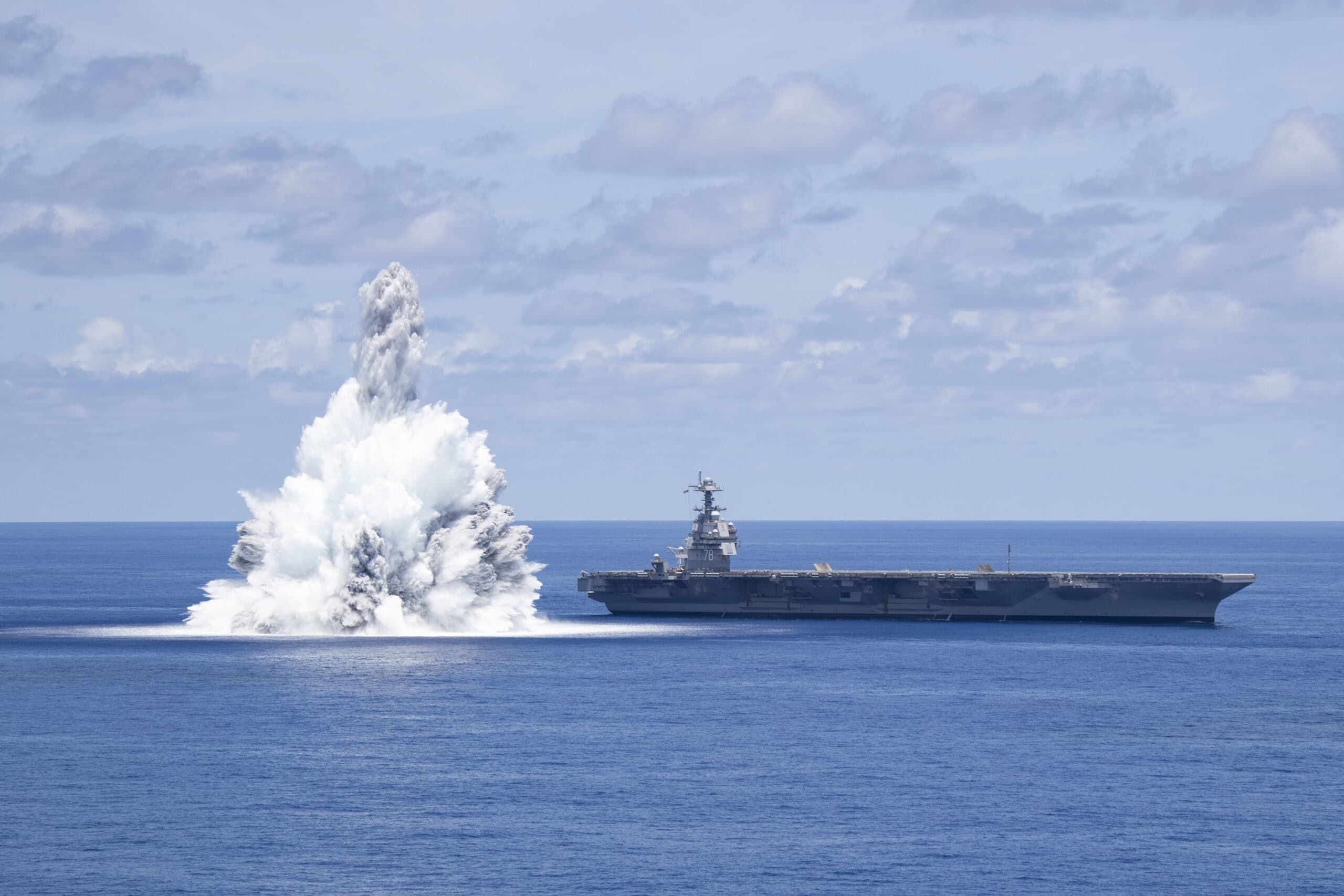
USS Gerald R. Ford (CVN 78) successfully completed the second of three scheduled explosive events for Full Ship Shock Trials (FSST), July 16, 2021. The shock trials are designed to demonstrate the ship’s ability to withstand the effects of nearby underwater explosion and retain required capability. Ford is underway in the Atlantic Ocean for required inspections and preparation for the third FSST explosive event, scheduled for later this month. (U.S. Navy Photo by Mass Communications Specialist Seaman Jackson Adkins)
By deferring maintenance on the carrier for as long as possible, even though it is the newest in the fleet, the Navy is ensuring that small problems could become severe ones.
Given the maintenance complications, the weakness of US naval shipyards, the backlog, and the fact that aircraft carrier maintenance is among the most demanding operations for US shipyards, the USS Gerald R. Ford will eventually be unusable for up to two years while she recovers, as I see it. That’s the price of a massive amount of deferred maintenance and repair.
A Navy Stretched to the Breaking Point
The US Navy is stretching its most important warships to the breaking point to sustain global commitments amid a multi-theater conflict. Even its newest, most advanced carrier is not immune to the ravages of overextension.
And the US is not even in a near-peer conflict (yet). That the Navy is exhausting its biggest assets in what amounts to a peripheral war against an unconventional foe, while America’s near-peer rivals, notably China, continue to build up, underscores the Navy’s vulnerability.
The Strategic Warning Washington is Ignoring
Under current conditions, there is simply no way the US Navy could conceivably last in a high-tempo, near-peer conflict with an adversary like China. That’s not necessarily because the US Navy isn’t as good as the Chinese Navy. It’s simply because the Navy is overextended, its systems are overburdened, the defense industrial base cannot keep up, and the crews are exhausted.
These are the makings of a real strategic defeat on the High Seas. Washington has been warned. They are on notice, but they have not taken notice.
About the Author: Brandon J. Weichert
Brandon J. Weichert is the Senior National Security Editor at 19FortyFive.com. Recently, Weichert became the editor of the “NatSec Guy” section at Emerald.TV. He was previously the senior national security editor at The National Interest. Weichert is the host of The National Security Hour on iHeartRadio, where he discusses national security policy every Wednesday at 8pm Eastern. He hosts a companion show on Rumble entitled “National Security Talk.” Weichert consults regularly with various government institutions and private organizations on geopolitical issues. His writings have appeared in numerous publications, among them Popular Mechanics, National Review, MSN, and The American Spectator. And his books include Winning Space: How America Remains a Superpower, Biohacked: China’s Race to Control Life, and The Shadow War: Iran’s Quest for Supremacy. Weichert’s newest book, A Disaster of Our Own Making: How the West Lost Ukraine, is available for purchase wherever books are sold. He can be followed via Twitter/X @WeTheBrandon.