
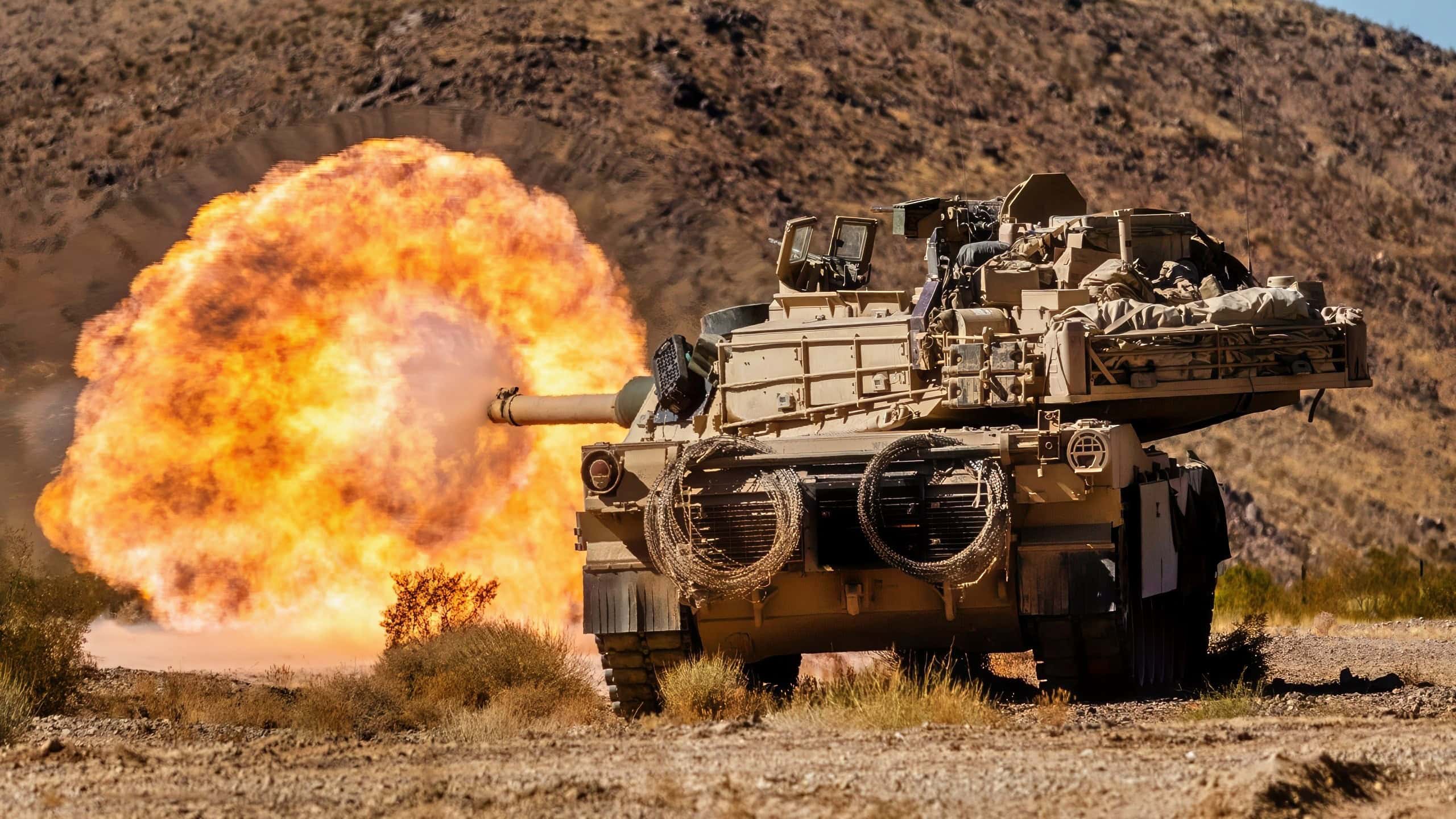
The Republic of China Army took delivery of its final batch of M1A2T Abrams main battle tanks from the United States in late April, with the vehicles delivered to the service’s Army Armor Training Command at Hsinchu, in the northwestern region of Taiwan Island.
The armor will be deployed with the 6th Army Corps, based near the capital, Taipei, in Taoyuan, which is responsible for defending the country’s northern region.
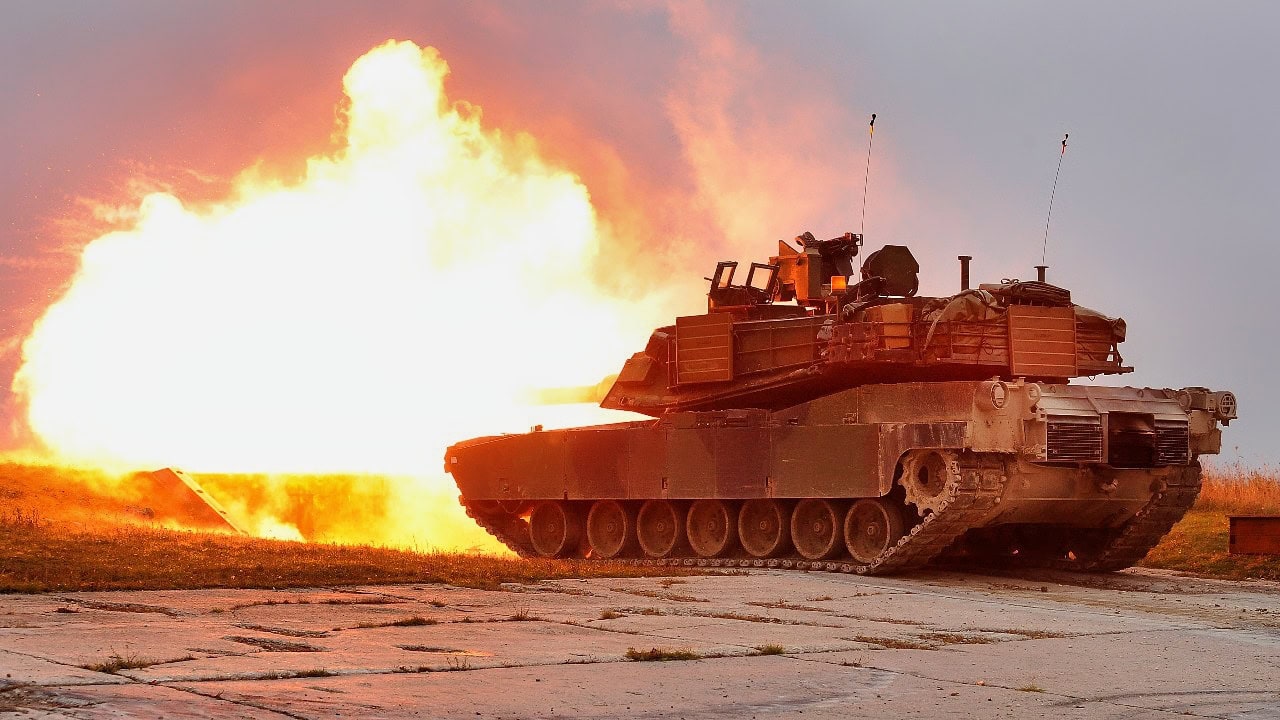
U.S. Soldiers, assigned to the 1st Battalion, 64th Armor Regiment, 1st Armored Brigade Combat Team, 3rd Infantry Division, conduct gunnery with M1A2 Abrams tanks during exercise Combined Resolve V at 7th Army Joint Multinational Training Command in Grafenwoehr, Germany, Oct. 8, 2015. Combined Resolve is designed to exercise the U.S. Army’s regionally aligned force to the U.S. European Command area of responsibility with multinational training at all echelons. Approximately 4,600 participants from 13 NATO and European partner nations will participate. The exercise involves around 2,000 U.S. troops and 2,600 NATO and Partner for Peace nations. Combined Resolve is a preplanned exercise that does not fall under Operation Atlantic Resolve. This exercise will train participants to function together in a joint, multinational and integrated environment and train U.S. rotational forces to be more flexible, agile and to better operate alongside our NATO Allies. (U.S. Army photo by Visual Information Specialist Gertrud Zach/released)
However, analysts at the Australian Strategic Policy Institute (ASPI) have recently assessed that the vehicles are prime examples of “dead weight” procurements because they are optimized for a form of conventional land warfare far removed from the Army’s likely conflict scenarios.
M1 Abrams: Taiwan Arming Itself With The “Wrong Weapons”
David Axe, writing for ASPI, has raised critical concerns about Taiwan’s military modernization, specifically labeling much of its older hardware and newly acquired equipment as potential “deadweight” in a modern conflict.
While Taiwan recently completed its $1.29 billion procurement of 108 American-made M1A2T Abrams tanks, analysts argue that these 70-ton tanks are highly vulnerable to cheap, modern loitering munitions and interceptor drones, given their checkered results in Ukraine.
“The 74-ton, four-person M1A2 was designed for a kind of warfare that is rapidly becoming a thing of the past,” Axe wrote.
“As the wars in Ukraine and Iran have proved, the future belongs to small, light, autonomous weapons that can be continuously upgraded and built quickly in huge quantities: propeller-driven strike missiles, remotely deployed mines, explosive robotic boats, long-range jet cruise missiles and scalable defenses against these same weapons,” he added.
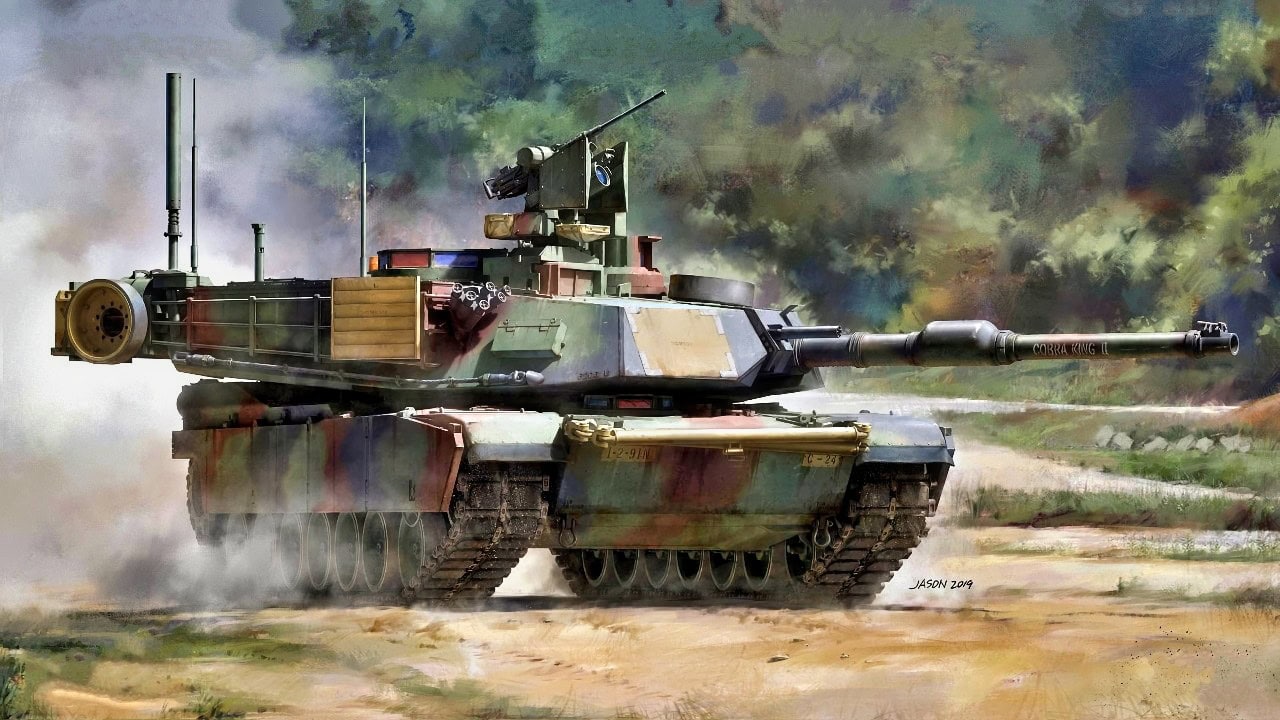
M1 Abrams Tank. Image Credit: Creative Commons.
The Abrams’s heavy weight poses severe mobility challenges on Taiwan’s narrow roads, bridges, and soft or muddy soil.
ASPI and other arms analysts suggest the island’s defense budget would be better spent on asymmetric weapons such as Javelin anti-tank missiles, Stinger air defense systems, and mobile interceptor drones.
Taiwan operates the Abrams without the US-supplied Battlefield Management System (BMS), which severely limits the tanks’ ability to coordinate attacks, share real-time intelligence, and communicate over modern networks.
Experts argue that shifting focus away from traditional, heavy-armor platforms toward smaller, distributed, and highly mobile strike capabilities is necessary to deter a Chinese amphibious invasion.
Meet The Taiwanese Version Of The M1A2 Abrams
The M1A2T Abrams is a customized variant of the U.S. M1A2 SEPv3 main battle tank, designed specifically for Taiwan.
It features advanced “hunter-killer” target acquisition, a 120mm smoothbore gun, and enhanced armor, providing superior, modern firepower to Taiwan’s armored forces.
The “T” designation indicates a tailored export model for Taiwan, based on the M1A2 SEPv3 but without depleted uranium armor inserts.
The M1A2T comes equipped with an independent thermal viewer for the commander, allowing for faster engagement cycles (hunter-killer).
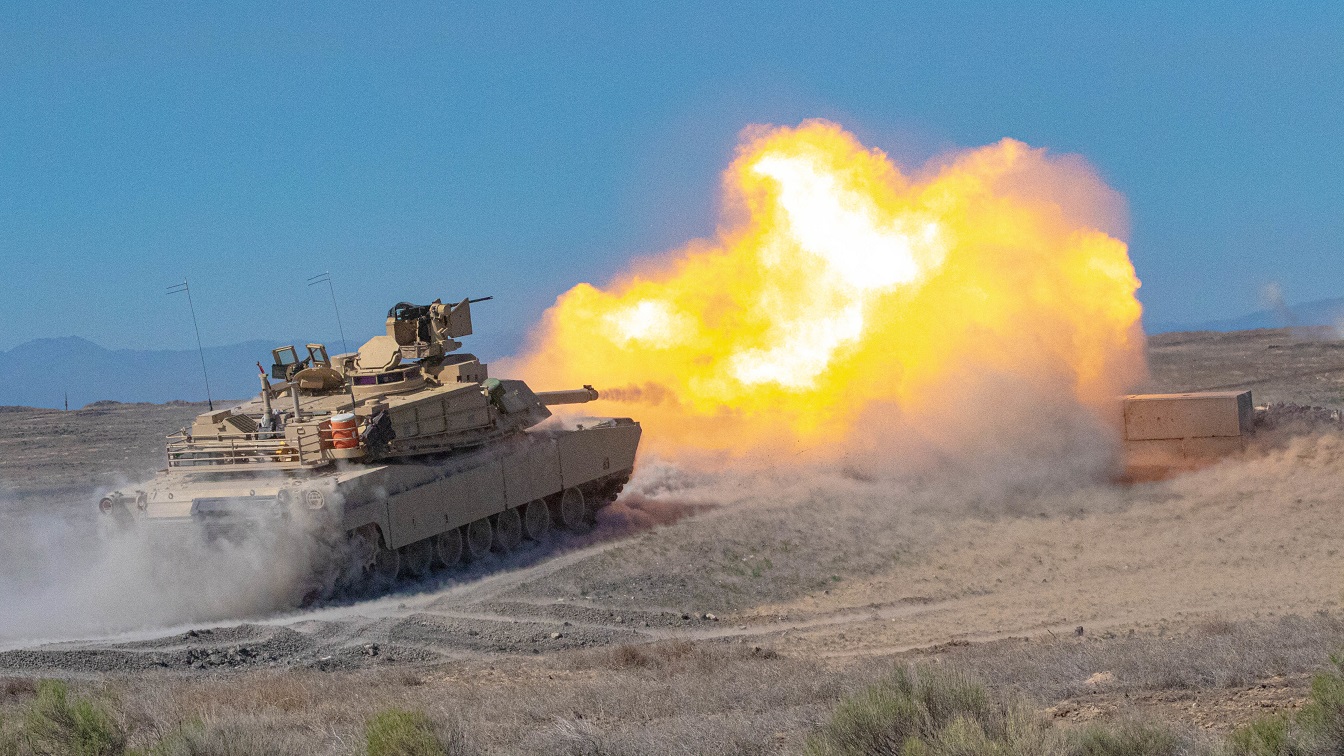
Oregon Army National Guard M1A2 Abrams battle tank with Alpha Troop, 3rd Squadron, 116th Cavalry Regiment, engages a target at a firing range during annual training at the Orchard Combat Tranining Center near Boise, ID, June 19, 2021. Soldiers trained in their military occupational specialties during annual training. (National Guard photo by Spc. Dominic Trujillo, 115th Mobile Public Affairs Detachment)
The tank’s armament includes the standard 120mm XM256 smoothbore gun, along with M2 .50-caliber and M240 7.62mm machine guns.
The M1A2T is produced by General Dynamics Land Systems in Lima, Ohio. The final batch of the $2.2 billion contract was delivered early this year.
However, the Abrams M1A2T models initially delivered to Taiwan reportedly lack the Trophy Active Protection System (APS), which is designed to intercept incoming missiles and drones, leaving them more vulnerable than US Army variants.
Taiwan is integrating the Abrams with other forces that possess counter-drone capabilities, including anti-drone electronic warfare, to create a protective bubble. Taiwan is planning on using the “Urban Resilience” strategy. The strategy is shifting toward hiding or using tanks within cities to protect critical infrastructure, rather than relying solely on exposed beach “tank-on-tank” combat.
ASPI Lists Additional “Dead Weights”
In addition to the new Abrams tanks, Taiwan’s military also operates hundreds of older M60A3 and CM-11 tanks. Axe pointed out, again using Ukraine as an example, that self-propelled howitzers such as the American M109 and the M110 are extremely vulnerable to FPV drones that target any kind of armored vehicle.
He argues for smaller towed artillery pieces that are easier to conceal in dugouts or in wooded areas, and that the larger self-propelled guns are far less cost-effective.
Helicopters have been largely pulled from front-line service in Ukraine due to the plethora of the advent of cheap interceptor drones, designed to collide with other drones and crewed aircraft, making them extremely vulnerable in modern warfare.
Axe wrote that the US is cutting its attack helicopter fleet and is buying more unmanned drone systems.
Taiwan has 120 attack and armed observation helicopters in its military, but it doesn’t plan to purchase any more helicopters and hasn’t yet decided to purchase drones.
The M1A2T Abrams could bolster Taiwan’s defenses if it is used correctly and the Army uses an integrated defense system that includes robust counter-drone capabilities, infantry support, and camouflage.
But if and when the Chinese invade, they will be using their Type 100 tanks. The PLA plans to use attack and transport helicopters (like the Z-20 and Z-10) in the opening waves to deploy special forces and paratroopers.
The goal is to capture key airfields, neutralize command centers, and paralyze Taiwanese defenses. And they, too, will be vulnerable to interceptor drones.
About the Author: Steve Balestrieri
Steve Balestrieri is a National Security Columnist. He served as a US Army Special Forces NCO and Warrant Officer. In addition to writing on defense, he covers the NFL for PatsFans.com and is a member of the Pro Football Writers of America (PFWA). His work was regularly featured in many military publications.