
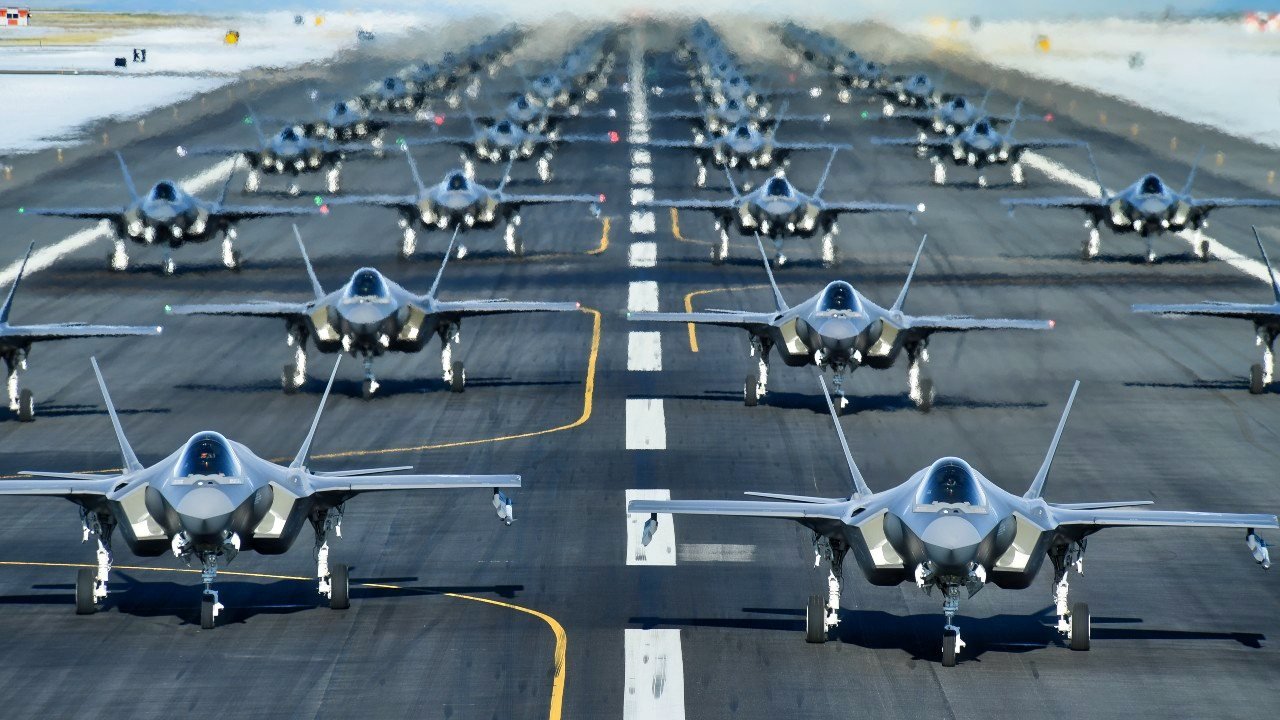
Summary and Key Points: Canada signed a 2023 program for 88 Lockheed Martin F-35A fighters, with the first jet due at Luke Air Force Base later this year and Canadian delivery expected in 2028. A government review has kept the door open to a mixed fleet that would add Saab’s Swedish-built Gripen, and Saab’s position strengthened when NATO announced negotiations for up to ten more of its GlobalEye aircraft at the July summit in Ankara. Supporters point to Gripen’s lower cost per flying hour and its Canadian industrial benefits. The harder question is whether Ottawa can fund two separate training, maintenance, and supply systems at once.
Canada’s F-35-Gripen Idea Isn’t Crazy. Ottawa’s Budget Discipline Is the Real Question
A Canadian fighter fleet built around both the F-35 and the Saab Gripen is not a foolish idea. It is a demanding one, and nothing in Ottawa’s recent behavior suggests the government is prepared to meet the demand. That gap is what this argument is actually about, more than anything Lockheed Martin or Saab is currently saying in public.
Start with the logic because it exists. The F-35 is built for the high-end fight: NORAD integration, coalition strike packages, missions where stealth and sensor fusion matter because the alternative is showing up with the wrong airplane against the wrong adversary.
The Gripen was built for a different problem. Saab has marketed it for years as a dispersed, road-capable fighter, something you can fly off a stretch of highway rather than a hardened base, which sounds almost quaint until you remember a hardened base is exactly what an adversary would target first.
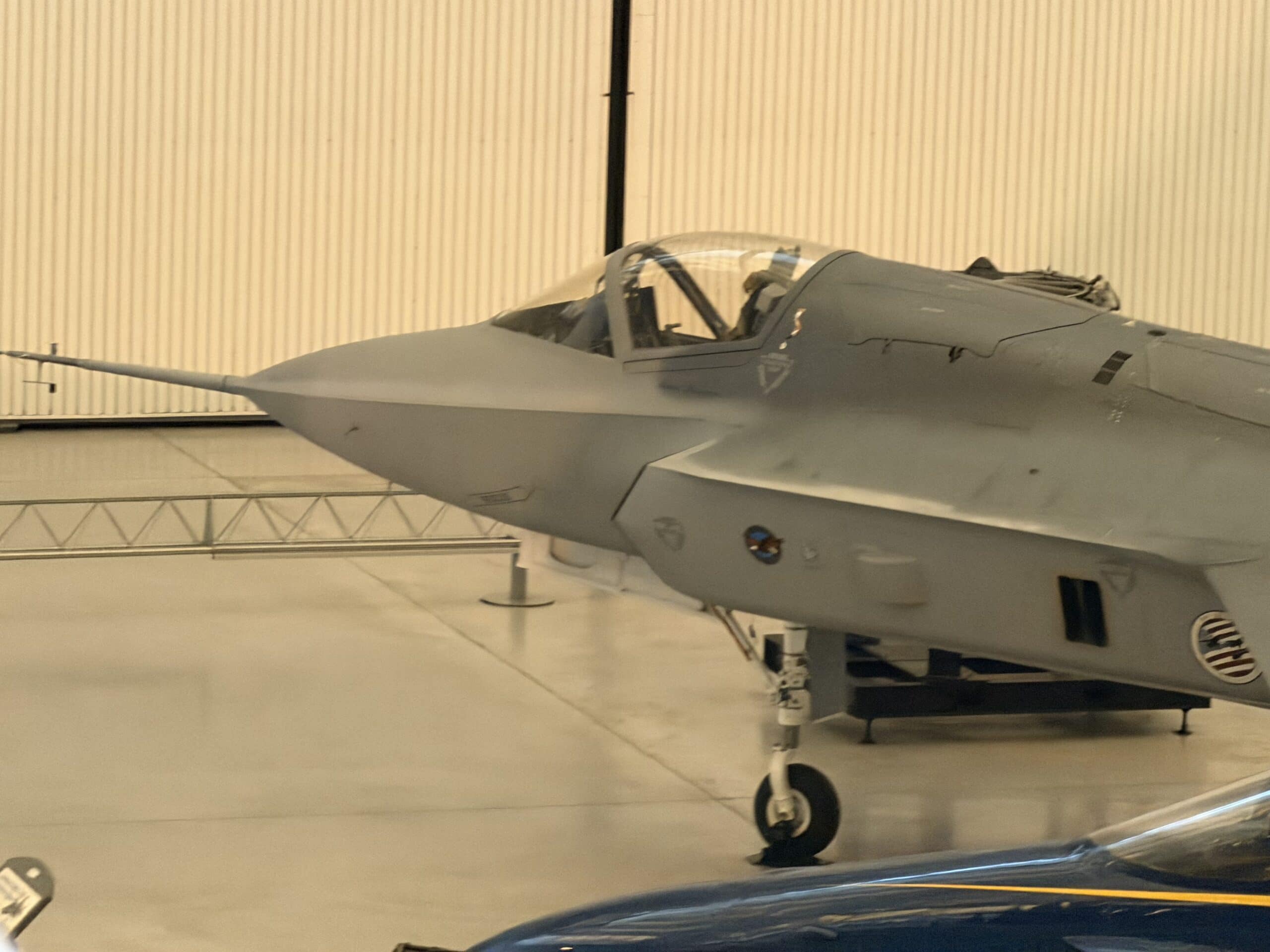
F-35 at the Smithsonian. Image taken on 7/8/2026 by 19FortyFive Staff.
Give those two aircraft different jobs, and Canada has something close to a coherent air force.
Use the Gripen mainly to soften the F-35 bill, and Canada gets two smaller fleets that add up to less than either one alone would have provided.
The Review Everyone Keeps Insisting Isn’t a Reopening
Officially, Canada is still committed to the 88-aircraft F-35A program signed in 2023.
The first jet is due at Luke Air Force Base later this year, with delivery to Canadian soil penciled in for 2028. Ottawa describes this as central to sovereignty, to NORAD, to the NATO relationship, a language governments generally reach for when a decision has not, in fact, been finalized.
Defense Minister David McGuinty told Reuters in April that the F-35 review was continuing and that other jets from other countries remained on the table. He also said something more revealing: Ottawa has already legally committed funds for the first sixteen aircraft.
So this was never a clean start between two competing airplanes. It is a question of how much of an existing, partly funded program Canada keeps, shrinks, or bolts a second airframe onto. The same reporting linked the review to Prime Minister Mark Carney’s unease about how dependent Canadian defense procurement has become on one American supplier, a worry that is real and, conveniently, flexible enough to justify almost any outcome Ottawa lands on.
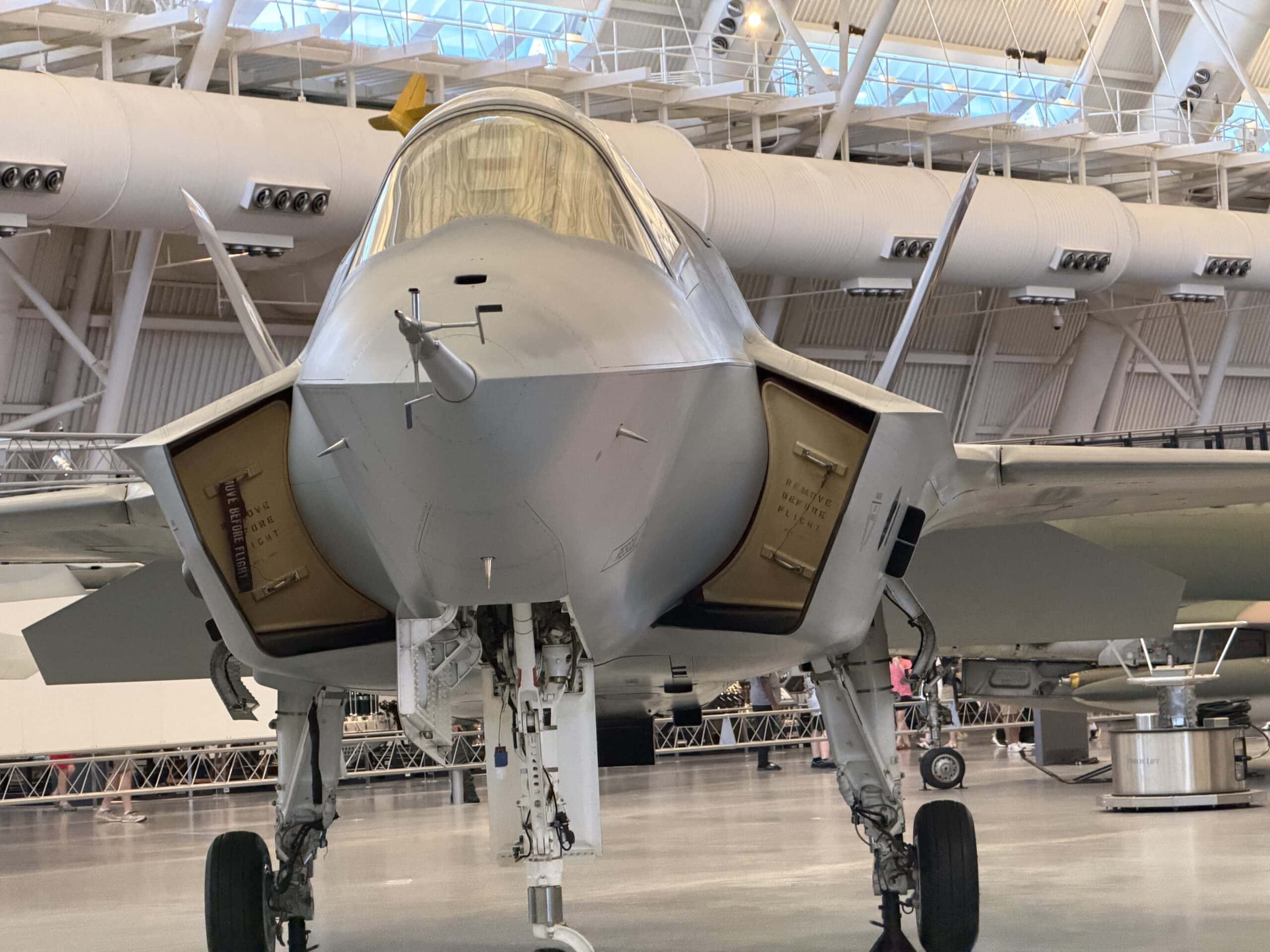
F-35 at the Smithsonian. Image taken on 7/8/2026 by 19FortyFive Staff.
Saab’s Pitch Got a Lot More Credible This Year
A year ago, the Gripen argument sounded like a grievance from a competition Canada had already decided. It sounds different now. Canada has moved toward Saab’s GlobalEye airborne early-warning aircraft, and on July 7, at the NATO summit in Ankara, the alliance announced negotiations with Saab for up to ten more of them. That does not settle the fighter question. But Saab is no longer showing up in Ottawa as the company that lost last time. It has a live contract relationship running alongside a fighter review that has not closed, and a government hunting for a face-saving way to lean away from Washington has a real supplier to point to instead of a theoretical one.
Two Fleets Don’t Come Cheaper Than One
Here, the arithmetic gets less forgiving. A mixed fleet is not one training pipeline with a cheaper airplane added on the side. It means two training systems, two maintainer workforces, two simulator ecosystems, two weapons-integration efforts, two spare-parts chains, and two readiness models, running side by side for as long as both types stay in the inventory.
Gripen’s cost per flying hour genuinely is lower than the F-35’s, and Saab is not wrong to say so. That number matters less once you account for the cost of standing up two logistics tails rather than one, a figure that does not make it into a press release.
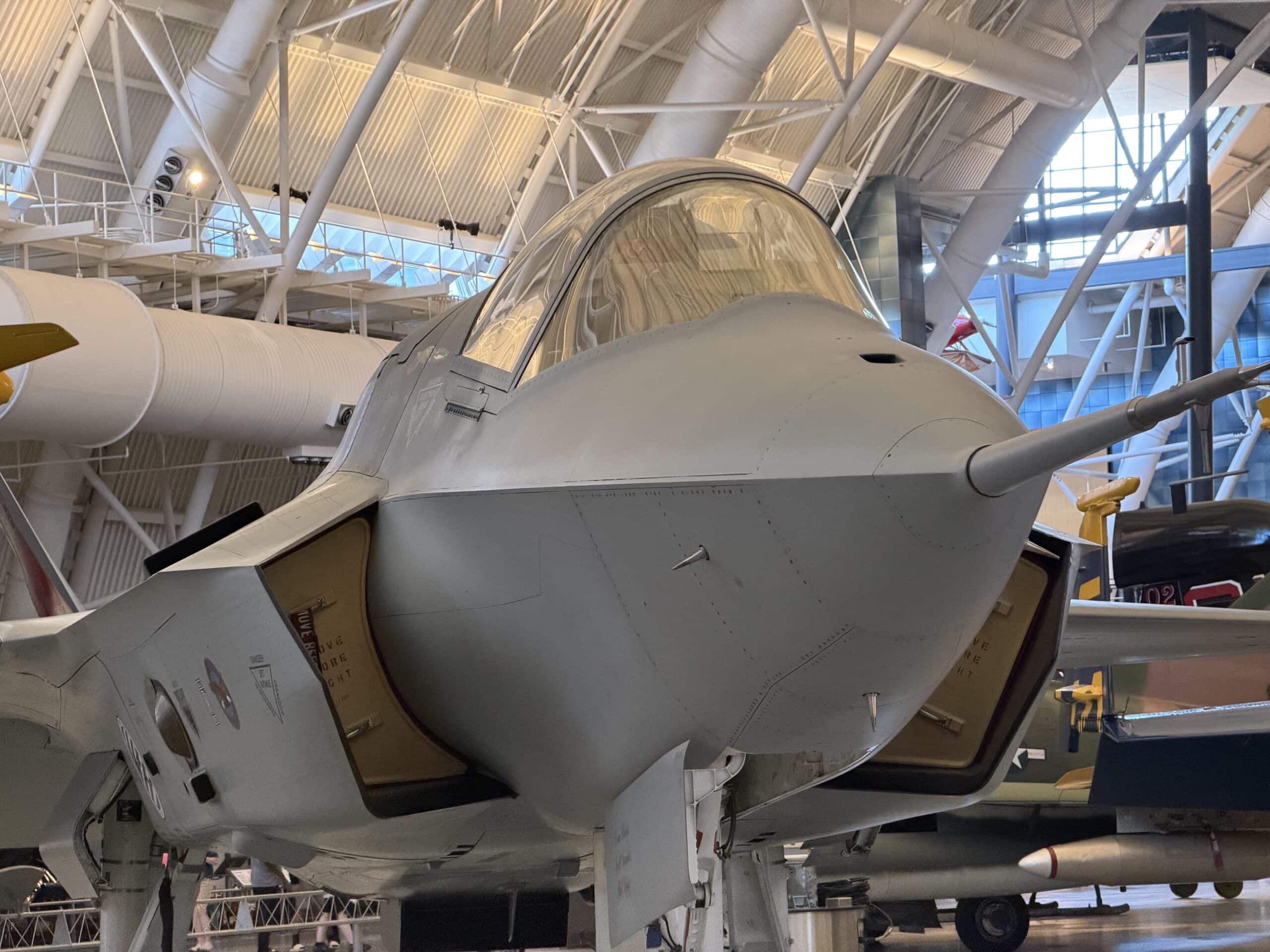
F-35 at the Smithsonian. Image taken on 7/8/2026 by 19FortyFive Staff.
The United States can carry that duplication because it operates at a scale where the overhead disappears into rounding. Canada does not have that luxury. The RCAF has spent years managing a personnel shortage, works with aging infrastructure across the North, and has a procurement history that involves the word “delay” more often than any government would like to acknowledge.
A second fighter type can work, in principle, if Canada buys enough of them, trains enough pilots on both, and funds the parts depots a second logistics chain actually requires. Do the whole thing halfway, and the result is two boutique fleets, with a press release describing the outcome as sovereignty.
Industrial Policy Isn’t the Problem. Mistaking It for Strategy Is.
Saab leans hard on its Canadian materials: jobs, domestic assembly, offsets, and a later industry push tied a combined Gripen-and-GlobalEye package to a considerably larger employment number. Nothing dishonest there. Industrial base and supply chain depth are legitimate concerns, not window dressing in a procurement pitch. The trouble starts when those benefits get treated as a substitute for an airpower concept rather than a bonus attached to one. Ottawa has a long habit of solving domestic political problems through defense contracts and then calling the result grand strategy, and nothing here suggests this debate breaks that habit rather than extends it.
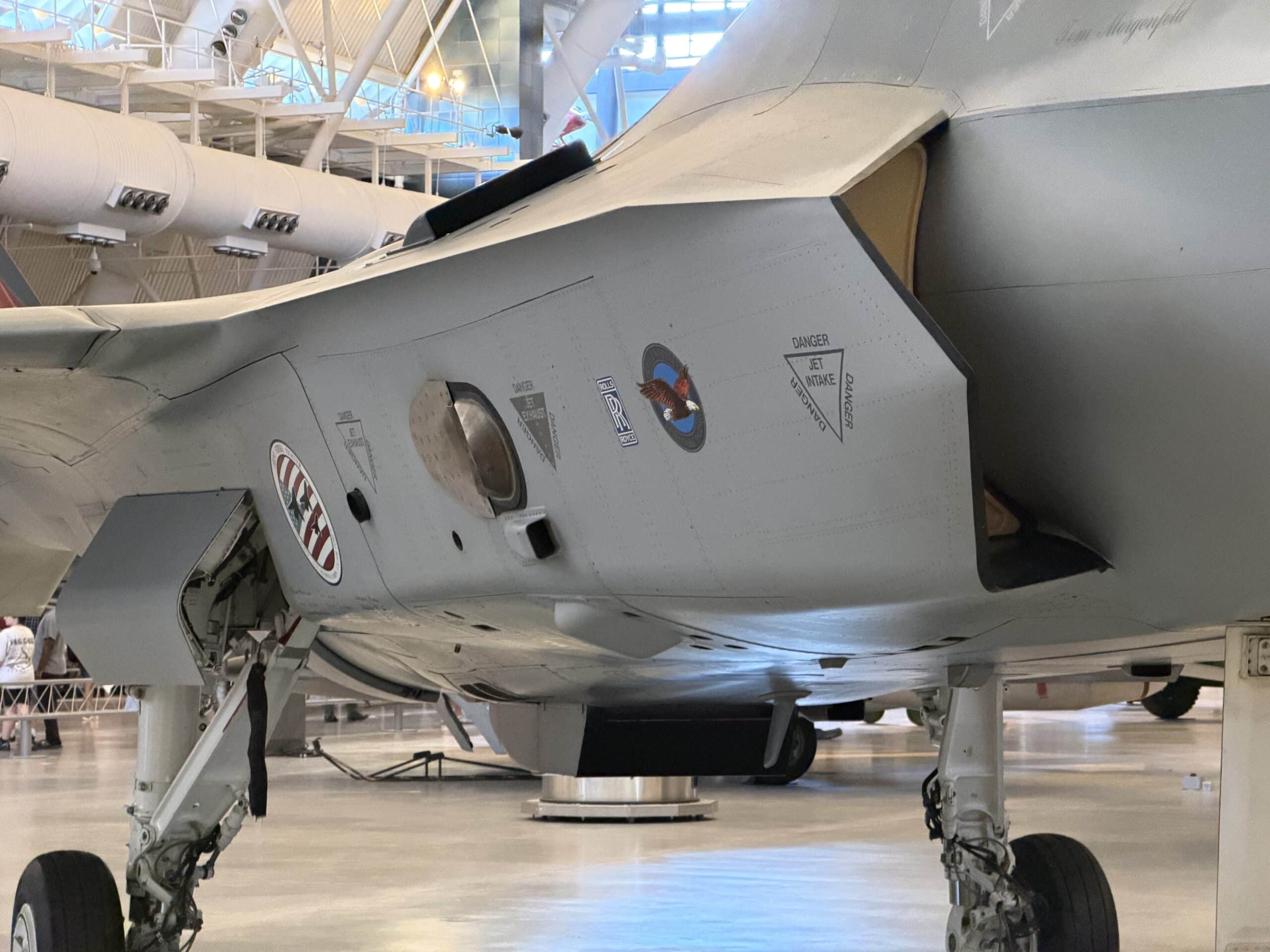
F-35 at the Smithsonian. Image taken on 7/8/2026 by 19FortyFive Staff.
There is also a strategic-autonomy version of the argument circulating, and it deserves a straightforward answer.
Buying Gripens will not make Canada independent of the United States. Geography does not move. Continental air defense, NORAD data-sharing, and wartime coordination will keep running through Washington no matter which airframe sits in a hangar at Cold Lake. If the underlying worry is really American reliability, the more serious responses are munitions stockpiles, hardened northern basing, and readiness funding, none of which lends itself to a ribbon-cutting.
The announcement, whenever it lands, will be the easy part: a government standing visibly between Lockheed Martin and Saab, looking decisive no matter which way it goes. What actually tests the decision comes years later, in sortie rates nobody watches until a crisis forces the question, and in whether Canada built an air force or found a more expensive way to describe the same old budget compromise.
MORE – Does Canada Need Aircraft Carriers?
About the Author: Dr. Andrew Latham
Andrew Latham is a professor of international relations and political theory at Macalester College in Saint Paul, MN. You can follow him on X: @aakatham.