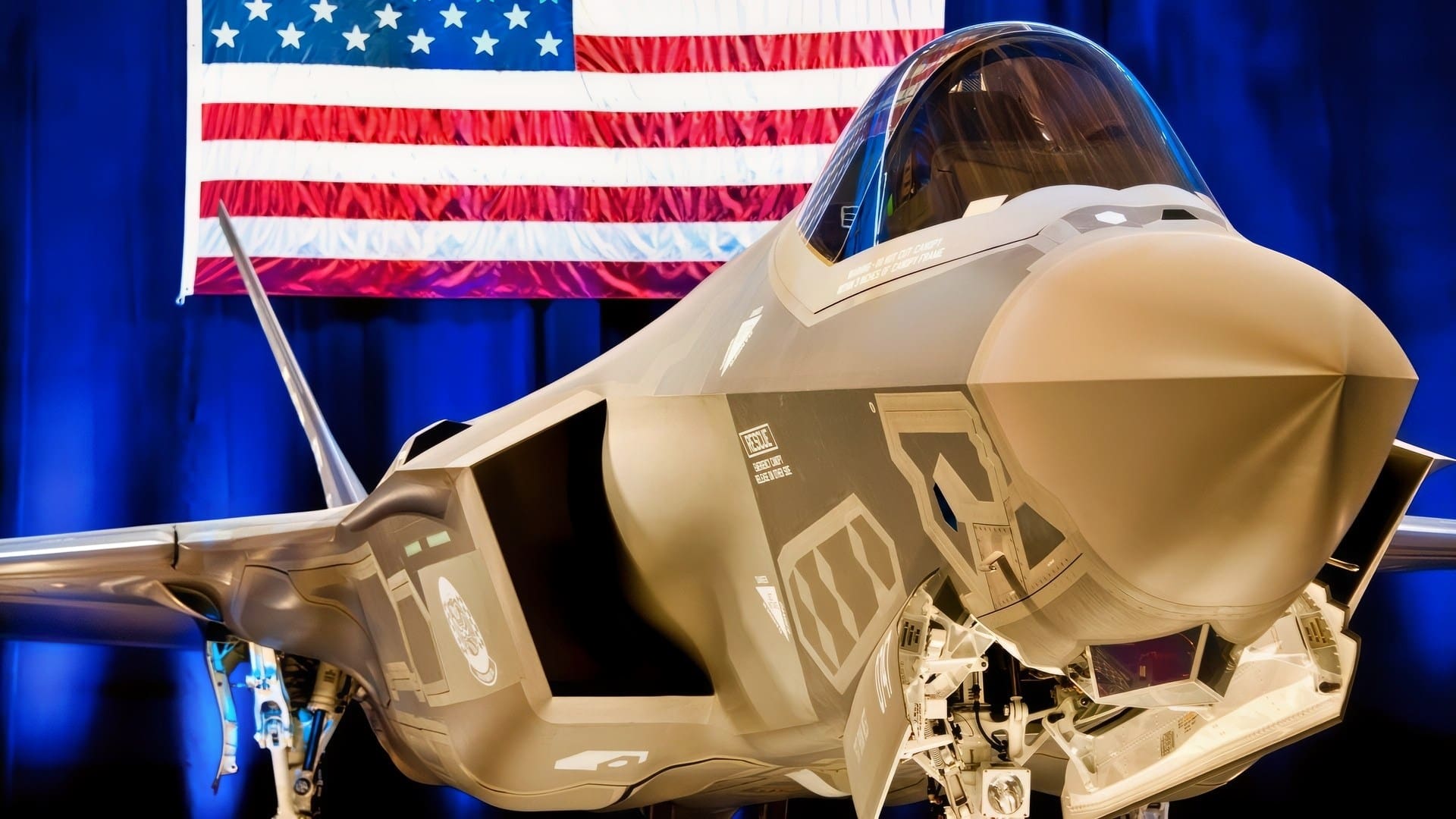
Summary and Key Points: Caleb Larson, a defense journalist, evaluates the escalating tension between Canada and the United States over the F-35 Lightning II procurement.
-Amidst a trade war under President Donald Trump, a leaked Royal Canadian Air Force document shows the F-35A outperformed the Saab JAS 39 Gripen E by a massive margin (95% vs. 33%).
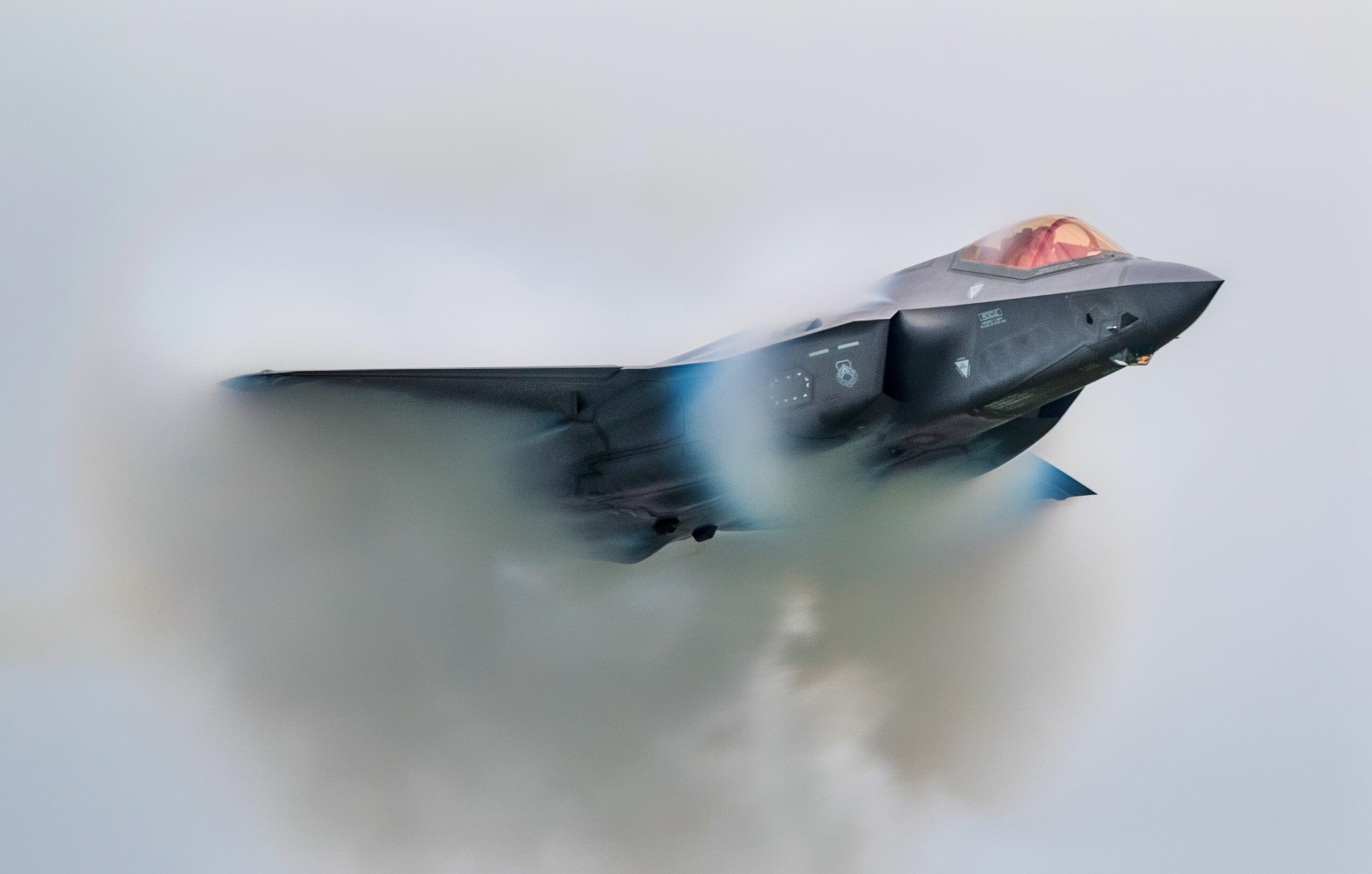
Capt. Andrew “Dojo” Olson, F-35 Demo Team pilot and commander performs aerial maneuvers during the Aero Gatineau-Ottawa Airshow in Quebec, Canada, Sept. 7, 2019. The team consists of 10 Airmen who help showcase the world’s most technologically advanced fifth-generation fighter jet. (U.S. Air Force photo by Senior Airman Alexander Cook)
-This report analyzes Ambassador Pete Hoekstra’s warning that choosing an “inferior product” would force a reassessment of the NORAD early warning agreement.
-Larson concludes that withholding Link 16 encryption could leave a mixed Canadian fleet digitally isolated from NATO partners.
Digital Hardball: Analyzing the U.S. Strategy to Secure Canada’s 88-Jet F-35 Commitment
The latest development in the Canadian-U.S. dustup over Canada’s planned purchase of F-35 fighter jets raises the specter that the United States could withhold a crucial F-35 communications component.
The United States might not allow Canada to use Link 16 if Ottawa chooses to back out of its original F-35 order and purchase Swedish Gripen fighters instead.
Link 16 is a jam-resistant, high-speed, encrypted communications data link used by the United States and other NATO countries to share battlespace information. It facilitates communications across military services that use the link.
Although it is not certain that the United States would withhold the technology from Canada, if the United States’ northern neighbor reduces its reliance on the F-35, it might have to source an alternative communication solution to enable a mixed F-35-Gripen fleet to communicate.
For months, Canada has vacillated on the F-35 question. Buffeted by the trade war prosecuted by U.S. President Donald Trump—the United States is Canada’s number one trade partner—Ottawa has sought an alternative, non-U.S. fighter to replace its aged CF-18 Hornet aircraft.
Those jets, a derivative of the U.S. Navy’s Cold War-era F/A-18 Hornets, are old and need to be replaced.
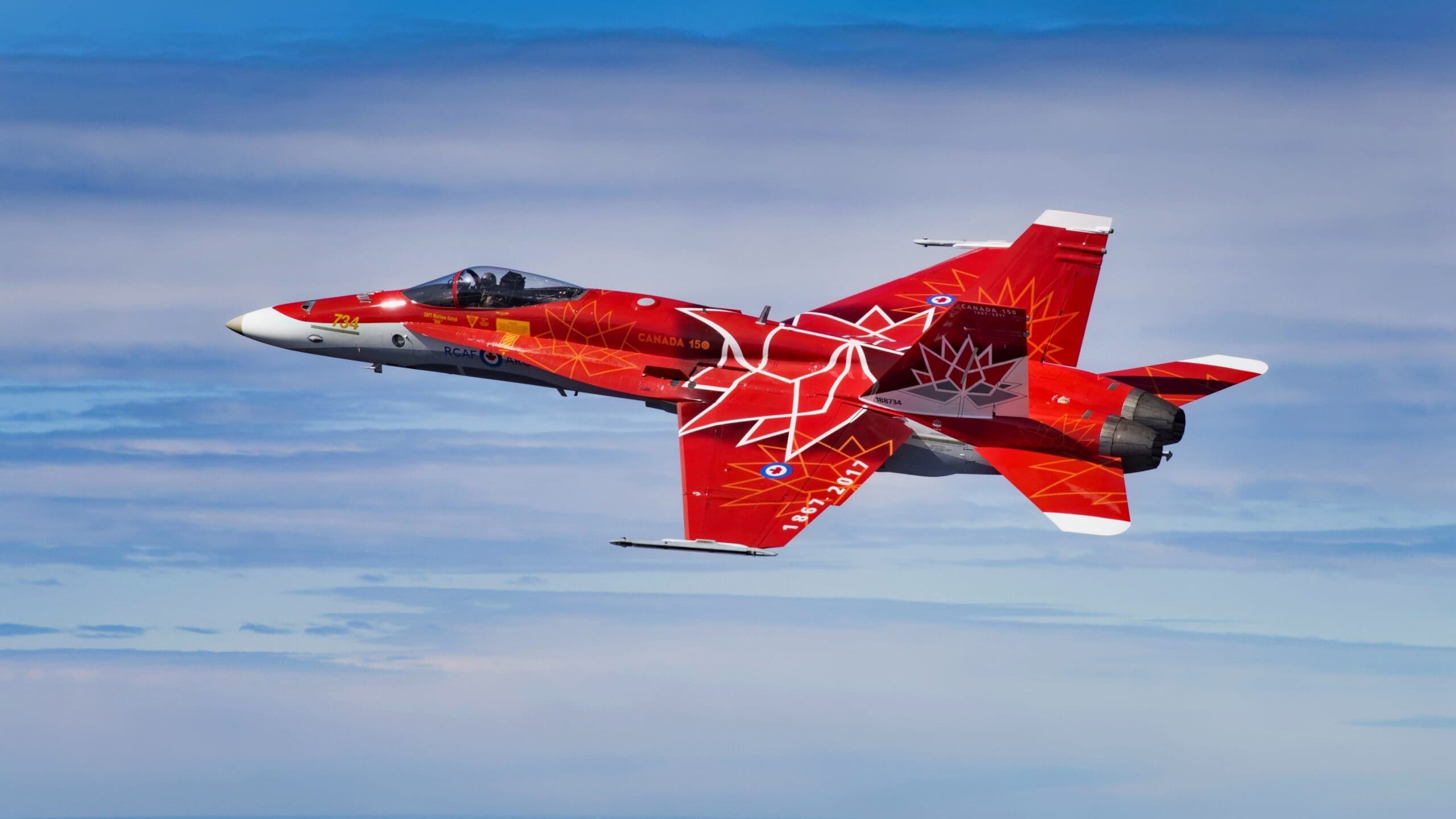
CF-18 Fighter from Canada. Image Credit: Creative Commons.
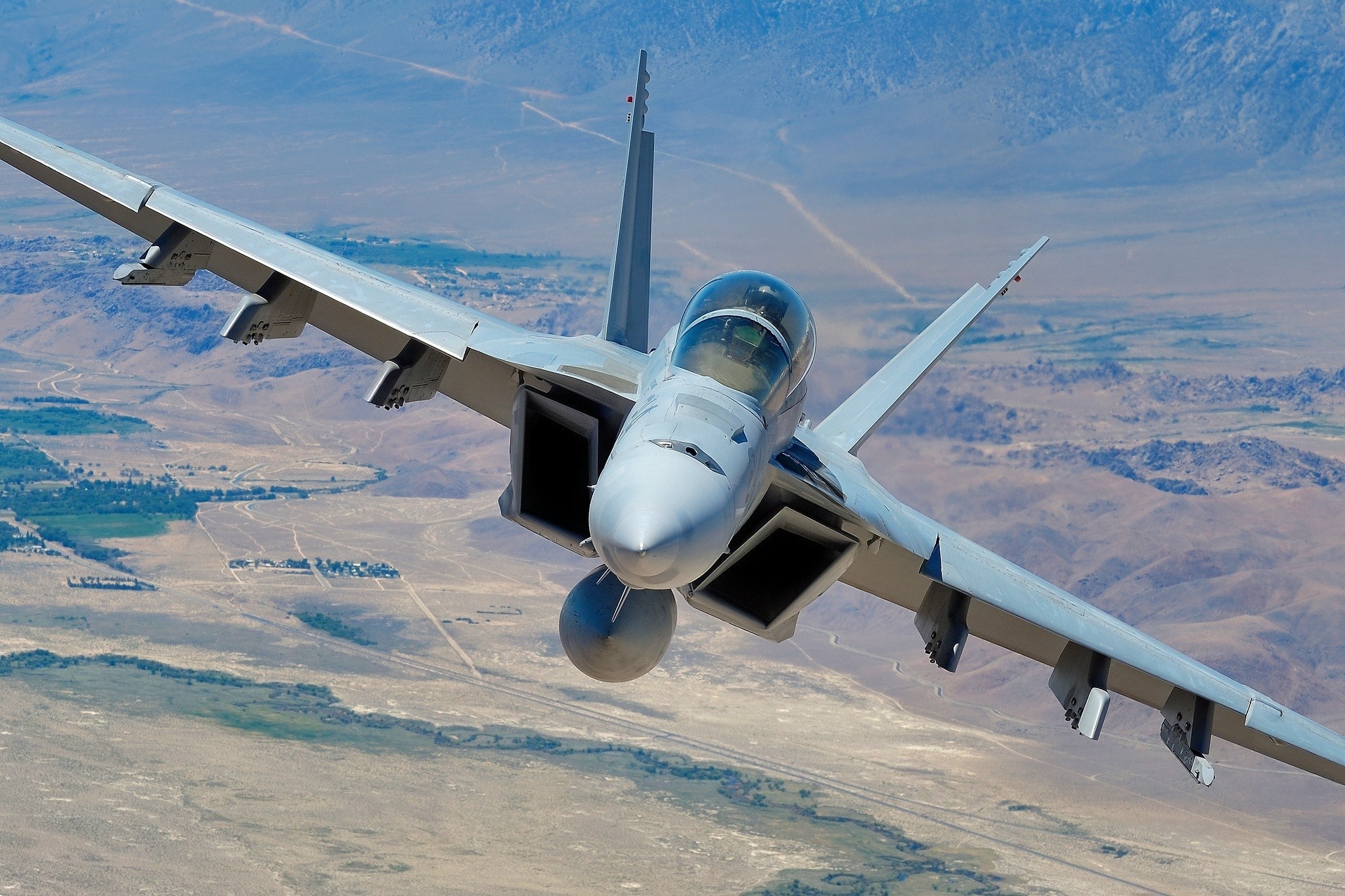
CF-18 Canada. Image Credit: Creative Commons.
Canada originally planned to replace its Hornet fleet with 88 F-35A stealth fighters; it has already paid for an initial tranche of 16 F-35As. But Canadian fury at Trump’s tariff war has caused the country to explore alternative fighter options.
The U.S. ambassador to Canada is not pleased. In comments given to the National Post, Pete Hoekstra said that he was “irritated” by Canadian waffling on the F-35 order. Ambassador Hoekstra waived diplomatic niceties and said “Canada can do what it wants on the F-35, OK?”
“Does it irritate me, personally, that we’re revisiting this issue again? Yeah, it’d be nice to put this one to bed and just move forward,” the ambassador also said, highlighting Canada’s contribution to the F-35 program in years past.
“It would be nice if Canada made a commitment,” Ambassador Hoekstra said. “But if they want to go through another review, they can go through another review.”
Canada is not the only country to sour on the F-35.
Tepid European Interest
Late last year, Spain announced it would not participate in the F-35 program and would instead seek a European solution. Portugal is also looking for a fighter option from the continent, and, like Canada, cited the American president’s damaging trade war as the catalyst for its decision.
Swiss interest in the F-35 cooled as well. Bern was set to buy 36 F-35As for 6 billion Swiss Francs ($7.6 billion) under the terms of an agreement struck with Washington in 2021. But the Pentagon later explained that the sum would not cover the 36-jet order, citing an accounting error. Instead of increasing their financial commitment to cover 36 F-35s, Switzerland instead decided to purchase as many F-35As as their 6 billion Swiss Francs would cover, though it was not immediately clear how many F-35s that is.
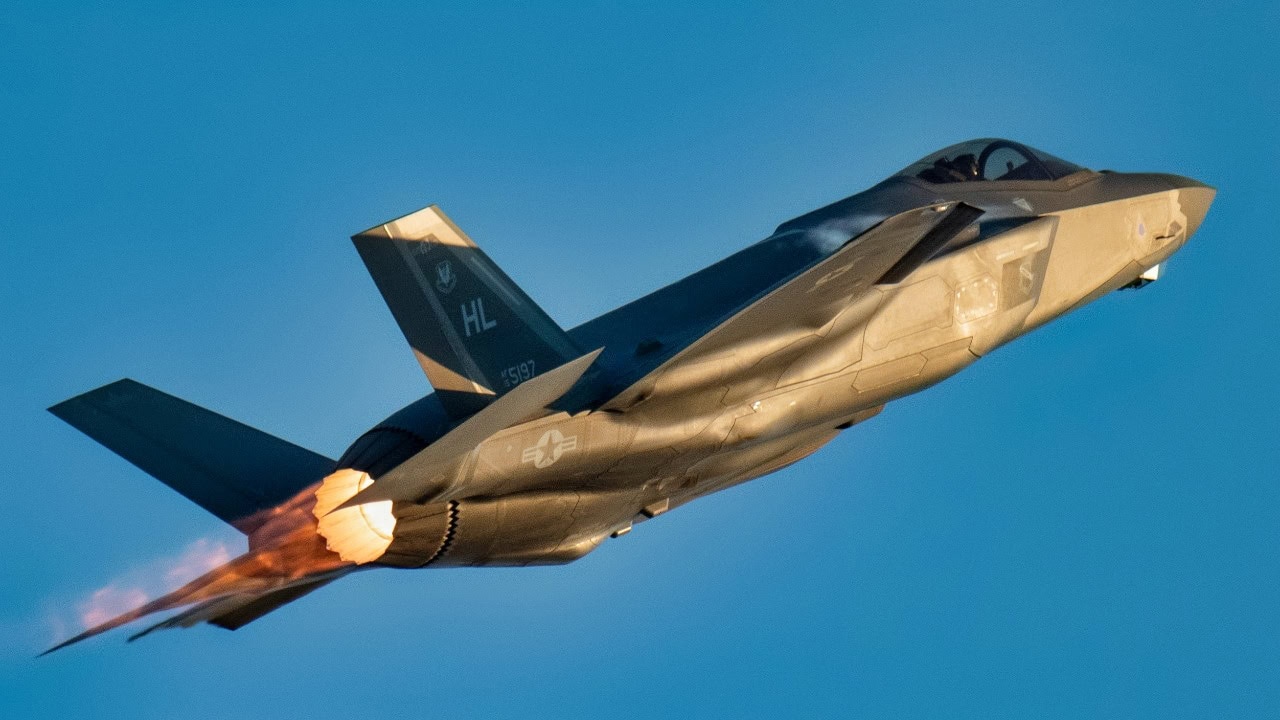
U.S. Air Force Major Kristin “BEO” Wolfe, F-35A Lightning ll Demonstration Team pilot and commander, flies during sunset over Mathers Airport, Calif., Sept. 24th, 2021, at the California Capital Airshow. The team consists of approximately 15 total Airmen to include the pilot and commander, pilot safety officers, superintendent, team chief, maintenance Airmen, aircrew flight equipment specialists, and public affairs personnel. (U.S. Air Force photo by Staff Sgt. Thomas Barley)
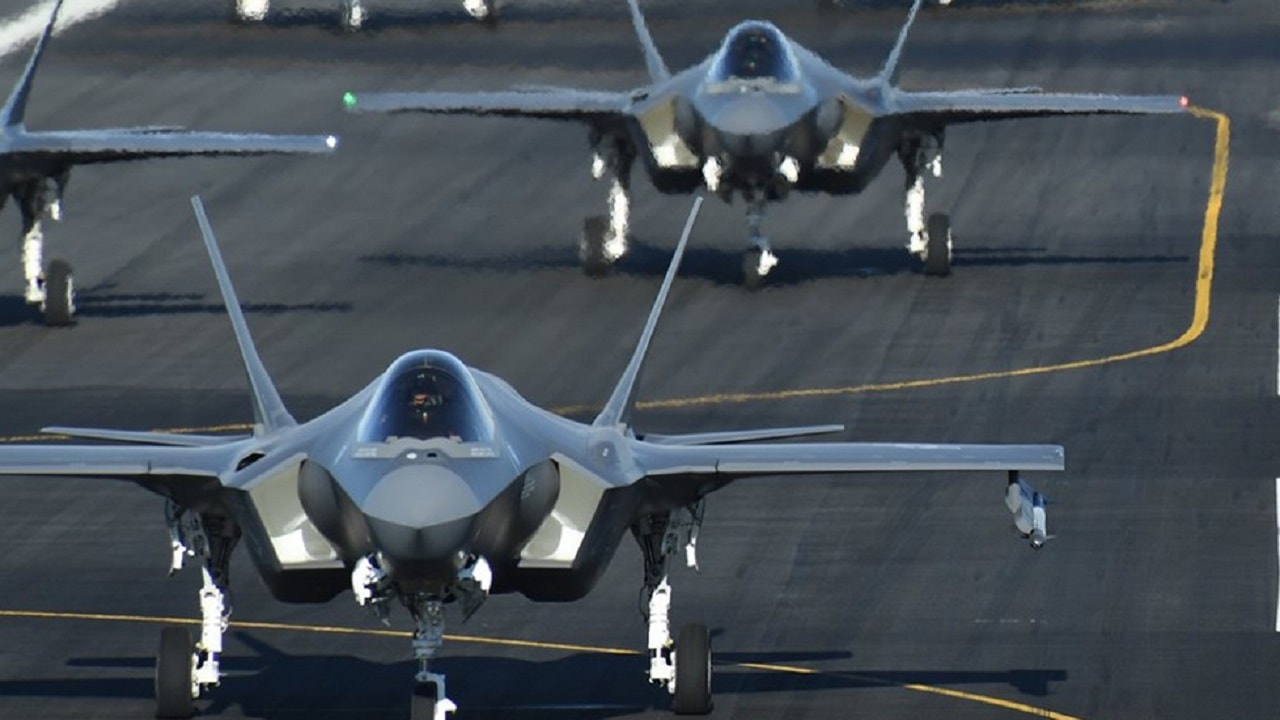
The active duty 388th and Reserve 419th Fighter Wings conducted an F-35A Combat Power Exercise with 52 aircraft at Hill AFB, Utah, Jan. 6, 2020. 388th Fighter Wing photo via Facebook.
Bombshell Document Leak
The debate in Canada heated up significantly after the leak of an internal Royal Canadian Air Force document by CBC News, the Canadian broadcaster. The document was, in a word, a revelation.
The document showed the results of a Royal Canadian Air Force assessment of the F-35A and Sweden’s fourth-generation Saab Gripen E. In every single category in which the two fighters were measured, the American F-35 came out on top—and in some instances by eye-opening margins. Evaluation categories included sustainability, performance, upgradeability, technical criteria, and delivery. While the F-35A did not score all possible points, it did secure 95 percent of the potential points, averaged across evaluation categories. The Gripen E’s average score was a paltry 33 percent, a consequence of its older, non-stealth fourth-generation design.
NORAD, Canada, and the United States
Ambassador Hoekstra jumped into the F-35 fray again, but instead of venting frustration, the ambassador cautioned that the division of labor within the NORAD early warning agreement would have to be reassessed if Canada rejected the F-35. “NORAD would have to be altered,” the ambassador said to CBC News, explaining that if Ottawa chose the less-capable Gripen E, the United States would be forced to plug the resulting capabilities gap by shouldering more responsibility for NORAD response.
“If Canada is no longer going to provide that [capability], then we have to fill those gaps,” the ambassador added. “If they decide they’re going with an inferior product that is not as interchangeable, interoperable as what the F-35 is, that changes our defense capability. And as such, we have to figure out how we’re going to replace that.”
About the Author: Caleb Larson
Caleb Larson is an American multiformat journalist based in Berlin, Germany. His work covers the intersection of conflict and society, focusing on American foreign policy and European security. He has reported from Germany, Russia, and the United States. Most recently, he covered the war in Ukraine, reporting extensively on the war’s shifting battle lines from Donbas and writing on the war’s civilian and humanitarian toll. Previously, he worked as a Defense Reporter for POLITICO Europe. You can follow his latest work on X.