
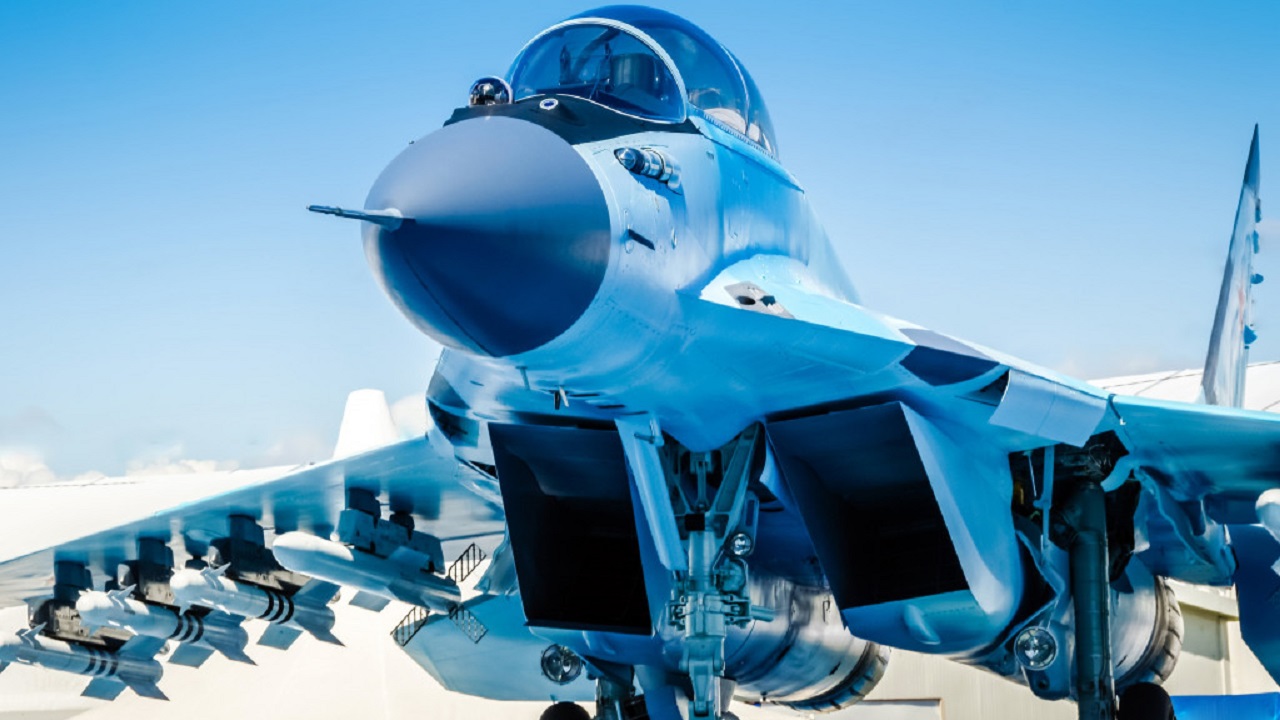
Summary and Key Points: On paper, a MiG-35 against an F-35 sounds like a fair fight between two modern fighters, and in one narrow sense, it is: dragged into a close-in knife fight, Russia’s most advanced Fulcrum is genuinely dangerous, and the F-35 is a mediocre dogfighter by design. But that fight decides nothing, because the F-35 sees the MiG-35 first, shoots first, and never has to let the merge happen. The Russian jet’s one real advantage exists only in an engagement it has no way to force, and that is before you notice Russia has built barely ten of them.
Russia’s MiG-35 Might Actually Out-Dogfight the F-35. It Will Never Get the Chance
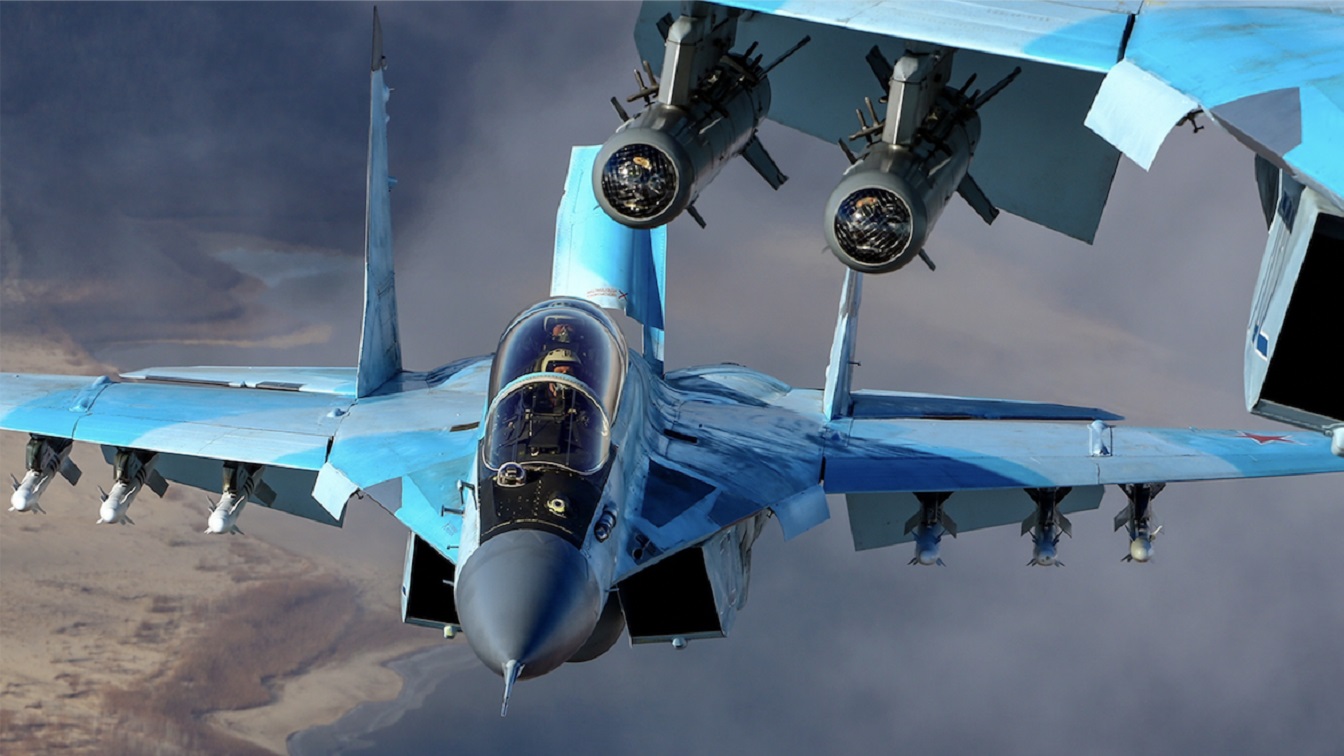
MiG-35. Image Credit: Creative Commons.
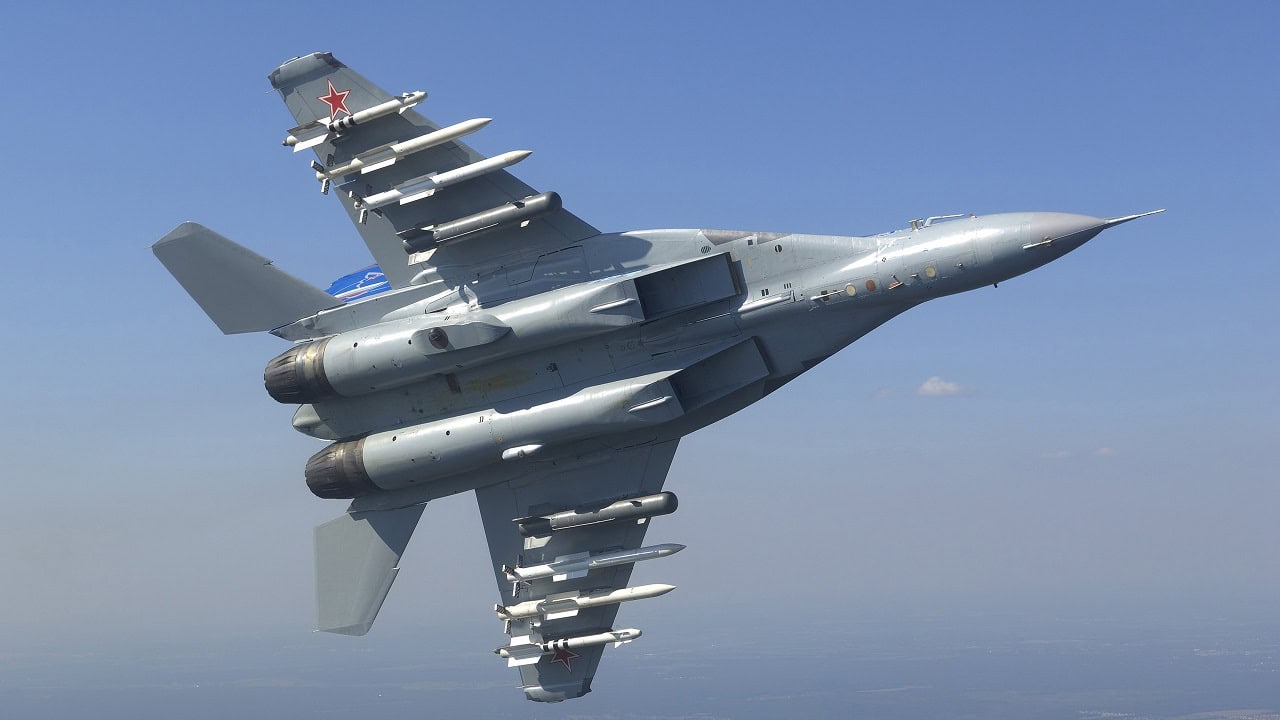
MiG-35 fighter. Image Credit: Creative Commons.
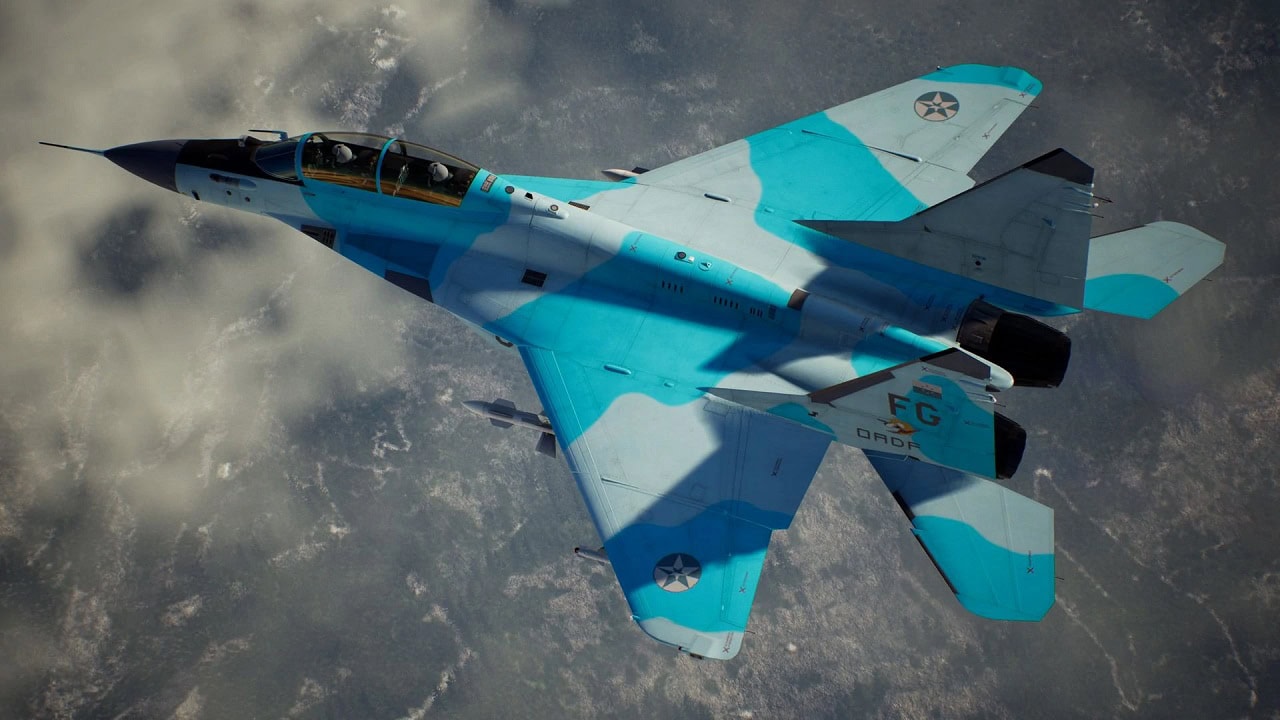
MiG-35. This is a computer generated image for a video game – Creative Commons.
Every so often, the internet stages a duel between Russia’s MiG-35 Fulcrum-F and America’s F-35 Lightning II, two of the most modern fighters their nations build, and asks who would win one-on-one. The honest answer is not a cliffhanger: the F-35 wins, and it wins decisively. But the reason it wins is more interesting than a simple mismatch of numbers, because there is one phase of air combat where the MiG-35 would genuinely hold the advantage, and the entire purpose of a fifth-generation fighter is to make sure that phase never arrives.
Beyond Visual Range: The Fight That Ends Before It Starts
Modern air combat is usually decided long before two jets ever see one another, in the beyond-visual-range duel of radar and long-range missiles, and here the contest is not close. The F-35 is a stealth aircraft: its radar cross-section is a fraction of a conventional fighter’s, and it carries its missiles internally so nothing hangs off the wings to give it away. The MiG-35 is not stealthy at all.
It is a deeply upgraded MiG-29, a 1970s airframe with modern avionics fitted, and it lights up an opposing radar like any other conventional jet. Worse for the Fulcrum, its own radar has been a chronic weakness; India’s evaluation faulted it for failing to reach its advertised targeting range, and sanctions have since left Mikoyan unable to fully modernize the avionics.
Now stack the sensors. The F-35 fuses its APG-81 AESA radar, a ring of infrared cameras, and its electronic-warfare system into a single tactical picture no legacy fighter can match, then shares that picture across a datalink with every other F-35 in the sky, the same sensor-fusion edge that defines the way America now builds fighters.
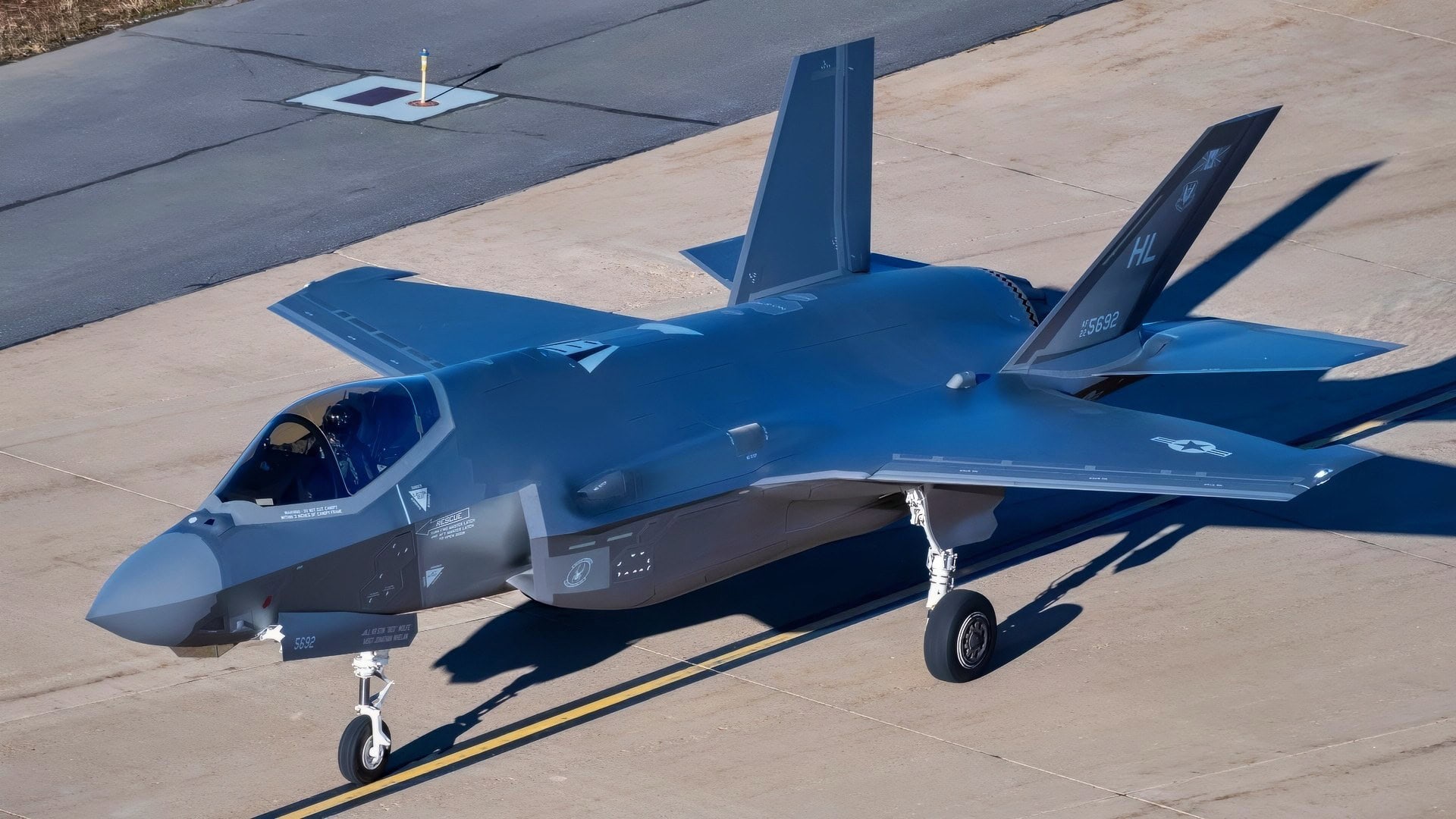
Maj. Kristin “BEO” Wolfe demonstrates the capabilities of the F-35A Lighting II, a single seat, single engine, all-weather stealth multirole fighter aircraft, during a practice flight with the F-35 Demonstration Team at Hill Air Force Base, Utah, Dec. 13, 2023. (U.S. Air Force photo by Senior Airman Jack Rodgers)
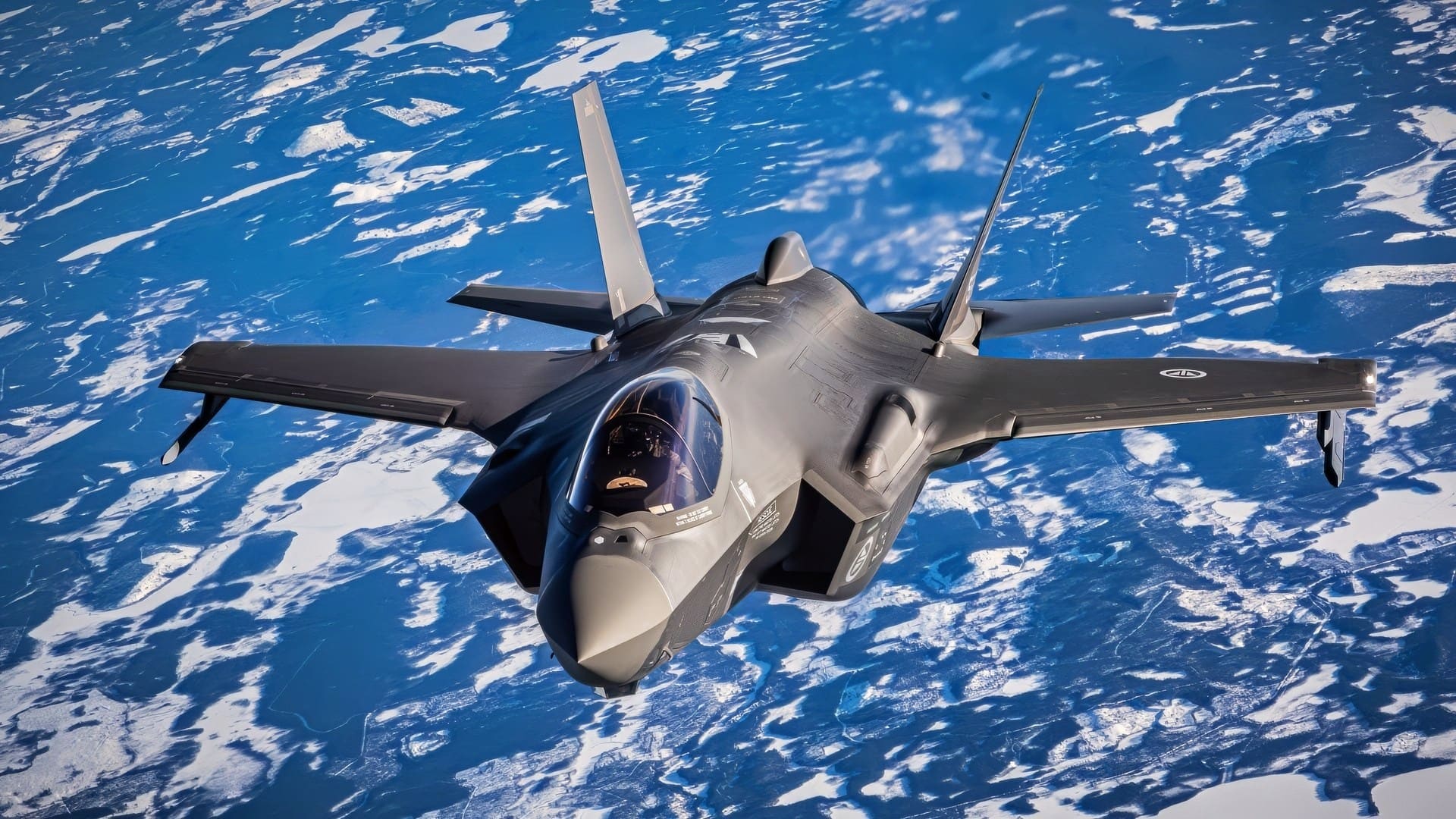
A Norwegian F-35 Lightning II closes the gap to receive fuel from a KC-135 Stratotanker assigned to the 101st Air Refueling Wing during Nordic Response 24, March 11, 2024. The MAINEiacs are staged at RAF Mildenhall, England, to take part in the Norwegian-led exercise taking place in Norway, Sweden and Finland. Exercises like NR24 solidify operational and tactical relationships; synchronizing tactics, techniques and procedures; and strengthen bonds among U.S., Norwegian and Allied and partner forces.
In practice, an F-35 detects and identifies the MiG-35 first, launches an AIM-120 first, and turns away while the missile flies. The MiG-35, still hunting for a lock, would, in most engagements, be destroyed before it ever pinned down the threat’s location. In practice, that makes it less a duel than an ambush; the Fulcrum walks in every time.
The Dogfight: Where the Fulcrum Finally Bites
Force the two jets close together, into the swirling, high-G knife fight of within-visual-range combat, and the picture genuinely changes.
The MiG-35 is light, powerful, and agile. Its twin RD-33MK engines give it abundant thrust against a relatively low weight; it can point its nose hard at high angles of attack, and it inherits the raw dogfighting pedigree of the MiG-29, one of the finest close-in fighters of its generation. It carries the R-74 Archer, a high-off-boresight infrared missile that the pilot can cue with a helmet sight to engage targets 60 degrees off the nose, backed by an infrared search-and-track sensor for quiet hunting at close range.
The F-35 was never built to turn. It has no thrust-vectoring, a relatively high wing loading, and a thrust-to-weight ratio that slips below one-to-one when loaded, all of which leave it a middling energy fighter, outclassed in a pure turning contest even by some fourth-generation jets. If the entire question were which jet wins a low-speed turning duel, the MiG-35 would have a real and defensible claim.
Why the Knife Fight Is Closer to Mutual Suicide
The knife fight, though, is not the turning contest the lazy version imagines. A dogfight in 2026 no longer turns on who can point their nose first, because both fighters carry all-aspect, high-off-boresight missiles cued by helmet-mounted sights that let a pilot shoot at a target the aircraft is not pointing at.
The F-35 may be a poor dancer, but it is a lethal shooter: its distributed infrared cameras give the pilot a seamless 360-degree view, the ability to look through the airframe and cue an AIM-9X at a jet above, beside, or behind it — without out-turning anyone.
When both aircraft can kill off-boresight the moment they merge, the realistic outcome of a close fight is not a clean Russian victory but a mutual bloodbath from which neither jet is likely to emerge alive. And the MiG-35, contrary to a common misconception, does not carry the Su-35’s three-dimensional thrust-vectoring engines as standard equipment; its edge in agility is real, but narrower than its reputation suggests.
So even the one phase that favors the Fulcrum is closer to a coin flip than a Russian win.
The F-35 Chooses the Fight
The defining trait of a stealth fighter is not that it cannot be out-turned; it is that it dictates the terms of every engagement. Because the F-35 sees the MiG-35 long before the reverse becomes true, the American pilot decides whether a merge ever happens. Faced with a Fulcrum, the F-35 kills it at range and goes home, and if it has reason to avoid a close fight, it has every ability to refuse one.
The MiG-35’s single genuine advantage lies entirely within a scenario the F-35 will never voluntarily enter, and the MiG-35 has no means to compel it. It is the better knife-fighter in a duel that never starts on its terms.
The Fighter That Barely Exists
There is a final, almost absurd wrinkle. For this matchup to mean anything, the MiG-35 would have to be in numbers, and it essentially isn’t. Russia’s air force ordered 24 in 2017, with deliveries promised by 2027, but fewer than 10 have been built; every attempt to sell it abroad has collapsed, with Egypt buying the older MiG-29M2 instead and India walking away.
Mikoyan has announced a production restart that outside engineers openly doubt, given sanctions and the demands of the war in Ukraine. One former Mikoyan engineer dismissed it as a fighter without a market. Against it stands the F-35, more than 1,100 of which have been built and which fly with a dozen-plus air forces. Russia’s supposed answer to the F-35 is a fighter Russia itself has declined to buy in any real quantity.
Put the two in the ring, and the verdict is lopsided. The F-35 wins nearly every time, not by dancing better but by ensuring the dance never happens.
The MiG-35 keeps the one thing its designers did brilliantly: a light, agile airframe that would be a nightmare at knife-fighting range, and it never gets to use it because a stealth fighter’s whole job is to win the fight before the knives come out. The Fulcrum might well out-dogfight the Lightning, but it will never get the chance to try.
About the Author: Harry J. Kazianis
Harry J. Kazianis (@Grecianformula) was the former Senior Director of National Security Affairs at the Center for the National Interest (CFTNI), a foreign policy think tank founded by Richard Nixon based in Washington, DC. Harry has over a decade of experience in think tanks and national security publishing. His ideas have been published in the NY Times, The Washington Post, The Wall Street Journal, CNN, and many other outlets worldwide. He has held positions at CSIS, the Heritage Foundation, the University of Nottingham, and several other institutions related to national security research and studies. He is the former Executive Editor of the National Interest and the Diplomat. He holds a Master’s degree focusing on international affairs from Harvard University.