
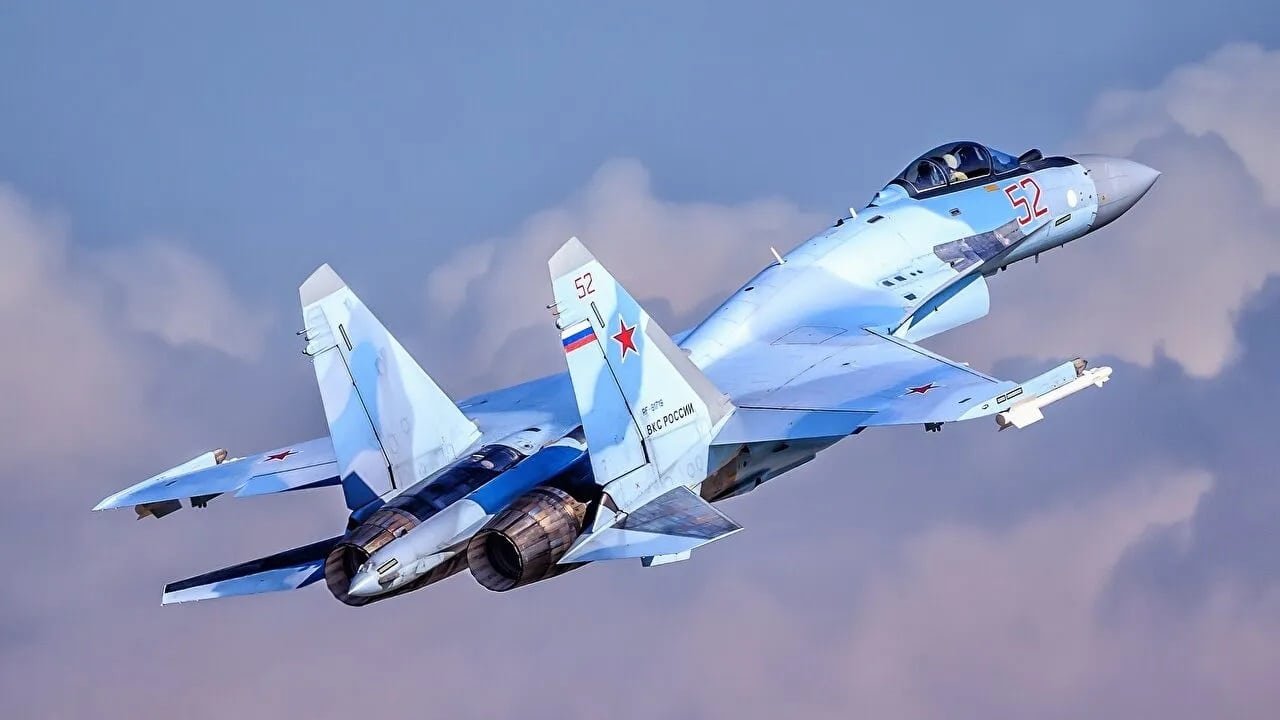
Summary and Key Points: Reports from Russia this month say the factory that builds every Russian Su-35 has finished the first 20 of 48 jets promised to Iran, and that Russia’s own air force will now wait years longer for new fighters as the export order takes priority. Behind that trade sits a harder problem: one factory, a proven output of about 20 fighters a year, and a stack of promises to Tehran, Algiers, and Moscow’s own squadrons that the arithmetic struggles to cover. The fighter nobody wanted for a decade is suddenly oversubscribed, and the customer pushed to the back of the queue is Russia itself.
Russia’s Su-35 Has a New Problem: An Introduction
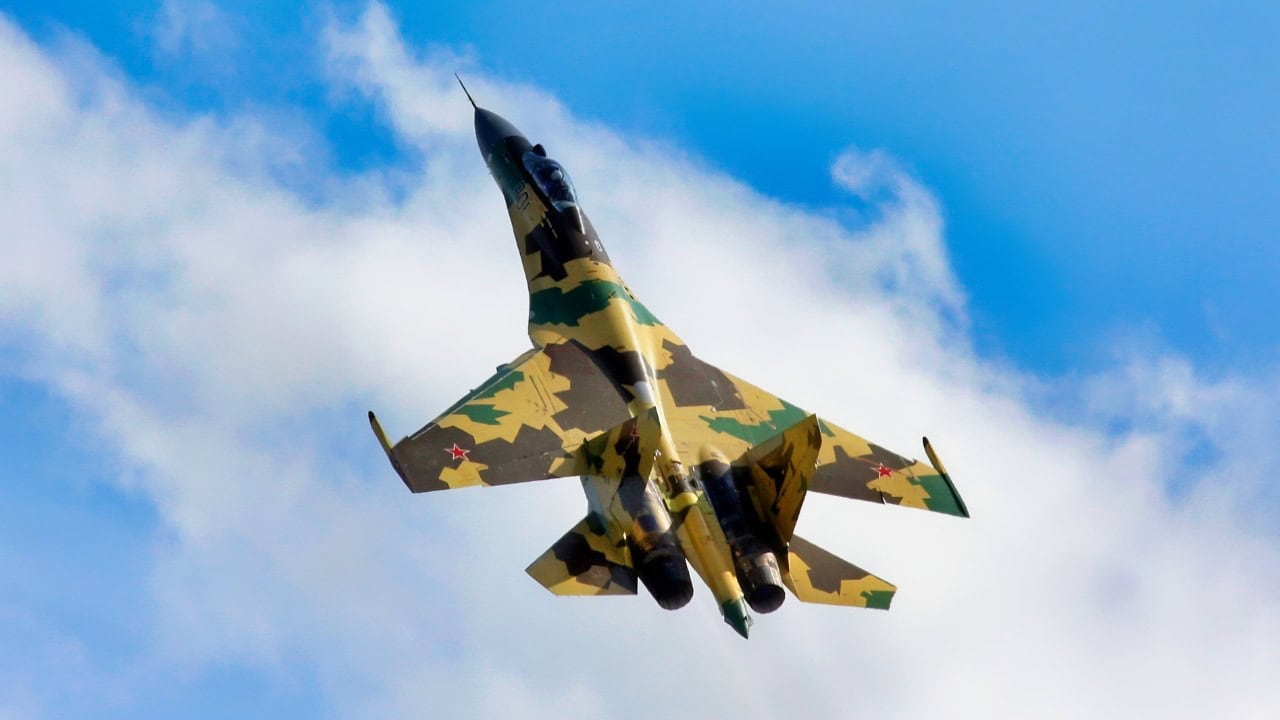
Su-35 Fighter from Russia.
Russia’s air force is about to start waiting for its own fighter jet. According to reporting this month, carried by outlets including the Kyiv Post and originating with defense trade press, the Komsomolsk-on-Amur Aviation Plant in Russia’s Far East has completed the first 20 of 48 Su-35s ordered by Iran, with the jets held in Russia while Tehran pays their upkeep, and deliveries to Russia’s own Aerospace Forces are expected to slow for the next two to three years as the export order is prioritized.
Neither Moscow nor Tehran has officially confirmed the production milestone. But the underlying shift it describes, Russia putting a foreign customer ahead of its own air arm in wartime, is consistent with everything else visible in the order book, and the numbers behind it tell a story about Moscow’s priorities that the headline only hints at.
One Factory, Everyone’s Fighter
Start with the physical constraint. Every Su-35 ever built has come from one facility, the Komsomolsk-on-Amur plant, which also handles the entire production run of Russia’s Su-57 stealth fighter. Its proven output is modest.
Before 2022, the line turned out roughly 14 Su-35s a year. The Royal United Services Institute’s production tracking found the plant delivered 10 of 12 Su-35s ordered for Russia’s air force in 2024, and Russian aviation sources counted a record of just over 20 in 2025. The plant has added shifts, equipment, and workers, and Russian officials talk of doubling output. The demonstrated number, though, is about 20 airplanes a year, from the one line that everyone is now counting on.
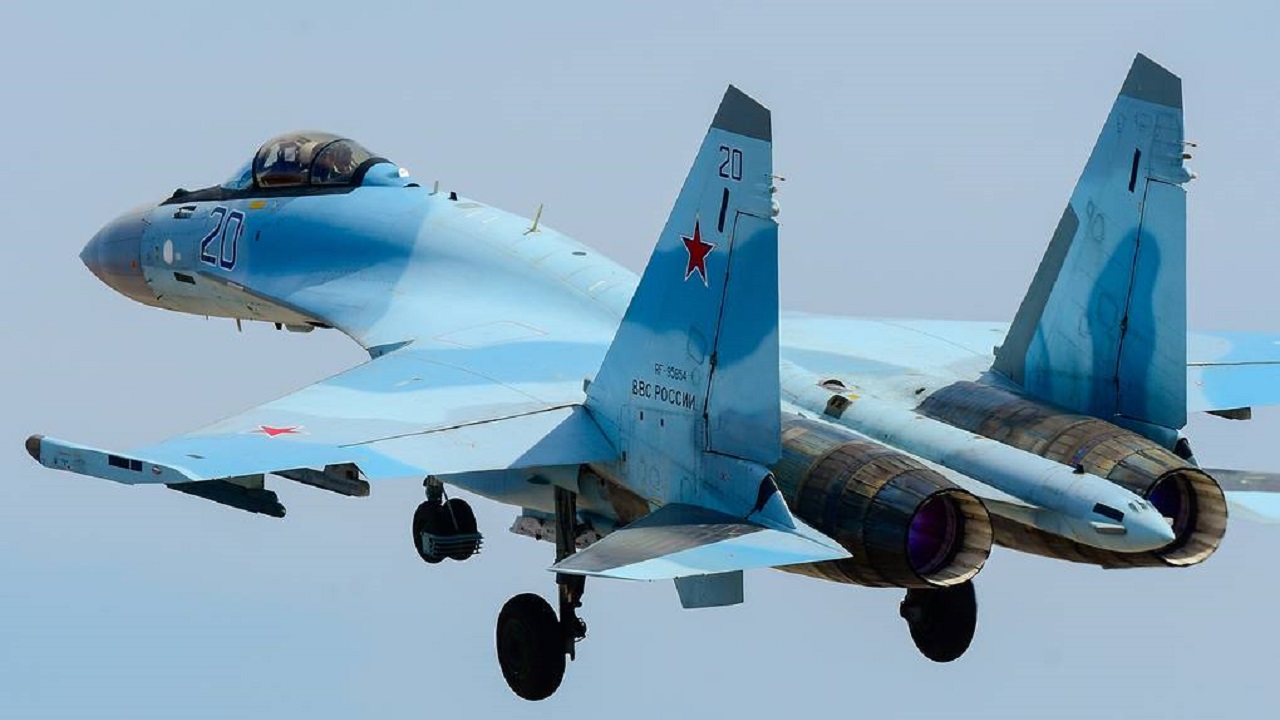
Su-35 over Ukraine. Image Credit: TASS/Russian state media.
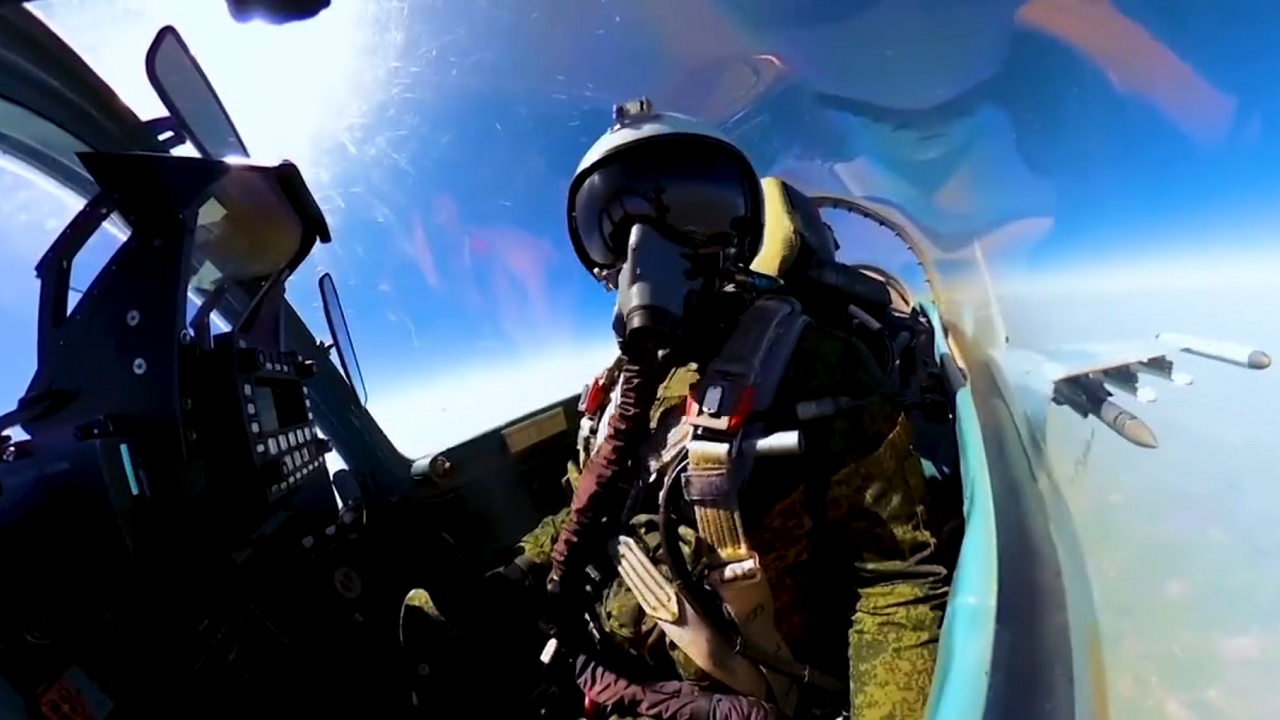
Russia pilot behind the controls of a Su-35S. Image Credit: Twitter Video Screenshot.
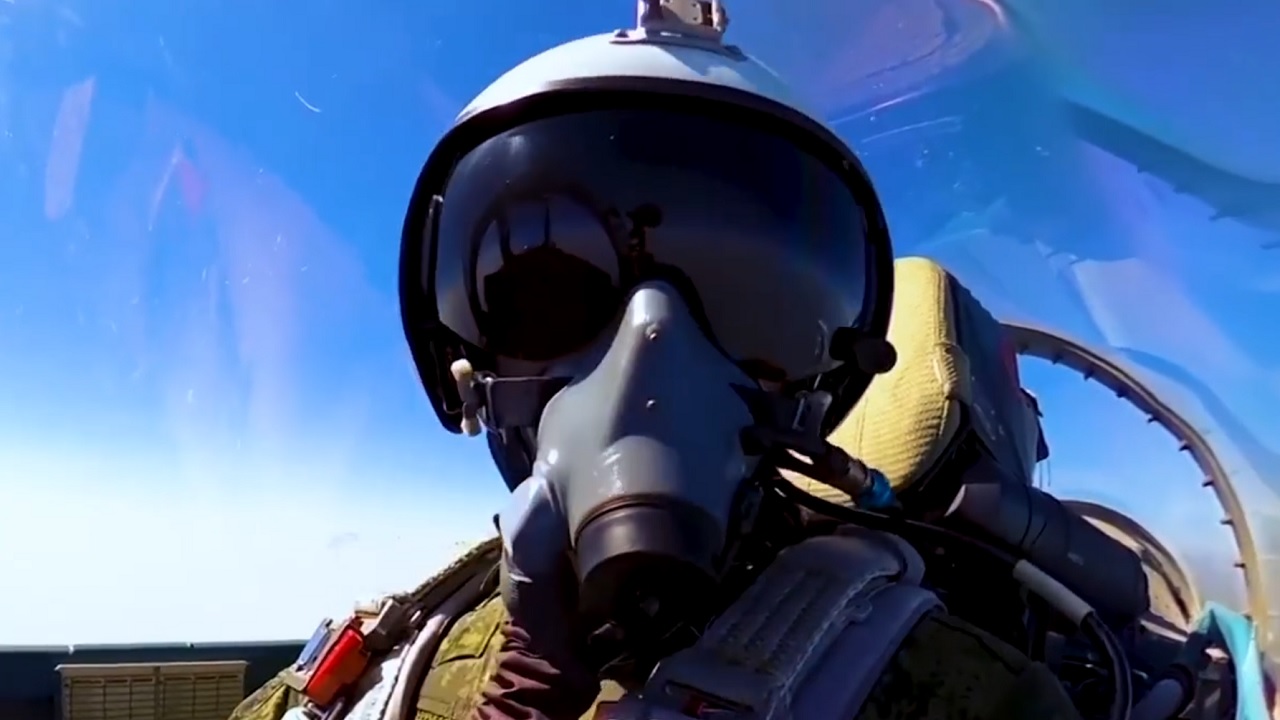
Russia pilot behind the controls of a Su-35S. Image Credit: Creative Commons.
The Promise Stack
Against that line, count the commitments. The 48-jet Iranian order surfaced in October, when the hacker collective Black Mirror published some 300 internal documents from the Russian state conglomerate Rostec; analysts who decoded the export tables matched customer code 364 to a 48-aircraft Su-35 package on a 2026-to-2028 delivery schedule, along with Su-57s and Su-34s for Algeria and six Su-35s for Ethiopia, though the leak’s authenticity has never been independently verified. Those Iranian jets are new-build aircraft that must come off the line.
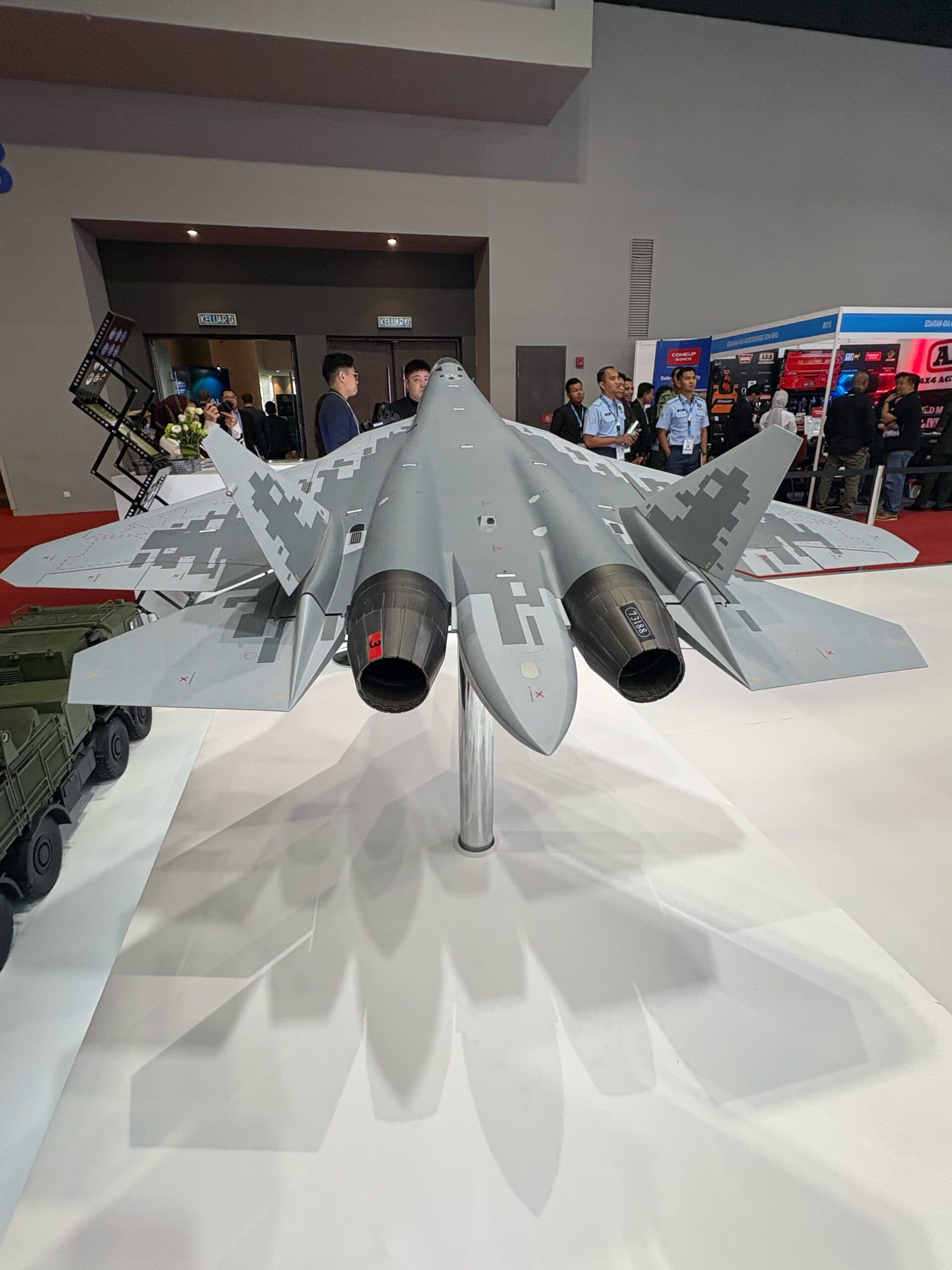
Russian Su-57 Model. Image Credit: 19FortyFive Photo.
The Su-35s Algeria began receiving in 2025, by contrast, were not new production at all: satellite imagery showed they were drawn from the batch originally built for Egypt before American sanctions pressure collapsed that sale, airframes that had sat in Russia for years. Refurbishing orphans is cheap. Iran’s 48 are the only export order that occupies the wartime production line, which is exactly why the bill lands on the Russian air force.
Then add the stealth fighter sharing the same factory. Russia’s 2019 contract calls for 76 Su-57s for its own air force by 2028, but Army Recognition’s tally found only 19 delivered as of early 2025, with roughly 7 aircraft arriving in 2023 and 2024 against a target of 16 per year.
Algeria’s leaked package includes a dozen Su-57s, Russian officials say more export customers have signed, and Iranian interest in the type has been widely reported, with any deliveries years away. One plant, two fighter programs, and at least four governments holding promises.
The Tells
Three details give away how tight the line really is.
First, when Iran wanted additional aircraft quickly, Russian sources reported in June that it bought 12 Su-30SM2s to be delivered secondhand from frontline Russian units, a country at war, selling jets out of its active squadrons because the new-build capacity is spoken for.
Second, the motive is documented: the Jamestown Foundation found Russian arms exports collapsed by 92 percent between 2021 and 2024, which makes the Iranian contract one of the few large deals keeping the export business, and its hard currency, alive. Moscow is putting a paying customer ahead of its own squadrons because the export business needs the money.
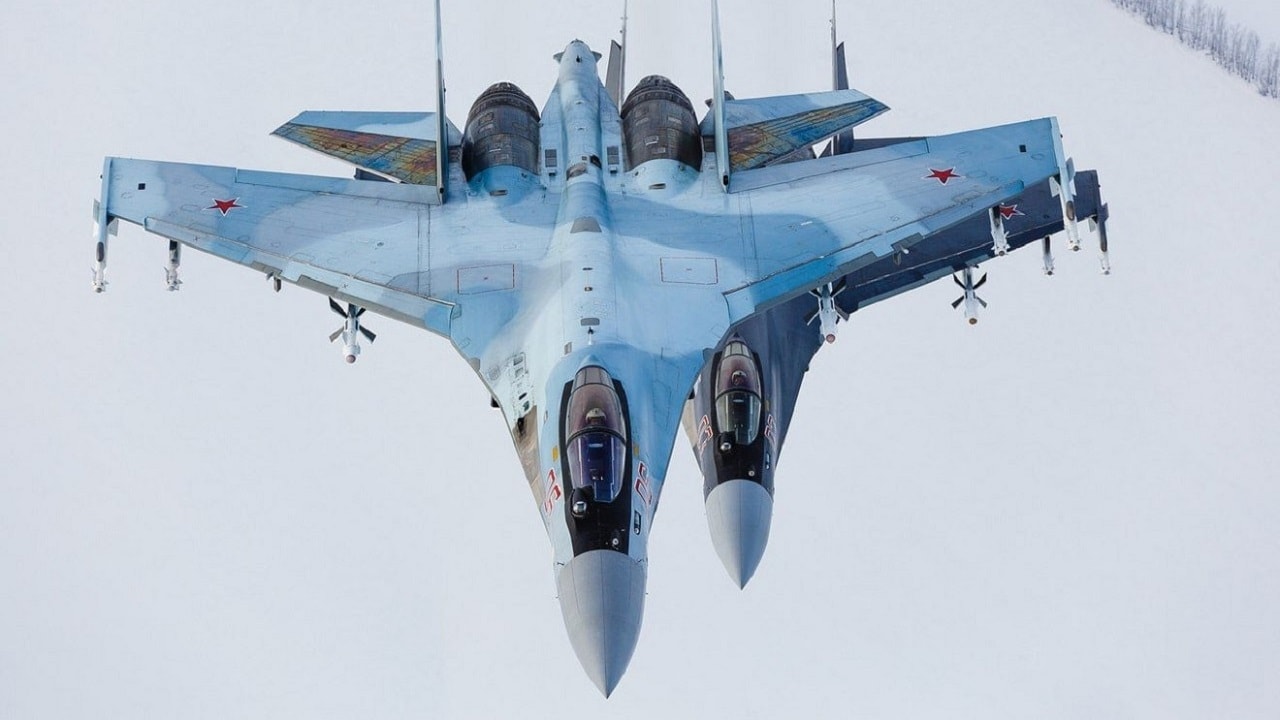
Russian Su-35 fighters. Image Credit: Creative Commons.
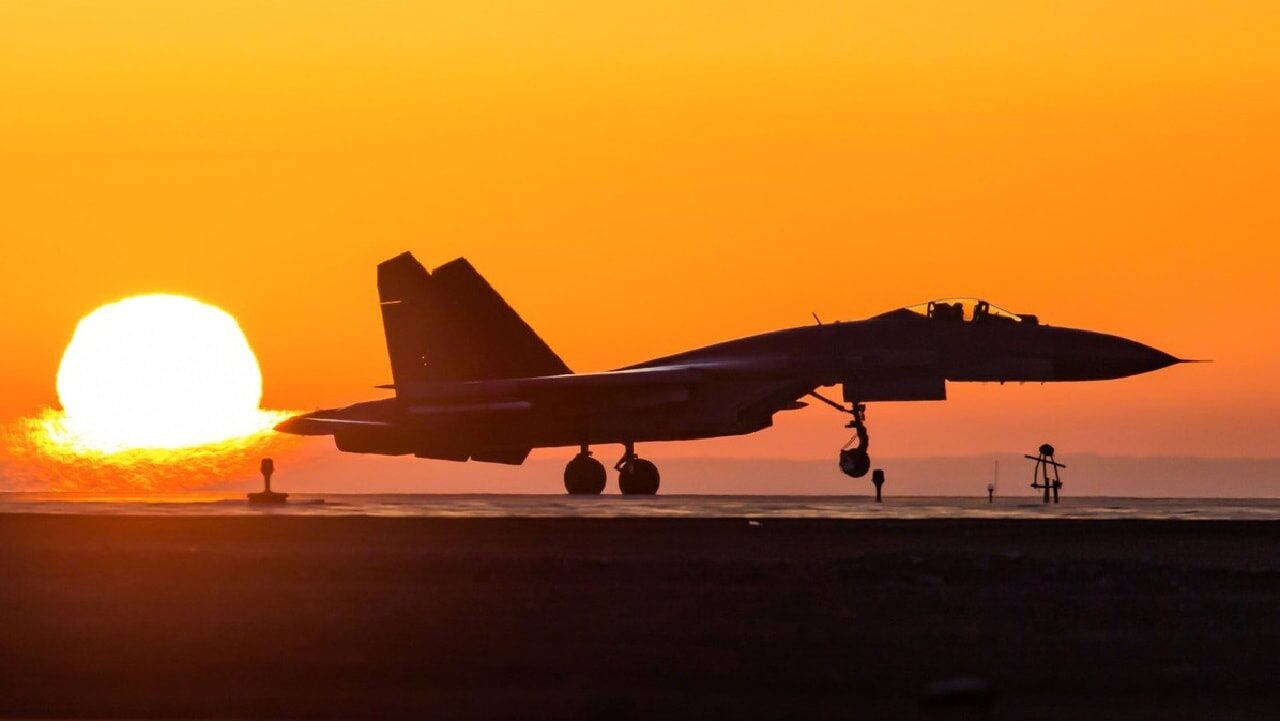
Su-35. Image Credit: Creative Commons.
Third, there is a ceiling on any ramp: a 2025 investigation by the International Partnership for Human Rights and Ukrainian anti-corruption researchers found downed Su-34s and Su-35s packed with hundreds of Western-made electronic components, a sanctions-era dependency that makes every promised production increase harder than the press release suggests.
And the customer at the front of the line is not celebrating yet. The delivery record so far is a muddle of contradictory signals: a private handover ceremony reported by German aviation press in late 2024, Iranian officials claiming jets were acquired, and a fleet that was conspicuously absent when Israeli and American aircraft ranged over Iran in June 2025. Iranian skepticism runs high enough that Mohammad Sadr, a member of the country’s Expediency Council, complained publicly that Russia was willing to sell S-400s to a NATO member yet “has still not provided them to Iran” after years of Su-35 talk. Even if the buyer jumps the queue, they doubt the seller.
What the Queue Says About Moscow
There is a defensible Russian version of this story, and it deserves to be stated. Moscow’s commentators argue the air force can afford the pause: more than 150 Su-35s have been delivered since 2009; RUSI’s tracking attributes only around eight airframe losses over four years of fighting; and the service is still receiving Su-30SM2s, Su-34s, and Su-57s from other lines. On that reading, renting out the Su-35 line for two or three years is a rational way to fund the industry that builds everything else.
But the queue itself is the tell. A country fully confident in its aircraft industry does not sell fighters from frontline squadrons, and a defense sector flush with orders does not need a sanctioned customer this badly.
For a decade, the Su-35 was the fighter almost nobody would buy, with canceled deals stretching from Cairo to Jakarta under pressure from American sanctions, and China, the sole successful customer, stopping at 24.
Now the order book has roughly quadrupled in a single year, and the one production line that must satisfy it is the same line Russia’s own air force depends on, in wartime, with its stealth-fighter program already years behind on the same factory floor.
Whether Komsomolsk-on-Amur can serve everyone it has been promised to is the question the next two years will answer, and the first measurable test is simple: whether 48 new Su-35s land in Iran on schedule while Russian squadrons wait, or whether, as Iran’s own officials seem to suspect, the queue was always longer than the promises.
MORE – NATO’s Second Act Has Arrived
About the Author: Harry J. Kazianis
Harry J. Kazianis (@Grecianformula) was the former Senior Director of National Security Affairs at the Center for the National Interest (CFTNI), a foreign policy think tank founded by Richard Nixon based in Washington, DC. Harry has over a decade of experience in think tanks and national security publishing. His ideas have been published in the NY Times, The Washington Post, The Wall Street Journal, CNN, and many other outlets worldwide. He has held positions at CSIS, the Heritage Foundation, the University of Nottingham, and several other institutions related to national security research and studies. He is the former Executive Editor of the National Interest and the Diplomat. He holds a Master’s degree focusing on international affairs from Harvard University.

