
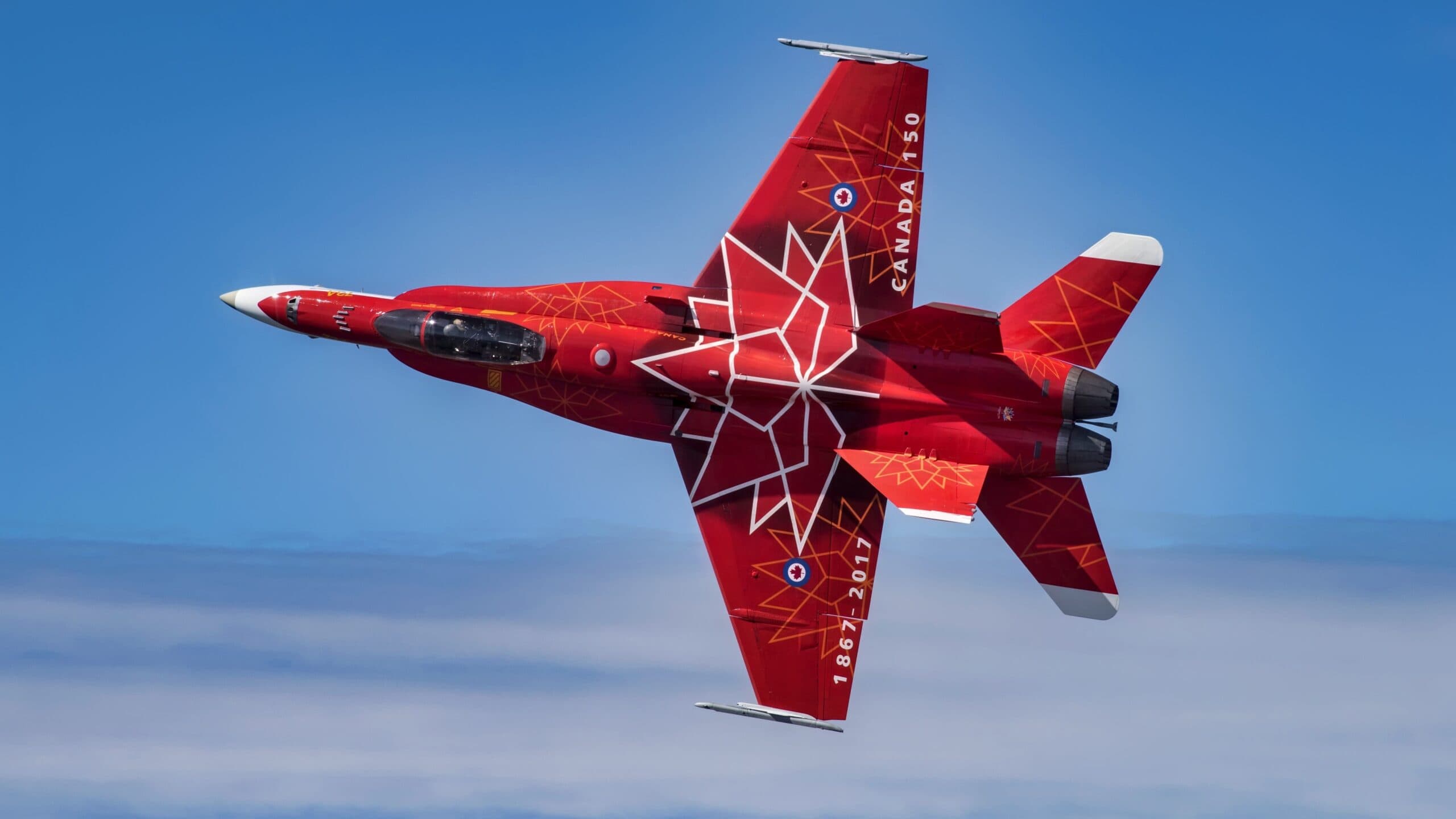
Summary and Key Points: Canada acquired 138 CF-18 Hornets in the 1980s, and the fleet is now structurally fatigued and shrinking, with roughly 72 to 85 airframes still flying, and their service lives are running out in the early 2030s. That countdown is the forcing function behind the largest fighter decision in Canadian history. Canada selected the Lockheed Martin F-35 in 2022 and ordered an initial batch, but a review launched in March 2025 reopened the question amid deteriorating relations with Washington and rising acquisition costs. Ottawa is contractually committed only to the first 16 jets, leaving the remaining 72 open, and by mid-2026, reporting pointed toward a possible mixed fleet of about 140 aircraft, combining F-35s, Saab Gripens, and GlobalEye early-warning planes.
The CF-18 Hornet Is Creating Canada’s Epic Fighter Debate: Introduction
For four decades, the CF-18 Hornet has been the backbone of the Royal Canadian Air Force, but it is now worn out, structurally fatigued, and short on the flight hours needed to hold the line into the 2030s. Replacing it should have been simple after Canada picked the F-35 in 2022. Instead, the aging Hornet has become the forcing function behind a procurement saga that has swollen from a straightforward 88-jet stealth buy into a possible 140-aircraft, three-tier air force split between American and Swedish manufacturers, a fight over sovereignty, industrial jobs, and how much Canada is willing to depend on Washington. This is the complete picture of how a tired fighter fleet drove Ottawa into the most consequential air power decision in its history.
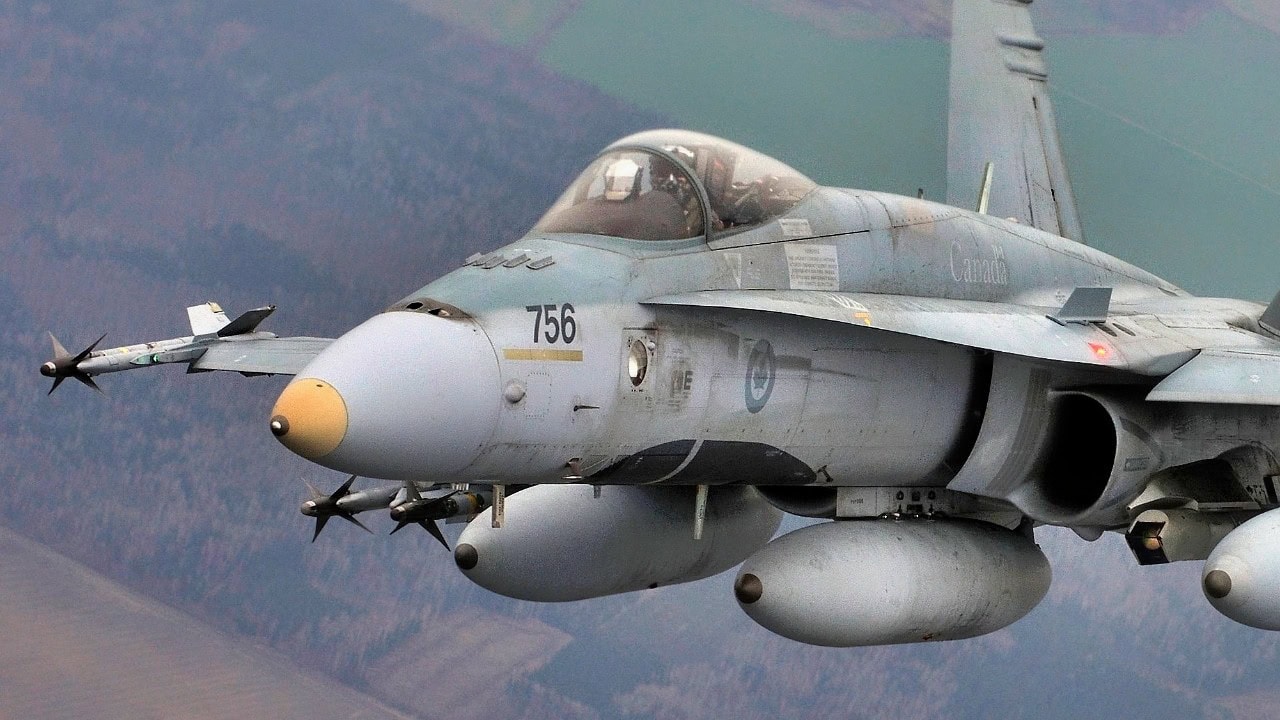
A CF-188 Hornet from the Canadian Air Task Force Lithuania flies over Lithuania on November 20, 2014 for the NATO Baltic Air Policing Block 36 during Operation REASSURANCE.
Photo: Air Task Force — OP Reassurance, DND
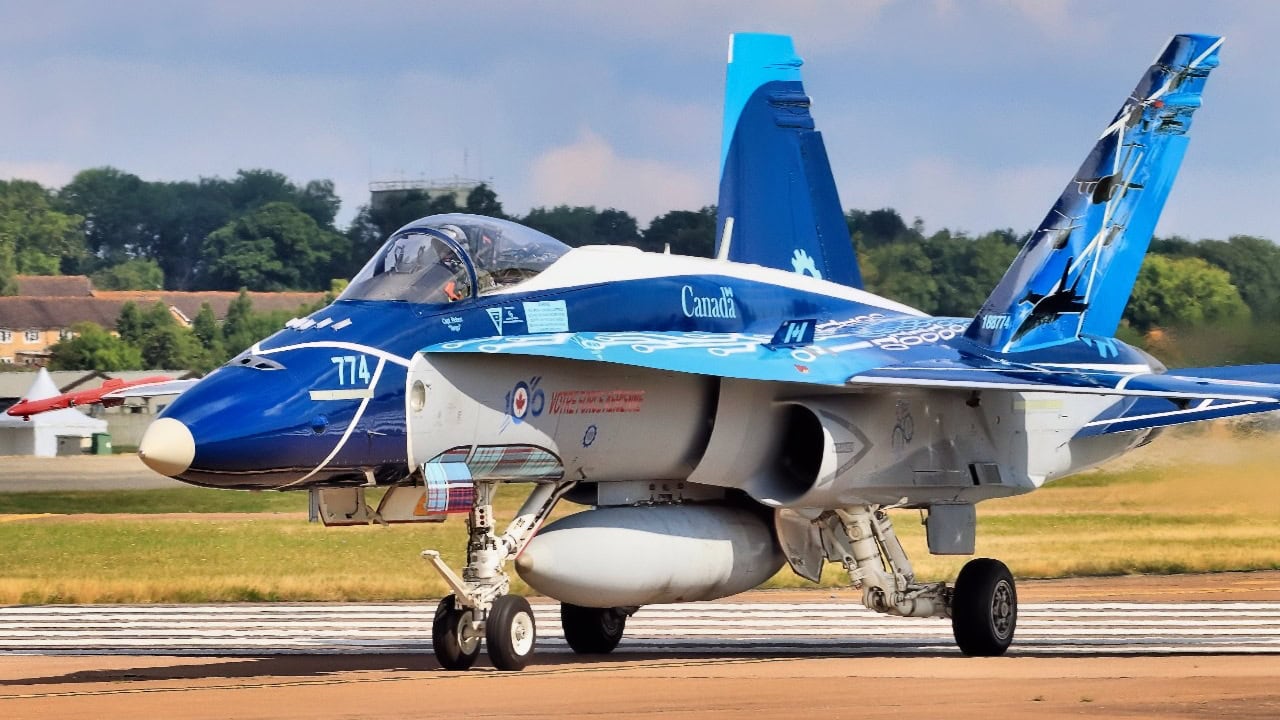
CF-18 Canada Air Force.
The Royal Canadian Air Force is running out of time, and the reason is sitting on the ramps at Cold Lake and Bagotville. Canada’s CF-18 Hornets, the aircraft that have flown NORAD Arctic patrols and NATO combat missions for more than forty years, are at the end of their structural lives, and every month of political indecision about their replacement narrows the margin between a credible fighter force and a capability gap. What began as a clean choice between the Lockheed Martin F-35 and the Saab Gripen has metastasized into something far larger, a debate over the entire shape, size, and national allegiance of Canada’s future air force. To understand how Ottawa arrived at a possible 140-aircraft mixed fleet, you have to start with the jet that everyone is racing to replace.
The Fleet That Cannot Wait: The CF-18’s Terminal Decline
Canada acquired 138 CF-18s in the 1980s, the Canadian variant of the American F/A-18 Hornet, designating them the CF-188 and tailoring them with features such as a distinctive nose-mounted spotlight for identifying aircraft during nighttime Arctic interceptions of Soviet bombers. The first CF-18 entered service in 1982, and the fleet has since served in the Gulf War, Kosovo, Libya, and the campaign against the Islamic State in Iraq and Syria. Four decades of that service have taken a physical toll that no upgrade can reverse. The airframes now suffer from structural fatigue and parts shortages, and the design itself belongs to an analog, pre-stealth era, with a radar cross-section that cannot be modernized away, no matter how many new avionics are bolted on.
The numbers tell the story of a force stretched thin. The current CF-18 fleet has fallen below 88 aircraft, with roughly 72 to 85 airframes still flying depending on the count, a fraction of the original 138. To keep them viable, Canada undertook the Hornet Extension Project, a series of upgrades intended to keep the jets legal and combat-relevant into the early 2030s, and it purchased used F/A-18s from Australia to bolster the shrinking fleet. As of recent reporting, all 18 airworthy Australian Hornets had been integrated into the RCAF simply to sustain squadron numbers. These are stopgaps, not solutions. The Hornet Extension Project buys time; it does not buy a modern fighter, and the clock it is buying against is unforgiving, because a fighter fleet that ages out before its replacement arrives leaves a country responsible for a continent’s worth of airspace with nothing credible to fly.
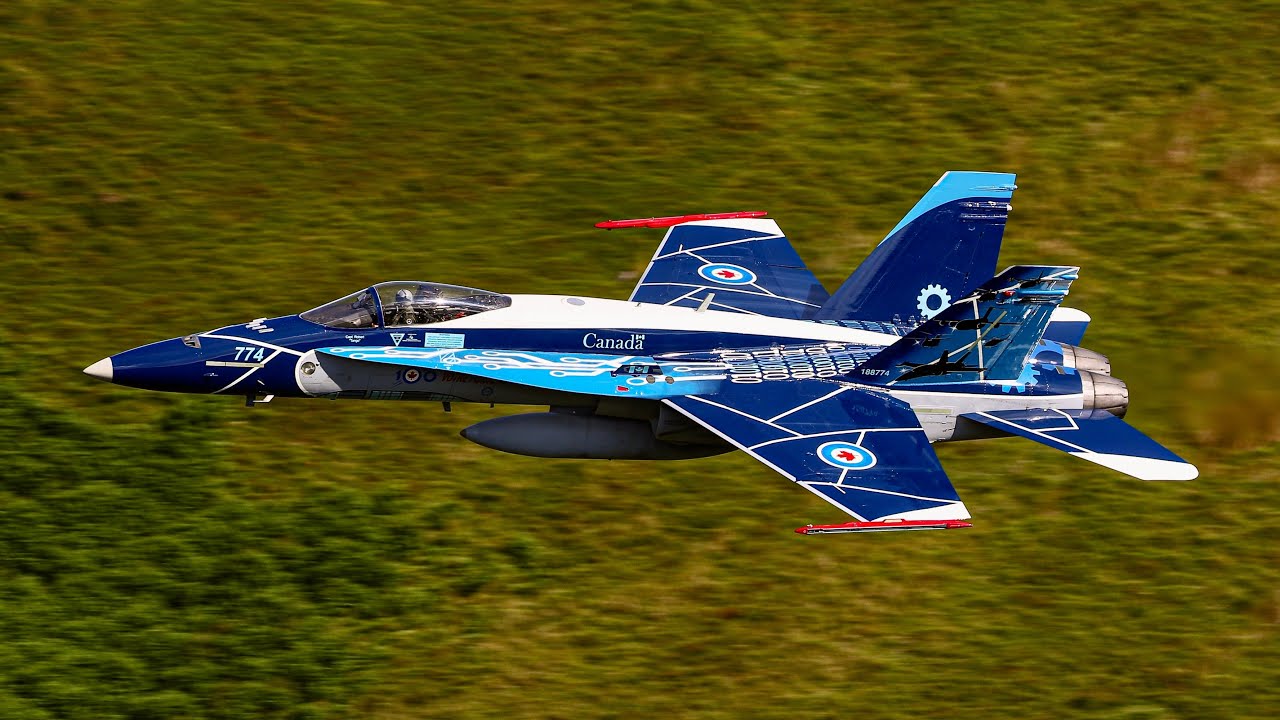
CF-18 Hornet Canada Air Force. Image Credit: Creative Commons.
That deadline pressure is the single most important fact in the entire Canadian procurement debate. Every argument about sovereignty, jobs, and interoperability plays out against a countdown, and the first replacement F-35s are not expected to set foot on Canadian soil until 2028. Any further delay or reversal risks a multi-year window in which the CF-18s can no longer be safely or effectively flown and their replacements have not yet arrived. The tired Hornet is what makes the decision urgent and what makes Ottawa’s inability to finalize a choice so consequential.
From Sole-Source Controversy to Open Competition
Canada’s path to the F-35 was tortured long before the current review. The saga dates back to July 2010, when Stephen Harper’s Conservative government announced plans to buy 65 F-35As for roughly CAD 9 billion, arguing the stealth fighter was essential for national defense and Arctic sovereignty. That sole-source plan collapsed under criticism over its cost estimates and procurement process, and the resulting political damage forced Canada to start over with an open competition, one of the longest-running fighter contests in the modern era.
The formal Future Fighter Capability Project launched in 2017 with a requirement for 88 aircraft, and it drew bids from Lockheed Martin for the F-35A, Saab for the Gripen E, and Boeing for the F/A-18 Super Hornet, while Dassault withdrew the Rafale early. Boeing’s Super Hornet, on paper the natural continuity choice for a Hornet operator, was effectively pushed out of the competition after Boeing filed a trade complaint against Canada’s Bombardier over its CSeries jetliners, poisoning its standing in Ottawa. The government introduced a procurement rule penalizing firms that had harmed Canadian economic interests, and Boeing’s fate was sealed. That left the F-35A and the Gripen E as the two finalists, and in 2022 the Department of National Defense selected the F-35A, with Ottawa formally ordering an initial 16 aircraft in January 2023 as part of an agreement for the full 88-aircraft order, valued at approximately CAD 19 billion.
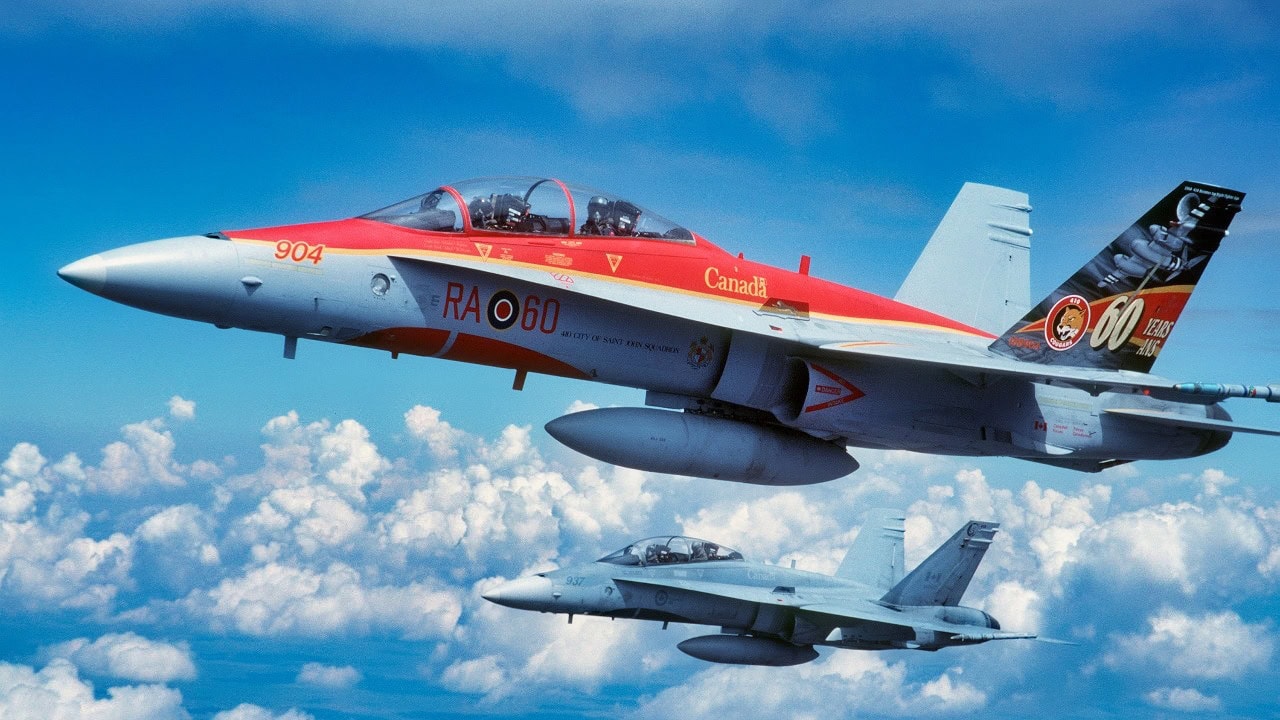
Two Canadian Forces, 410 Squadron CF-188B Multi-Role Fighters, one painted in special anniversary colors, flying over the Utah Test and Training Range (UTTR) for planned engagements during the Tiger Meet of the Americas. The Inaugural Tiger Meet of the Americas brought together flying units from throughout North America that have a Tiger or large cat as their unit symbol. The Tiger Meet of the Americas closely mirrors the North Atlantic Treaty Organization (NATO)/Europe Tiger Meet in its goal of fostering camaraderie, teamwork and tactics familiarization.
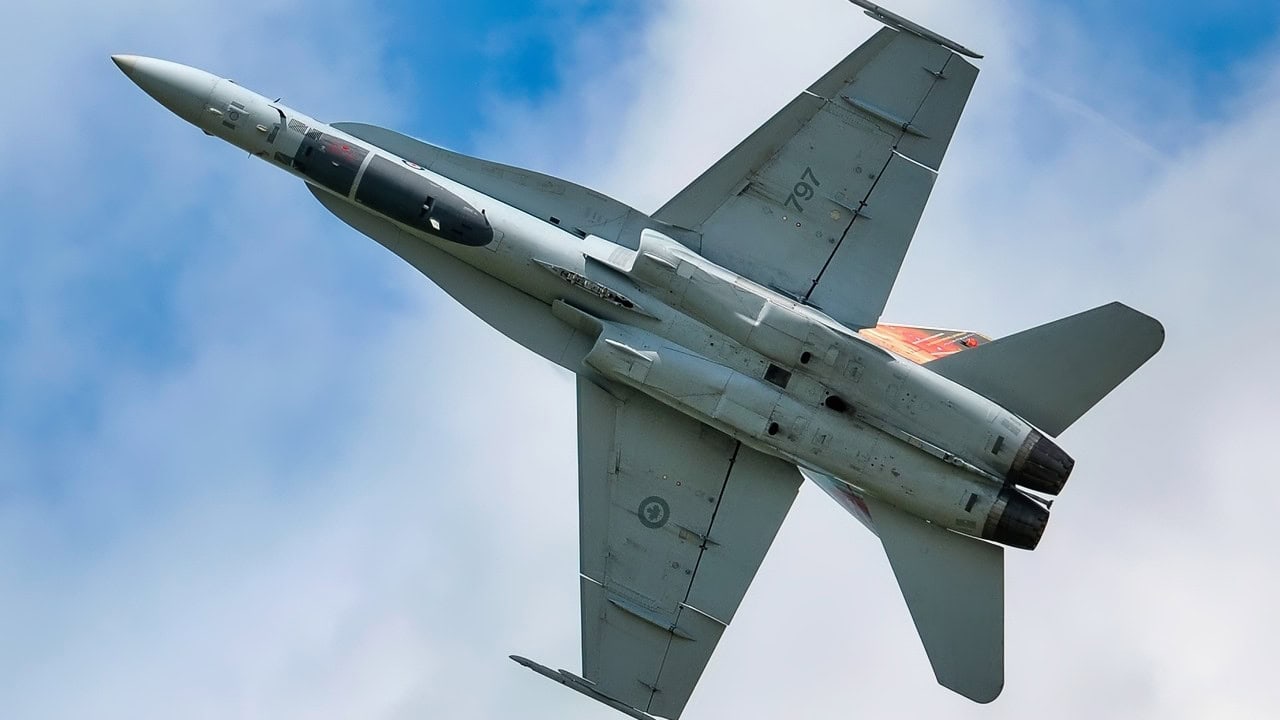
Canada CF-18 Hornet Fighter
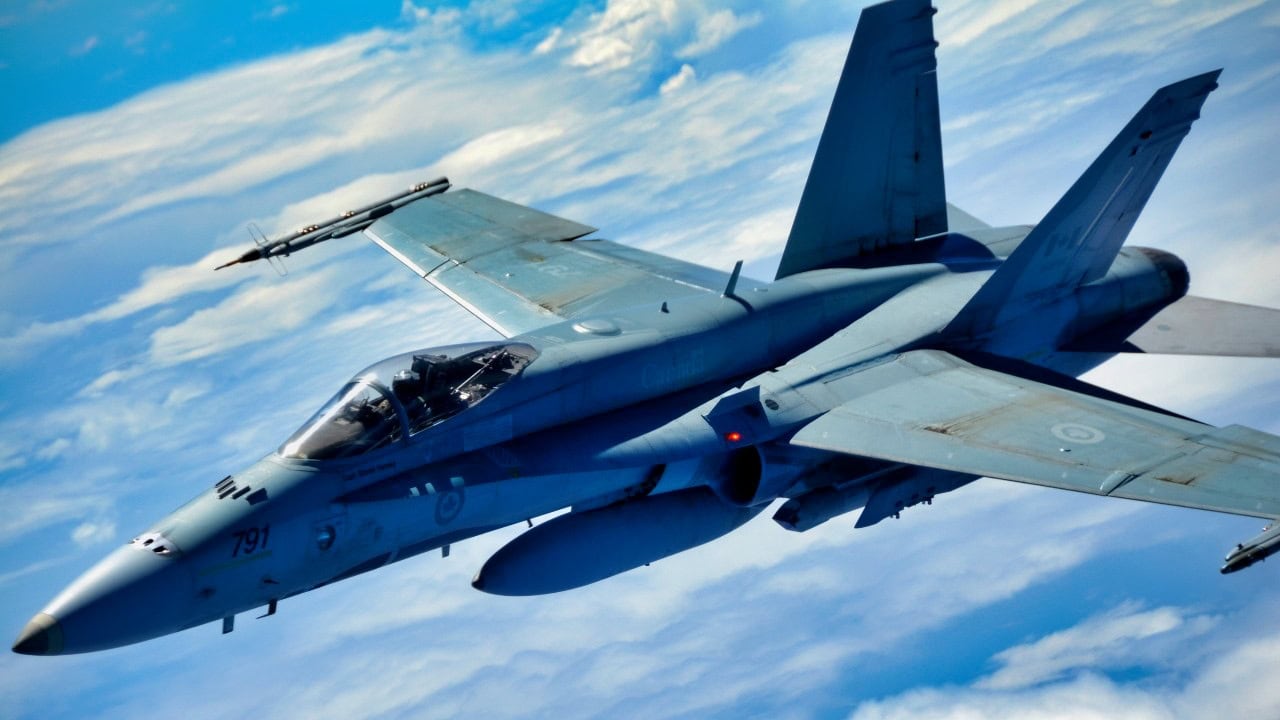
JOINT BASE PEARL HARBOR-HICKAM (July 11, 2016) A Royal Canadian Air Force CF-18 Hornet flies alongside a KC-135 Stratotanker flown by a crew from the 465th Air Refueling Squadron, Tinker Air Force Base, Okla., in support of Rim of the Pacific 2016. Twenty-six nations, more than 40 ships and submarines, more than 200 aircraft and 25,000 personnel are participating in RIMPAC from June 30 to Aug. 4, in and around the Hawaiian Islands and Southern California. The world’s largest international maritime exercise, RIMPAC provides a unique training opportunity that helps participants foster and sustain the cooperative relationships that are critical to ensuring the safety of sea lanes and security on the world’s oceans. RIMPAC 2016 is the 25th exercise in the series that began in 1971. (U.S. Air Force photo/Master Sgt. Grady Epperly)
For a moment, the decades-long question appeared settled. The RCAF had its fifth-generation fighter, the contract was signed, and the CF-18’s successor was chosen. Then the ground shifted.
The Review That Reopened Everything
On March 15, 2025, one day after Mark Carney became prime minister, his government ordered a full review of the F-35 purchase. The trigger was a dramatic deterioration in relations with the United States. President Donald Trump had imposed tariffs on Canadian goods, threatened the Canadian economy, and repeatedly called for Canada to become the 51st state, and that hostility made Ottawa’s dependence on a US-controlled fighter program suddenly feel like a strategic vulnerability rather than an alliance benefit. Carney cited concerns about overreliance on the American defense industrial base, and the review was initially expected to conclude in about three months.
It did not. More than a year later, the review remains formally unresolved, having repeatedly blown past its original completion target. Defense Minister David McGuinty told Parliament on April 27, 2026, that the review was still underway and that aircraft from other countries were under active consideration. Carney had established the crucial parameter early: Canada would keep the 16 F-35As it was already committed to while examining other manufacturers for the rest. That distinction turned out to be the hinge on which the entire decision swings, because it separated the small, legally binding core of the order from the large, still-open remainder.
The legal reality is more flexible than public perception assumes. Ottawa is contractually committed only to the first 16 F-35As, which are already in production and effectively locked into the force structure. The remaining 72 aircraft have never been covered by a signed production contract, which means they remain fully available for cancellation, reduction, or substitution. During 2026, Canada quietly paid for long-lead components tied to another 14 jets, a move that preserves its slots in Lockheed Martin’s coveted production queue without committing to buy them. Ottawa was hedging, keeping its options open while it decided how much of the F-35 program to keep.
The Cost That Fed the Doubt
Money sharpened every doubt. The original CAD 19 billion acquisition figure proved optimistic. A 2024 report from the Office of the Auditor General of Canada found that total acquisition costs had risen by at least 46 percent since 2022, reaching CAD 27.7 billion. The Auditor General also flagged that an additional CAD 5.5 billion would be needed for weapons and critical infrastructure, including operational bases, and warned of a shortage of trained pilots as a further challenge. A Parliamentary Budget Office analysis had earlier pegged the full 45-year lifecycle cost of the fleet at roughly US$73.9 billion once planning, maintenance, and disposal were included.
Those escalating numbers reopened a door that the 2022 selection had appeared to close. If the F-35 was going to cost dramatically more than advertised, cabinet figures reasoned, then Canada should extract more from the deal, or spend the money differently. Industry Minister Mélanie Joly pressed Lockheed Martin to commit to greater investment in Canada or risk seeing the order scaled down, arguing in an October 2025 interview that Ottawa could obtain further industrial commitments in exchange for keeping the 88-fighter contract, or procure fewer F-35s and complement them with Gripens assembled in Canada. The fighter’s decision was no longer only about capability. It had become an industrial-policy and sovereignty question, and that is where Saab found its opening.
The Gripen Alternative and the Sovereignty Argument
Sweden’s Saab has spent years positioning the JAS 39 Gripen E as the answer to exactly the anxieties Canada developed about the F-35. While the F-35’s mission data files, software updates, and sustainment run through US-controlled architecture, Saab offered Canadian control. The company dangled a sovereign data center in Montreal, promising that Canadian mission data and software would remain under Canadian control rather than be routed through American systems, and proposed building the Gripen in Canada outright.
The industrial pitch is the heart of Saab’s case, and it is one the F-35 program structurally cannot match. Saab has told Ottawa that a combined purchase of 72 Gripen fighters and six GlobalEye early-warning aircraft could support up to 12,600 jobs in Canada, with the internal split running roughly 9,000 jobs tied to Gripen assembly and sustainment and about 3,600 to GlobalEye, and production centers proposed for Ontario and Quebec. Foreign Affairs Minister Mélanie Joly framed the stakes bluntly, describing the mixed-fleet decision as being about Canadian jobs, Canadian sovereignty, and the country’s defense industrial base. Beyond the economics, the Gripen carries genuine operational advantages for Canada’s specific geography. It was designed for dispersed operations from austere sites, able to fly from 800-meter stretches of public road, frozen lakes, or short unpaved runways, and it can be refueled and rearmed by a small team in as little as fifteen minutes, attributes tailor-made for the vast, sparsely serviced Canadian Arctic. Saab’s proposal also promises first delivery within roughly five years and lower operating costs per flying hour than the F-35.
Public opinion moved with the pitch. Reporting on an EKOS poll indicated that a plurality of Canadians came to favor the Gripen over the F-35, with nearly half of respondents backing the Swedish fighter and only a minority still supporting the American jet as the sole option. What had once sounded like a grievance from a losing bidder increasingly sounded like national policy.
The Case for the F-35 and the NORAD Problem
Against the sovereignty and jobs arguments stands a hard operational reality, and the Royal Canadian Air Force has never stopped making it. The F-35 is a fifth-generation stealth aircraft with sensor fusion, low observability, and electronic-warfare capabilities that a 4.5-generation Gripen, however capable and modern, cannot match. For the high-end fight, for operating in contested airspace, and above all for seamless integration with the United States under NORAD, the RCAF has consistently held that the F-35 is the right and necessary choice. A senior RCAF officer and NORAD operational commander, Major General Chris McKenna, pointedly noted in a December 2025 interview that while the fighter choice is a sovereign decision for Canada, NORAD needs an aircraft with overmatch against adversaries, a comment widely read as a warning against the Gripen. Deputy Minister of National Defense Stefanie Beck put it more directly at a parliamentary hearing, arguing that it is impossible to overstate the importance of fielding fifth-generation aircraft because adversaries such as Russia and China now fly them.
Washington has applied its own pressure, and not always deftly. US Ambassador to Canada Pete Hoekstra warned in a January 2026 CBC interview that Canada could face consequences if it did not buy the F-35, and suggested the NORAD agreement itself would have to change, claiming Gripens would not be as interoperable with US-operated F-35s. That argument drew a sharp public rebuttal. Aviation writer Bill Sweetman called Hoekstra’s claims nonsense, noting that Canada has flown different aircraft from the US Air Force within NORAD for more than forty years, controls its jets through its own command center in Winnipeg, and that the F-35’s stealth is largely irrelevant to the NORAD intercept mission because Russian bombers do not carry air-to-air radar. The interoperability question, in other words, is real but frequently overstated, and it has become a proxy for the deeper argument about how tightly Canada wants to bind itself to American systems.
The Mixed Fleet, the 140-Jet Option, and What Comes Next
By mid-2026, the review had produced not a simple yes-or-no on the F-35 but a far more ambitious possibility. In late May, reporting from La Presse indicated Ottawa was moving toward a mixed fleet of roughly 30 F-35As and 60 Gripens, retaining the stealth core for NORAD and NATO while filling out the fleet with Canadian-built Swedish jets. Then the ambition grew again. On June 6, 2026, CBC News reported that industry and government sources described a plan to expand the force into a mixed fleet of about 140 aircraft, with a three-tier structure of F-35s for stealth missions, Gripen Es for everyday air defense, and Saab GlobalEye aircraft for airborne early warning and battle management. One source told CBC there could easily be a fleet of 140 aircraft, a scale that would return Canada to a Cold War-era fighter force larger than anything it has fielded since the 1980s.
The clearest signal that a split was coming arrived on May 27, 2026, when Carney confirmed Canada had entered negotiations with Saab for five to six GlobalEye aircraft in a program valued at more than CAD 5 billion, a competition that eliminated Boeing’s E-7 Wedgetail and L3Harris. Because the GlobalEye is built on Bombardier’s Global 6500 business jet, already manufactured in Ontario, Ottawa could present it as substantially Canadian-made, and the same supply chain could then support a follow-on Gripen assembly line. The GlobalEye deal was, in effect, the first step toward the Gripen.
The mixed fleet is not a costless solution, and the objections are serious. Analysts and RCAF officials have warned throughout the review that operating two fighter types multiplies the burden, requiring separate training pipelines, maintenance systems, spare-parts chains, and software-sustainment arrangements for aircraft with different engines, radars, and mission computers. David Perry of the Canadian Global Affairs Institute cautioned that the two jets are so different that a pilot could not simply move between cockpits, and argued that the cleanest way to grow the fleet would be to buy more F-35s rather than add a second type. A leaked Future Fighter evaluation reported by Radio-Canada showed the F-35 scoring far higher than the Gripen-and-GlobalEye combination on pure capability, which F-35 supporters cite as evidence that industrial benefit is being weighed against a genuine performance gap. And there is the timing risk that worries planners most: the RCAF would be retiring CF-18s, introducing F-35s, standing up Gripen squadrons, and absorbing GlobalEye aircraft all in the same window, and if Canada buys airframes faster than it can train crews and technicians, it ends up with inventory it cannot fly.
A final decision is now expected to be deferred until after the US midterm elections in November 2026, to avoid further straining relations with Washington while Ottawa makes a choice that has become a referendum on whether Canada builds its next air force at home or buys it abroad. What has not changed through all of it is the pressure underneath. The CF-18 fleet keeps aging, its airframe hours keep draining away, and whatever Canada decides, it cannot debate forever. The tired Hornet that started this saga is still flying the patrols, still holding the line, and still counting down, and the scramble to replace it has already reshaped Canadian defense policy for a generation.
About the Author: Harry J. Kazianis
Harry J. Kazianis (@Grecianformula) was the former Senior Director of National Security Affairs at the Center for the National Interest (CFTNI), a foreign policy think tank founded by Richard Nixon based in Washington, DC. Harry has over a decade of experience in think tanks and national security publishing. His ideas have been published in the NY Times, The Washington Post, The Wall Street Journal, CNN, and many other outlets worldwide. He has held positions at CSIS, the Heritage Foundation, the University of Nottingham, and several other institutions related to national security research and studies. He is the former Executive Editor of the National Interest and the Diplomat. He holds a Master’s degree focusing on international affairs from Harvard University.

