
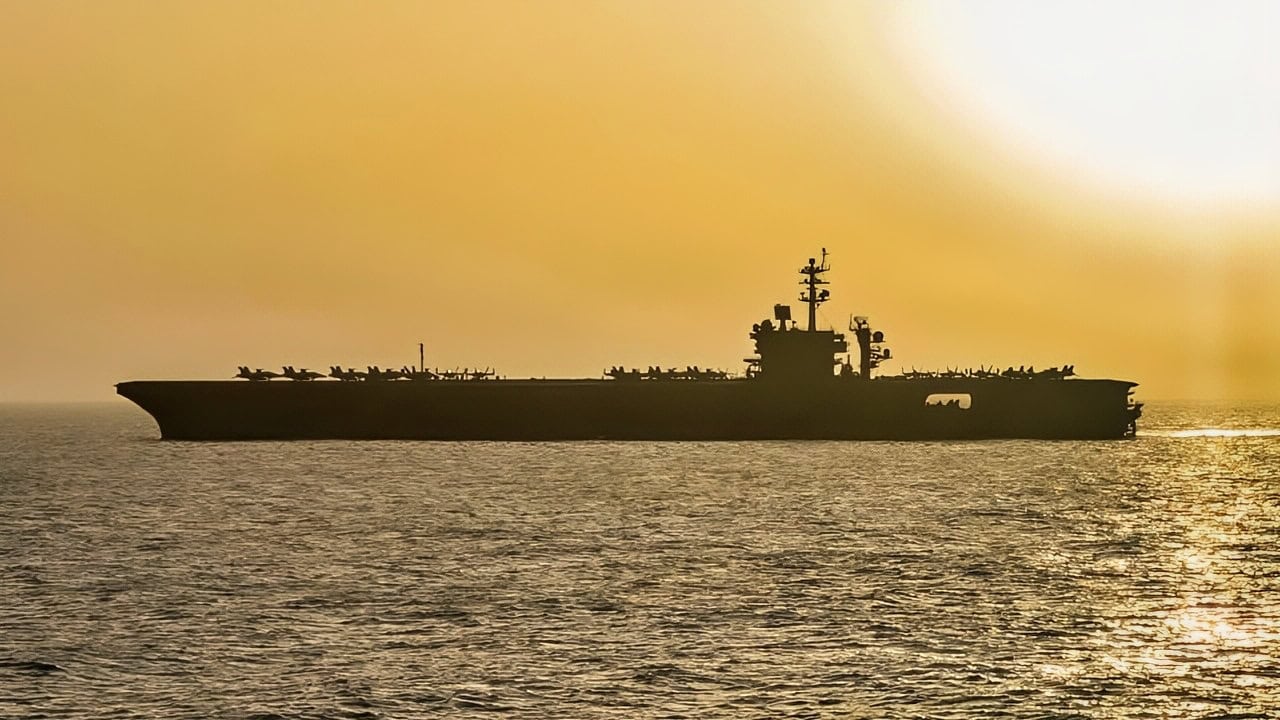
What if Canada had aircraft carriers in 2026? It would look impressive. It would visit useful ports and let ministers speak. It would also do little to address the waters where Canada’s security is most exposed.
That is the trouble with the renewed question about aircraft carriers. Canada did have carriers during the Cold War. HMCS Bonaventure, the last of them, was paid off in 1970. The memory has a pull in a country that has spent decades shrinking its military ambitions. But the carrier question becomes useful when it is aimed away from nostalgia and toward geography.
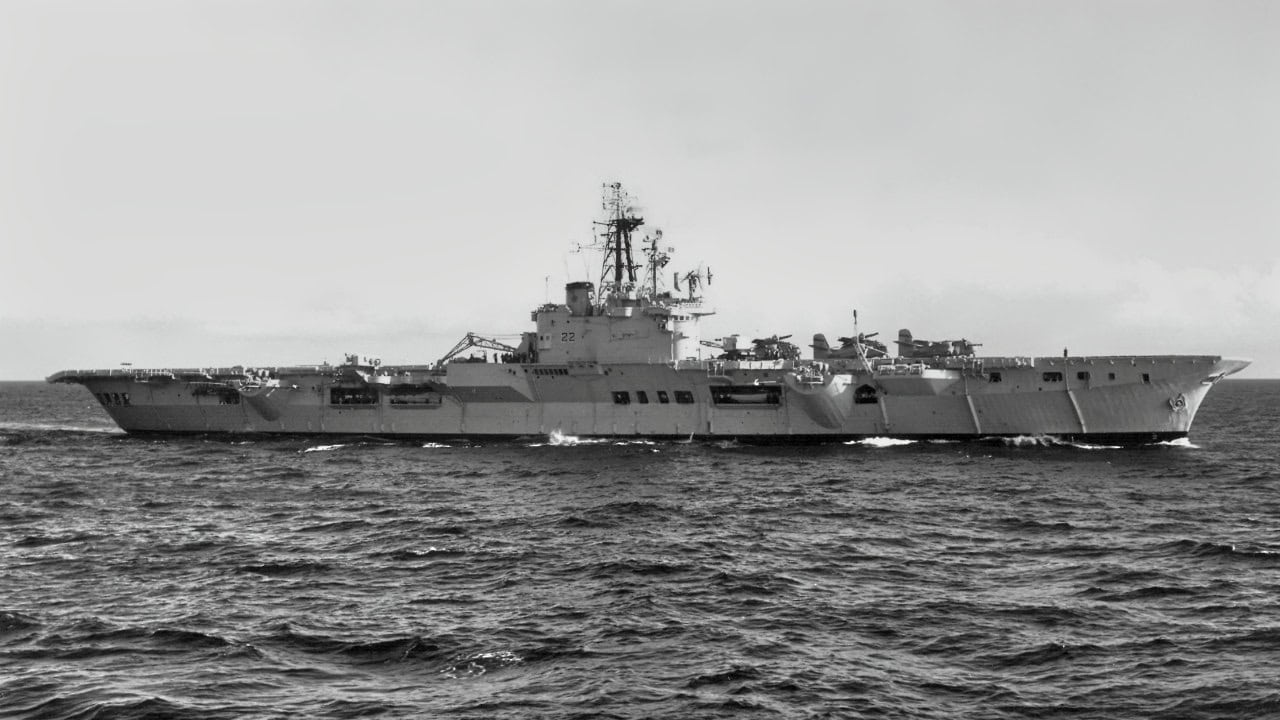
HMCS Bonaventure Canada Aircraft Carrier. Image Credit: Creative Commons.
Canada’s naval problem is in the Arctic approaches and the North Atlantic/North Pacific seams. A new carrier would pull attention toward the Indo-Pacific. Canada’s harder task is less photogenic: build the naval power needed to defend a three-ocean country.
The Aircraft Carrier Canada Had
Canada’s Cold War carrier fleet was not a bid for American-style power projection. It was built for a narrower purpose.
The Royal Canadian Navy operated carriers from 1946 to 1970 to help with anti-submarine warfare and protect ships against enemy aircraft. Bonaventure carried Banshee fighters and Tracker anti-submarine aircraft. This was an alliance tool for the North Atlantic, where Soviet submarines threatened the sea lanes linking North America to Europe.
A U.S. carrier is a sovereign airbase at sea. Canada’s carrier put aircraft over a fleet whose main wartime job was escort and submarine hunting, with surveillance threaded through both.
By the late 1960s, the case for keeping it had weakened. Canadian naval history is blunt on this point: Bonaventure had little remaining tactical value to NATO compared with the anti-submarine destroyers NATO badly needed. Sea-based fighter defence from Banshees had become too expensive to maintain.
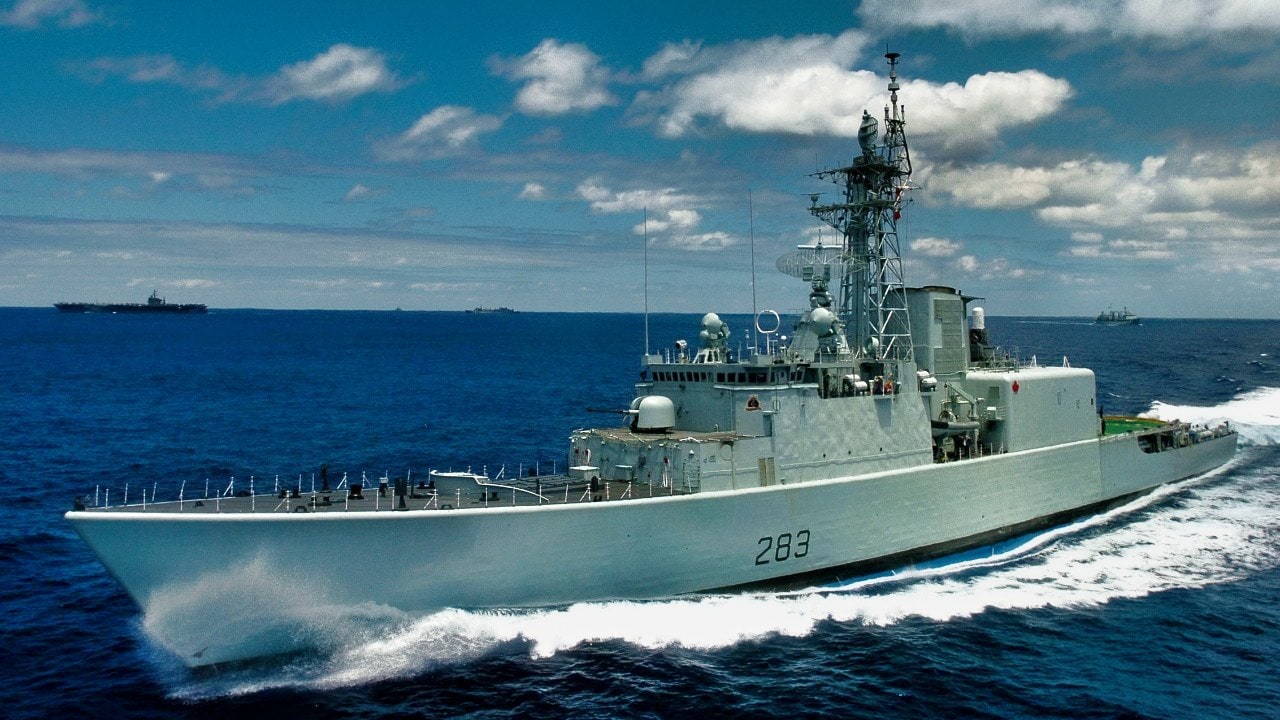
Pacific Ocean (June 25, 2004) – The Canadian destroyer HMCS Algonquin (DDG 283) is shown underway in close formation with the Nimitz-class aircraft carrier USS John C. Stennis (CVN 74). Algonquin just completed an eight-ship photo exercise with Stennis just prior to participation in Rim of the Pacific Exercise (RIMPAC) 2004. RIMPAC is the largest international maritime exercise in the waters around the Hawaiian Islands. This years exercise will include seven participating nations; Australia, Canada, Chile, Japan, South Korea, Britain and the United States. RIMPAC is intended to enhance the tactical proficiency of participating units in a wide array of combined operations at sea, while enhancing stability in the Pacific Rim region. U.S. Navy photo by Photographer’s Mate 2nd Class Jayme Pastoric (RELEASED)
The old ship should not be treated like a relic from a lost age of Canadian greatness. It was a useful platform for a serious mission. The mission outlived the hull.
The Wrong Ocean Fantasy
A modern Canadian carrier would almost certainly become a diplomatic asset before it became a military one. That is the danger.
Ottawa would send it far from home because that is where carrier politics leads: port calls in Asia and coalition exercises with cameras everywhere. The ship would become proof that Canada was present, even when presence had a loose connection to strategy.
This is how a middle-power habit turns into a procurement mistake. Canada does not need to imitate the U.S. Navy badly. Washington already has carriers. It needs Canada to help secure the maritime approaches to North America and carry weight where Canadian geography is actually valuable.
Canada’s first maritime obligation is closer, colder, and harder to sustain.
The Arctic Is The Real Test
The Arctic is where the carrier debate should end.
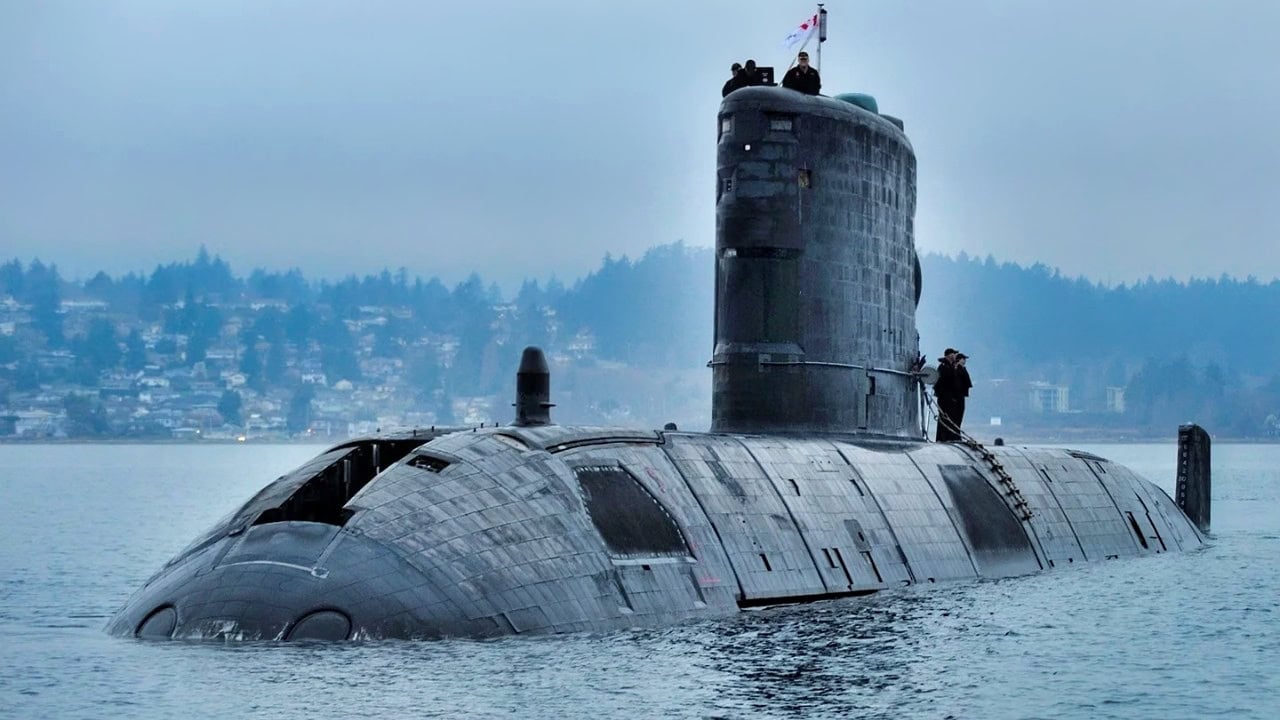
Victoria-Class Submarine Canadian Navy. Image Credit: Government Photo.
That does not mean the region should be inflated into a cartoon of imminent great-power war. Canada should avoid the panic that turns every Russian movement or Chinese research interest into a prewar signal. Restraint still has a place in the North. So does diplomacy.
But realism begins with the map. The map is getting less forgiving.
Canada’s Arctic Foreign Policy says the region is central to North American defense and NATO’s northern and western flanks. It also says Canada must work with the United States to deter increasingly sophisticated threats in the Arctic and its North Atlantic and North Pacific approaches.
That vocabulary points toward domain awareness and denial, backed by infrastructure that can survive northern conditions.
The Arctic rewards the state that can see what is happening and keep operating after the weather turns bad. It rewards sensors and submarines, patrol aircraft and drones, helicopters and support hubs. Much of that power is hard to show on television.
A carrier would be a large answer to the wrong question.
The Submarine Decision Is The Real Story
This is why the July 2026 submarine decision matters more than any revived debate over carriers.
Prime Minister Mark Carney has named Thyssenkrupp Marine Systems as the preferred supplier for the Canadian Patrol Submarine Project, with negotiations to follow for up to 12 submarines.
Ottawa says the TKMS 212CD design can conduct Arctic patrol, undersea surveillance, special forces deployment, and NATO-interoperable operations. The government expects contracting by the end of 2027 and the first four boats in 2034.
A submarine in the Arctic or North Atlantic does more for deterrence than a Canadian carrier passing through the South China Sea for a week of strategic theatre. It can watch. It can complicate planning. It can force an adversary to spend time and money searching for something that may already be gone.
There is a catch, because there always is with Canadian defense. Naming a preferred supplier does not build a force.
Submarines require trained crews, maintenance depth, weapons, basing, secure communications, and patience. They require governments to keep paying after the first announcement has disappeared from the news cycle. Canada has often failed there.
What Ottawa Has To Prove
The aircraft-carrier debate is useful only if it strips away illusion. A carrier would offer the appearance of maritime ambition. The harder path is a broader, more extensive defense system built around the places Canada cannot escape.
That means Arctic infrastructure outside press releases. It means patrol aircraft that fly enough to matter. It means submarines that are crewed, armed, maintained, and available. It means a navy that can support NATO without pretending Canada’s main contribution is to borrow American naval habits at one-tenth the scale.
MORE – Canada’s Military Is Going on A Massive Spending Spree
Geography keeps making claims long after politicians have grown tired of paying for them. Canada can postpone those claims. It can dress up the postponement as prudence, fiscal discipline, or a more enlightened view of power.
Then the bill arrives in some cold, dark place where no one wants to operate, and no one has enough of what is needed.
Bonaventure is gone. The question now is whether Canada can recover the maritime seriousness that once made such a ship useful.
MORE – MiG-35 vs. F-35: Who Wins?
About the Author: Dr. Andrew Latham
Andrew Latham is a professor of international relations and political theory at Macalester College in Saint Paul, MN. You can follow him on X: @aakatham.