
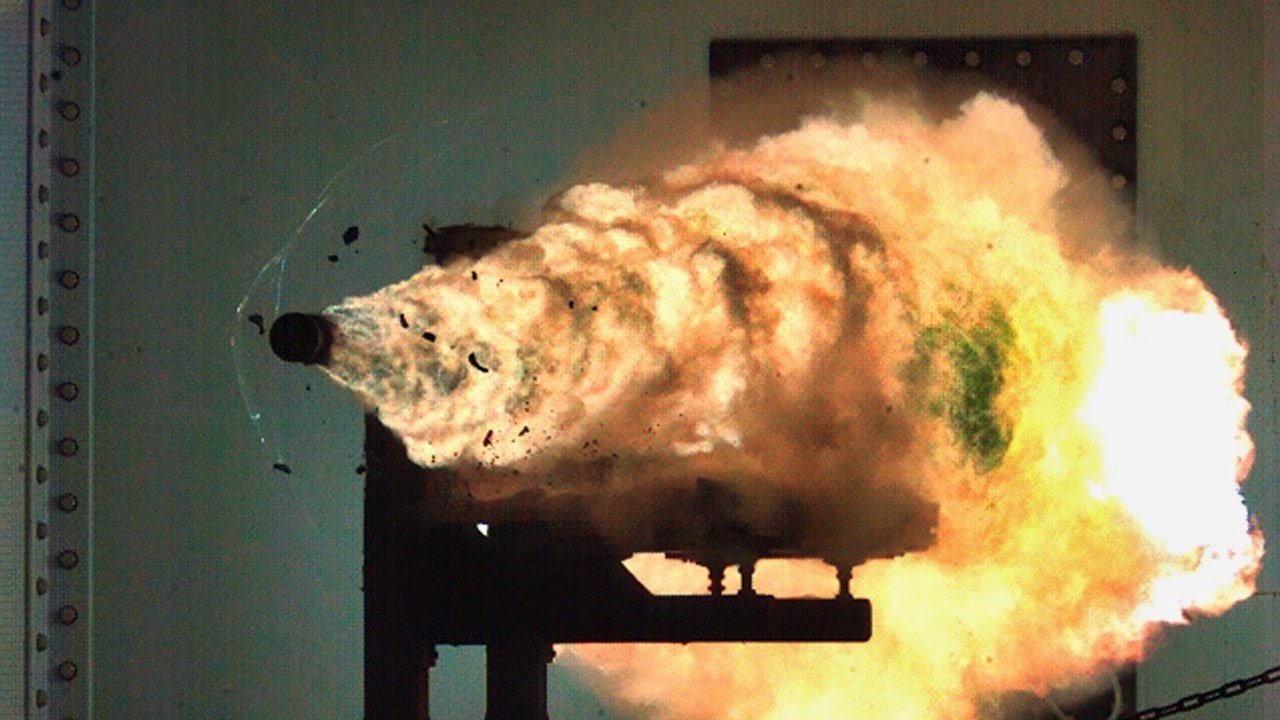
The Pentagon’s New Laser Weapon Program Is Bigger Than the Headlines Say, and Harder Than They Admit: On July 9, the Pentagon awarded agreements to nLIGHT and Lockheed Martin to build containerized laser weapons powerful enough to kill cruise missiles, a program with an $86 million start and a ceiling of $847 million, larger than the single-vendor figure in most headlines. The logic is magazine math: missiles worth millions have been spent shooting down drones worth thousands, and lasers promise a deep magazine at a fraction of the cost per shot. The catch is history. Battlefield lasers have been nearly ready for 40 years, and the Pentagon’s own officials say they will complement interceptors, not replace them.
The Lasers Are Coming: That Could Be a Big Deal
The story racing around the internet says the Pentagon just launched a $627 million laser weapons program. The reality is both bigger and more interesting. On July 9, the Defense Department announced two agreements, not one, selecting both nLIGHT Defense and Lockheed Martin Aculight under the Joint Laser Weapon System program, with a combined initial award of $86 million and a total program ceiling of $847 million. The $627 million in the headlines is just nLIGHT’s share of that ceiling, on a contract that begins at $44 million. Behind the numbers sits the most serious attempt yet to drag laser weapons out of the demonstration circuit and into production, and both the promise and the problem deserve a harder look than the press-release rewrites are giving them.
What the Pentagon Bought
JLWS, run by the Pentagon’s research and engineering directorate under its Scaled Directed Energy initiative, buys containerized high-energy lasers designed to bolt onto ground vehicles and warships alike and deploy quickly to any theater.
The first prototypes will generate roughly 150 kilowatts to meet what the department calls urgent operational demands, then scale to the 300- to 500-kilowatt class it says is required for robust cruise missile defense, while a concurrent 500-kilowatt integrated system is built around a laser source from the earlier High Energy Laser Scaling Initiative.
The department wants operational demonstrations as early as 2028, and it is deliberately using a fast, flexible contracting authority to shorten the path from a successful test to production.
Why 500 Kilowatts Is the Real Story
The power numbers are the substance that most coverage skipped. Nearly everything actually fielded today operates in the tens of kilowatts: the Navy’s roughly 60-kilowatt HELIOS aboard the destroyer USS Preble and the Army’s 50-kilowatt lasers on Stryker vehicles. Those power levels can burn small drones out of the sky and pop mortar rounds. A cruise missile, faster, tougher, and often crossing the beam for only seconds, demands far more energy on target, which is why the 300-to-500-kilowatt threshold is the line between a counter-drone gadget and a genuine air-defense weapon.
The pieces exist in the laboratory: nLIGHT already delivered a 300-kilowatt laser under the scaling initiative and holds a follow-on contract, reported at $171 million, to push beyond a megawatt, while Lockheed built the Army’s 300-kilowatt prototype. JLWS is the attempt to turn those lab lasers into something a combatant commander can park in a container and use.
The Magazine Math
The motive is arithmetic, every recent air war has taught. Defenders have expended interceptor missiles costing a million dollars or more against drones costing a few thousand, and a warship’s missile magazine empties in days while the attacker’s drone supply does not. A laser inverts that exchange: each shot costs little more than the fuel to generate it, and the magazine is as deep as the power supply. That would matter in a war against Iran, Russia, and, of course, China.
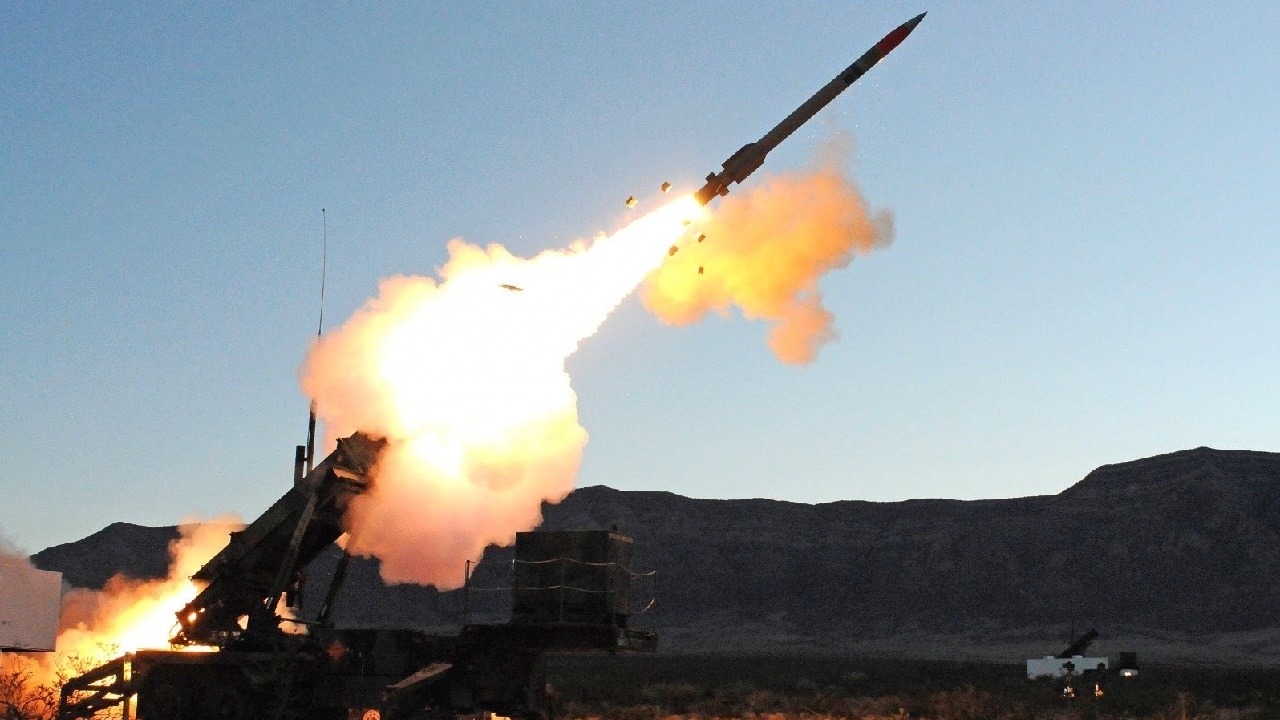
Patriot Missile. Image Credit: Creative Commons.
That is why the department’s announcement leans so hard on deep magazines and low cost-per-intercept, and why the ambition runs past drones. Specialist reporting ties JLWS directly into the Golden Dome homeland air-defense architecture, and on June 23, both vendors took part in a laser demonstration for Defense Secretary Pete Hegseth at White Sands, where he said he watched lasers stop drones and cruise missiles “dead in their tracks.” Under Secretary of War for Research and Engineering Emil Michael put the frame plainly: “We must actively defend the homeland.
” The market noticed too, with nLIGHT’s stock jumping 30 percent on the news. Nor is America alone: the very same day, Germany signed MBDA and Rheinmetall to build a containerized naval laser for its frigates, targeting 2029.
Forty Years of Almost
Now the honest half. Directed energy has been on the verge since the Reagan years, and the graveyard of almosts is long: the Navy demonstrated a laser at sea aboard USS Ponce back in 2014, and a decade later, the fielded force still amounts to a handful of low-power systems. The trade press covering this very award noted that the Pentagon has historically struggled to move lasers from research into large-scale fielding, and the department’s own budget language is careful, describing directed energy as one layer in a multi-tiered framework that complements interceptors rather than replacing them.
Physics explains the humility. Rain, fog, and dust eat a beam’s power over distance, which is precisely why nLIGHT advertises atmospheric-correction technology; a laser must dwell on each target for seconds, which is a real constraint against a saturation swarm; and generating and cooling hundreds of kilowatts inside a shipping container is a brutal engineering problem. The money is honest about the uncertainty too: $86 million is committed today, and the $847 million ceiling is an option stack that only fills in if the prototypes earn it.
The Test Is 2028
The right way to read this week’s news, then, is neither the breathless version nor the cynical one. The significance is not the dollar figure but the transition attempt, a deliberately structured push, across two vendors and two power classes, to make lasers a production reality rather than a perennial demo.
The cost-exchange problem that motivates it is real and worsening, which is why the Pentagon keeps paying and why Germany signed its own laser contract the same morning.
Whether this attempt breaks the forty-year pattern will be visible soon enough: the department has put a date on it, operational demonstrations by 2028. Until a 500-kilowatt beam kills a cruise missile in the rain, on demand, the laser age remains a promise, but for the first time, it is a promise with a schedule and a bill attached.
About the Author: Harry J. Kazianis
Harry J. Kazianis (@Grecianformula) was the former Senior Director of National Security Affairs at the Center for the National Interest (CFTNI), a foreign policy think tank founded by Richard Nixon based in Washington, DC. Harry has over a decade of experience in think tanks and national security publishing. His ideas have been published in the NY Times, The Washington Post, The Wall Street Journal, CNN, and many other outlets worldwide. He has held positions at CSIS, the Heritage Foundation, the University of Nottingham, and several other institutions related to national security research and studies. He is the former Executive Editor of the National Interest and the Diplomat. He holds a Master’s degree focusing on international affairs from Harvard University.

