
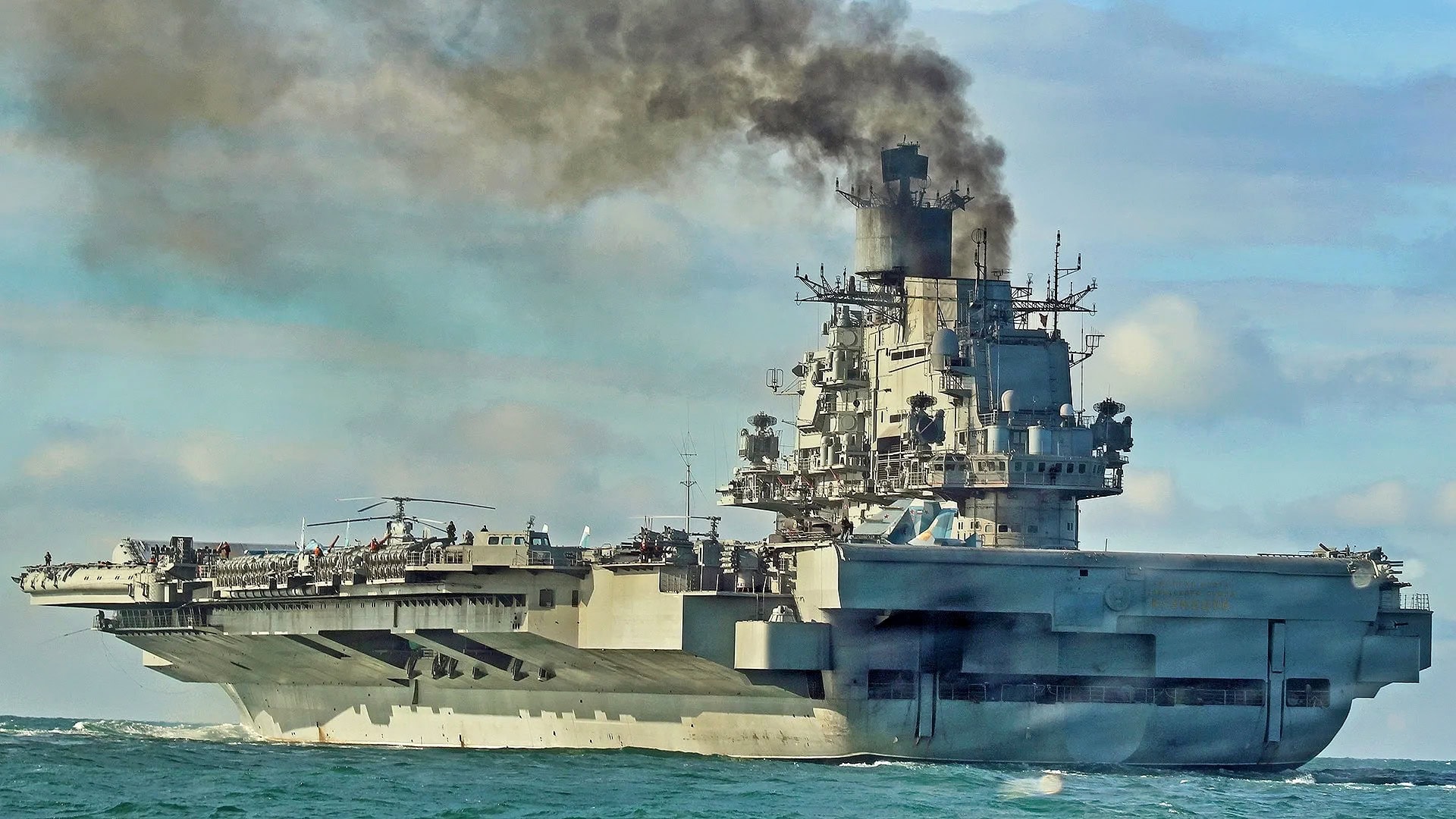
Russia may have spent around $1 billion and nine years on a ship that is likely to be sold for scrap. The cursed Admiral Kuznetsov, the country’s only aircraft carrier, is about to meet an ignominious end. The vessel has endured a huge share of bad luck, leaving many wondering whether the whole ordeal of rebooting it was worth the money and effort.
The Kuznetsov has been out of service since 2017, and the trouble only mounted after it returned to port after a lackluster deployment in Syria. In 2018, the ship was moored to a floating dry dock known as the PD-50. The dry dock was faulty too, and a power failure sank the structure.
Deadly Accident Begins a Disastrous Period
During the accident, a 70-ton crane fell onto the flight deck. This punched a hole several feet across in the flight deck. One shipyard worker died. After the PD-50 was submerged, Russia had no other means of holding the Kuznetsov in dry dock. Russia tried to place the vessel at the 35th Shipyard until an alternative location could be found. Work to repair it ground to a halt.
Admiral Kuznetsov: Fires Plague the Ship
That was not the only problem when repairs finally resumed. In 2018, a welder failed to ensure that no trouble would arise during the process and did not account for the possibility of an accident. The welding sparks hit a fuel line, and a fire broke out. This killed two workers and wounded at least 12 others. Extensive damage occurred below deck.
Another blaze occurred in December 2022, and an earlier fire in 2009 had many wondering whether this carrier would ever be safe to operate and maintain. Then, an additional problem confronted the navy. So much money was being spent on the Kuznetsov that greedy hands got in the till. The shipyard leader was arrested for embezzlement of funds in 2021.
This Is a Lost Cause Aircraft Carrier
Each year, the Russians pushed back the carrier’s readiness deadline. By the summer of 2025, the navy was ready to give up. There was no way that the ship could sail again. Plus, carriers were seen by naval leaders as becoming obsolete due to anti-ship missiles and drones.
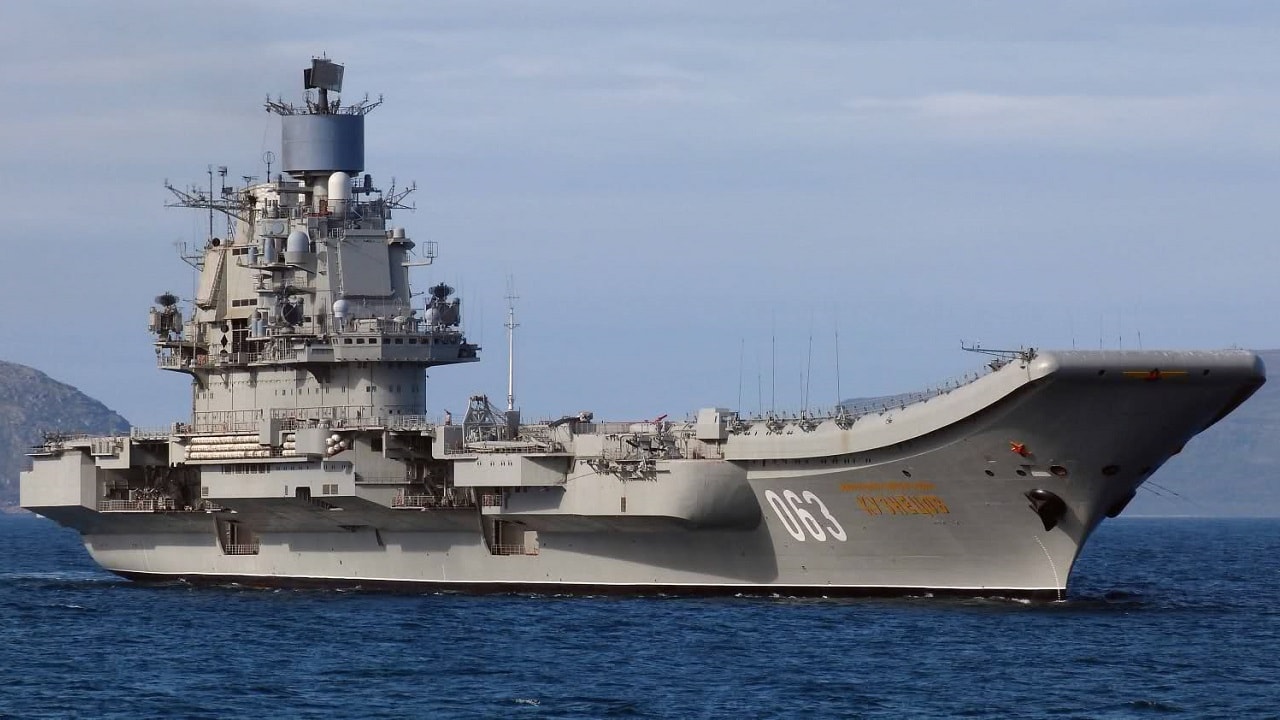
Admiral Kuznetsov Aircraft Carrier. Image Credit: Creative Commons.
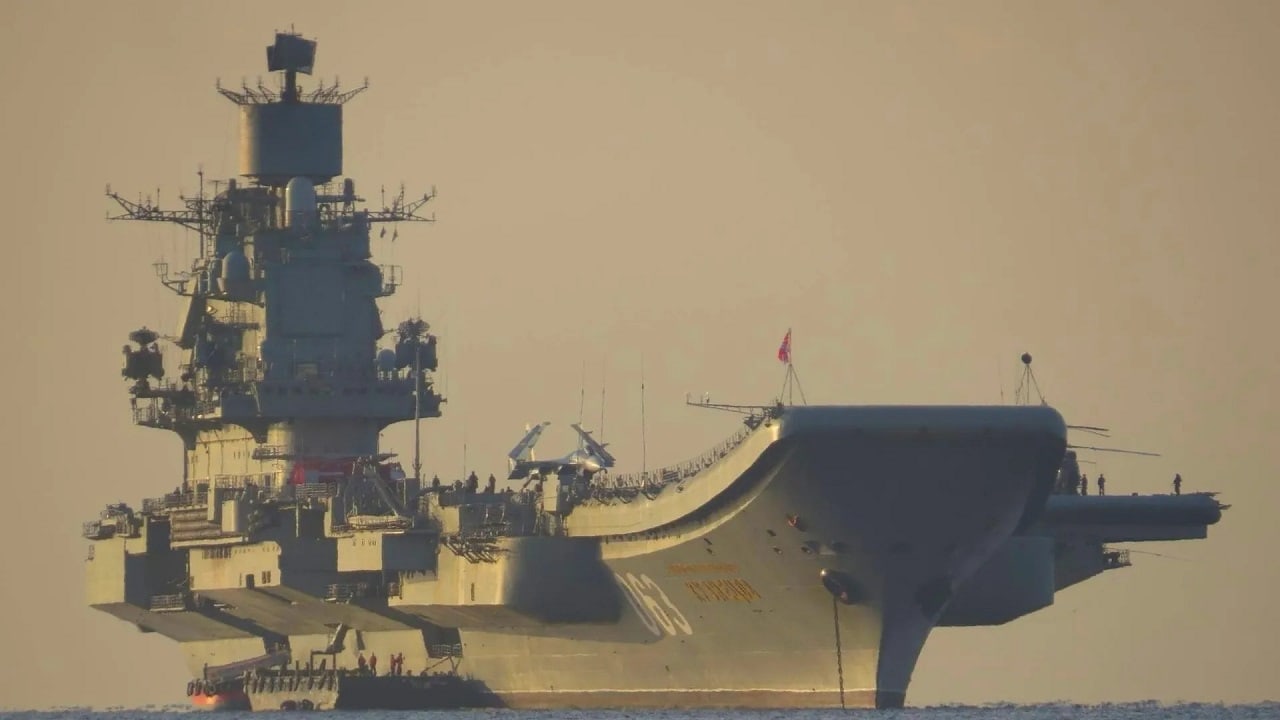
In November of 2018, Admiral Kuznetsov was damaged when a 70-ton floating crane fell on the flight deck.
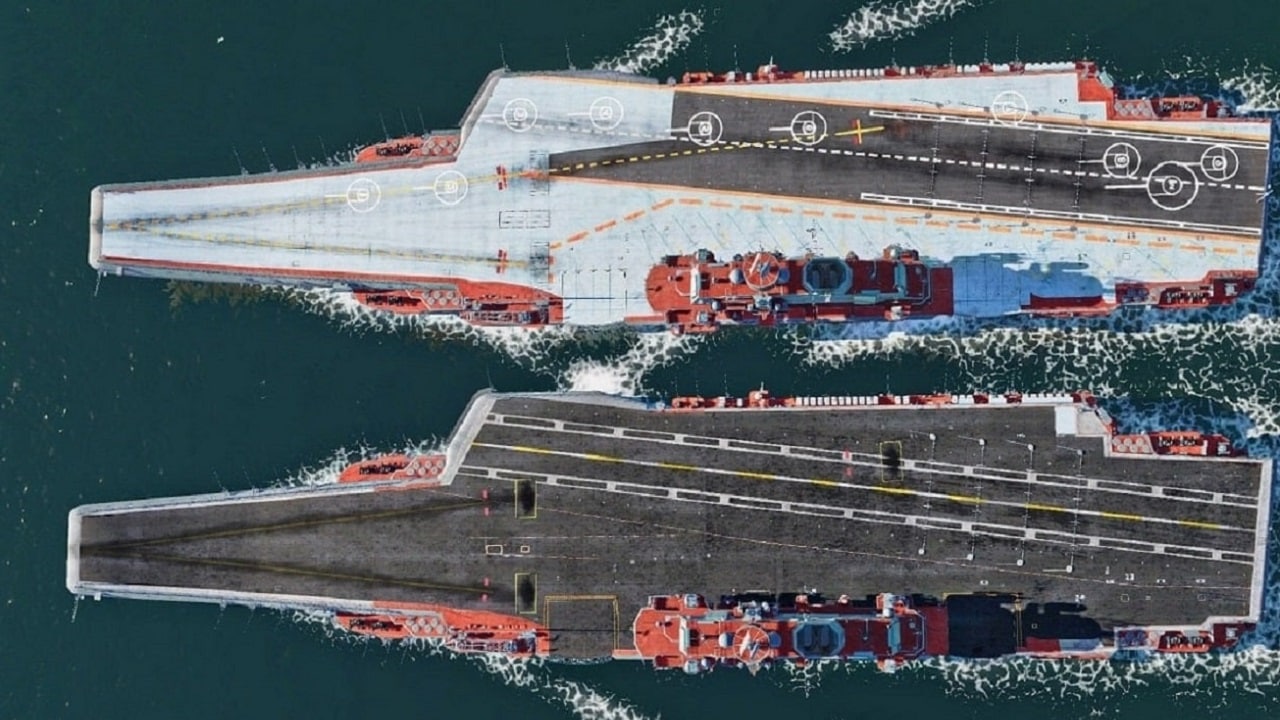
Admiral Kuznetsov before and after a refit. Image Credit: Creative Commons.
The ship was finally going to be decommissioned, and the high command even sent the carrier’s sailors to fight in Ukraine. The Kuznetsov is moored in Murmansk, rusting away. Financial sanctions robbed the ship of spare parts. No shipbuilder wanted to be responsible for it because of the corruption scandal. The repair costs were mounting, and the Russian high military command was more consumed with prosecuting the land war against Ukraine than with investing more time and money in the carrier. This was a stunning end to the 40-year-old ship.
A Struggling Navy Hurts Long-term Strategy
Russia thus does not have an operational aircraft carrier, which makes its navy on par with those in the developing world. The Kremlin cannot project power beyond its region, and the military lacks a blue-water navy capable of carrying the flag abroad.
The Navy just cannot handle the modern era. Its submarine force is impressive, but the inability to form and deploy a carrier strike group robs the country of the wherewithal to strategically dominate the waters near shore or at hotspots around the globe.
This means that Russia will either have to invest in more submarines or sea drones to offer some form of modernization. The country simply does not have the maritime industrial base to keep a carrier in business. The irony is that Russia ended up helping the Chinese with its carrier ambitions.
The Chinese Navy’s Aircraft Carrier Efforts Have Been Successful
The Kuznetsov’s sister ship, the Varyag, ended up with the People’s Liberation Army Navy and became the Liaoning carrier. This has stung Russia. It shows that the Chinese are better adept at modern shipbuilding and maintenance.
The Kuznetsov is now at the end of its service life. Even the propulsion plant cannot be saved because of faulty boilers. The engines were so bad that the carrier usually had to be either pulled or escorted by tugboats.
No Aircraft Are Ready for Russian Carriers Anyway
Russia has failed to continue its troubled era of carrier aviation. It does not have decent carrier-borne fighter jets to populate the flight deck. There was once a movement to develop a carrier version of the new Su-75 Checkmate, but that was seen as a bridge too far.
Selling the carrier would not work since it is in such poor shape. No country wants to take on the job of getting it back in service. The Kuzntetosov is headed to the scrap yard.
Given the problems of the Russian military, admirals are unlikely to heed the cautionary tale of the Kuznetsov. This should be a set of lessons learned that must be taught at officer academies and staff colleges. Unfortunately, it will likely be ignored by the higher-ups and is liable to be repeated. This experience is a memory that the Russian shipbuilding industry is ignoring. It shows that Moscow has high ambitions but not the capability to make its navy into one of the best in the world. The failure will serve as a warning and become a case study that no country wants to repeat.
About the Author: Dr. Brent M. Eastwood
Author of now over 3,500 articles on defense issues, Brent M. Eastwood, PhD, is the author of Don’t Turn Your Back On the World: A Conservative Foreign Policy and Humans, Machines, and Data: Future Trends in Warfare, plus two other books. Brent was the founder and CEO of a tech firm that predicted world events using artificial intelligence. He served as a legislative fellow for US Senator Tim Scott and advised the senator on defense and foreign policy issues. He has taught at American University, George Washington University, and George Mason University. Brent is a former US Army Infantry officer. He can be followed on X @BMEastwood.