
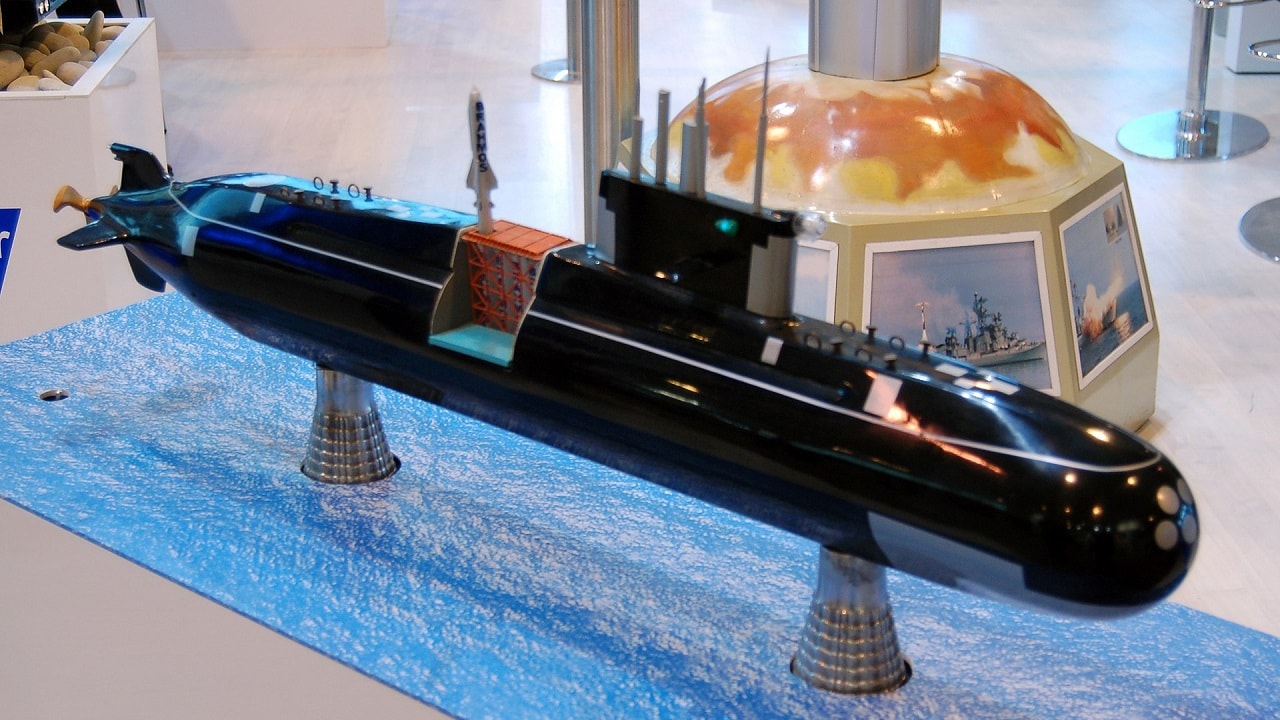
The Russian Lada-class attack submarines are among the country’s worst defense acquisition failures. The program has been in trouble for years, and the Russian navy has been frustrated by the hard-luck subs as it struggles to replace an older class of boats.
A successful Lada-class acquisition process would have boosted the country’s undersea warfare capabilities.
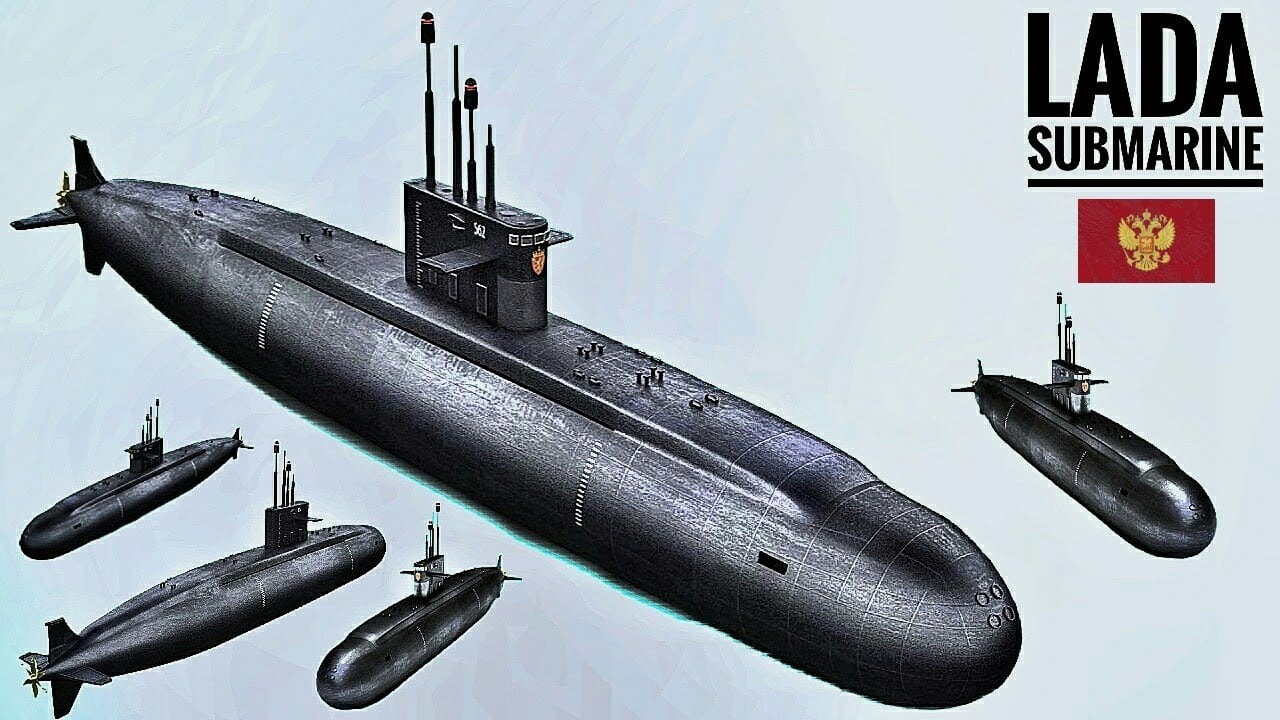
Lada-class Submarine. Image Credit: Creative Commons.
The Lada-class, also known as the Project 677 class of submarines, comprises diesel-electric boats designed to replace the Cold War-era Kilo-class subs.
This upgrade was badly needed due to the Kilo-class’s age and obsolescence.
Russia Had High Hopes for the Lada-class
The Lada-class was seen as a way to bolster the effectiveness of Russian nuclear ballistic missile submarines (SSBNs).
The family of attack boats could escort the SSBNs in a wolf pack of hunter-killer boats, thereby enhancing the strategic capabilities of the Russian submarine fleet.
The Lada-class could also perform patrol duties as a homeland security asset to defend Russian shores.
The Lada-class was later seen as more of an anti-submarine asset due to its lack of nuclear-powered propulsion.
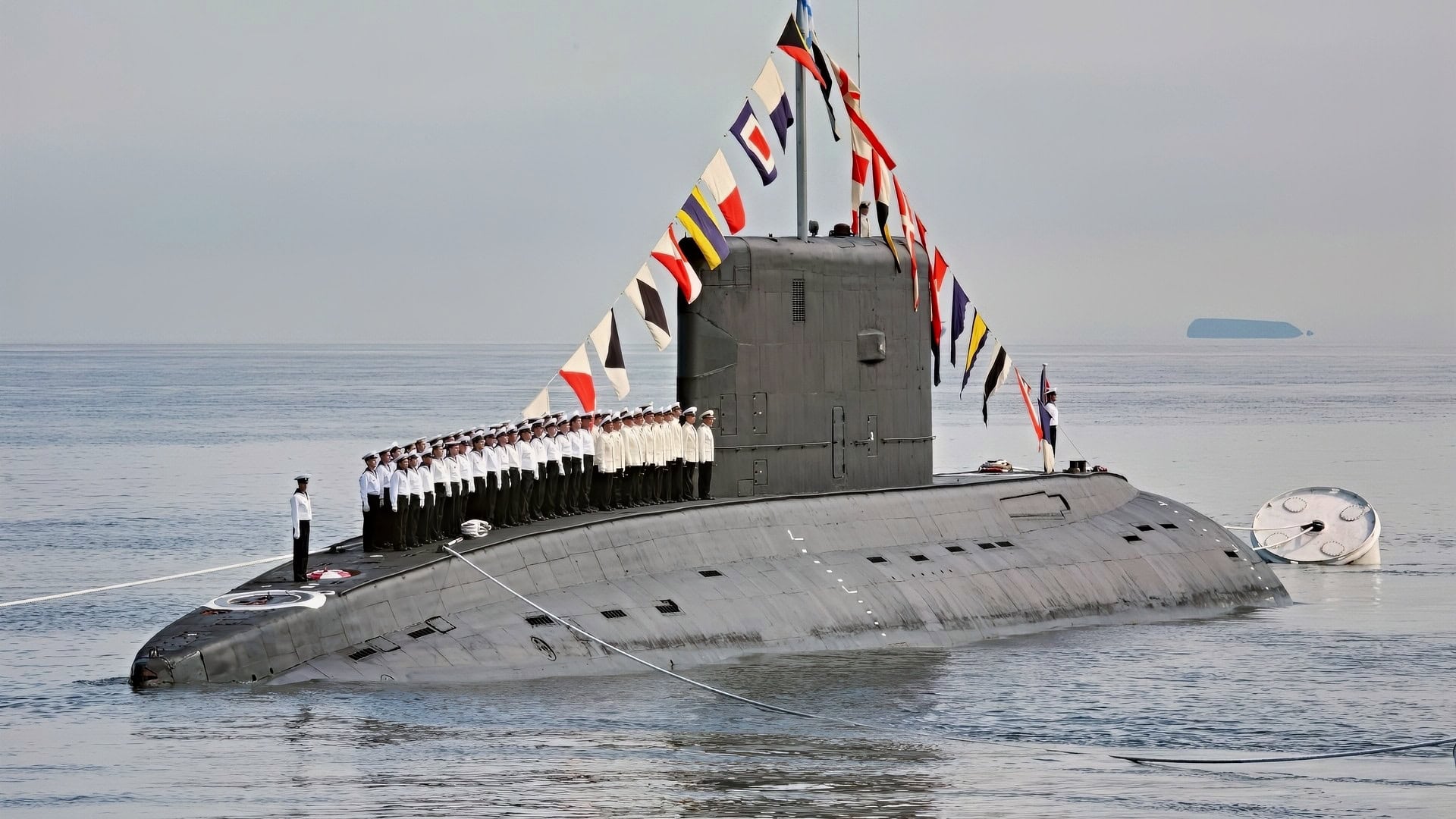
Kilo-Class Submarine on Display
The family of boats has a large conformal array that can collect significant amounts of data for the subs’ computer systems and help their torpedoes become more adept at targeting enemy shipping.
Curse of the Sankt Petersburg
The first sub of the Lada-class is called the Sankt Petersburg. This was finally Russia’s entry into the fourth-generation submarine evolution. The Sankt Petersburg was commissioned in 2010 after a difficult manufacturing period that began in 1997.
The Sankt Petersburg was a stunning failure. Sailors quickly noticed that the sub’s sonar and propulsion systems were not working properly.
The Navy and its defense contractors had to rework the design and begin testing and evaluating various systems after a period of renewed, expensive manufacturing. The Lada-class would need to be overhauled.
No Joy for the Lada-class
The extra effort did not pay off. The Russians were unable to quickly replace the engine and sonar system. The navy decided to decommission the Sankt Petersburg in 2023.
The shipbuilders were spending too much money on the sub, and since it was a time of warfare on land in Ukraine, the navy decided the extra investment was not worth it.
Plus, the redesign process was taking too long, and the various improvements were not working out as planned.
The Sad Story of the Kronstadt
However, Russia did not completely give up on the Lada-class. The navy tried again with the Kronstadt. Work on this boat started in 2005.
Russia halted shipbuilding in 2009 due to the effects of the Global Financial Crisis, which stymied the entire naval industrial base.
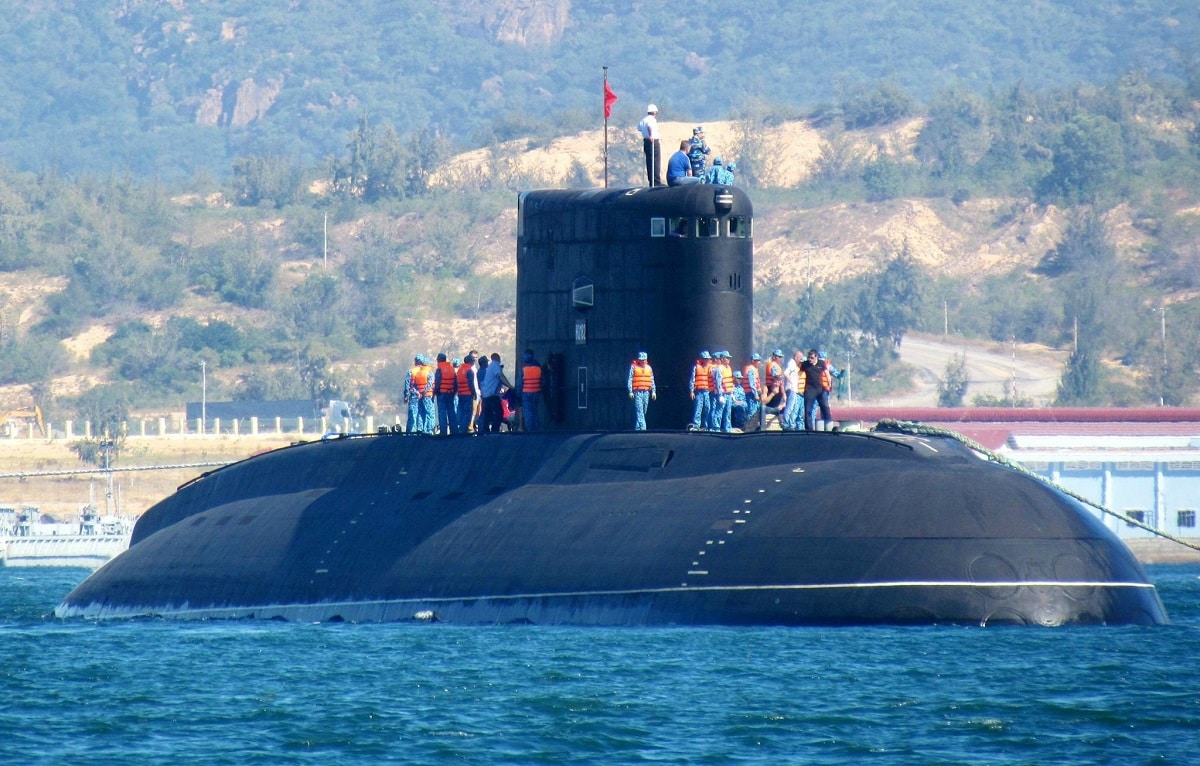
Russia-built Kilo-class Submarine. Image Credit: Creative Commons.
Russia resumed work on the Kronstadt in 2013, with the first launch in 2018. The delays and money spent were considerable, and even though sea trials finally began in 2021, the Kronstadt was seen as a troubled boat.
What About Selling It Overseas?
Russia did not give up the Lada-class’s original design. The navy thought it could export the submarine to help pay for earlier cost overruns and schedule slips.
This effort became known as the Amur-1650. Another attempt at export was the Amur-950, which was meant for long-range patrolling to hot spots that needed a smattering of cruise missiles.
The Amur-950 had a Vertical Launching System that would help it achieve land attack capability.
Russia turned to its ally India to see whether the country’s navy wanted to undertake a joint production run for the Amur boats.
India opted for a French design instead, and the Amur export program floundered. No other country was interested in building or buying Amurs.
Cursed Band of Subs
Russia still hopes the Lada-class can dominate underwater and bolster its attack fleet. The subs are still in development. Russia must instead concentrate on its Kilo-class subs, which are seen as more reliable.
This is again an indictment of Russia’s sub-building. The Lada-class should be considered a failure. They never delivered on promises and are faulty at best. Long delays and cost overruns plagued the program.
The Sankt Petersburg was finally sent to the scrap yard.
The Lada-class was originally intended to deploy an air-independent propulsion (AIP) system, but this capability was never integrated into the Lada subs.
The third sub of the class was the Velikiye Luki, which entered service in December 2025.
Not a Good Idea to Continue the Program
But Russia is likely throwing good money after bad with its Lada-class efforts.
The long development period risked the subs becoming obsolete by the time they entered service. Without AIP capabilities, they would be noisier and liable to be discovered.
Decades have elapsed since the program’s inception. The Russian navy has to look at other models now that the Lada-class has languished for so long.
The admirals could use some good news for a change.
We’ll continue to check in on the development of the Lada-class, but do not expect any miracles to come from the program in the future.
This project should be considered a troubling case study in poor attempts to add muscle to the Russian attack submarine fleet.
About the Author: Brent M. Eastwood, PhD
Brent M. Eastwood, PhD, author of now over 3,500 articles on defense issues, Brent M. Eastwood, PhD, is the author of Don’t Turn Your Back On the World: A Conservative Foreign Policy and Humans, Machines, and Data: Future Trends in Warfare, plus two other books. Brent was the founder and CEO of a tech firm that predicted world events using artificial intelligence. He served as a legislative fellow for US Senator Tim Scott and advised the senator on defense and foreign policy issues. He has taught at American University, George Washington University, and George Mason University. Brent is a former US Army Infantry officer. He can be followed on X @BMEastwood.