
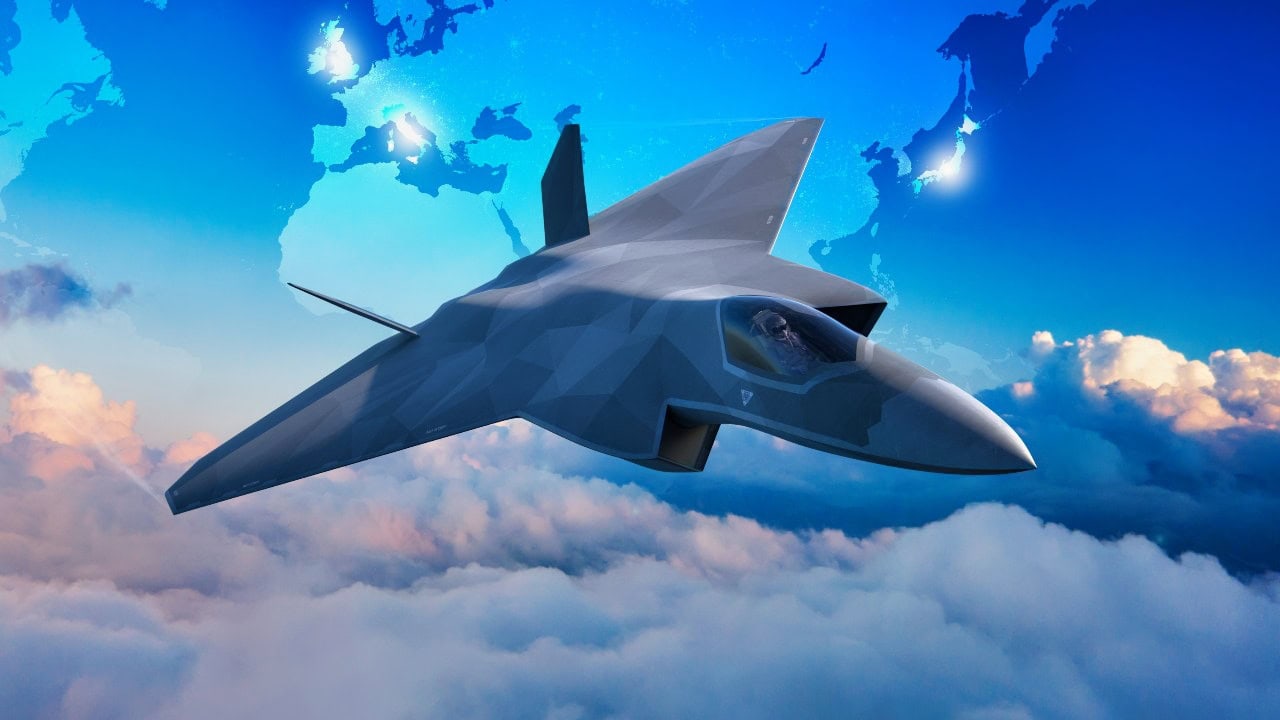
Canada Joined GCAP to Hedge Its Fighter Future Without Paying the Development Bill: Canada became the first observer nation in the Global Combat Air Program because Ottawa wants access before Britain, Italy and Japan lock down the fighter’s design, cost and industrial work. Observer status gives Canada privileged access without requiring a financial contribution, an aircraft order or a vote.
The four governments announced the agreement on July 21. Canada will receive deeper insight into GCAP’s capabilities, governance, industrial structure, security requirements and future partnership opportunities. The British government said Ottawa will have no decision-making role, while Reuters reported that observer status carries no financial commitment.
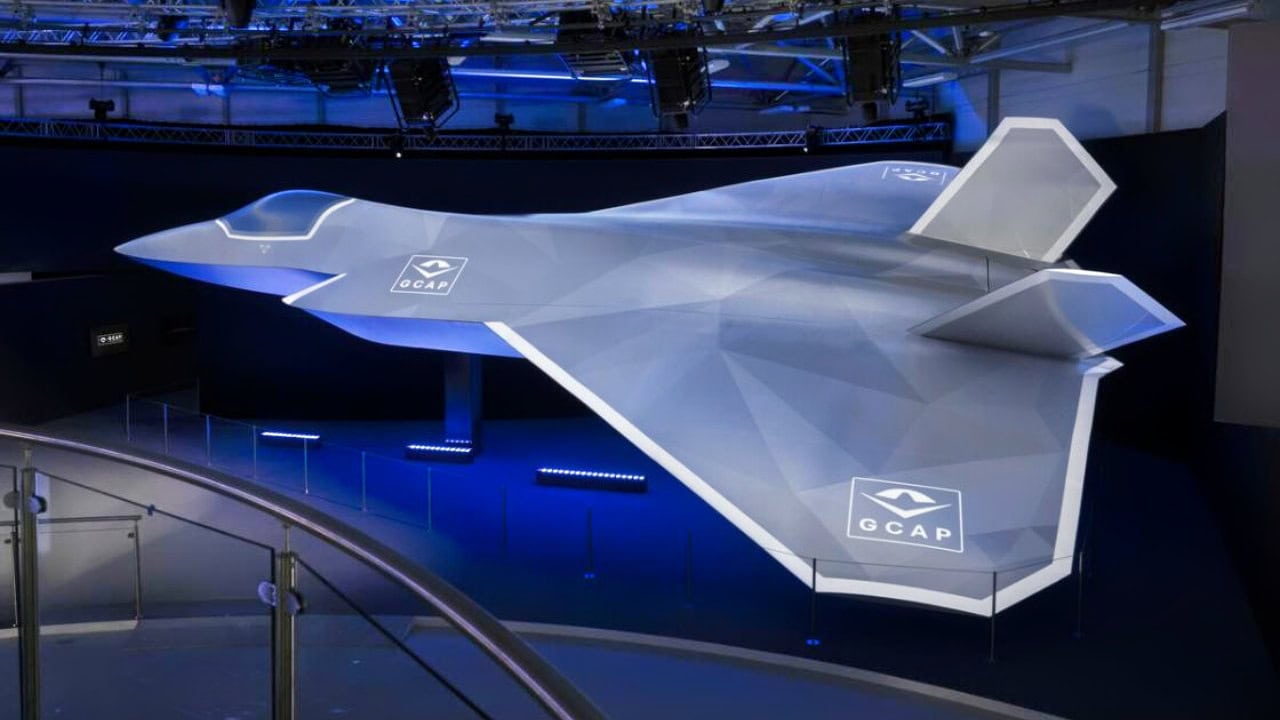
GCAP 6th Generation Fighter
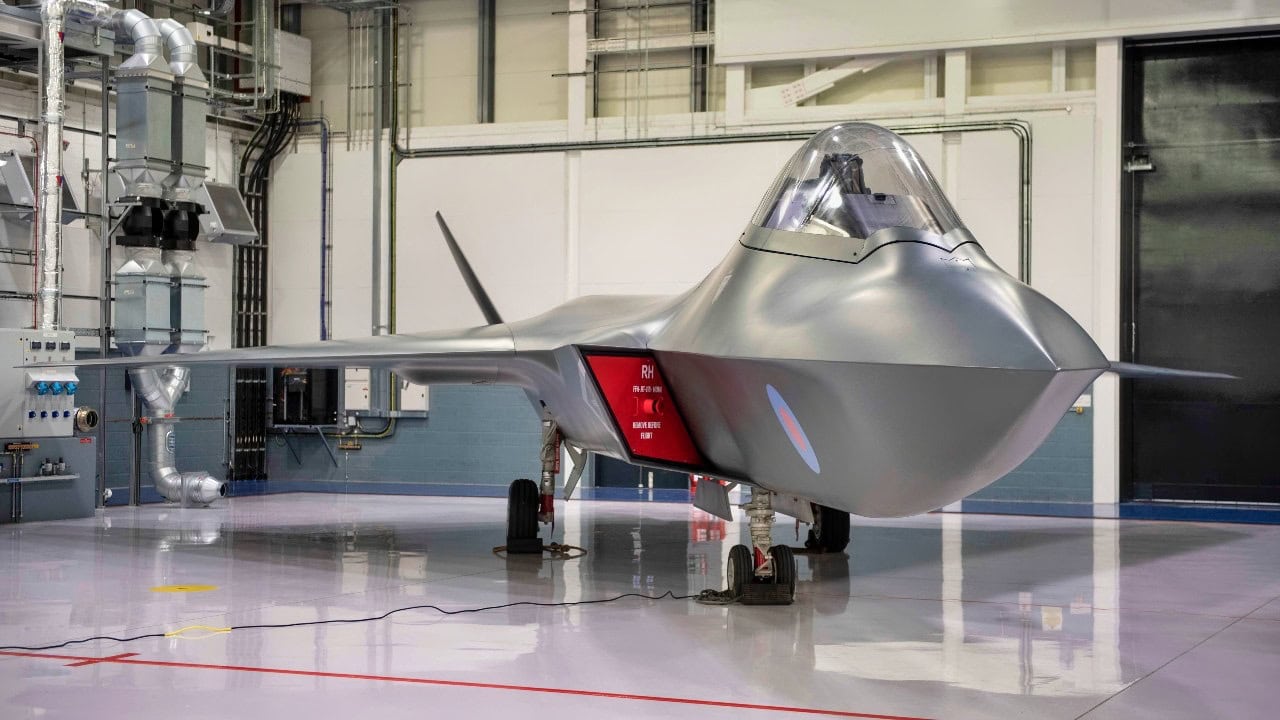
Image of the UK’s concept model for the next generation jet fighter “Tempest”, which was unveiled by Defence Secretary, at Farnborough International Air Show back in 2018.
GCAP was launched in 2022 to field a sixth-generation combat aircraft by 2035. Edgewing, the joint venture owned equally by Britain’s BAE Systems, Italy’s Leonardo and Japan Aircraft Industrial Enhancement Co., serves as the prime contractor and design authority. The aircraft is intended to operate alongside F-35s, uncrewed systems and advanced sensors.
The move does not settle Canada’s F-35 review. Ottawa remains committed to the first 16 aircraft from a planned fleet of 88, while the remainder is under examination. GCAP arrives too late to replace the aging CF-18s on their present schedule, but it gives Prime Minister Mark Carney a longer-term option while supporting his effort to reduce dependence on American defense suppliers.
Canada Gained Access Without Taking On the Bill
The observer agreement is a low-risk form of due diligence. Canadian officials will examine the program’s requirements, delivery plans and industrial model before negotiating full participation, a future aircraft purchase or a narrower technology role. Canadian companies receive no guaranteed contracts, yet Ottawa now sees how the program is being organized from the inside.
Entering now matters because GCAP is moving from broad concepts into detailed engineering. On July 3, the GCAP Agency awarded Edgewing an 18-month contract worth £4.6 billion to finish the advanced concept and assessment phase and continue design work. The agreement followed an earlier bridge contract that kept thousands of engineers working through a period of serious schedule and funding pressure.
Decisions made during this phase will shape propulsion, sensors, software, weapons integration and manufacturing. The program’s propulsion work has already reached major test milestones. Canada wants to identify where its aerospace sector fits before the most valuable work packages are assigned.
GCAP Fits Carney’s Defense Diversification Strategy
Canada directs about 70 percent of its weapons spending toward American products, according to Reuters. Carney’s Defense Industrial Strategy seeks to reverse that balance by raising the share of defense acquisitions awarded to Canadian firms to 70 percent, expanding research spending and building export-oriented production at home.
GCAP links Canada with three trusted partners outside the United States. Britain is a Five Eyes intelligence partner and NATO ally. Italy is a NATO ally with a large combat-air industry. Japan has become a closer Canadian security partner in the Indo-Pacific, and a bilateral equipment and technology agreement provides a framework for joint projects involving defense technology and intellectual property.
Canada also has an operational reason to watch GCAP. The Royal Canadian Air Force must cover Arctic, Atlantic and Pacific approaches across enormous distances. Ottawa’s announcement cited longer ranges, more sophisticated sensors and rapidly evolving threats as requirements for its future force. GCAP matches that direction while opening an industrial path into software, sensors and crewed-uncrewed integration.
GCAP Does Not Solve Canada’s F-35 Problem
The government has acknowledged that the F-35 purchase remains under review, although the first 16 jets are funded. The first eight are scheduled for delivery to Luke Air Force Base in 2026 and 2027 for Canadian pilot training. The first aircraft is expected in Canada in 2028, with initial operational capability planned for 2029.
The CF-18 retirement schedule leaves little room for delay. Canada expects the Hornet fleet to serve through 2032, while GCAP targets 2035 for entry into service. The country’s aging fighters still need a replacement this decade, and Defense Minister David McGuinty has not set a deadline for the broader F-35 decision.
Ottawa still must choose whether to complete the 88-aircraft F-35 plan, reduce the order or pursue a mixed fleet involving another fighter. GCAP sits beyond that decision. It gives Canada a hedge after 2035 rather than an escape from the procurement choice already in front of it.
Industrial Influence Is the Real Prize
Full participation would require a separate agreement with Britain, Italy and Japan, followed by negotiations over funding, security rules and industrial work. Observer status guarantees none of those benefits. It gives Ottawa enough information to judge whether a larger role offers better strategic and economic value than entering later as an aircraft customer.
The window will not stay open indefinitely. Leonardo chief executive Lorenzo Mariani said on July 22 that another country should ideally join by the end of 2026, with roughly one year as the outer limit. Canada now has access to the programme, but no financial pledge, industrial share or vote has been agreed.
About the Author: Harry J. Kazianis
Harry J. Kazianis (@Grecianformula) was the former Senior Director of National Security Affairs at the Center for the National Interest (CFTNI), a foreign policy think tank founded by Richard Nixon based in Washington, DC. Harry has over a decade of experience in think tanks and national security publishing. His ideas have been published in the NY Times, The Washington Post, The Wall Street Journal, CNN, and many other outlets worldwide. He has held positions at CSIS, the Heritage Foundation, the University of Nottingham, and several other institutions related to national security research and studies. He is the former Executive Editor of the National Interest and the Diplomat. He holds a Master’s degree focusing on international affairs from Harvard University.