
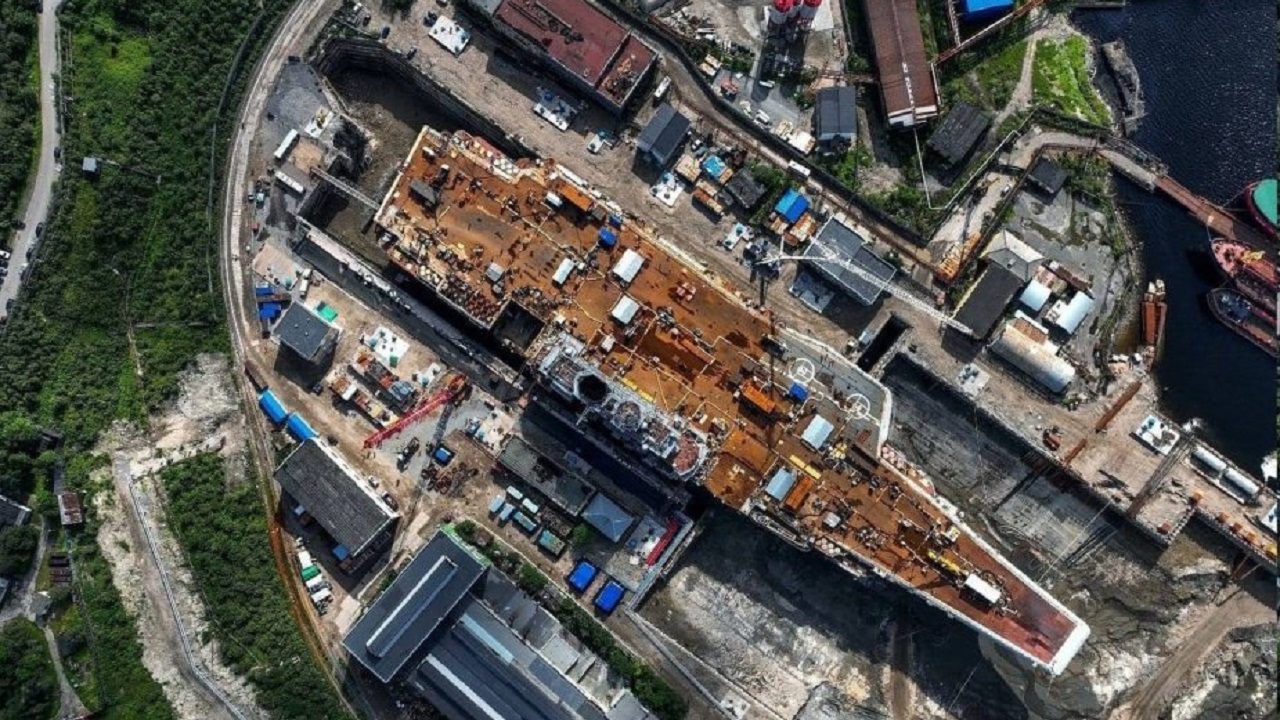
Why Russia Never Called Admiral Kuznetsov an Aircraft Carrier: Russia’s last aircraft carrier appears to be nearing the end of its long and troubled life. Admiral Kuznetsov has not sailed since 2017; its overhaul has been suspended, and the chairman of Russia’s state shipbuilding corporation has said the vessel will likely be sold or scrapped. Moscow has not issued a final disposal order.
Officially, Russia never classified Admiral Kuznetsov as an aircraft carrier. The Soviet and later Russian designation was tyazholyy avianesushchiy raketnyy kreyser, usually translated as “heavy aircraft-carrying missile cruiser.” The description sounds like bureaucratic wordplay for a ship with a full flight deck, a ski jump, arresting wires, and an air wing of Su-33 and MiG-29K fighters.
The name served an important legal purpose. Admiral Kuznetsov was built in Mykolaiv, now Mykolaiv, in the Ukrainian Soviet Socialist Republic. The ship therefore had to leave the Black Sea through the Turkish Straits before joining the Soviet Northern Fleet.
The 1936 Montreux Convention complicated the journey. Article 11 allows Black Sea powers to send large capital ships through the Straits under special conditions. Annex II places aircraft carriers in a separate category and defines them as warships designed or adapted primarily to carry and operate aircraft at sea. A 55,000-ton Soviet aircraft carrier had no straightforward right of passage under those rules.
Admiral Kuznetsov Had the Weapons of a Missile Cruiser
The Soviet classification rested on more than just the name on official documents. Admiral Kuznetsov carried 12 enormous P-700 Granit anti-ship missiles in launch tubes beneath the forward flight deck. Those weapons gave the ship an offensive surface-strike capability that was absent on American carriers, which rely primarily on aircraft and escorting warships to attack enemy fleets.
The cruiser also carried a large defensive weapons suite, including Kinzhal surface-to-air missiles, Kashtan close-in weapon systems, AK-630 cannons, and anti-submarine rockets. The resulting ship was part carrier and part heavily armed surface combatant.
The design followed the earlier Kiev class, which placed a flight deck on the port side and filled the bow with missiles, guns, and other weapons. Those Soviet carrier-cruiser hybrids operated Yak-38 vertical-takeoff aircraft and helicopters but never resembled American supercarriers.
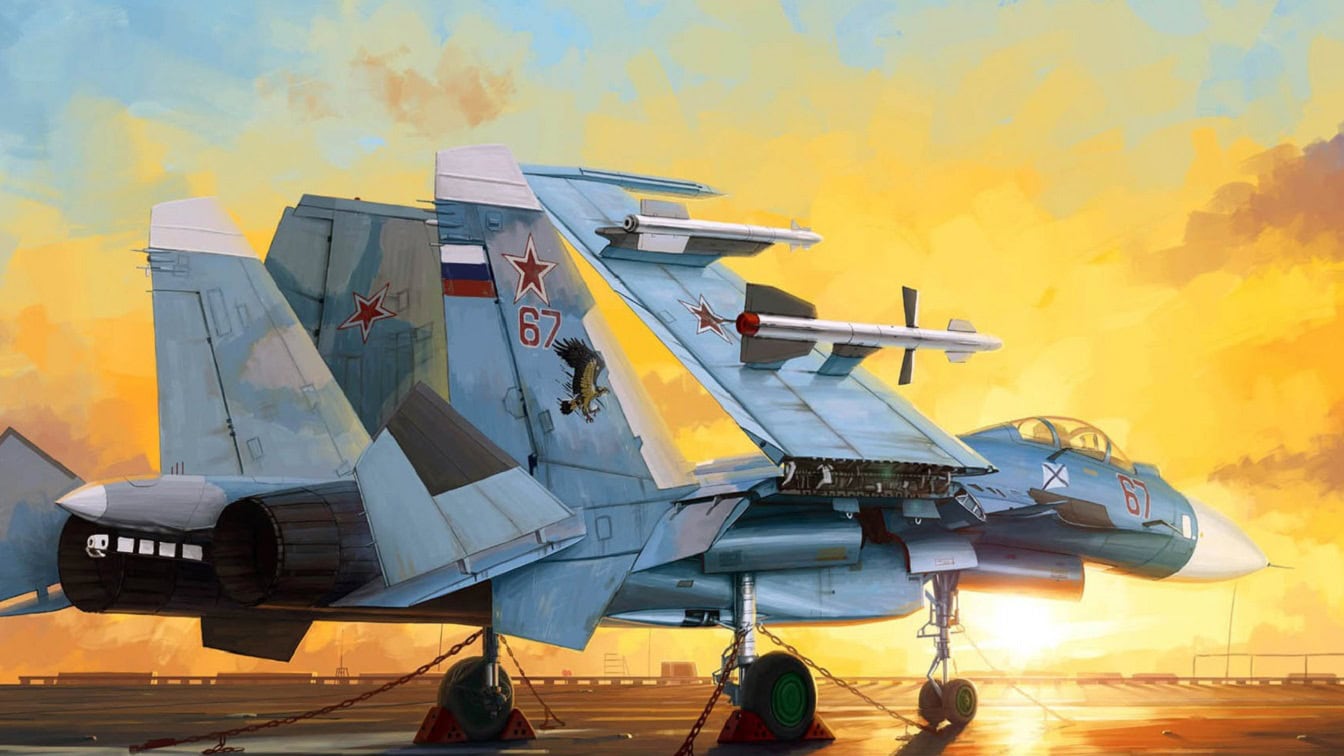
Su-33. Image Credit: Artist Rendering.
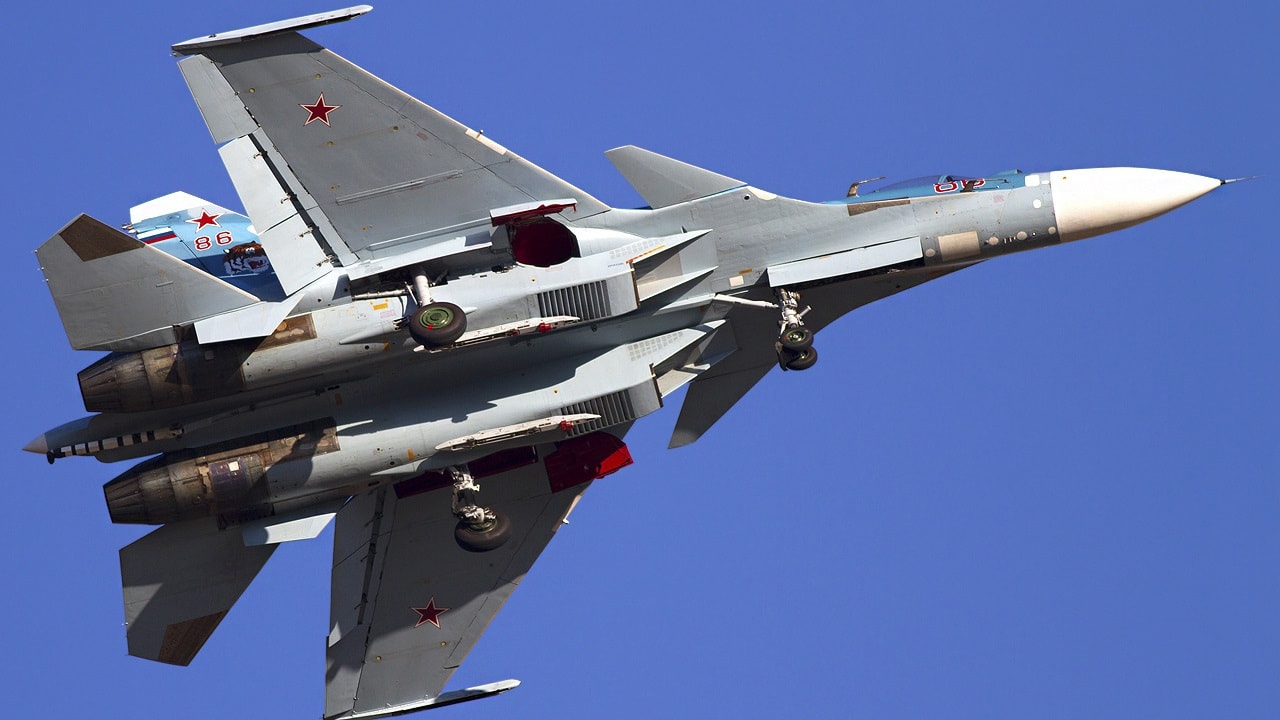
Russia’s Su-33 fighter. Image Credit: Creative Commons.
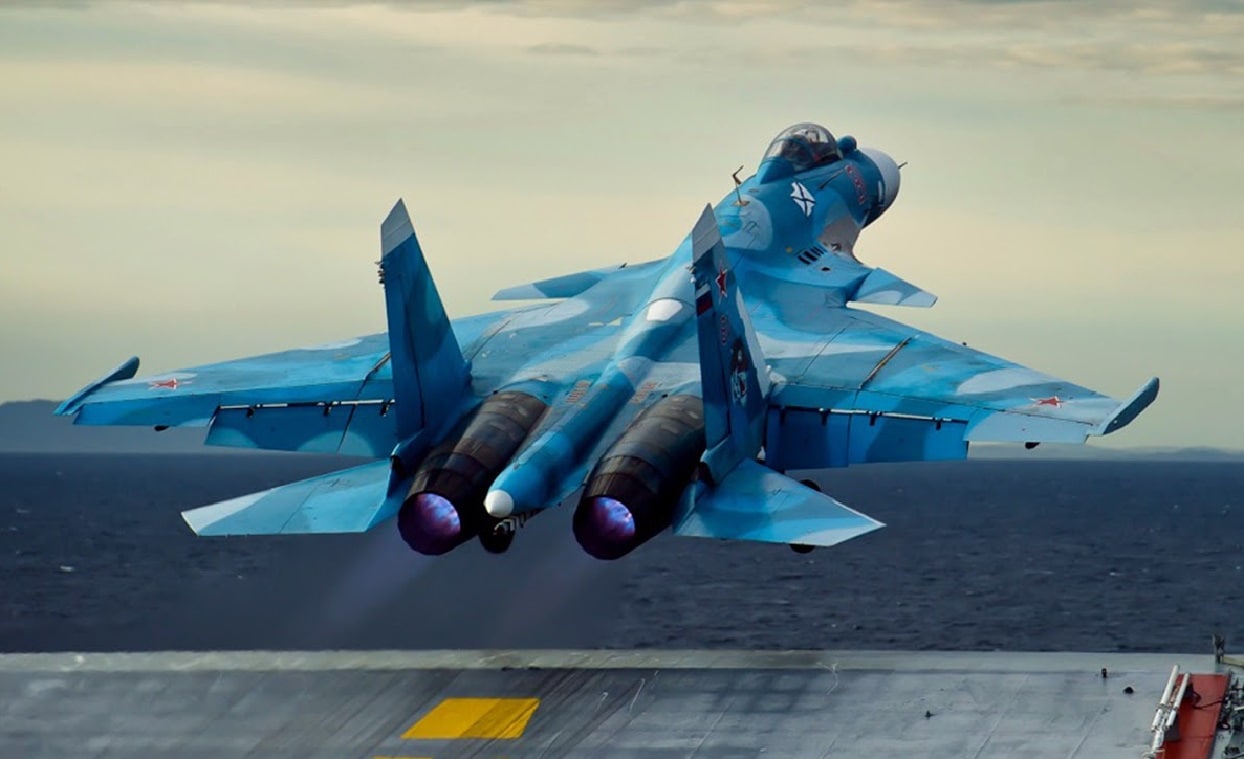
Su-33 Image: Creative Commons.
Admiral Kuznetsov moved much closer to a conventional carrier. It had an angled landing area, arresting gear, and a bow ski jump for launching high-performance fighters. The Granit missiles and dense shipboard armament still gave Moscow a factual basis for arguing that aircraft operations were not the vessel’s only defining purpose.
Soviet Carrier Doctrine Was Different From the U.S. Navy’s
The Soviet Navy did not build Admiral Kuznetsov as a smaller version of a Nimitz-class carrier. American carrier strike groups centered their offensive power on the embarked air wing. The carrier’s aircraft attacked land targets, gained air superiority, hunted ships, and projected power far beyond the reach of the hull itself.
Soviet planners placed the ship inside a different naval system. Studies of Soviet carrier doctrine described naval aviation as support for submarines, surface missile ships, and defensive operations against Western carrier aircraft. Admiral Kuznetsov’s fighters were intended primarily to provide air cover for a fleet rather than lead prolonged bombing campaigns deep inside another country.
The Soviet Union’s ballistic-missile submarines formed a central part of its nuclear deterrent. Surface ships, attack submarines, land-based aircraft, and naval fighters would help protect operating areas in the Barents Sea and northwestern Pacific. A carrier able to place fighters above those forces filled a defensive role in Soviet planning, even though the same ship also offered limited power-projection capability.
The ski-jump design reinforced the distinction. Su-33 fighters could launch without catapults, but heavier takeoff weights reduced fuel and weapon loads. Admiral Kuznetsov also lacked the catapult-launched fixed-wing airborne early-warning aircraft used by American carriers. Its air wing was better suited to fleet defense, patrol, and interception than to sustained long-range strike warfare.
The Montreux Convention Made the Cruiser Label Necessary
The treaty issue was not as simple as Moscow changing one word and automatically receiving legal immunity.
Montreux classifies ships by design and function, not just by what their owners call them. A ship built mainly to operate aircraft would remain an aircraft carrier under the treaty even if its navy described it as a cruiser.
Admiral Kuznetsov’s heavy missile armament created enough ambiguity for the Soviet argument to work.
Article 11 allowed Black Sea powers to move capital ships exceeding the normal tonnage limit through the Straits singly, accompanied by no more than two destroyers. Since the Soviets maintained that Kuznetsov was a cruiser rather than an aircraft carrier, they claimed the ship belonged inside that capital-ship exception.
Turkey’s decision mattered more than Soviet terminology alone. Ankara accepted the classification and permitted the ship to transit. Legal specialists debated whether the vessel’s full-length flight deck made it an aircraft carrier under the treaty’s functional definition, but no international court ruled on the issue, and Turkey did not block the passage.
The designation therefore worked in practice. It allowed a ship built at the Soviet Union’s only major carrier-construction yard on the Black Sea to reach the open ocean. It also matched the unusual compromise built into the vessel.
The Cruiser Designation Also Solved a Soviet Political Problem
The Soviet military establishment did not organize naval power around carriers. Submarines, land-based maritime bombers, and missile-armed surface ships received greater priority. Large aircraft carriers also resembled the American instruments of overseas intervention that Soviet officials regularly criticized.
Calling the new ship a heavy aircraft-carrying cruiser placed it inside an accepted Soviet naval lineage. It was presented as a missile warship with aviation support rather than an American-style floating air base. The terminology helped reconcile officers who wanted carrier aviation with leaders who remained committed to submarines and missile cruisers.
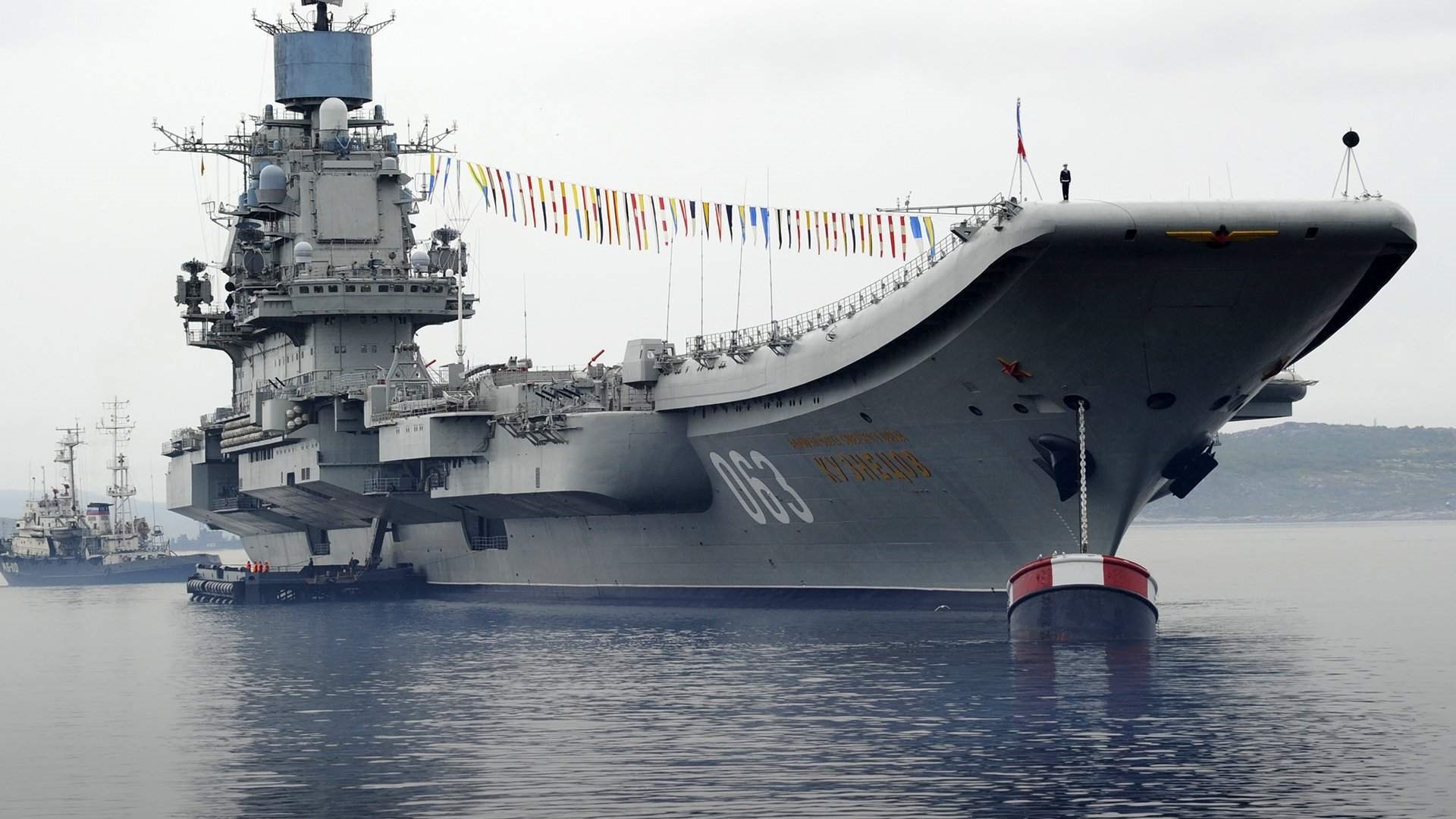
Admiral Kuznetsov, Russia’s last aircraft carrier. Image Credit: Creative Commons.
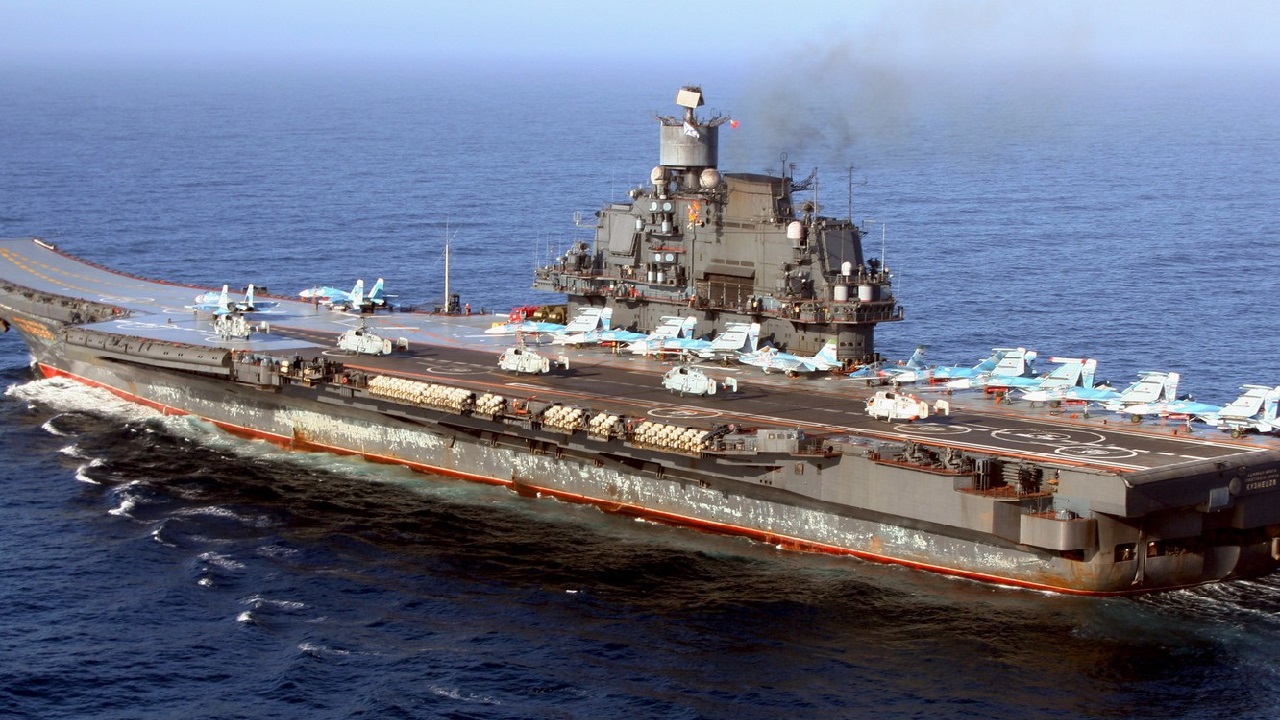
Admiral Kuznetsov Aircraft Carrier. Image Credit: Creative Commons.
The result embodied both schools. Naval aviators received a real flight deck and conventional fighters. The surface-warfare establishment received Granit missiles powerful enough to threaten an American carrier group. The Montreux problem received a classification that Turkey was prepared to accept.
China Turned the Same Hull Into an Aircraft Carrier
The unfinished sister ship Varyag offers the clearest contrast. Ukraine sold the hull after the Soviet collapse, and China eventually completed it as Liaoning. Beijing openly calls Liaoning an aircraft carrier.
China did not preserve the original Soviet emphasis on heavy offensive shipboard missiles. The spaces associated with the Granit battery were removed or repurposed, allowing greater attention to aviation facilities.
Liaoning became the starting point for China’s conventional aircraft-carrier program, followed by Shandong and the catapult-equipped Fujian.
The comparison shows why the Soviet name was more than an empty legal fiction. Russia’s ship was expected to fight with missiles launched from the hull and aircraft launched from the deck. China took the same basic design and placed the air wing at the center of its purpose.
Admiral Kuznetsov’s Final Classification Still Fits the Ship
Admiral Kuznetsov’s later history moved closer to the Western understanding of a carrier.
During its 2016 deployment off Syria, Russian aircraft flew combat missions against targets ashore.
Two aircraft were lost in landing accidents, and several fighters eventually moved to a Syrian land base rather than continue operating from the ship.
The deployment was the carrier’s only combat cruise. Admiral Kuznetsov entered overhaul after returning home, then suffered a succession of accidents, fires, delays, and the loss of the floating dry dock supporting the repairs. Russia has reportedly spent close to $1 billion on an overhaul that never returned the ship to sea.
The Russian Navy has since mothballed the vessel, removed useful equipment, and reduced the crew to the minimum needed to preserve the hull.
Scrapping would leave Russia without an operational carrier and close the last chapter of its Soviet carrier-cruiser experiment.
Admiral Kuznetsov remains tied to a pier in Murmansk with the flight deck of an aircraft carrier and the official identity of a cruiser. If workers eventually cut through the forward deck, they will reach the spaces built for the P-700 missiles.
Those launchers were the physical evidence behind the name Russia used for the ship.
MORE – The U.S. Navy’s Ford-Class Aircraft Carrier Mistake
About the Author: Harry J. Kazianis
Harry J. Kazianis (@Grecianformula) was the former Senior Director of National Security Affairs at the Center for the National Interest, a foreign policy think tank founded by Richard Nixon in Washington, D.C. Harry has more than a decade of experience in think tanks and national security publishing. His ideas have been published in The New York Times, The Washington Post, The Wall Street Journal, CNN and many other outlets worldwide. He has held positions at CSIS, the Heritage Foundation, the University of Nottingham and several other institutions related to national security research and studies. He is the former Executive Editor of The National Interest and The Diplomat. He holds a master’s degree focusing on international affairs from Harvard University.

