
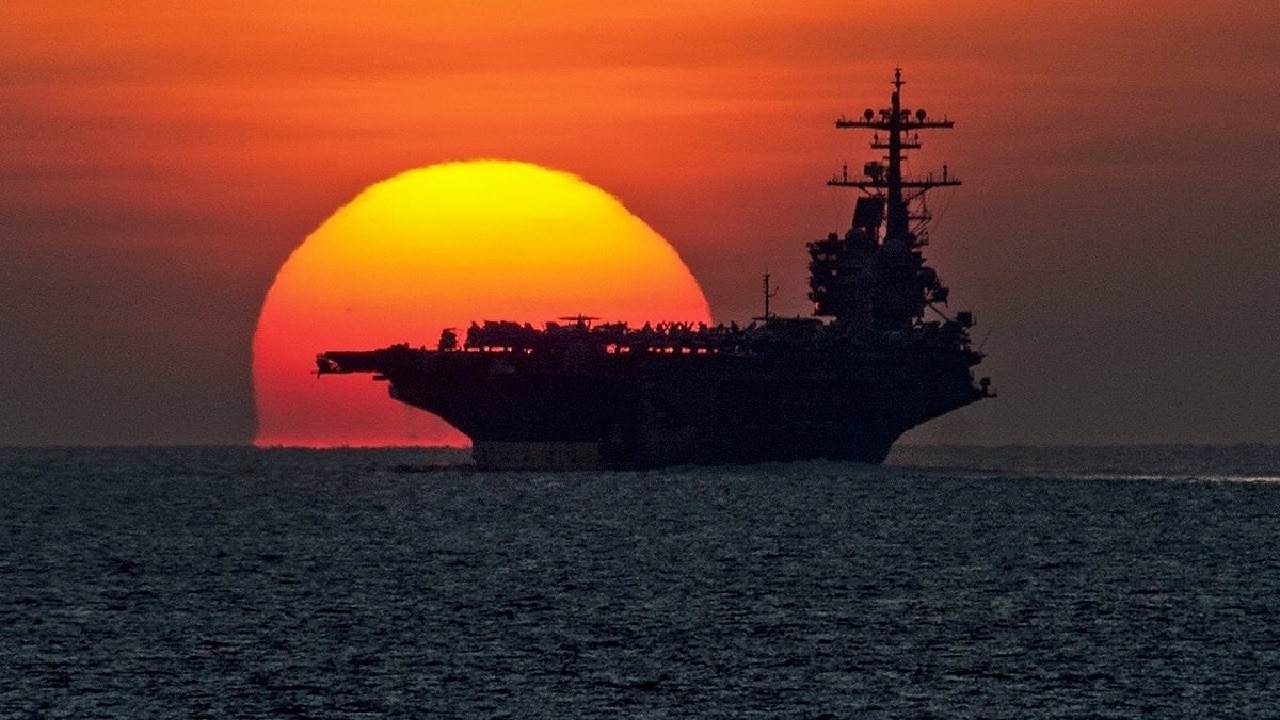
$5,500,000,000 Nuclear U.S. Navy Aircraft Carrier ‘Sunk’ Canada In a Drill History Has Largely Forgotten: A widely repeated account of Ocean Venture ’81 says a Canadian Oberon-class diesel-electric submarine reached a simulated firing position, what many would consider a simulated sinking or simulated mission kill, against Nimitz-class aircraft carrier USS Dwight D. Eisenhower.
The familiar cost comparison pits an $80 million boat running on batteries against a $5.5 billion nuclear carrier. Both figures are rounded modern equivalents, but the disparity captures the operational problem.
The contemporary public record confirms the larger controversy while leaving several details unsettled.
The Washington Post reported in May 1982 that Lt. Cmdr. Dean L. Knuth, the exercise’s chief analyst, rejected the Navy’s favorable interpretation and said Eisenhower and USS Forrestal had been attacked successfully by submarine-launched torpedoes or missiles. The Navy classified his proposed article about the results.
Ocean Venture joined several Atlantic operations between August 1 and October 15, 1981. Its most ambitious phase sought to move roughly 250 NATO ships toward the Norwegian Sea under emissions control, deceptive routing, poor weather and heavy seas. The attacking submarines were one threat inside a much larger war-at-sea exercise.
A simulated firing solution does not establish that Eisenhower would have sunk in combat. It also does not erase the warning.
A carrier group must find and contain every submarine reaching its operating area. The submarine needs one usable approach, one accurate track and one chance to fire.
Ocean Venture ’81 Became a Fight Over Carrier Survivability
The result surfaced during a political battle over two more Nimitz-class carriers. Knuth helped reconstruct the exercise, then challenged the Navy’s favorable interpretation.
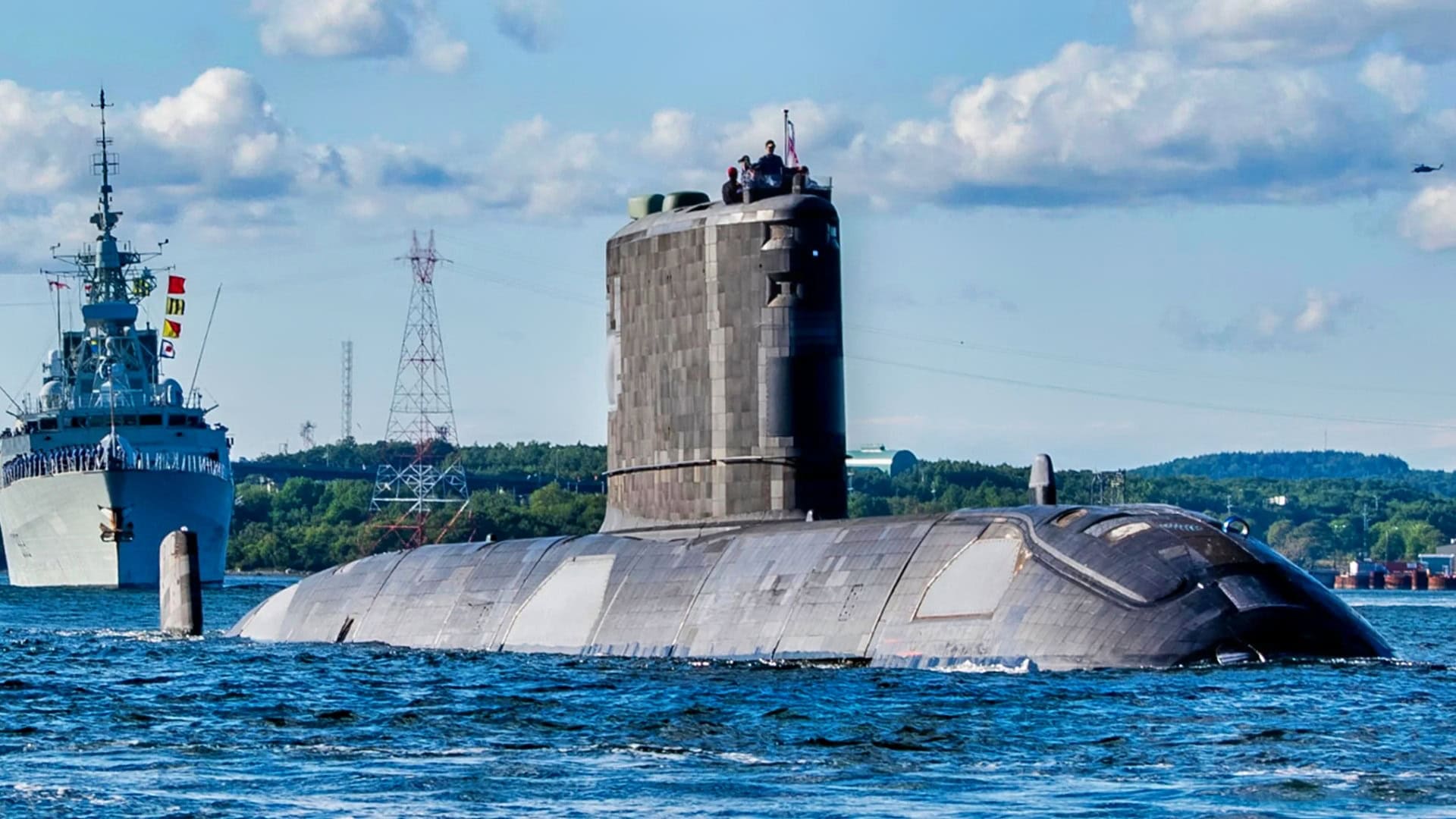
Victoria-Class Submarine Canada.
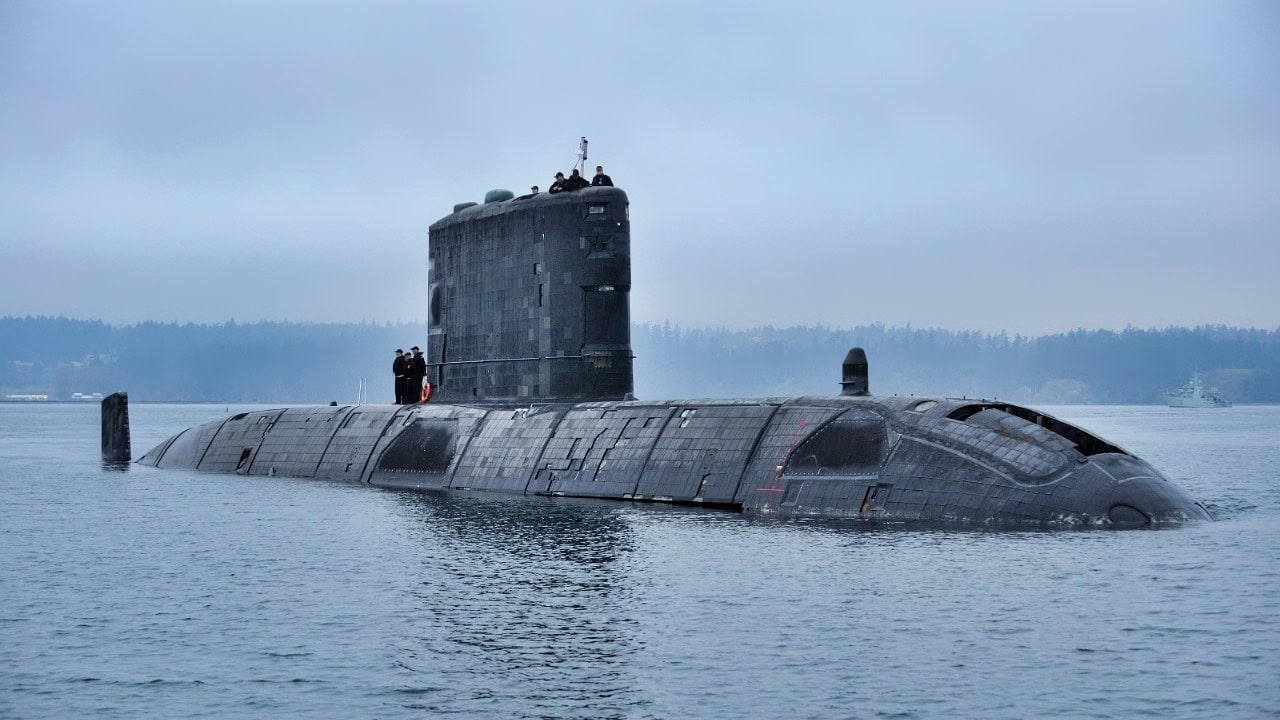
Victoria-Class Submarine from Canada.
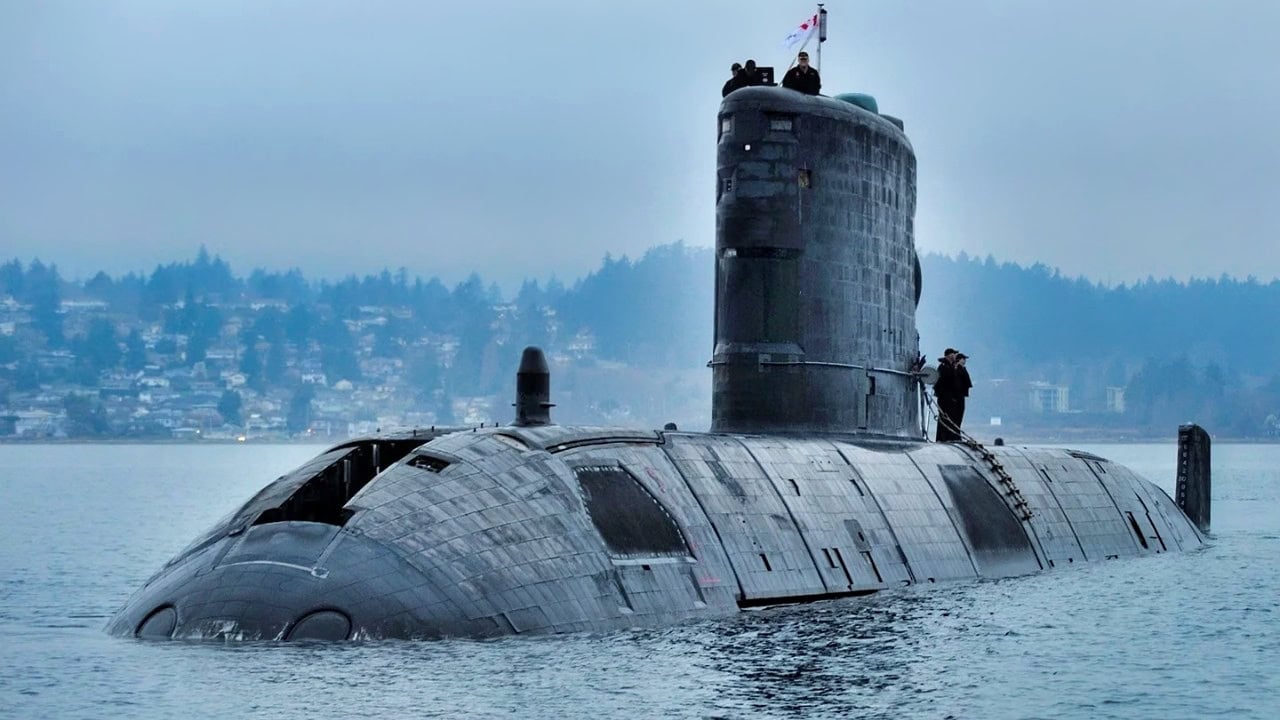
Victoria-Class Submarine Canadian Navy. Image Credit: Government Photo.
The dispute turned the Canadian submarine’s reported attack into an argument over concentrating immense combat power in a few ships.
Sen. Gary Hart sought a delay while Congress examined the exercise. Sen. William Cohen answered that his subcommittee had not been misled and that the official conclusions remained valid. The assessment might have credited the carriers with completing their mission while recording successful attacks against them. The classified reconstruction leaves no complete public verdict.
The Oberon Was Quiet Because It Was Slow and Patient
Canada acquired HMCS Ojibwa, HMCS Onondaga and HMCS Okanagan, initially using them heavily as targets for anti-submarine training. Their diesel engines recharged large battery banks through a snorkel, while electric motors drove the boats when fully submerged. At low speed on batteries, an Oberon avoided the combustion and exhaust signatures associated with snorkeling.
The 1981 exercise preceded the full operational effect of Canada’s Submarine Operational Update Program. The later upgrade added better passive-sonar processing and digital fire control, but the Oberon’s acoustic reputation did not depend on those additions. Canadian Aurora patrol aircraft later struggled to track the boats even when their crews knew the approximate location.
Battery stealth carried strict limits. An Oberon reached roughly 17 knots submerged, but speed produced more water flow and machinery noise. Depending on battery use, the boat needed to snorkel about every four to six hours, exposing a mast and running its diesels. Its best opportunity came through intelligence, pre-positioning and waiting near a route the carrier needed to use.
That is why quiet conventional submarines remain dangerous despite lacking a nuclear boat’s speed and endurance. The Oberon did not have to outrun Eisenhower. It had to arrive first and remain quiet while the carrier formation moved toward it.
A Carrier Strike Group Has Layers, Not an Impenetrable Wall
Escorts use hull-mounted and towed sonars. Helicopters lower dipping sonar and drop sonobuoys. Maritime patrol aircraft search farther from the formation, while friendly attack submarines operate along likely threat axes. Each sensor covers part of a picture shaped by temperature layers, sea state, bottom conditions and the group’s own noise.
The Navy demonstrated the modern version around Eisenhower in 2020. During an Arabian Sea exercise, the carrier worked with a cruiser, a destroyer, a P-8A Poseidon, two MH-60R helicopters and USS Newport News as the opposing submarine. The three-day event included transit protection and defense at chokepoints, where a submarine has a stronger chance of predicting the surface force’s route.
More sensors do not turn the ocean transparent. Passive sonar listens without revealing the receiver’s position, but a quiet submarine produces little energy to detect. Active sonar sends sound into the water and listens for a return, though range and clarity shift with the environment. A submarine reaching torpedo range has already defeated several layers of the search.
The War Game Did Not Recreate a Real Torpedo Attack
No live weapon struck Eisenhower. A simulated attack does not account fully for torpedo reliability, countermeasures, evasive maneuvers, damage control or an escort counterattack. Public sources do not disclose the Canadian boat’s identity, starting position, intelligence, sonar restrictions or umpire scoring. That is why “sunk” belongs in quotation marks.
Those limits are not grounds for dismissal. Navies stage exercises to place capable opponents inside demanding scenarios and expose failure before combat. A submarine does not need to survive after launch to impose a strategic loss if its torpedoes disable propulsion, flood key compartments or force the ship into months of repair.
The result feeds a wider debate over the vulnerability of large carriers, but it did not prove that submarines make them obsolete. Carriers deliver sustained airpower, command facilities, surveillance and presence that a diesel boat cannot reproduce. The exercise showed that those capabilities remain valuable enough to demand an expensive protective system.
Sweden’s Gotland Extended the Threat Beneath the Surface
The Oberon still had to snorkel frequently. Air-independent propulsion gave later conventional submarines more time underwater at low speed. In 2005, the U.S. Navy leased Sweden’s HSwMS Gotland for $17.5 million to train American forces against a small submarine using quiet Stirling engines. U.S. forces found the boat difficult to locate, and the arrangement continued through 2007.
Gotland became famous for its success as an opposing submarine against U.S. carrier strike groups. Its deeper advantage was endurance. The submarine operated for two weeks or longer without conventional diesels, removing the regular snorkeling cycle that exposed older boats. The episode reinforced the carrier-defense lesson associated with Gotland and the earlier Canadian account.
The Gotland comparison is often oversold as proof that carriers are finished. A slow regional submarine still needs positioning, targeting information and favorable geography. Those conditions are common near straits, island chains and coastal operating areas where carriers face concentrated opposition.
A Submarine Does Not Have to Sink the Carrier to Change the Fight
A suspected submarine forces the carrier group to spend helicopter hours, sonobuoys, patrol-aircraft coverage, escort attention and time. It influences route selection and distance from the coast. A carrier held farther from the operating area sends its aircraft over longer distances, increases tanker demand and reduces useful time over the target.
This is why the cost asymmetry still matters. The submarine is not a replacement for a carrier and does not deliver an air wing’s sustained striking power. It creates an underwater threat that must be searched for continuously. The defender pays for the protective system even when the submarine never fires.
Canada retired all three Oberons by 2000. Onondaga is preserved in Quebec, while Ojibwa became a museum submarine in Ontario. The public record still does not identify which of Canada’s three boats made the reported 1981 approach against Eisenhower.
About the Author: Harry J. Kazianis
Harry J. Kazianis (@Grecianformula) was the former Senior Director of National Security Affairs at the Center for the National Interest (CFTNI), a foreign policy think tank founded by Richard Nixon based in Washington, DC. Harry has over a decade of experience in think tanks and national security publishing. His ideas have been published in the NY Times, The Washington Post, The Wall Street Journal, CNN, and many other outlets worldwide. He has held positions at CSIS, the Heritage Foundation, the University of Nottingham, and several other institutions related to national security research and studies. He is the former Executive Editor of the National Interest and the Diplomat. He holds a Master’s degree focusing on international affairs from Harvard University.

