
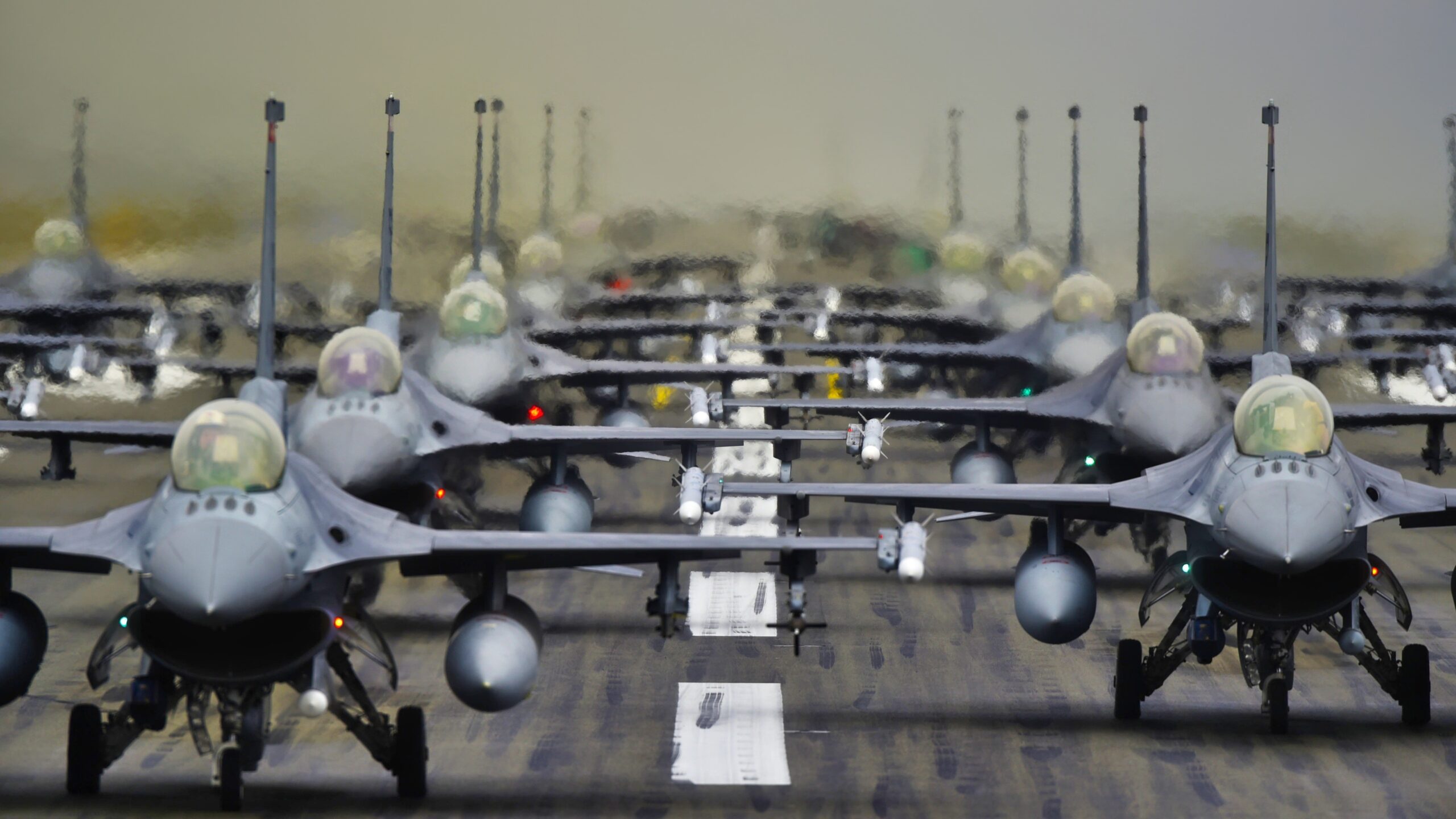
F-16 Aggressors Swarmed the F-35 at Red Flag. The Stealth Fighter Still Posted a 20-to-1 Kill Ratio: Thirteen F-35A Lightning IIs entered Red Flag 17-1 at Nellis Air Force Base (near Las Vegas) in January 2017 and left with an Air Force-credited score of 145 simulated air-to-air kills against seven losses. Lt. Gen. Jerry Harris told Congress the result produced a kill ratio slightly above 20-to-1.
The popular account says F-16 aggressors beat the F-35 by swarming it. The exercise record supports the basic mechanism, though not a sweeping F-16 victory. Red Air from Nellis’s 64th Aggressor Squadron attacked in waves of eight to 16 aircraft, and planners added more adversaries whenever Blue Force destroyed one. A mission could expose the friendly force to as many as 50 enemy aircraft.
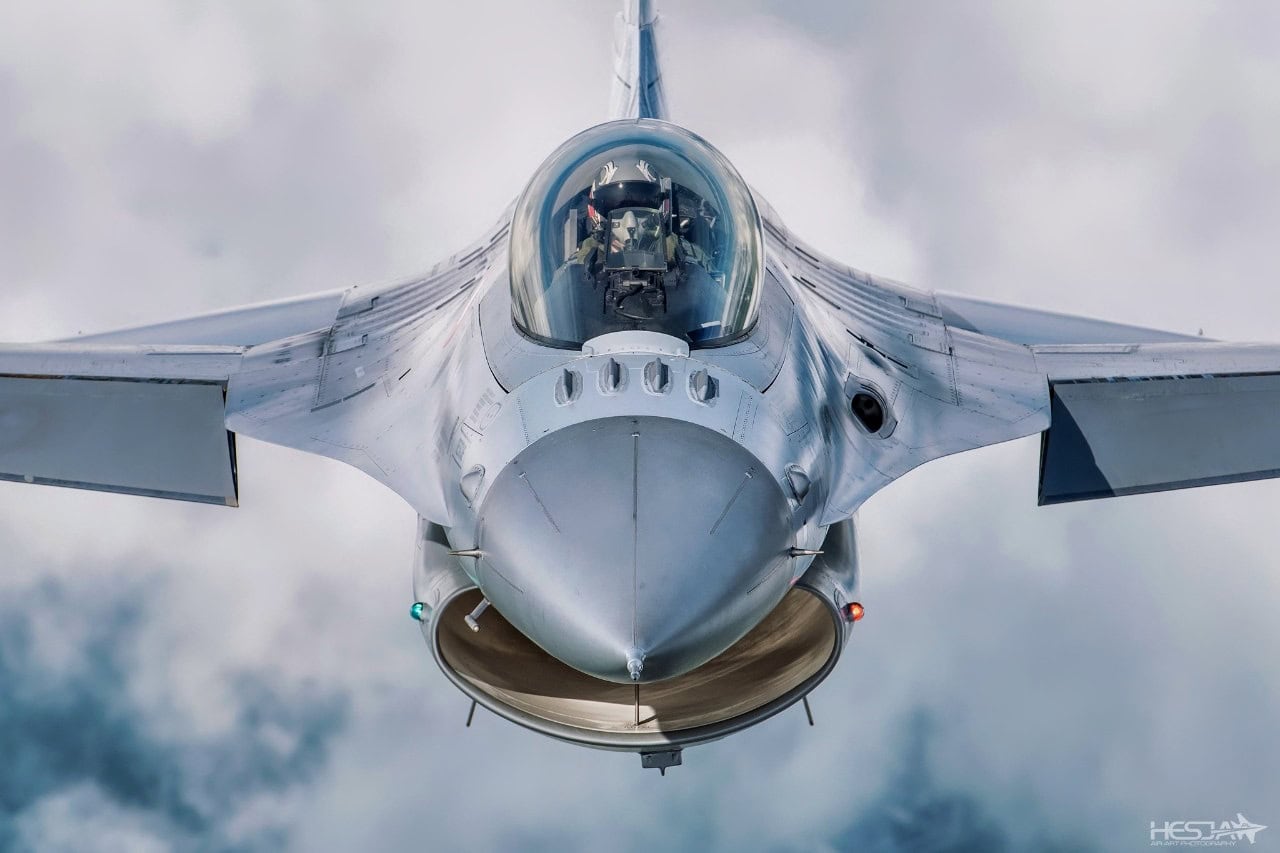
F-16 Fighter. Image Credit: Creative Commons.
Every F-35 loss occurred within visual range. Harris said the aggressors had not detected the stealth fighters on radar; they saw them passing nearby.
The Air Force did not publish an engagement-by-engagement account identifying which F-16 scored each kill, the weapons available, or the rules controlling those encounters.
Don’t Ever Count the F-35 Out
The F-35’s broader performance was stronger than the dogfight story suggests.
The aircraft completed 207 of 226 planned sorties, with the remaining 19 canceled due to weather and none lost to maintenance.
It also released 51 simulated weapons against surface-to-air missile sites and received credit for destroying 49, while recording a 92 percent success rate with heavyweight weapons.
Red Flag 17-1 was the F-35A’s first appearance at the exercise. The deployed jets used the interim Block 3i configuration and flew missions centered on air interdiction, defensive counter-air and suppression of enemy air defenses alongside F-22s and coalition aircraft against sophisticated electronic countermeasures and ground threats.
F-16 Waves Forced the F-35 to Spend Weapons and Close
The pressure came from numbers and regeneration. The F-35A had four internal weapon stations for stealthy operations.
Once a formation fired its limited radar-guided missiles, another wave of aggressors could arrive with fresh weapons and fuel.
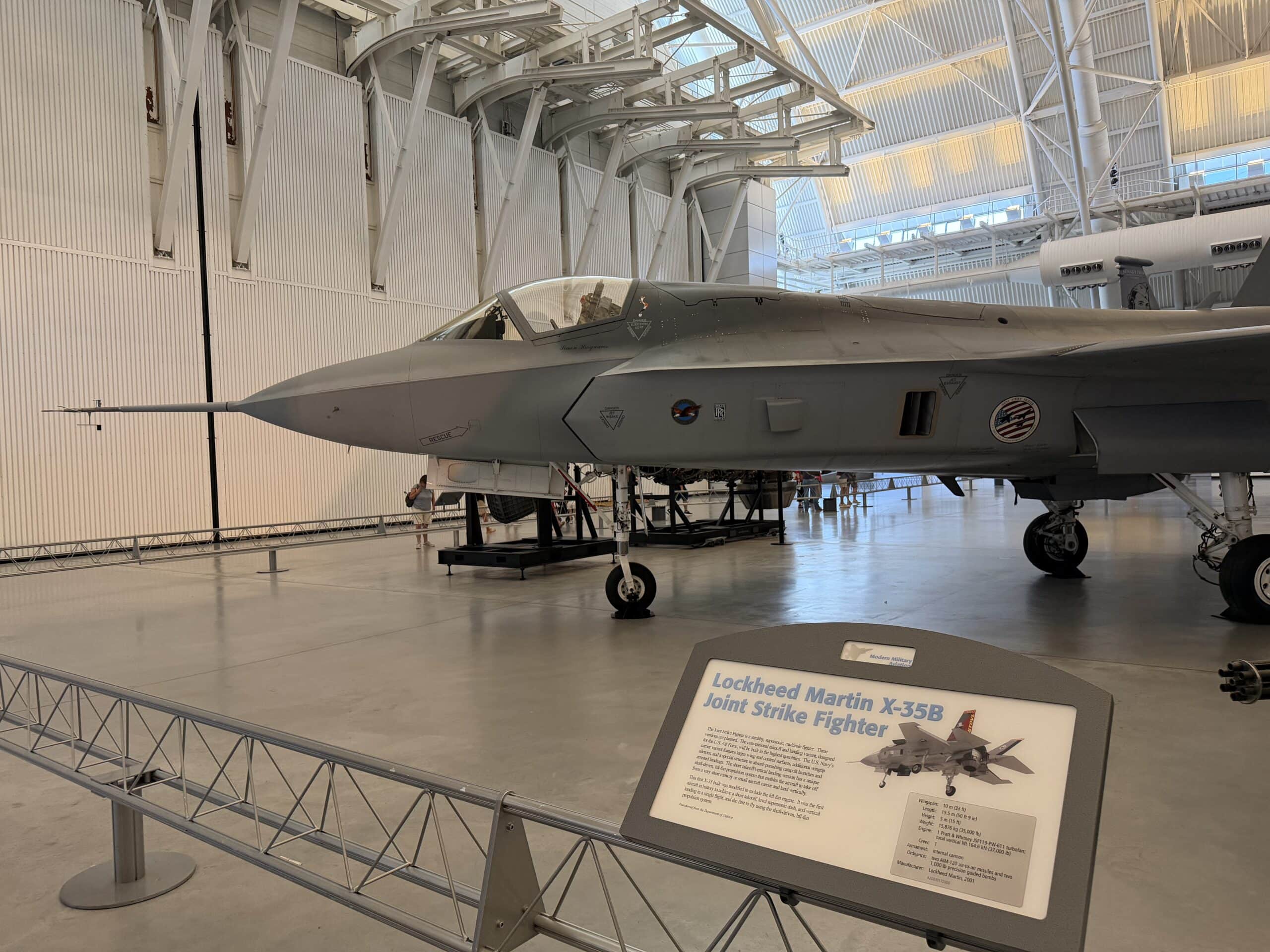
F-35 at the Smithsonian 19FortyFive Photo
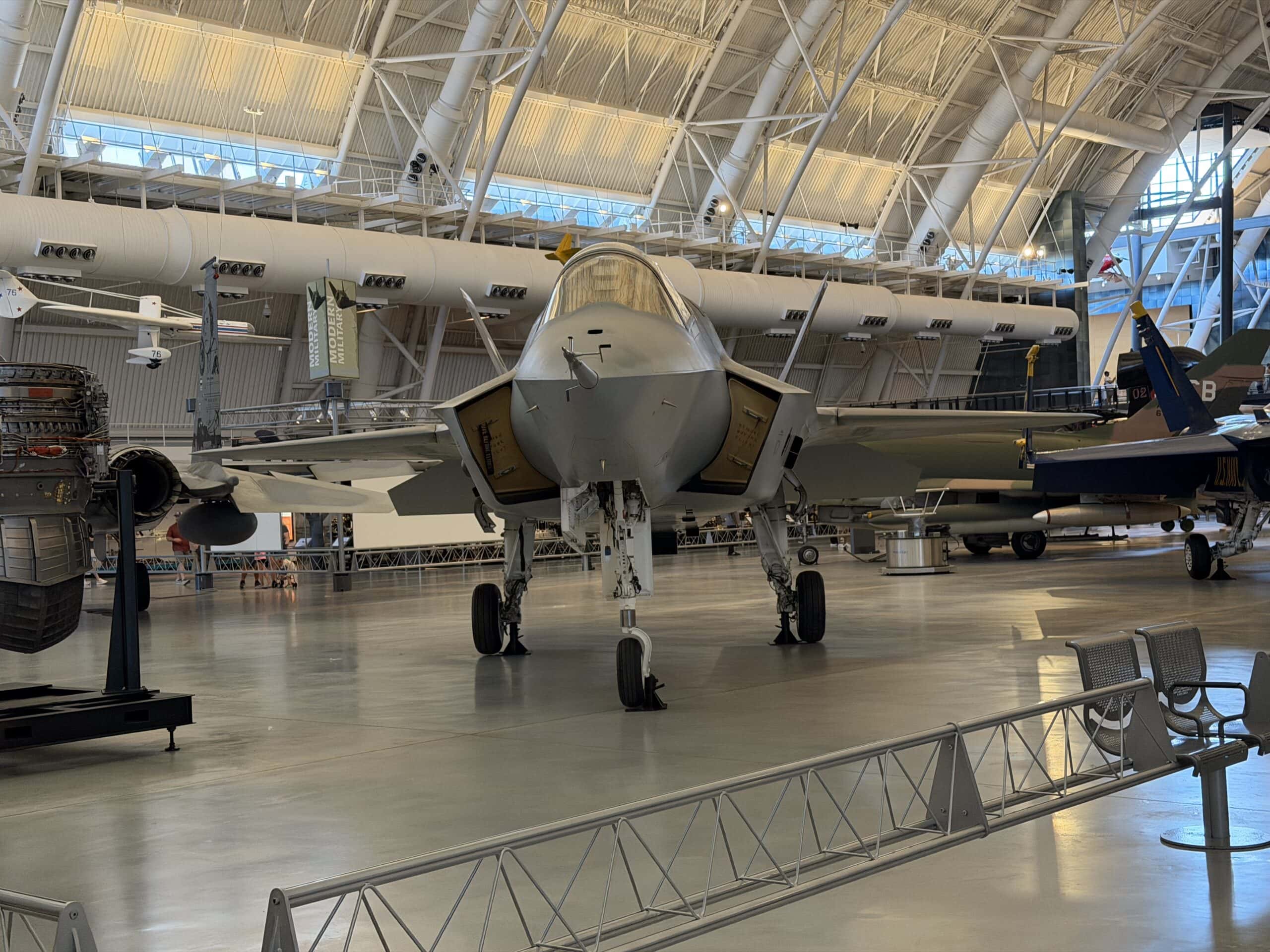
F-35 at the Smithsonian 19FortyFive Photo
The F-35 pilots then had to disengage, rely on another shooter, or accept the kind of close engagement examined in the continuing F-35 dogfight debate.
That is why “swarm” works as shorthand, even though the Air Force did not use the term in its public reports.
The aggressors used repeated formations and pressure from multiple directions to compress the fight. Nellis’s 64th Aggressor Squadron supplied Red Air, and its pilots specialized in reproducing foreign tactics rather than fighting as ordinary American F-16 units.
The episode showed how massed aggressors could exploit a finite missile magazine.
The F-35’s Seven Losses Came After Stealth Had Done Its Work
Stealth offers its largest advantage before opposing pilots know where to look.
The F-35 combines a low radar signature, an active electronically scanned array radar, passive sensors, and fused data to find targets and launch first. Once aircraft merge and establish visual contact, geometry, energy, infrared missiles, and pilot decisions gain importance. An agile F-16 remains dangerous at close range.
The seven losses exposed a limit without overturning the 145 kills.
The public record does not say how many aggressors were destroyed beyond visual range, but all F-35 losses came after the fight had closed.
Repeated waves and regenerated Red aircraft kept creating fresh chances to reach that point.
The same tension explains why internal weapons preserve stealth but restrict magazine depth.
Red Flag Tested a Strike Package, Not a One-on-One Dogfight
Red Flag 17-1 included F-22s, F-15Cs, F-16s, British Typhoons, electronic-attack aircraft, and airborne command platforms.
Official reporting said F-35s attacked advanced ground defenses while F-22s concentrated on aerial threats, clearing routes for fourth-generation aircraft. The F-35 also gathered and shared targeting information across the package.
That makes the 20-to-1 figure useful but incomplete. The War Zone noted at the time that public reporting did not explain how kills were credited across the integrated force or how much support each engagement received.
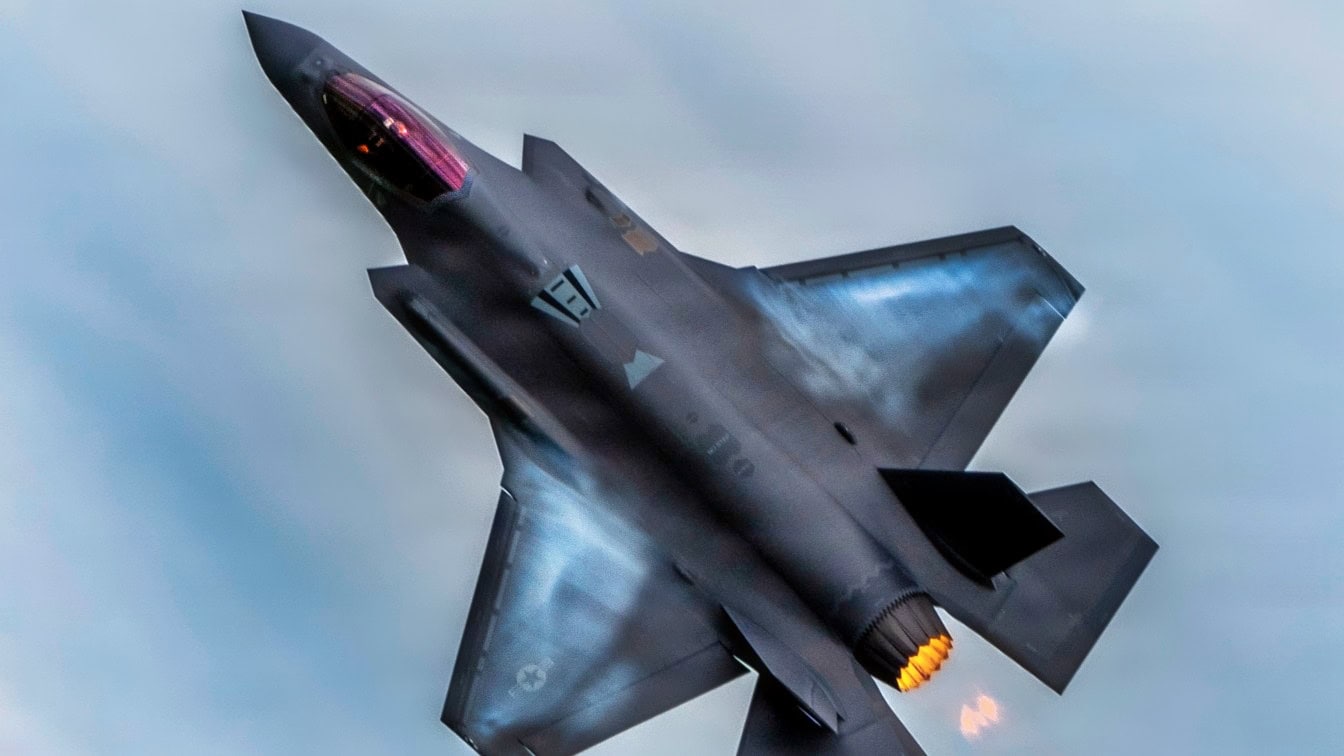
A U.S. Air Force F-35A Lightning II, assigned to the F-35A Lightning II Demonstration Team, performs precision aerial maneuvers during the Columbus Air Show at Rickenbacker Air National Guard Base, Columbus, Ohio, June 21, 2026. The F-35A Demonstration Team showcases the unique aerodynamic capabilities, advanced avionics, and combat readiness of the military’s premier fifth-generation fighter to inspire the next generation of Airmen and demonstrate American air power. (U.S. Air National Guard photo by Airman 1st Class Samir Harris)
The exercise demonstrated the value of fifth-generation sensing and stealth, not a laboratory comparison between two isolated fighters.
The F-16 Success Exposed a Magazine Problem
The F-16 aggressors found the condition Red Flag was designed to create: a less stealthy force generated enough pressure to make the F-35 fight outside its preferred sequence.
Preserving stealth while expanding firepower requires additional shooters, complementary fighters, and networked weapons able to support F-35 formations during high-end combat.
The Air Force never released the engagement tapes, individual scoring records, weapon allocations, or complete rules of engagement behind the seven F-35 losses.
Those details remain unavailable in the public record more than nine years later.
About the Author: Harry J. Kazianis
Harry J. Kazianis (@Grecianformula) was the former Senior Director of National Security Affairs at the Center for the National Interest (CFTNI), a foreign policy think tank founded by Richard Nixon based in Washington, DC. Harry has over a decade of experience in think tanks and national security publishing. His ideas have been published in the NY Times, The Washington Post, The Wall Street Journal, CNN, and many other outlets worldwide. He has held positions at CSIS, the Heritage Foundation, the University of Nottingham, and several other institutions related to national security research and studies. He is the former Executive Editor of the National Interest and the Diplomat. He holds a Master’s degree focusing on international affairs from Harvard University.

