
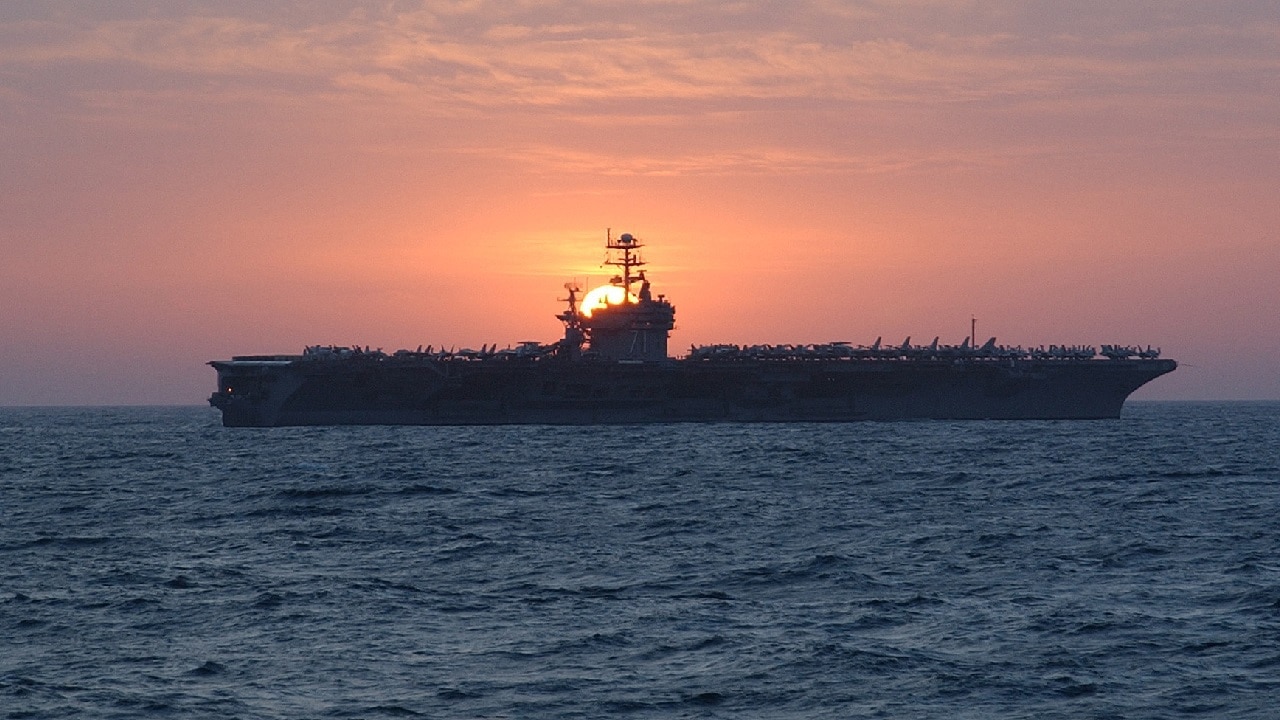
The U.S. Navy Let Five Aircraft Carriers Go for One Cent. Scrapping Them Was the Expensive Part: Five retired U.S. aircraft carriers have become famous for one-cent disposal deals: Forrestal, Saratoga, Ranger, Kitty Hawk, and John F. Kennedy.
The figure sounds absurd for ships built to carry thousands of sailors and dozens of combat aircraft.
It makes sense only after the cost of moving, cleaning, and dismantling a supercarrier is deducted from its scrap value.
The contract language matters here. When the Navy sent Forrestal and Ranger for dismantling, Naval Sea Systems Command said they were procurement contracts, not ordinary sales. The Navy paid the breaker one cent, retained ownership until the hull disappeared, and let the company keep the metal produced during the work. Saratoga followed the same model. Kitty Hawk and John F. Kennedy were sold for one cent each in 2021.
The penny represented a net price. The contractor assumed towing, environmental remediation, labor, insurance, disposal, and regulatory compliance. In return, it received steel, aluminum, copper, and copper-nickel alloy to sell.
A retired carrier still contains valuable material, but reaching it requires years of controlled demolition. Sensitive equipment and reusable components have already been removed, propulsion systems are inactive, and the ship has no certification to return to service. The buyer receives raw material and a disposal obligation, not a usable warship.
Scale narrows the market in this situation. A Navy environmental review described Constellation as 1,088 feet long and 61,993 tons in inactive condition. At the time, it identified only three qualified U.S. facilities, all near Brownsville, Texas. Ranger was too large for the Panama Canal, forcing a four-to-five-month tow around South America before cutting began. An unpowered carrier needs ocean-going tugs, hull preparation, weather routing, and contingency planning for flooding or structural failure. A long tow shifts those risks to the contractor before the first torch reaches the flight deck.
The Scrap Metal Pays the Contractor’s Bill
Shipbreakers remove equipment, propellers, and accessible machinery before cutting the hull into large sections. As deeper compartments open, workers sort metals by grade and send them to brokers or remelting plants. The widely reported one-cent carrier price therefore reflects expected revenue after expenses, not the carrier’s replacement cost or historical importance.
That margin changes with metal prices, ship condition, and towing distance. The Navy paid about $3 million to dismantle Constellation, while Ranger’s scrap estimate covered nearly the entire job. The difference shows why penny contracts are cost-avoidance arrangements rather than bargain sales of usable warships.
Hazardous Materials Turn Scrapping Into Environmental Work
A carrier built during the Cold War contains more than clean steel. OSHA lists asbestos, PCBs, lead, mercury, heavy metals, and refrigerants among common shipbreaking hazards. Navy planning documents also identify fuels, oils, and contaminated paint. Engine rooms hold extensive insulation and often take the longest to clear.
The work remains labor-intensive. Crews strip hazardous material from cut lines, ventilate confined compartments, control fires during torch work, and move enormous sections ashore for further processing. Contractors must document regulated waste and send it to permitted facilities. Those obligations explain why taking possession of the scrap also means accepting years of liability.
A Carrier Costs Money Even While It Sits Still
The US Navy estimated that keeping Ranger in safe stowage cost between $100,000 and $200,000 annually. The bill covered security, fire and flood protection, inspections, and exterior maintenance to stop deteriorating paint from entering the water. Berthing an obsolete carrier also occupies scarce waterfront space while its condition continues to decline.
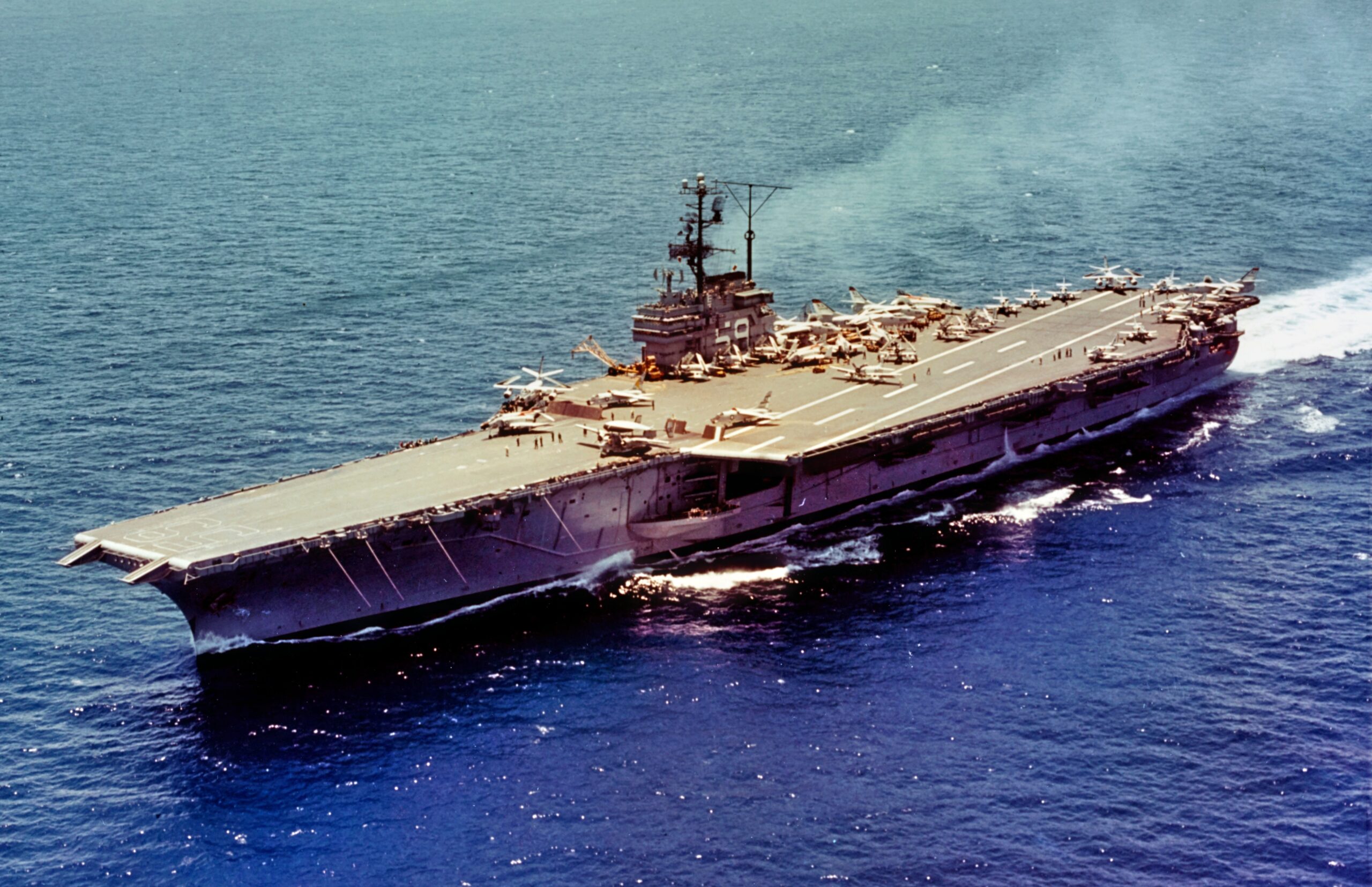
USS Forrestal Aircraft Carrier. Image Credit: Creative Commons.
Museum proposals rarely solve the problem. The Ranger Foundation raised $105,000 against estimated startup costs of $31.85 million. A viable group also needed a permanent berth, dredging, permits, city approvals, and long-term operating money. The Navy said only 11 of 29 ships offered for museum donation after 1990 had reached museums. Similar difficulties ended efforts to preserve John F. Kennedy as a public attraction.
Sinking or Exporting An Aircraft Carrier Is Not an Easy Alternative
The Navy spent about $20 million to prepare and sink the Oriskany as an artificial reef in 2006. Its review of Constellation rejected reefing because extensive PCB-containing material exceeded federal limits and was impractical to remove.
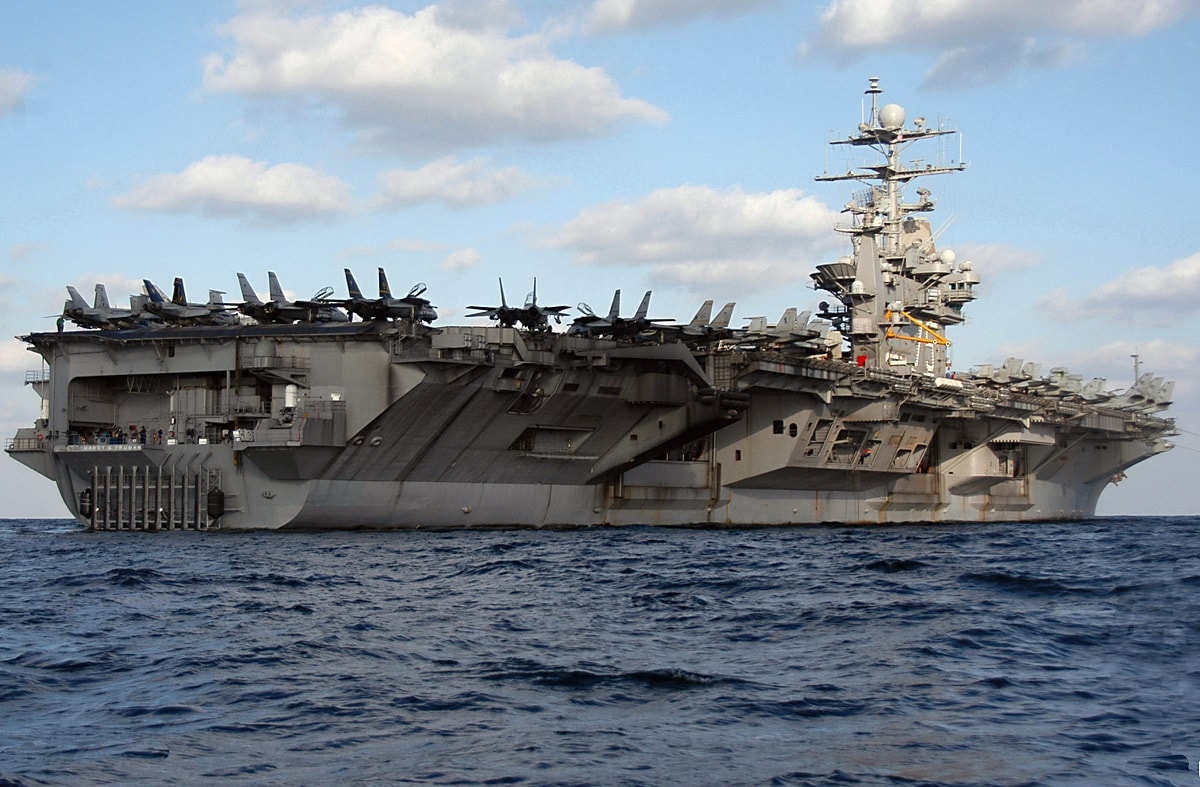
Persian Gulf (Feb. 8, 2005) The Nimitz-class aircraft carrier USS Harry S. Truman underway while on station in the Persian Gulf. Carrier Air Wing Three (CVW-3) is embarked aboard Truman and is providing close air support and conducting intelligence surveillance and reconnaissance over Iraq. The Truman Carrier Strike Group is on a regularly scheduled deployment in support of the global war on terrorism. U.S. Navy photo by Photographer’s Mate Rome J Toledo (RELEASED)
The same review said aircraft carriers were unavailable for foreign military sales and that current policy did not include carriers in routine live-fire sinking exercises.
USS America was the exception. The Navy deliberately sank the carrier in 2005 to gather survivability data, producing a final test unavailable from ordinary recycling. Its loss did not establish a cheap disposal path for every retired flattop.
Nuclear Carriers Eliminate the Penny Option
Reactor plants add another category of work. GAO reported that inactivating Enterprise cost $863 million, including defueling eight reactors and removing equipment before final dismantling. In July 2026, the Navy awarded a new $418.5 million disposal contract, pushing the combined Enterprise bill to about $1.3 billion. Radioactive waste must be packaged and sent to licensed sites.
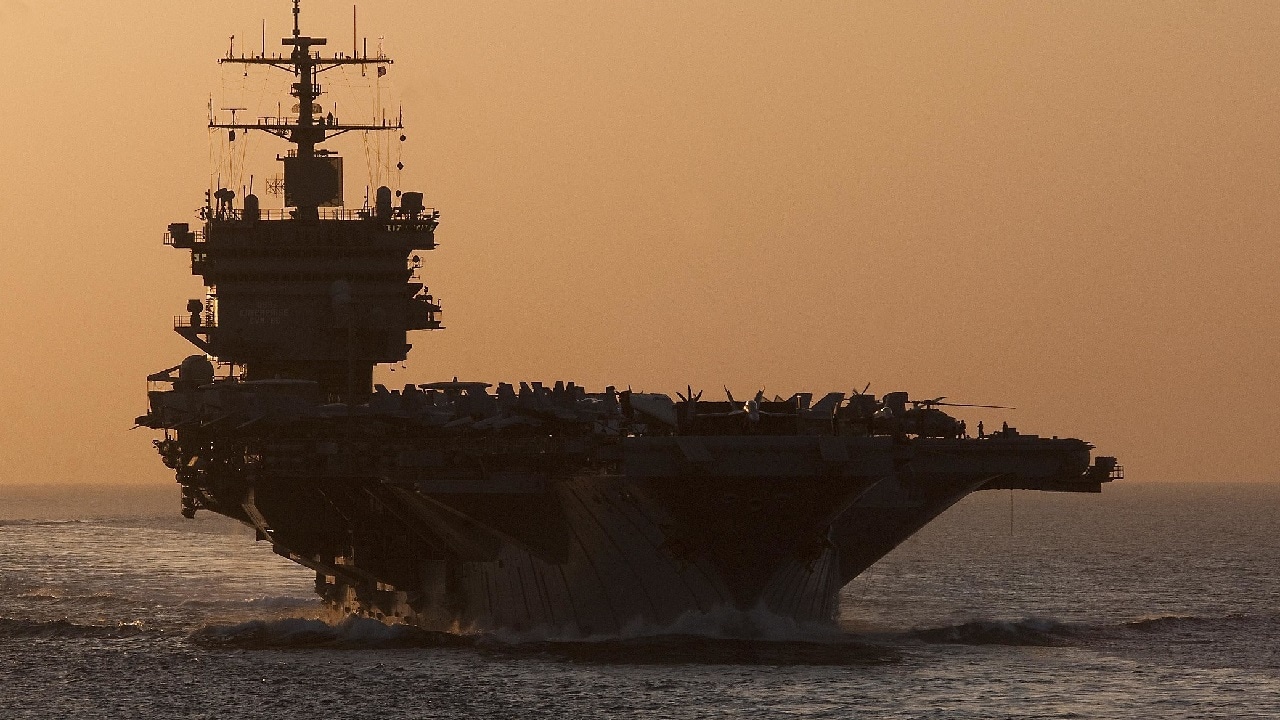
The aircraft carrier USS Enterprise, right, the guided-missile destroyer USS Porter (DDG 78) and the guided-missile cruiser USS Vicksburg (CG 69) transit back to their homeport of Norfolk, Va. Enterprise, Porter and Vicksburg are returning from a deployment to the U.S. 5th Fleet area of responsibility, where the ship conducting maritime security operations, theater security cooperation efforts and support missions for Operation Enduring Freedom.
John F. Kennedy reached Brownsville on February 2, 2025. Selected mementos will be made publicly available later. International Shipbreaking expects the dismantling to take about two years from arrival to completion and plans to recycle 97 percent of the ship’s material.
MORE – China’s J-20 Stealth Fighter Has Russian Engines
About the Author: Harry J. Kazianis
Harry J. Kazianis (@Grecianformula) was the former Senior Director of National Security Affairs at the Center for the National Interest (CFTNI), a foreign policy think tank founded by Richard Nixon based in Washington, DC. Harry has over a decade of experience in think tanks and national security publishing. His ideas have been published in the NY Times, The Washington Post, The Wall Street Journal, CNN, and many other outlets worldwide. He has held positions at CSIS, the Heritage Foundation, the University of Nottingham, and several other institutions related to national security research and studies. He is the former Executive Editor of the National Interest and the Diplomat. He holds a Master’s degree focusing on international affairs from Harvard University.

