
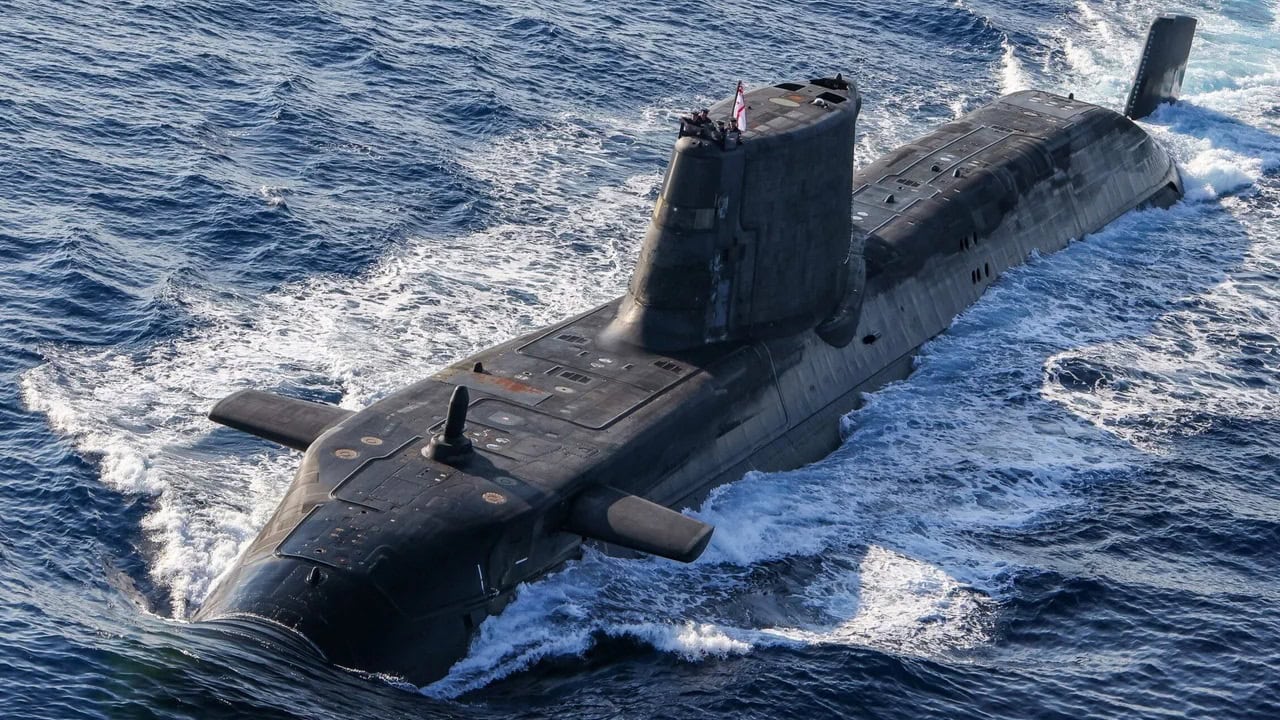
Summary and Key Points: In the summer of 2026, for stretches of weeks at a time, every attack submarine the Royal Navy owns was tied up in port at once. The most detailed public survey of the fleet, in late June, found all five in-service Astute-class boats alongside simultaneously, one of them stripped of parts to keep her sisters alive, while the Chief of the Defence Staff, Sir Richard Knighton, warned in June that Russia was probing the country’s defenses. The Astute-class themselves are magnificent, among the quietest and most capable hunter-killer submarines ever built, and that is precisely what makes their absence the real story. The class was late, over budget, suspended outright at one point, rescued by American engineers, marred by a grounding, a collision, a fatal shooting, and a corrosion scandal, and it took roughly 28 years to deliver 7 boats. Every one of those facts traces to a single decision made in the 1990s, when Britain let the art of building submarines die at Barrow and then had to buy it back.
The Asute-Class Submarines – The Royal Navy’s Big Mistake?
The Astute-class program failed before a single plate was cut, because the people who knew how to do the work had gone.
After the last Trafalgar-class boat and the final Vanguard hulls, submarine orders at Barrow-in-Furness dried up through the 1990s, the design offices emptied, and the knowledge of how to engineer a nuclear submarine, passed between generations of workers, atrophied in the gap.
When the Astute contract arrived, the program bet on a leap to full three-dimensional computer-aided design, and the bet collapsed on contact with the workforce: the yard’s people were accustomed to working from two-dimensional drawings and exercising their own judgment, the new digital plans demanded a different discipline entirely, and the project ran without an integrated master plan or an effective way to track its own progress.
The reckoning came in August 2002, when an audit found the program more than three years behind schedule and £700 million over budget, and work was temporarily suspended.Va
A nuclear-weapons-state’s attack submarine program had stopped, not for money or politics, but because the builder no longer knew how to build.
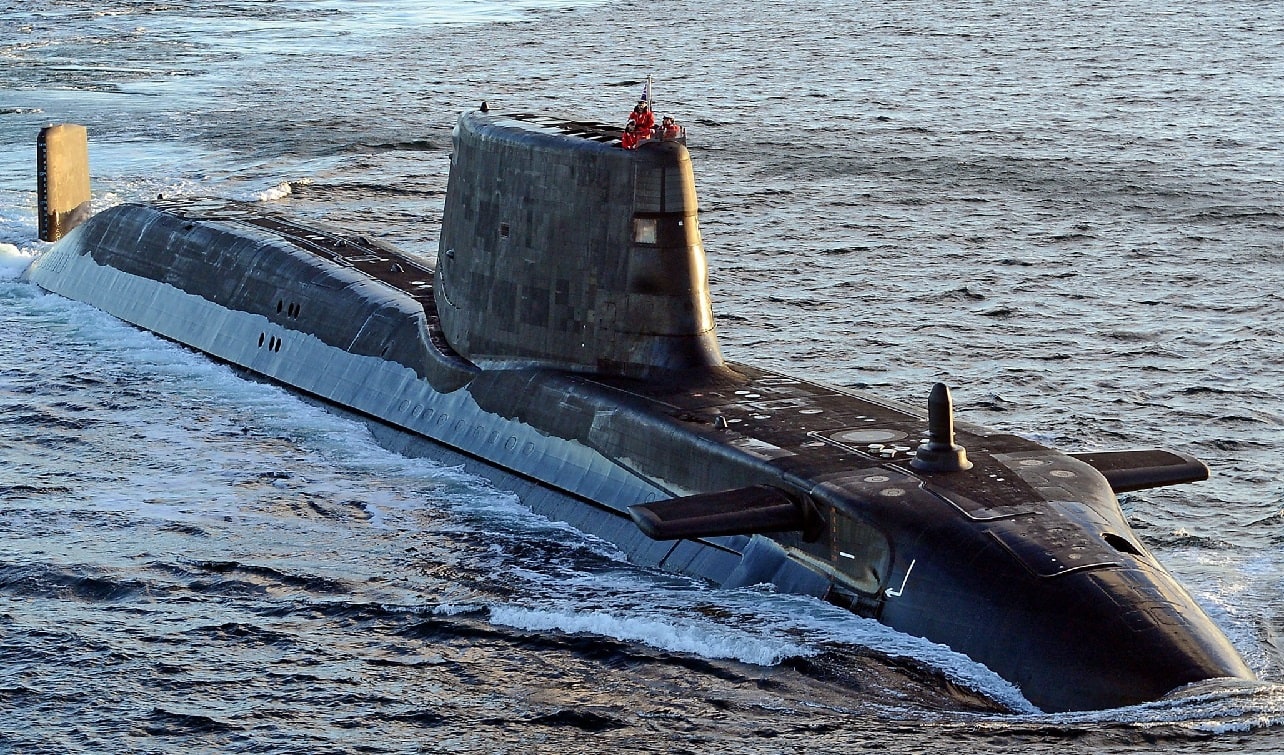
Astute class submarine HMS Ambush is pictured during sea trials near Scotland. Ambush, second of the nuclear powered attack submarines, was named in Barrow on 16 December 2010 and launched on 5 January 2011.
The American Rescue
The solution to a British skills crisis turned out to be American, which remains the most quietly humbling fact in the modern Royal Navy’s history.
BAE Systems brought in engineers from General Dynamics Electric Boat, the Connecticut yard that builds the US Navy’s submarines, to put the program back on its feet, importing the project management, digital design discipline, and production methods that Barrow had lost.
The rescue worked, and the lesson price is recorded in the delivery record.
HMS Astute took 170 months from the start of manufacture to operational handover, more than fourteen years, and was commissioned in August 2010, running years late and, by the National Audit Office’s program reporting, nearly £2 billion over budget.
Her sister Ambush managed the same journey in 149 months, and the curve kept bending in the right direction as the relearned skills took hold.
The knowledge had been bought back. The bill for losing it in the first place was only beginning to come due.
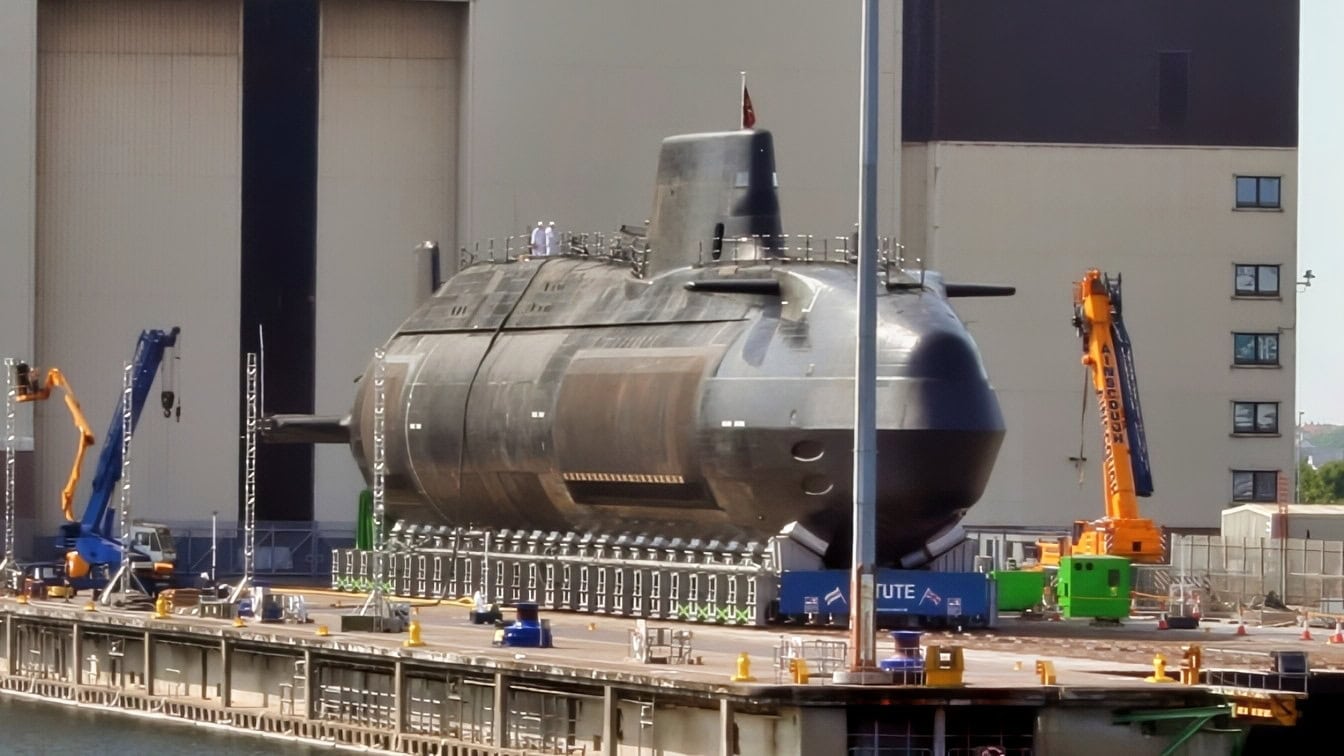
Astute-Class Submarine Creative Commons Photo
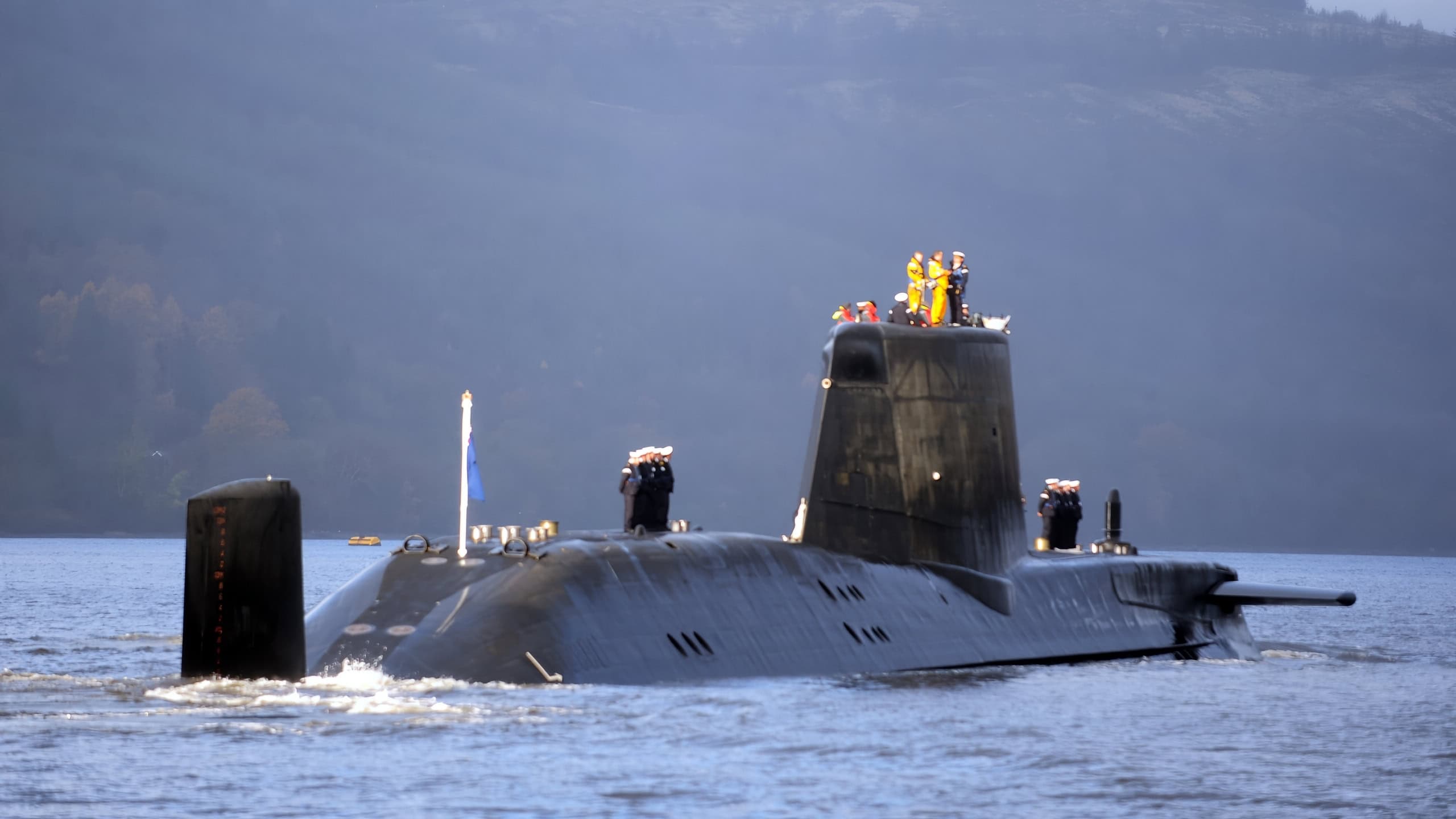
Astute-Class SSN Royal Navy
Marooned Off Skye
The lead boat’s introduction to the public was a £1.2 billion submarine stuck on a silt bank in view of a road bridge.
On October 22, 2010, during sea trials, HMS Astute ran aground in the channel between the Isle of Skye and the Scottish mainland during a personnel-transfer exercise, and the service inquiry later found that her commanding officer had failed to act on three separate requests from other officers to reduce speed and alter course, with the officer of the watch showing what the report called “a significant lack of appreciation of the proximity of danger.”
The Ministry of Defence’s day-one statement insisted “This is not a nuclear incident” and the boat was watertight.
Both claims were true, and neither helped.
Astute sat marooned for about ten hours, her captain electing to wait for the tide and tugs rather than force her off under her own power, and the recovery then compounded the embarrassment when the emergency tow vessel Anglian Prince collided with the submarine it had been sent to free, damaging her starboard foreplane.
The rudder was damaged in the grounding, the foreplane in the rescue, and within days Commander Andy Coles was relieved of command.
The full inquiry report sits on the government’s own website, a case study in how procedure breaks down, and the episode set the tone for a first decade in which the class’s engineering excellence kept being upstaged by its luck.
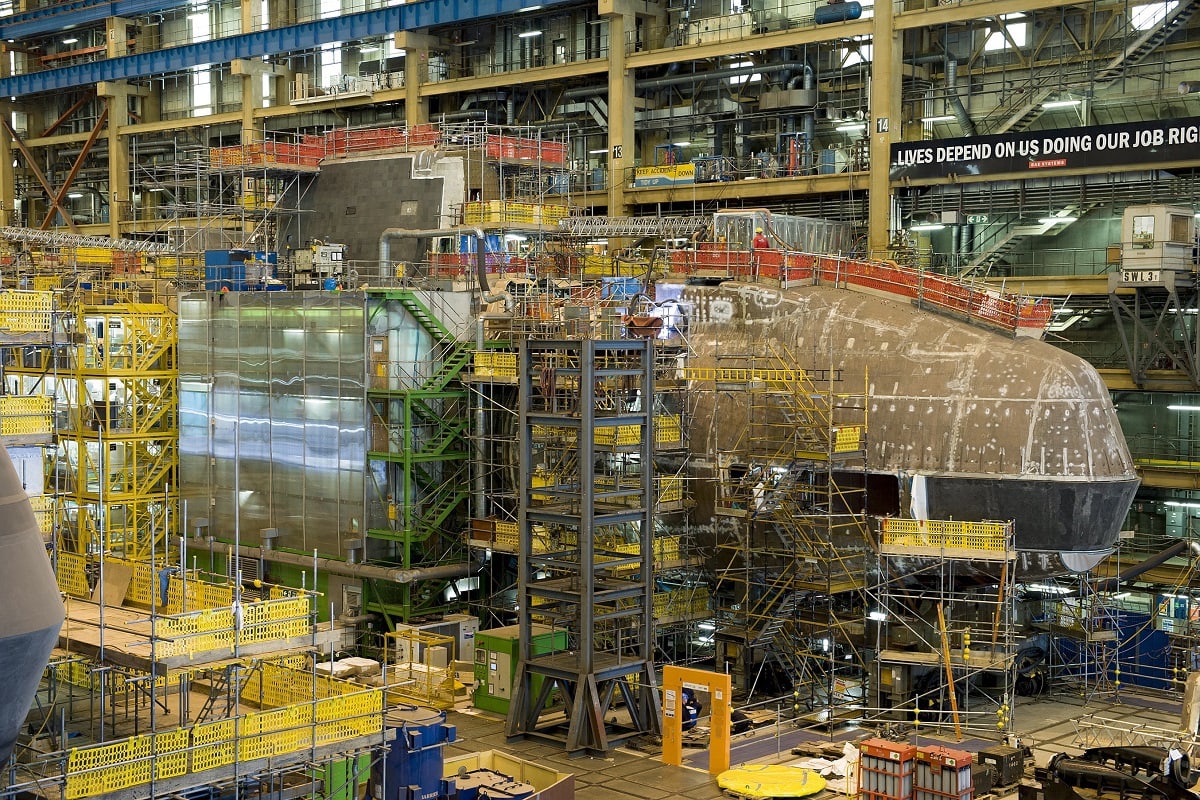
Astute Class submarine Audacious under construction at Barrow in Furness shipyard in Cumbria.
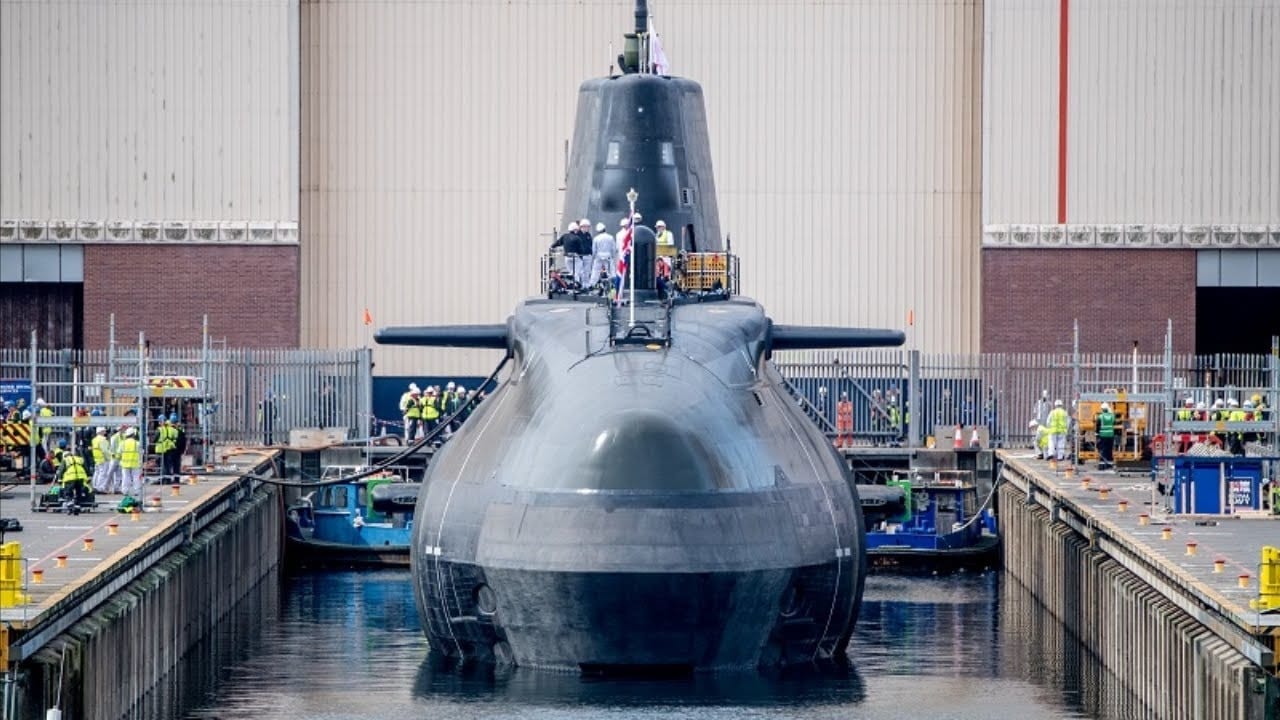
Astute-class. Image Credit: Creative Commons.
The Hardest Day
On April 8, 2011, while Astute was berthed at Southampton Docks during a civic visit, Able Seaman Ryan Donovan, who had been drinking heavily the previous night and was standing armed sentry duty, opened fire with his rifle inside the submarine’s control room.
He fired six shots, killing Lieutenant Commander Ian Molyneux, a 36-year-old father of four from Wigan with twenty years of service, who ran toward the gunfire and tried to stop him, and wounding another officer.
Donovan was overpowered not by sailors but by two of the visiting civilians, Southampton’s council leader Royston Smith and chief executive Alistair Neill, who wrestled him to the deck, and both men were themselves awarded the George Medal for tackling and subduing an armed gunman.
Donovan admitted the murder and three attempted murders and was jailed for life in September 2011 with a minimum of twenty-five years; the Defence Secretary of the day called it a tragic incident.
Ian Molyneux was posthumously awarded the George Medal in March 2012, among the highest honors Britain bestows for gallantry away from combat, for attempting to disarm the gunman and protect the others in the control room, and the Navy afterward tightened its rules for armed sentries and its approach to alcohol before duty.
More than a decade later, in May 2022, his widow Gillian stood with Prince William, then the Duke of Cambridge, at the unveiling of the submariners’ memorial at the National Memorial Arboretum.
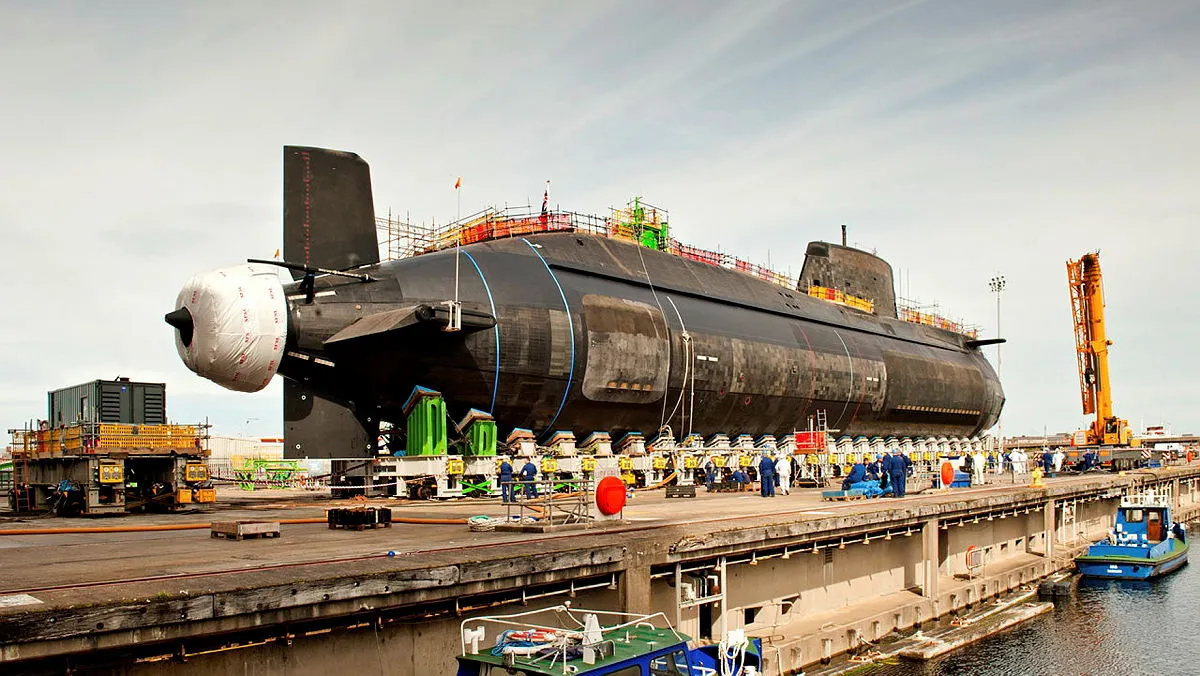
Royal Navy’s Astute-Class Submarines. BAE Systems.
The episode belongs in the class’s story because it took place aboard the class’s lead boat and because Ian Molyneux’s name deserves to outlast the program’s troubles.
What the Leaked Memo Warned
By 2012, the problems had moved inside the hull, and the reporting that year read like a systems failure in slow motion.
The class is credited with a submerged top speed of about 30 knots, and the Guardian reported that Astute could not reach it, attributing the shortfall to a mismatch between reactor and turbine, a serious charge against a hunter-killer whose job includes sprinting to protect aircraft carriers faster than herself, and one the Ministry of Defence never fully engaged in public.
The same reporting described flooding during a routine dive that forced an emergency surfacing, and corrosion appearing on a submarine that was essentially new.
The corrosion had a paper trail.
A confidential Ministry of Defence memo, leaked to the Guardian in 2012 and since published in full, called the corrosion on the first two boats “a cause for major concern,” blamed cost-cutting during construction, warned that severe problems and extended repair periods should be expected, and worried aloud whether it was already too late for the fourth boat then taking shape at Barrow.
The early-career catalog kept growing around the documents: Ambush broke down within days of her commissioning ceremony in March 2013, and in July 2016 she surfaced into a merchant tanker off Gibraltar in a glancing collision that crumpled the top of her sail, with the Royal Navy confirming the reactor was untouched and no one hurt. None of these events sank a boat or cost the fleet a hull.
Together they cost something subtler: the years of repair time and confidence that a seven-boat force cannot spare.
Twenty-Eight Years of Seven Boats
The tempo is the problem underneath every other problem.
The first Astute’s keel was laid on January 31, 2001. The seventh and final boat, ordered as Agincourt and renamed HMS Achilles in early 2025, was due in service in late 2026 and has slipped, with delivery now expected closer to the end of the decade, which means the class will have consumed close to twenty-eight years from first keel to final delivery, the slowest production run of its kind in the Western world.
The intermediate milestones tell the same story: Audacious’s handover slid from August 2019 into 2021, Anson commissioned on August 31, 2022, and Agamemnon, commissioned in late 2025, was still working through trials into 2026, while official program reporting has pushed the class’s whole-life cost above £11 billion.
The slow build had a force-structure consequence Britain is living with now.
The aging Trafalgar-class boats were stretched years past their design lives to cover the gap, and when the last of them retired in December 2024, the final buffer disappeared, leaving the attack-submarine mission resting entirely on a class that was still not finished being built a quarter century after it began.
Zero Boats at Sea
The availability collapse arrived on schedule, and it produced sentences that would have been unthinkable when the class was conceived.
In July 2025, HMS Anson returned to Faslane and the naval press recorded that no Royal Navy attack submarines were at sea.
The promised recovery kept receding; the Navy had said availability would improve in late 2024, and by the summer of 2026 the picture was worse.
The fleet survey that June found HMS Astute in Devonport awaiting her midlife overhaul, having arrived in June 2025 and queued for the dockyard’s one refurbished dry dock; Audacious, who had waited 22 months for that same dock before entering it in February 2025; Artful, who had not been to sea since around May 2023; and Ambush, who last sailed in August 2022 and had been partially stripped of parts to keep her sisters running, a frontline submarine converted into a spares donor barely a decade after commissioning.
Anson, the only boat sailing at all, had come home early.
A former submarine captain summed up the constraints in the plainest terms, noting “There are only so many dry docks available,” along with limited skilled people and limited training capacity, which is the 1990s skills gap reappearing a generation later in the maintenance yards rather than the building hall.
The cost is not only strategic.
Submarine crews keep their edge through sea time, and a fleet alongside is a fleet whose commanding officers, sonar teams, and planners are quietly losing the practice that makes the boats worth having.
The AUKUS Irony
Britain chose these same years to promise its submarine-building skill to another country, and the promise collided with the shortage almost immediately.
On January 10, 2026, HMS Anson sailed from Faslane for Australia to join the rotational force established under the AUKUS pact, the arrangement through which Britain and the United States are to help Australia field nuclear-powered attack submarines, and the deployment of one of the Navy’s few working boats drew criticism at home for exactly the reason the June survey later made vivid.
The war with Iran that began in late February, and the American campaign known as Operation Epic Fury that opened in March, then cut the mission short, and Anson came home to Devonport in May, her time in Australia truncated, her return leaving the Pacific commitment thinner than advertised.
The deeper strain sits at Barrow, where the SSN-AUKUS successor class, planned at up to twelve boats entering service from the late 2030s, must be designed and built in a yard already saturated with the Dreadnought ballistic-missile boats and the final Astute.
The industrial base whose capacity shortfalls caused the current crisis is the same one that must now deliver the next class, while the wider naval enterprise nurses the aging deterrent fleet through its own troubles at Faslane.
Britain is teaching Australia the lesson it paid Electric Boat to teach Barrow, that submarine skills die quickly and resurrect slowly, while demonstrating in real time what happens when the lesson is learned late.
The Best Boats in the World, Alongside
The Astutes have never been bad submarines when in operation. They are, by the assessment of the analysts who track them, an outstanding platform, exceptional in stealth, speed, and lethality, quieter than the ocean around them, armed with Tomahawk missiles and Spearfish torpedoes, and carrying one of the world’s most capable sonar suites, and when one of them sails, allied navies notice and adversaries lose track of it.
The tragedy of the class is that its excellence and its scarcity came from the same place.
Britain built superb submarines slowly because it had to relearn how to build them at all; the slow build stretched the old boats past their limits and left no reserve; the thin fleet then aged into a maintenance system without the docks or hands to sustain it, and the result, a quarter century after the first keel, is the finest attack submarines in Europe tied up alongside while the waters they were built to patrol go unwatched.
About the Author: Harry J. Kazianis
Harry J. Kazianis (@Grecianformula) was the former Senior Director of National Security Affairs at the Center for the National Interest (CFTNI), a foreign policy think tank founded by Richard Nixon based in Washington, DC. Harry has over a decade of experience in think tanks and national security publishing. His ideas have been published in the NY Times, The Washington Post, The Wall Street Journal, CNN, and many other outlets. He has held positions at CSIS, the Heritage Foundation, the University of Nottingham, and several other institutions related to national security research and studies. He is the former Executive Editor of the National Interest and the Diplomat. He holds a Master’s degree focusing on international affairs from Harvard University.

