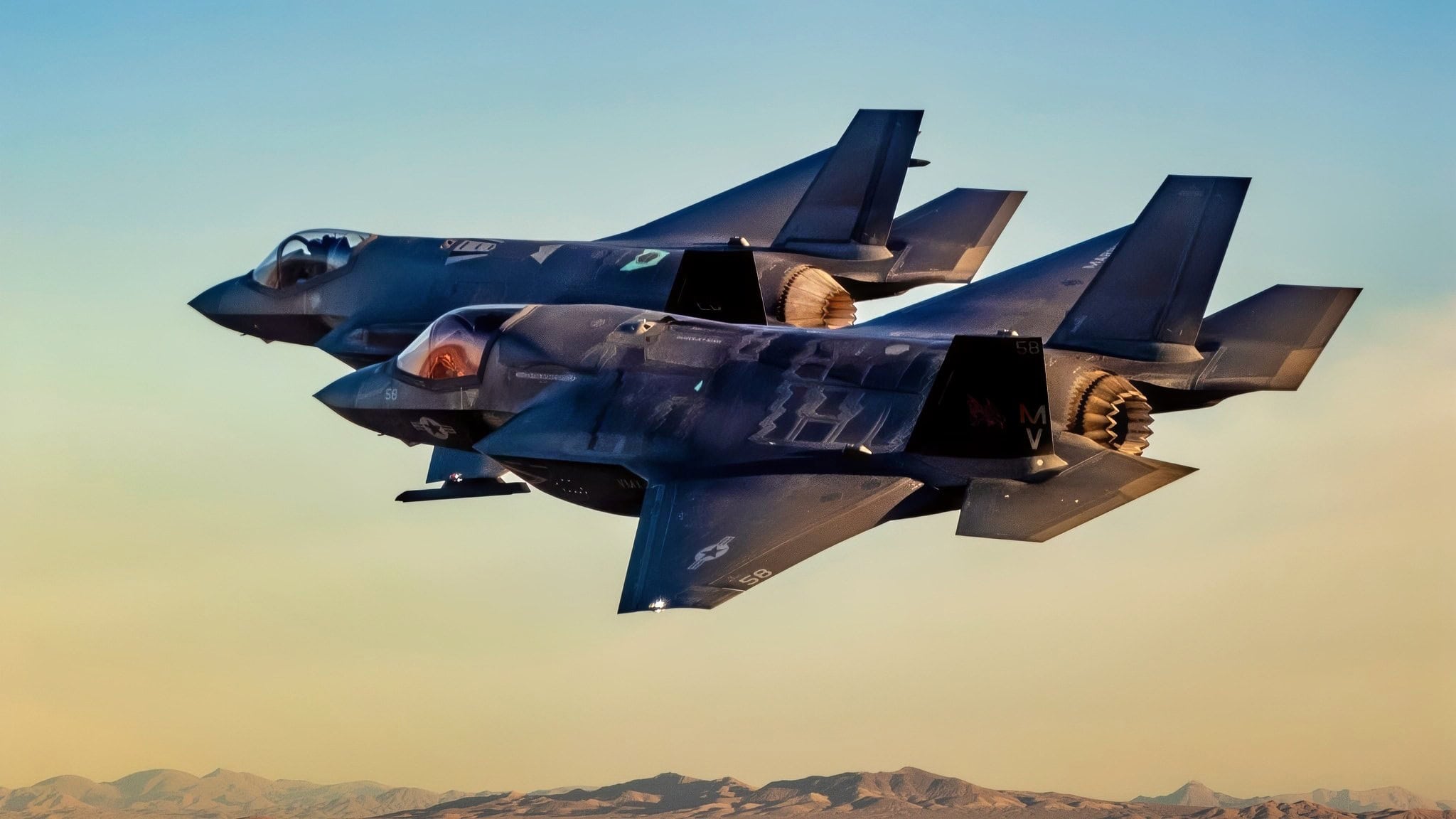
“It may be a great airplane: it’s not the right plane for Canada.” This is what Stephen Fuhr said about the F-35 on CBC in 2011. Some fifteen years on, Canada is set to buy the jet, although how many it will eventually purchase remains uncertain.
Fuhr himself is now one of the key people deciding how far this purchase goes.
Fuhr, a former Royal Canadian Air Force CF-18 pilot, was appointed as Canada’s secretary of state for defense procurement this May.
He also oversees the Defense Investment Agency, the body Prime Minister Mark Carney set up last October to streamline a procurement system notorious for cumbersome reviews and overlapping priorities.
Canada Once Said It Would Buy 88 F-35As
Back in 2023, Canada said it would buy 88 F-35As. The acquisition budget is currently around $27.7 billion Canadian dollars. Last year, Carney launched the landmark review.
Now, more than 17 months have passed since that news, and it remains unclear when a firm decision will be made.
Canada is still scheduled to buy the initial 16 aircraft, and the first eight are set to arrive in Canada by 2028.
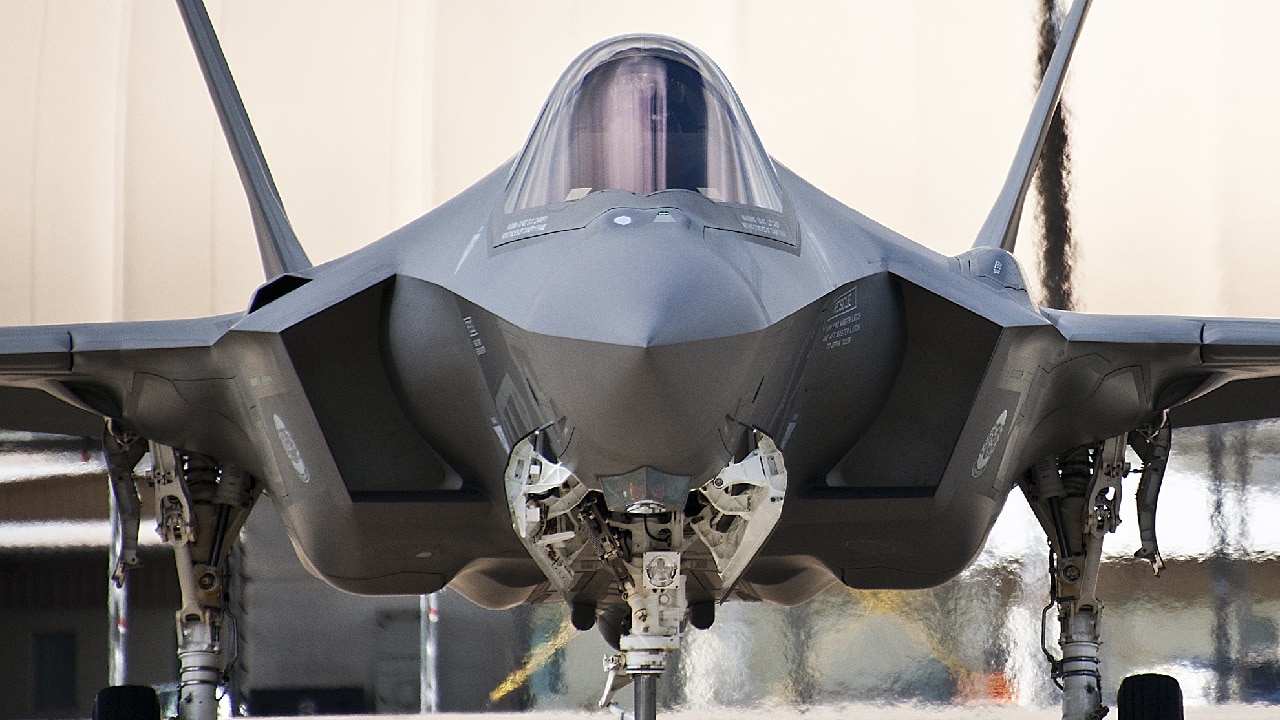
An F-35A Lightning II pilot turns his aircraft along the yellow taxi line on the 33rd Fighter Wing flightline at Eglin Air Force Base, Fla. (U.S. Air Force photo by Samuel King Jr./Released)
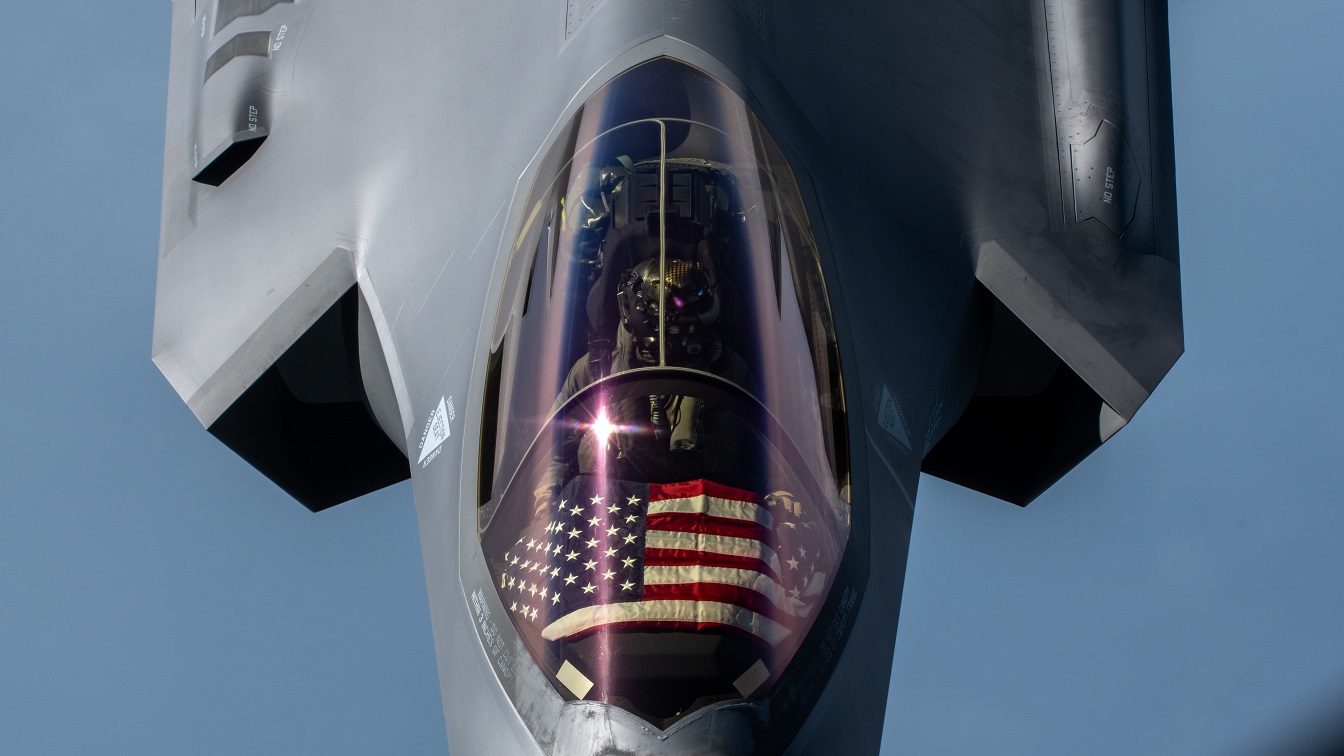
An F-35A Lightning II from the 354th Fighter Wing, Eielson Air Force Base, Alaska, flies behind a KC-135 Stratotanker assigned to the 117th Air Refueling Squadron, Forbes Field Air National Guard Base, Kansas, over the Indo-Pacific, March 10, 2022. Aircrews routinely fly missions aimed at sharpening the necessary skills needed to respond to emerging situations at a moment’s notice. (U.S. Air Force photo by Airman 1st Class Yosselin Perla)
Last week, CBC News said that Fuhr’s lengthy opposition to the F-35 left him at odds with parts of Canada’s fighter-pilot community.
After Fuhr retired from the RCAF in 2009 with the rank of major, he became an outspoken, public critic of the Lockheed Martin aircraft, pointing to its costs, delays and technical issues. In 2021, he called it “unaffordable.”
Fuhr: No Reason We Can’t Switch
“Many of our allies … run a mixed fleet with fighters,” Fuhr told CBC when asked about the possibility of operating both F-35s and Saab Gripens. “I don’t necessarily subscribe to the fact that we can’t do it. We certainly can; we’ve done it, and our allies do it now.
So it’s a function of ‘do we want to do this or not?'”
After another flare-up in the Canada-U.S. tariff dispute in August, Fuhr said a new sole-source deal with an American defense company would be hard to achieve.
“That’s just me reading the room,” he informed CBC. “I think that would be a very difficult thing to do, especially after this last week. I think that people would not be happy about that.”
“We are going to become less reliant and more resilient,” he added.
Ottawa has already begun putting that idea into hardware.
The Swedish Option?
In May, the Defense Investment Agency selected Sweden’s Saab as the preferred supplier for talks over an airborne early-warning fleet based on the GlobalEye, which uses Bombardier’s Canadian-built Global 6500 aircraft.
In July, Canada selected Germany’s Thyssenkrupp Marine Systems as preferred supplier for its planned fleet of up to 12 new submarines.
Then in August, the agency awarded an initial C$2.3 billion contract to Canadian satellite operator Telesat for Arctic military communications.
Fuhr is even questioning one of the less visible ties binding Canadian defense procurement to Washington: the U.S. International Traffic in Arms Regulations (ITAR), which govern sensitive American technology.
“Is there a world in which we can operate with fewer ITAR restrictions? I think there is,” he told CBC, pointing to closer cooperation with partners in Europe, Asia and Oceania.
Fuhr Set to Expand His Authority
Bill C-31, now before a House of Commons committee, would establish the Defense Investment Agency as a stand-alone entity and give the minister presiding over it sweeping authority over defense and national-security procurement.
The legislation provides exceptions to competitive tendering in cases involving urgent military requirements, interoperability, sensitive technology and economic security.
But can a new agency actually cure Canada’s old procurement habits?
The International Institute for Strategic Studies warned last November that many Canadian defense-project teams were operating at only 30 to 50 percent of desired staffing.
Its assessment called the DIA a gamble on institutional reform and warned that “the risk that looms largest is not failure but relapse” into the bureaucracy the agency was created to change.
Fuhr, at least, seems comfortable with the prospect of making enemies along the way.
“I’m not afraid to stand out on the hill by myself,” he told CBC. “It’s just a principled place to be. And sometimes it’s lonely, but that’s just the way it is.”
About the Author: Georgia Gilholy
Georgia Gilholy is a journalist based in the United Kingdom who has been published in Newsweek, The Times of Israel, and the Spectator. Gilholy writes about international politics, culture, and education.