
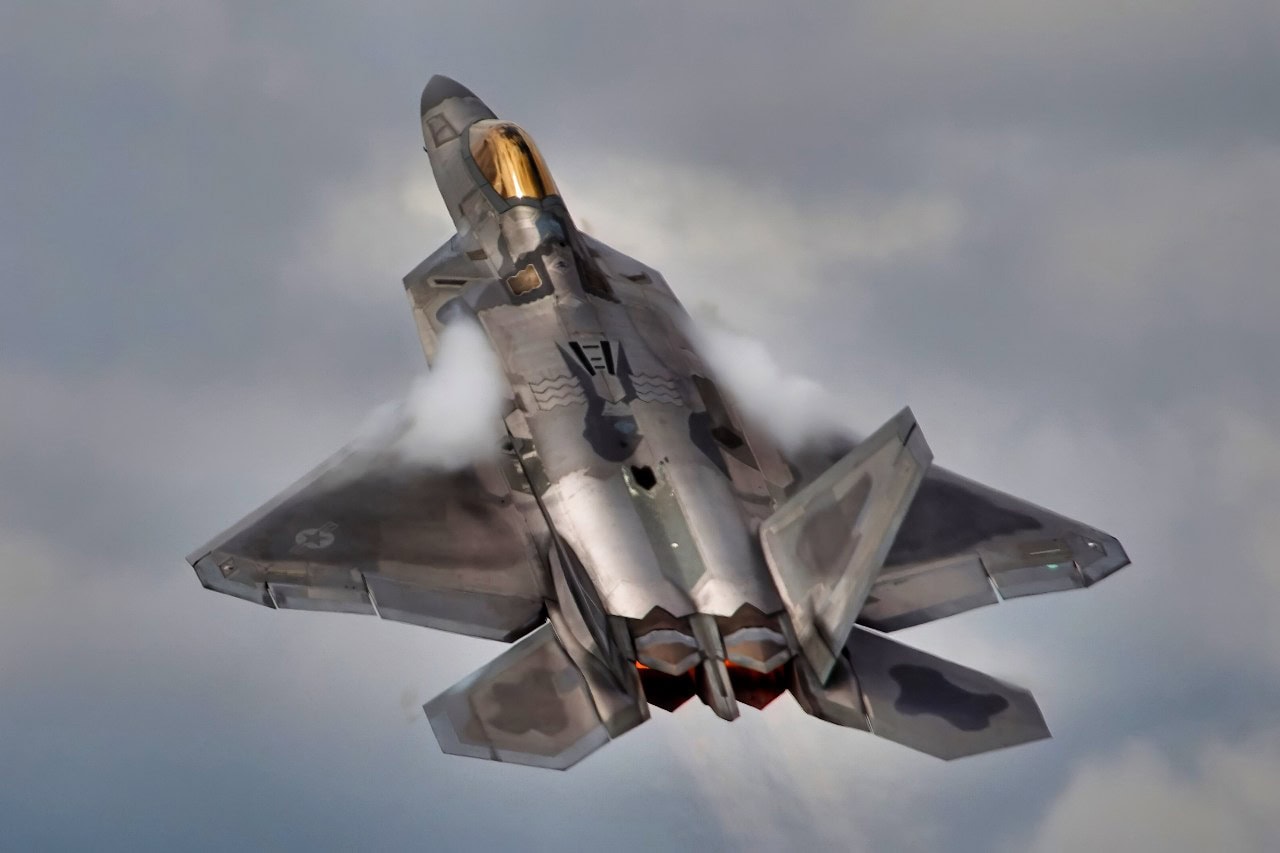
Russia’s S-400 Is Feared for Good Reason. It Still Does Not Make the F-22 or F-35 Obsolete: Russia’s S-400 Triumf is feared because it turns a large area into a difficult air-defense problem. The Defense Intelligence Agency calls it a key part of Moscow’s anti-access strategy. Russia advertises a maximum engagement range of 400 kilometers (about 250 miles) for its longest-range interceptor.
The number tells only part of the story. An S-400 formation combines mobile launchers, command equipment, acquisition and engagement radars, and several missile types. It can operate within a wider network alongside lower-frequency surveillance radars, fighter aircraft, and short-range systems such as Pantsir, protecting valuable vehicles from drones and precision-guided weapons.
Washington treated the system seriously enough to remove Turkey from the F-35 program after Ankara accepted Russian S-400s. The Pentagon said the system might gather information about F-35 capabilities and pass it to Moscow. That concern involved repeated access to the aircraft’s signatures and operating patterns, not proof of an S-400 victory in combat.
The contest depends on a sequence. A radar must detect an object, maintain a track, classify it, pass accurate data to the engagement system, and guide a missile close enough to work. Stealth complicates each step by reducing the strength and consistency of the return. It does not make an aircraft invisible.
The S-400’s Strength Comes From the Network Around It
The S-400 is more dangerous as part of an integrated air-defense system than as an isolated battery. Radars operating in different frequency bands can monitor separate sectors and relay alerts to command posts. Its longest-range missiles also push tankers and surveillance aircraft farther from the defended area. That layered structure explains why the S-400 represents Russia’s wider air-defense network.
Mobility adds another problem. Launchers and radars can change position, operate briefly, and shut down before an attacker completes the find-fix-strike cycle. Air University research notes that mobile defenses can make a safe corridor disappear within hours. Russian acquisition radars such as the Nebo SVU use frequency agility and digital processing, making electronic attack harder.
The 400-Kilometer Figure Is Not a Universal Kill Zone
A 400-kilometer brochure range does not create a perfect circle in which every aircraft is equally vulnerable. Earth curvature, terrain, altitude, radar power, target aspect, and electronic interference change the usable distance. Low-flying targets disappear behind the radar horizon much sooner than aircraft at high altitude.
Lower-frequency radars sometimes detect stealth aircraft at greater distances, yet their returns often lack the precision required for missile guidance. A 2026 Air University study describes detection as probabilistic and warns that no single frequency defeats low observability. Higher-frequency fire-control radars offer better targeting resolution, but stealth shaping is particularly effective against many of those bands.
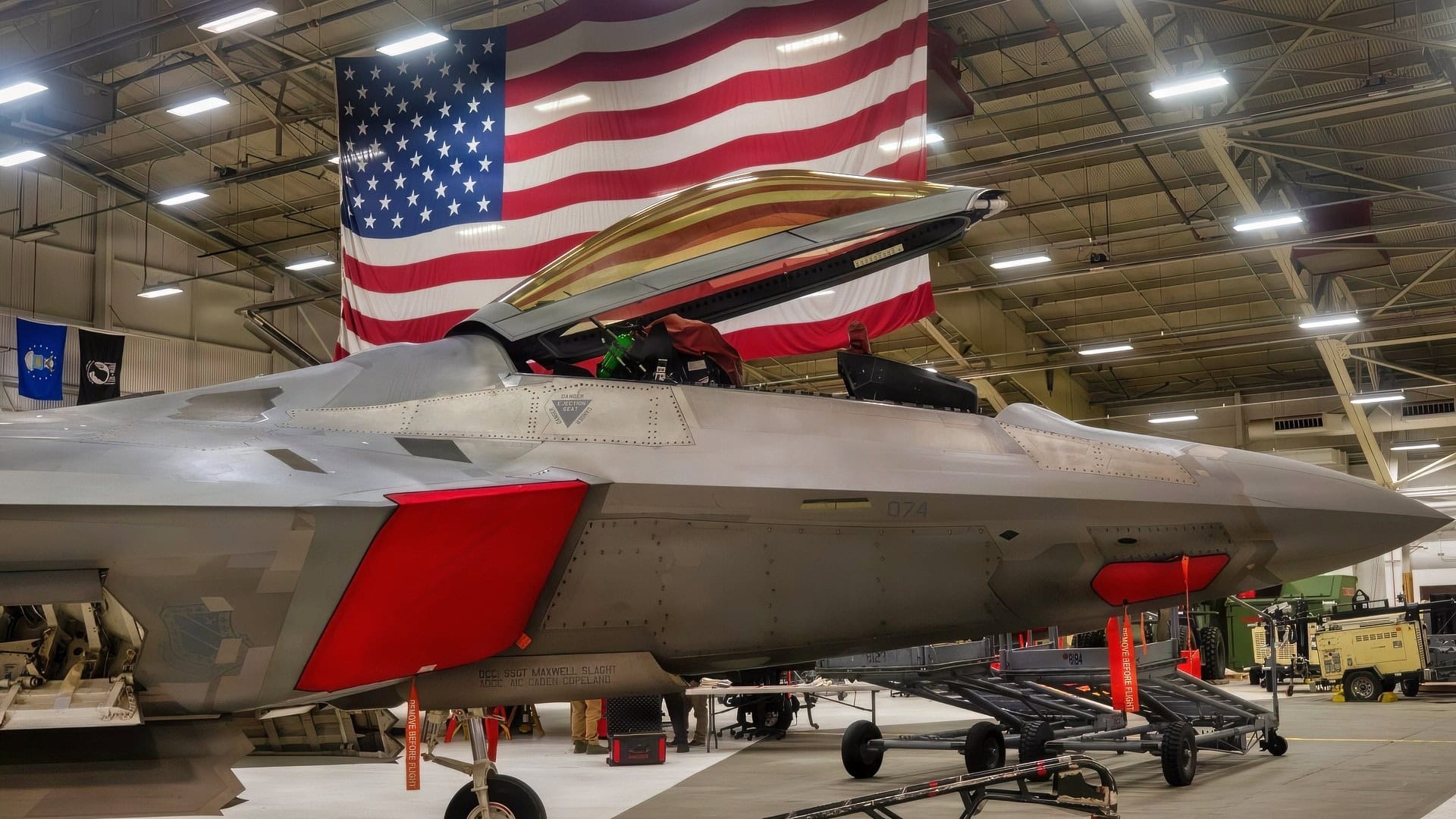
An F-22A Raptor sits in a hangar during a load competition on Joint Base Elmendorf-Richardson, Alaska, Jan. 23, 2026. Load competitions test Airmen’s ability to safely and efficiently build munitions, strengthening readiness for real-world taskings. (U.S. Air Force photo by Airman 1st Class Theodore Gowdy)

An F-35A Lightning II flown by a 65th Aggressor Squadron (AGRS) pilot takes off for its first flight with a new paint scheme at Nellis Air Force Base, Nevada, May 26, 2022. The mission of the 65 AGRS is to know, teach and replicate fifth-generation air adversaries tactics. (U.S. Air Force photo by Airman 1st Class Josey Blades)
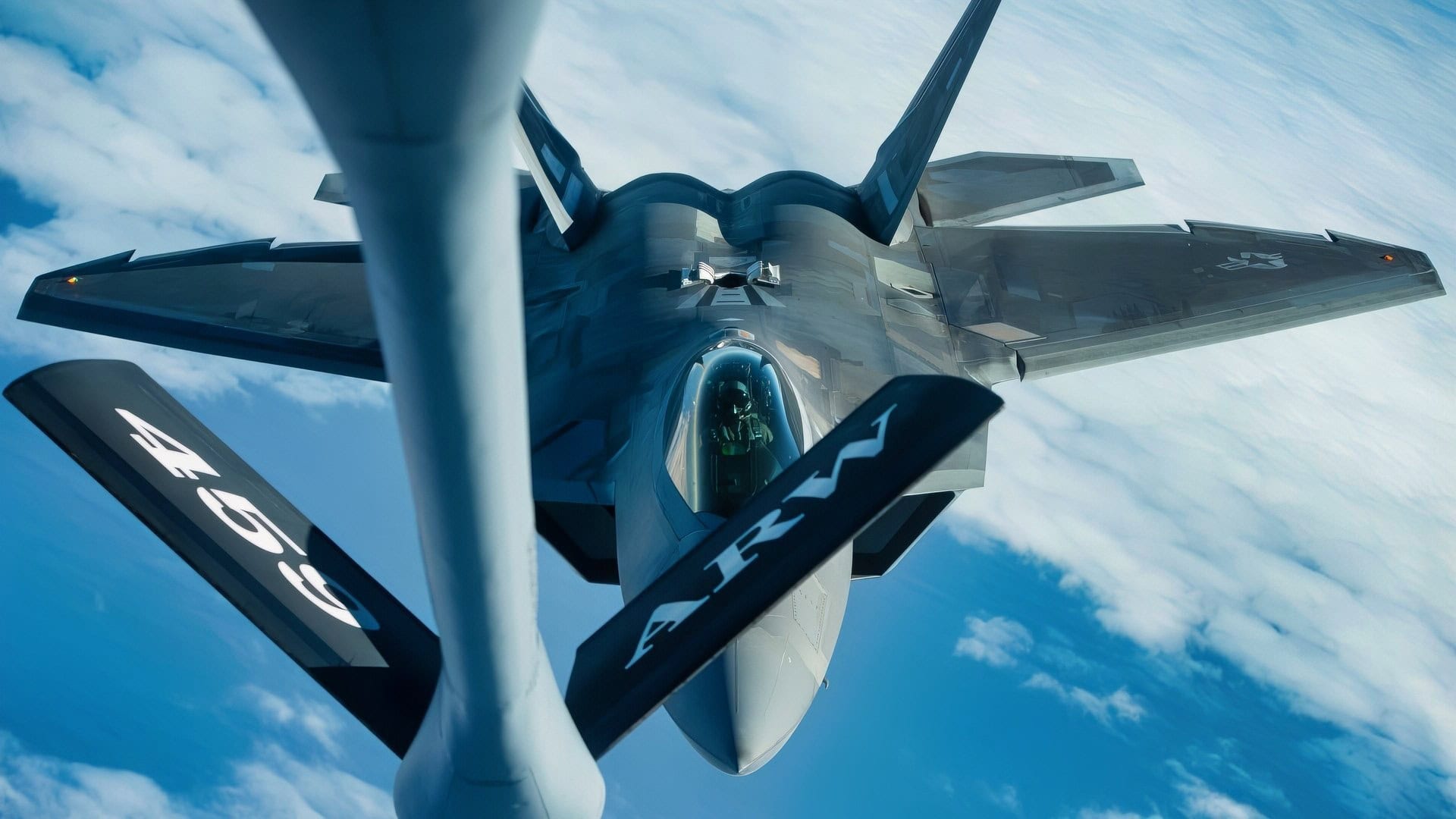
An F-22 Raptor from the Hawaii Air National Guard’s 199th Fighter Squadron, conducts aerial refueling with a KC-135 Stratotanker near Joint Base Pearl Harbor-Hickam, Hawaii, Jan. 15, 2019. The F-22 Raptors conducted interoperability training with the B-2 Spirit bomber deployed here from Whiteman Air Force Base, Missouri. The bombers and more than 200 Airmen are deployed in support of U.S. Strategic Command’s bomber task force mission. Bomber aircraft regularly rotate through the Indo-Pacific region to integrate capabilities with key regional partners and maintain a high state of aircrew proficiency. (U.S. Air Force photo by Master Sgt. Russ Scalf)
A faint return may cue another sensor without supporting a weapon-quality track. The aircraft’s nose, sides, tail, control-surface position, and external stores also alter its radar cross-section. The S-400 remains a serious threat, but its maximum published range is not the distance at which it is guaranteed to defeat a stealth fighter.
F-22 and F-35 Pilots Would Target the Entire Air-Defense Network
The F-22 combines low observability, supercruise, and integrated sensors. The Air Force says its design improves survivability against surface-to-air threats. The F-35 adds extensive sensor fusion and data links. Neither aircraft would normally enter an S-400 network alone and wait for a radar lock.
A suppression package would combine stealth aircraft, passive sensors, electronic attack, decoys, standoff weapons, and intelligence from other platforms. Some aircraft would locate emitters. Others would strike radars, command vehicles, or communications links. Air University’s analysis says low observability and standoff weapons are central because they either shorten the defender’s detection range or allow the attacker to fire from outside it.
Mobility produces a tradeoff. An emitting radar reveals its location; a silent radar preserves itself but stops contributing to the engagement. Ukraine says it has struck components supporting S-300 and S-400 formations, including long-range radars in occupied Crimea. The claims remain unverified, but they show why sensors and command links receive priority.
The S-400 Still Has Ways to Threaten Stealth Fighters
Stealth effectiveness changes with geometry and behavior. An F-22 or F-35 presenting its side or rear, opening a weapons bay, carrying external stores, or repeating a route may generate a stronger return. Separated sensors improve the chance of estimating its path. At close range, even a reduced signature becomes easier to track.
Skilled crews can use short radar emissions, false positions, decoys, and data from other sensors. They might wait until a stealth aircraft moves closer before activating the engagement radar. That is the danger of an S-400 encounter with the F-22 or F-35: the American aircraft retain major advantages but are not immune to a layered defense.
No publicly verified combat engagement has tested an S-400 against either fighter. Claims of an automatic Russian victory ignore stealth, electronic warfare, and suppression tactics. Claims that the system is harmless ignore its mobility, sensor diversity, and pressure on vulnerable support aircraft.
The S-500 Adds a Higher Missile-Defense Tier
The S-400 still has years of service ahead. India approved a maintenance contract for its S-400 force in August 2025, while Russia continues to use the system as a long-range air-defense layer. The S-500 Prometheus is intended to supplement it against ballistic missiles, high-speed targets, and threats near the edge of the atmosphere.
Russia’s defense minister announced on December 17, 2025, that the first S-500 regiment had entered combat duty. The program arrived years later than early schedules predicted. Russian claims assign it an extraordinary range and missile-defense performance, but exact specifications have not been officially published.
The S-500 expands the upper tier while S-400 batteries continue handling much of the aircraft and cruise-missile mission. Russia has not disclosed how many S-500 launchers or interceptors are operational, and no public combat record shows either system engaging an F-22 or F-35.
About the Author: Harry J. Kazianis
Harry J. Kazianis (@Grecianformula) was the former Senior Director of National Security Affairs at the Center for the National Interest (CFTNI), a foreign policy think tank founded by Richard Nixon based in Washington, DC. Harry has over a decade of experience in think tanks and national security publishing. His ideas have been published in the NY Times, The Washington Post, The Wall Street Journal, CNN, and many other outlets worldwide. He has held positions at CSIS, the Heritage Foundation, the University of Nottingham, and several other institutions related to national security research and studies. He is the former Executive Editor of the National Interest and the Diplomat. He holds a Master’s degree focusing on international affairs from Harvard University.

