
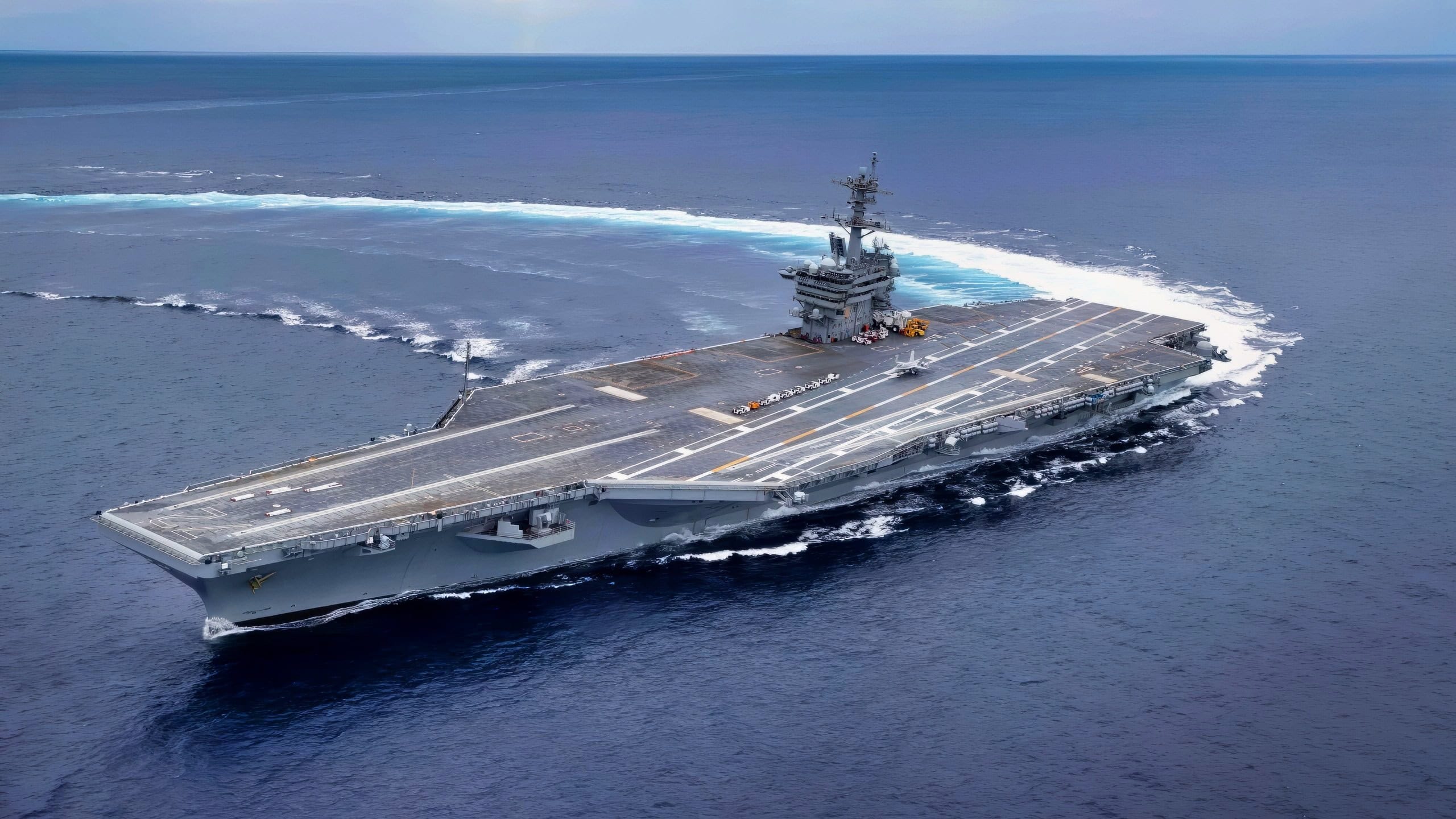
The US Navy Almost Built a 62,500-Ton Medium Carrier. Congress Chose Nimitz: The U.S. Navy’s proposed medium aircraft carrier was never small. The 1978 CVV design displaced about 62,500 tons, measured 912 feet at the waterline and had an extreme width of 256 feet. It was designed to operate every current and planned type of carrier aircraft.
The attraction was numbers. In January 1977, the Ford administration approved a plan replacing the expected fourth Nimitz-class carrier with two conventionally powered CVVs. The Government Accountability Office said cost, vulnerability to improving Soviet anti-carrier weapons, and uncertainty over future technology drove the decision.
The design was expected to carry roughly 55 to 65 aircraft, use two steam catapults, and make about 28 knots. A 1979 Navy profile presented it as a flexible carrier capable of handling conventional aircraft and future vertical or short takeoff and landing designs.
The CVV failed because the savings were smaller than the label suggested. It retained most of the machinery and infrastructure that make a carrier expensive while giving up air-wing size, catapult capacity, speed, aviation-fuel storage, weapons capacity, and room for later growth.
The CVV Came From the Navy’s High-Low Fleet Debate
The proposal grew from the high-low fleet debate associated with Adm. Elmo Zumwalt. Supporters wanted more flight decks at lower individual cost, wider geographic coverage and less combat power concentrated in a few hulls. A larger carrier count also helped preserve a 12-carrier force as older ships approached retirement.
The plan reached the federal budget process. The Navy deferred full funding until fiscal 1980 while seeking advance money in fiscal 1979, and planners considered a second CVV for fiscal 1982. Contemporary debate treated it as a serious procurement effort, not a speculative shipyard sketch.
The V/STOL Fighter Never Became a Reliable Foundation
Part of the concept rested on a future high-performance vertical-takeoff-and-landing fighter. Such an aircraft promised to reduce dependence on long launch runs and heavy catapult machinery. The Navy refused to base a new carrier on an unproven aircraft.
CVV therefore had to operate conventional aircraft such as the F-14 Tomcat, A-6 Intruder, S-3 Viking, and E-2C Hawkeye. That requirement brought back catapults, arresting gear, large elevators, a substantial hangar, aviation workshops, and the deck dimensions needed for heavy aircraft. The medium-carrier concept became a smaller version of the existing carrier system rather than the start of a cheaper aviation model.
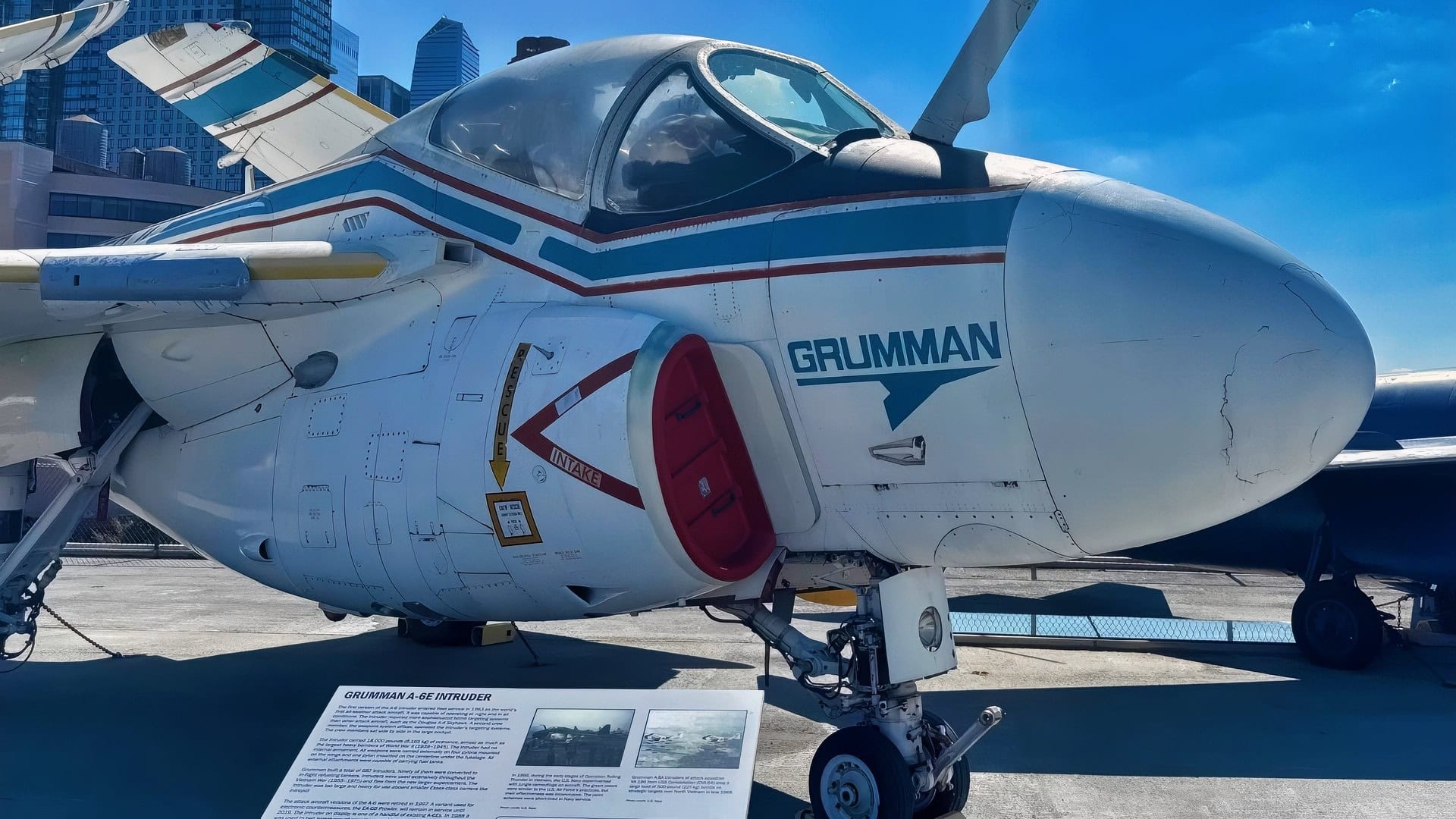
A-6 Intruder Original 19FortyFive.com Image Taken in July 2025.
The CVV Kept Most of What Makes a Carrier Expensive
A carrier’s dimensions are driven by its aircraft and sortie requirements. Flight decks, elevators, hangars, magazines, fuel tanks, repair spaces, and crew accommodations all support the air wing. Navy designers explained in 1977 that aircraft characteristics and aviation stores often controlled hull size more than the propulsion plant.
Those costs do not fall in direct proportion to displacement. A CVV still needed thousands of sailors, escorts, replenishment ships, shipyard overhauls, and a complete training and supply system. Building only one or two also spreads design and support expenses across too few hulls, weakening the promised fleet-wide economy.
The Carter administration requested about $1.617 billion for the medium carrier in the fiscal 1980 budget. Congress ultimately appropriated about $2.094 billion for a nuclear carrier. The CVV was cheaper, but lawmakers judged the price difference against decades of reduced aviation capacity.
Two Catapults Reduced the Medium Carrier’s Combat Margin
Two catapults were sufficient for routine operations and represented one of the design’s major savings. A Nimitz-class carrier had four, along with a larger deck and air wing. More launch paths provide flexibility when machinery fails, deck crews are moving aircraft, or the ship must generate sorties quickly.
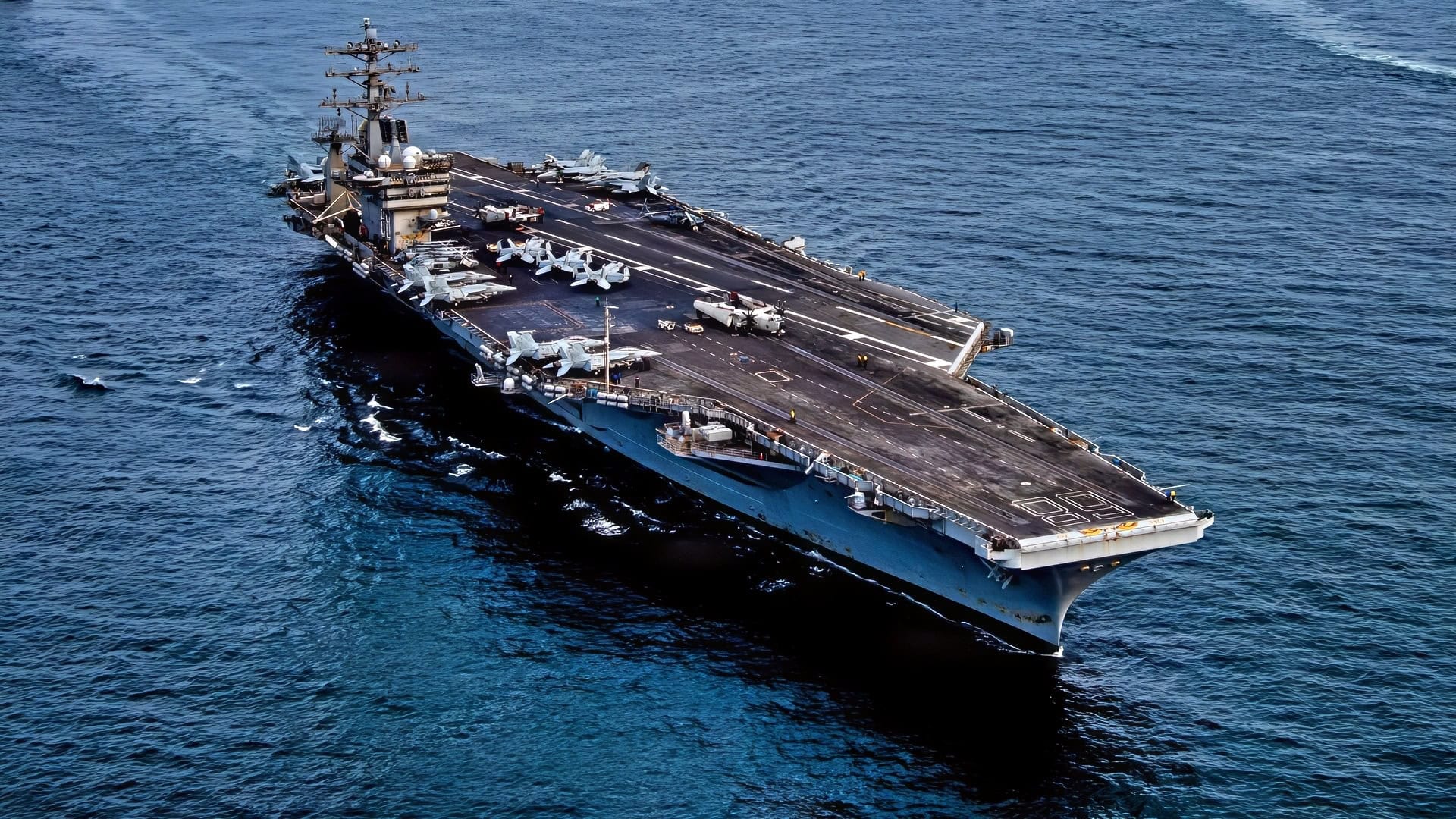
Ecuadorian Navy Esmeralda-class missile corvettes BAE Manabi (CM 12) and BAE Loja (CM 16) conduct formation maneuvering alongside Nimitz-class aircraft carrier USS Nimitz (CVN 68) and Arleigh Burke-class guided missile destroyer USS Gridley (DDG 101), part of Nimitz Carrier Strike Group (NIMCSG), in the Pacific Ocean, April 8, 2026. Nimitz is deployed as part of Southern Seas 2026 which seeks to enhance capability, improve interoperability, and strengthen maritime partnerships with countries throughout the region through joint, multinational and interagency exchanges and cooperation. (U.S. Navy photo by Mass Communication Specialist Seaman Apprentice Julian Jaime)
A smaller air wing also forces harder choices among fighters, strike aircraft, airborne early-warning planes, electronic-warfare aircraft and submarine hunters. Maintenance losses or combat attrition consume a larger share of a 60-aircraft force. That gap explains why the CVV’s lower purchase price did not settle the argument.
Supporters answered that two medium carriers could operate in different regions and force an enemy to find two targets. The case worked best if the Navy bought a substantial class. Congress was being asked to approve the first ship without a firm commitment to purchase enough sisters to make that model pay.
Congress Chose CVN-71: Newport News Never Built a Medium Aircraft Carrier
The Carter administration requested a CVV for fiscal 1979. Congress substituted a fourth Nimitz-class carrier. Carter vetoed that defense bill, and replacement legislation contained no carrier. The administration returned with the CVV in the fiscal 1980 program, but Congress remained committed to CVN-71.
Operations in the Indian Ocean and Middle East strengthened support for a larger air wing, sustained high speed and nuclear propulsion. The decision also protected the specialized carrier-building base at Newport News and extended a proven Nimitz-class production line.
The final fiscal 1980 program funded the nuclear carrier. Newport News received the CVN-71 contract on September 30, 1980. Its keel was laid on October 31, 1981, and the ship entered service as USS Theodore Roosevelt on October 25, 1986. Theodore Roosevelt became the fourth Nimitz-class carrier. CVV never received a hull number.
MORE – USS Missouri: The Greatest Battleship Ever
MORE – The US Navy Almost Has a Nuclear Bomber Aircraft Carrier
About the Author: Harry J. Kazianis
Harry J. Kazianis (@Grecianformula) was the former Senior Director of National Security Affairs at the Center for the National Interest (CFTNI), a foreign policy think tank founded by Richard Nixon based in Washington, DC. Harry has over a decade of experience in think tanks and national security publishing. His ideas have been published in the NY Times, The Washington Post, The Wall Street Journal, CNN, and many other outlets worldwide. He has held positions at CSIS, the Heritage Foundation, the University of Nottingham, and several other institutions related to national security research and studies. He is the former Executive Editor of the National Interest and the Diplomat. He holds a Master’s degree focusing on international affairs from Harvard University.

