
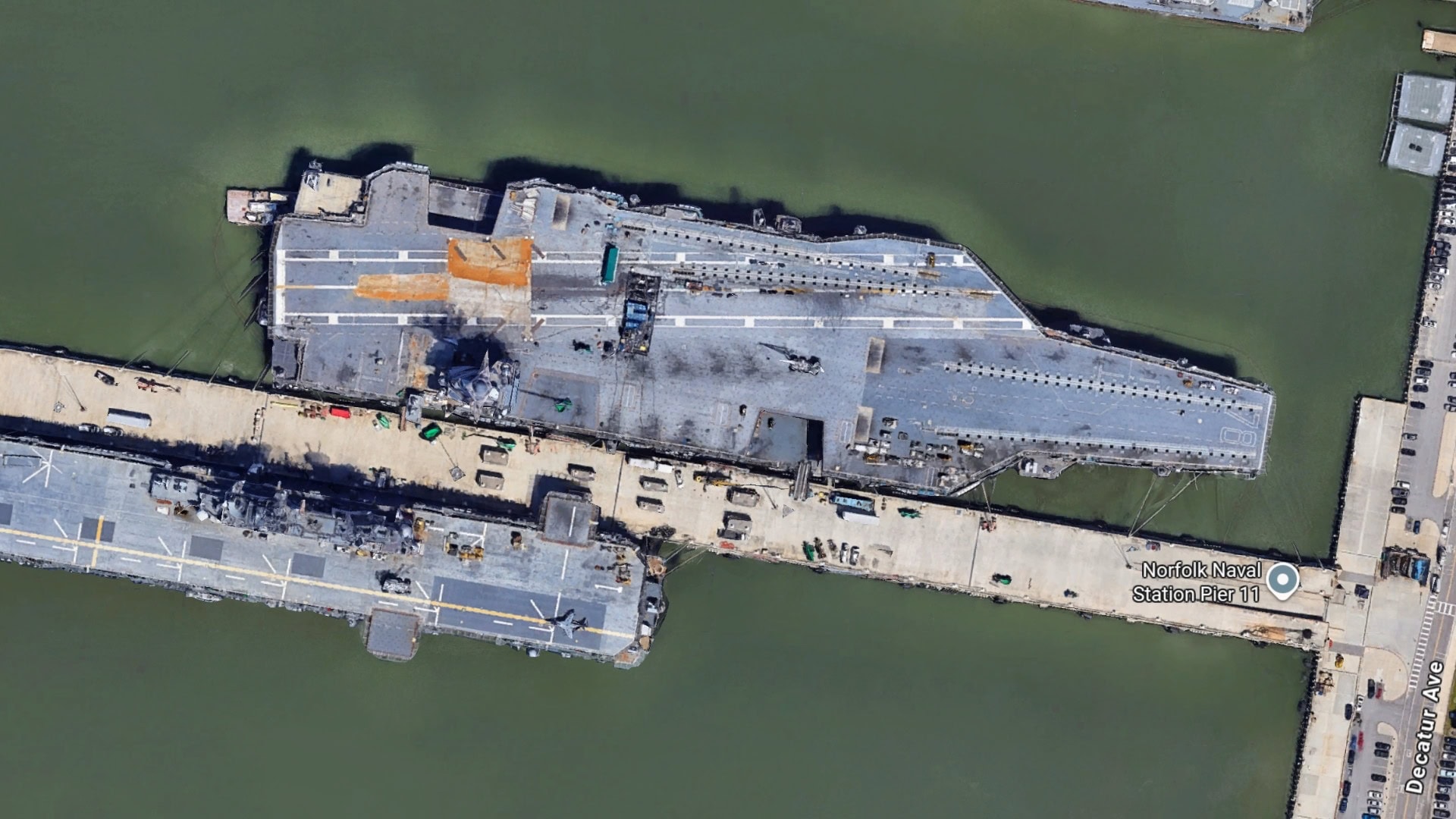
Newport News Builds a Ford-Class Aircraft Carrier With 445 Lifts and 10.5 Million Feet of Cable: HII’s Newport News Shipbuilding is the only American yard that designs and builds nuclear-powered aircraft carriers. Its 550-acre complex stretches along two miles of the James River, employs 26,000 shipbuilders, and is working on John F. Kennedy, Enterprise, and Doris Miller.
Each Ford-class carrier displaces about 100,000 tons. The Navy’s fiscal 2026 estimates placed John F. Kennedy at $13.2 billion, Enterprise at $14.2 billion, and Doris Miller at $15.2 billion. Those procurement figures do not include their aircraft, weapons, or decades of operations.
A Ford-class ship combines two nuclear reactors, an airfield, living space for thousands, electromagnetic catapults, arresting gear, radar, weapons magazines, and a large electrical network. The Navy expects each hull to serve for 50 years, requiring equipment that remains supportable through decades of deployments, maintenance, and upgrades.
Newport News uses modular construction. Workers assemble sections away from the dry dock, install piping, cable, and machinery, then join them into larger units for placement by crane. Enterprise is the first carrier being built entirely with digital work instructions rather than traditional paper drawings.
445 Lifts Turn Steel Into a 100,000-Ton Hull
John F. Kennedy was planned around 445 major lifts, 51 fewer than Gerald R. Ford and 149 fewer than the last Nimitz-class carrier. Larger modules and more work completed before placement are intended to shorten the construction cycle, which is now stretching toward 15 years.
One Kennedy superlift weighed 704 metric tons, measured about 80 by 105 feet, and combined 22 smaller units. It already contained machinery rooms, berthing, a barber shop, and a post office when a 1,050-metric-ton gantry crane lowered it into place. Another section weighed 965 tons.
Pre-outfitting lets welders, electricians, and pipefitters work on an accessible module instead of deep inside a nearly completed hull. The crane movement may take an hour. Fabrication, equipment installation, inspection, and connection to the surrounding ship consume far more time.
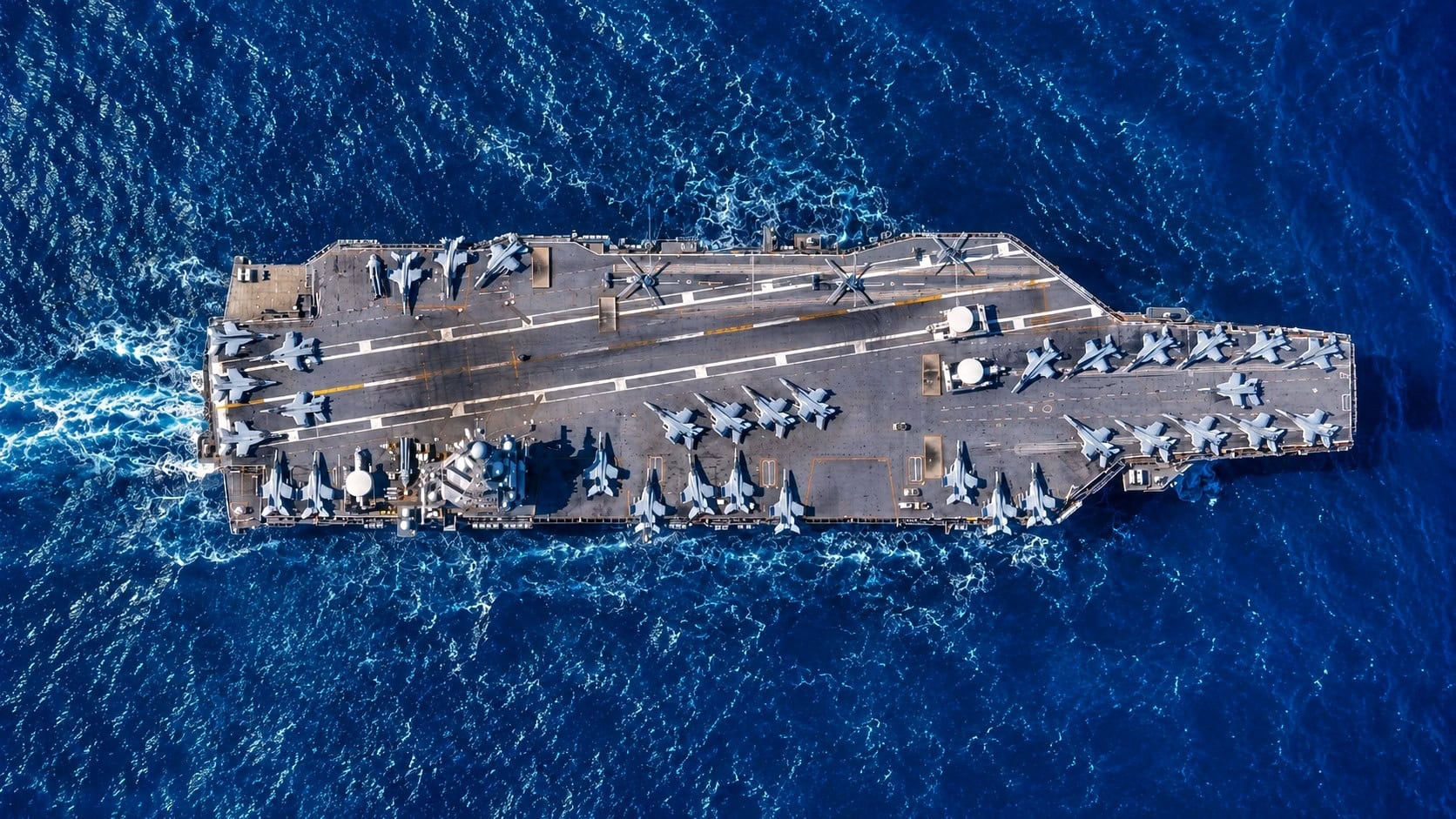
USS Gerald R. Ford. Image Credit: Banana Nano.
2,615 Spaces and 10.5 Million Feet of Cable Follow the Hull
John F. Kennedy contains 2,615 spaces and approximately 10.5 million feet of cable, close to 2,000 miles. The count covers berthing, galleys, medical facilities, workshops, machinery rooms, and aviation spaces. Each compartment requires testing and Navy acceptance.
The Ford design introduced 23 technologies, including the electromagnetic launch system, Advanced Arresting Gear, and software-controlled weapons elevators. It also provides more than twice the electrical capacity of the Nimitz class. Those systems expand capability and testing because launch, recovery, weapons handling, and power generation must work together.
John F. Kennedy completed builder’s sea trials in February 2026, testing major systems at sea for the first time. The carrier returned to Newport News for more work before acceptance trials and formal delivery.
One Yard and 2,000 Suppliers Set the Pace
Newport News depends on more than 2,000 carrier suppliers in 46 states. They provide everything from valves to nuclear-qualified equipment. A late part may block several tasks because construction follows a strict sequence, the central constraint behind the decade-plus carrier schedule.
Enterprise slipped eight months after large, sequence-critical equipment arrived late, obstructing work needed for launch. The delay then reached Doris Miller. The Navy said limited construction space prevented the yard from building CVN-81 modules on the earlier timetable, while Enterprise continued to occupy facilities the next carrier needed. That footprint bottleneck pushed Doris Miller back two years.

A U.S. Sailor observes flight deck operations on the flight deck of the world’s largest aircraft carrier, USS Gerald R. Ford (CVN 78), during Operation Epic Fury, Feb. 28, 2026. (U.S. Navy photo)
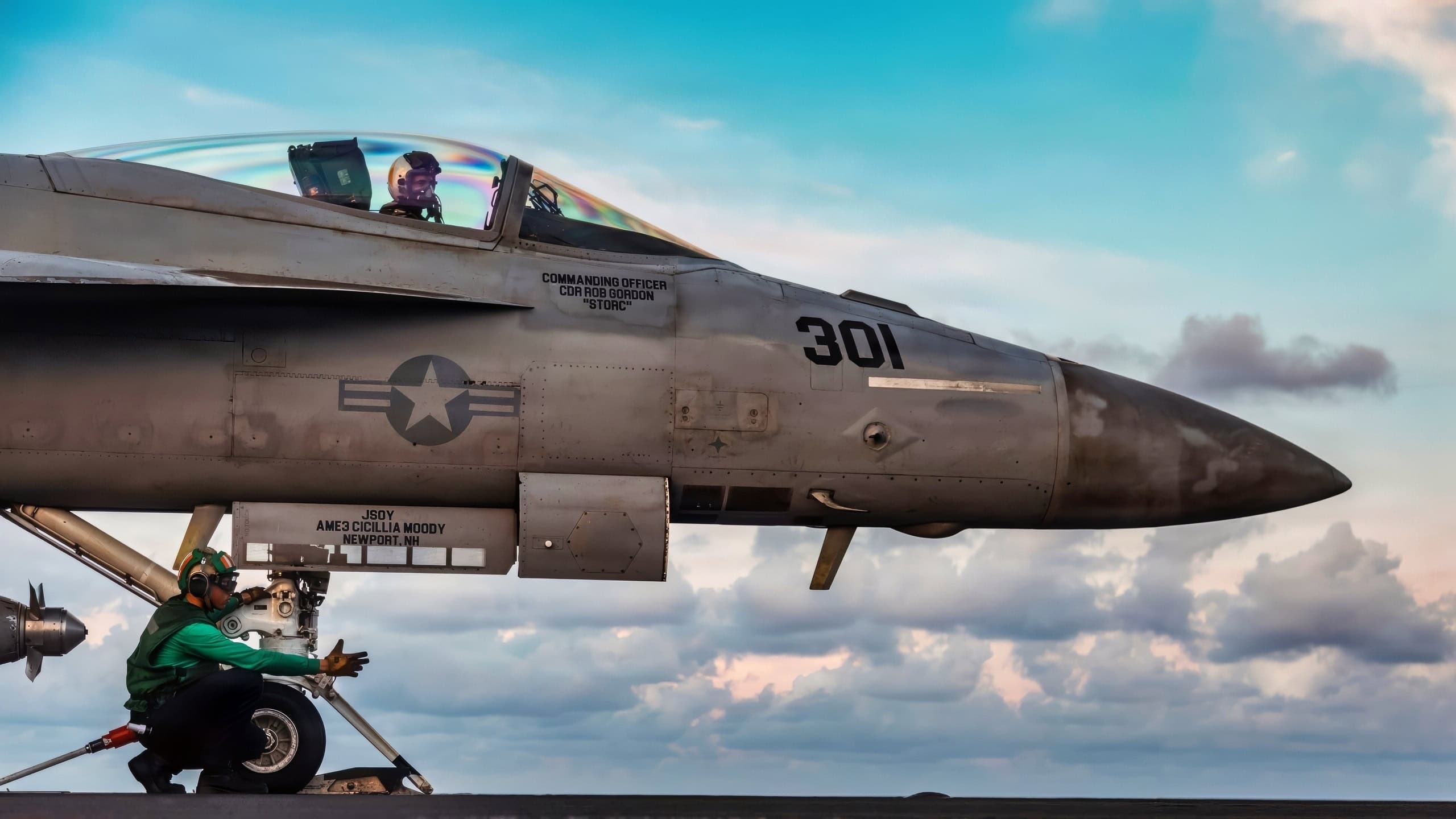
A U.S. Sailor performs a safety scan of the catapult track as an F/A-18E Super Hornet aircraft positions for launch from the flight deck while underway in the Caribbean Sea, Nov. 25, 2025. U.S. military forces are deployed to the Caribbean in support of Operation Southern Spear, the U.S. Southern Command mission, Department of War-directed operations, and the president’s priorities to disrupt illicit drug trafficking and protect the homeland. (U.S. Navy photo)
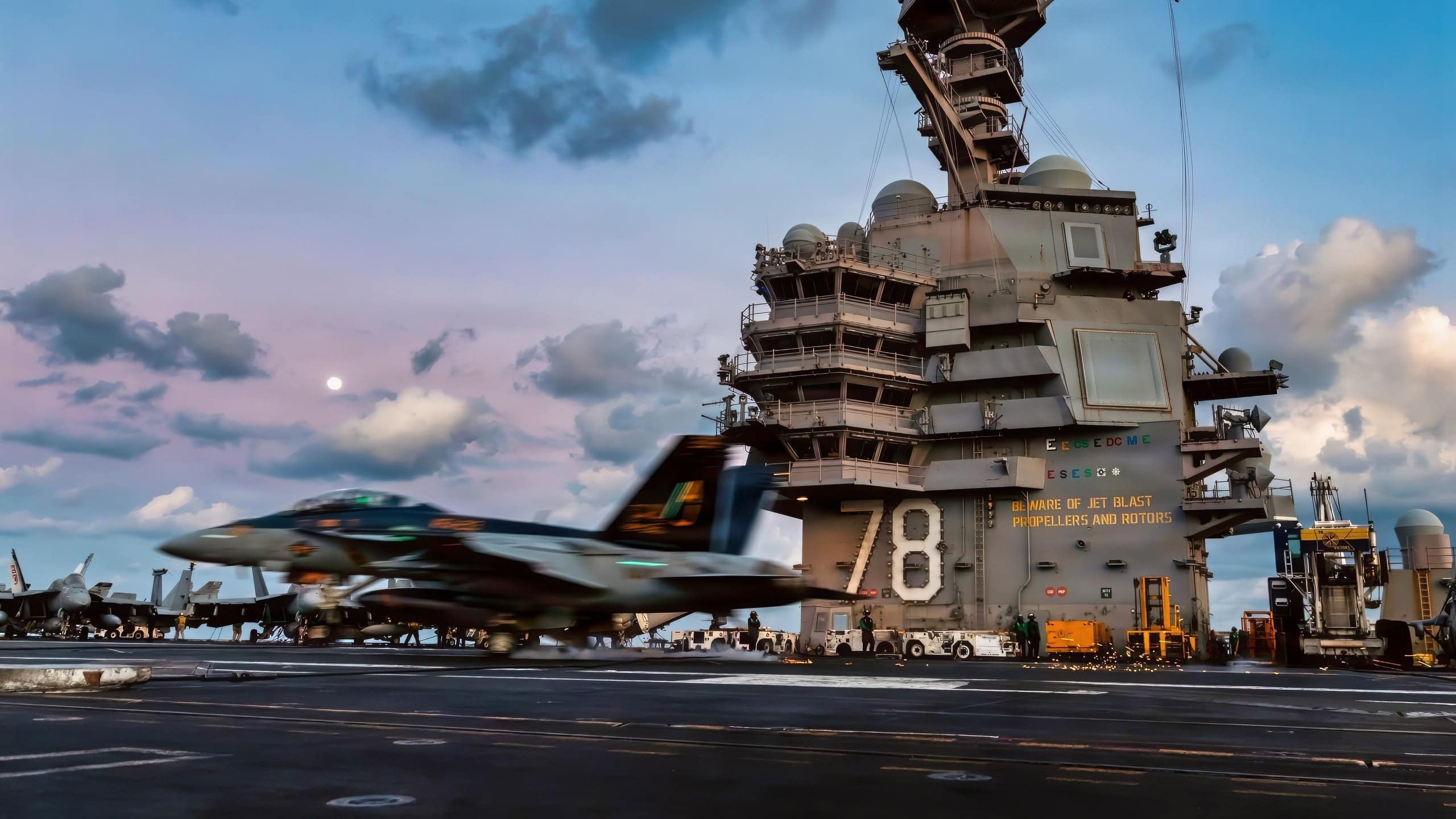
An F/A-18F Super Hornet aircraft, attached to Strike Fighter Squadron 213, lands on the flight deck of the world’s largest aircraft carrier, USS Gerald R. Ford (CVN 78), while operating in the Eastern Mediterranean Sea in support of Operation Epic Fury, March 2, 2026. (U.S. Navy photo)
Labor cannot be expanded quickly. The Government Accountability Office found that shipyard tradespeople generally need three to five years to reach proficiency. New welders, electricians, pipefitters, and machinists require experienced supervision, and mistakes create expensive rework.
26,000 Shipbuilders Anchor the Hampton Roads Economy
Newport News is Virginia’s largest industrial employer. Its 26,000-person workforce supports households, contractors, schools, and local businesses across Hampton Roads. The regional shipbuilding and repair sector employed 30,900 people in 2024, its highest total in more than three decades.
The economic reach extends beyond the gates. Small businesses make up more than 60 percent of the yard’s supply base. The Apprentice School ties paid technical education to the pipeline for trades needed on carriers and submarines.
Long orders provide unusual stability. The Navy’s 2019 block purchase of Enterprise and Doris Miller covered $15.2 billion in contracts at award and was projected to save more than $4 billion across the program. HII said the agreement would support its workforce and suppliers into the 2030s.
The Current Aircraft Carrier Schedule Runs Through 2034
Slow construction carries a fleet cost. The Navy must retire aging Nimitz-class ships while waiting for replacements from the same yard, adding pressure to an existing aircraft carrier availability problem.
John F. Kennedy is scheduled to be delivered in March 2027. Enterprise moved to March 2031 after its latest delay. The Navy’s current delivery date for Doris Miller is February 2034.
About the Author: Harry J. Kazianis
Harry J. Kazianis (@Grecianformula) was the former Senior Director of National Security Affairs at the Center for the National Interest (CFTNI), a foreign policy think tank founded by Richard Nixon based in Washington, DC. Harry has over a decade of experience in think tanks and national security publishing. His ideas have been published in the NY Times, The Washington Post, The Wall Street Journal, CNN, and many other outlets worldwide. He has held positions at CSIS, the Heritage Foundation, the University of Nottingham, and several other institutions related to national security research and studies. He is the former Executive Editor of the National Interest and the Diplomat. He holds a Master’s degree focusing on international affairs from Harvard University.

