
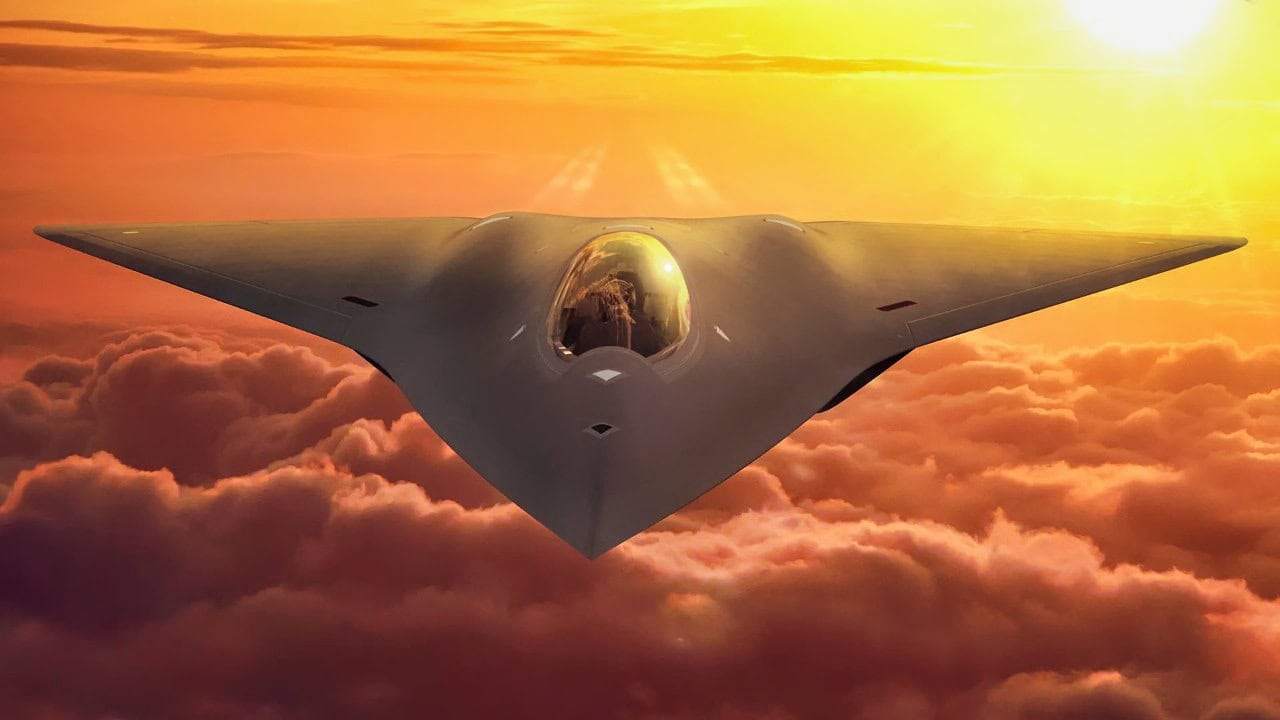
With so many US weapons systems running behind schedule and over budget, the Air Force released some very good news on August 3.
Both the B-21 Raider bomber and the F-47 sixth-generation fighter are ahead of schedule, Air Force General Dale White, director of Critical Major Weapon Systems, in charge of development of both projects, said last week at the Life Cycle Industry Days in Dayton, Ohio.
The Air Force announced that development on the B-21 Raider bomber and the F-47 sixth-generation fighter is progressing early or on schedule, driven by accelerated production and digital engineering.
The First B-21 Raider Will Join A Squadron In 2027
The B-21 Raider is officially shattering the legacy defense procurement rulebook. The B-21 Raider next-generation stealth bomber is currently undergoing advanced flight testing at Edwards Air Force Base in California.
General White said that the first of what the Air Force hopes to be more than 100 B-21s will be “on the ramp” at Ellsworth Air Force Base in South Dakota by 2027.
The B-21 Raider stealth bomber will be one of the stealthiest airplanes in U.S. history. The Air Force has ordered 100 B-21 Raiders, but that number may need to increase.
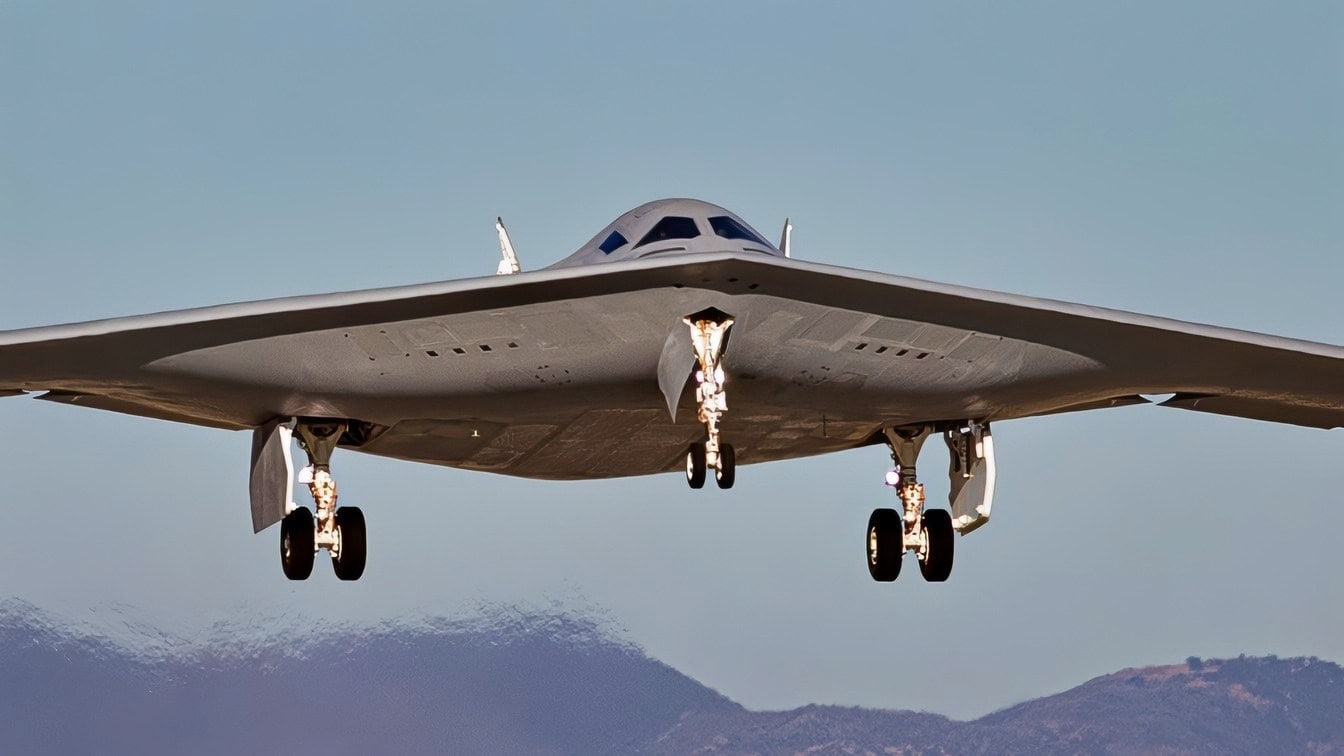
A second B-21 Raider test aircraft takes off, Sept. 11, from Palmdale, Calif., to join the Air Force’s flight test campaign at Edwards Air Force Base, Calif. The addition of the second test aircraft expands mission systems and weapons integration testing, advancing the program toward operational readiness. (Courtesy photo)
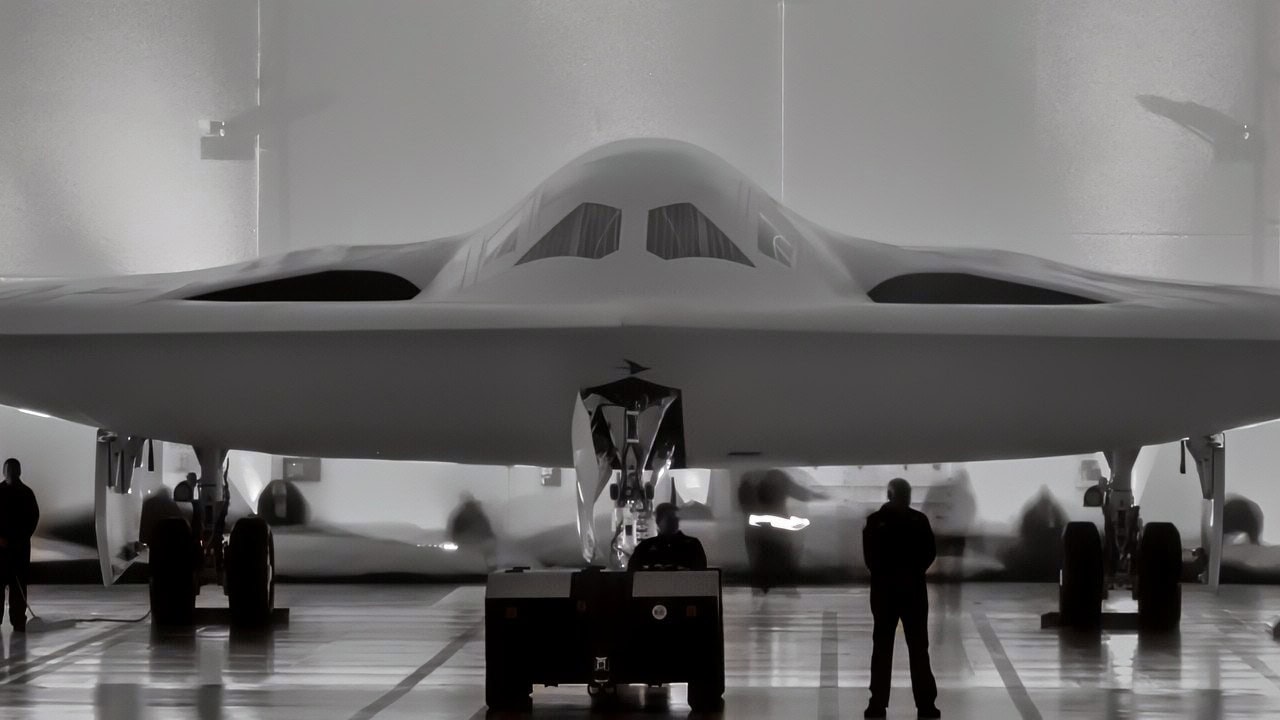
A B-21 Raider is unveiled at Northrop Grumman’s manufacturing facility on Air Force Plant 42 in Palmdale, California, Dec. 2, 2022. The B-21 will be a long-range, highly survivable, penetrating strike stealth bomber capable of delivering both conventional and nuclear munitions. (U.S. Air Force photo by Airman 1st Class Joshua M. Carroll)
A fleet of B-21s would serve the United States well as potential conflicts with great powers such as China and Russia loom, as well as the current conflict with Iran, which continues.
However, the United States may need 200 to 250 B-21s to meet all of its strategic needs.
The Reconciliation Bill Is Responsible For The Accelerated Schedule
General White said the 2027 date for delivering an operational bomber to a squadron was only possible because the acquisition program had accelerated by 25 percent because of a $4.5 billion one-time funding for the bomber under the 2025 reconciliation bill.
General White said the bomber program’s increase in productivity was “physical proof our warfighting-focused acquisition mindset can and will work.”
The Pentagon’s record-breaking $1.5 trillion defense budget request includes $6.1 billion for the B-21 program in 2027.
He added that Northrop Grumman will be able to produce seven to ten B-21s per year, with recent agreements aiming to boost production capacity by 25 percent and target rates shifting toward 12 aircraft at a time.
The B-21 Raider will eventually replace the B-1B Lancer and the B-2 Spirit stealth bombers. The B-52 bombers will remain in the force until the 2050s, with a modernization program that is currently running $3 billion over budget.
Would Even 200 B-21 Raiders Be Enough?
The Mitchell Institute think tank has published a paper strongly advising the U.S. Air Force not to cut costs at the expense of quantity on its B-21 stealth bomber program.
The report, authored by former U.S. bomber pilot Mark Gunzinger, stressed that the U.S. would need to neutralize a large number of targets deep inside Chinese and Russian airspace in the event of war.
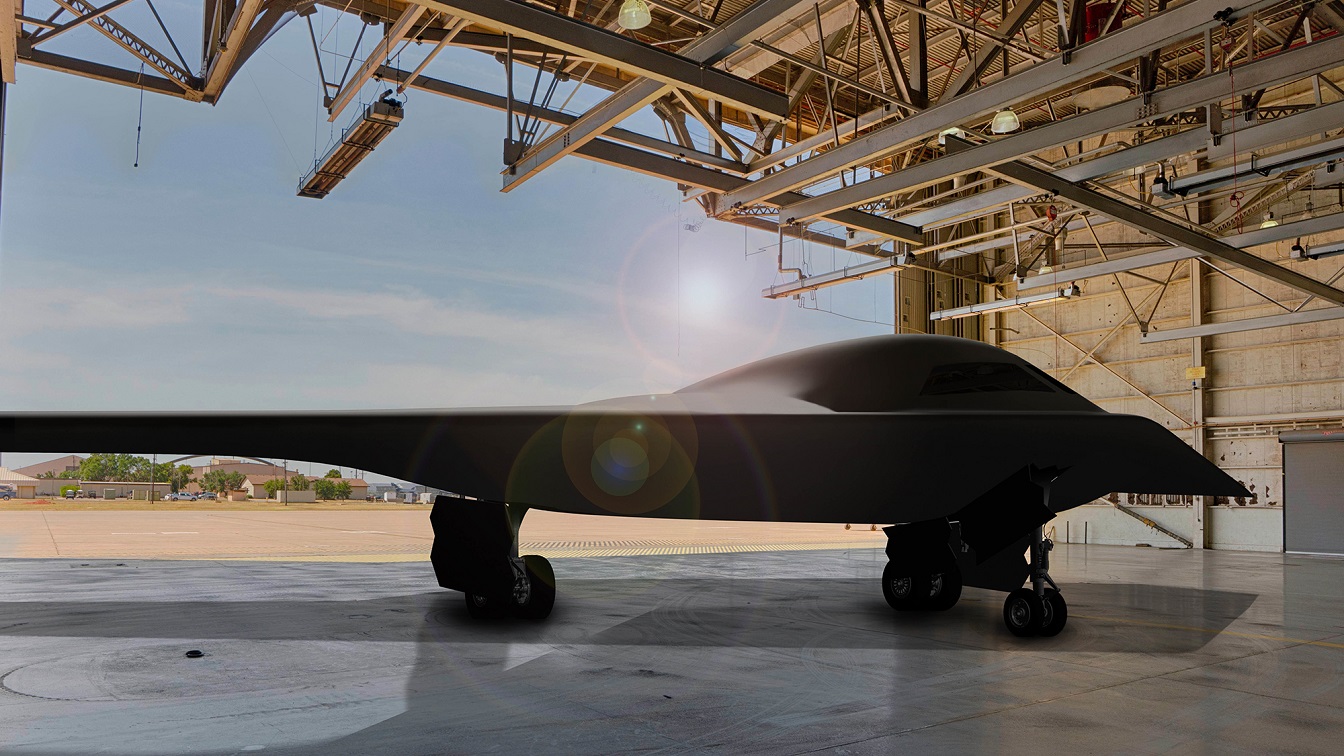
Artist rendering of a B-21 Raider concept in a hangar at Dyess, Air Force Base, Texas, one of the future bases to host the new airframe. (Courtesy photo by Northrop Grumman)
He claimed that the bomber would provide the most reliable means of doing so and would be more cost-effective and dependable than standoff strikes using cruise missiles.
Gunzinger believes the Air Force needs at least 225 B-21 Raiders to take on China and Russia in a potential conflict.
That number, however, is very unlikely to happen.
“The F-47 Will Fly In This Administration”
General White also said planning for the F-47 Next Generation Air Dominance (NGAD) fighter was in a state of “unprecedented maturity.”
“The F-47 will fly in this administration,” White stated at the conference.
The U.S. Air Force’s F-47, developed by Boeing under the Next Generation Air Dominance (NGAD) initiative to replace the F-22, is on track for a first flight in 2028.
As of February 2026, the F-47 is currently in early, low-rate, and highly secretive production following a March 2025 contract award. Early manufacturing of the first aircraft is underway in St. Louis, with a fleet goal of 185+ units to replace the F-22.
The Air Force has requested $5.03 billion for the F-47 program in its 2027 budget request.
The NGAD effort also includes developing new Collaborative Combat Aircraft (CCA) drones, as well as advanced jet engines, weapons, electronic warfare suites, sensors, networking ecosystems, battle management capabilities, and more.
“Right now we are still on time and on target,” White said earlier this year.
The F-47 Will Be The Most Advanced Fighter In History
The F-47 could be the best fighter the Air Force has ever flown, combining unprecedented stealth, extreme speed (Mach 2+), and vastly improved range, acting as a “quarterback” for AI-driven drone swarms (CCAs).
The F-47 will accomplish this while featuring modular, adaptable software/hardware and built-in resilience for easier maintenance, ensuring air dominance by out-sensing, out-thinking, and out-performing any adversary in contested airspace for decades.
The F-47 will boast a much longer range (1000+ mile radius) and network-centric warfare, not just dogfighting, than the Raptor.
Pratt & Whitney’s New Engine For The F-47
On February 17, Pratt & Whitney released new details and video of its XA103 adaptive cycle engine developed for the US Air Force Next Generation Adaptive Propulsion (NGAP) program.
The NGAP engine is intended to power the Next Generation Air Dominance (NGAD) fighter.
Because the video update depicts a sixth-generation fighter linked to the NGAP effort, it could be that they let the cat out of the bag.
“One of the most striking aspects of the aircraft shown in the video was its apparent lack of traditional vertical stabilizers, wrote Jack Buckby.
“Instead, the aircraft used a blended wing configuration with smooth, uninterrupted surfaces, a design approach widely associated with reducing radar cross-section and improving survivability in heavily defended airspace – meaning that the aircraft depicted was clearly stealthy.
“The Air Force has previously confirmed that NGAD will incorporate stealth characteristics exceeding those of current fighters like the F-22 and F-35, reflecting the need to penetrate advanced integrated air defense systems developed by adversaries such as China.”
The F-47: Collaborative Combat Aircraft (CCA) Formation Quarterback
According to the graphic that former USAF Chief of Staff Gen. Allvin showed at the White House last spring, the Air Force plans to acquire at least 185 F-47s; this could provide enough aircraft to replace the Raptor fleet on a one-to-one basis, but that figure may be misleading.
The F-47 will control a swarm of AI-driven drones, CCAs, from its cockpit. This “quarterback” role allows the manned F-47 to operate at a safe distance.
At the same time, the CCAs perform tasks such as penetrating high-threat areas, conducting reconnaissance, jamming enemy systems, or acting as decoys.
The drones have autonomous maneuvering capabilities, and the F-47 receives data and provides command and control through a secure, jam-resistant link.
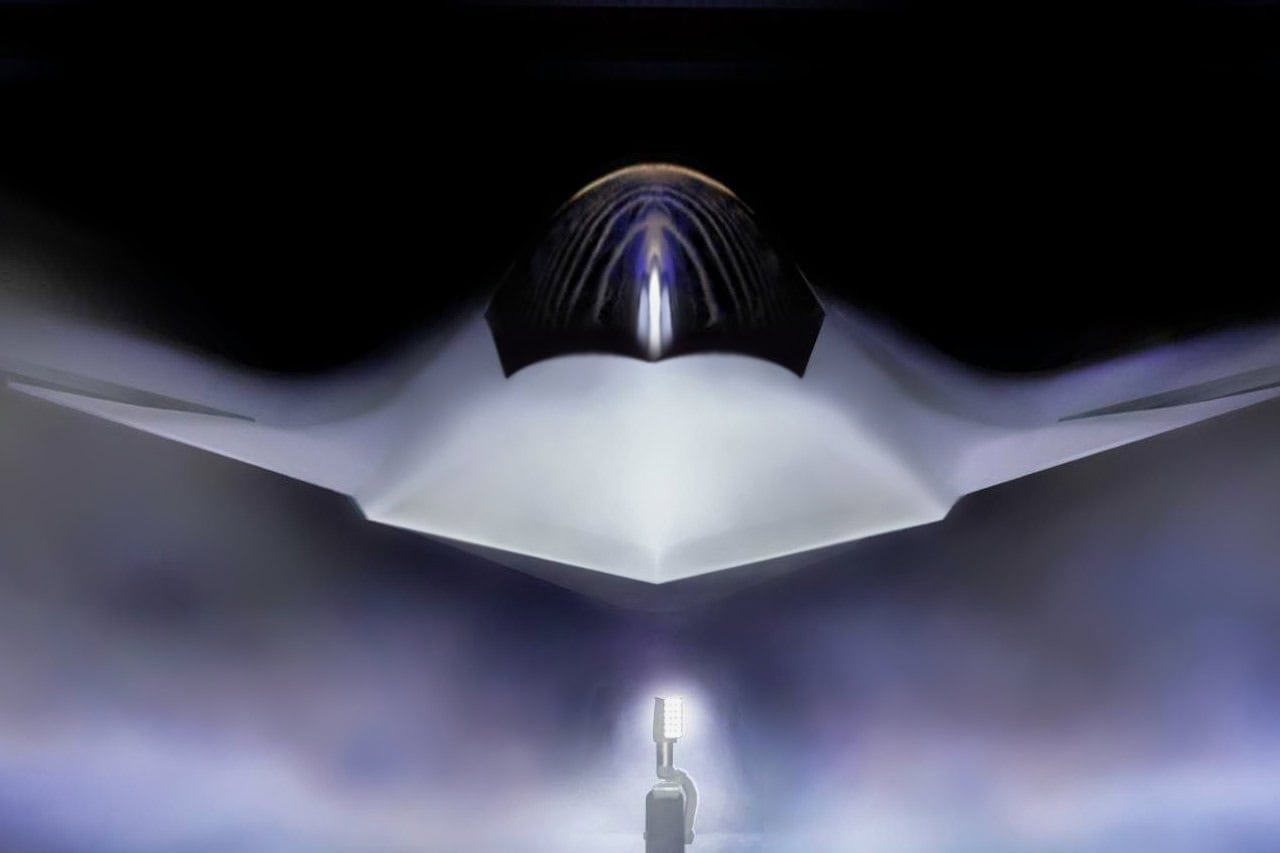
Shown is a graphical artist rendering of the Next Generation Air Dominance (NGAD) Platform. The rendering highlights the Air Force’s sixth generation fighter, the F-47. The NGAD Platform will bring lethal, next-generation technologies to ensure air superiority for the Joint Force in any conflict. (U.S. Air Force graphic)
The F-47 is the quarterback of several drone wingmen, with initial assessments suggesting that each new fighter would be paired with at least two, and possibly as many as five, AI-enabled drone wingmen.
However, more recent tests by Lockheed Martin have shown that the final figure could be significantly higher, demonstrating the ability to control up to eight drones from a single F-35.
That means each of the 185 new F-47s should be thought of as a fighter formation unto itself, rather than as a single jet.
What The Coatings Mean For Stealth Capabilities:
While the F-35 was described as a “stealth” aircraft, as were the CCAs, the F-22 was described as a “Stealth +” type. In contrast, the F-47 was described as “Stealth ++,” consistent with service comments that it would have to be substantially stealthier than the F-22 to survive anticipated adversary air defenses.
Alex Hollings of Airpower provides a detailed explanation of the complex calculations behind radar cross-sections and stealth.
“Radar cross sections are notoriously difficult to calculate and vary depending on radar frequency and angle of observation, but speaking in general terms, the F-35’s radar cross section is estimated to be .005 square meters – nearly half the size of the F-117 Nighthawk on radar scopes.
“But the larger and stealthier F-22 Raptor is said to have a frontal radar cross section of an incredible .0001 square meters – an astonishing 50 times smaller than the very stealthy F-35.
“If that difference is encapsulated in the distinction between ‘Stealth’ and ‘Stealth+’ on this graphic, then it suggests the F-47 that is designated as ‘Stealth++’ may be the stealthiest fighter ever designed by a wide margin.”
The Air Force is tracking ahead of schedule with its two newest aircraft. That is very welcome news. Unless you are in China or Russia.
MORE – USS Kentucky: The Last Iowa-class Battleship the Navy Never Finished
About the Author: Steve Balestrieri
Steve Balestrieri is a National Security Columnist. He served as a US Army Special Forces NCO and Warrant Officer. In addition to writing on defense, he covers the NFL for PatsFans.com and is a member of the Pro Football Writers of America (PFWA). His work was regularly featured in many military publications.