
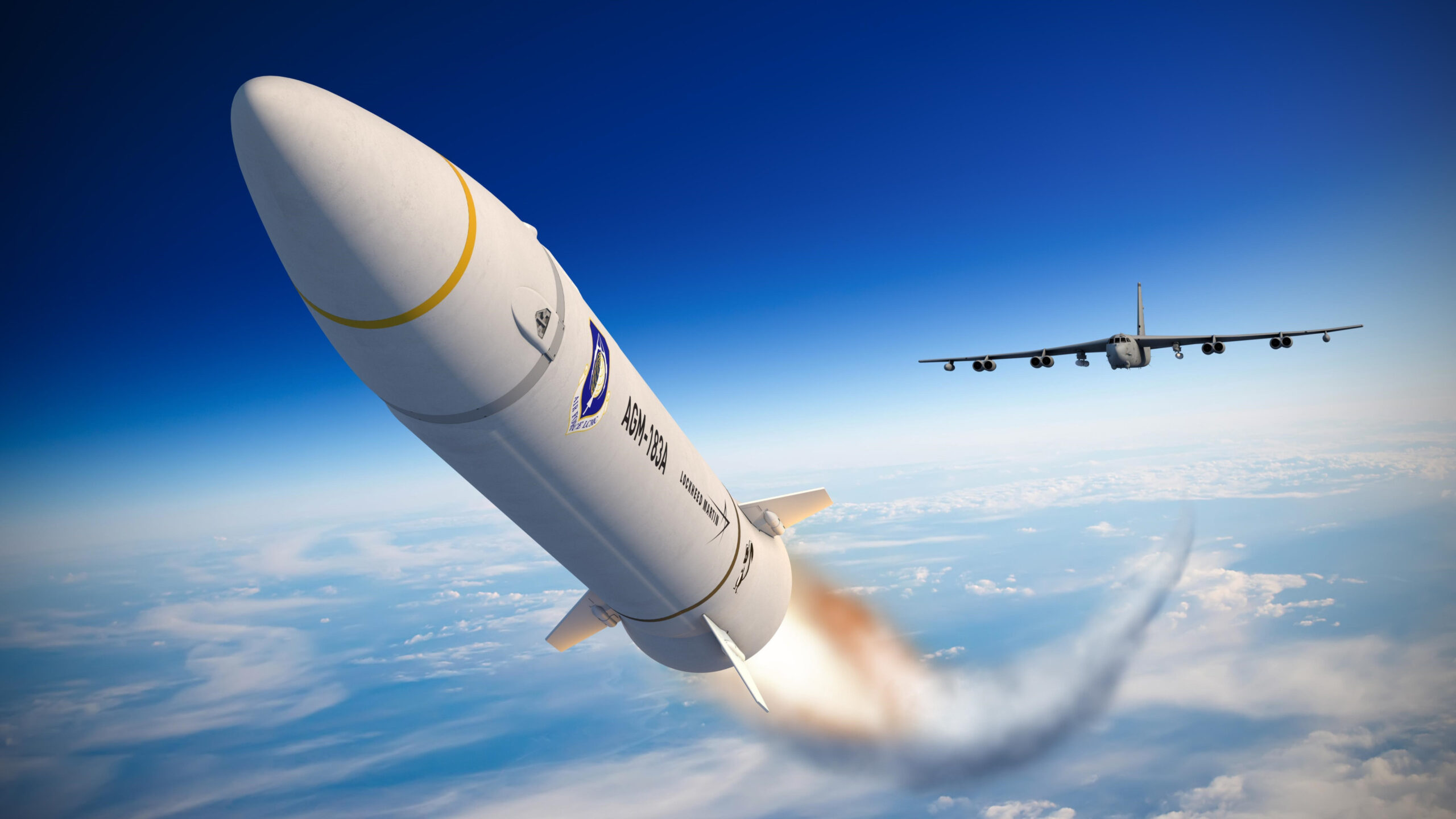
We now know more about a hush-hush U.S. military rocket launch that had been previously classified. The U.S. Navy tested a rocket in February, but now more details have been released to the public in a report deemed unclassified this month.
This was one curious test that was sure to send shivers down the spines of U.S. adversaries, given its technological sophistication.

A B-52 Stratofortress from Barksdale AFB is parked on the flight line at Fairchild Air Force Base, Washington, Aug. 16, 2022. The B-52s landed at Fairchild to conduct their own Agile Combat Employment exercise creating more multi-capable Airmen ready to deploy anywhere, anytime. (U.S. Air Force photo by Staff Sgt. Lawrence Sena)
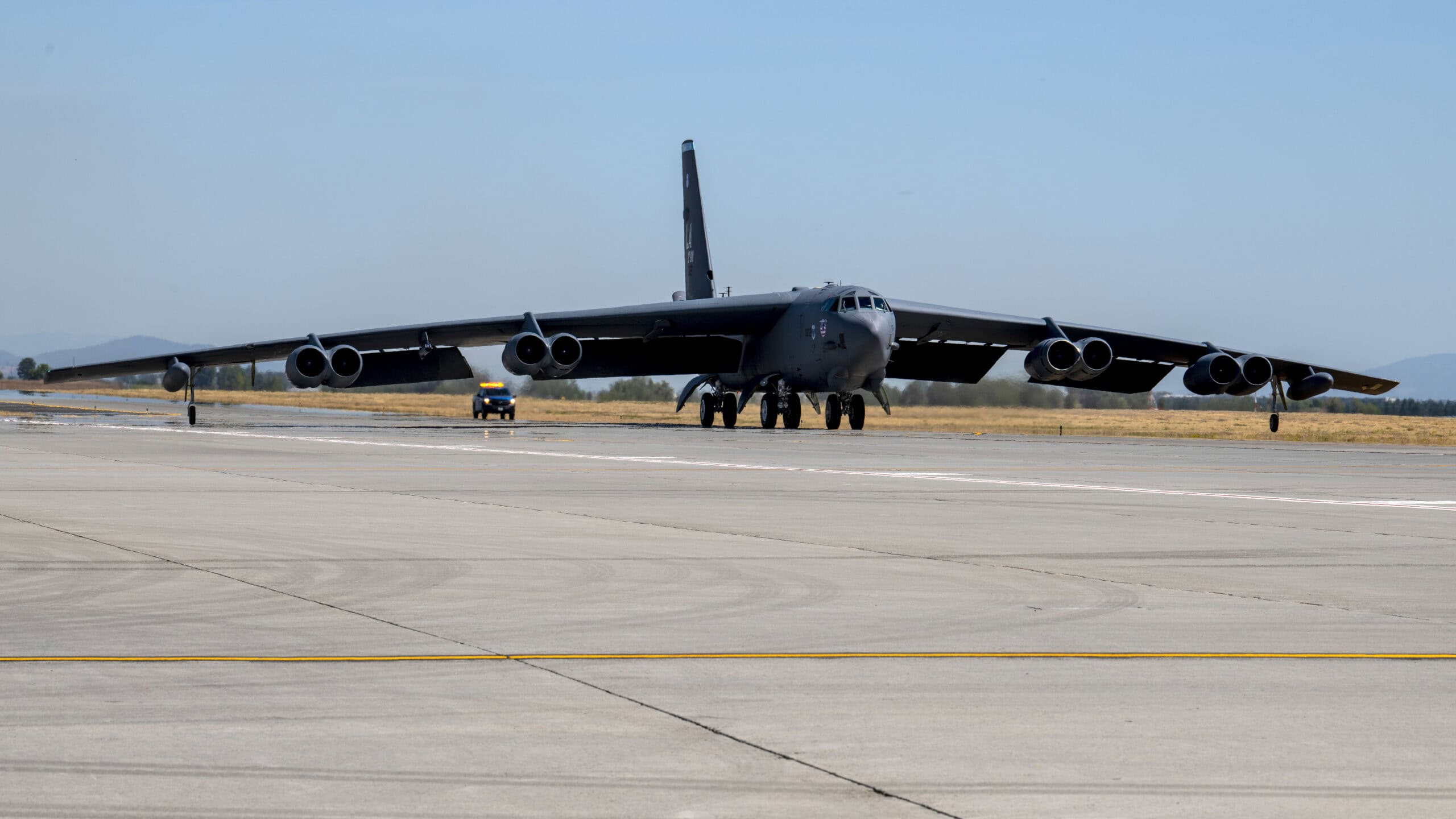
A B-52 Stratofortress from Barksdale AFB lands on the flight line at Fairchild Air Force Base, Washington, Aug. 16, 2022. The B-52s landed at Fairchild to conduct their own Agile Combat Employment exercise creating more multi-capable Airmen ready to deploy anywhere, anytime. (U.S. Air Force photo by Staff Sgt. Lawrence Sena)
The Navy “deliberately vaporized metal high above the Pacific Ocean this February, creating a plasma field in the upper atmosphere to study how that energy converts and behaves in space,” according to Defence Blog on August 5.
Mission Control: In White Sands Missile Range
Navy personnel led the test from White Sands Missile Range (WSMR) in New Mexico. This is not the usual place for sailors to perform their jobs, since the open ocean is thousands of miles away, but the Navy needs a safe and isolated place to oversee the testing of new missiles.
The WSMR served as mission control for the launch that happened on Wake Island in the middle of the Pacific on February 12. Named Oriole IV, this was the Navy’s largest “sounding rocket” launch in years.
What Is a Sounding Rocket?
A sounding rocket “carries scientific instruments into space along a parabolic trajectory. Its overall time in space is brief, typically 5-20 minutes, and at lower vehicle speeds for a well-placed scientific experiment. The short time and low vehicle speeds are more than adequate [in some cases they are ideal] to carry out a successful scientific experiment,” according to NASA.
This Project Was ‘SMART’
The Navy called this the Space Measurement of A Rocket-released Turbulence project, or SMART. The group had never launched a SMART vehicle of this size before.
The service branch had to build launch facilities from scratch with 42 sailors working round the clock and supervised from White Sands.
It took about seven weeks to get ready for the test launch.
Scientists from the Naval Research Laboratory were active during the project, along with other expert teams. “Naval Surface Warfare Center Indian Head Division, NASA’s Goddard Space Flight Center, two university research teams, and several supporting contractors” also participated in SMART, Defense Blog said.
Oriole IV Knocks It Out of the Park
Oriole IV has four stages, and it flew 335 miles high. This is high enough to see satellites in orbit.
“Once there, the vehicle detonated a directional explosive called a shape charge to vaporize several pounds of barium metal, creating an artificial plasma field, essentially a cloud of electrically charged particles, while a second payload deployed instruments to measure the electromagnetic effects that plasma field produced,” according to Defence Blog.
This test had national security implications, including better ways to communicate in space.
The research will likely be shared with the U.S. Space Force and will bring new technologies to the warfighter that depends more on satellites to win battles inspired by research from these types of rocket launches.
Move the Launch to Wake Island for Better Safety Protocols
This was a dangerous test, as debris from the blast could have been spread to civilians on the ground. That is why the test launch was moved from Virginia to Wake Island.
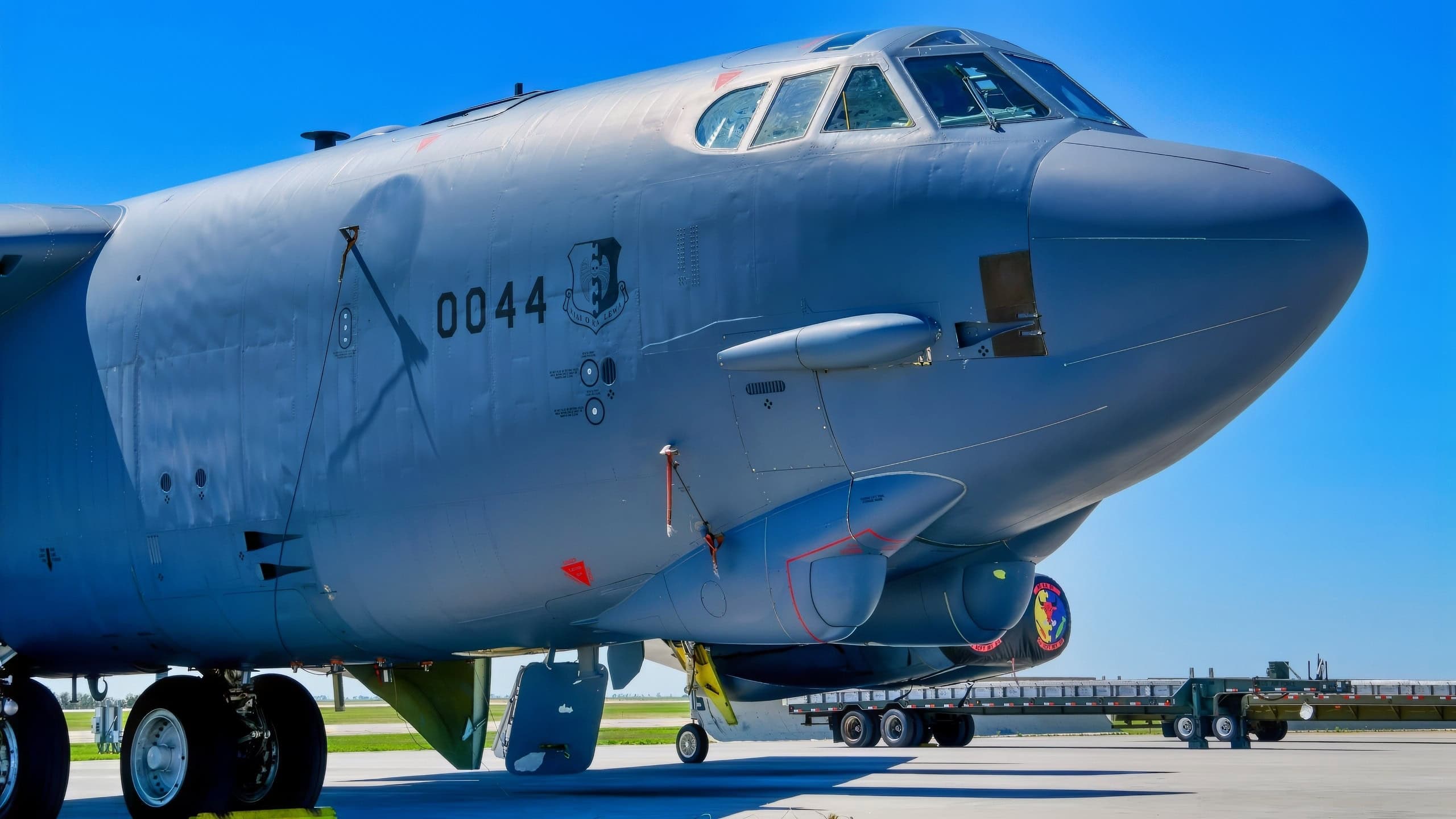
A B-52H Stratofortress sit parked on the flight line at Minot Air Force Base, North Dakota, Aug. 8, 2022. The B-52 is capable of dropping or launching gravity bombs, cluster bombs, precision-guided missiles and joint direct attack munitions. (U.S. Air Force photo by Airman Alysa Knott)
But this move was challenging for the people involved. Material had to be transferred to Wake Island, which is located 2,300 miles west of Honolulu.
White Sands had never overseen such an ambitious test. Project leaders acknowledged that Wake Island is “in the middle of nowhere.”
Building a Launch Facility on Grounds That Only Had a Shed
The only thing on the site was an old garage that the team converted to a launch facility.
Everything else had to be built from scratch with materials making the long journey to Wake in a process that took months.
SMART relied on flights stuffed with people and gear transported by a C-17 cargo plane that took off from Holloman Air Force Base in New Mexico. SMART leadership deemed the ensuing launch successful.
Jay Breuer, senior test director in the detachment’s suborbital vehicles division, said, “We had a good flight, and we collected good science.”
New Developments for Hypersonics and Golden Dome
The launch of Oriole IV is also significant because it builds on knowledge developed from other tests of hypersonic missiles. The sounding rocket test will also help the Golden Dome missile defense project, which needs all the research it can get from scientists.
SMART was a big step for the Navy and should build confidence in its various missile programs. The scientific data will help create new breakthroughs and spur efforts to improve U.S. national security efforts.
U.S. adversaries such as China and Russia are likely studying this test to glean more information about how the Americans are progressing in hypersonics and missile defense.
These two countries do not want the Golden Dome to proceed, and it looks like the Pentagon needs more shots in the arm like Oriole IV. Look for additional successful tests of this type of sounding rocket in the future.
About the Author: Brent M. Eastwood, PhD
Brent M. Eastwood, PhD, has written over 3,500 articles on defense issues. Eastwood, PhD, is the author of Don’t Turn Your Back On the World: A Conservative Foreign Policy and Humans, Machines, and Data: Future Trends in Warfare, plus two other books. Brent was the founder and CEO of a tech firm that predicted world events using artificial intelligence. He served as a legislative fellow for US Senator Tim Scott and advised the senator on defense and foreign policy issues. He has taught at American University, George Washington University, and George Mason University. Brent is a former US Army Infantry officer. He can be followed on X @BMEastwood.