
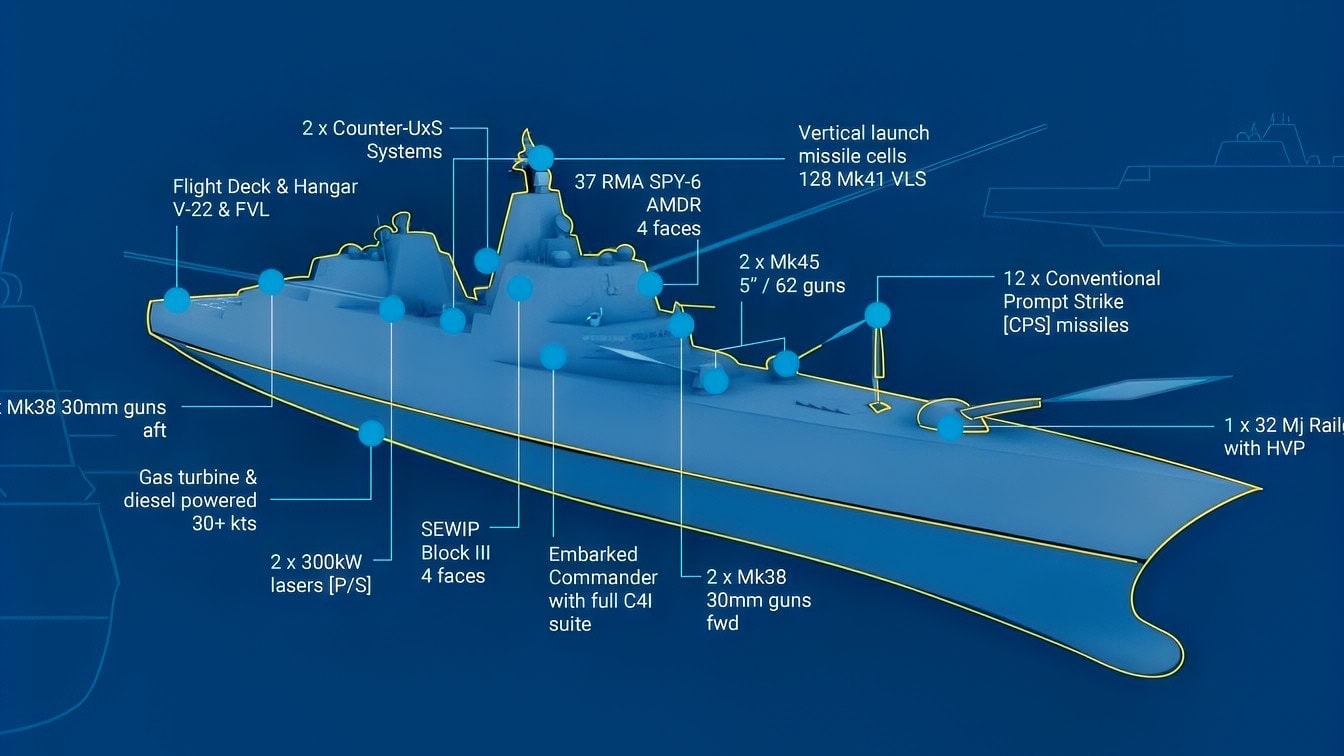
The Golden Fleet isn’t even a year old, and we’re already suffering from sticker shock. A report from the Congressional Budget Office this week indicated that the cost of the USS Defiant (BBGN-1), the expected first vessel of the Trump-class battleships, has soared to $23.4 billion, about 50% above expectations. Follow-on vessels are now expected to cost around $18 billion.
For a project this early in its design phase, the projected cost growth is alarming.
With Congress already skeptical about the future of the ships, news of the projected cost overruns will undoubtedly turn the project into a toxic political battlefield over the next few years.
The Costs for the Trump-Class Battleship
$23.4 billion is a lot to pay for a single warship, no matter how capable. By comparison, the USS Gerald R. Ford (CVN-78), the first ship of the Ford-class aircraft carriers, cost about $17 billion.
Of course, an aircraft carrier also requires aircraft, which are themselves extraordinarily expensive, but the Trump-class battleships will require an array of sophisticated, expensive defensive and offensive munitions.
By contrast, a modern Arleigh Burke (DDG-51 Flight III) destroyer costs about $3 billion.
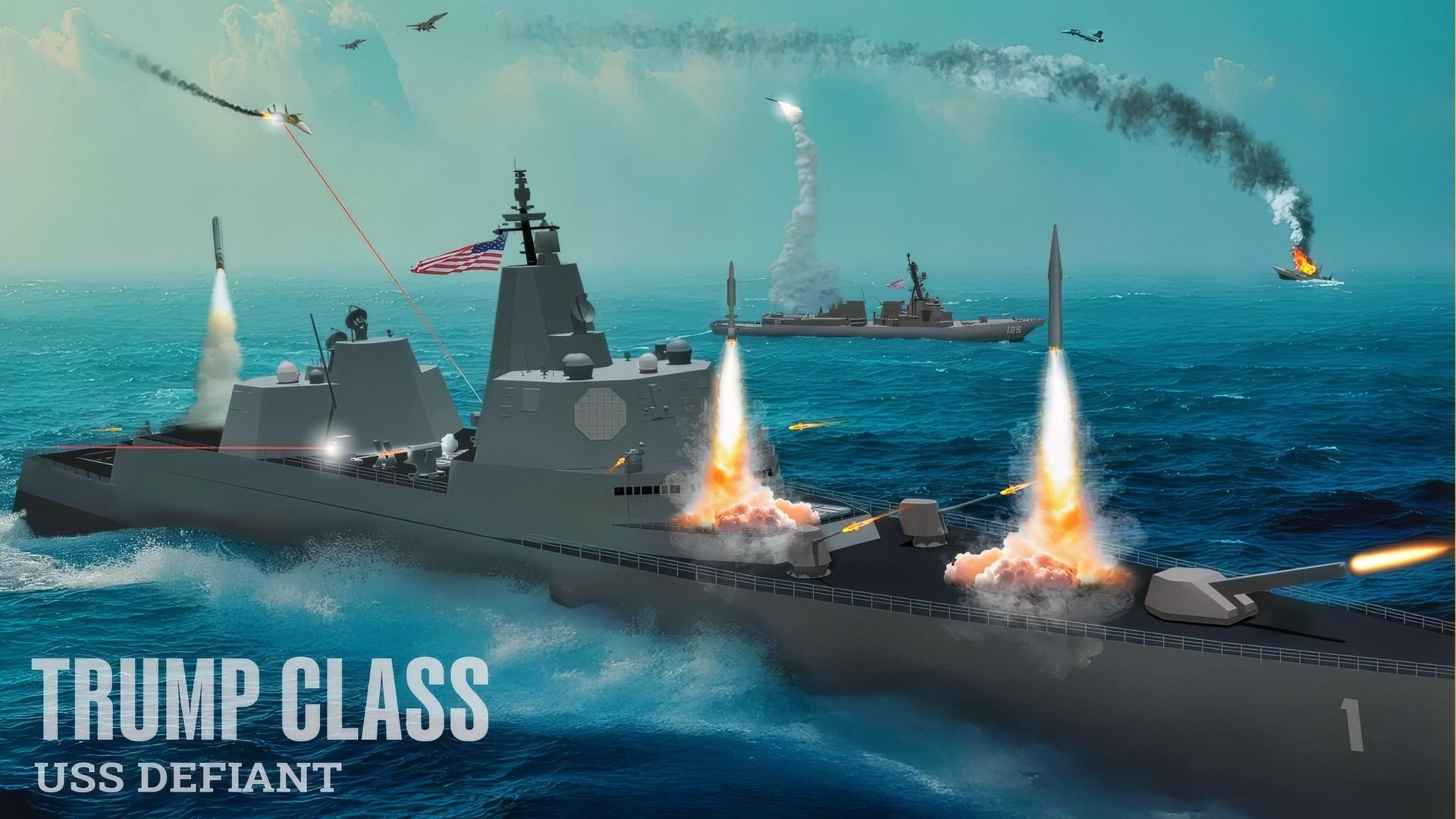
Trump-Class Battleship USS Defiant. Image Credit: Creative Commons.
Virtually every military project endures some degree of cost overruns. Changing requirements and the need to modify plans in lieu of technological reality always require expensive design and production changes.
Service experience with early vessels indicates problems that need to be resolved in later ships.
Initial cost assessments are a snapshot of a best guess; we can identify the elements of a design and the production conditions most likely to cause overruns, but we can only estimate final costs within bands of uncertainty.
It is hardly surprising that the expected cost of the Trump class battleships has spiked.
Since the announcement of the ships in December of 2025, design requirements have changed several times, including most notably a shift from conventional to nuclear propulsion.
The weapons systems to be included on the ships remain in flux, with some systems (rail guns, directed energy weapons) nowhere near technological maturity.
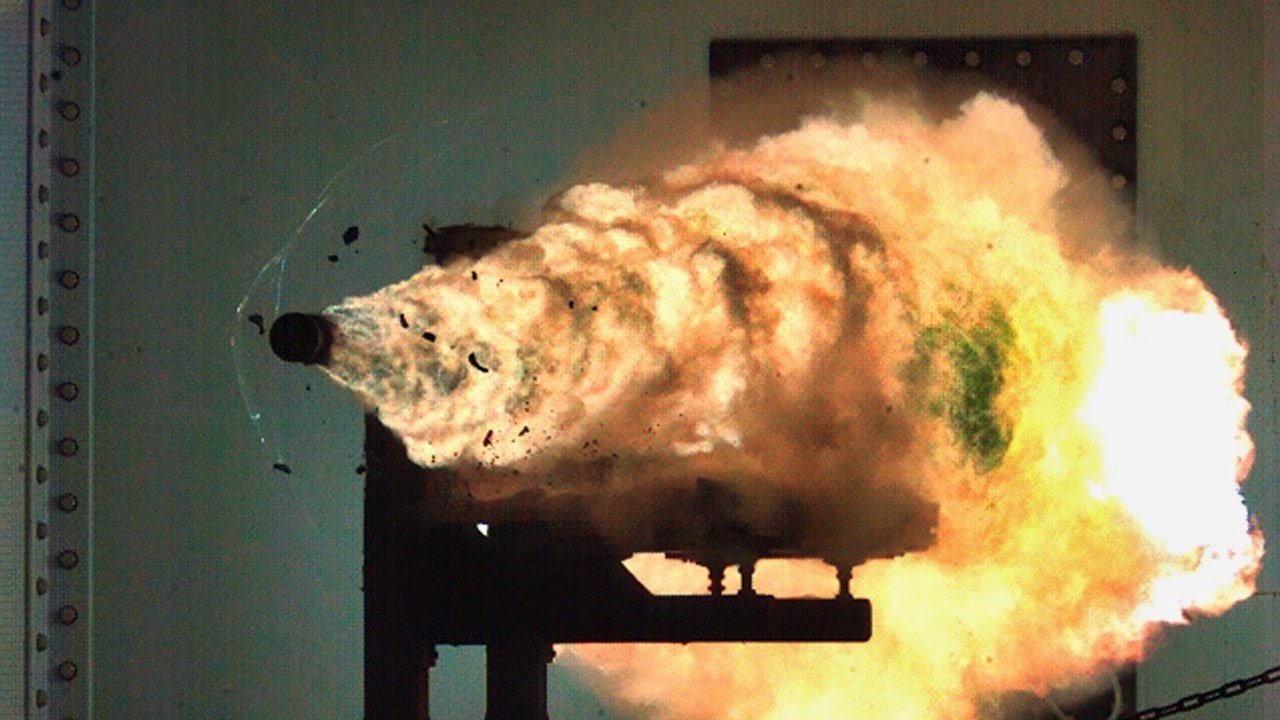
(Jan. 31, 2008) Photograph taken from a high-speed video camera during a record-setting firing of an electromagnetic railgun (EMRG) at Naval Surface Warfare Center, Dahlgren, Va., on January 31, 2008, firing at 10.64MJ (megajoules) with a muzzle velocity of 2520 meters per second. The Office of Naval Research’s EMRG program is part of the Department of the Navy’s Science and Technology investments, focused on developing new technologies to support Navy and Marine Corps war fighting needs. This photograph is a frame taken from a high-speed video camera. U.S. Navy Photograph (Released)
Prospective demands on the shipbuilding industry have also changed, with difficult questions surrounding where exactly the vessels can be built.
Congress
While the Trump administration has effectively sidelined Congress on many national security-related decisions over the past two years, the executive needs the cooperation of the legislative branch to continue pursuing this program.
Senator Jeff Merkley (D-OR) requested the analysis from the Congressional Budget Office. Congress has already begun to display skepticism about the project, with many lawmakers concerned about cost and about the immaturity of the design.
This skepticism is likely to increase if Democrats retake either the House or the Senate in the 2026 midterm elections, especially given the degree to which the project is identified with President Trump.
The battleships will be competing for attention with multiple other naval priorities, including follow-on frigate designs and a host of unmanned vehicle programs.
RIP, Trump-Class?
None of this is surprising.
If the Trump class battleships had emerged from a more conventional design process and a more regular assessment of strategic need, we would still expect costs to increase as the entire project came into focus.
But this process did not take place before the President committed his prestige and political capital to the project.
If the Trump administration continues to push the battleship program forward despite a skeptical Congress, it will amount to a massive redistribution of US investment toward the surface fleet at a time when the value of large surface warships has come into question.
Many analysts argued in December 2025 that USS Defiant would never see the water, and some contended that the steel for her construction would never even be cut. At the moment, the skeptics seem to hold the high ground.
Momentum for the battleships is weak, and the number of enemies seems to grow by the day. Odds are that we are watching another major naval procurement project sink without a trace.
About the Author: Robert Farley
Dr. Robert Farley has taught security and diplomacy courses at the Patterson School since 2005. He received his BS from the University of Oregon in 1997 and his Ph.D. from the University of Washington in 2004. Dr. Farley is the author of Grounded: The Case for Abolishing the United States Air Force (University Press of Kentucky, 2014), the Battleship Book (Wildside, 2016), Patents for Power: Intellectual Property Law and the Diffusion of Military Technology (University of Chicago, 2020), and most recently Waging War with Gold: National Security and the Finance Domain Across the Ages (Lynne Rienner, 2023). He has contributed extensively to a number of journals and magazines, including the National Interest, the Diplomat: APAC, World Politics Review, and the American Prospect. Dr. Farley is also a founder and senior editor of Lawyers, Guns and Money.