

The USS Nimitz Disposal Bill Starts at $562 Million and Has No Final Price – USS Nimitz is scheduled to leave active service in March 2027, yet the official retirement plan still accounts for 600 sailors assigned to the ship in fiscal 2030. The Navy has not announced when the last section will be cut apart. Its fiscal 2027 budget assigns $562 million to inactivation, the first funded phase of a much longer disposal project.
Nimitz arrived at Naval Station Norfolk on July 9, 2026, for its final homeport period. The 1,092-foot carrier displaces about 97,000 tons at full load and uses two nuclear reactors to drive four shafts. The Navy plans to use the ship for aviation training before transferring it to Newport News Shipbuilding for defueling and inactivation.
HII received a $96 million contract in March for advance planning and long-lead material. The official budget still projects hundreds of sailors in retirement through fiscal 2030, showing that the crew will decline gradually as shipyard workers take control of more spaces and systems.
The Navy has not published an all-in Nimitz disposal estimate or a date for the last piece of steel to leave a yard. USS Enterprise offers the closest precedent, but it had eight reactors rather than two. Its long retirement still shows how nuclear-carrier costs continue after the ship is decommissioned.
March 2027 Starts a Process That Runs for Years
The March 2027 date aligns Nimitz’s departure with John F. Kennedy after Ford-class delays stretched the replacement timetable. The first work will empty the carrier. Weapons, aviation-support equipment, spare parts, electronics, classified material, and reusable components must be removed. Fuel, oils, refrigerants, and other fluids must be drained or contained.
Sensitive spaces are demilitarized, power is isolated, and equipment suitable for transfer to the remaining Nimitz-class fleet is cataloged and lifted ashore. Newport News has the nuclear-qualified workforce and infrastructure needed to remove the spent fuel, inactivate the propulsion plant, and document thousands of controlled steps. Once the fuel is gone and the steam plant is permanently disabled, Nimitz will no longer be a reserve carrier waiting for another call to service.
A Museum Plan Is Not a Realistic Alternative
There is no blanket rule preventing a nuclear-powered Navy ship from becoming a museum; USS Nautilus proves otherwise. Nimitz presents a different scale. A museum group would need a permanent deep-water berth, dredging, shore utilities, security, fire and flood protection, corrosion control, insurance, and enough annual revenue to maintain a 1,092-foot hull.

USS Nimitz in November 2025. Image Credit: Creative Commons.
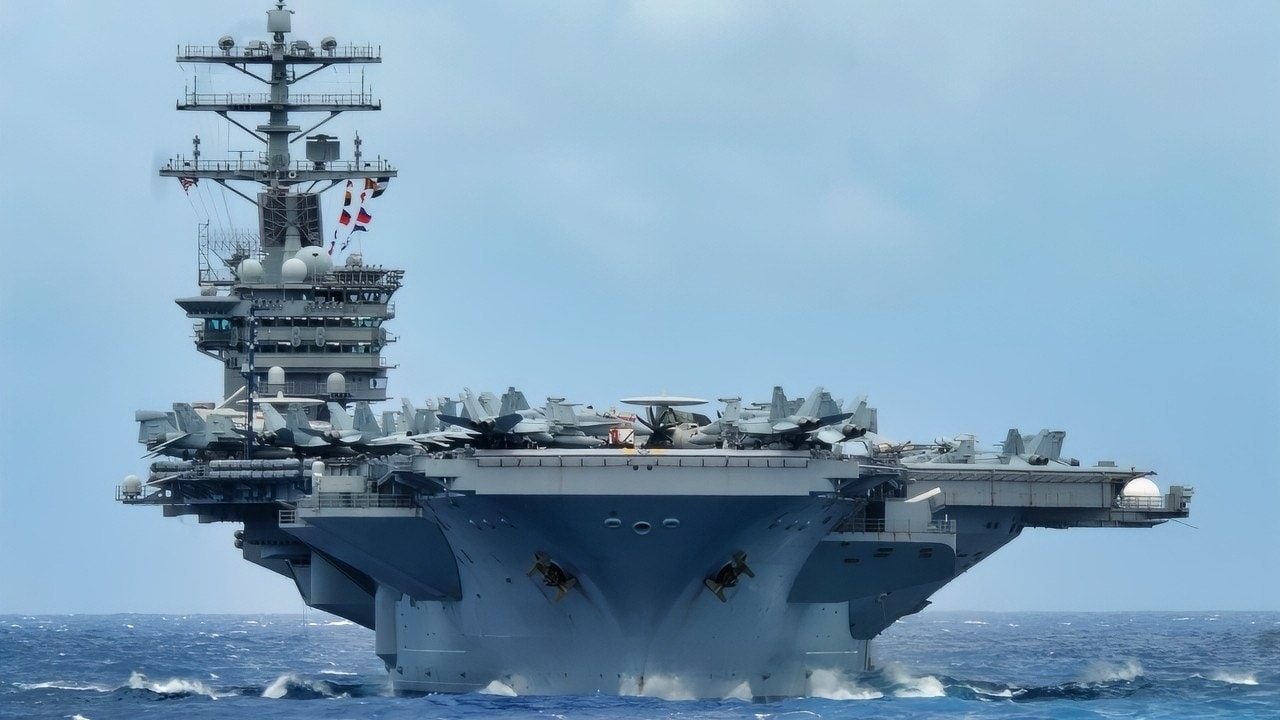
WESTERN PACIFIC (Nov. 12, 2017) The aircraft carrier USS Theodore Roosevelt (CVN 71) transits the Western Pacific during a three-carrier strike force photo exercise. The USS Ronald Reagan (CVN 76), USS Theodore Roosevelt (CVN 71) and USS Nimitz (CVN 68) Strike Groups are underway and conducting operations in international waters as part of a three-carrier strike force exercise. The U.S. Navy has patrolled the Indo-Asia Pacific region routinely for more than 70 years promoting regional security, stability and prosperity. (U.S. Navy photo by Mass Communication Specialist 3rd Class Kelsey J. Hockenberger/Released)
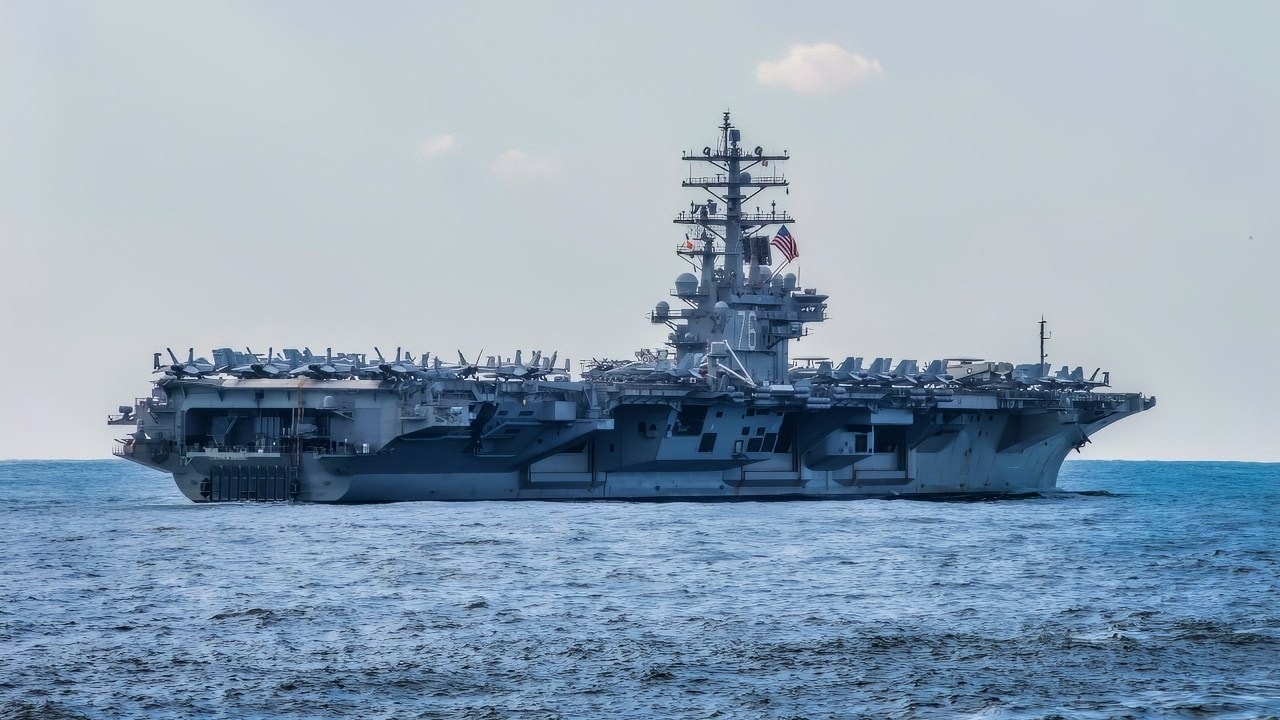
WESTERN PACIFIC (Nov. 12, 2017) The aircraft carrier USS Theodore Roosevelt (CVN 71) transits the Western Pacific during a three-carrier strike force photo exercise. The USS Ronald Reagan (CVN 76), USS Theodore Roosevelt (CVN 71) and USS Nimitz (CVN 68) Strike Groups are underway and conducting operations in international waters as part of a three-carrier strike force exercise. The U.S. Navy has patrolled the Indo-Asia Pacific region routinely for more than 70 years promoting regional security, stability and prosperity. (U.S. Navy photo by Mass Communication Specialist 3rd Class Kelsey J. Hockenberger/Released)
The reactor spaces make the conversion harder. Defueling removes most of the radioactivity, but controlled piping, shielding, and structural material remain inside the propulsion plant.
The ship would be altered during inactivation, while a nonprofit would inherit a stripped engineering complex and enormous maintenance liability.
The Navy has announced no approved sponsor, berth, or donation plan, and its budgeted disposition is dismantlement.
The difficulty has already defeated several attempts to preserve much simpler, conventionally powered carriers.
Defueling Two Reactors Is the Most Specialized Work
Naval spent fuel removed from Nimitz will be transported in specially designed containers to the Naval Reactors Facility at the Idaho National Laboratory.
The equipment and procedures are established, but the work involves heavy lifts, shielded handling, exact configuration control, and a transportation system whose availability affects carrier and submarine schedules.
The rest of the ship brings more familiar shipbreaking hazards on an exceptional scale. Workers will encounter confined spaces, hot cutting, suspended loads, aging steel, asbestos, lead, PCBs, oils, and radiological material.
Each waste stream requires identification, packaging, and shipment to an authorized facility. A fire, spill, structural discovery, or unavailable disposal route could stop work in one section and delay the sequence behind it.
Enterprise Shows How the Bill Builds Over Time
Enterprise returned from its final deployment in 2012. More than 1,000 Newport News shipbuilders spent years defueling its eight reactors and disabling its propulsion systems.
The Navy later paid for prolonged storage and did not award the $418.5 million final dismantlement contract until July 2026. USNI News reported $902 million for initial inactivation and $111 million for storage before that award.
Nimitz should not be assigned the Enterprise total by simple comparison. It has fewer reactors and a different plant arrangement. It is still a roughly 97,000-ton carrier and the first of 10 ships whose retirements will stretch into the 2060s.
NAVSEA created a dedicated disposal program office because the combined effort will last decades and cost billions.
The Final Contract Still Has to Define the End
The final approach may combine nuclear work at Newport News with commercial dismantlement elsewhere, following the method selected for Enterprise. That would require preparing an unpowered 97,000-ton hull for tow, verifying watertight integrity, securing hazardous spaces, and moving it to a yard authorized to handle the remaining radiological material.
The Enterprise plan demonstrates why a carrier hull cannot be processed like a submarine reactor compartment.
Conventional carriers have entered one-cent recycling arrangements because breakers kept the recovered metal. Nuclear carriers follow a more expensive path: the government retains responsibility for reactor work, regulated waste, and long-term oversight.
The Navy has not yet published Nimitz’s final dismantlement contract, completion date, or total project cost.
About the Author: Harry J. Kazianis
Harry J. Kazianis (@Grecianformula) was the former Senior Director of National Security Affairs at the Center for the National Interest (CFTNI), a foreign policy think tank founded by Richard Nixon based in Washington, DC. Harry has over a decade of experience in think tanks and national security publishing. His ideas have been published in the NY Times, The Washington Post, The Wall Street Journal, CNN, and many other outlets worldwide. He has held positions at CSIS, the Heritage Foundation, the University of Nottingham, and several other institutions related to national security research and studies. He is the former Executive Editor of the National Interest and the Diplomat. He holds a Master’s degree focusing on international affairs from Harvard University.


naga303
August 7, 2026 at 8:12 am
Very well presented. Every quote was awesome and thanks for sharing the content. Keep sharing and keep motivating others.