
Iran and Oman have indeed reached the framework of a deal on the status of the Strait of Hormuz, MS NOW reported Thursday night, citing two Middle Eastern diplomats.
But does the deal mean that the Strait of Hormuz is now “open,” as it was before the war in Iran began? That does not appear to be the case.
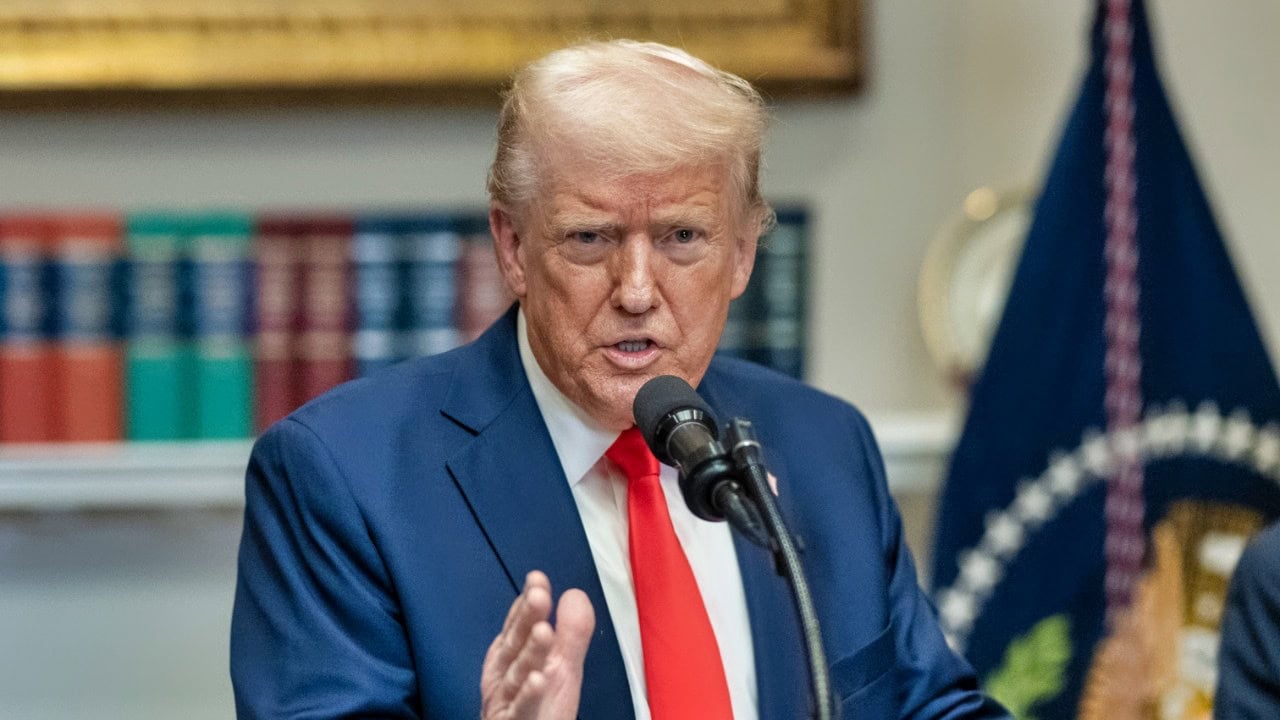
President Donald J. Trump makes an investment announcement, Monday, March 3, 2025, in the Roosevelt Room of the White House. (Official White House Photo by Molly Riley.)
President Donald Trump plays golf in the Senior Club Championship at Trump National Golf Club Jupiter, Sunday, April 6, 2025, in Jupiter, Florida. (Official White House Photo by Molly Riley)
The framework between Iran and Oman, per the MS NOW report, matches what has been reported in recent days: That new shipping routes will be established, with Iran controlling incoming shipping traffic and Oman controlling outgoing traffic.
Tolls will not be collected. Also, it is a “temporary” agreement, to be followed by later talks between Washington and Tehran, aimed at resuming discussions on the status of Iran’s nuclear program and settling other disputed matters from the war.
There has been no official announcement of a deal yet, but when it comes, an Iranian official told MS NOW, the United Nations International Maritime Organization and the U.S. will both participate.
The Gulf Cooperation Council will also endorse the agreement.
A Washington Post report on Thursday stated that while Iran and Oman are close to an agreement on Strait of Hormuz traffic, officials from Iran are “warning that the deal will not fully reopen the crucial waterway.”
“This understanding does not mean the complete opening of the Strait of Hormuz, but rather a new and different model,” Iran’s Deputy Foreign Minister Kazem Gharibabadi said this week, as reported by Iran’s state-run Islamic Republic News Agency.
The deputy foreign minister also said that Iran and Oman had discussed establishing a “joint coordination center” to direct ship traffic.
The Post characterized this as Iran “using its hold to extract further concessions.”
Tehran’s comments, the Post said, caused oil prices to jump on Thursday, with Brent Crude rising 4 percent to $82 per barrel. It had risen to $83 as of Friday morning.
The View From Washington
The deal may hinge on the semantic question of whether or not the Strait of Hormuz is “open.” But that distinction certainly mattered in June, when vague wording in the “Memorandum of Understanding” deal imposing a ceasefire led the sides to have different understandings of exactly what they had agreed to.
“Any temporary routes will be without any impediments — meaning no approvals or permissions and no tolls or charges,” a U.S. official told the press. “The Strait of Hormuz is an international waterway, and no party controls the lanes or the ability to transit through them.”
The president, speaking to reporters in the Oval Office on Thursday, said the Strait is “sort of open right now.” He also told reporters that he had been “personally” involved in the talks.
Trump had more to say in an interview with Punchbowl News, which was published on Friday.
“They want to make a deal. Look, it’s obvious. They don’t want to be hit. Ok? They want to make a deal. So we will see,” Trump told the news outlet.
Mockery From Iran’s Parliament Speaker
Meanwhile, as reported by Fox News, the president came in for some mockery this week from Iranian Parliament Speaker Mohammad Bagher Ghalibaf, who took to X to mock Trump’s recent negotiating posture.
“Massive attack coming… wait, never mind, they want to negotiate,” Ghalibaf wrote on the social media platform, going on to rip the U.S. president for engaging in “theater diplomacy on loop.” Trump had indeed threatened to launch the largest military attack since World War II, before backing down, and announcing, last weekend, that a deal was close to reopening the Strait of Hormuz.
It’s a deal that, nearly a week later, remains close.
The speaker is certainly not the first person to direct that charge at Trump.
Even the usually Trump-friendly New York Post, earlier this week, noted that Trump had given Iran a “last chance” at least 13 times since the start of the war, often threatening to launch a specific attack or bomb a specific location, before backing down.
“Using bullying + broken promises + fake news as leverage is a failed strategy,” Speaker Ghalibaf added in the social media message. “Acknowledge the facts and fulfill your commitments. We don’t need more theater.”
About the Author: Stephen Silver
Stephen Silver is an award-winning journalist, essayist, and film critic, and contributor to the Philadelphia Inquirer, the Jewish Telegraphic Agency, Broad Street Review, and Splice Today. The co-founder of the Philadelphia Film Critics Circle, Stephen lives in suburban Philadelphia with his wife and two sons. For over a decade, Stephen has authored thousands of articles that focus on politics, national security, technology, and the economy. Follow him on X (formerly Twitter) at @StephenSilver, and subscribe to his Substack newsletter.