
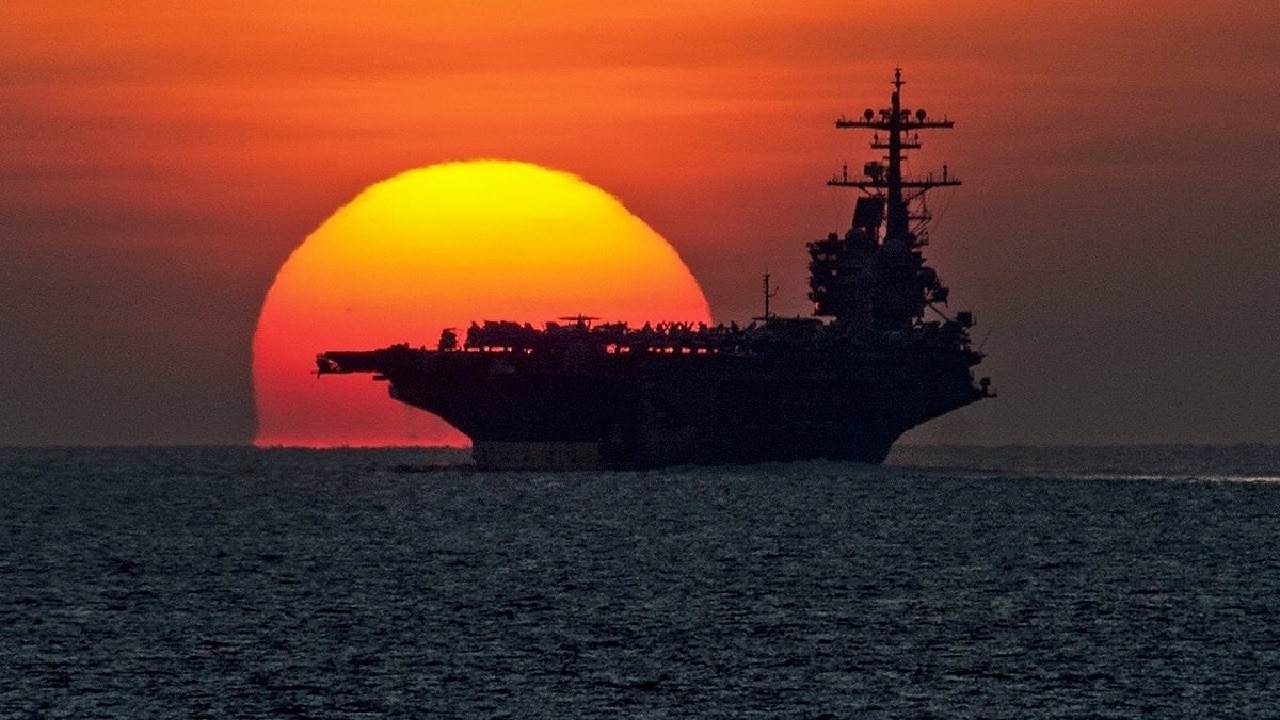
A 2,200-Ton Chinese Diesel Submarine Surfaced Five Miles From the USS Kitty Hawk, Inside Torpedo Range and Undetected – On October 26, 2006, the aircraft carrier USS Kitty Hawk was running exercises in the East China Sea near Okinawa, screened the way American carriers are always screened. Roughly a dozen warships accompanied her, along with an attack submarine and anti-submarine helicopters whose entire job was to keep hostile submarines away from the flattop. That afternoon, a Chinese Song-class submarine, a 2,200-ton diesel-electric boat, surfaced about five miles from the carrier. It was the first moment anyone in the battle group knew the boat existed. The submarine was spotted only after it broke the surface, by a routine surveillance flight from the carrier’s own air wing.
The arithmetic of that moment is why it still gets studied two decades later. The Song class is a conventionally powered attack boat that costs a small fraction of its target; comparable European diesel boats of its generation cost about 100 million dollars, according to published estimates.
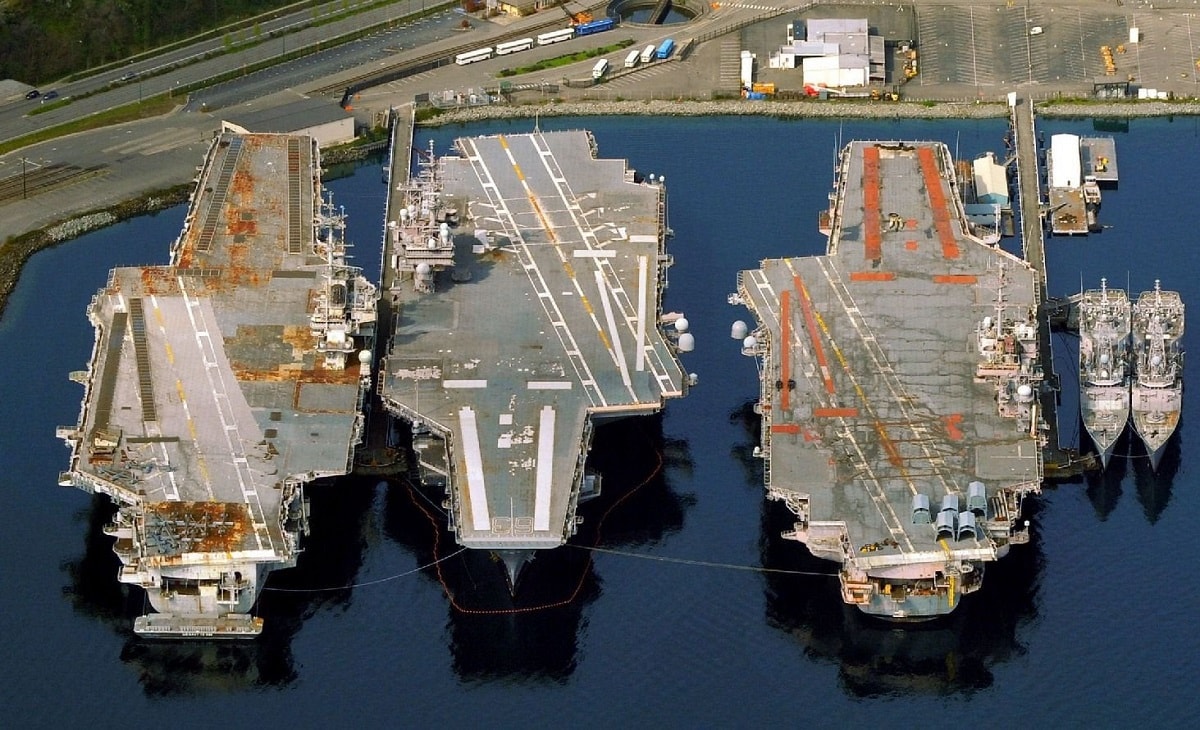
Image of several old carriers headed to scrap yard.
The ship it approached displaced 80,000 tons, embarked an air wing worth billions, carried more than 5,000 sailors, and belonged to a class of assets whose newest successors cost about 13 billion dollars each before a single aircraft lands aboard.
At five miles, the Song sat well inside the reach of its 18 homing torpedoes, weapons that chase a ship’s wake and are notoriously hard to decoy. Had this been combat, or a drill run for real, one or two hits would have meant at minimum a mission kill: flight operations over, the carrier limping toward a shipyard, the strike group converted from a striking force into an escort for a cripple. A submarine that intends to shoot does not surface first. This one surfaced to be seen.
The story broke on November 13, 2006, when the Washington Times reported the boat had stalked the battle group and “surfaced within firing range of its torpedoes and missiles” before being detected, just as the commander of the US Pacific Fleet arrived in China on a goodwill visit.
Pacific Command called the details classified, and Beijing never explained itself.
Inside the Navy, the debate split between those who read the surfacing as a deliberate message and those who called it a chance encounter, and the two readings share the uncomfortable part: either a Chinese diesel boat penetrated the screen on purpose, or one wandered into the middle of a carrier group, and nobody noticed.
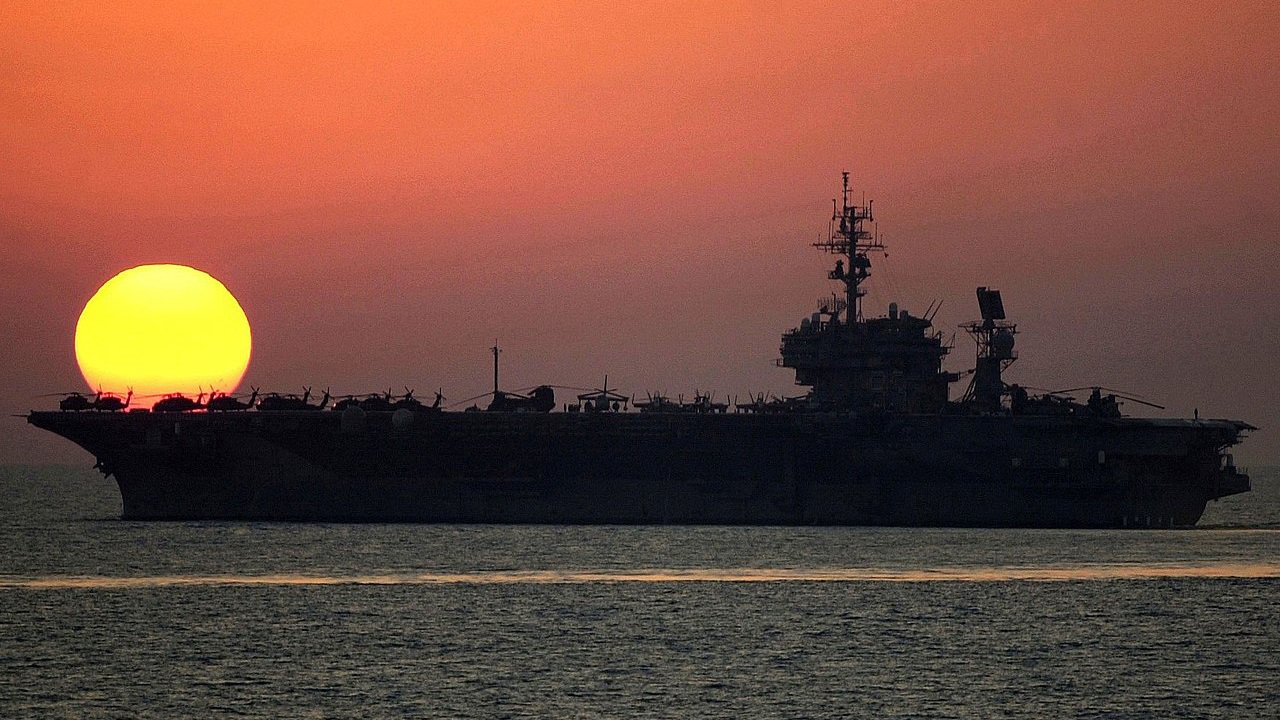
“The USS Kittyhawk (sic) underway in support of Operation Enduring Freedom-Afghanistan in 2001. 160th Special Operations Aviation Regiment helicopters are visible on the vessel’s flight deck.”
Clearly, the physics favored the submarine. A diesel-electric boat creeping on battery power has no reactor pumps, no steam plant, almost no machinery noise at all, and in the shallow, cluttered acoustics of littoral water it can run quieter than the nuclear submarines built to hunt it.
American anti-submarine forces had spent the Cold War optimized against fast Soviet nuclear boats in the deep ocean, and the skill had atrophied in the fifteen years since. The Kitty Hawk incident was the bill arriving.
The Gotland Proved It Was No Fluke
The year before, the US Navy had run the experiment deliberately and gotten the same answer.
In exercises beginning in 2004, the Swedish submarine HSwMS Gotland, a 1,600-ton boat with air-independent propulsion, repeatedly penetrated the USS Ronald Reagan’s screen and scored simulated torpedo kills on the 6.2-billion-dollar carrier without the escorts ever finding her.
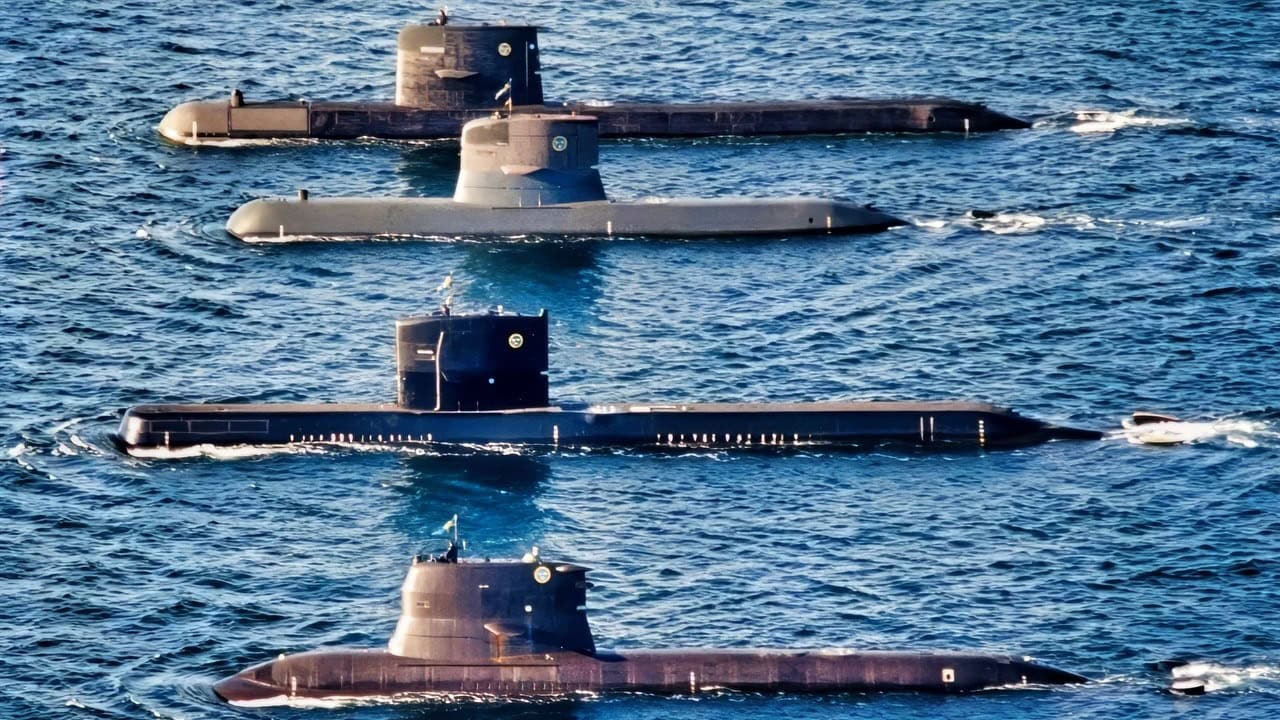
Gotland-Class Fleet of Submarines. Image Credit: Creative Commons.
The Navy was rattled enough to lease the Gotland and her crew for two years of anti-submarine training out of San Diego, because its own sensors could not reliably cope with her.
Air-independent propulsion is what separates boats like the Gotland from the Song: Stirling-cycle engines that let a submarine stay submerged and near-silent for weeks instead of days, closing the diesel boat’s one traditional weakness, the need to snorkel.
A hundred-million-dollar submarine had beaten a screen built around a six-billion-dollar ship, and could do it again on demand.
China Built the Lesson Into a Fleet
I would argue Beijing drew the obvious conclusion. The Song class that embarrassed the Kitty Hawk was followed by the Yuan class, which married the same quiet diesel-electric approach to air-independent propulsion, with more than a dozen in service within years and construction continuing since.
The carrier’s defenders have answers: longer-range air wings, dispersed formations, rebuilt anti-submarine forces, unmanned sensors, and the Navy is spending on all of them.
But the trade at the heart of the 2006 incident has not moved: quiet boats keep getting cheaper and better while the ships they threaten grow more expensive, and every navy that cannot afford a carrier can afford the thing that menaces one.
As for the two vessels themselves, the Song-class remains in Chinese service. The Kitty Hawk was decommissioned in 2009, and in 2021 the Navy sold her to International Shipbreaking Limited of Brownsville, Texas, for one cent.
The veterans’ campaign to preserve her as a museum was refused; the dismantling of the 80,000-ton hull was expected to take about eighteen months.
About the Author: Harry J. Kazianis
Harry J. Kazianis (@Grecianformula) was the former Senior Director of National Security Affairs at the Center for the National Interest (CFTNI), a foreign policy think tank founded by Richard Nixon based in Washington, DC. Harry has over a decade of experience in think tanks and national security publishing. His ideas have been published in the NY Times, The Washington Post, The Wall Street Journal, CNN, and many other outlets. He has held positions at CSIS, the Heritage Foundation, the University of Nottingham, and several other institutions related to national security research and studies. He is the former Executive Editor of the National Interest and the Diplomat. He holds a Master’s degree focusing on international affairs from Harvard University.

