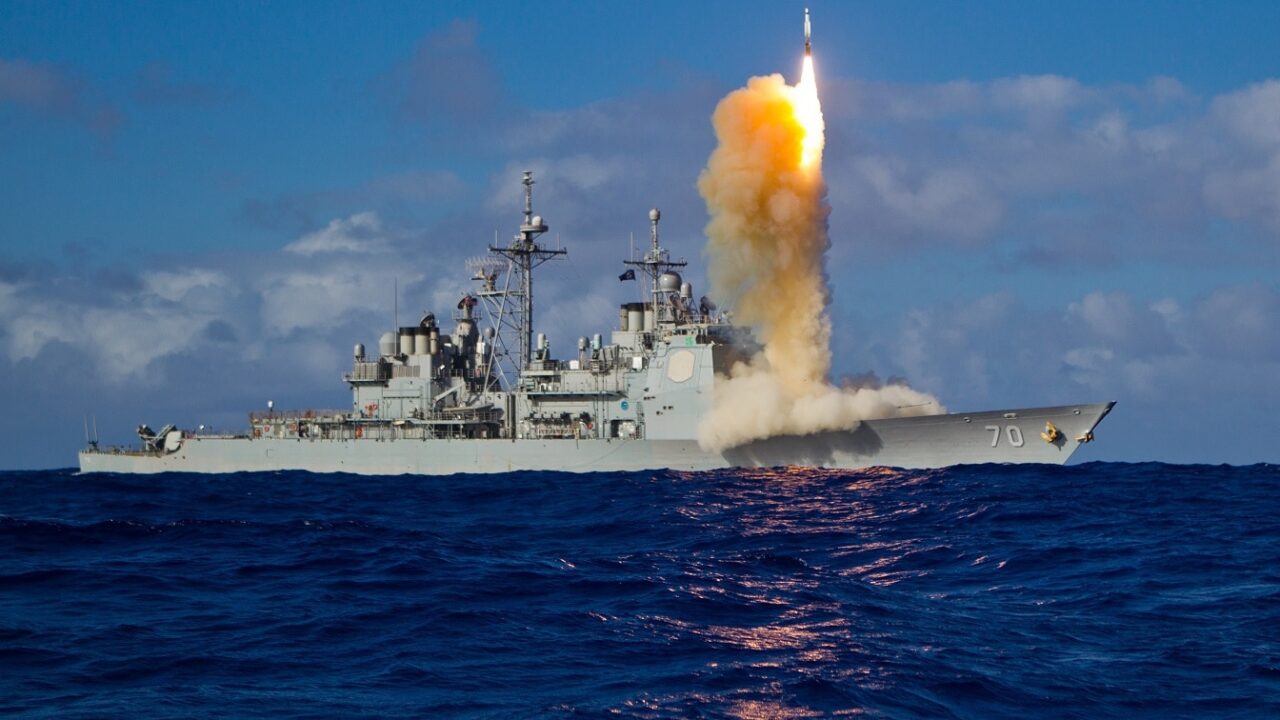
As the ongoing war in Iran drags on, seemingly inexorably, toward the half-year mark, Russian leader Vladimir Putin and Chinese strongman Xi Jinping may see an opportunity to further their aims in their respective near abroad, in Ukraine and Taiwan, respectively. American involvement in Iran has been incredibly costly — not necessarily in American lives lost, but in treasure spent and mentions expended. For Moscow and Beijing, American preoccupation in the Middle East may be a golden opportunity.
The US Military in Trouble?
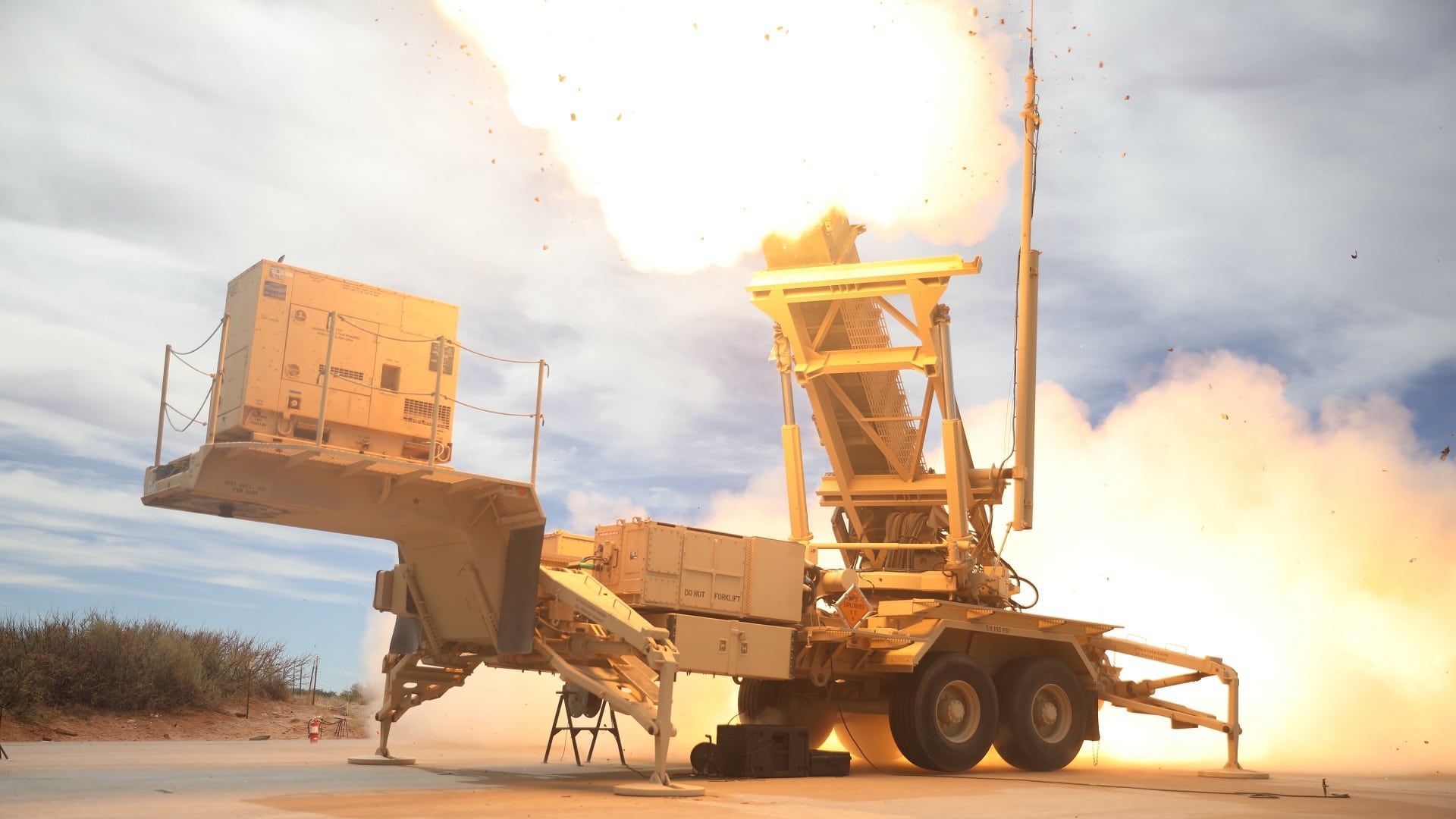
Soldiers from 69th Air Defense Artillery Brigade conducted Patriot Missile live fire training, November 5, at McGregor Range Complex on Fort Bliss. The live fire exercise was conducted jointly with Air Defense counterparts from the Japanese Self-Defense Force. (U.S. Army Photo by Staff Sgt. Ian Vega-Cerezo)
The information comes to light amidst an acute shortage of vital, advanced munitions that the United States has expended with apparent abandon during the course of fighting in Iran. One recent analysis by the Center for Strategic and International Studies, a think tank that focuses on foreign affairs and defense topics, found that while the United States still has hundreds of Patriot and THAAD interceptor missiles in its stocks, inventories have been reduced significantly, placing potential limitations on Washington’s ability to respond to other crises around the world, should events abroad necessitate an American military response.
First and foremost on the minds of policymakers and the Pentagon is the situation in Asia. Beijing’s bellicosity toward Taiwan, the democratic island nation off the coast of the Chinese mainland, has left American allies in the region concerned that China could view the American interceptor-missile shortage as a rare window of opportunity to move on Taipei.
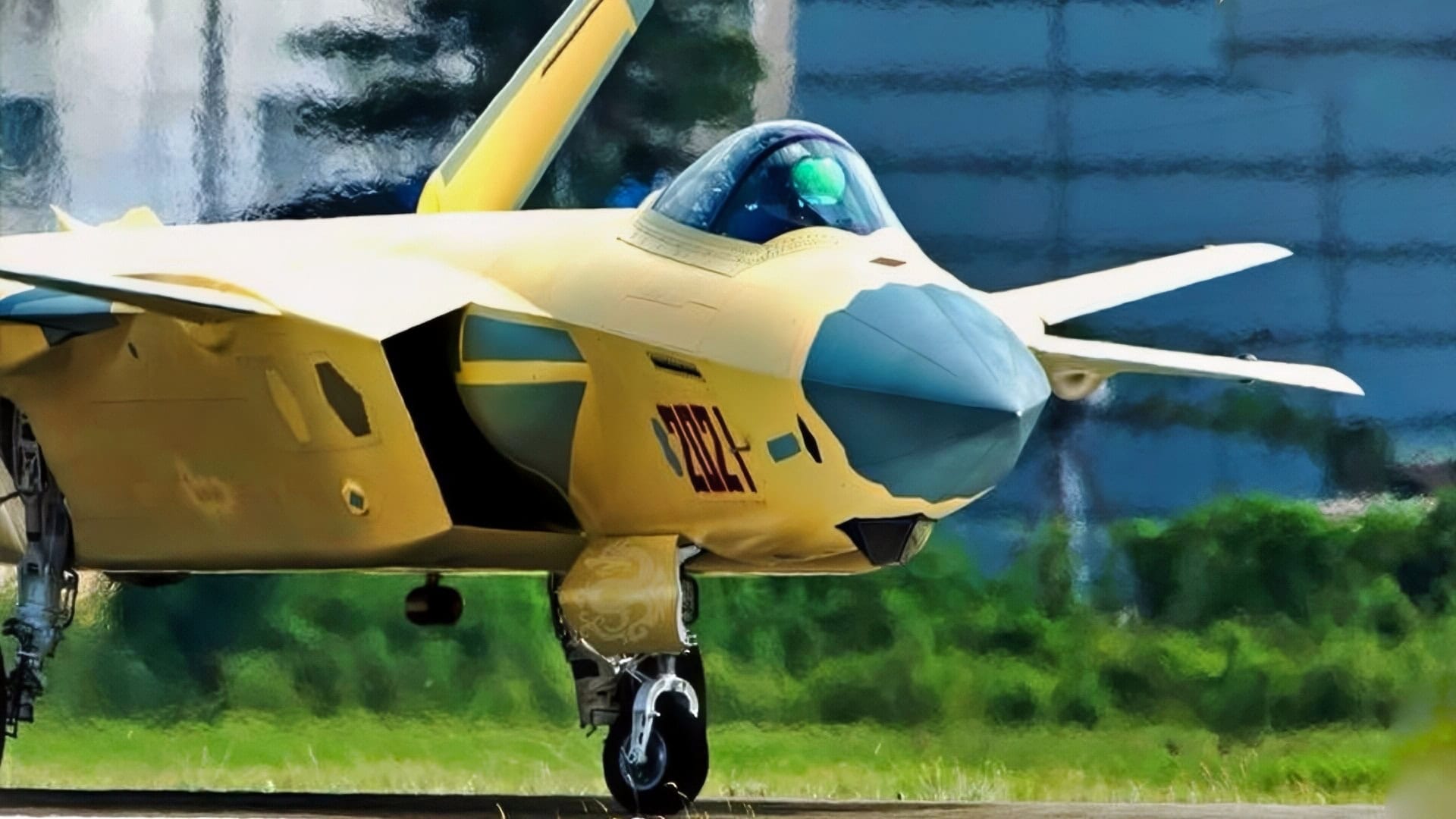
China’s J-20 Mighty Dragon in Yellow. Image Credit: Screenshot.
But against the backdrop of constrained American military might is Chinese leader Xi Jinping’s shakeup at the highest levels of the People’s Liberation Army, or PLA. Recent purges of top leadership there have left the PLA seemingly headless, cuts instigated by Xi’s stated desire to root out graft and corruption within China’s military. Though outwardly aimed at making the PLA a more efficient fighting force, the sweeping out of some of Beijing’s most seasoned military leaders may also be designed to consolidate power around Xi Jinping, easily China’s most singularly powerful leader since the Mao Zedong era.
But eyes within the Pentagon are looking toward Europe, too. While NATO has affirmed in the past that the Kremlin would not test the NATO alliance while bogged down in Ukraine, Russia’s halting and incredibly costly progress along that front in eastern Ukraine may have changed that calculus.
Ukraine’s ongoing strike campaign against Russian oil and gas infrastructure — an effort Ukrainian President has dubbed part of Kyiv’s “long-range sanctions” effort against the Russian war machine — has brought a war fought mostly abroad into the Russian homeland. Though Russia is one of the world’s top energy producers, many of its regions have been forced to contend with long lines at gas stations, fuel caps, and, in some areas, no fuel at all.
The increased domestic pressure on the Putin regime at home may have, NATO officials conclude, motivated the Kremlin to gauge the NATO alliance’s cohesion, probes perhaps exemplified by recent Russian drones that flew into Romania, and apparently errant cruise missiles that fell in Poland, both of which are members of the NATO alliance.
Intelligence assessments have reportedly analyzed a wide gamut of possible scenarios that range from virtual intrusions in cyberspace to physical incursions into NATO territory. Although the likelihood of Russian troops attempting a kind of limited attack on part of a NATO member’s territory is low — a state actor has never attacked the NATO alliance in its entire history — and would trigger a collective defensive response from the entirety of NATO, how the alliance responds to a cyber attack or other interference of unclear provenance is less clear.
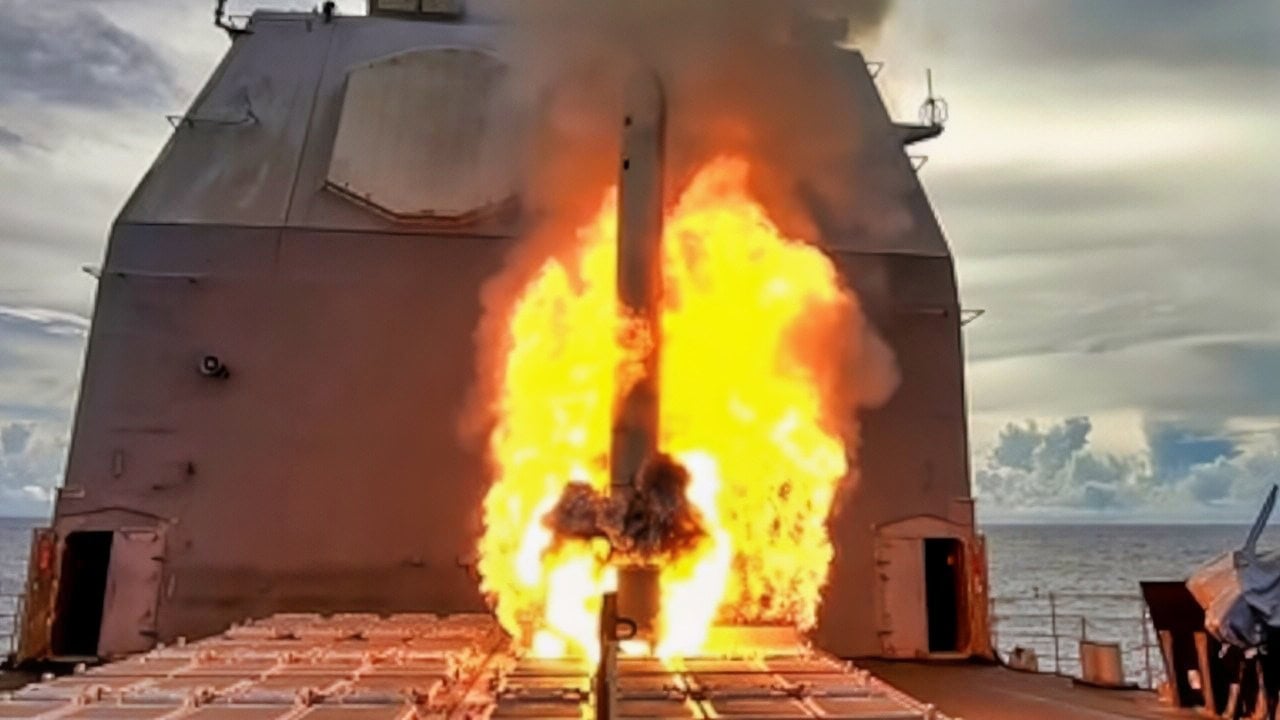
Tomahawk Missile Firing U.S. Navy Photo
In addition to deleted air interceptor inventories, several other important munitions are also running low. Another assessment by CSIS found that munitions beyond air interceptors were running low, including Tomahawk cruise missiles. Of note are those munitions production timelines, which, in the shortest case, take 42 months to build, test, and deliver, and up to 64 months for the SM-3 interceptor.
Future War, Future Scenarios
Speaking to The Wall Street Journal, Mark F. Cancian, the author of one of CSIS’s reports on the expenditure of air defense munitions during the course of fighting against Iran, was unequivocal.
“If it’s just a question of fighting Iran, even though we’ve used half of the interceptors, a little more, we still have half of them left. So we could go on against Iran for quite some time,” Mr. Cancian explained. “The problem is that the Pentagon is now very worried about what this does in the Western Pacific with China.”
While the American president has, on several occasions, promised to make life untenable for Iran’s leadership by pummeling the country with crippling airstrikes, those threats have for the most part proven empty.
Though the president’s shifting whims have seemingly been a factor in calling off the threatened attacks, the looming acute shortage of munitions may also have played a role.
In the meantime, eyes in Moscow and Beijing are watching.
About the Author: Caleb Larson
Caleb Larson is an American multiformat journalist based in Berlin, Germany. His work covers the intersection of conflict and society, focusing on American foreign policy and European security. He has reported from Germany, Russia, and the United States. Most recently, he covered the war in Ukraine, reporting extensively on the war’s shifting battle lines from Donbas and writing on the war’s civilian and humanitarian toll. Previously, he worked as a Defense Reporter for POLITICO Europe. You can follow his latest work on X.