
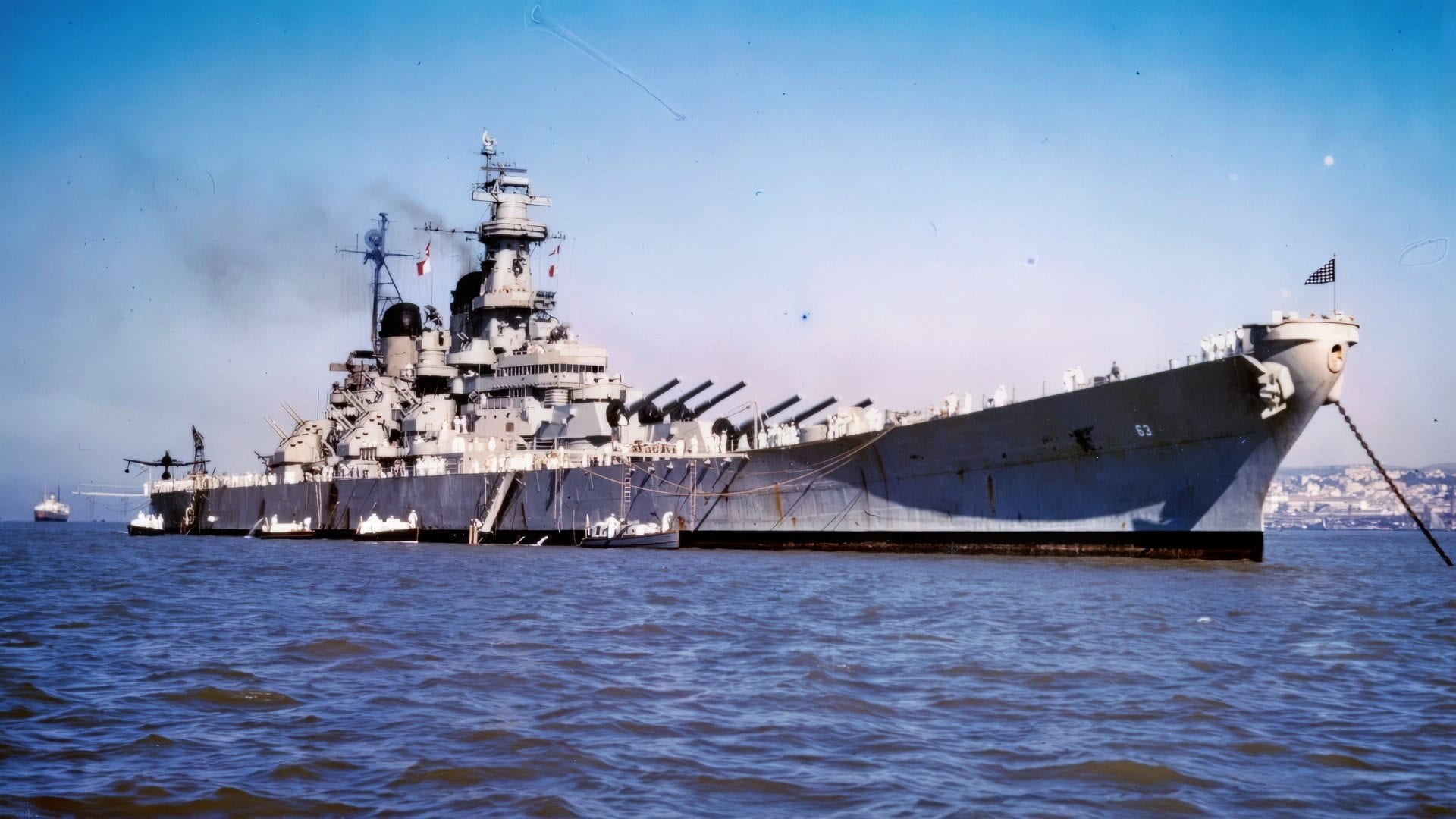
Two Iowa-Class Battleships Fired 1,083 16-Inch Shells in Desert Storm – Only two of the four completed Iowa-class battleships went to war in the Persian Gulf in 1991. USS Missouri and USS Wisconsin conducted 80 naval gunfire missions and fired 1,083 16-inch rounds—759 from Missouri and 324 from Wisconsin—according to the Navy’s immediate postwar campaign appendix. The service put the weight of that heavy-gun ordnance at about 2.166 million pounds.
The battleships also launched 52 Tomahawk land-attack missiles: 28 from Missouri and 24 from Wisconsin. Their 1980s modernization retained nine 16-inch guns while adding 32 Tomahawk positions, 16 Harpoon anti-ship missiles, and modern electronic-warfare and fire-control equipment. GAO later placed the cost of reactivating and modernizing all four Iowa’s at about $1.7 billion.
USS Iowa and USS New Jersey did not join them. Iowa was decommissioned on October 26, 1990, and New Jersey left active service on February 8, 1991. Missouri and Wisconsin carried the class into its final war while the Navy had already begun reversing the fleet expansion that returned the battleships to service.
Their combat was directed primarily ashore. Iraq had no surface combatant remotely comparable to an Iowa-class ship, but coastal mines and Silkworm anti-ship missiles made the northern Gulf dangerous. The battleships supplied long-range missile strikes, heavy gunfire, and a visible naval threat along Kuwait’s coast.
The 1980s Refit Turned the Iowa-Class Into Missile Battleships
The Reagan administration completed a major Iowa-class return to service for the 600-ship Navy. Each received eight armored box launchers for Tomahawks, four quadruple Harpoon launchers, and updated communications, target-acquisition, and defensive systems.
The conversion gave the class far greater reach while preserving a 16-inch battery able to fire 1,900-pound high-capacity shells.
The firepower came with a large manpower bill. Each battleship required about 1,500 sailors, compared with 340 for a contemporary cruiser and 295 for a destroyer. That difference became decisive once Cold War fleet requirements began falling.
Missouri Fired 759 Heavy Shells and Faced a Silkworm
Missouri reached the Gulf in early January 1991. Its explosive-ordnance team disarmed a mine on January 9, and the ship fired its first Tomahawk toward Baghdad on January 17. By January 20, it had launched all 28 missiles credited to its deployment.
The main battery returned to combat on February 3 for the first time since Korea. Missouri fired 112 16-inch rounds between February 5 and 7, then 69 more during the following week against command bunkers, artillery, infantry, and mechanized positions.
Its campaign total reached 759 rounds across 47 missions, the final combat chapter in Missouri’s long battleship career.
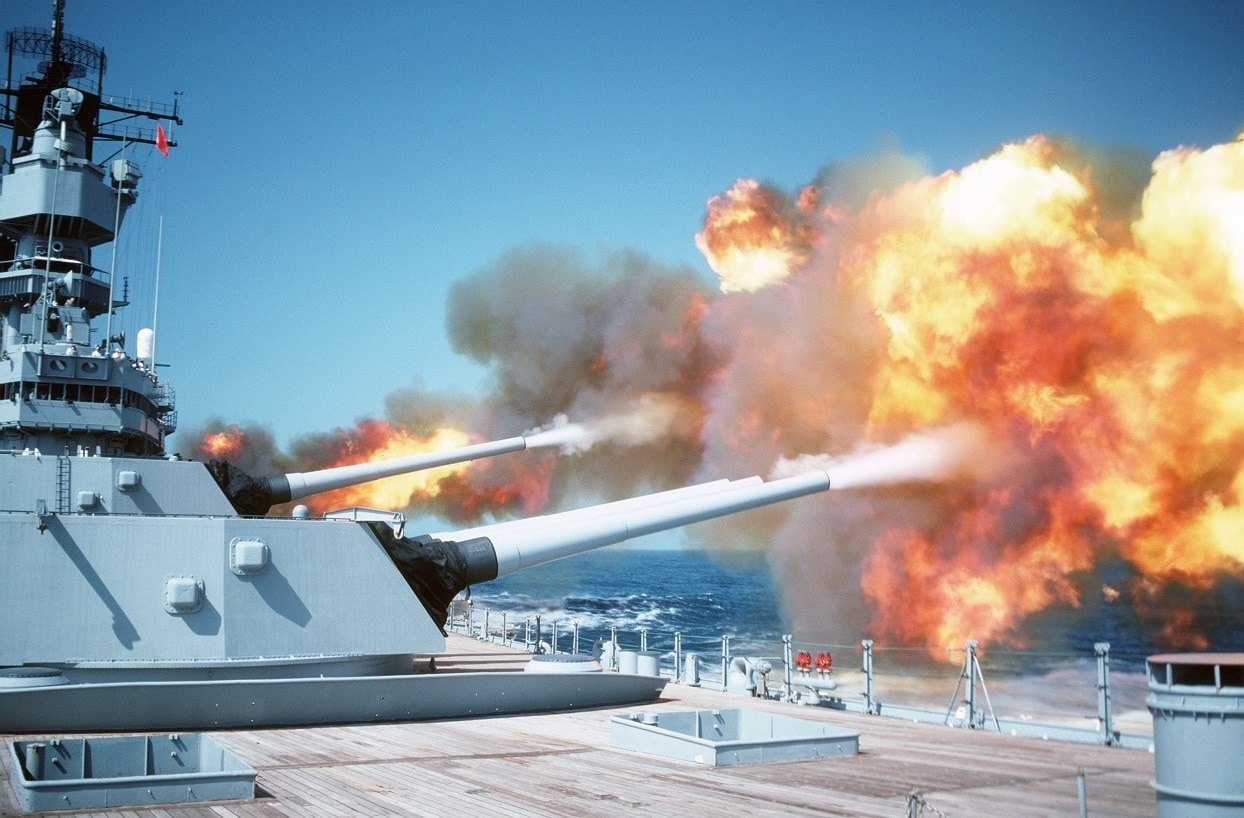
USS Iowa battleship. Image Credit: US Navy.
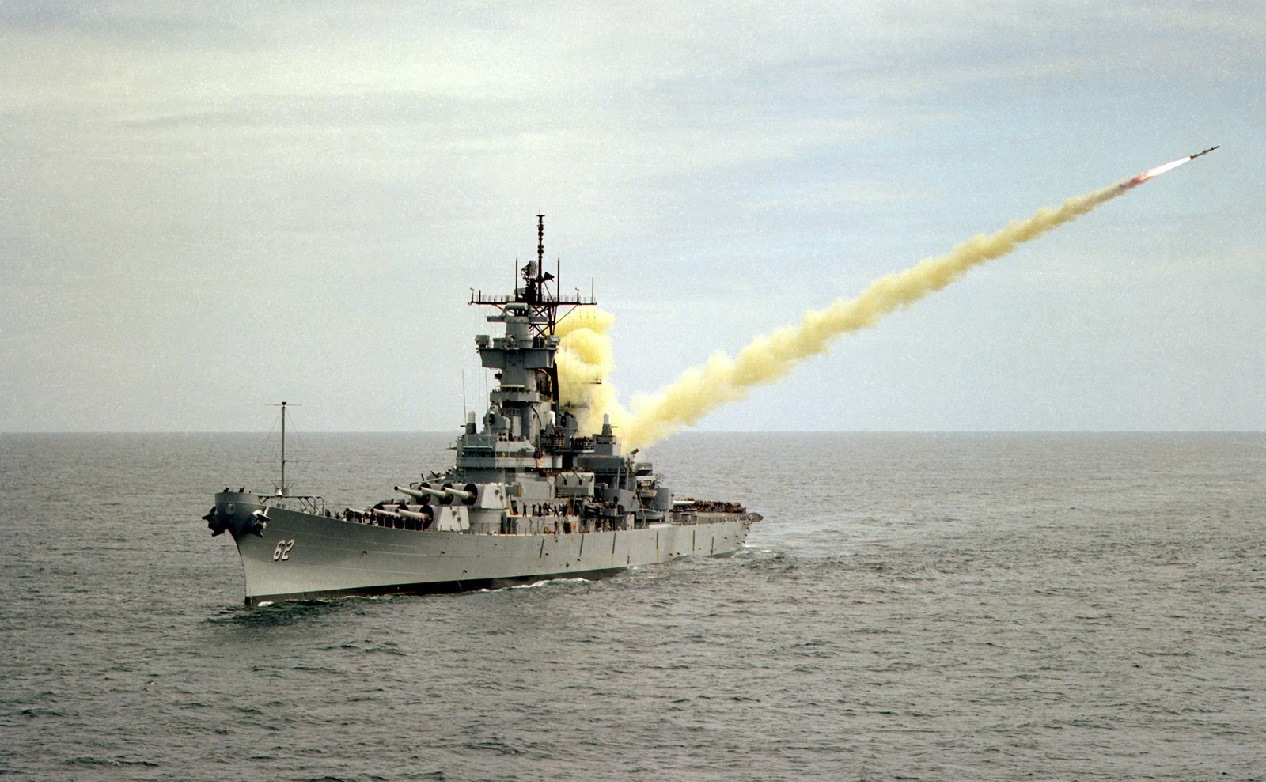
An aerial port bow view of the battleship USS NEW JERSEY (BB-62) launching an RGM-84 Harpoon missile on the Pacific Missile Test Center Range.
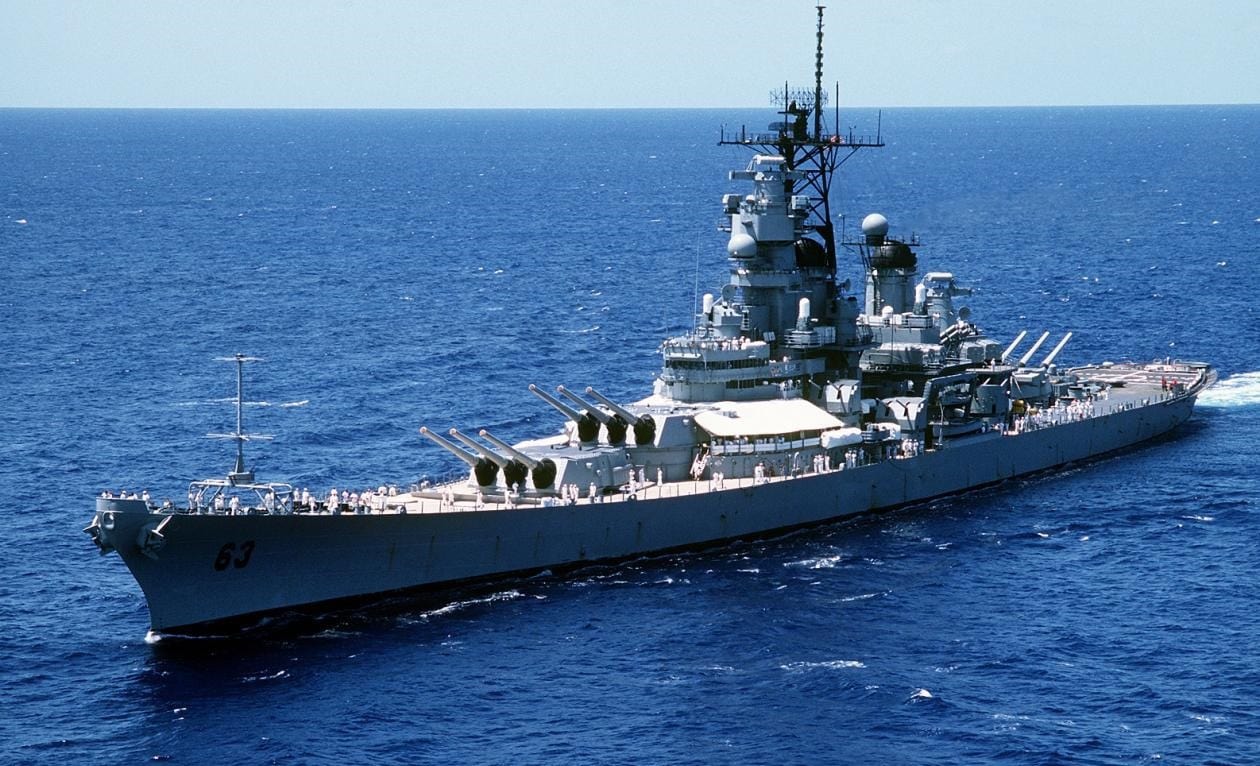
USS Iowa. Image Credit: Creative Commons.
Mine clearance determined how close Missouri could approach Kuwait. A six-mile lane had to be opened before the ship moved far enough north to reach targets inland. On February 25, Iraqi forces launched two Silkworm missiles toward the naval force. One fell into the Gulf; HMS Gloucester destroyed the other with Sea Dart missiles.
Wisconsin Fired 324 Heavy Shells and Directed Tomahawk Strikes
Wisconsin served as a Tomahawk strike commander and launched 24 cruise missiles.
On February 6, it fired 11 16-inch rounds approximately 19 miles to destroy an Iraqi artillery battery. The next day brought another 24 heavy shells against artillery, missile, and electronic-warfare sites.
Later, 50 rounds struck Iraqi naval facilities, damaging or sinking 15 boats and destroying piers. The Navy’s campaign appendix records 324 16-inch rounds across 33 missions. Pioneer unmanned aircraft located targets and corrected gunfire; Iraqi troops on Faylaka Island displayed white flags when one appeared overhead.
Wisconsin fired the final American battleship rounds in combat on February 28. The 47-year-old hull had used cruise missiles, unmanned reconnaissance and guns designed before Pearl Harbor during the same campaign, extending Wisconsin’s operational life into a third war.
The Bombardment Supported an Amphibious Feint
Coalition commanders rejected a major amphibious landing on Kuwait’s coast. Mines, beach defenses, urban terrain and anti-ship weapons made it costly; USS Tripoli and USS Princeton both struck mines during the campaign.
The threat of a landing still served the coalition plan. Marine Corps history records that commanders used the battleships’ movements and repeated coastal bombardments to reinforce the deception while ground forces prepared their main attack farther west.
The guns also provided direct support to Saudi-led troops moving along the coastal highway.
Retirement Followed the Gulf War
Desert Storm demonstrated that the Iowas still delivered enormous volume against targets within gun range.
The war also ended as the Soviet Union collapsed and the Navy began shrinking.
Large crews, unique machinery, specialized ammunition, and aging hulls became harder to justify.
Wisconsin was decommissioned on September 30, 1991. Missouri followed on March 31, 1992. GAO later reported that the Navy opposed another return due to high operating costs, crew demands, age and uniqueness, and the range and accuracy limitations of existing 16-inch ammunition.
The Gulf deployment remains central to accounts of the 1980s missile conversion, Missouri’s three-war career, Wisconsin’s final combat service and the barriers to another Iowa-class comeback.
Missouri entered the reserve fleet at Puget Sound after its March 31 decommissioning, leaving the United States without an active battleship. Well, until the Trump-Class, if they ever sail, that is.
About the Author: Harry J. Kazianis
Harry J. Kazianis (@Grecianformula) was the former Senior Director of National Security Affairs at the Center for the National Interest (CFTNI), a foreign policy think tank founded by Richard Nixon based in Washington, DC. Harry has over a decade of experience in think tanks and national security publishing. His ideas have been published in the NY Times, The Washington Post, The Wall Street Journal, CNN, and many other outlets worldwide. He has held positions at CSIS, the Heritage Foundation, the University of Nottingham, and several other institutions related to national security research and studies. He is the former Executive Editor of the National Interest and the Diplomat. He holds a Master’s degree focusing on international affairs from Harvard University.

