
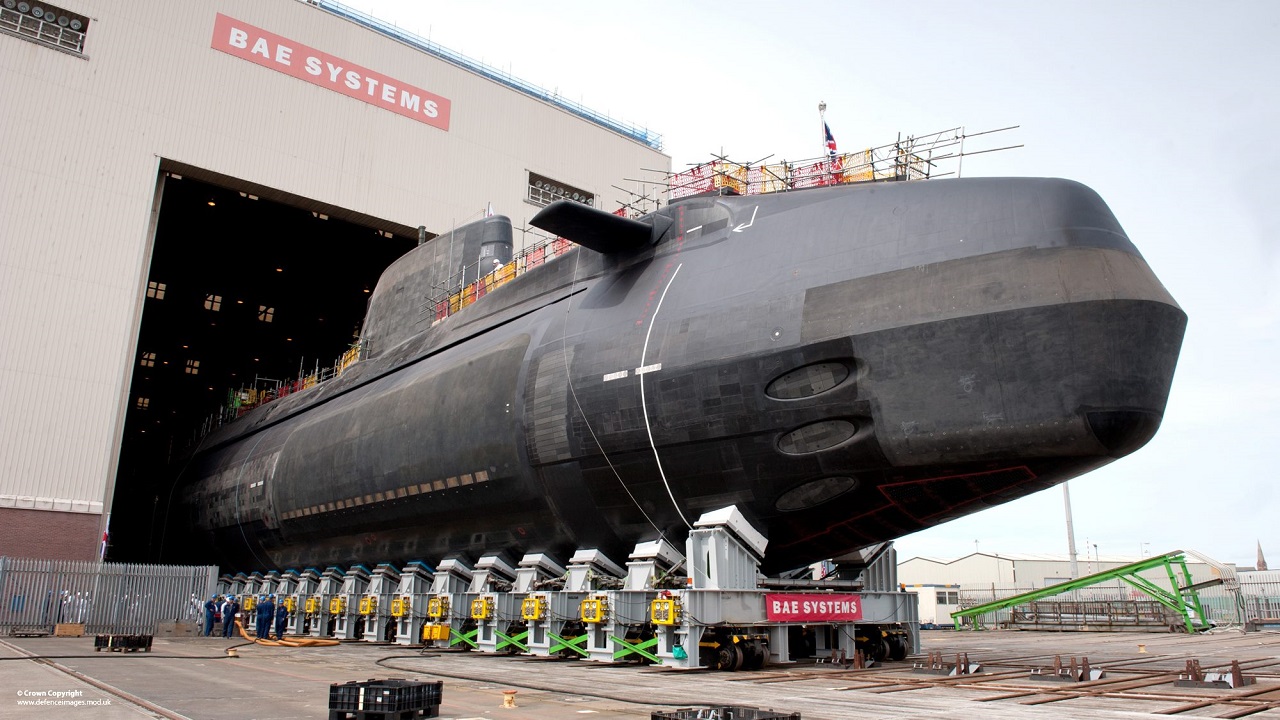
Britain’s nuclear-submarine disposal record fits into three numbers: 43 years, 23 retired boats and zero fully dismantled. Since 1983, decommissioned Royal Navy submarines have been stored afloat at Rosyth or Devonport while the government searched for an acceptable disposal system. HMS Swiftsure is still scheduled to become the first fully dismantled boat by the end of 2026. Yet the July major-project publication, based on data reported on March 31, rated delivery Red after identifying supplier, supply-chain, planning and commercial problems.
The 43-year clock belongs to the national disposal system, not to Swiftsure alone. The current inventory is larger than the Royal Navy’s operational submarine force. According to the Defence Nuclear Enterprise’s latest full inventory, 16 retired submarines sit at Devonport and seven at Rosyth. All seven in Scotland have been defueled, but only four at Devonport have. Twelve decommissioned submarines therefore still hold irradiated reactor fuel.
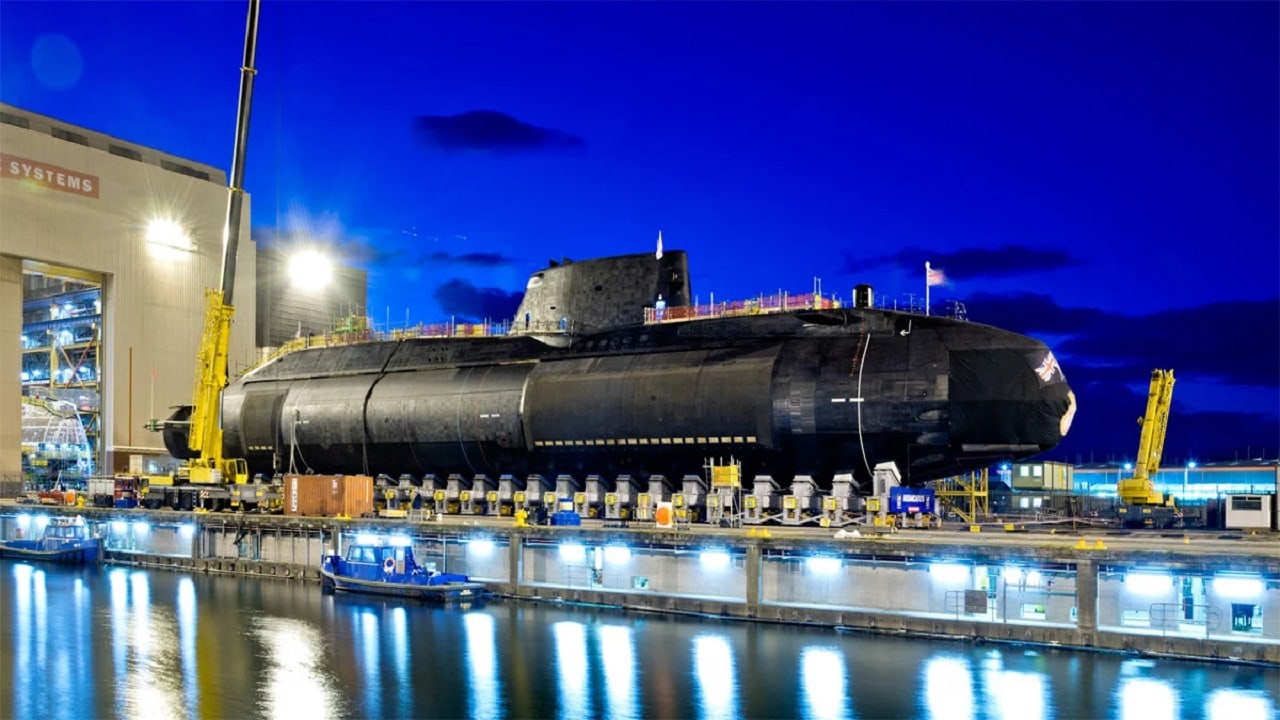
Astute-class Submarine. Image Credit: BAE Systems.
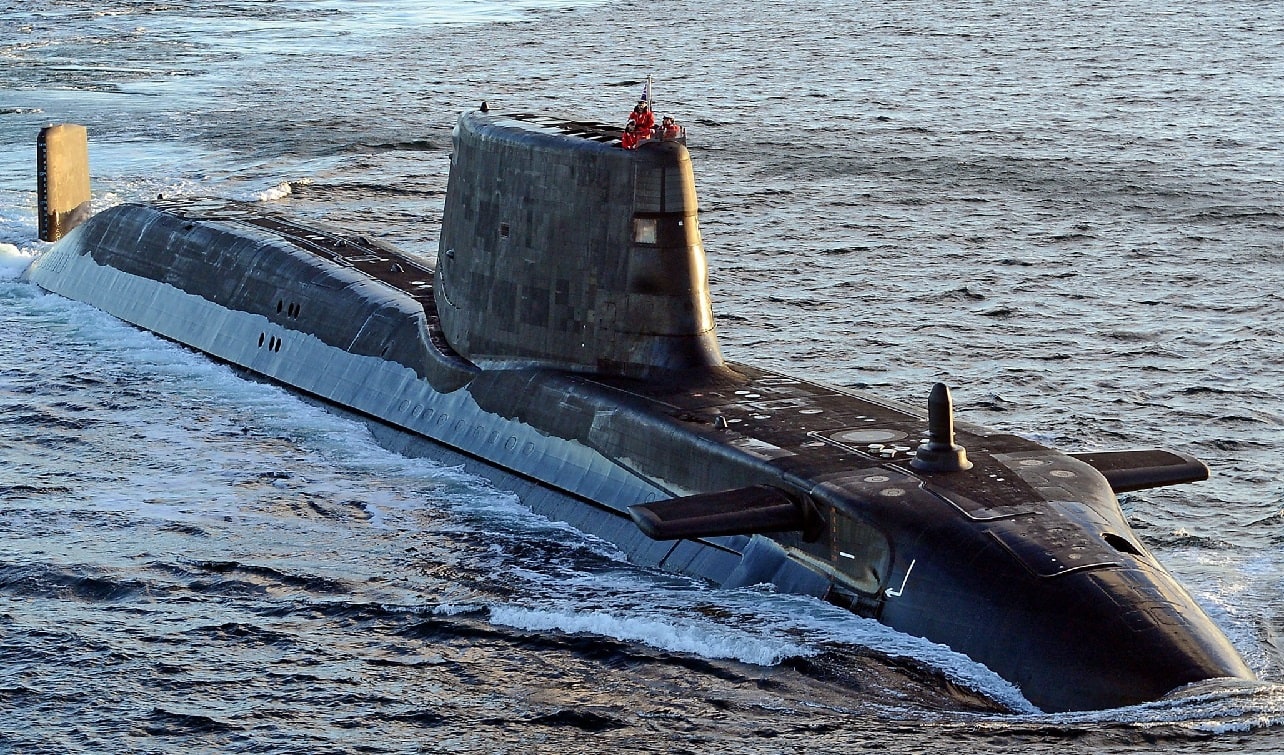
Astute class submarine HMS Ambush is pictured during sea trials near Scotland. Ambush, second of the nuclear powered attack submarines, was named in Barrow on 16 December 2010 and launched on 5 January 2011.
A nuclear submarine is not an ordinary ship waiting for a cutting torch. Workers first prepare and maintain the hull for storage, remove spent fuel inside a licensed dock, extract low-level radioactive material, isolate the reactor pressure vessel and other intermediate-level waste, and then break up the conventional structure. Every stage needs specialist facilities, nuclear-qualified personnel, approved transport packages, radiation controls and regulatory permission. The National Audit Office documented those interlocking requirements. Safety explains why the job is difficult. It does not explain why Britain operated nuclear submarines for decades without an industrial system to finish the job.
The cost now reflects that institutional gap. The July 2026 project data places the Submarine Dismantling Project’s whole-life cost at £541.73 million in 2024-25 prices. The accompanying Ministry of Defence narrative gives the departmentally agreed estimate as £489.563 million, an £89.181 million increase from £400.382 million as infrastructure and other costs matured. Those sums cover more than physically cutting apart Swiftsure, but they measure the price of developing the method, facilities and controls Britain failed to establish earlier.
Britain Let the Nuclear Submarine Defueling Pipeline Collapse
The history is a sequence of slipped dates. The Ministry of Defence once intended to have a disposal process operating by 2011. A National Audit Office investigation found the planned rollout had moved 15 years to 2026.
Defueling stopped in 2004 after the nuclear regulator judged Devonport’s facilities short of newer standards. Restart was first expected in 2012, then 2023 and now 2026. A December 2025 parliamentary answer gave no completion dates for the 12 PWR1 submarines awaiting defueling. The same shortage of nuclear-certified docks and specialist labor also sits behind Britain’s wider submarine maintenance crisis.
The high safety threshold is unavoidable. The weak program management was not. The latest review cites ongoing prime-supplier performance problems, third-party supply-chain risks and gaps in planning, controls and commercial arrangements.
The National Audit Office also found Britain depended heavily on Babcock, owner of the nuclear-licensed facilities at both Devonport and Rosyth. Operational boats, reactor work and disposal therefore compete inside a narrow industrial base already struggling to keep the Astute-class attack-submarine fleet available while meeting the industrial demands of AUKUS.
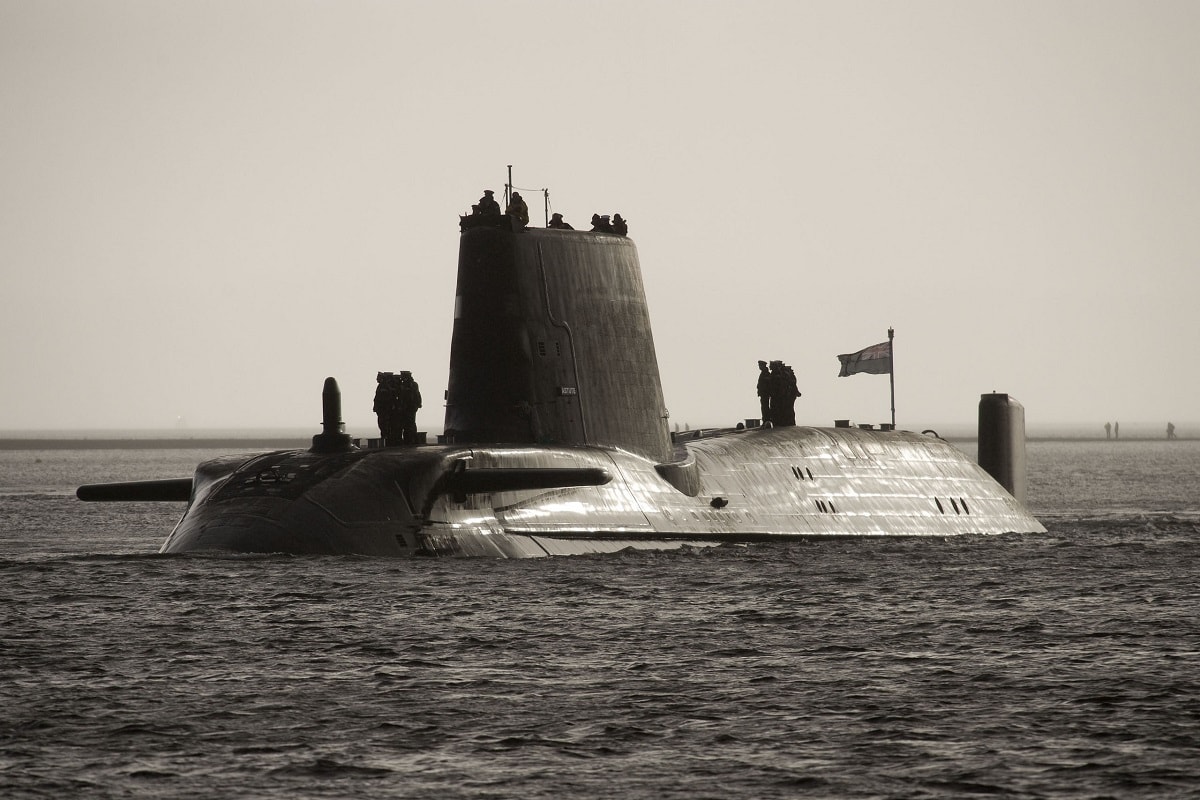
HMS Astute.
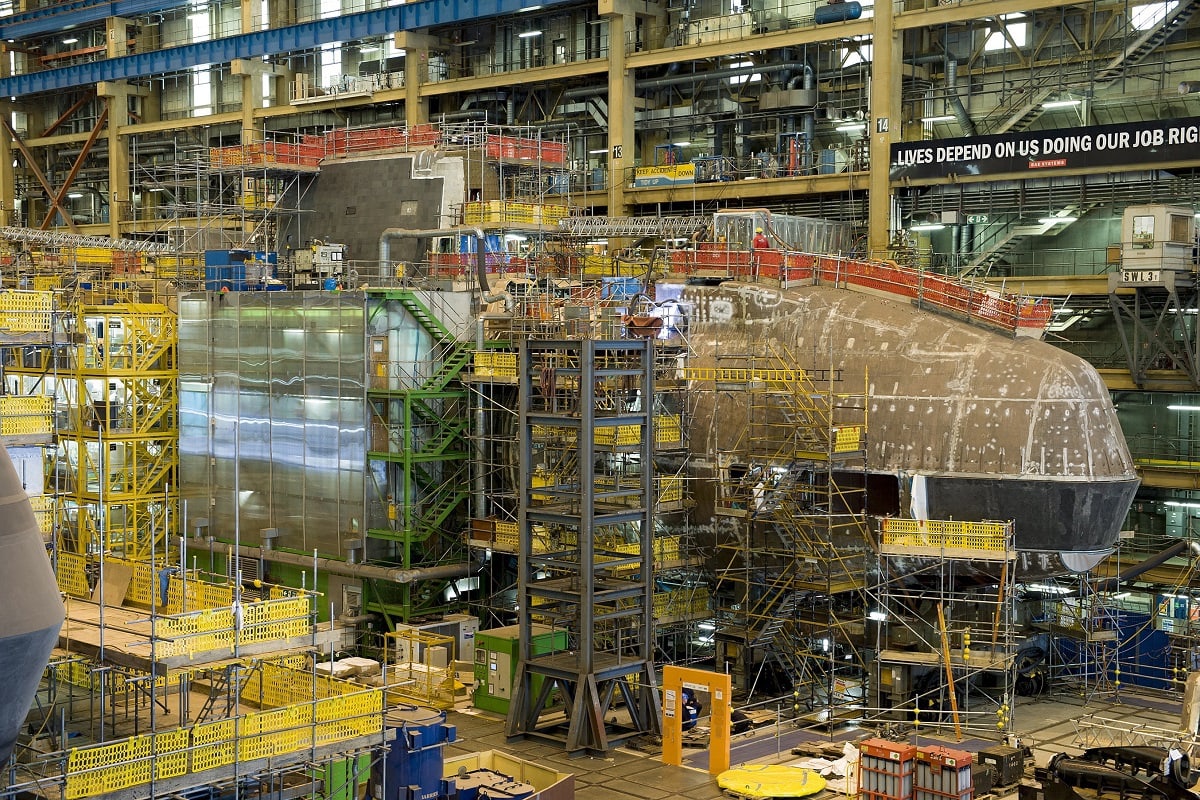
Astute-class submarine Audacious under construction at Barrow in Furness shipyard in Cumbria. Creative Commons Photo.
Delay has been expensive even before final disposal. The National Audit Office estimated Britain spent £500 million maintaining retired submarines between 1980 and 2017. It priced full disposal of one boat at £96 million in 2017-18 prices, excluding the expense of creating facilities and the eventual permanent disposal of nuclear waste. It also recorded a £7.5 billion future liability for maintaining and disposing of 20 stored and 10 serving submarines as of March 2018. The figures use different scopes and price bases, so they should not be added together. They still show why storage is not a free pause: retired hulls need inspections, maintenance and deeper docking at least once every 15 years.
HMS Swiftsure Will Leave 22 Retired Submarines Behind
There has been physical progress at Rosyth, so some good news is worth mentioning here. Swiftsure’s fin was removed in June 2025, more than 500 tonnes of conventional material had already been taken out and recycled, and the government expects roughly 90 percent of the submarine’s total weight to be reused or recycled.
The selected disposal route sends the reactor pressure vessel and other intermediate-level waste to interim storage at Capenhurst in Cheshire. Permanent disposal depends on a national Geological Disposal Facility, now estimated to accept intermediate-level waste in the 2050s.
Interim storage means Britain need not wait for the underground facility before dismantling hulls. It also means the permanent endpoint is still decades away. More importantly, Swiftsure is a demonstrator, not an established production line.
The government says its experience will shape work on the remaining PWR1 boats. Its enduring system for PWR2 submarines and later classes was still in the concept phase in the 2025 Defence Nuclear Enterprise report.
Britain is extending the lives of its four aging Vanguard ballistic-missile submarines, building the Dreadnought replacement fleet and planning up to 12 SSN-AUKUS attack submarines.
Building those boats while treating disposal as tomorrow’s problem repeats the decision behind today’s floating backlog. End-of-life infrastructure, people and waste routes belong inside the cost of a nuclear fleet from the start, not as a rescue program after retirement.
Even if Swiftsure is fully dismantled by December 31, 2026, Britain will have completed one boat and still have 22 retired nuclear submarines awaiting disposal. The latest government report moved the project’s formal closure date from March 31, 2027, to October 31, 2028.
About the Author: Harry J. Kazianis
Harry J. Kazianis (@Grecianformula) was the former Senior Director of National Security Affairs at the Center for the National Interest (CFTNI), a foreign policy think tank founded by Richard Nixon based in Washington, DC. Harry has over a decade of experience in think tanks and national security publishing. His ideas have been published in the NY Times, The Washington Post, The Wall Street Journal, CNN, and many other outlets worldwide. He has held positions at CSIS, the Heritage Foundation, the University of Nottingham, and several other institutions related to national security research and studies. He is the former Executive Editor of the National Interest and the Diplomat. He holds a Master’s degree focusing on international affairs from Harvard University.

