Thirty years ago, at the end of the Cold War, the United States was the undisputed global hegemon. Nothing and no one dared to challenge the United States militarily, because if they did, they were crushed. America’s military reach was ubiquitous. But that reach is now under strain because of the war in Iran. In fact, America’s war of choice with Iran has exposed a longstanding vulnerability in the US military: many of the overseas bases that American forces require to project power reliably cannot survive sustained attacks from modern missiles and drones.
Indeed, this experience with Iran serves as a vital warning for what might befall US bases in the Indo-Pacific.
Since the start of Operation Epic Fury, Iran has conducted more than 2,000 air, missile, and drone strikes across the Middle East.
Those attacks have done immeasurable damage to at least 20 US military facilities in eight countries, according to a recent Wall Street Journal report.
Because of this destruction and damage, the financial toll on the US military has been substantial.
There might be as much as $13 billion in losses to American equipment and facilities, per the WSJ.
Indeed, more than 42 US military aircraft have been damaged or destroyed — including aircraft caught on the ground at air bases.
America’s Bases Are Vulnerable
Few outside Washington appreciate just how reliant the US military is on the web of global bases, airfields, naval installations, and logistics facilities it requires to project its power abroad. Many of those facilities, as we have seen in the Iran War, are poorly defended.
They are fixed targets whose locations and layouts have been well known for years.
In fact, satellite imagery enables US rivals to accurately identify aircraft parking areas, fuel storage facilities, ammunition depots, and other key elements of these facilities.
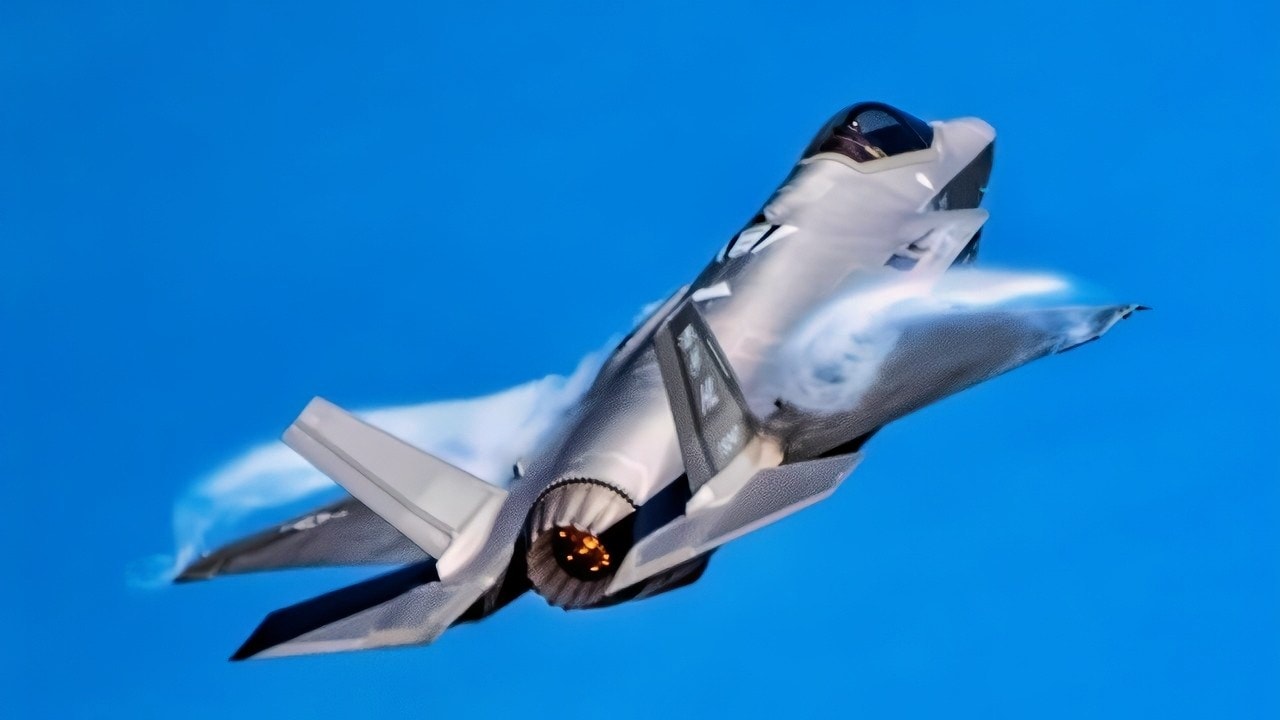
U.S. Air Force Maj. Kristin Wolfe performs a demonstration in the F-35A Lightning II during at the Reno Air Races in Reno, Nevada, September 19, 2021. The F-35 Lightning II Demonstration Team is based out of Hill Air Force Base, Utah. (U.S. Air Force photo by Tech. Sgt. Nicolas Myers)
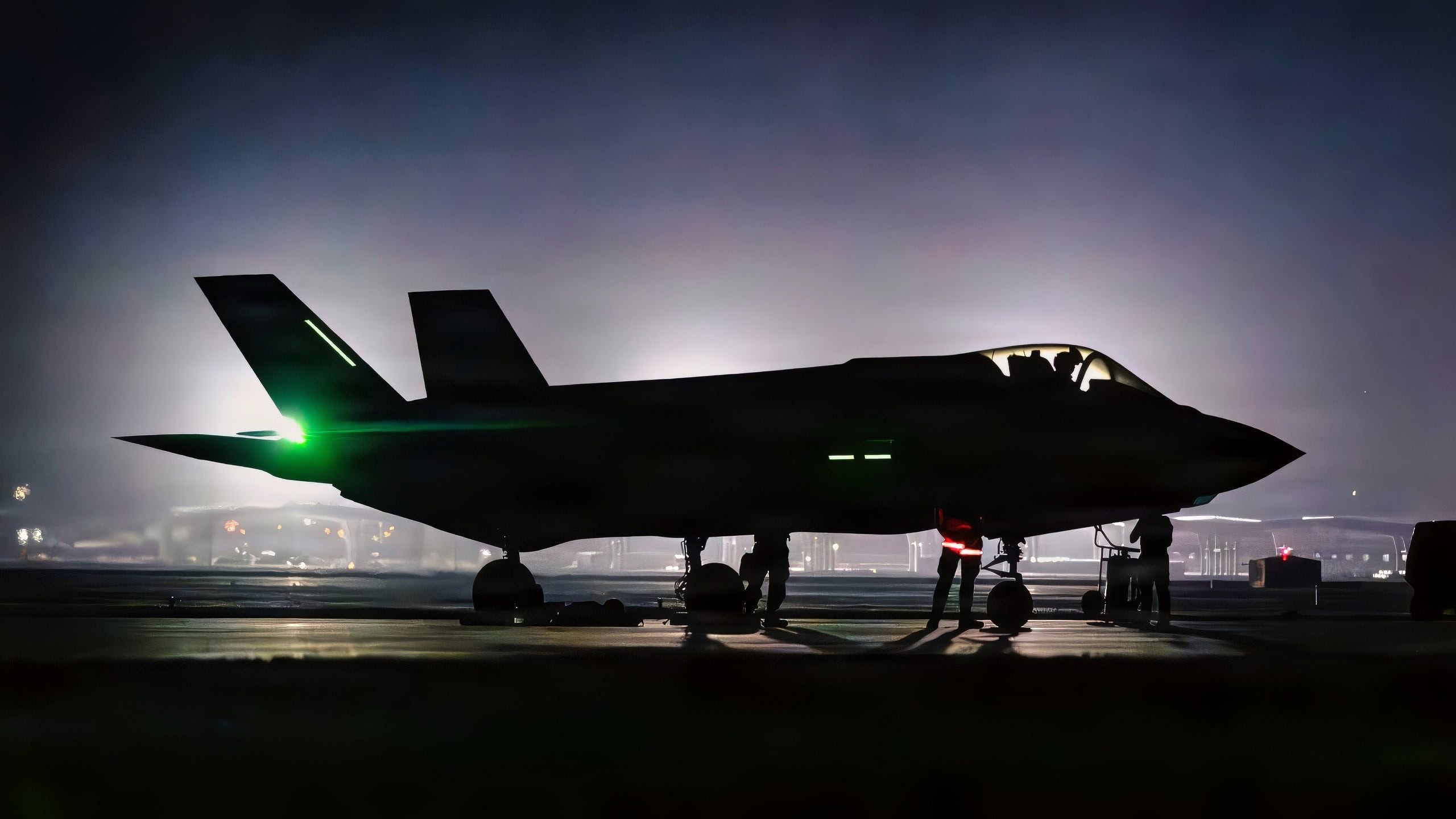
A U.S. Air Force F-35A Lightning II assigned to the 95th Fighter Squadron is parked on the flightline during exercise Noble Panther 26-4 at Tyndall Air Force Base, Florida, March 9, 2026. Airmen participated in night sorties, requiring them to perform their tasks in low-light conditions while staying watch for potential simulated attacks. These high-intensity, realistic scenarios were designed to build the confidence and muscle memory required for combat operations. (U.S. Air Force photo by Senior Airman Zeeshan Naeem)
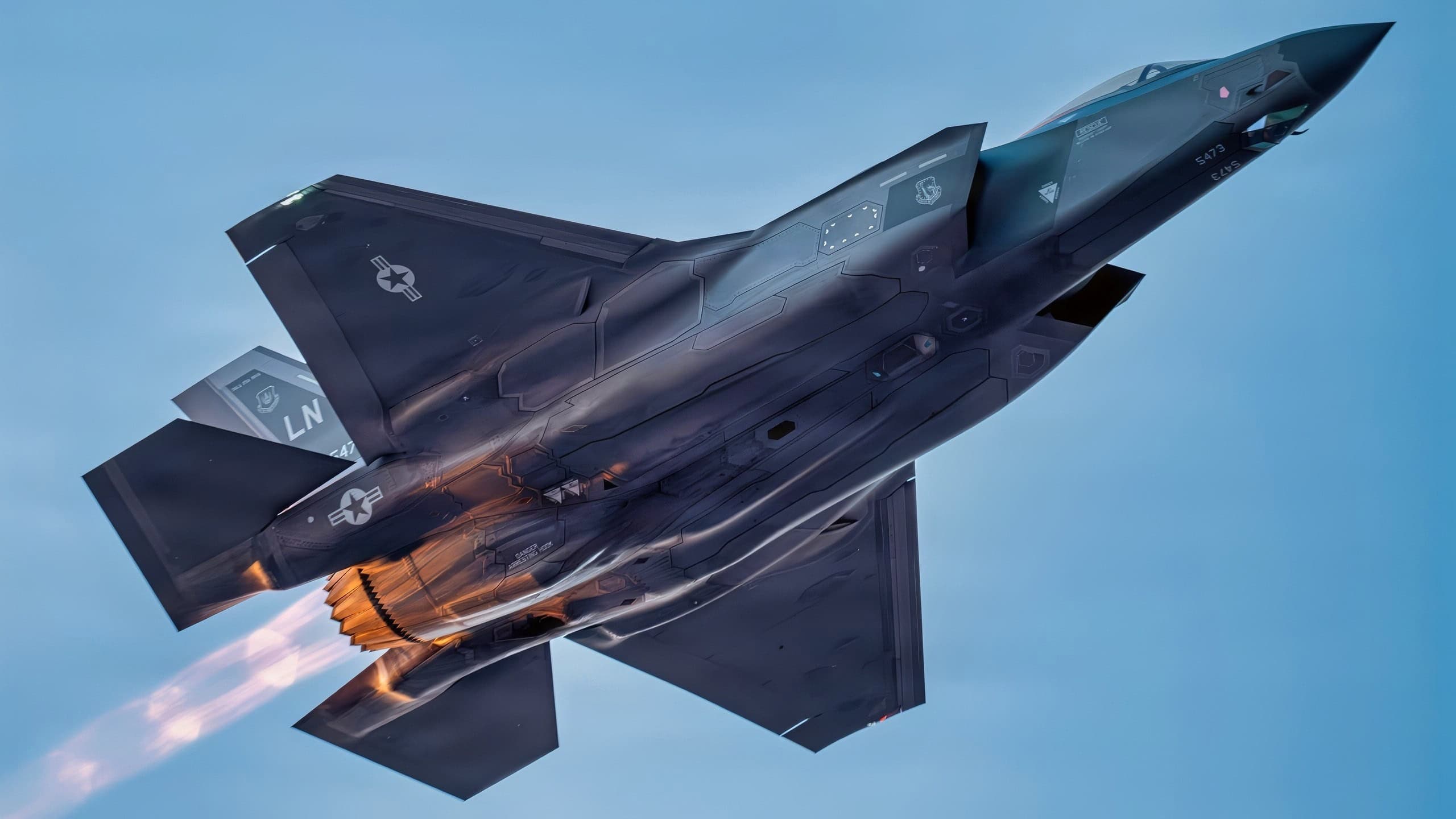
A U.S. Air Force F-35 takes flight in the Middle East in support of Operation Epic Fury, March 2, 2026. (U.S. Air Force Photo)
Precision-guided missiles and inexpensive attack drones have made these US facilities easy targets.
Iran has demonstrated that problem in the Middle East.
American installations must defend against combinations of missiles and drones in large swarms. Even the best air defenses are poorly suited to stopping all of these swarms.
So, the bases must be made to withstand being struck. What’s more, the various platforms and equipment housed in those bases–such as expensive aircraft–are vulnerable.
Building hardened aircraft shelters, dispersing aircraft across multiple airfields, and expanding missile defenses could reduce those risks.
Yet, doing so across the vast network of bases America maintains is expensive and will take time.
China Presents a Much Larger Challenge
The greater concern, if you can believe it, is the war that America has not yet waged. That’s the potential conflict with the People’s Republic of China (PRC).
Consider this: the US depends heavily on major bases in Japan, Guam, and elsewhere to sustain military operations in the Indo-Pacific.
Those installations will become easy targets at the start of any war with China. Plus, China possesses a far greater and more sophisticated missile and drone arsenal than does Iran.
Indeed, China’s People’s Liberation Army (PLA) spent the last several decades preparing conventional ballistic and cruise missiles capable of striking American facilities throughout the Western Pacific (and the bases belonging to US allies in the region).
Those weapons will hit runways, parked US aircraft, fuel depots, and other key areas of the bases that support US military operations in the region.
Beyond China, North Korea is another potential threat to American military installations in Northeast Asia.
The danger is not simply that individual American bases could be attacked. That’s bad enough. The larger concern is whether concentrated attacks could temporarily prevent the US from using critical installations during the opening stages of a conflict.
Under current conditions, they likely will–and these attacks will greatly complicate US operations around Taiwan or elsewhere in the Western Pacific, while benefiting the Chinese or North Korean attackers.
Toward A New Kind of Base?
The Wall Street Journal argues for creating a more durable US base.
Yes, more missile-defense systems are needed. But interceptors are too costly and finite in number, no matter how many you may have at your disposal.
Meanwhile, hardening bases is one way to better protect forward bases in the Indo-Pacific.
The recent US defense budget calls for expanding aircraft shelters and other key defenses for base personnel and platforms, making it harder for enemy forces to turn off those bases.
An additional method would be to disperse aircraft and supplies among numerous smaller locations to make it harder for enemy forces to destroy large numbers of these expensive, irreplaceable assets in a first strike.
None of these measures, however, would fully protect the now highly vulnerable US bases along China’s frontier.
Iran has demonstrated the consequences of leaving military infrastructure exposed.
Despite possessing a military substantially weaker than America’s, Tehran has significantly damaged US facilities and destroyed (or damaged) dozens of expensive US military aircraft.
But China’s capability to do even greater damage to US facilities near its borders is greater than whatever the Iranians have achieved.
Many in Washington acknowledge this new reality and want to make it harder for the Chinese to destroy the bulk of America’s forward-deployed power projection at those bases in an opening strike.
But no amount of hardening or dispersal will stop the kind of threat to US military power projection that China’s missile and drone swarms pose.
A better solution–a more radical one, at that–would be for the United States to simply scale back its forward presence in the Indo-Pacific and reach a new modus vivendi with the Chinese going forward.
Is it really worth the time, money, and resources to try to defend better bases that are, by definition, indefensible?
Congress should direct the US military to reduce its footprint in the First Island Chain and create a more viable defensive perimeter in the Second and Third Island Chains before we lose many planes and people in a Chinese first strike.
About the Author: Brandon J. Weichert
Brandon J. Weichert is the Senior National Security Editor at 19FortyFive.com. He also manages The Weichert Brief on Substack. Weichert also hosts “National Security Talk” on Rumble. He is the author of four bestselling national security books, the most recent of which is A Disaster of Our Own Making: How the West Lost Ukraine (Encounter Books). Follow him via Twitter/X @WeTheBrandon.