
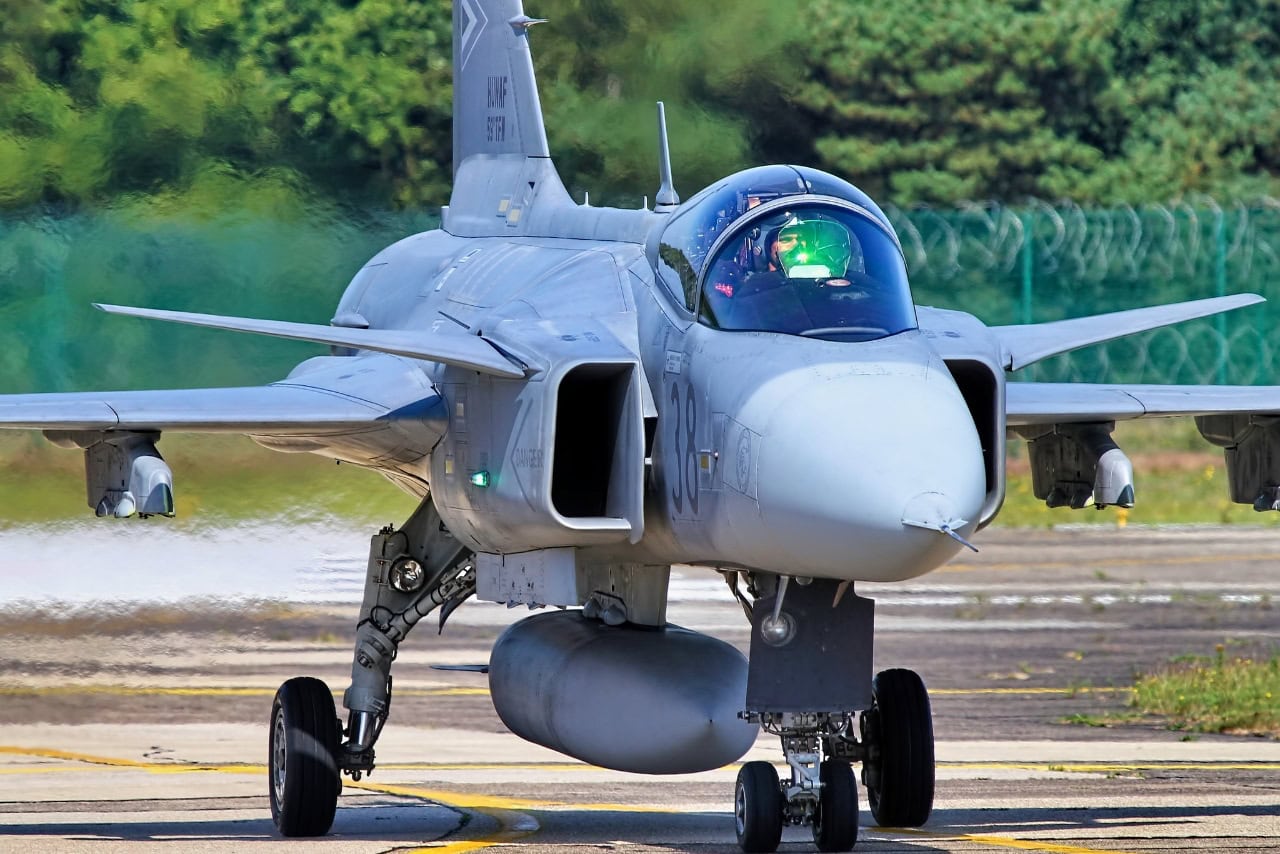
Yes, the rumored split between F-35s and Sweden’s Gripen could be real. Canada may be building a two-fighter air force without ever deciding to build one.
Ottawa’s review of its planned F-35 purchase is now closing in on a year and a half old, and somewhere in that stretch, the government spent real money on a decision that makes the unanswered question considerably harder to ignore.
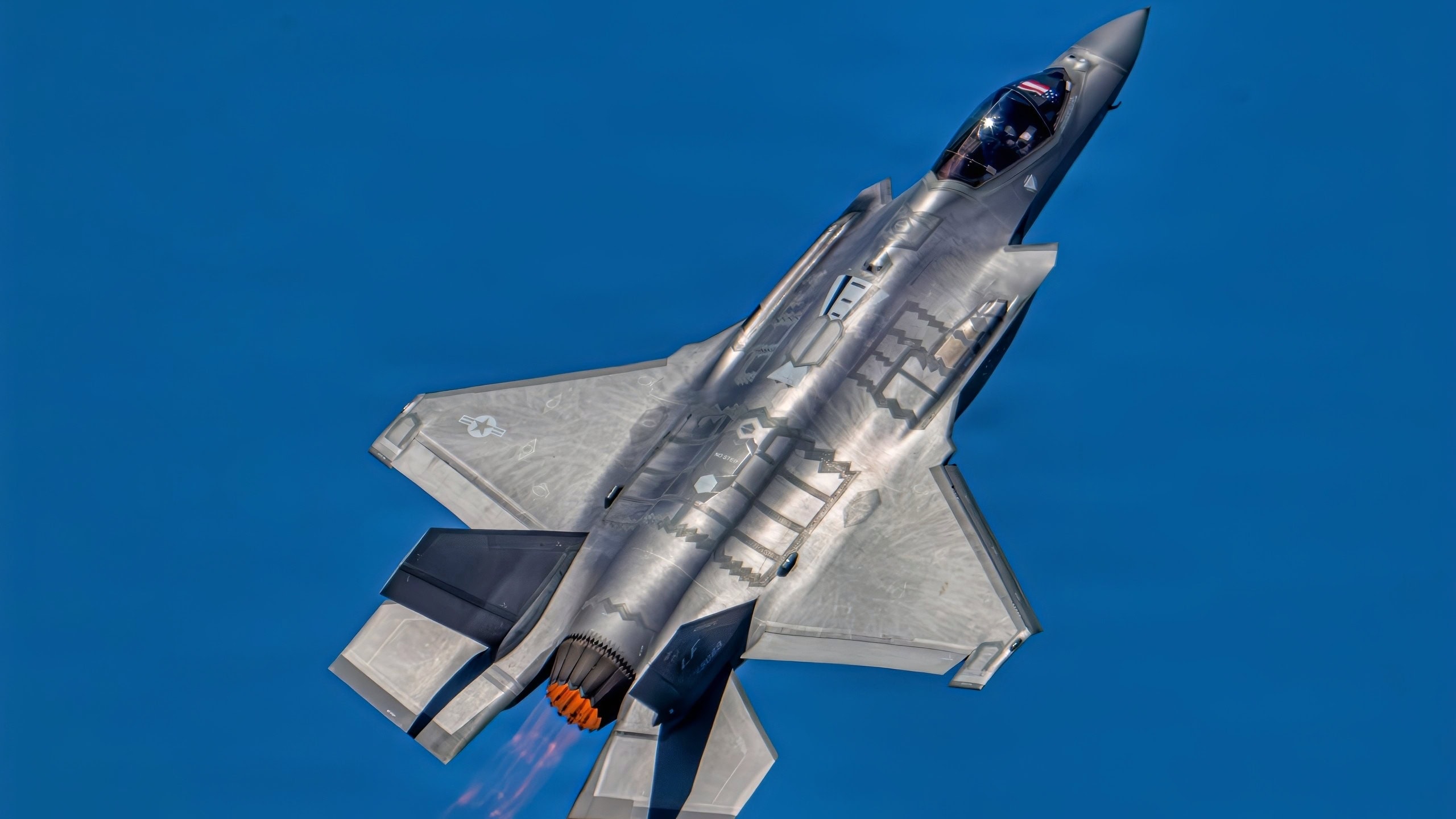
U.S. Air Force Maj. Sean “Rambo” Loughlin, pilot of the F-35A Demonstration Team, performs aerial maneuvers during a performance at Luke Days Airshow at Luke Air Force Base, Arizona, March 20, 2026. The team showcases the capabilities of the Air Force’s premier fifth-generation fighter to inspire current and future generations of Airmen. (U.S. Air Force photo by Staff Sgt. Nicholas Rupiper)
On June 30, Kongsberg announced a 4.7 billion Norwegian kroner contract to arm an undisclosed customer’s F-35s with its Joint Strike Missile.
On July 8, at the NATO summit in Ankara, Prime Minister Mark Carney confirmed Canada as that customer, in a deal he valued at roughly 800 million Canadian dollars, about 564 million American dollars.
Much of the commentary since has treated the purchase as evidence that a reported split between F-35s and Sweden’s JAS 39 Gripen is basically settled.
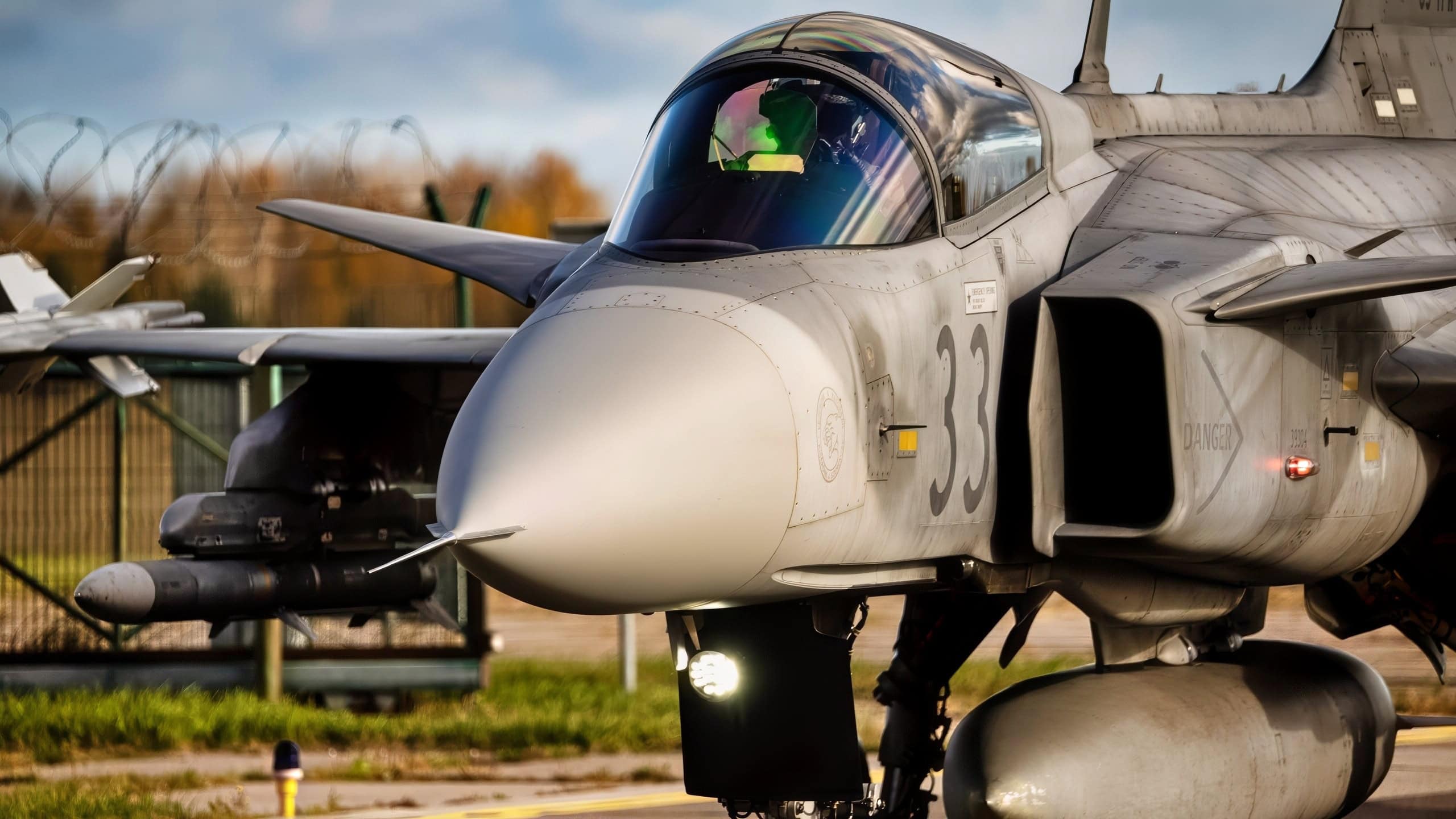
A Hungarian Air Force JAS-39 Gripen is seen taxiing across the runway after completing a successful training scramble.
Hungary took command of NATO’s Baltic Air Policing mission in August 2022, deploying JAS-39 Gripen fighter jets to Siauliai Air Base in Lithuania for the third time since 2015. Air Policing is a long-running mission that operates 24 hours a day, 365 days a year. It includes quick reaction fighter aircraft are ready to take off within minutes to intercept any aircraft that may threaten Allied airspace.
I think that gets it backward. The purchase doesn’t tell us that Canada is abandoning a two-fighter air force or committing to one.
It tells us something narrower: Ottawa is making real, expensive decisions about what its F-35s will do without ever saying, in public, how many there will be or what job they’d share with a Gripen fleet if one arrives.
A Missile Doesn’t Settle the Question It Raises
The weapon itself isn’t complicated. It launches from inside the F-35’s weapons bay, so the jet maintains its stealth signature, and it reaches out roughly 350 kilometers against ships and land targets.
Canada joins Norway, Australia, Japan, Germany, and the United States as buyers, all arming aircraft for serious strike missions, not just home-defense scrambles.
The Future Fighter Capability Project has included weapons procurement since December 2022, when Ottawa approved the F-35 program in full, years before Carney ordered the current review.
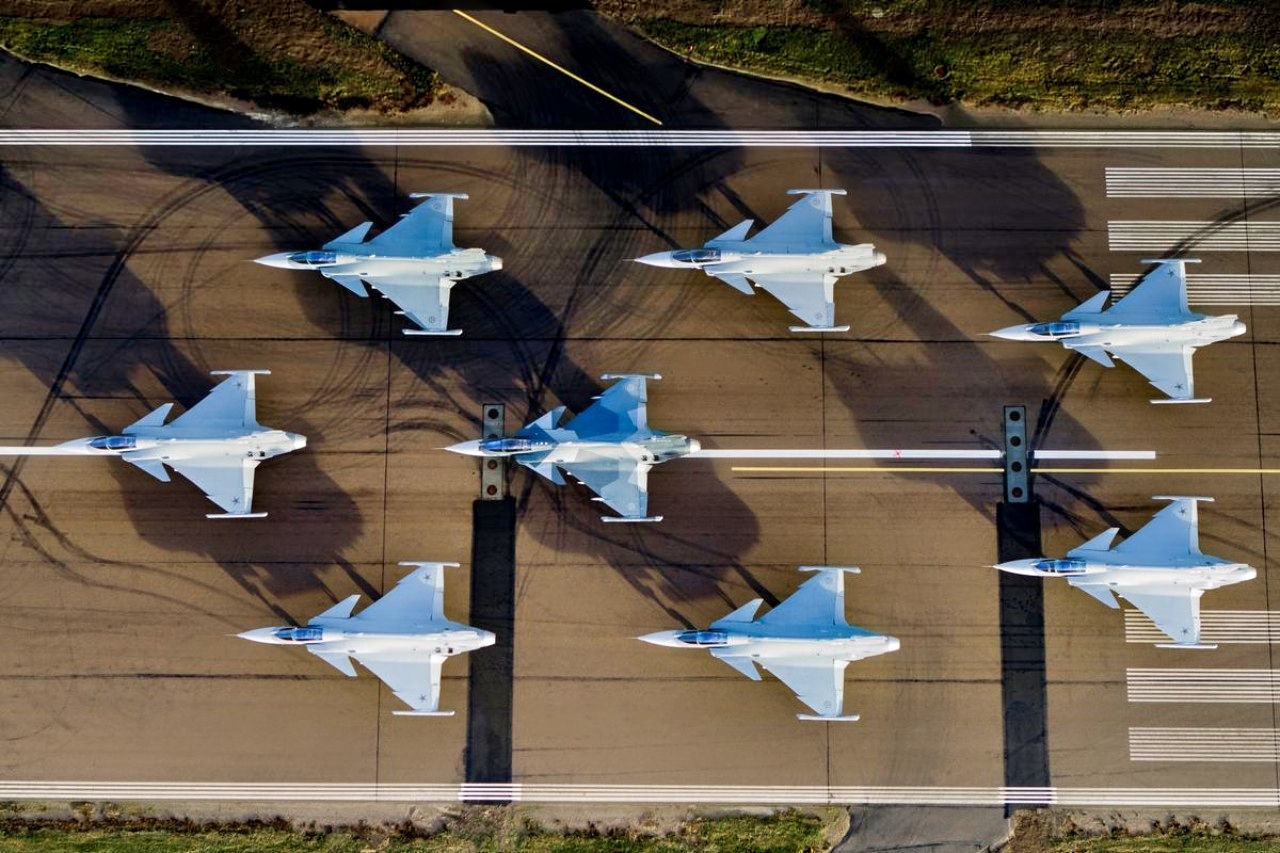
JAS 39 Gripen E. Image Credit: Creative Commons.
So the missile contract could just as easily be a program running on rails laid down earlier as a fresh signal about how the review ends. Read it as proof of anything larger, and you’re interpreting tea leaves, not procurement paperwork.
What the purchase does establish is that the F-35s Canada keeps, whatever the eventual number, are meant to do real strike work. That’s a narrower claim than most of the coverage has allowed it to be.
The Version Where None of This Is Strange
None of this rules out a mixed fleet, though, and there’s a coherent theory that makes the purchase look sensible.
Gripens fly the routine missions, sovereignty patrols, and quick-reaction scrambles, while a smaller F-35 force gets held back for missions that actually need stealth and sensor fusion.
Arm that smaller force with a serious stand-off weapon, and you’ve got a defense ministry doing exactly what it should.
Nobody in the Canadian government has said that’s the plan.
Not once, on the record.
The division of labor I just described exists because people outside government, myself included a paragraph ago, have built it to make Ottawa’s disconnected decisions look like they add up to something.
A review that spent months weighing training and maintenance costs against interoperability with U.S. forces almost certainly modeled this internally.
Modeling something and explaining it publicly are different acts, and only the second one is missing.
This isn’t the first time Canada has let a fighter decision drag on for years. The last replacement search took the better part of a decade, including a campaign pledge to rule out the F-35 that a later government simply reversed.
Why the Possibility Survives Its Own Best Argument
Canada’s own defense review, reported last August, argued strongly against splitting the order, citing the training and maintenance costs of running two fleets and the depth of integration with American forces.
The review stopped short of a formal recommendation, but the internal case it made was blunt.
Independent observers in Ottawa have expected for months that the government will keep the full order once the politics settle, and they may be right.
That’s the strongest objection to everything that follows, and nothing here resolves it outright; it only gets outweighed by politics.
The political pull toward diversification hasn’t disappeared, though.
Carney’s government has spent much of the past year and a half in a trade dispute with Washington, giving it a clear reason to appear to be weaning itself off American suppliers.
Its Defence Industrial Strategy, launched in February, names buying Canadian its explicit priority, with a target of awarding 70 percent of defence acquisitions to Canadian firms, backed by hundreds of billions in planned spending.
In May, Carney named Saab the preferred supplier for Canada’s future airborne early-warning aircraft, choosing a Swedish company over American alternatives and tying the program to Canadian production for Canada and prospective allied orders.
Nothing is signed yet, and Carney said nothing about the fighter question when he made the announcement.
But the diversification instinct just moved from talking points into an actual major aircraft decision, and nothing about that instinct stops at the fighter fleet’s edge.
A Pentagon official’s May complaints about this review were about how long it’s taking, not an endorsement of any split, and the 30 F-35, 60 Gripen figure that keeps circulating traces to a single Canadian newspaper report from May that neither government has confirmed.
What Washington Should Actually Press For
NORAD modernization, and any serious continental air and missile defense architecture, depends on Canada eventually settling what it intends to build, not just on which aircraft wins.
Ottawa has already committed 38.6 billion dollars over twenty years to modernize its side of NORAD, including new radar, infrastructure, and quick-reaction basing sized around a fighter fleet whose final shape is still unresolved.
A fleet built on purpose, whichever aircraft it ends up favoring, at least comes with a rationale attached.
What doesn’t come with one is a fleet assembled by accumulation, with nobody in government ever describing the concept behind it.
That’s the outcome that produces capability gaps nobody planned for.
If Washington wants leverage here, it should press for the explanation rather than the number.
A fight over how many F-35s Canada buys turns this into a trade dispute about whose workers get the contracts.
A demand to know what each aircraft is actually for is harder to dodge, and it’s the question Ottawa has spent seventeen months avoiding.
The Budget, Not the Headlines, Will Answer This
Ottawa’s own defense department has already made the strongest case against a split fleet, and the government has left that case without a public answer for a year.
A live political incentive to diversify, paired with an unresolved objection from inside the department, is enough on its own to explain why the option stays open.
Nobody needs to be scheming for this outcome; it can happen the way most institutional drift happens, through nobody being forced to choose.
The next real signal will come from the budget, not another headline about Gripen or another line from McGuinty.
If money keeps moving into JSM integration and F-35 infrastructure while real money also starts moving toward Gripen production, Ottawa will have built its two-tier air force by budget line rather than by decision.
Someone will eventually have to say whether that was the plan all along or just the shape avoidance left behind.
If one of those funding tracks goes quiet while officials keep calling the review ongoing, the fleet will have answered the question that the government wouldn’t.
About the Author: Dr. Andrew Latham
Andrew Latham is a professor of international relations and political theory at Macalester College in Saint Paul, MN. You can follow him on X: @aakatham.