
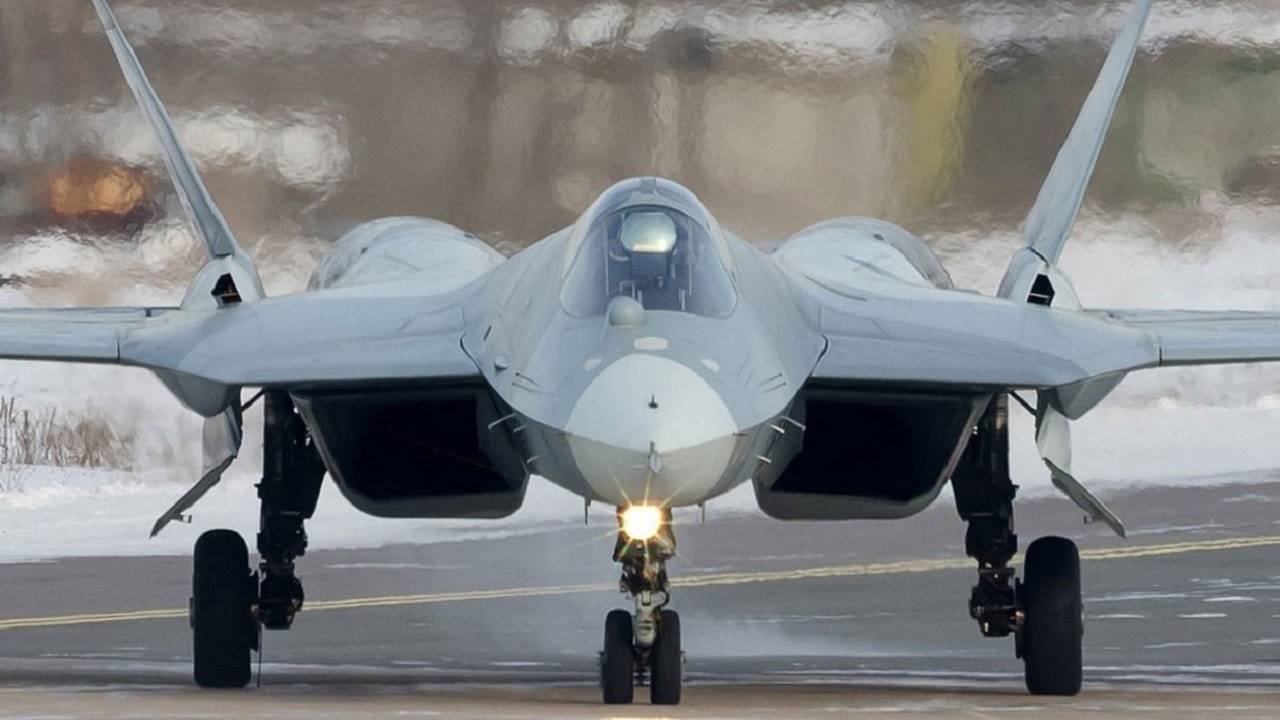
A Su-57 Felon Stealth Fighter Landed in Iran. Tehran Still Has No Confirmed Deal – A Russian Su-57 Felon stealth fighter landed at Iran’s 9th Tactical Air Force Base in Bandar Abbas in February 2025. That much is established. Satellite imagery showed the aircraft on the ramp on February 19 and February 21, marking the first documented visit by Russia’s most advanced fighter to Iran.
The aircraft was not an Iranian Su-57, nor was it a production jet prepared for delivery. It was T-50-4, a prototype marked “054 Blue,” returning to Russia after appearing at Aero India 2025. The fighter stopped in Bandar Abbas with an Il-76 support aircraft, apparently for fuel and logistical support.
Reports claimed the Su-57 suffered engine trouble and returned to the base after attempting to depart. Those accounts were not confirmed by Russia or Iran. The imagery proves only that the aircraft remained at Bandar Abbas longer than a brief fuel stop might require.
The visit has since been used as evidence that Tehran is negotiating to buy the Su-57. No Iranian official has announced such an order. No quantity, contract price, training program, weapons package, production schedule, or delivery date has entered the public record.
The 2025 Landing Was a Stopover, Not a Delivery
The aircraft’s itinerary points toward transit rather than a sales demonstration.
Russia had sent “054 Blue” to India to promote the Su-57 and offer local production to New Delhi.
Reuters reported that Moscow offered India technology transfer and domestic assembly using its existing Su-30 production infrastructure.
No comparable offer was announced in Iran. There was no public ceremony, Iranian inspection flight, or statement from Rosoboronexport identifying Tehran as a prospective customer.
The stop nonetheless gained attention because Iran urgently needs newer fighters after decades of sanctions and combat losses.
Iran Has a Strong Reason to Want a Stealth Fighter
Why Iran would want a fleet of Su-57 Felon stealth fighters is clear: Iran’s combat fleet still depends on F-4 Phantoms, F-5 Tigers, MiG-29s, Su-24s, and surviving F-14 Tomcats. Israeli F-35I Adirs operated over Iran during the 2025 and 2026 wars, while American stealth bombers struck heavily defended targets. The campaigns exposed the gap between Iran’s aging fighters and modern Israeli air power.
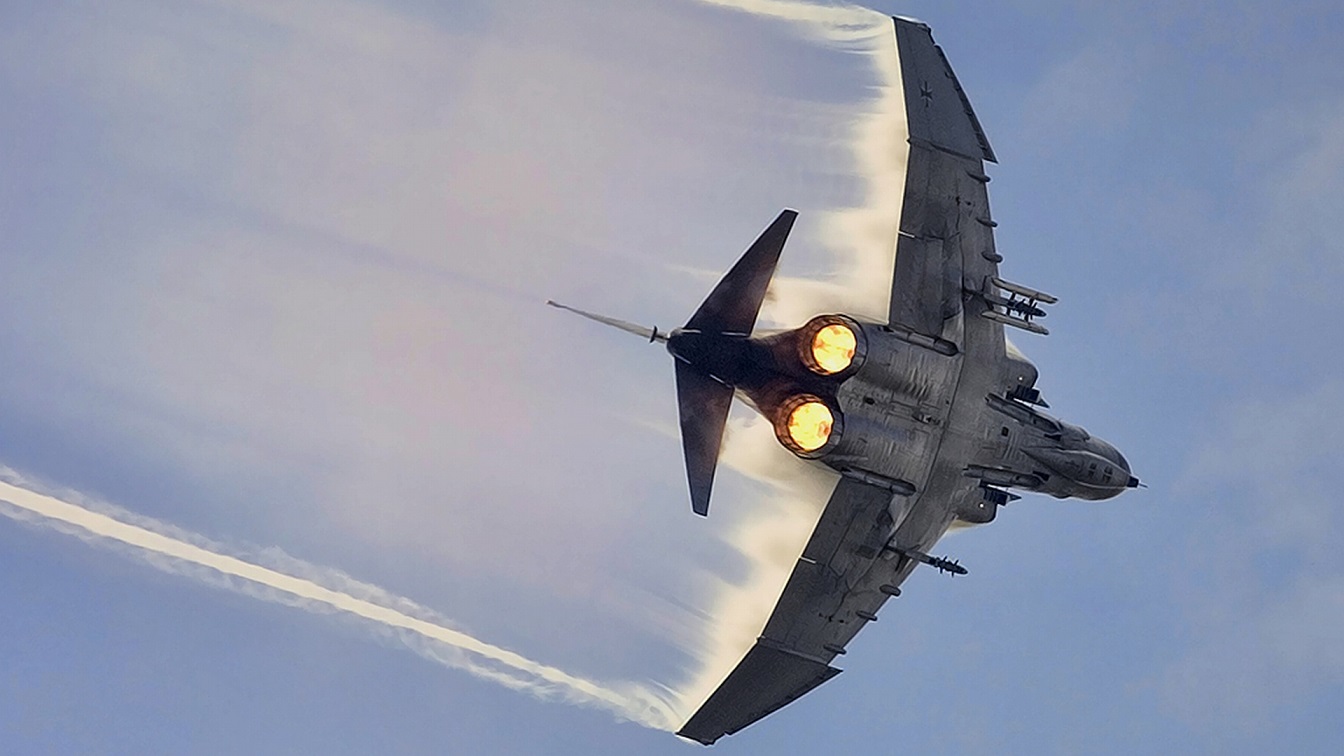
F-4 Phantom II. Image Credit: Creative Commons.
The Su-57 would provide lower observability, internal weapon carriage, advanced radar, infrared search and track, electronic warfare and long-range air-to-air missiles. Russia describes it as a multirole aircraft able to attack air, ground and maritime targets.
That would be a major improvement for Iran. It would not create an Israeli-style fifth-generation force by itself. Iran would still need trained pilots, secure data links, modern airborne warning aircraft, tankers, maintenance facilities, weapons stocks and enough aircraft to sustain daily operations. Earlier analysis of the Su-57’s stealth and production limitations also cautioned against treating the Felon as a direct substitute for the F-35.
Iran’s Real Russian Fighter Deal Is the Su-35
Iran has publicly confirmed a different purchase. In January 2025, a senior Revolutionary Guards commander said Tehran had bought Russian Su-35 fighters. He did not disclose the quantity or whether deliveries had begun.
The Su-35 fits Iran’s immediate needs more easily. It is a mature non-stealth fighter with powerful radar, long range and compatibility with Russian weapons. Iran had already received Yak-130 trainers, while officials said arrangements covering Su-35s and Mi-28 helicopters had been completed in 2023.
This procurement trail existed years before the Su-57 landing. A 2021 assessment of a possible Iranian Su-35 purchase shows how long Tehran has considered the Flanker family. The Su-35 deal has progressed slowly enough that Iran has not yet released a verified operational inventory.
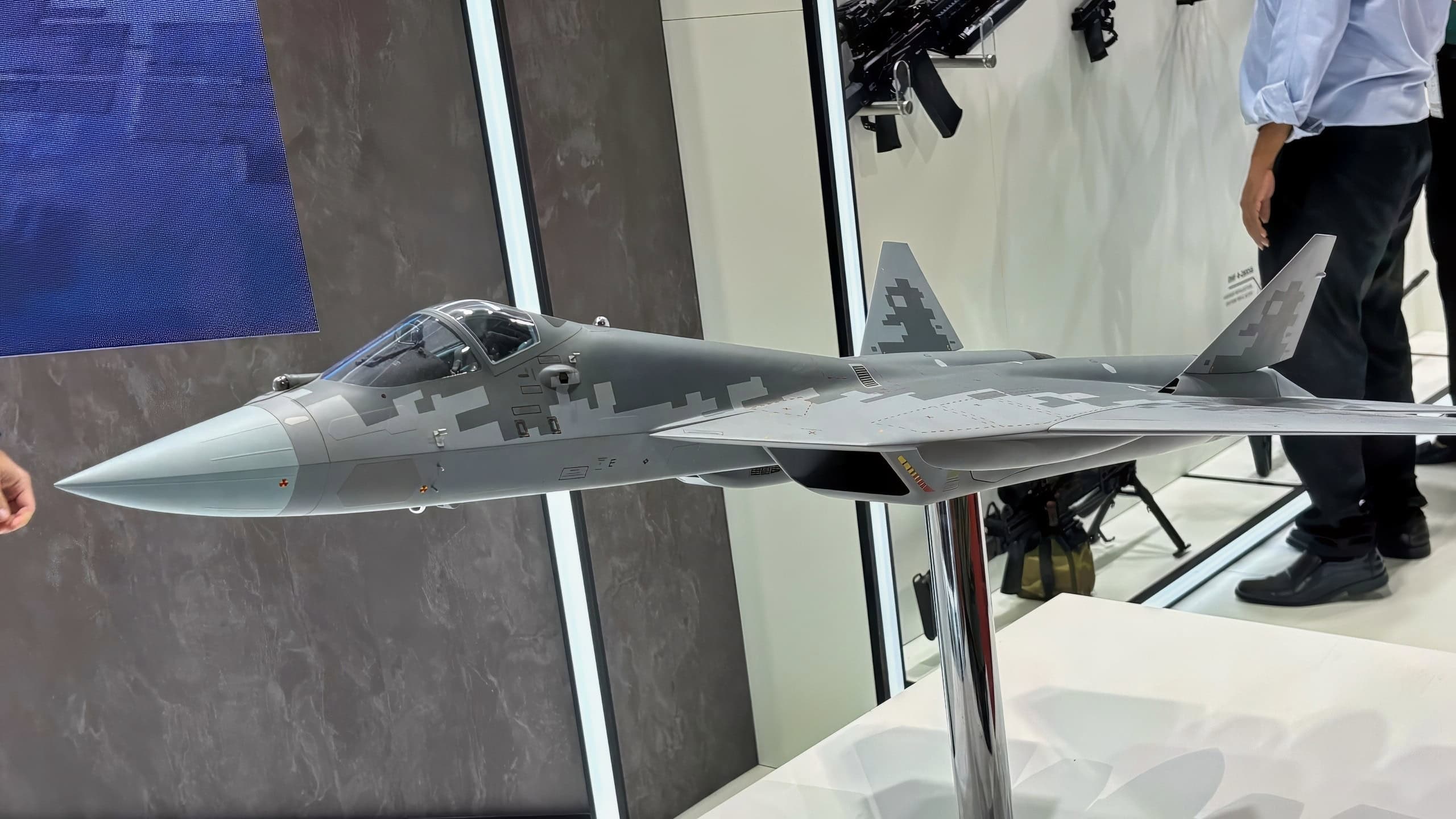
Su-57 Model 19FortyFive Original Photo
Russia Has Not Named Iran as a Su-57 Customer
Russia announced its first Su-57 export contract in November 2024 without naming the buyer. Algeria publicly emerged as the first customer in February 2025, with pilots training in Russia and deliveries planned afterward.
In February 2026, Russian Industry and Trade Minister Anton Alikhanov said Middle Eastern countries had shown substantial interest in the Su-57E. He added that some contracts had been signed, but refused to identify the customers or disclose quantities.
The statement reopened speculation about Iran. It did not confirm an Iranian sale. The Middle East also contains other governments that operate Russian aircraft or have discussed buying them. Until Moscow names a customer, assigning the contract to Tehran is an inference.
Purported Rostec documents leaked in 2025 pointed in the opposite direction. The unverified material associated Iran with a possible 48-aircraft Su-35 program while linking Su-57 equipment to Algeria. The documents cannot be treated as confirmed contracts, but they supplied no support for an Iranian Su-57 order.
A Su-57 Purchase Would Require More Than Aircraft
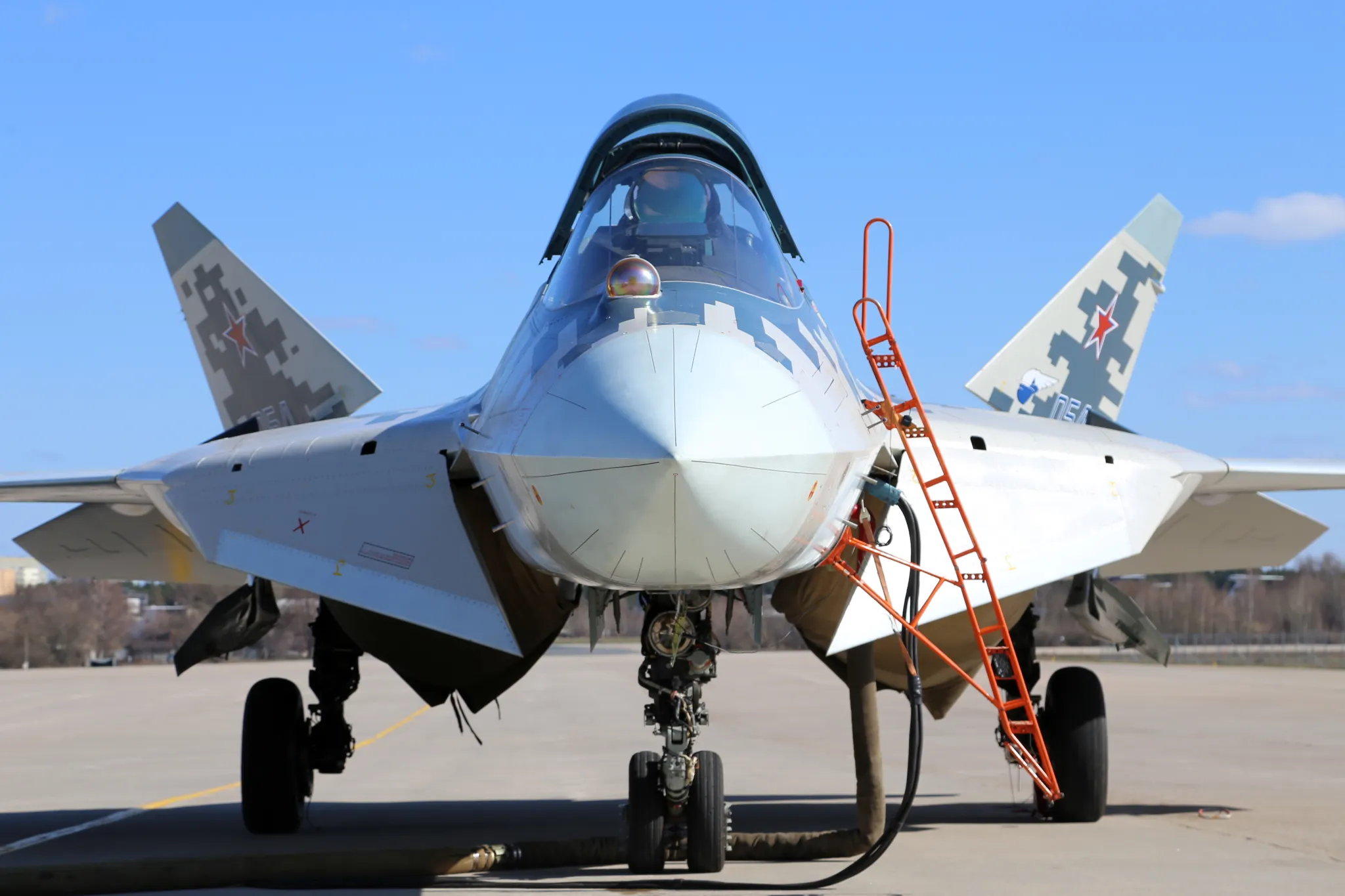
Russia’s Su-57 Stealth Fighter. Image Credit: Creative Commons.
Iran would need Russian instructors, simulators, ground-support equipment, spare engines, radar maintenance facilities, and stocks of modern missiles. Hardened shelters and dispersal sites damaged during recent air campaigns would also require repair or replacement.
Russia faces its own production demands. The Su-57 entered serial production only after years of delay, while Moscow must equip its air force and fulfill its first export obligations. Earlier reporting on Russia’s slow Su-57 production buildup helps explain why immediate delivery of a meaningful Iranian fleet was always unlikely.
Even a small order would attract sanctions and require a long-term support relationship with Russia. Iran’s experience keeping American aircraft alive without factory assistance shows what happens when a supply chain disappears.
So, for now, while it might make sense in many respects for Iran to dream of Su-57 Felons stealth fighters to take on US Air Force F-22s and F-35 stealth warplanes, it might never happen.
About the Author: Harry J. Kazianis
Harry J. Kazianis (@Grecianformula) was the former Senior Director of National Security Affairs at the Center for the National Interest (CFTNI), a foreign policy think tank founded by Richard Nixon based in Washington, DC. Harry has over a decade of experience in think tanks and national security publishing. His ideas have been published in the NY Times, The Washington Post, The Wall Street Journal, CNN, and many other outlets worldwide. He has held positions at CSIS, the Heritage Foundation, the University of Nottingham, and several other institutions related to national security research and studies. He is the former Executive Editor of the National Interest and the Diplomat. He holds a Master’s degree focusing on international affairs from Harvard University.

