
The Pentagon has reportedly surveyed its own members for ideas about how to pursue the Iran war, as repeated Central Intelligence Agency leaks convince the Iranian regime they can outlast the United States.
If leaks about weaponry shortages are true, the United States faces real obstacles.
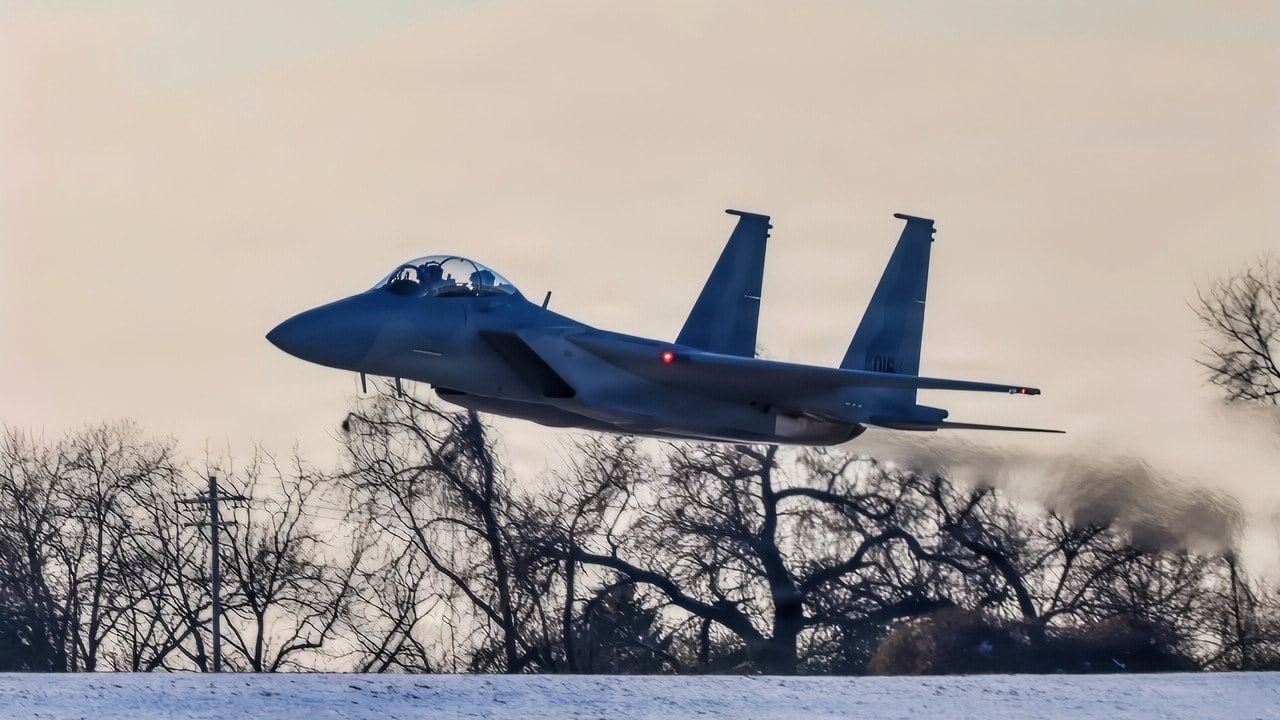
An F-15EX departs for Portland Air National Guard Base. The U.S. Air Force, in partnership with Boeing and the Defense Contract Management Agency, has resumed F-15EX Eagle II deliveries to the Portland Air National Guard Base, overcoming recent production delays. (Courtesy photo)
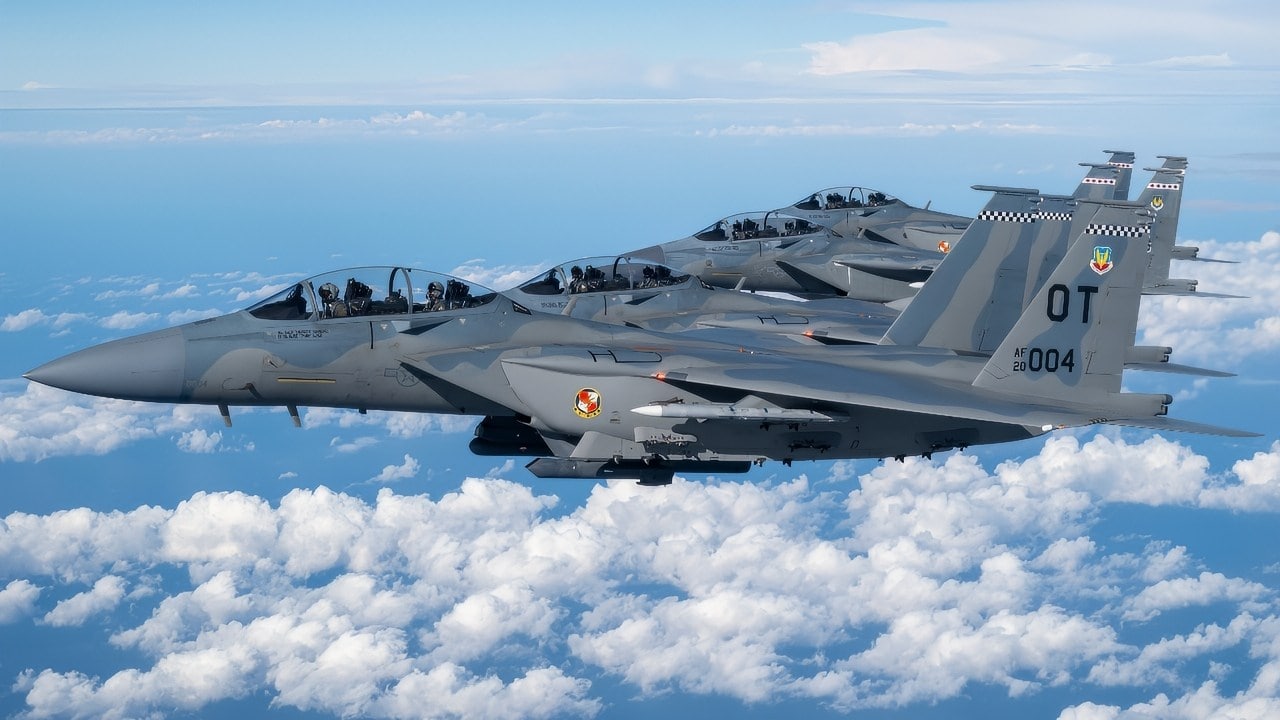
A formation of four U.S. Air Force F-15EX Eagle II fighter jets, assigned to Eglin Air Force Base, Florida, fly over the Gulf of America, Nov. 21, 2025. Secretary of the Air Force Troy Meink flew in the backseat of the lead jet as part of his visit to Eglin AFB. The flight oriented Meink to F-15EX tactics, techniques and procedures being developed and advanced by the 53d Wing to include weapons capacity, next-gen survivability, and next-generation radars, sensors and networking capabilities. (U.S. Air Force photo by Staff Sgt. Blake Wiles)

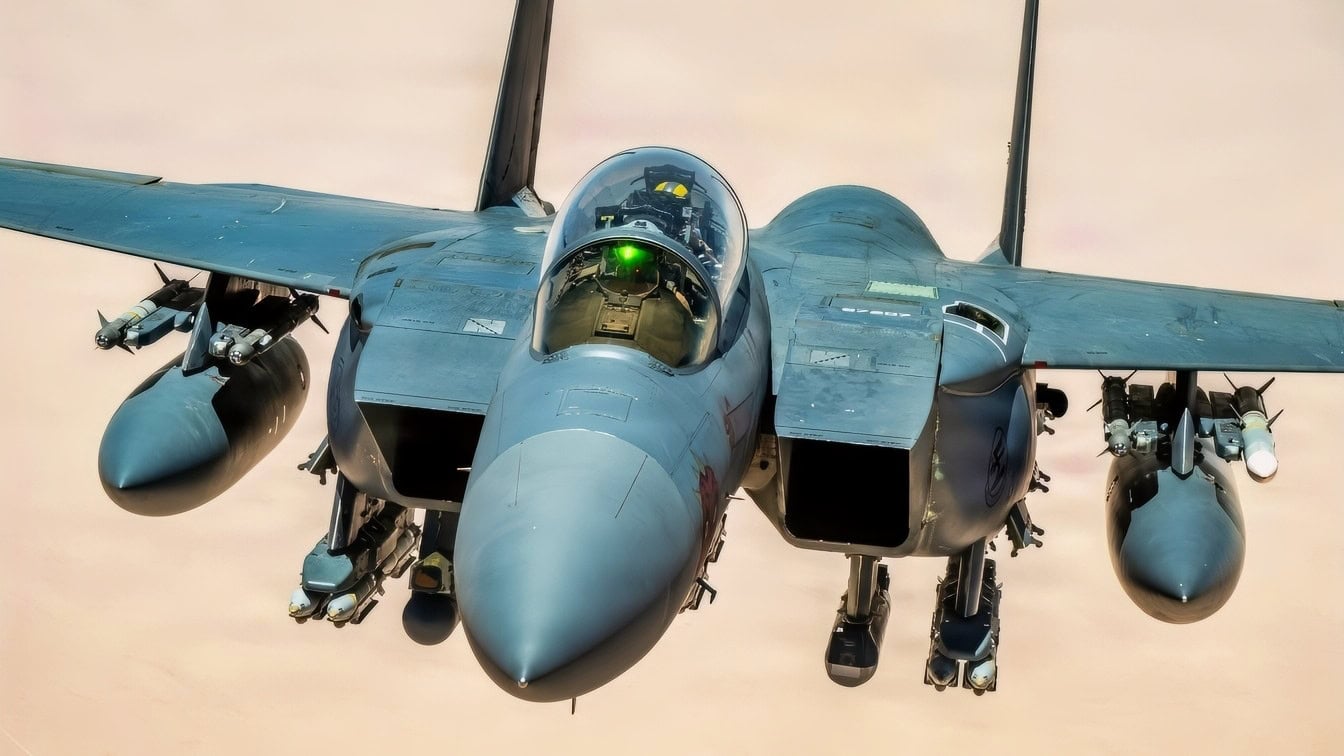
A U.S. Air Force F-15E Strike Eagle performs a flare check over the U.S. Central Command area of responsibility, March 9, 2025. The F-15E is deployed within the CENTCOM AOR to help defend U.S. interests, promote regional security, and deter aggression in the region. (U.S. Air Force photo by Senior Airman Zachary Willis)
The past can be precedent, though. President Donald Trump, however, has a path forward, one hewn during his first term: If the Islamic Republic wants to play the long game, Trump should pursue a policy of targeted assassination to repeatedly decapitate the Iranian regime.
The Iranian president, flag officers, and intelligence chief should rise to their positions knowing they will have a lifespan of weeks, if not days.
The core of the model should be the removal of Iranian Qods Force Chief Qassem Soleimani. Soleimani believed himself untouchable but, on January 3, 2020, Iranians woke up to the news that an MQ-9 Reaper firing Hellfire missiles had taken out Qassem Soleimani on the airport road in Baghdad. The regime blustered but ultimately could do nothing.
Trump’s strike on Soleimani was as audacious as the operation to kill Al Qaeda leader Osama bin Laden in Pakistan nine years previously, not because of the complexity of the attack but because no one believed the United States had it in them to take out a sitting general responsible both for the growth of Iranian militias abroad and the murder and maiming of hundreds of American servicemen.
The usual quarters criticized Trump, citing faux legality issues such as imminence.
This was nonsense, as they sought to impose a ridiculously narrow definition of imminence that would obviate the right to self-defense.
The critics’ cynicism was on display as the same analysts celebrated Bin Laden’s killing irrespective of any ongoing Al Qaeda plot.
Soleimani’s killing left the Islamic Republic reeling.
Not only did Soleimani leave behind a capability void not easily replaced, but his death pierced the propaganda and showed the supreme leader and the cult of resistance he promoted to be hollow.
After the state-mandated mourning ended, Iranians mocked Soleimani.
The true triumph of Operation Epic Fury was the decapitation of the regime in the first hours of the campaign. U.S. or Israeli intelligence had reportedly tracked key regime leaders using traffic cameras.
In the days that followed, many of Iran’s top military and intelligence leaders perished.
While some Trump critics argue that the death of the supreme leader allowed a more hardline leadership to emerge, this confuses polish with policy.
Under Ali Khamenei’s leadership, the regime cultivated Soleimani and his proxies and invested billions of dollars into Iran’s nuclear and precision missile programs. That is not moderation.
If Khamenei was cautious and presidents like Mohammad Khatami, Hassan Rouhani, and Masoud Peseshkian feigned moderation, they did so in the service of a regime whose true aims they recognized.
While the regime’s polish may be gone, the targets remain clear. Trump should target every Islamic Revolutionary Guard Corps commander, from Ahmad Vahidi on down.
There should be no quarter given to Revolutionary Guardsman and Parliamentary Speaker Mohammad Bagher-Ghalibaf, who at best could not deliver and at worst never intended to.
While many Western pundits argue that assassination is illegal, they misstate the law, its conditions, and its workarounds.
Targeted assassinations are effective for multiple reasons.
First, they create a vacuum. Just as Quds Force successor Esmail Qaani was a shadow of Soleimani with just a fraction of his institutional knowledge, so too does eliminating Vahidi or any other leader with decades of service.
When regime heavyweights die, so do their informal networks, which take decades to build through personal relationships.
Paranoia also amplifies the effectiveness of assassinations.
When a key leader dies, the question regime security asks is how the United States gathered the intelligence to succeed.
Suspicion falls on aides and associates, leading to their isolation. This, in turn, erodes regime effectiveness.
Finally, targeted assassinations can also feed a quest for revenge that plays into U.S. hands.
If Iranian terror is a given, then it is better if officials with less experience plan Iranian operations and rush them before they can refine and perfect them. Indeed, this was a lesson to Israel’s targeted assassination campaign against Palestinian terrorists a quarter century ago that ultimately brought two decades of relative quiet.
Iran and the Islamic Revolutionary Guard Corps are not synonymous, nor can a body that shoots protestors in the streets or hangs champion athletes and artists wrap itself in a nationalist flag.
Guardsmen are limited resources, and victory will require killing them wherever they might cower.
MORE – The US Army’s M10 Light Tank Is Too Heavy and Had to Be Canceled
About the Author: Dr. Michael Rubin
Michael Rubin is director of policy analysis at the Middle East Forum and a distinguished fellow at India’s Usanas Foundation. A former Pentagon official, Dr. Rubin was a senior fellow at the American Enterprise Institute for more than two decades. He has lived in post-revolution Iran, Yemen, and both pre- and postwar Iraq. Opinions expressed here are the author’s own.