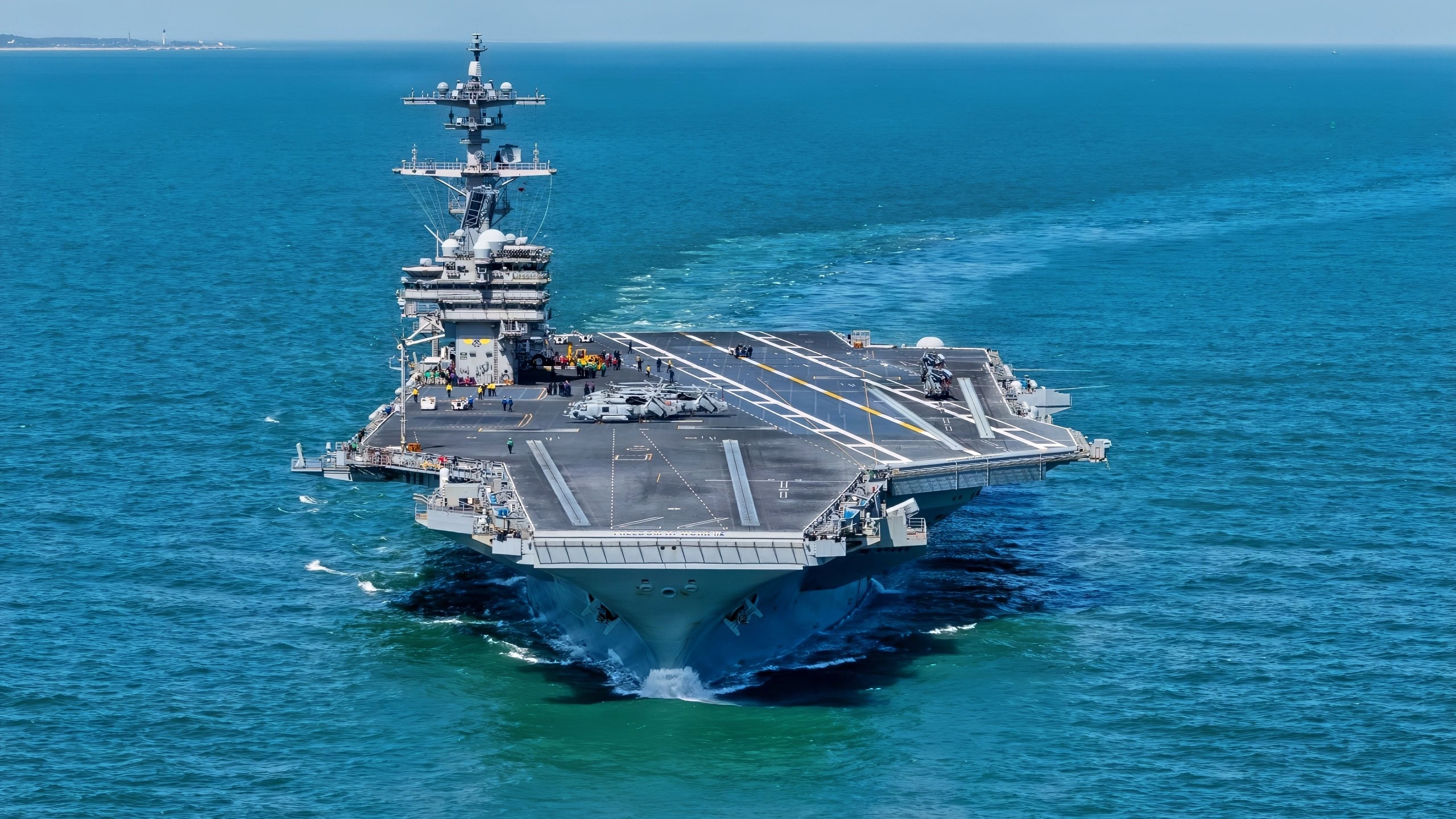
China’s growing economy has also created a modern, growing military. And US war planners must focus not only on a large army or an expanding air force. It is the growing Chinese People’s Liberation Army Navy (PLAN).
China’s Submarine Force Is a Growing Threat
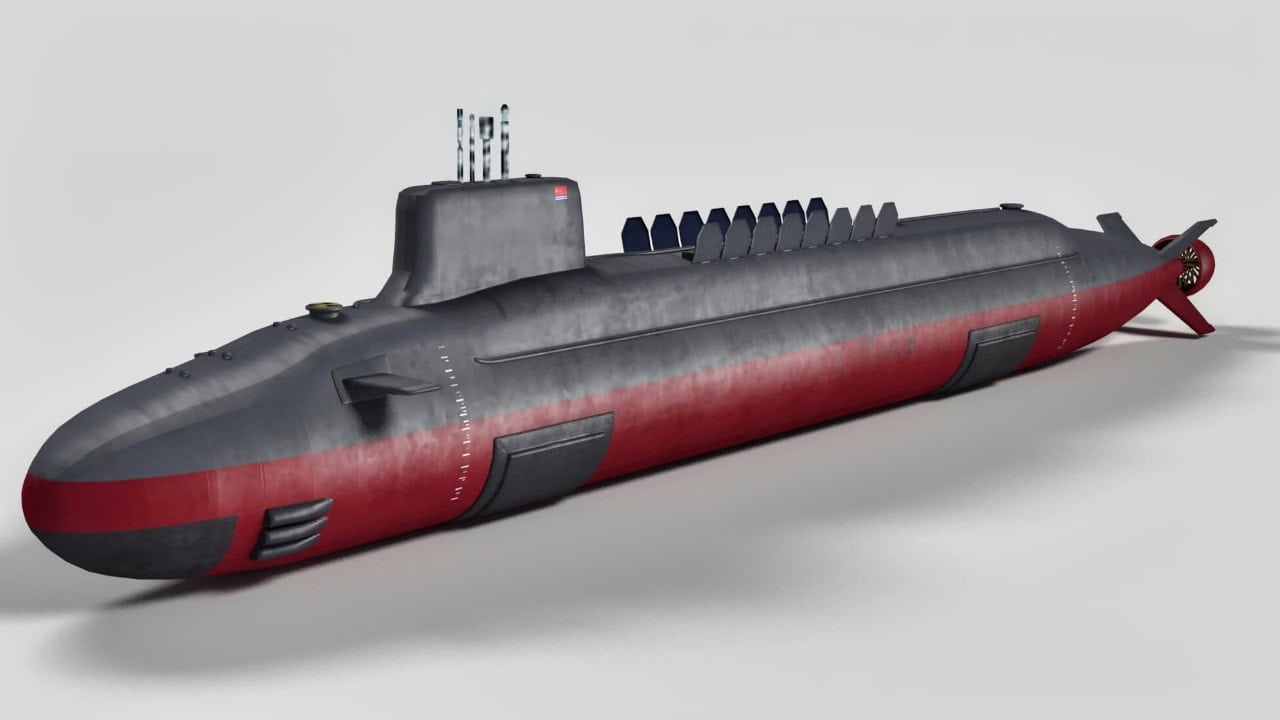
Type 096 Submarine from China. Image Credit: Creative Commons.
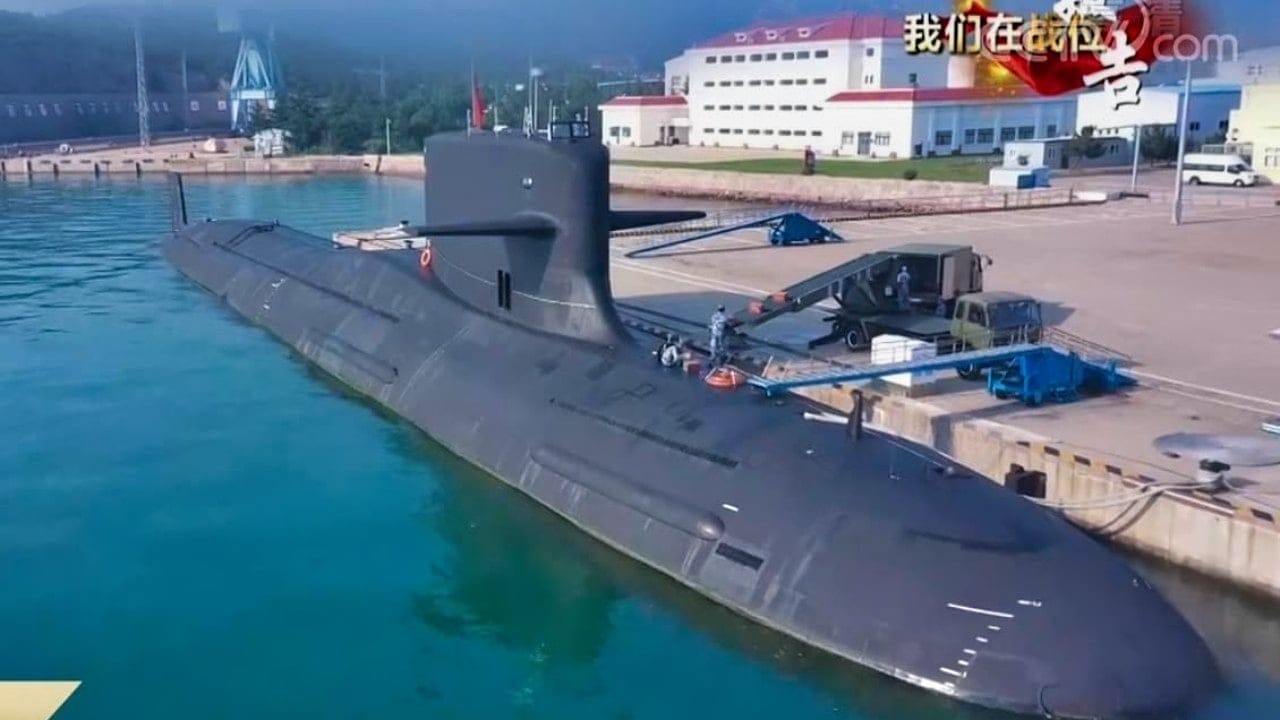
Type 093B Submarine from China. Image Credit: Screengrab.
Specifically, the growing capabilities of the PLAN’s submarine force. One incident highlights how the growth of China’s submarine threat is not recent. It dates back to 2006.
On October 26, 2006, a Chinese diesel-electric Song-class attack submarine surfaced unexpectedly near the United States Navy’s aircraft carrier, the USS Kitty Hawk, as it operated near Okinawa, Japan.
The Chinese submarine in question was operating within five miles of the USS Kitty Hawk. A US aircraft spotted the submarine after it surfaced.
Both forces were operating in international waters, and the Chinese submarine and the American ships did not communicate.
But that incident garnered much attention at the time, as the US Navy ships did not know the older Chinese submarine was within range of the USS Kitty Hawk.
Had the United States and China been at war, the Kitty Hawk would have been hit before the Navy even knew the Chinese diesel-electric submarine was there.
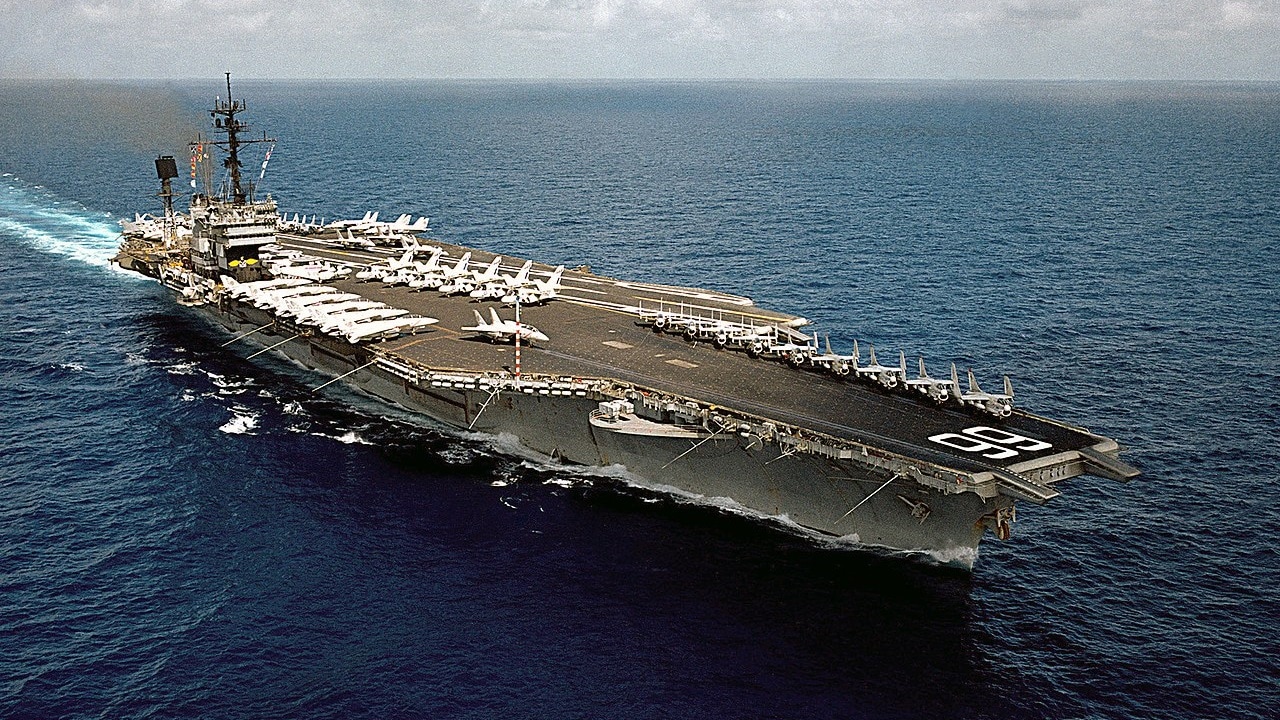
An aerial starboard bow view of the aircraft carrier USS AMERICA (CV-66) underway.
The threat Chinese submarines pose to US aircraft carriers has only grown.
Of course, the Navy insists that its newer carriers are better defended than the older Kitty Hawk was back in 2006. Indeed, the Kitty Hawk has since been decommissioned.
Carriers Are Increasingly Obsolete
Still, the fundamentals of US carriers remain the same as they have been for decades. That’s why some dissident naval analysts argue that the carrier itself has become an increasingly obsolete system in the age of drones, missile swarms, and advanced submarines.
Another defense the US Navy offered at the time of the 2006 incident was that the carrier and its attendant battle group were not conducting anti-submarine warfare operations.
If they had been, experts argue that the ships would have spotted the Chinese submarine long before it got within firing range.
Yet, that explanation strains credulity.
After all, if the carrier and its defensive ships are not conducting anti-submarine warfare in a real-world combat scenario, then they would be as vulnerable to an enemy submarine attack as the Kitty Hawk was back in 2006.
On a slightly related note, the Navy is increasingly facing an anti-submarine warfare gap, as the Littoral Combat Ships (LCS) have never achieved operational anti-submarine capabilities and the Constellation-class frigate has been scrapped.
The Navy has other anti-submarine systems, but they are aging, and there is no dedicated anti-submarine warfare ship.
Instead, naval forces must rely on multi-role systems, which might be tasked with other functions in combat (and therefore could miss a single enemy submarine prowling dangerously close to a carrier).
Old Subs Are a Huge Threat to US Carriers, Apparently
What’s more, diesel-electric submarines have long presented the US Navy with difficulty when it comes to detection.
When operating submerged at low speed, these subs produce little acoustic disturbance. The Song-class represented a major step beyond older Chinese submarines that had dominated the PLAN submarine force during the Cold War.
It was designed specifically for operations in waters nearer to China and carried both torpedoes and anti-ship weapons.
That incident warned of a shifting undersea balance in the Pacific.
During the 1990s and early 2000s, China invested heavily in both domestically produced submarines and Russian-built Kilo-class boats.
The PLAN later introduced the much more advanced Yuan-class, which expanded China’s conventional sub capabilities.
Not Ready For War
A Chinese attack submarine got much too close to one of America’s most important naval assets.
That was 20 years ago.
The threat to American carriers from increasingly advanced Chinese submarines has only increased — and the problem is that, while US carriers have advanced since 2006, they have not done so sufficiently to mitigate the grave risks to those ships.
And if a war between the US and China erupted, Chinese forces would target US carriers among the first assets.
About the Author: Brandon J. Weichert
Brandon J. Weichert is the Senior National Security Editor at 19FortyFive.com. He also manages The Weichert Brief on Substack. Weichert also hosts “National Security Talk” on Rumble. He is the author of four bestselling national security books, the most recent of which is A Disaster of Our Own Making: How the West Lost Ukraine (Encounter Books). Follow him via Twitter/X @WeTheBrandon.