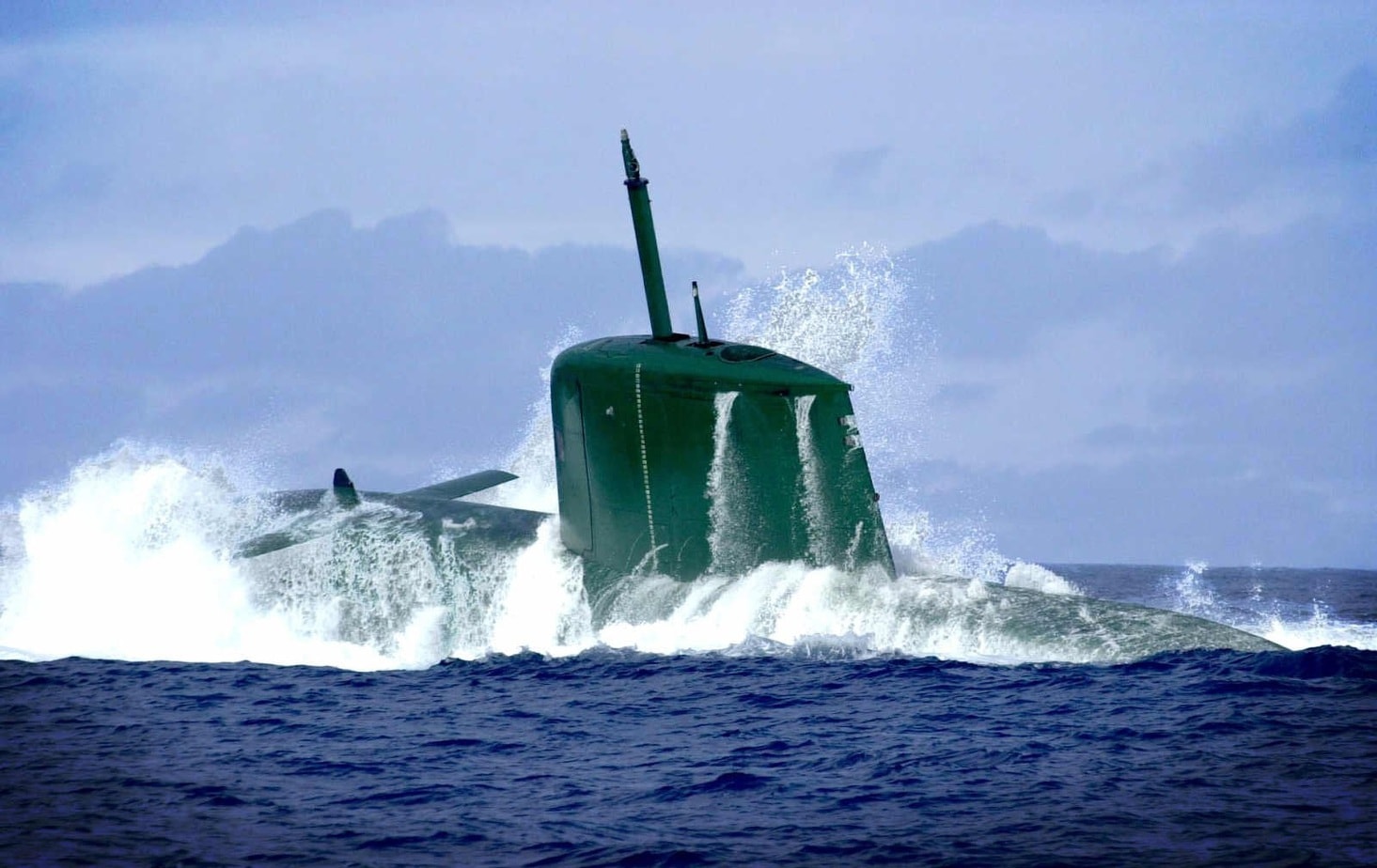
The INS Drakon, one of the newest submarines in the Israeli Navy, is also one of the most mysterious. Originally slated to be the last boat of the Dolphin II-class, which was an Israeli adaptation of a German design, built by what is now ThyssenKrupp Marine Systems, or TKMS, in Kiel.
The original Dolphin subs, commissioned beginning in 1999, were unusual to begin with.
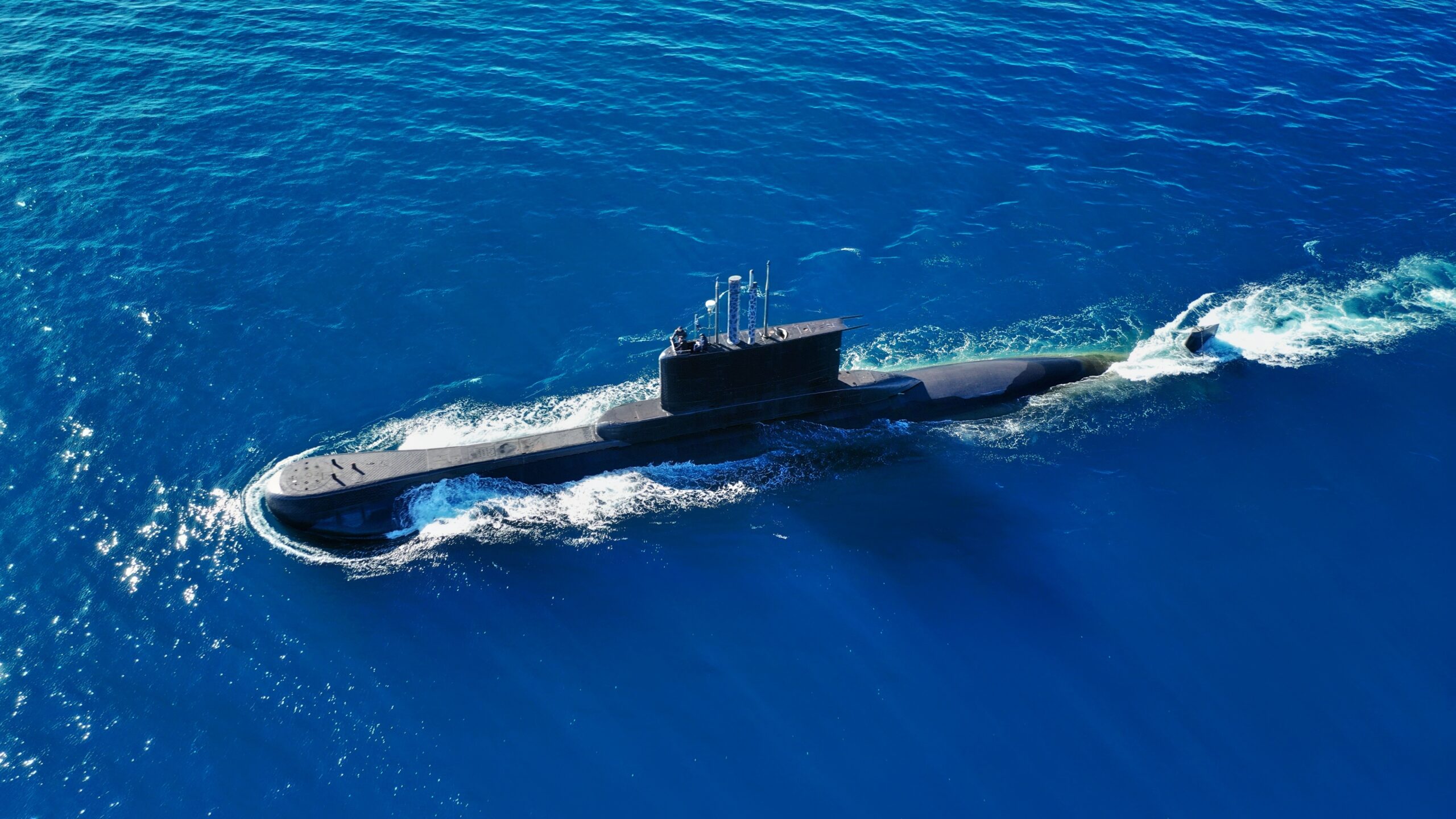
AIP Submarine from Germany. Image Credit: Creative Commons.
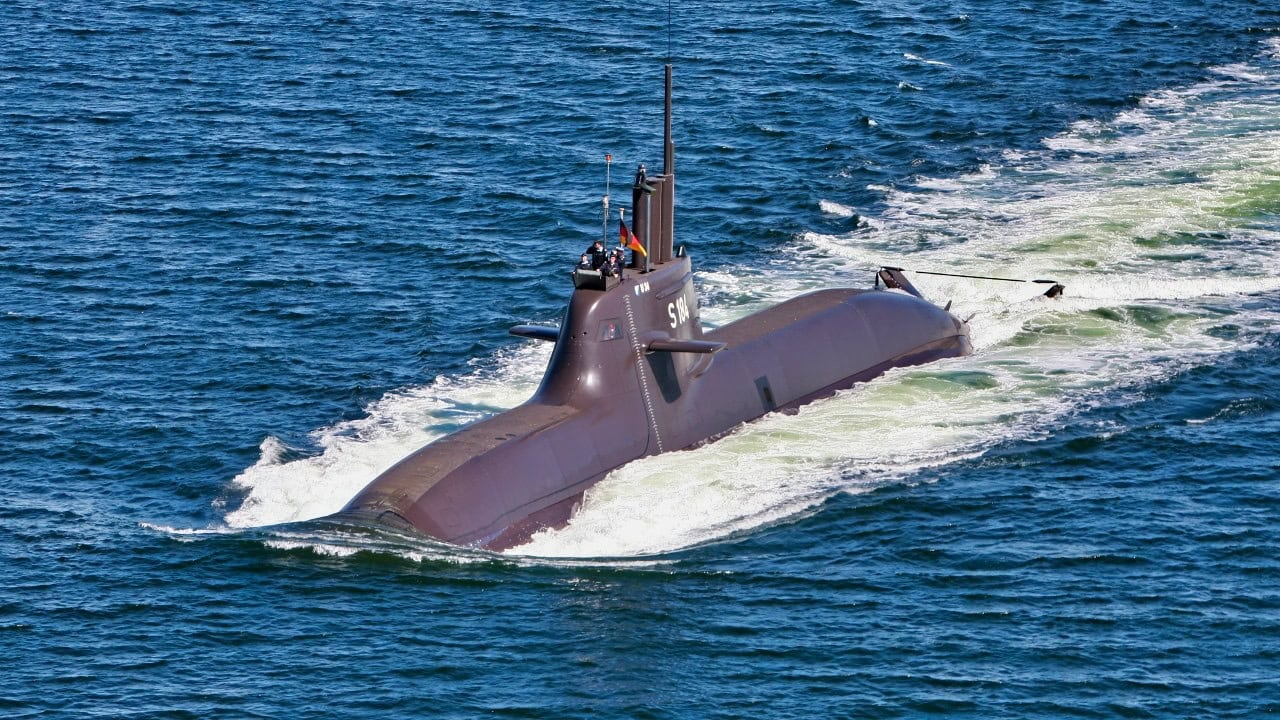
Type 212A Submarine from Germany.
Derived from Germany’s Type 209 family of boats, they were enlarged and significantly modified to Israeli specifications, including a whopping ten torpedo tubes, four of which accommodate large 650mm torpedoes.
For a conventionally powered submarine, the design supports a large crew and substantial weapons load-out.
The Dolphin II-class, represented by the INS Tanin and INS Rahav, both of which preceded the INS Drakon, added air-independent propulsion.
Their fuel-cell system, derived from the technology used in Germany’s Type 212A, allowed the boat to remain submerged for much longer without running its diesel generators and therefore without exposing a snorkel.
The AIP installation required an approximately 11-meter hull extension behind the sail, making the Dolphin II-class significantly longer than the original Dolphins.
The INS Drakon, however, is much different.
The Israeli government still calls the Drakon a Dolphin, and TKMS, its German builder, describes it as the third and final boat of the Dolphin AIP submarines.
But photographs make it clear it differs substantially from the earlier Tanin and Rahav. Independent analyses suggest that the extra length was added amidships, beneath the sail. The hull’s diameter and much of the basic outside hull casing appear unchanged.
Perhaps the most conspicuous difference is the sub’s sail. It is dramatically larger than the sail of any preceding Dolphin.
TWZ, a respected defense website, notes that this feature sets the Drakon apart from the Dolphin II-class. However, the same enlarged sail appears in TKMS’s imagery of the subsequent Dakar-class, which makes the change particularly noteworthy.
The Drakon appears less like the last Dolphin and more like a transitional submarine between two generations.
Speculation versus Certainty
That observation is important because of what could be contained within the submarine’s sail.
HI Sutton, a naval analyst, has argued that its most plausible purpose is to house vertically launched missiles. His reason is structural rather than sensational.
The sail is large enough to accommodate weapons substantially longer than the submarine’s pressure hull diameter.
TWZ has, likewise, highlighted the possibility of a vertical launch system. But this raises an important boundary: the line between evidence and inference.
Neither Israel nor TKMS has confirmed that Drakon carries a VLS system, let alone specified which weapons might be fitted, should such a system exist.
And while there are suggestions that the submarine carries nuclear-armed missiles, that is currently unverifiable.
But an enlarged sail could also provide adequate internal volume for unmanned underwater vehicles, drones, or special-operations equipment.
Sutton has noted these potentialities, while also concluding that the missile explanation is convincing.
None of these interpretations has been proven, but Drakon clearly incorporates a requirement that earlier Dolphin builds did not.
Israel itself says only that the submarine contains unique systems and technologies that expand its operational capabilities.
That usually vague formulation is probably as much as the public is meant to know.
The German Connection
The INS Drakon’s connection to German submarine builders is unusually deep and unusually political.
After the 1991 Gulf War, when German technology had clandestinely helped Iraq acquire military capabilities that brought Israel into Baghdad’s crosshairs — despite Israel not being a party to the conflict — Germany agreed to finance the replacement of Israel’s aging Gal submarines.
Germany has since helped finance successive submarines, while TKMS has effectively become Israel’s long-term undersea partner.
The two governments openly describe the relationship as strategic.
Dakar Program
The INS Drakon was developed alongside the Dakar program, and its enlarged sail closely resembles the publicly released Dakar design.
TWZ suggests the submarine may have initially served as a testbed for technologies intended for the next generation of Israeli submarines.
In any event, as of July 2026, the submarine had been handed over to the Israeli Navy following sea trials.
About the Author: Caleb Larson
Caleb Larson is an American multiformat journalist based in Berlin, Germany. His work covers the intersection of conflict and society, focusing on American foreign policy and European security. He has reported from Germany, Russia, and the United States. Most recently, he covered the war in Ukraine, reporting extensively on the war’s shifting battle lines in the Donbas and writing on its civilian and humanitarian toll. Previously, he worked as a Defense Reporter for POLITICO Europe. You can follow his latest work on X.