
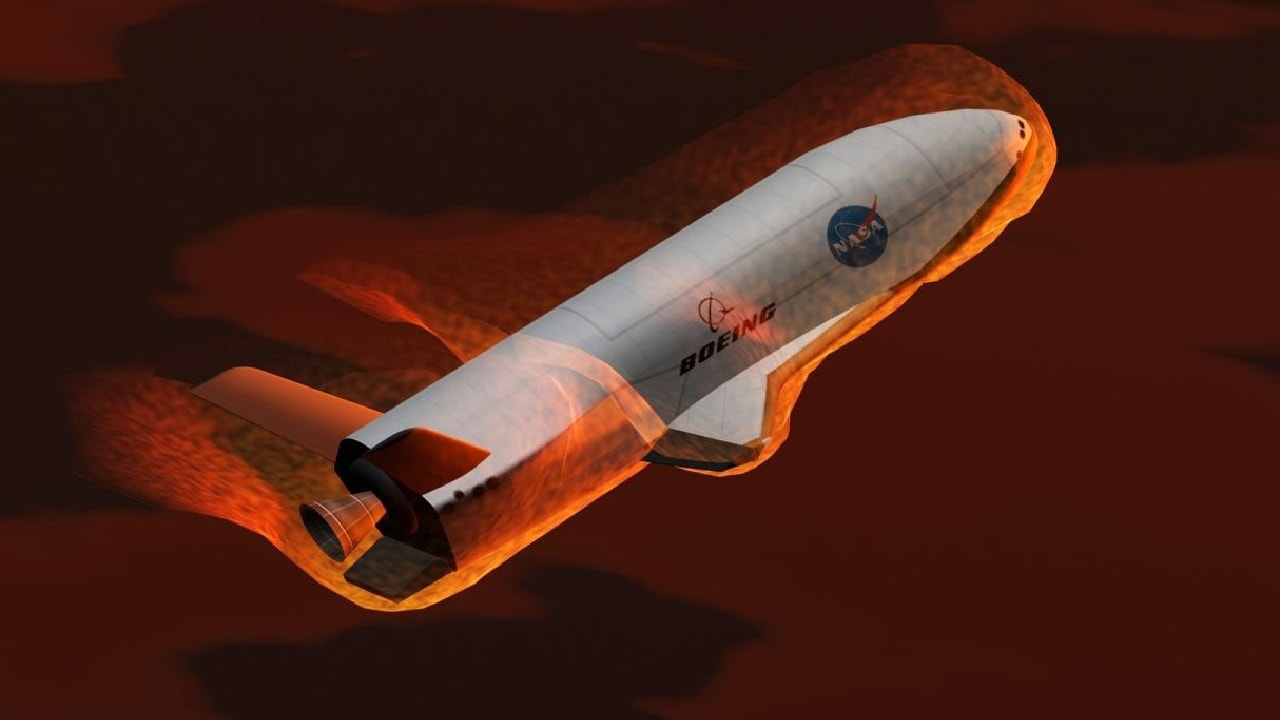
Summary and Key Points: NASA designed it, DARPA inherited it, and the Air Force turned it into the most secretive flying machine America owns: a 29-foot robotic spaceplane whose missions stretch to 908 days and whose cargo bay is classified. After a first-ever aerobraking campaign ended its seventh flight in March 2025, the X-37B sprinted back to orbit that August carrying a quantum navigation sensor and laser communications gear, and it is still up there a year later. Russia’s answer is to call it a nuclear bomber. The real answer is stranger: the secrecy is the weapon.
The X-37B Mystery
In late August 2026, a windowless white spaceplane the size of a school bus passes a quiet milestone: one full year in orbit on its current mission, with no landing date announced and no explanation of most of what it is doing up there. The X-37B has been doing this for sixteen years.
It flies missions measured not in days but in years, lands itself on a runway like a small robotic Space Shuttle, disappears into a hangar, and goes back up. The Pentagon calls it a test platform. Moscow and Beijing have called it something else, up to and including a nuclear bomber hiding in orbit. The truth runs through the vehicle’s history, its hardware, and an extraordinary stretch of flying across 2025 and 2026.
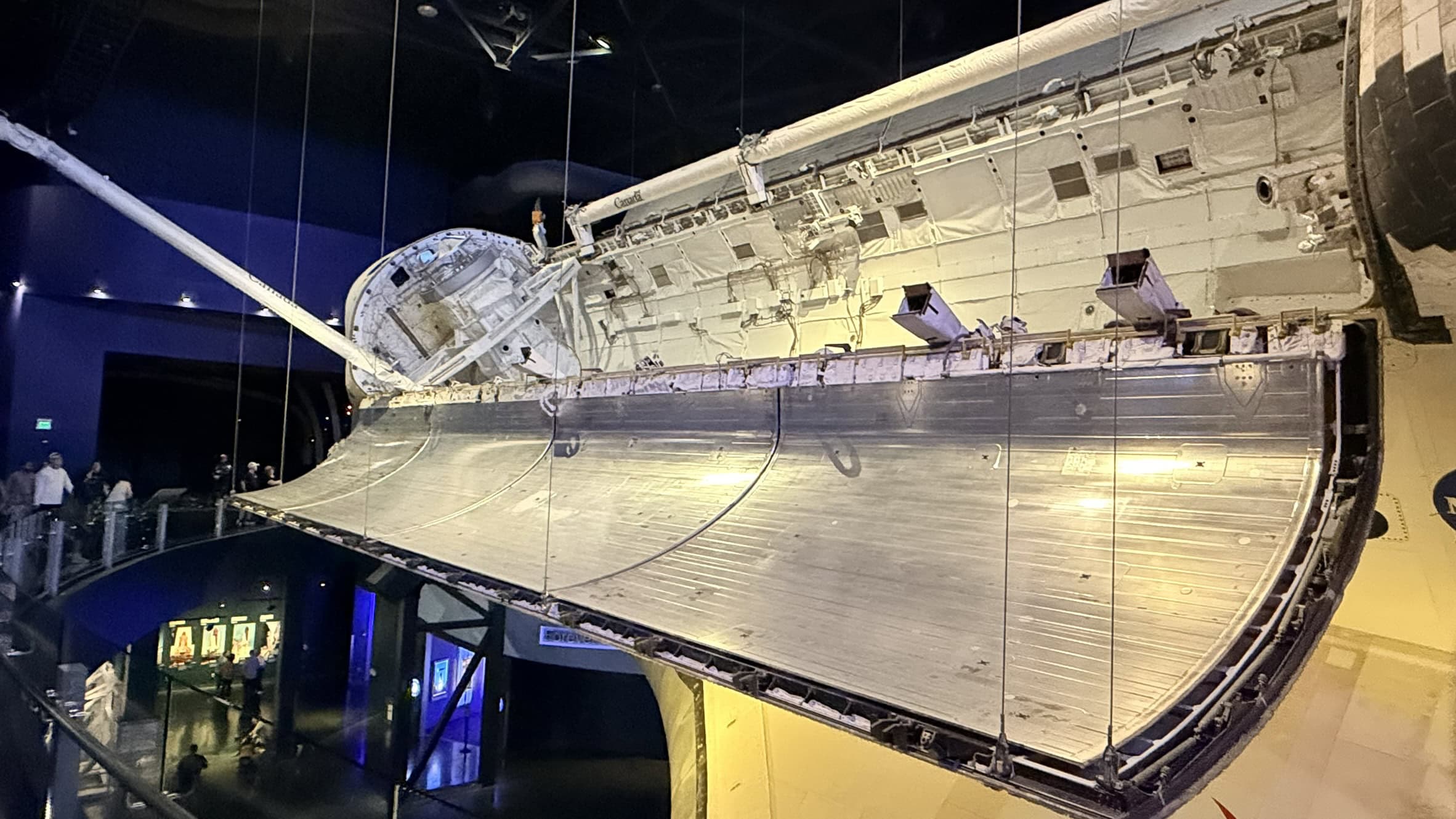
Space Shuttle Atlantis at Kennedy Space Center. Image taken by Harry J. Kazianis for 19FortyFive.
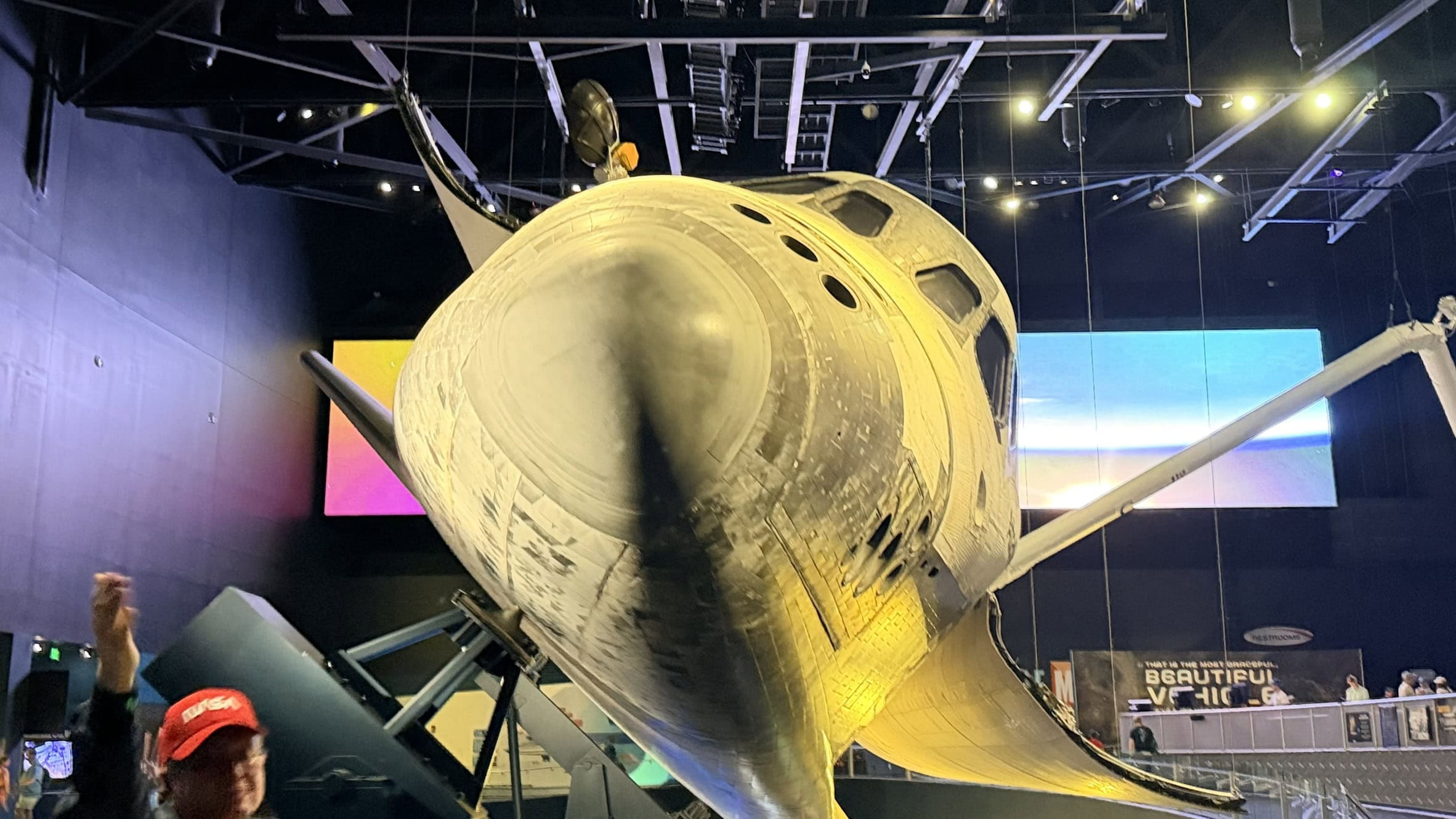
Space Shuttle Atlantis at Kennedy Space Center. Image taken by Harry J. Kazianis.
From NASA Orphan to Space Force Workhorse
The X-37 began as a NASA program in 1999, a Boeing Phantom Works project to demonstrate reusable spaceplane technology, with NASA contributing $109 million of the initial funding alongside Air Force and Boeing funding; the original concept even had the vehicle riding to orbit inside the Space Shuttle’s payload bay. NASA never flew it.
The program was passed to DARPA in 2004, which finished the approach-and-landing test work with a subscale drop-test vehicle by 2006, and in November 2006, the Air Force announced it would build its own orbital version, the X-37B Orbital Test Vehicle, run by the secretive Rapid Capabilities Office with mission control at Schriever in Colorado.
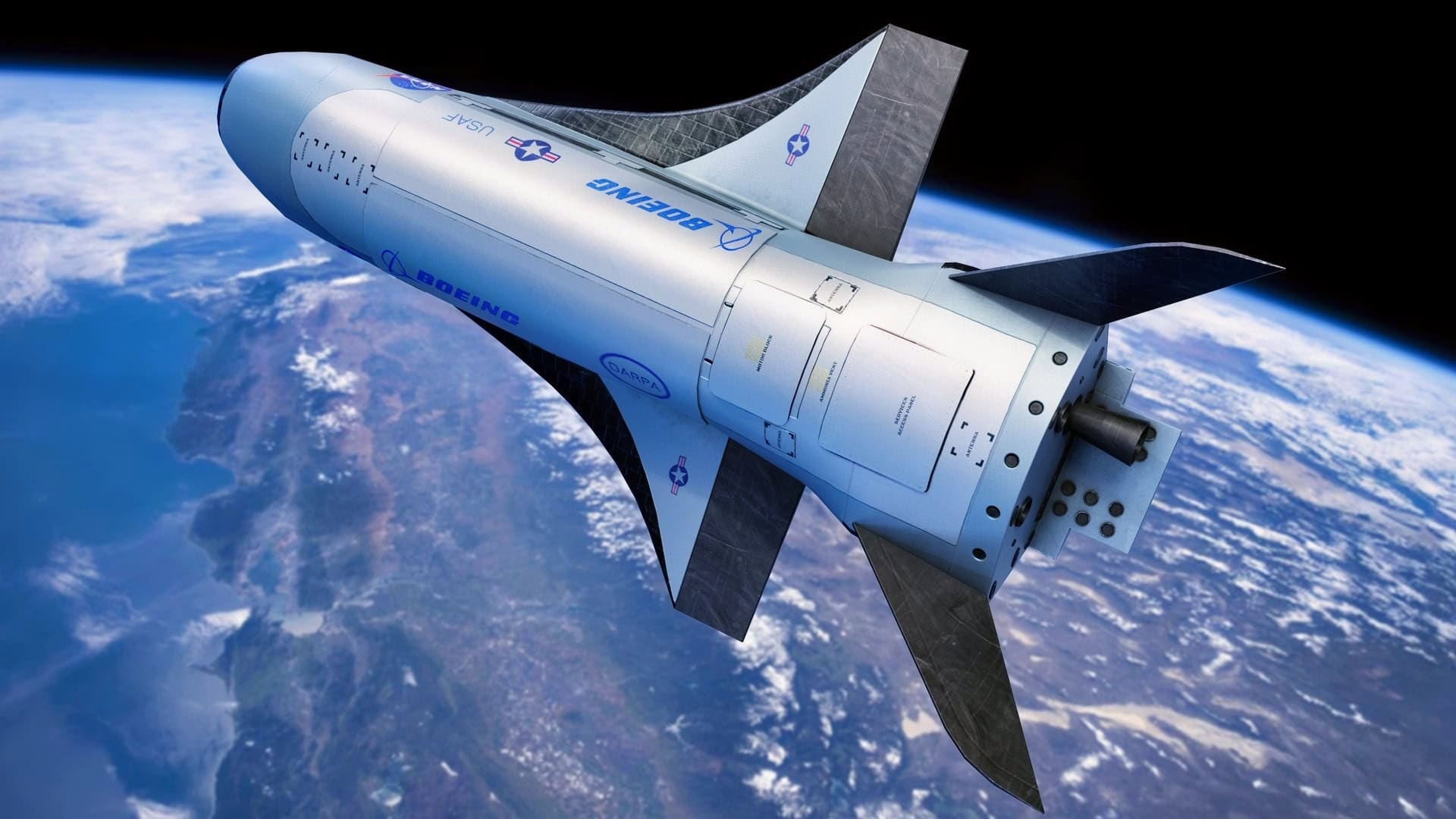
X-37B NASA Image. Image Credit: Creative Commons.

X-37B. Image Credit: Creative Commons.
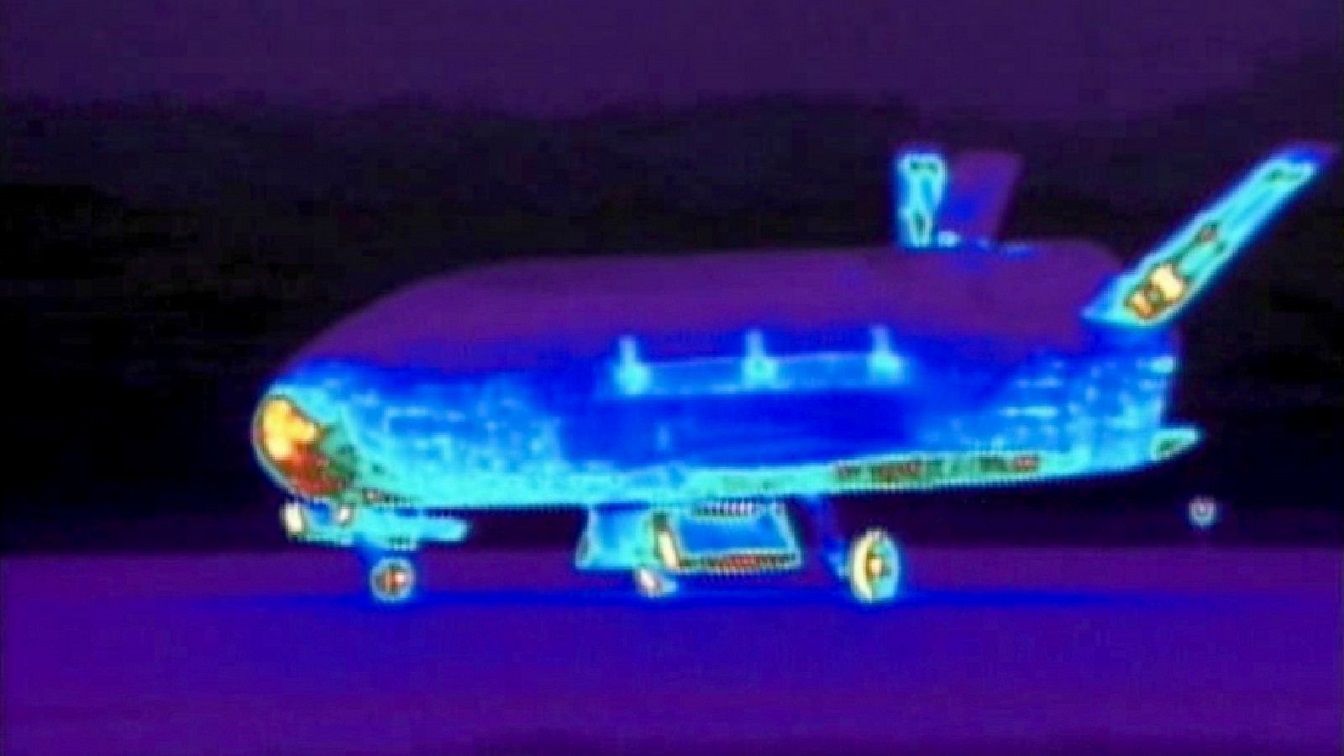
X-37B. Image Credit: NASA YouTube/Screenshot.
Two vehicles were built, and since 2020, they have belonged to the Space Force and have been flown by Space Delta 9. On program cost, the honest answer is that nobody outside the program knows: beyond the early NASA-era contracts, roughly half a billion dollars in the public record, the military-era budget is classified, and estimates of a billion dollars or more are exactly that, estimates.
What It Is and What It Says It Does
The vehicle itself is public. Per the Air Force’s own reference data, the X-37B runs 29 feet 3 inches long with a 14-foot wingspan, stands 9.5 feet tall, and weighs about 11,000 pounds at launch, roughly a quarter the length of the Space Shuttle it resembles. It rides to orbit inside a rocket fairing on an Atlas V, Falcon 9, or Falcon Heavy, deploys a solar array, and cruises in orbits typically between 150 and 500 miles up, though it has since gone much higher. A payload bay about the size of a pickup-truck bed carries the experiments; since 2020, a bolt-on service module has expanded that capacity.
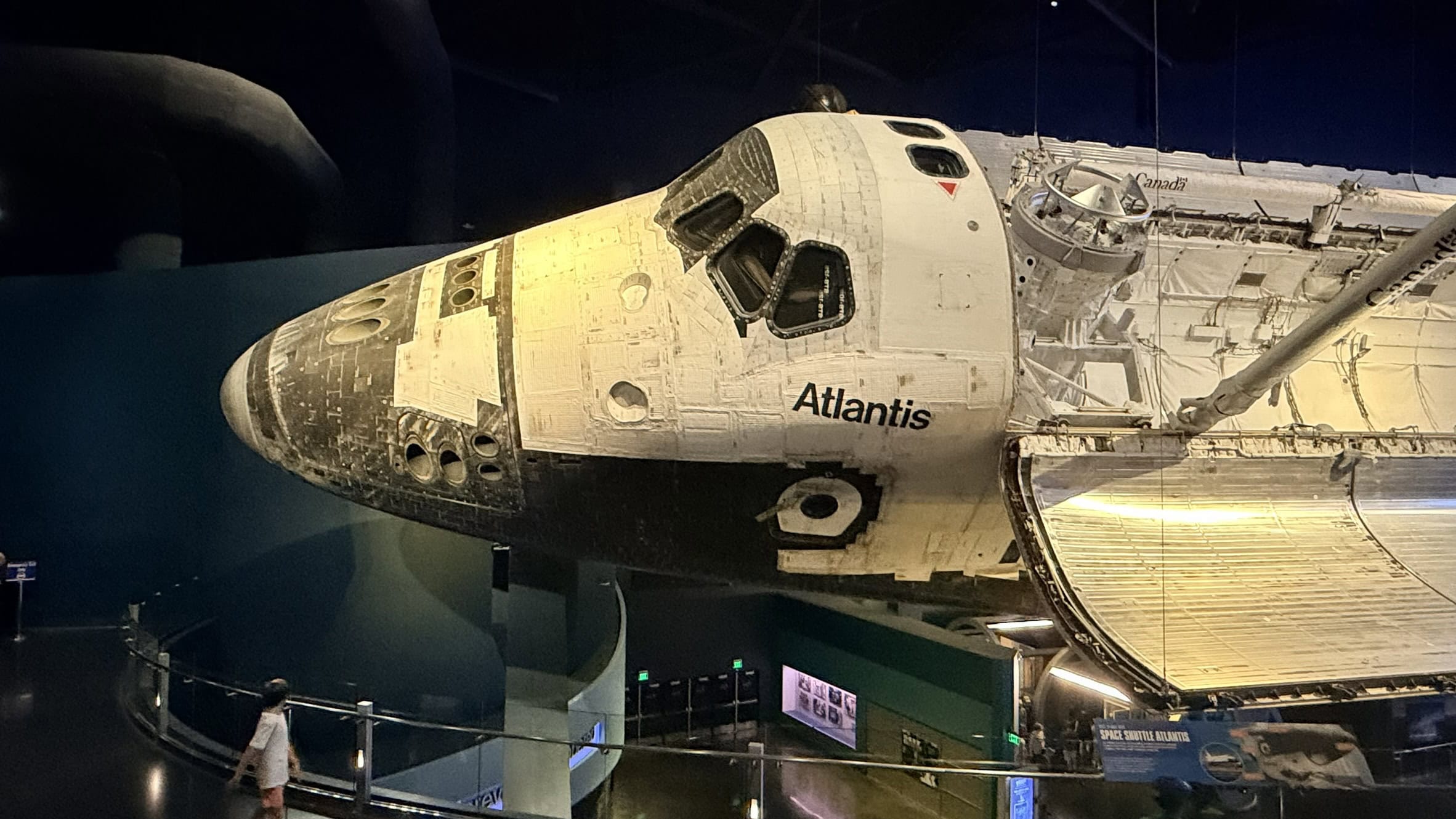
NASA Space Shuttle at Kennedy Space Center. 19FortyFive Image.
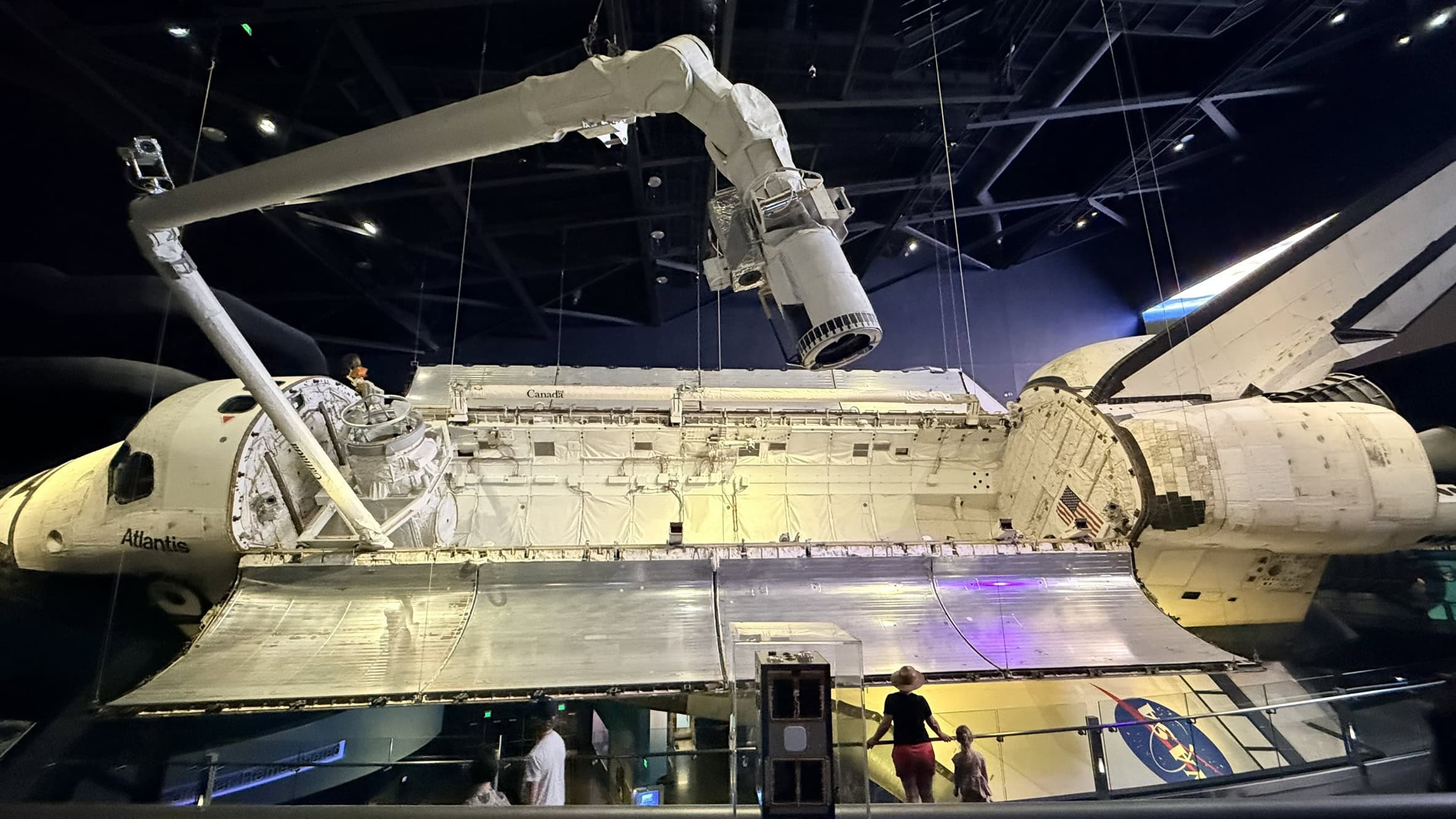
NASA Space Shuttle Atlantis taken at the Kennedy Space Center by 19FortyFive’s Harry J. Kazianis.
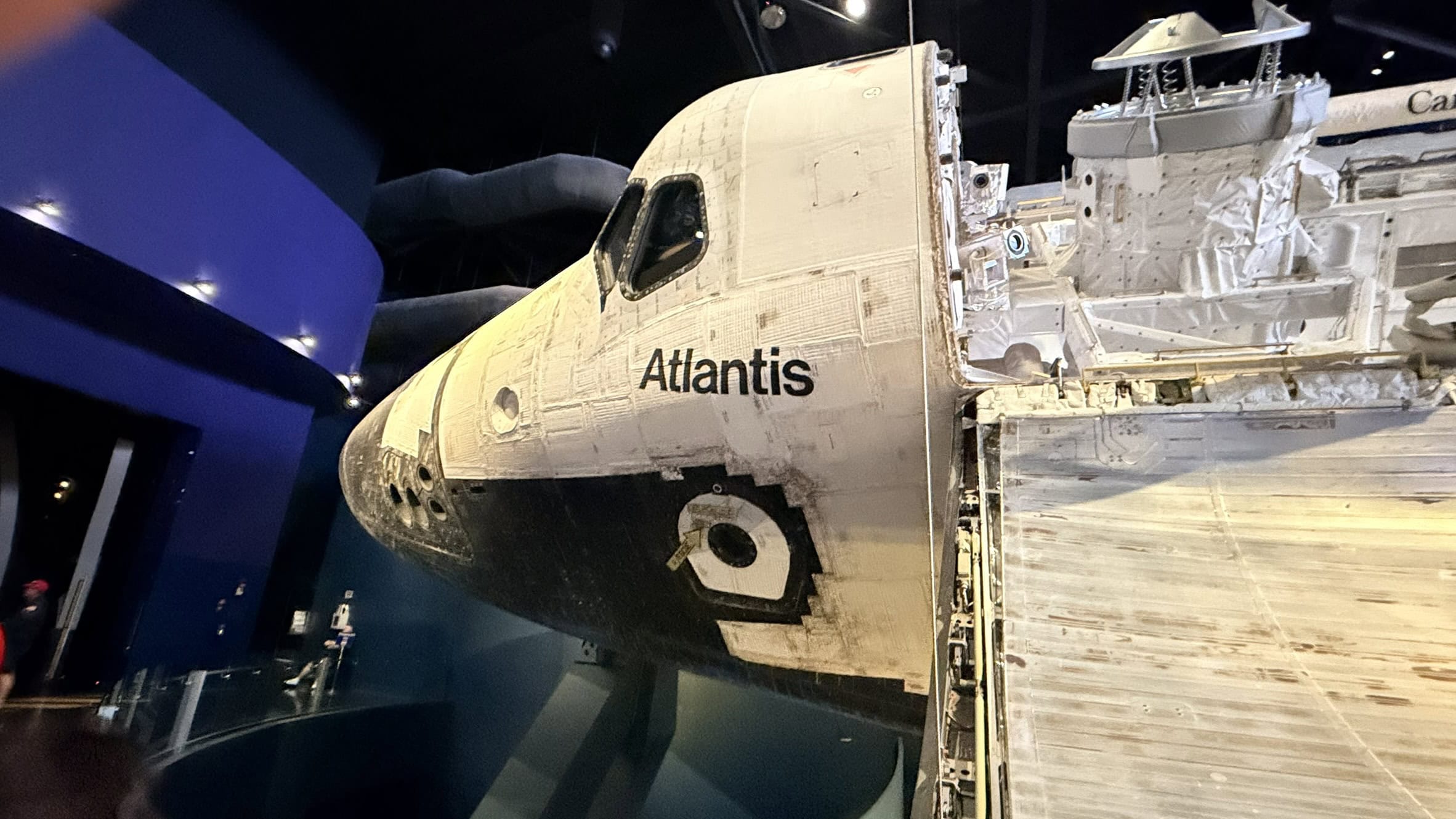
NASA Space Shuttle Atlantis taken at the Kennedy Space Center by 19FortyFive’s Harry J. Kazianis.
The stated mission has never changed: risk reduction and experimentation, a reusable orbital laboratory that tests sensors, materials, and technologies in real space conditions and, uniquely, brings them home for engineers to inspect.
The airframe was originally rated for roughly 270 days per flight, a number the program has since more than tripled. Everything else about most flights, including what is in the bay, is classified.
The Records
The flight log is a ladder of broken records. OTV-1 flew 224 days in 2010. OTV-2 managed 468, OTV-3 nearly 675, OTV-4 718, and OTV-5 780, the first three coming home to Vandenberg’s runway and the later flights to the Kennedy Space Center’s old shuttle strip, where Boeing services the vehicles in a converted shuttle hangar. Then OTV-6, launched in May 2020, stayed up 908 days, two and a half years, before landing in November 2022, a mission that also debuted the service module, deployed the FalconSat-8 small satellite, and hosted a Naval Research Laboratory experiment converting solar power to microwaves, a first step toward beaming power from space.
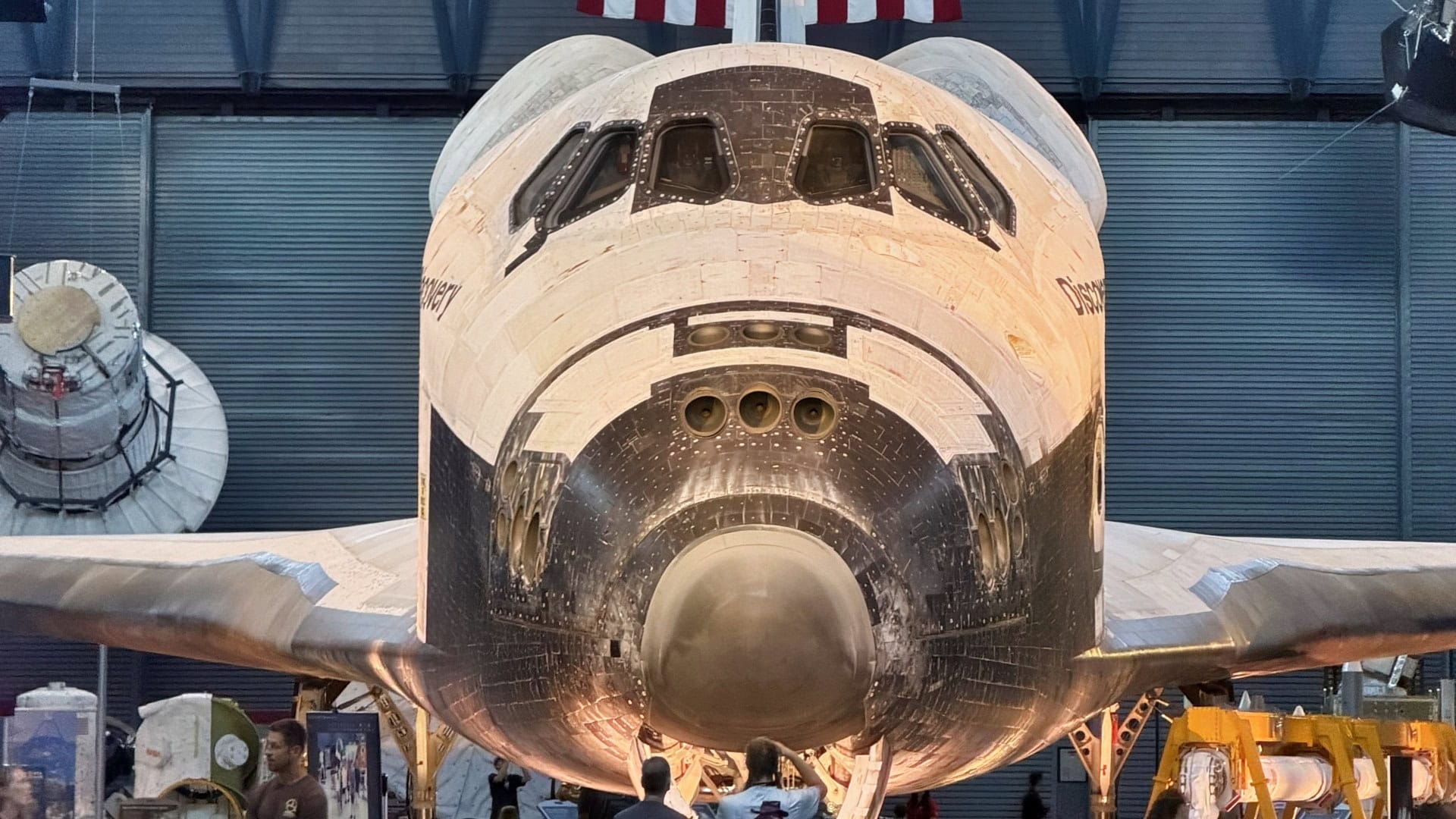
Space Shuttle Discovery at Smithsonian 19FortyFive Photo
Across the program, the two airframes have logged more than 4,200 days in orbit and over 1.3 billion miles, and every landing has been autonomous, a spacecraft flying its own approach in the dark.
The 2025-2026 File
The recent flying is the most interesting part of the program. OTV-7, launched December 28, 2023, was the first X-37B to ride a Falcon Heavy, which threw it into a highly elliptical orbit far beyond its old neighborhood, where it ran radiation-exposure experiments and NASA seed studies in a regime no previous flight had touched. On the way home, across late 2024 and early 2025, it executed the program’s first aerobraking campaign, dipping repeatedly into the upper atmosphere to bleed energy and change orbits while spending almost no fuel, a maneuver with obvious value for any spacecraft that wants to shift position without telegraphing it.
The mission ended on March 7, 2025, at Vandenberg, after 434 days, deliberately breaking the program’s streak of ever-longer flights in favor of something new: pace. Less than six months later, the spaceplane was back on a pad. OTV-8, flying as USSF-36, lifted off from Kennedy’s Launch Complex 39A on a Falcon 9 at 11:50 p.m. on August 21, 2025, the booster landing back at Cape Canaveral minutes later, and for once the Space Force advertised part of the cargo.
One demonstration is high-bandwidth laser communications with commercial satellite constellations, which the Chief of Space Operations said would help the service “leverage commercial space networks as part of proliferated, diversified, and redundant space architectures.” The second is the highest-performing quantum inertial sensor ever flown, a navigation device that senses motion at the atomic level; in the words of Space Delta 9’s commander, “quantum inertial sensing allows for robust navigation capabilities when GPS navigation is not possible,” which covers jammed battlefields and cislunar space alike. A NASA experiment aboard exposes the woven materials of inflatable heat shields to long-duration vacuum.
As of Boeing’s latest public status this spring, more than 230 days in, the vehicle was healthy and working through its experiment list, and as its first anniversary aloft arrives in late August 2026, it is still up there, with no landing date announced.
Why Moscow and Beijing See a Weapon
Which brings in the accusation. Russian and Chinese officials and state media have spent a decade insisting the X-37B is not a laboratory at all.
The most specific charge came from Yan Novikov, director general of the Russian air-defense giant Almaz-Antey, who claimed the spaceplane could carry nuclear warheads, the source of the recurring “space bomber” headlines; Chinese researchers have warned the vehicle’s military potential could ignite a new space arms race, and Beijing built its answer, the Shenlong spaceplane, which has now flown three missions of its own, months long, and released its own unexplained objects in orbit, with a second vehicle called Tengyun reportedly behind it.
The Pentagon noted that OTV-7’s launch and a Shenlong flight came within weeks of each other. Strip the propaganda, and real logic remains.
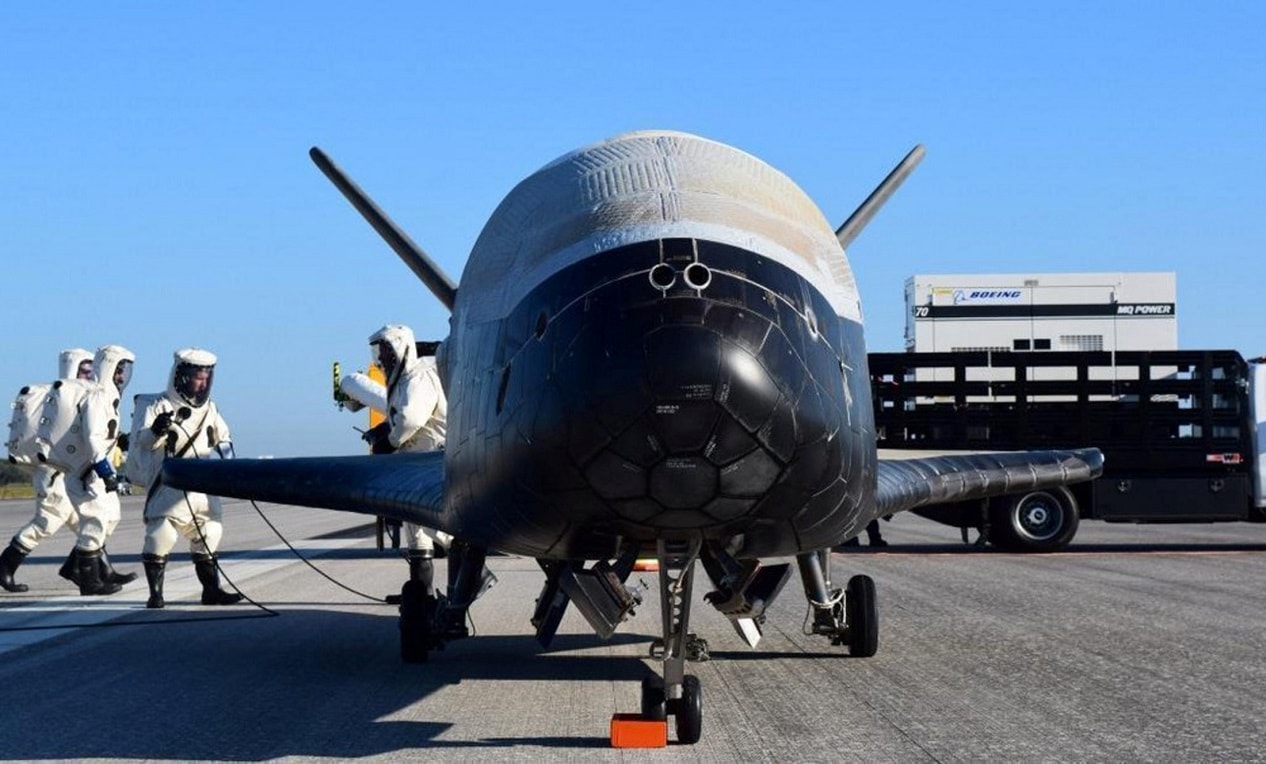
The U.S. Airforce’s X-37B Orbital Test Vehicle mission 4 after landing at NASA’s Kennedy Space Center Shuttle Landing Facility in Cape Canaveral, Florida, U.S., May 7, 2017. U.S. Air Force/Handout.
Analysts note the bomber charge fails on its own terms: the bay is small, and an orbital nuclear bomber would be slower to respond, more vulnerable, and vastly more expensive than the missiles and submarines America already fields, while crossing the line the 1967 Outer Space Treaty draws against nuclear weapons in orbit.
There is no public evidence any X-37B has ever carried a weapon. But a maneuverable spacecraft that can loiter for years, change orbits by stealthy aerobraking, approach and inspect objects, and bring hardware home is inherently dual-use, and a planner in Moscow or Beijing is professionally obligated to assume the worst case. The secrecy completes the effect.
As one line of analysis puts it, the ambiguity itself is the strategy: an adversary who cannot know what the spaceplane carries must price in everything it might, which deters more cheaply than any declared weapon could. That is where the program stands as OTV-8 passes its first year in orbit in late August 2026: one American spaceplane overhead on a mission with no announced end, one Chinese spaceplane program flying in answer, and two cargo bays, on opposite sides, that neither side can see into.
About the Author: Harry J. Kazianis
Harry J. Kazianis (@Grecianformula) was the former Senior Director of National Security Affairs at the Center for the National Interest (CFTNI), a foreign policy think tank founded by Richard Nixon based in Washington, DC. Harry has over a decade of experience in think tanks and national security publishing. His ideas have been published in the NY Times, The Washington Post, The Wall Street Journal, CNN, and many other outlets. He has held positions at CSIS, the Heritage Foundation, the University of Nottingham, and several other institutions related to national security research and studies. He is the former Executive Editor of the National Interest and the Diplomat. He holds a Master’s degree focusing on international affairs from Harvard University.

