
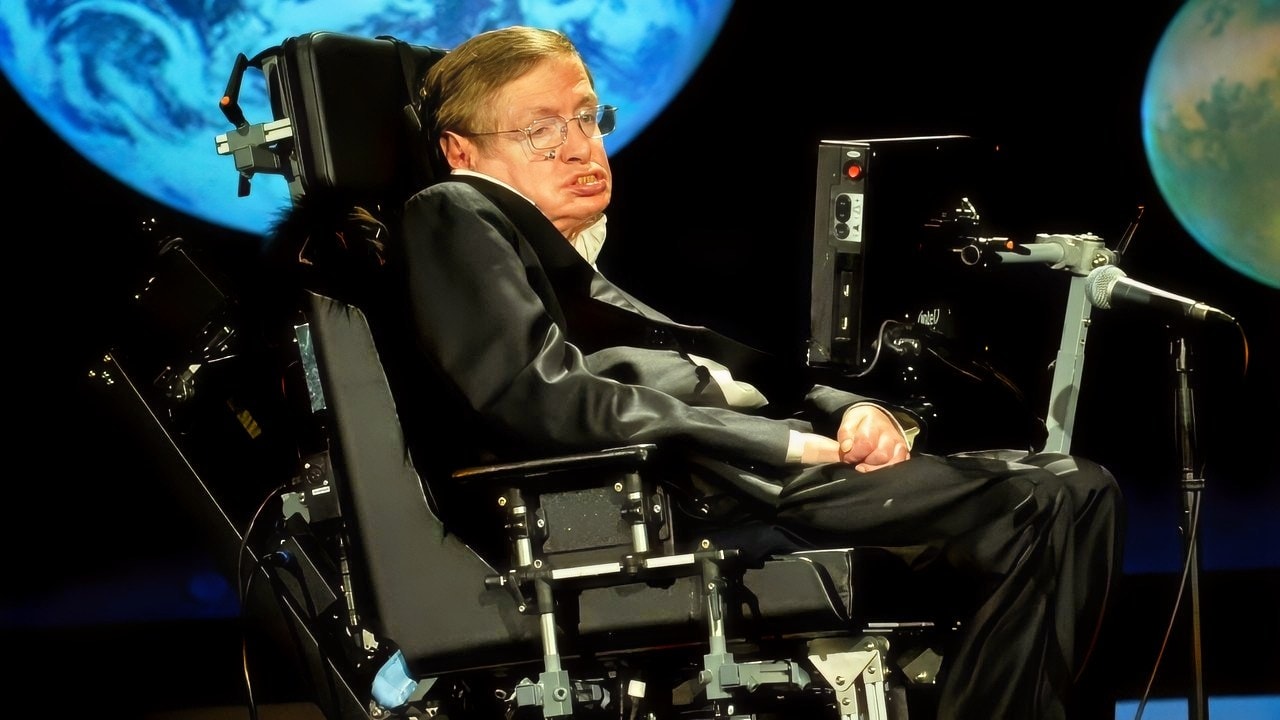
In the spring of 2010, in his Discovery Channel series Into the Universe, the most famous scientist alive delivered the most chilling sentence of his career, reasoning that if aliens ever visit us, “the outcome would be much as when Christopher Columbus first landed in America,” which, he added dryly, did not turn out well for the Native Americans.
The popular version trims a few of Stephen Hawking’s words, but the substance is exactly as remembered, and 16 years later, it remains the most unsettling thing he ever said, because of what it replaced.
Generations raised on benevolent screen aliens assumed that anything wise enough to cross the stars would arrive wise enough to be kind.
Hawking looked at the same sky and applied the only evidence available: us.
Stephen Hawking: What He Argued
His logic came in three steps, and none of them required the aliens to be evil.
“We only have to look at ourselves,” he said, to see how intelligent life can develop into something we would not want to meet.
First, any civilization capable of reaching Earth would be immensely older and more capable than ours, because interstellar travel demands it.
Second, expansion is what successful species do; he imagined such beings in massive ships, their home world’s resources exhausted, becoming nomads looking to conquer and colonize whatever planets they can reach.
And third, the Columbus analogy carried the real sting: contact between civilizations of mismatched power has gone badly for the weaker side in every recorded instance on this planet, often regardless of anyone’s intentions.
Disease, displacement, and dispossession followed European ships into the Americas, whether individual captains were cruel or curious.
Hawking’s point was never that aliens must be wicked.
It was that we would be the Native Americans in the encounter, and good intentions did not save them.
Nor was this a stray late-life remark: he had urged humanity to be wary of answering the sky as far back as a 1996 essay, and he repeated the warning to the end of his life.
Not Star Trek
The scenario science fiction taught the world to expect, gleaming federations arriving to share warp drives and cure diseases, struck Hawking as a projection of hope onto a universe that runs on selection.

USS Excelsior from Star Trek VI. Image Credit: YouTube Screenshot.
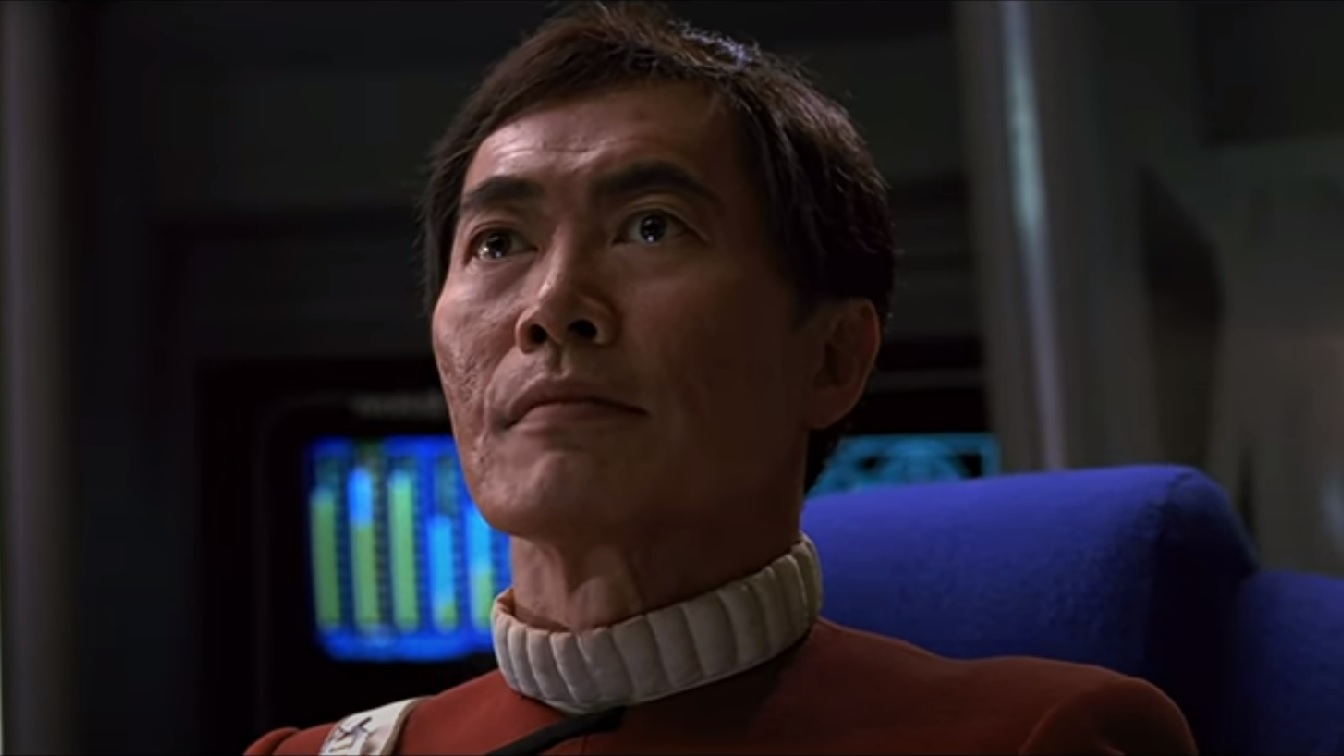
USS Excelsior with Captain Sulu commanding from Start Trek IV. Screenshot.
Intelligence, everywhere we have seen it arise, is a competitive weapon before it is a moral achievement.
That is why his position held a nuance the headlines flattened: he was enthusiastically in favor of finding aliens, so long as they did not find us.
He lent his name to Breakthrough Listen, the $100 million project scanning a million nearby stars for signals, and to the Starshot probe concept as well.
Listening, in his view, was pure gain.
Transmitting was the mistake.
Flying over the potentially habitable planet Gliese 832c in a 2016 documentary, he put the policy in one line: one day we might receive a signal from a world like that, but we should be wary of answering back.
The Debate He Started
Serious people pushed back.
Any civilization advanced enough to threaten Earth, skeptics note, likely already knows we are here, since radio and television have been leaking into space since around 1900, so staying quiet now is like guarding an empty vault.
Others observe that nothing scarce on Earth, water, metals, energy, is scarce in space, where asteroids offer it all without a defended gravity well attached, and institutions like the SETI Institute note there is no credible evidence that any visitor has ever come.
The Hawking camp’s reply is about asymmetry rather than probability: the upside of shouting is a conversation, the downside is everything, and a species with exactly one habitable planet should not run that experiment to satisfy its curiosity.
The argument remains genuinely unresolved, which is itself remarkable: the most famous physicist of his era made galactic-scale caution a respectable mainstream position.
16 Years On
Hawking died in March 2018, and his warning has aged into strange relevance.
The Pentagon now publishes reports on unidentified aerial phenomena, a subject this publication has covered through its national-security lens, and since 2017, astronomers have watched genuine interstellar objects, from ‘Oumuamua through this past year’s comet 3I/ATLAS, pass through our solar system while the public asked, each time, the exact question Hawking framed.
Astronomers now count likely planets by the hundreds of billions in this galaxy alone, so the silence gets stranger every year, and the stakes of breaking it stay the same.
There is a symmetry here the twentieth century earned twice: its two most famous scientists each spent their final years issuing warnings, Einstein about the weapons we build, Hawking about the neighbors we might invite.

Christopher Columbus. Creative Commons.
Sixteen years after the Columbus sentence, humanity’s answer to the sky remains, officially, nothing, and by the reasoning of the man who thought further ahead than anyone, that silence is not cowardice.
It is the first genuinely intelligent thing our species has said.
About the Author: Harry J. Kazianis
Harry J. Kazianis (@Grecianformula) was the former Senior Director of National Security Affairs at the Center for the National Interest (CFTNI), a foreign policy think tank founded by Richard Nixon based in Washington, DC. Harry has over a decade of experience in think tanks and national security publishing. His ideas have been published in the NY Times, The Washington Post, The Wall Street Journal, CNN, and many other outlets. He has held positions at CSIS, the Heritage Foundation, the University of Nottingham, and several other institutions related to national security research and studies. He is the former Executive Editor of the National Interest and the Diplomat. He holds a Master’s degree focusing on international affairs from Harvard University.

