
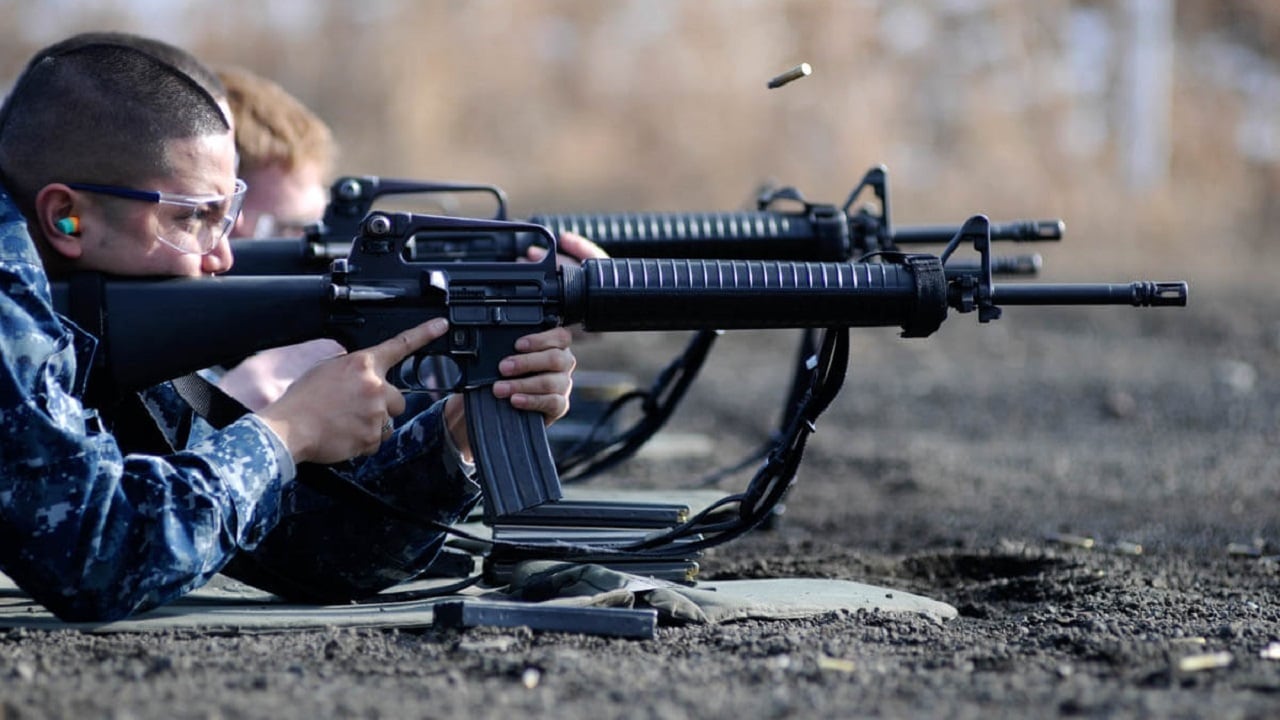
The M16 rifle got an awful rap early in the war in Vietnam because the weapon would jam frequently at the most inopportune times (is there ever a good time for a weapon to jam in combat?), and many soldiers died because of it.
We’ll never know the exact number, but it was significant.
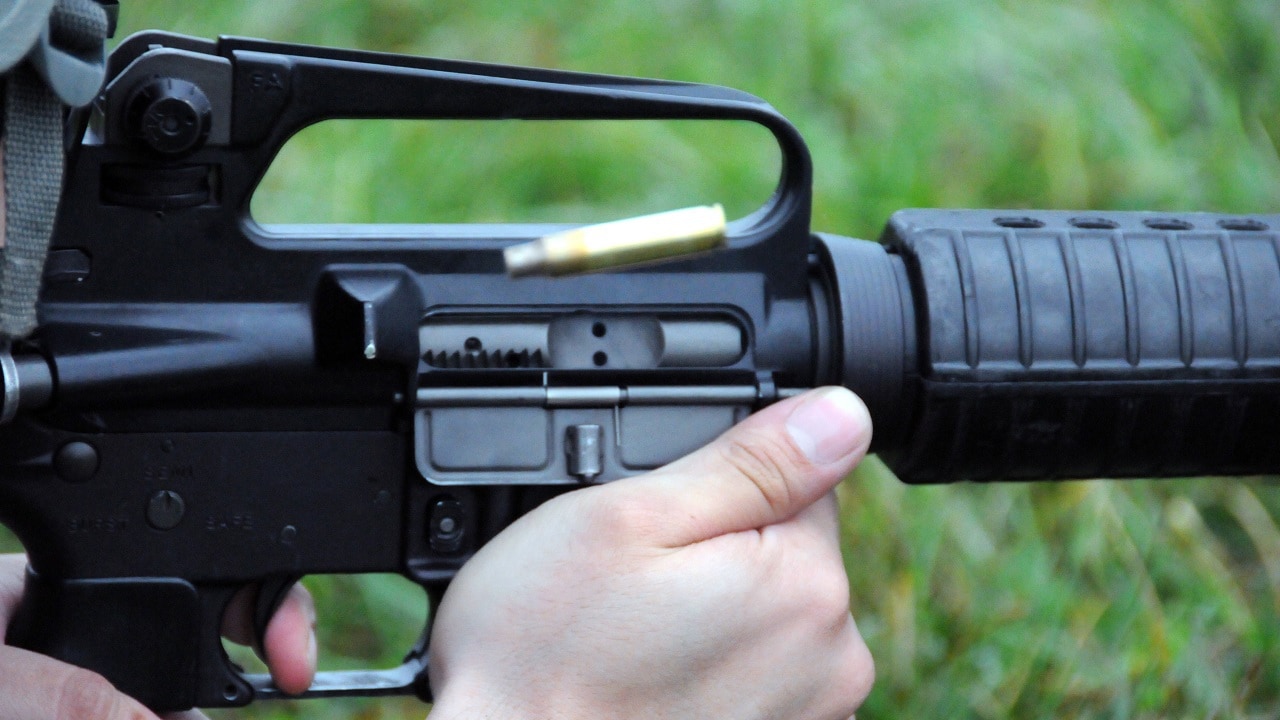
M16 Rifle: Sgt. Marco Gutierrez, a public affairs specialist from Indianapolis, Indiana assigned to the U.S. Army Reserve’s 350th Public Affairs Detachment, fires his M-16A2 at the range on Camp Atterbury, Indiana Nov. 3. Army Reserve Soldiers qualify on their individual assigned weapon once a year in order to be “mission capable” should they need to deploy. Image: Creative Commons.
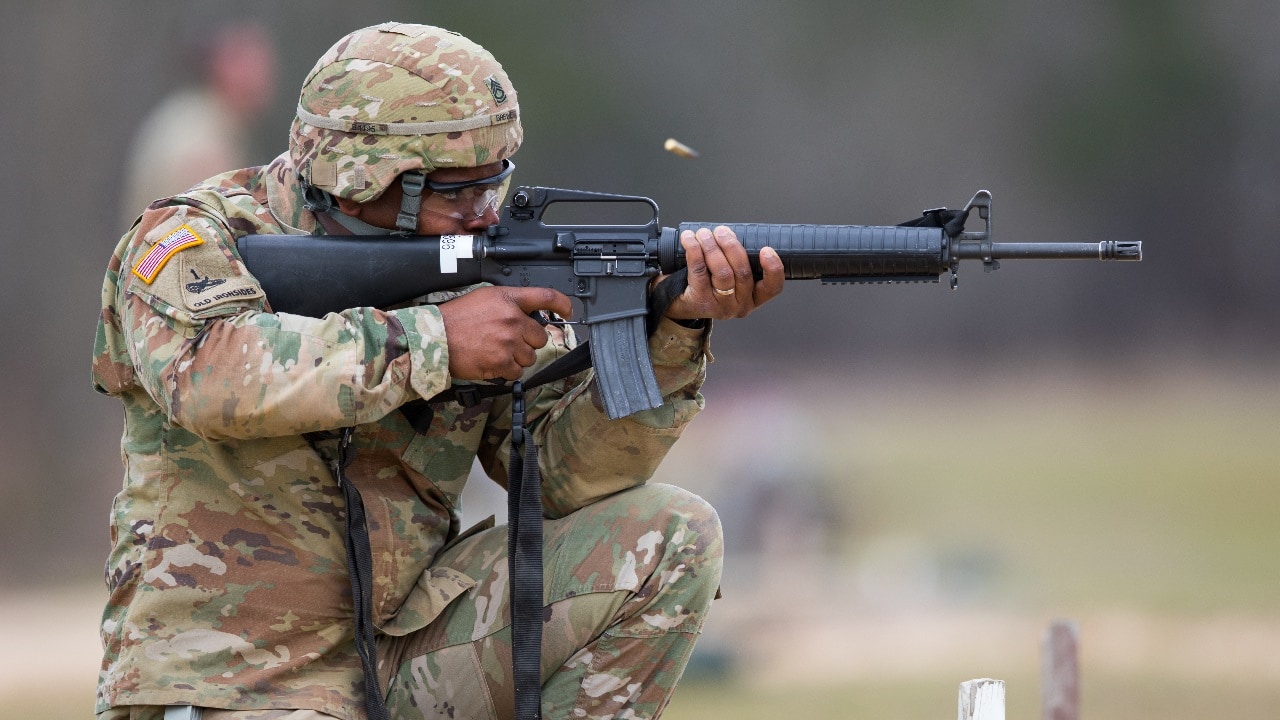
U.S. Army Reserve Sgt. 1st Class Harrison Brewer, G4 Chief Movements Supervisor for the 335th Signal Command (Theater), fires an M16 rifle on a range at Fort Gordon, Georgia, March 8, 2019. Soldiers from the 335th Signal Command (Theater) headquarters completed warrior tasks and battle drills to include weapons qualification, grenade practice and roll over training during a four-day training designed to increase their warfighting abilities. (U.S. Army Reserve photo by Staff Sgt. Leron Richards)
The year was 1966, and this was the first widespread use of the M16.
Once they made some modifications, including improved maintenance training, they largely rectified those issues.
However, having used the M16A1, M16A2, and the M4 Carbine, I can say that Colt’s family of weapons is excellent.
The M4 remains my personal favorite because it balances a lightweight, compact size with high modularity, low recoil, and reliable medium-range performance.
It bridges the gap between close-quarters combat and accurate target engagement out to 500 yards. But all three retain the same operating system.
About 60 countries use it, which speaks volumes about its popularity.
The Initial Usage Of The M16 Received High Marks
The story of the M16 begins in 1962.
The Air Force purchased 8,500 AR-15s from Colt for its security personnel.
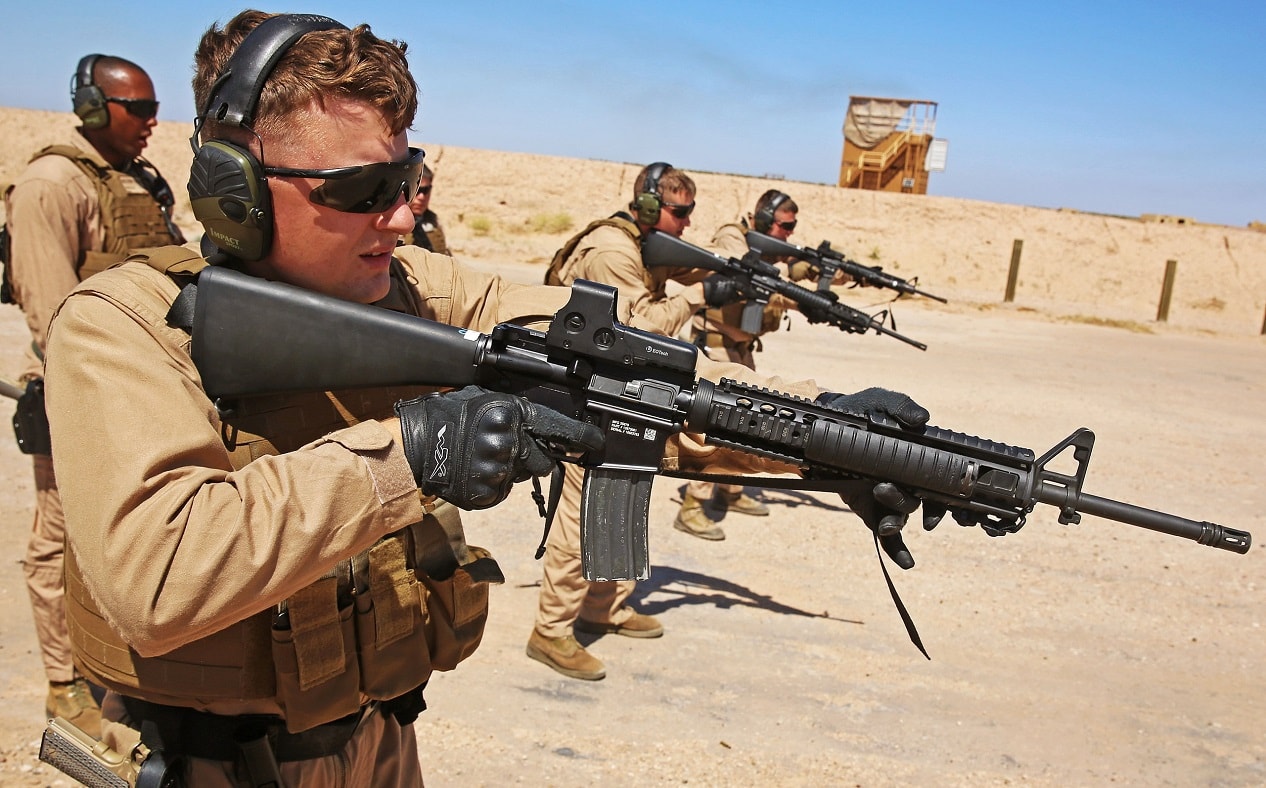
M16. Image Credit: Creative Commons.
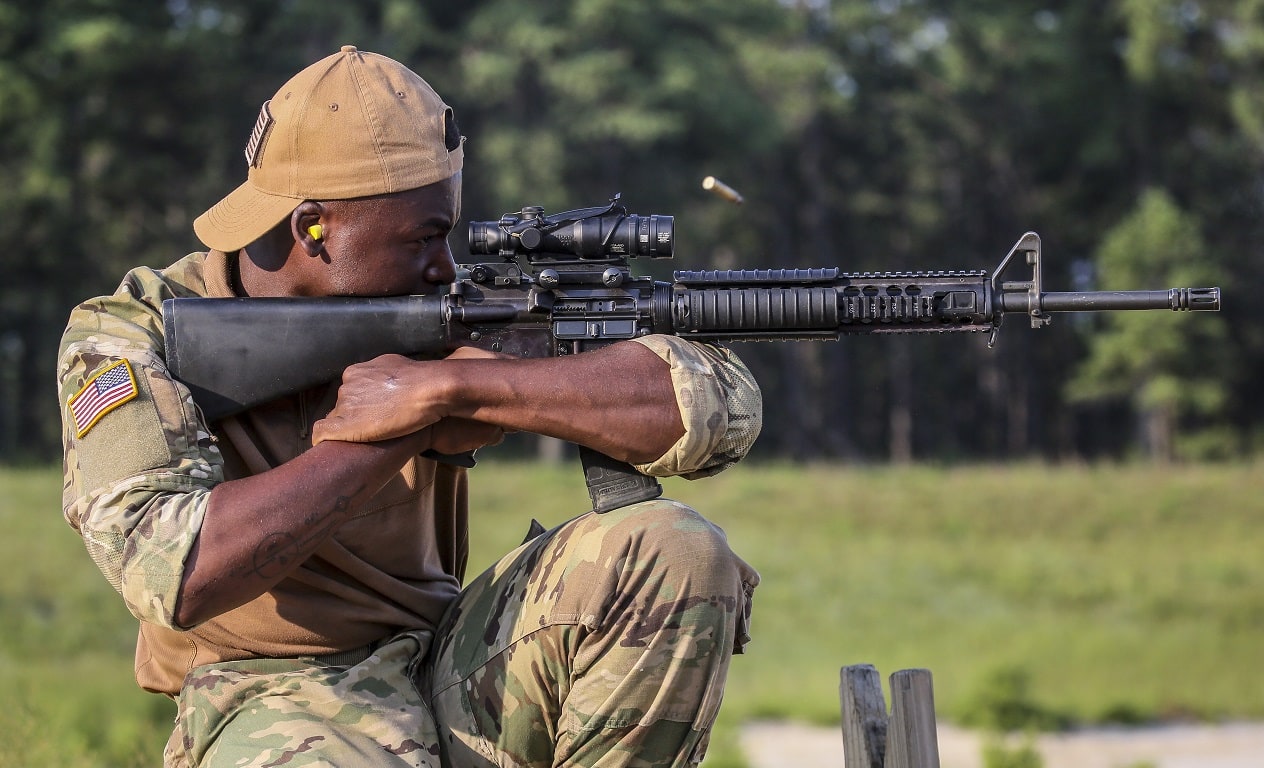
U.S. Army Private 1st Class Andre Matthews fires an M16A4 rifle during the Squad Designated Marksman Course instructed by the New Jersey Army National Guard’s 254th Regiment on Joint Base McGuire-Dix-Lakehurst, N.J., July 20, 2017. The course teaches the Squad Designated Marksman to directly support their squad with well-aimed shots at ranges slightly beyond the normal engagement distances for riflemen, up to 600 meters. The 254th Regiment is based out of the Regional Training Institute, National Guard Training Center, Sea Girt, N.J. (U.S. Air National Guard photo by Master Sgt. Matt Hecht/Released)
However, due to the US escalation in South Vietnam, small numbers of AR-15s were diverted to the US Army Green Berets and the ARVN units they were training.
The Special Forces operators and their Vietnamese allies gave the AR-15 high marks with no issues at all. Later, SF units in MACV-SOG carried CAR-15s and the XM-177, the shorter version of the AR-15/M16.
At the Battle of the Ia Drang Valley in late 1965, Colonel Hal Moore, the Commander of the 1/7 Cavalry, said that without the M16, the battle may have turned out quite differently.
The Problems Started Due To Lack Of Training, Cleaning Supplies
As the US began pouring conventional troops into Vietnam, beginning in 1965 and 1966, the Army replaced its M-14 rifles with M16s.
Units such as the 1st Cavalry Division, 173rd Airborne Brigade, and 101st Airborne Division took the M16 on its first large-scale deployment with U.S. forces.
At first, all was well. But in 1966, reports came out of Vietnam that the M16 was failing its troops. The main issues were failing to feed, fire, and extract.
In October 1966, the Commanding Officer of the 1st Battalion, 2nd Infantry, 1st Infantry Division reported that his troops had many problems with the new XM16E1 rifles “to the extent that confidence has been degraded.”
These reports made the news back in the US. I remember watching a report on this on the evening news when I was a youngster.
General William Westmoreland, commander of all US troops in Vietnam, was requesting more M16s but heard from soldiers that they weren’t working properly.
He asked a technical assistance team to visit troops in the field, see the issues, and hopefully solve them.
The M16s in Vietnam Were In “Appalling Condition”
A decorated Army veteran and part of Colt’s team sent to Vietnam was shocked by what he found. He said he had never seen equipment in such a poor state of maintenance.
Many of the younger troops had never maintained their weapons (a cardinal sin among the infantry grunts) and had never been trained on the M16 or on how to properly maintain it.
Training manuals and cleaning kits were scarce. Unfortunately, many believed the false rumor that Colt said the weapon didn’t need cleaning.
The Army didn’t help matters by stating in the manual that “an occasional cleaning will keep the weapon functioning indefinitely.” That was criminally incompetent wording. Soldiers and Marines sent requests to their families for cleaning supplies like lubricants, patches, .22 rifle cleaning rods, brushes, and picks.
Army Was Responsible For Other Problems Too
Eugene Stoner, the original designer of the Armalite, and Colt both recommended chrome-plating the barrels and bores. But the Army refused, saying it was unnecessary and cost-prohibitive.
The Army Materiel Command posted that the stick propellant used in the M16 ammunition was not viable, even though the SF, ARVN, and CIDG were using it without issues—the same with Hal Moore’s troops in the Ia Drang Valley.
But the problems began when the Army switched to the same ball propellant they’d used for 50 years.
They asked Stoner for his opinion, and he advised against it, but the Army had already decided. Colt warned the Army that the M16 wouldn’t function as well with ball powder.
But that fell on deaf ears. Ball powder burned dirtier than stick powder, requiring more cleaning than necessary, and the Army didn’t provide it.
Besides the propellant issues, the poor maintenance of the weapons, and the rusting of the bores, bolt carrier groups, and barrels due to a lack of chrome plating, an issue the Army knew back in the jungles of WWII. The ammunition would corrode in Vietnam’s hot climate.
The Army Finally Solved The Issues
In 1967, the Army was forced to act, and finally, it did.
They chrome-plated the parts that needed it. They addressed the ammunition by modifying the rifle to work better with it.
They made 10 modifications, including a forward assist to ensure the bolt was firmly seated.
The result was the M16A1.
And the rifle was an unqualified success.
The basic M16 family went through the M16A1, M16A2, and M4 variants, giving the rifle a service life that continues today.
The Army is gradually replacing the rifle with the new XM-7 and the XM-8 Carbine
The rifle was improved with the A1 and A2 models (heavier barrel, three-round burst, improved 1-7 twist rate, increased range, and better ergonomics until the shortened M4 came along.
While some didn’t like the M16A2 (re: the sights), it was still an excellent battlefield implement.
About the Author: Steve Balestrieri
Steve Balestrieri is a National Security Columnist. He served as a US Army Special Forces NCO and Warrant Officer. In addition to writing on defense, he covers the NFL for PatsFans.com and is a member of the Pro Football Writers of America (PFWA). His work was regularly featured in many military publications.