
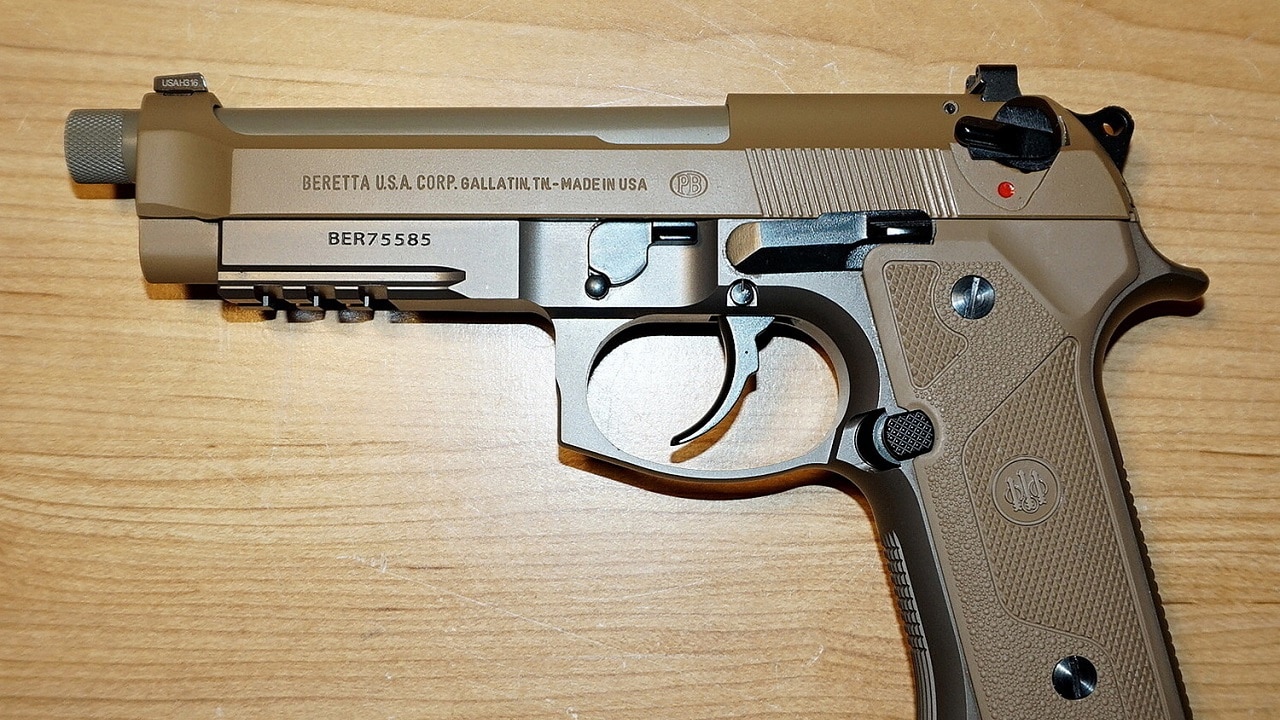
If you were/are a fan of the M9 Beretta, and that was the majority of military users, then you probably disagree with just about everything that follows. Most troops really liked the M9 pistol.
Here? Not so much.
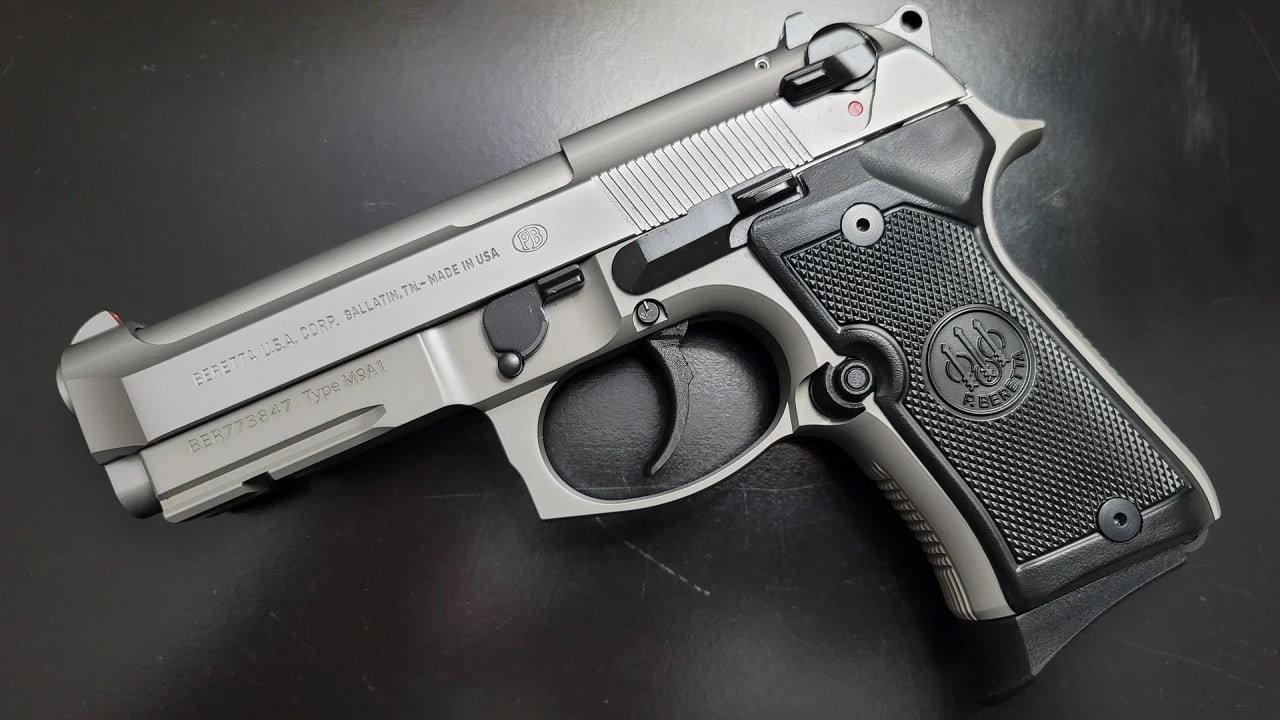
Beretta M9A1.
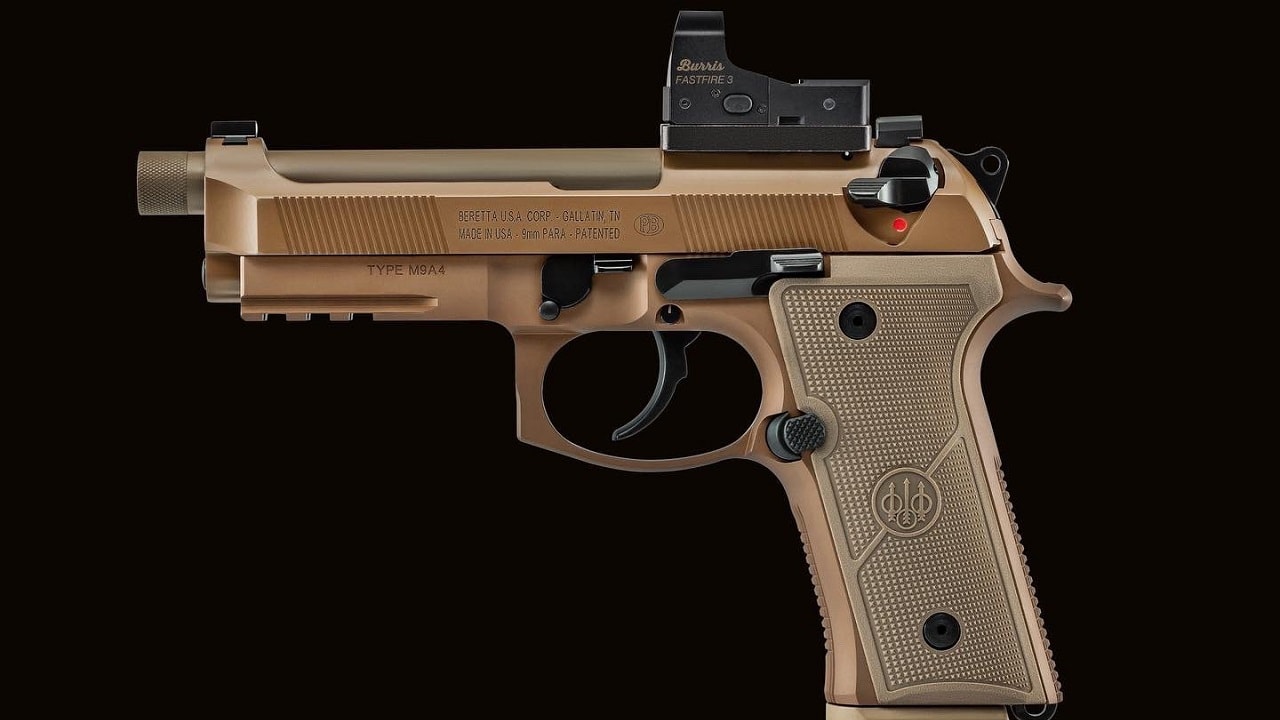
Beretta M9. Image Credit: Creative Commons.
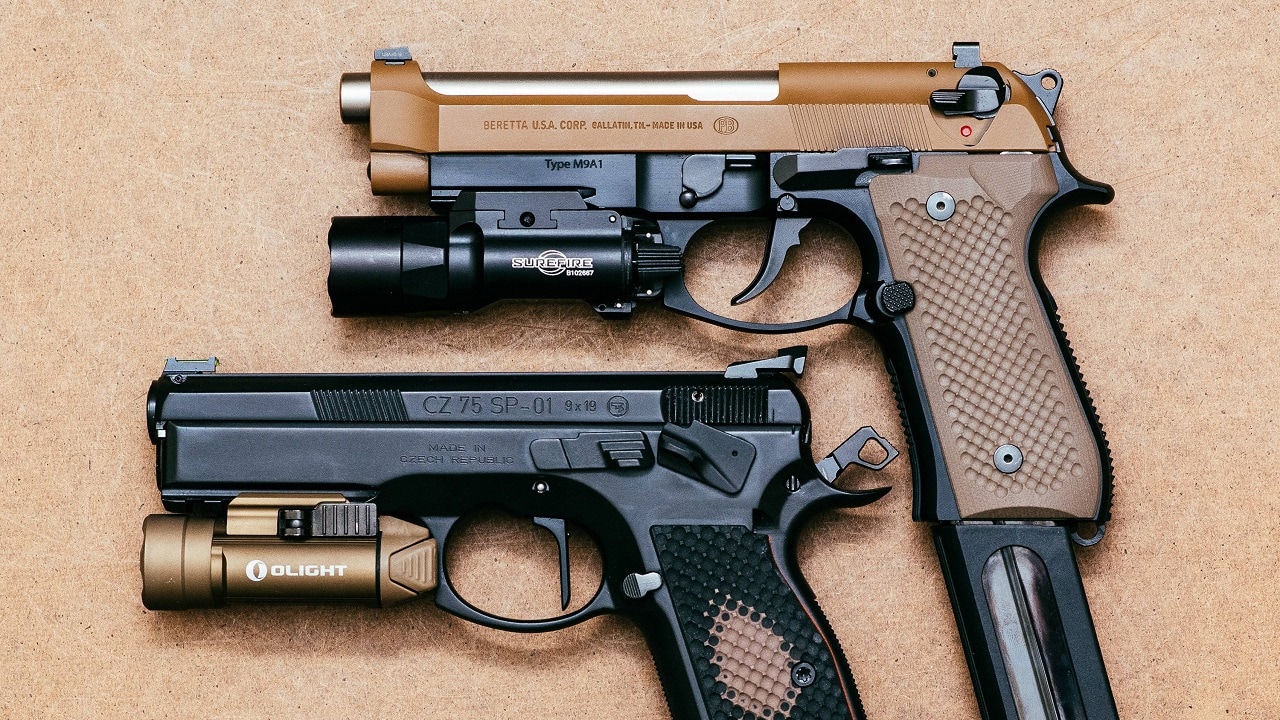
Beretta M9A1. Image Credit: Creative Commons.
My dislike…even hatred for the M9 Beretta still knows no bounds. Among my fellow troops, it was a never-ending source of not-so-gentle ribbing when it came to the pistol the Army replaced the iconic M1911A1 with.
Was this just a bit biased? Yes, very much so.
The 1911A1 Was A Better Shooter, Even The Old Models
I was weaned on the M1911A1 right away. I trained on it, got comfortable with it, shot a lot of rounds with it at Fort Bragg, Mott Lake, and many other locations downrange, and became a very well-trained shooter.
The old saying, “It feels like an extension of your hand,” was the 1911 to me. Did it rattle a bit? Oh yes, like a ‘52 Chevy, because most of the pistols we used were World War II-era-issued weapons. And forty-something years of firing, disassembling, and reassembling obviously took a toll.
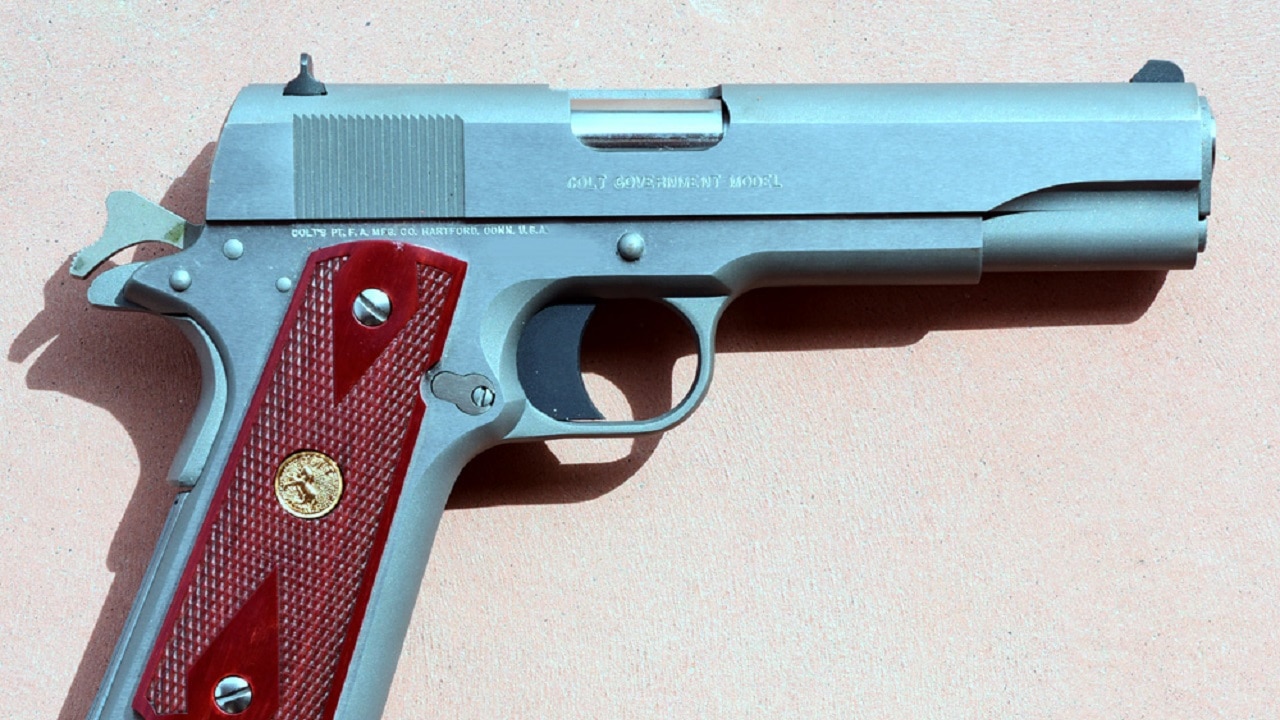
Modern version of the historic Colt M1911 pistol
But then the Army ditched the .45 caliber round for a 9mm, which was akin to blasphemy to those of us who were trained with the 1911.
I owned one and shot it frequently. So the M9 immediately became an unwanted intruder in the armories.
Conformity With NATO and 9mm Ammunition
However, the US was locked in with NATO, and the pistol 9mm ammunition was uniform with our allies, which was understandable. We shot the M9 a lot, and that comfort level was never high enough. Many others have felt these issues.
The slide-mounted safety was a pain in your fourth point of contact.
In racking the slide, many times, the shooter would engage the safety without realizing it. Imagine a shooter who doesn’t get as much range time reaching for a pistol in a combat situation and hearing a click.
Training and repetition work out that issue, but most troops in the Big Army don’t get that as they shoot it infrequently.
The open top/slide was another issue because it would let a lot of debris and other crap get inside the pistol. I never had a problem with the slide breaking, as some people did, but I heard some SF guys were shooting hot rounds with it.
The M9 Trigger Pull And The Extra Wide Grips
The M9’s trigger pull was absolute dog crap. For the first round, it was about 13 pounds. That isn’t conducive to first-round hits, which are all-important in a shooting situation.
The 1911’s trigger pull was six pounds for every round.
One drawback, and a frequent complaint, of the M9 was its wide grips. Many Joes and Flos hated them, but that was one of the few things I actually liked about the pistol. Although different from the 1911, they felt good and fit my hand well.
The double-stack 15-round magazine was also a nice feature.
So biases aside, even today, if the situation called for using either pistol, I’d still choose the 1911A1. The M9 lacks modularity and integrated rails to attach tactical lights, lasers, or red-dot sights needed in modern combat.
I have shot and like the new SIG Sauer M17/M18 pistols that replaced the M9, although several issues have been reported.
SIG makes some great weapons, and my primary defense weapon is a SIG P365XL.
It was a bit surprising that the military didn’t adopt the Glock 19 or the Glock 17, which are excellent weapons and already used in the military and law enforcement.
Back in the day, I assisted an FBI special agent at the US Embassy in Bolivia in training the Bolivian Presidential Security Detail in pistol marksmanship with the full-size SIG P226.
The Bureau was supplying the detail with the P226 that the Bolivians, even the women, found easy to shoot.
Why the Army chose the M9 over the P226 is one of those questions that could never be answered to any satisfaction. They opted for the cheaper option, and the old saying, “you get what you pay for,” rang true.
The Navy’s SEAL Teams eschewed the M9 in favor of the P226 due to superior reliability, corrosion resistance, and safety concerns (slide breakage) identified during early testing.
And has my opinion on the M9 changed over time? Not one little bit.
About the Author: Steve Balestrieri
Steve Balestrieri is a National Security Columnist. He served as a US Army Special Forces NCO and Warrant Officer. In addition to writing on defense, he covers the NFL for PatsFans.com and is a member of the Pro Football Writers of America (PFWA). His work was regularly featured in many military publications.