
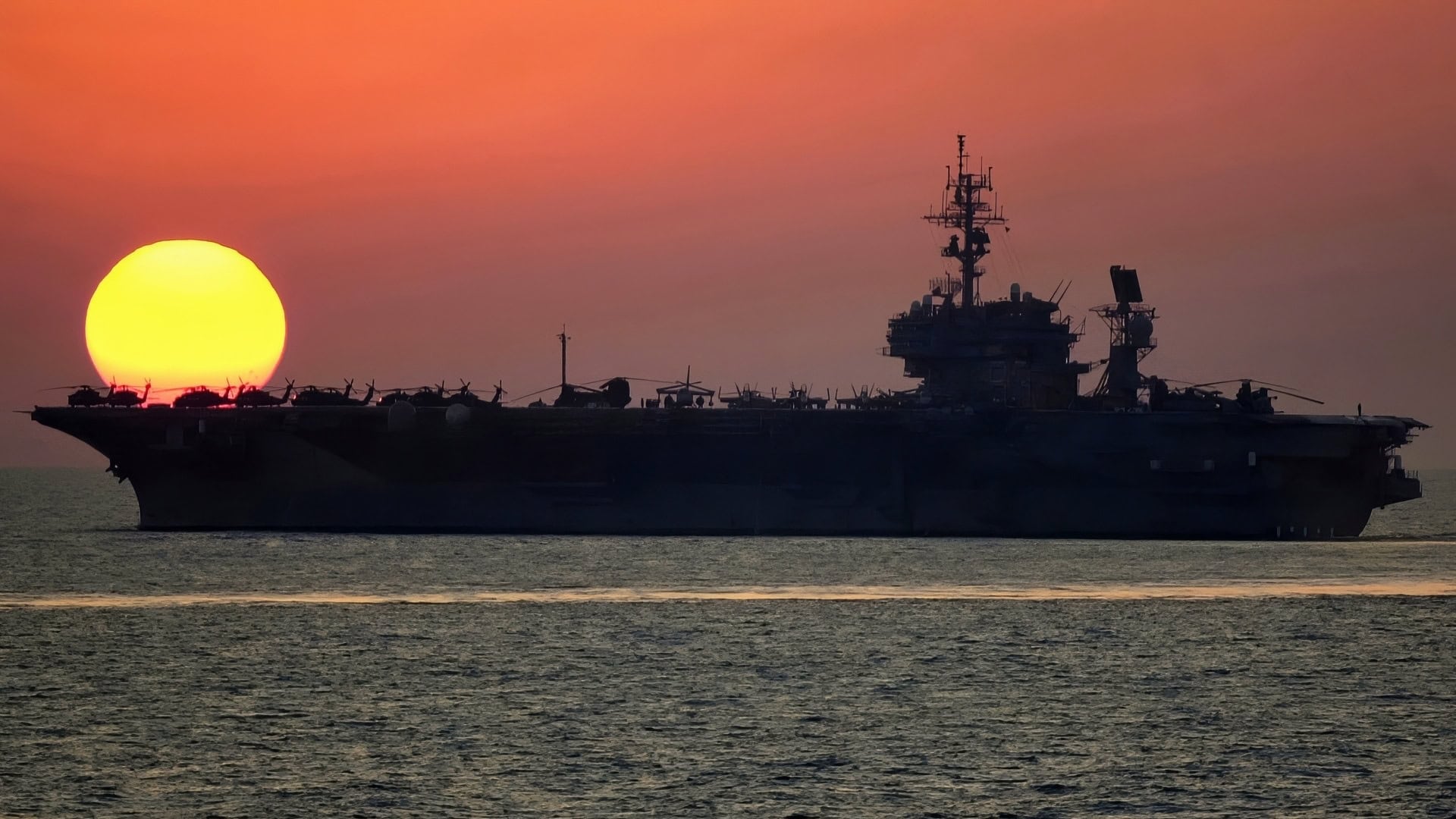
Summary and Key Points: Expert Isaac Seitz revisits October 26, 2006, when a Chinese Type 039 Song-class diesel-electric submarine, after an estimated month of shadowing, surfaced within five miles of the aircraft carrier USS Kitty Hawk (CV-63) off Okinawa, undetected by a strike group in a “relaxed posture” with no ASW drills. Foreign Ministry spokeswoman Jiang Yu denied it, Richard Fisher called it a harbinger, and Adm. Gary Roughead’s November 11 China visit was overshadowed; China now fields 60 submarines.
The USS Kitty Hawk (CV-63) vs. China’s Submarine: Forgotten Military History
In 2006, a strange event occurred when a Chinese Type-039 (NATO designation: Song-class) diesel-electric attack submarine shadowed the USS Kitty Hawk (CV-63).
During routine exercises near Okinawa, the submarine surfaced within five miles of the carrier and her strike group in an unusual departure from typical Chinese submarine operations.
Although neither ship posed a threat to the other, the event still shocked the U.S. Navy, which apparently had been blindsided by the sub.
The incident served as a wake-up call to the Navy, which, after the end of the Cold War, had begun transitioning away from anti-submarine warfare (ASW).
The event also demonstrated the threat posed by China’s submarine fleet and its growing sophistication.
A Chinese Submarine Slips Through an American Carrier’s Defenses
Before the incident, Kitty Hawk and her CSG had just participated in Exercise Talisman Saber, a multinational military exercise in the Pacific involving Australia and the U.S. in 2005.
Afterward, in October 2006, the carrier and her escorts conducted routine patrol exercises near Okinawa. On October 26, the submarine surfaced about five miles from the carrier, putting Kitty Hawk within range of the submarine’s Russian-made torpedoes.
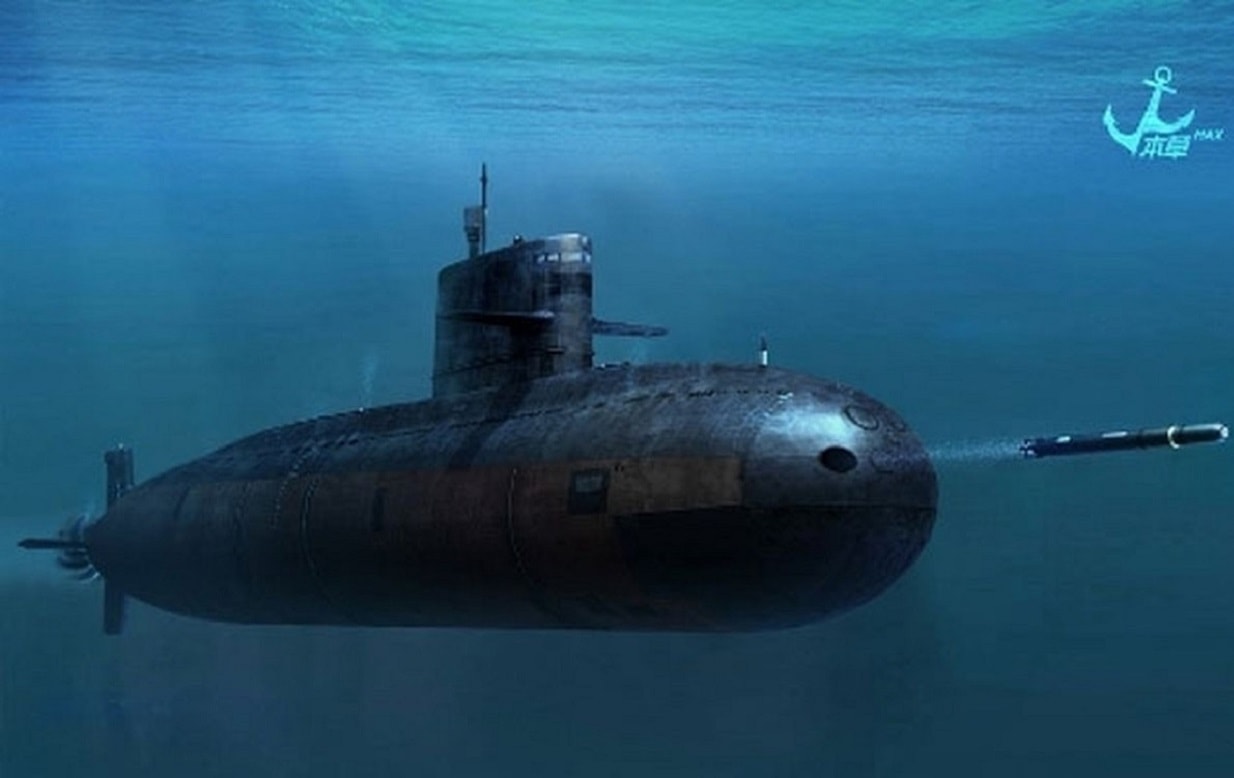
China Submarines. Image: Creative Commons.
According to reports, the CSG operated in a protective formation around the carrier, yet the submarine still slipped past the group’s defenses.
The U.S. Navy estimated that the submarine had shadowed the carrier for about a month before surfacing for unknown reasons.
The exact details of the incident are highly classified.
Despite the intrusion, both sides disengaged without any drama.
China’s Foreign Ministry denied the accusations and refused to acknowledge the incident occurred. “I have not heard of such a report,” said Foreign Ministry spokeswoman Jiang Yu when asked about the event. “
China has always had a defensive national defense policy. We are an adamant force in maintaining peace and stability in the Asia-Pacific region as well as the world at large.” China experts in Washington were stunned by the PLAN’s brazenness.
“This is a harbinger of a stronger Chinese reaction to America’s military presence in East Asia,” said Richard Fisher, a Chinese military specialist at the International Assessment and Strategy Center. “It will likely happen again, only because Chinese submarine captains of 40 to 50 new modern submarines entering their navy will want to test their mettle against the 7th Fleet.”
Unfortunate News for the U.S. Navy
The incident occurred at an unfortunate time for the U.S. Navy.
At the time, the Pentagon hoped to build a stronger relationship with China and avoid another Cold War with a major communist power.
On November 11 that year, Admiral Gary Roughead, then-Commander of the U.S. Navy’s Pacific Fleet, made a rare, historic visit to China to deepen ties between the two nations.
The talks were unfortunately overshadowed by news that a Chinese submarine was shadowing Kitty Hawk and her escorts. “It illustrates the primary reason why we are trying to push to have better military-to-military relationships,” said Admiral William Fallon, commander of U.S. Pacific Command. “Because the fact is that you have military units that operate in close proximity to one another,” he said, warning of “the potential for events that would not be what we’d like to see.”
The incident spurred speculation as to why the CSG had not detected the Chinese submarine.
Some have speculated that the U.S. did not anticipate the level of sophistication of China’s newer submarines.
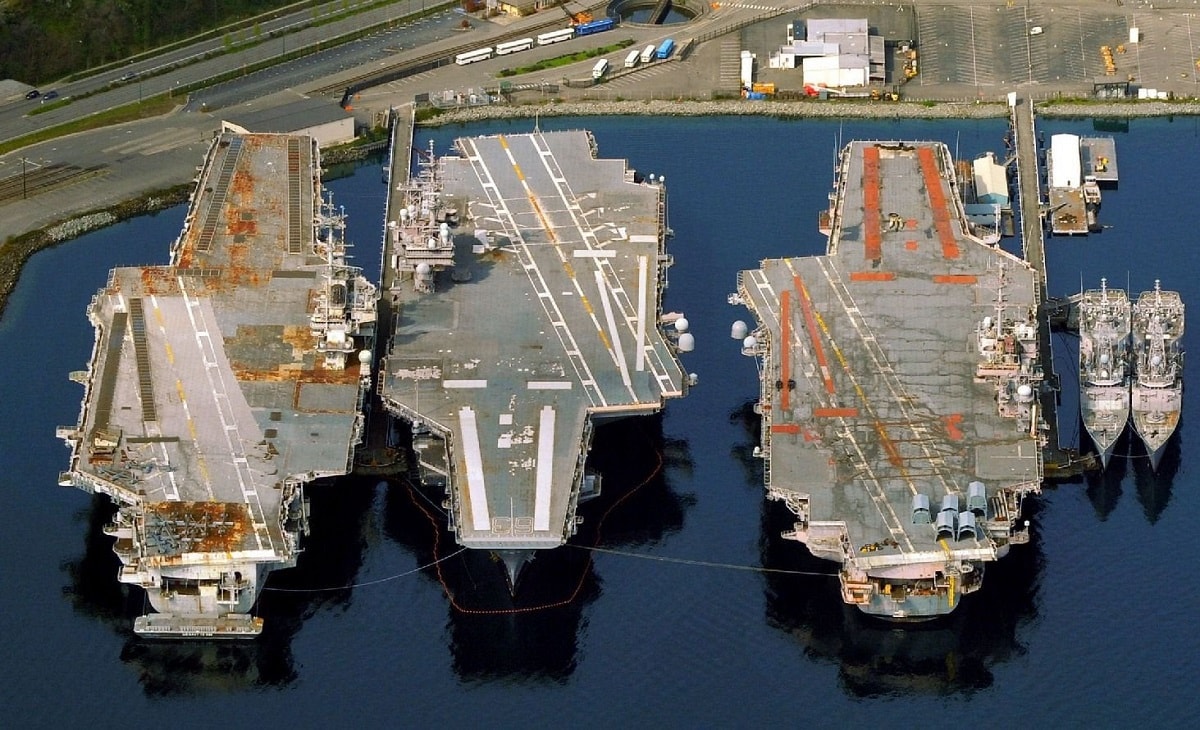
Image of several old aircraft carriers headed to scrap yard.
At the time, the Song-class was the PLAN’s most modern submarine and incorporated cutting-edge stealth technology.
After the Cold War ended, the U.S. Navy assumed it no longer had to worry about enemy submarines and began shifting its focus away from ASW.
According to Navy officials, Kitty Hawk’s CSG was not conducting ASW exercises at the time.
Had it been, the group likely would have detected the Chinese ship. Later, in 2009, Admiral Timothy J. Keating stated that the carrier was in a “relaxed posture.” “If there were some heightened state of tension, we would, believe me, we would not let them get that close,” he said.
The Rise of China’s Submarine Capabilities
At the time, Chinese subs rarely ventured far beyond the country’s coastal waters.
Not only had the ship surfaced near an American CSG, but it had done so near Okinawa, near Japanese waters.
The navy had underestimated not only the sophistication of the ship’s stealth technology, but also how far China was willing to venture outside its proverbial comfort zone.
The incident signaled a shift in China’s strategy and growing confidence in the PLAN’s A2/AD capabilities.
As Fisher noted earlier, the event foreshadowed what was to come. Since then, China has dramatically expanded its submarine capabilities.
Some estimates suggest China operates roughly 59 to 60 submarines of various models, both conventional and nuclear.
Like Russia, China has focused heavily on submarines in response to American aircraft carriers.
Furthermore, China has become more aggressive in recent years, as evidenced by the recent coast guard skirmishes in the South China Sea.
Unfortunately, the Navy’s efforts to build ties with the PLAN and avoid a new Cold War were ultimately unsuccessful.
And here’s some forgotten history on the USS Kitty Hawk: she was sold for just a penny and decommissioned years later. A sad ending for an aircraft carrier with so much history.
About the Author: Isaac Seitz
Isaac Seitz, a Defense Columnist, graduated from Patrick Henry College’s Strategic Intelligence and National Security program. He has also studied Russian at Middlebury Language Schools and has worked as an intelligence Analyst in the private sector.