
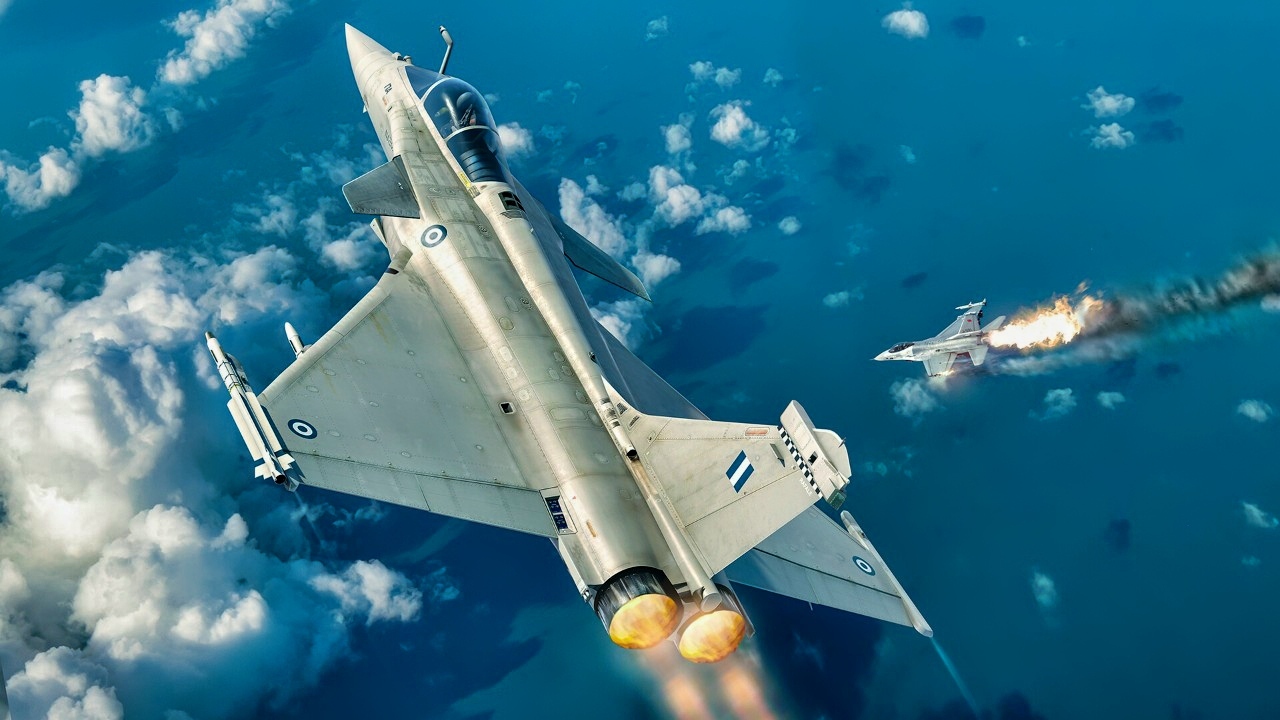
Following the termination of the Future Combat Air System (FCAS) program, Paris is seeking alternative ways to modernize its air force. FCAS, which aimed to produce a sixth-generation aircraft for France, Germany, and Spain, fell apart because Paris and Berlin disagreed. Germany has now instead opted to join the Global Combat Air Power (GCAP) initiative with the UK, Italy, and Japan. With no other options, France is now looking to upgrade its Dassault Rafale fighter.
French news media reports that the French Air Force is seeking to upgrade the Rafale to the F5 “Super Rafale.” This deeply modernized aircraft reportedly introduces new, heavily automated avionics, better engines, and the ability to carry new nuclear missiles.
France to Develop its Own Sixth-Generation Aircraft
The F5 variant was originally envisioned as a stopgap measure while the New Generation Fighter (FCAS) was undergoing development.
However, the FCAS initiative was officially canceled in June after French President Emmanuel Macron and German Chancellor Friedrich Merz agreed to end the program.
The decision to terminate the project stemmed from diverging priorities between Paris and Berlin.
Airbus in Germany and Dassault in France, the manufacturers in charge of the program, reportedly failed to cooperate.
Although the exact details of FCAS’ untimely demise remain unknown, the governments in Paris and Berlin apparently could not or would not resolve the conflict between the two manufacturers.
As a result, the program was terminated, and Germany instead joined the GCAP program.
With the FCAS project dead, France is going solo.

Dassault Rafale Fighter. Image Credit: Creative Commons.
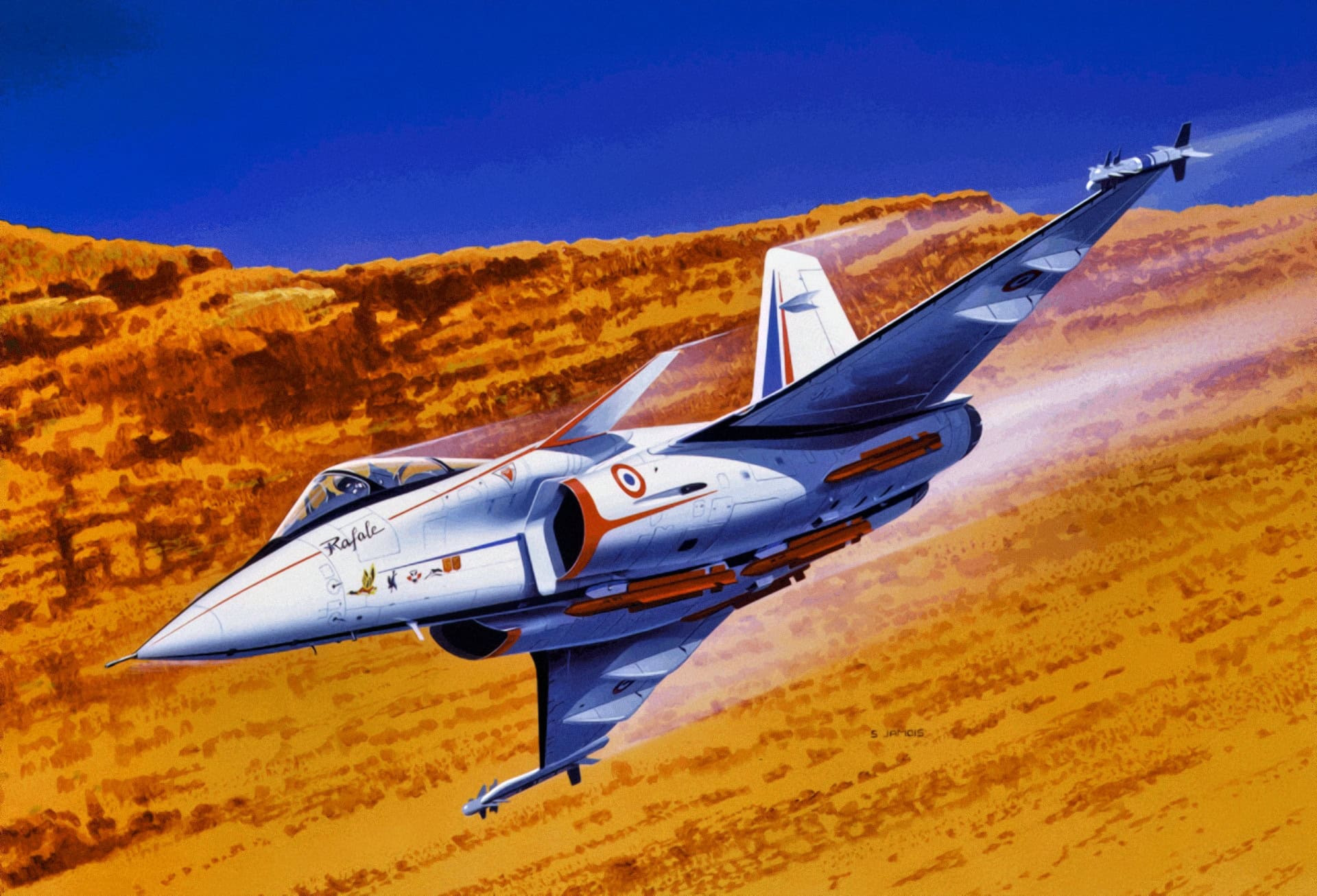
Dassault Rafale Artist Image. Image Credit: Creative Commons.
According to reports, Paris is looking to develop its own aircraft, under the designation Avion de Combat du Futur (ACF).
The ACF program will reportedly build upon the foundation laid by the FCAS program, incorporating the jointly developed Next-Generation Weapon System (NGWS) and other features from its predecessor.
France currently aims to produce a demonstrator aircraft by 2027, with the first operational aircraft planned by 2029.
The 2027 finance bill, currently under discussion in the French Parliament, lays out funding for the program. The program’s future is uncertain, as France is unlikely to cover its high costs without major partners.
The “Super Rafale”
Meanwhile, the Rafale F5 is the French Air Force’s top priority.
The new “Super Rafale” reportedly features a new set of engines—likely upgraded Snecma M88 engines—along with a new RBE2-XG AESA radar for detecting stealth aircraft.
The aircraft will also be capable of launching the ASN4G hypersonic nuclear missile designed for France’s airborne nuclear deterrent.
Under the current framework, France plans to expand its Rafale fleet by more than 35% and operate at least 230 aircraft by 2035.
According to French Air and Space Force Chief of Staff General Jérôme Bellanger, the service was already over-relying on its limited air force and needed to expand to compete with Russia. “I overuse fighter planes by more than 15%,” he said. “But overusing the park will no longer be enough tomorrow, so it is important to properly calibrate the effort on the format of fighter aviation in the next military programming law.”
AI and automation are a major component of the “Super Rafale.” The F5 variant will reportedly serve as a testbed for sixth-generation systems for the ACF program.
To that end, the French Air Force is betting heavily on manned-unmanned teaming (MUM-T).
The F5 will be able to control and operate collaborative combat aircraft (CCAs) that are designed to increase the pilot’s in-flight capabilities, radar detection, and firepower.
Development of the AI for the new CCAs is currently being conducted under the HypAIRion project. Under the program, two Mirage-2000s are currently serving as AI testbeds. The Rafale is expected to fly alongside a CCA in 2028.
Ensuring the Future of the French Air Force
Dassault has already conducted simulated flight tests with a Harmattan AI drone and flight tests with two separate AI algorithms aboard a Rafale aircraft. “The one who takes the upper hand is the one who detects, understands, decides, and acts faster than his adversary,” the head of the Air Force General Staff’s capacity development office said.
The official continued, saying that AI must “transform the abundance of data into an operational advantage.” He said French equipment must evolve to meet new battlefield needs, such as Russia’s Geran-2 drone, which is currently in its fifth iteration thanks to its open, modular design.
The Rafale F5 is currently slated to begin development in December this year. France plans to acquire 25 F5 aircraft and export F3 and F4 aircraft to India, Serbia, the UAE, and other countries.
The UAE expressed interest in the Rafale F5, but later rescinded it when France refused to give full control over the aircraft’s technology.
The first “Super Rafales” are expected to be delivered to the French Air Force by the early 2030s.
Originally developed in the 1980s, the Rafale will remain a core staple of France’s air power into the 2050s.
With the ACF program’s prospects uncertain, Paris has no option but to keep relying on the aircraft until it reaches its limit.
About the Author: Isaac Seitz
Isaac Seitz, a Defense Columnist, graduated from Patrick Henry College’s Strategic Intelligence and National Security program. He has also studied Russian at Middlebury Language Schools and has worked as an intelligence Analyst in the private sector.