
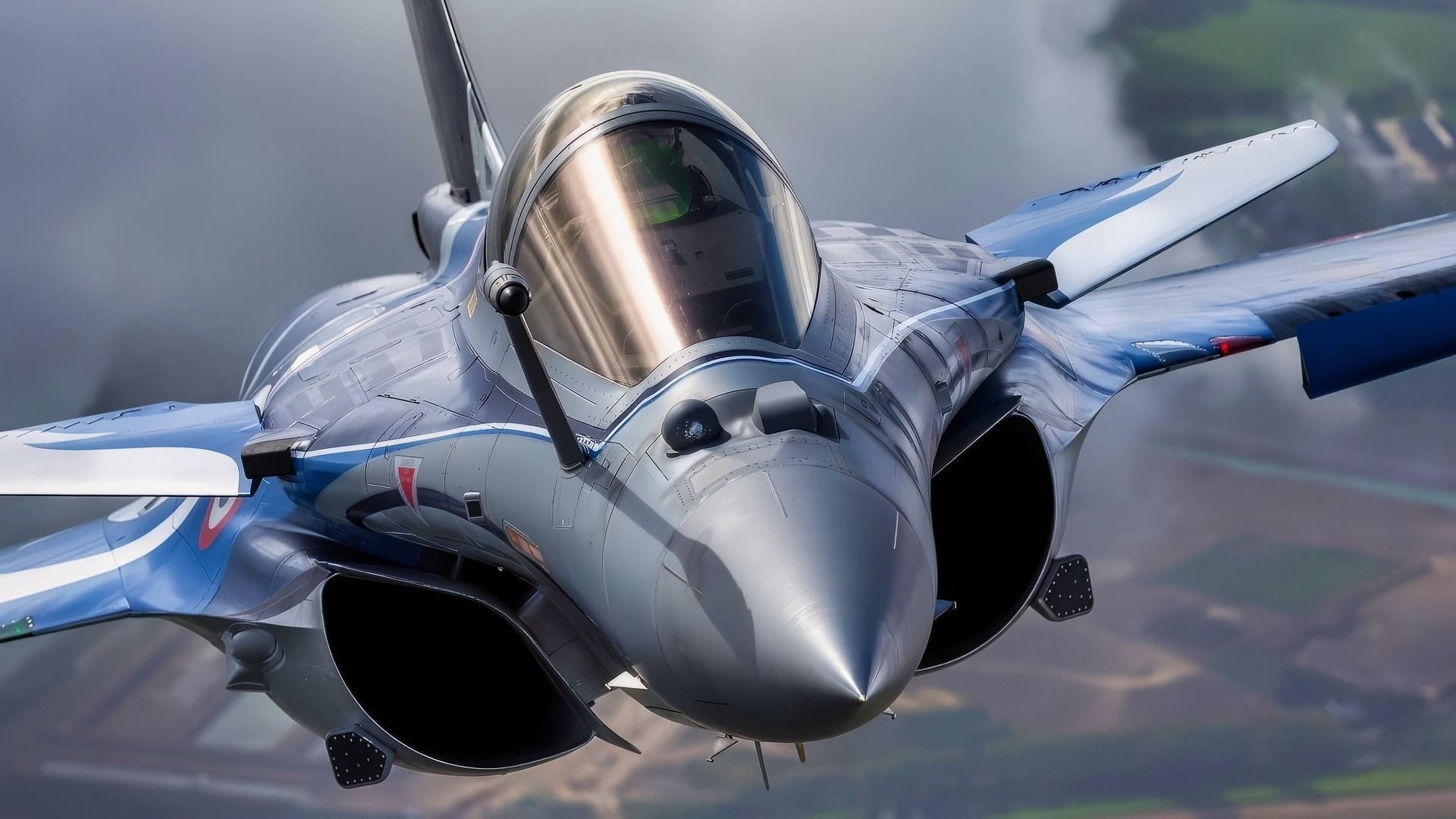
The Dassault Rafale Fighter Might Be the Best Fighter Not Called F-35 or F-22
Unlike other Western nations, which either rely on American-made weapons or form alliances with other European nations and make weapons under joint contracts.
France, on the other hand, has a thriving domestic defense industry that is capable of producing advanced military hardware and weapons systems across the board. The Dassault Rafale is the centerpiece of France’s industrial ambitions.
This 4.5-generation fighter is currently one of the most advanced French aircraft in service and arguably is one of the most advanced fighters in Europe.
The Rafale is currently operated by multiple nations worldwide.
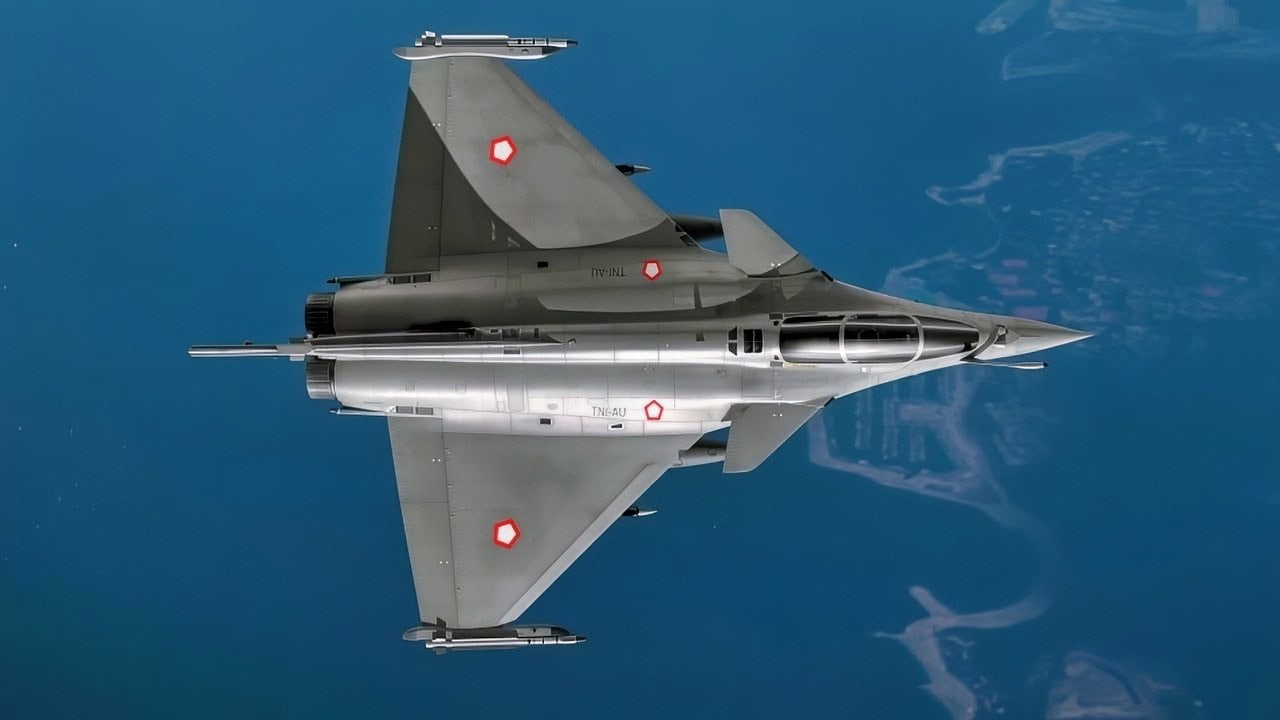
Dassault Rafale Overhead. Image Credit: Industry Handout.
Underpinning the aircraft’s success is a host of advanced weaponry developed by France, which makes the Dassault Rafale a deadly opponent.
France’s Most Important Fighter
The Dassault Rafale can carry a diverse weapons load, making it suitable for a wide range of missions. The aircraft is fitted with fourteen external hardpoints, thirteen in the case of the carrier-based Rafale M, and can carry approximately 9.5 metric tons of external fuel and ordnance.
Its stores management system complies with NATO MIL-STD-1760 standards, allowing it to integrate a wide range of French and NATO weaponry.
Integrated into the aircraft’s structure is an internally mounted 30-millimeter GIAT 30M791 revolver cannon.
While gun engagements are rare in modern aerial warfare, the cannon remains a necessary component for last-resort engagements or drone-hunting missions.
While the Dassault Rafale can carry a wide range of conventional armaments, its most important feature is its ability to carry nuclear munitions.
The aircraft is certified to carry the ASMP-A, a supersonic air-launched nuclear cruise missile that forms the airborne component of France’s nuclear forces.

Dassault Rafale Fighter from France. Image Credit: Creative Commons.
This mission places the Rafale at the heart of national strategic policy, replacing earlier nuclear-strike aircraft and ensuring France retains a flexible and survivable nuclear delivery option. Export variants are reportedly altered to restrict their ability to carry nuclear weapons due to arms control concerns.
For Air-to-Air Missions
For air-to-air operations, the Rafale’s primary weapon is the MICA missile family, produced by MBDA. MICA, short for Missile d’Interception de Combat et d’Auto-défense, is available in two separate seeker variants that share the same missile body.
The infrared-guided MICA-IR uses a passive imaging infrared seeker, offering resistance to jamming and allowing silent engagements without radar emissions. The radar-guided MICA-EM employs an active radar seeker suitable for beyond-visual-range combat.
Because both variants are aerodynamically identical, a Rafale can carry a mix of infrared and radar-guided missiles. MICA serves as both an air superiority weapon and a self-defense missile, effective across short and medium ranges.
For long-range aerial combat, the Rafale is equipped to carry the MBDA Meteor missile, one of the most advanced beyond-visual-range air-to-air missiles currently in service, according to many experts.
Unlike traditional rocket-powered air-to-air missiles, Meteor uses a ramjet propulsion system, allowing it to sustain thrust for much of its flight.
This gives Meteor a significantly larger no-escape zone, meaning that targets have far less ability to evade once the missile is launched. Integrated tightly with the Rafale’s Thales RBE2 AESA radar, the Meteor enables the Rafale to engage enemy aircraft at very long distances while retaining high kill probability, making it a central component of the aircraft’s air dominance capability.
Guided Bombs for Strike Missions
In the same way, the Rafale’s air-to-ground arsenal is equally extensive and comprises mostly standoff weapons. Its primary strike weapon is the French AASM (or HAMMER), which stands for Armement Air-Sol Modulaire.
HAMMER is a modular precision-guided munition that combines conventional bomb bodies with guidance and propulsion kits much like American JDAMs. Depending on the configuration, AASM can use inertial and GPS guidance, laser guidance, or imaging infrared seekers.
A rocket-powered range-extension kit allows the weapon to be launched from significant distances, enabling the Rafale to strike defended targets without overflying them. Multiple AASM weapons can be released in a single pass against separate targets, a capability demonstrated in real combat operations.
In addition to AASM, the Rafale can employ a wide range of laser-guided bombs, including NATO-standard Paveway series munitions.
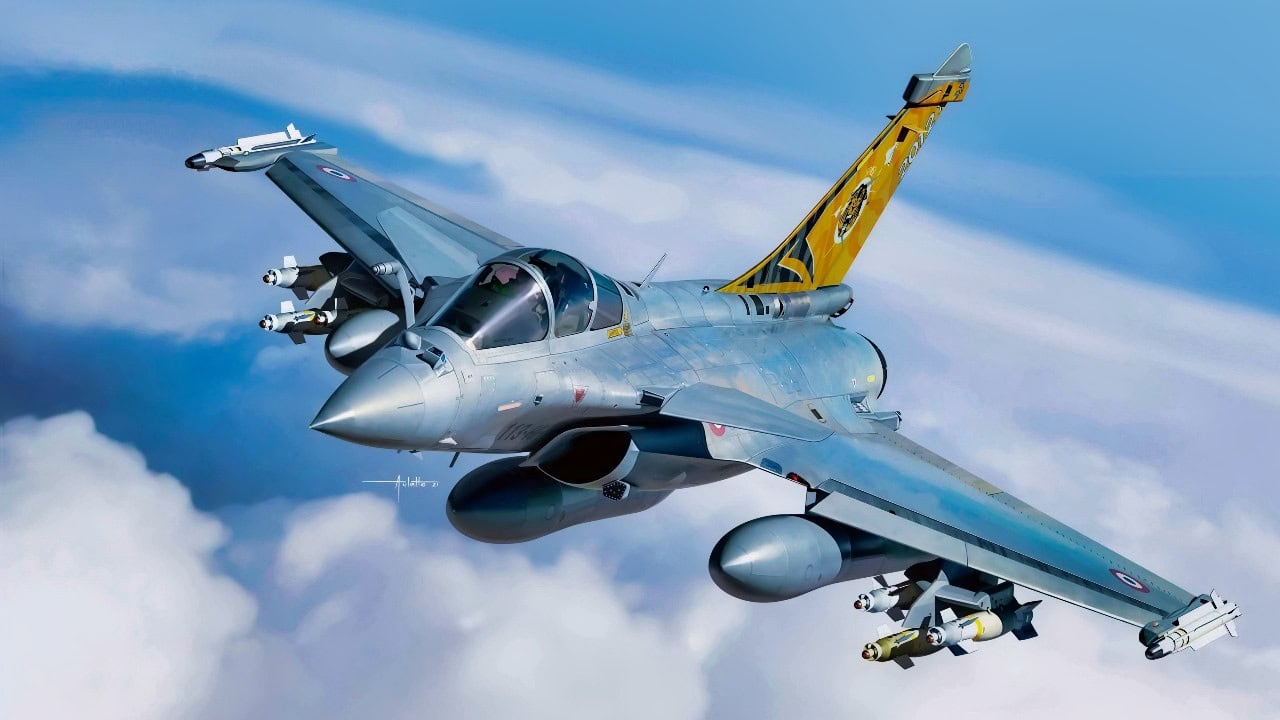
Dassault Rafale. Image Credit: Creative Commons.
These weapons are typically employed using advanced targeting pods such as TALIOS, which provides high-resolution electro-optical and infrared imagery, laser designation, and reconnaissance capability. The aircraft can also carry unguided bombs where required, reflecting its ability to operate across the full range of intensity from high-end warfare to lower-intensity conflicts.
Long-Range Missile Arsenal
For deep-strike missions, the Rafale can be equipped with the Franco-British SCALP-EG cruise missile, or, as the British like to call it, the Storm Shadow. This long-range, air-launched cruise missile is designed to strike hardened and high-value targets such as bunkers, command centers, and infrastructure from distances exceeding 500 kilometers.
SCALP follows a low-observable, terrain-hugging flight profile and uses advanced navigation and guidance systems to deliver its warhead with extreme precision. The Rafale’s integration with SCALP allows it to conduct strategic strikes while remaining well outside enemy air defense coverage, a capability employed extensively in operations over Libya, Iraq, Syria, and Ukraine.
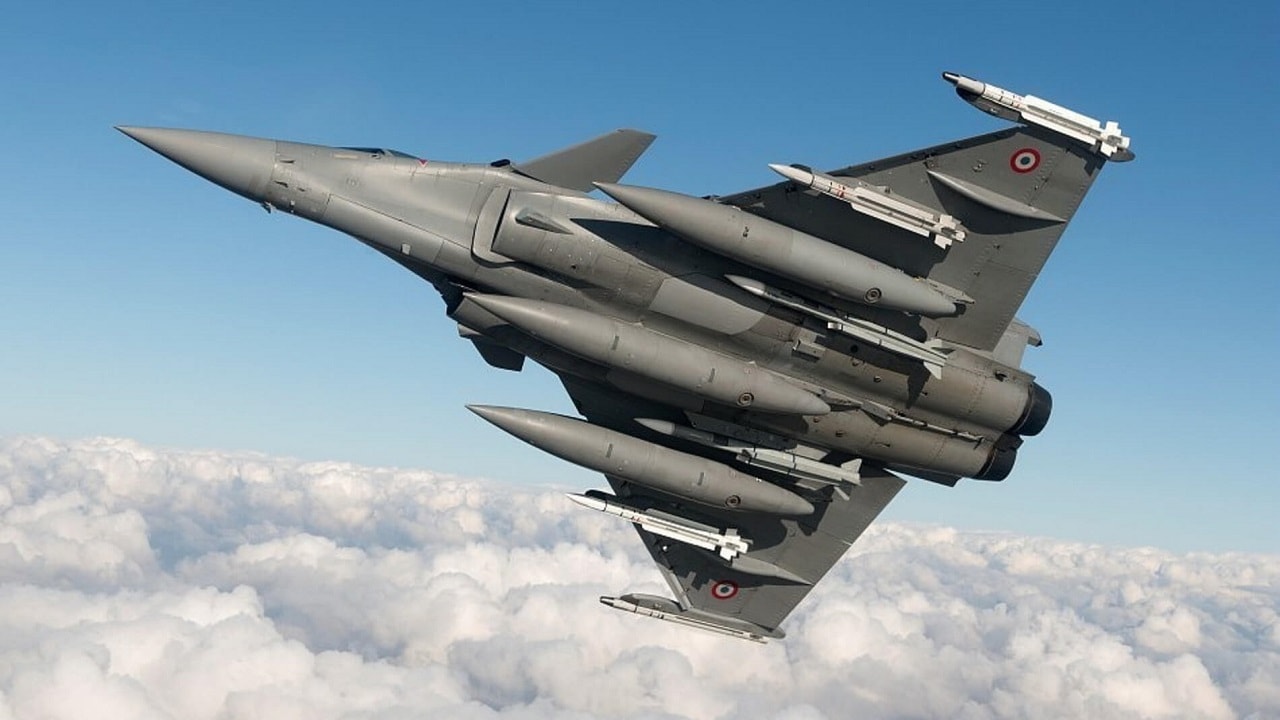
Dassault Rafale F3-R. Image Credit: Creative Commons.
In the maritime strike role, the Dassault Rafale carries the AM39 Exocet anti-ship missile, a weapon well known for its sea-skimming flight profile and effectiveness against surface combatants.
This capability is particularly important for the Rafale M, which serves as the French Navy’s primary strike fighter.
Combined with the aircraft’s sensors and data-link capabilities, Exocet gives the Rafale a credible role in sea control and naval strike missions.
MORE – The U.S. Navy Really Did Sink Its Own Aircraft Carrier
MORE – Russia Doesn’t Have an Aircraft Carrier Anymore
About the Author: Isaac Seitz
Isaac Seitz, a Defense Columnist, graduated from Patrick Henry College’s Strategic Intelligence and National Security program. He has also studied Russian at Middlebury Language Schools and has worked as an intelligence Analyst in the private sector.