
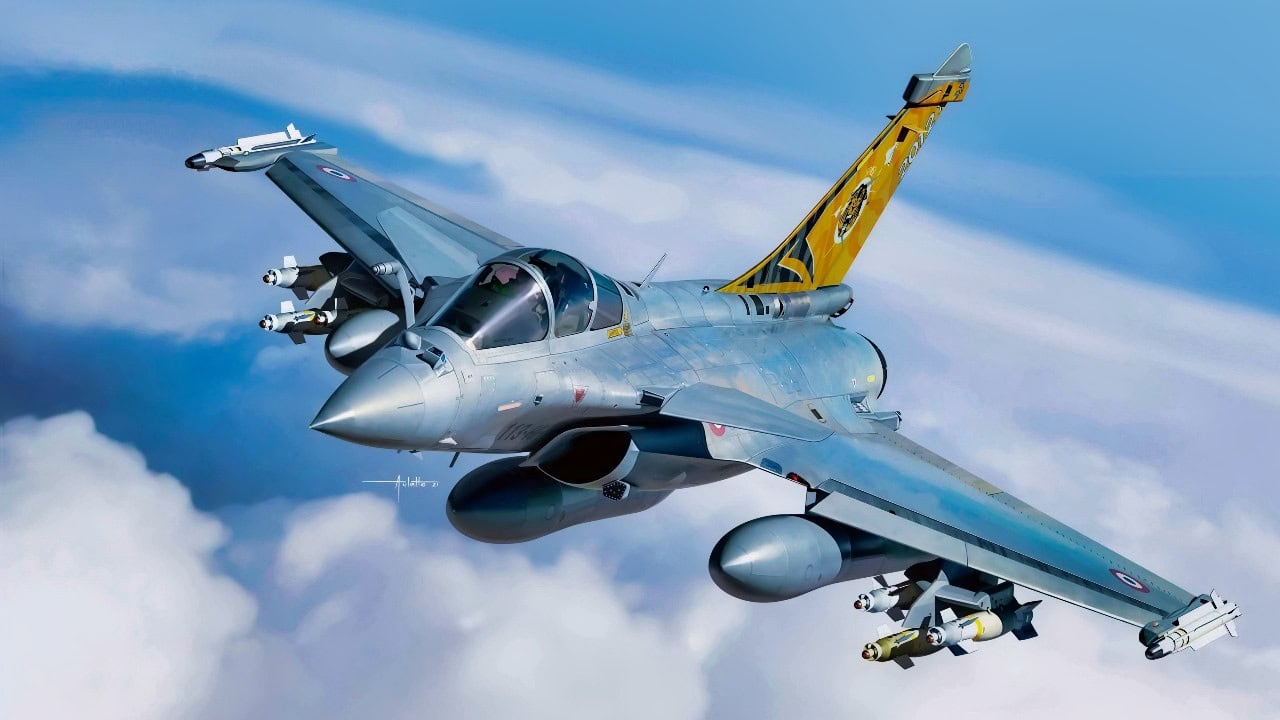
Summary and Key Points: A short cockpit clip from Atlantic Trident 25 shows a French Rafale radar acquiring an F-35A and simulating a missile shot, prompting claims that a 4.5-generation jet “killed” a fifth-generation stealth fighter.
-The problem is context: the engagement geometry, altitude, speed, rules, and the F-35’s EMCON posture are unknown, and the exercise emphasized Agile Combat Employment and interoperability—not the demonstration of platform superiority.
-In a within-visual-range merge, stealth benefits shrink, and outcomes hinge on tactics, pilot decisions, networking, and electronic warfare.
-The clip doesn’t dethrone stealth, but it does underline vulnerability under constraints.
Can a Dassault Rafale Beat an F-35? The NATO Exercise Video That Set Off a Storm
A 44-second cockpit clip from Exercise Atlantic Trident 25 shows a French Rafale locking onto and “killing” a US F-35A in a mock engagement.
The video, released by the French Air and Space Force, reignited a long-running debate: can advanced 4.5-generation fighters meaningfully challenge fifth-generation stealth aircraft? Immediate reactions ranged from celebration in French defense circles to skepticism among US analysts, leaving the public wondering what exactly had happened and what it meant.
Atlantic Trident 25
The mock engagement in question happened during Atlantic Trident 25, which was hosted by Finland, a NATO member since 2023.
Participants included France, the UK, the US, and Finland, and involved the Rafale (France), Typhoon (UK), F-35A and F-15E (US), and F/A-18 Hornets (Finland). The exercise focused on Agile Combat Employment (ACE) concepts, such as dispersed basing, rapid sortie generation, and interoperability among NATO members.
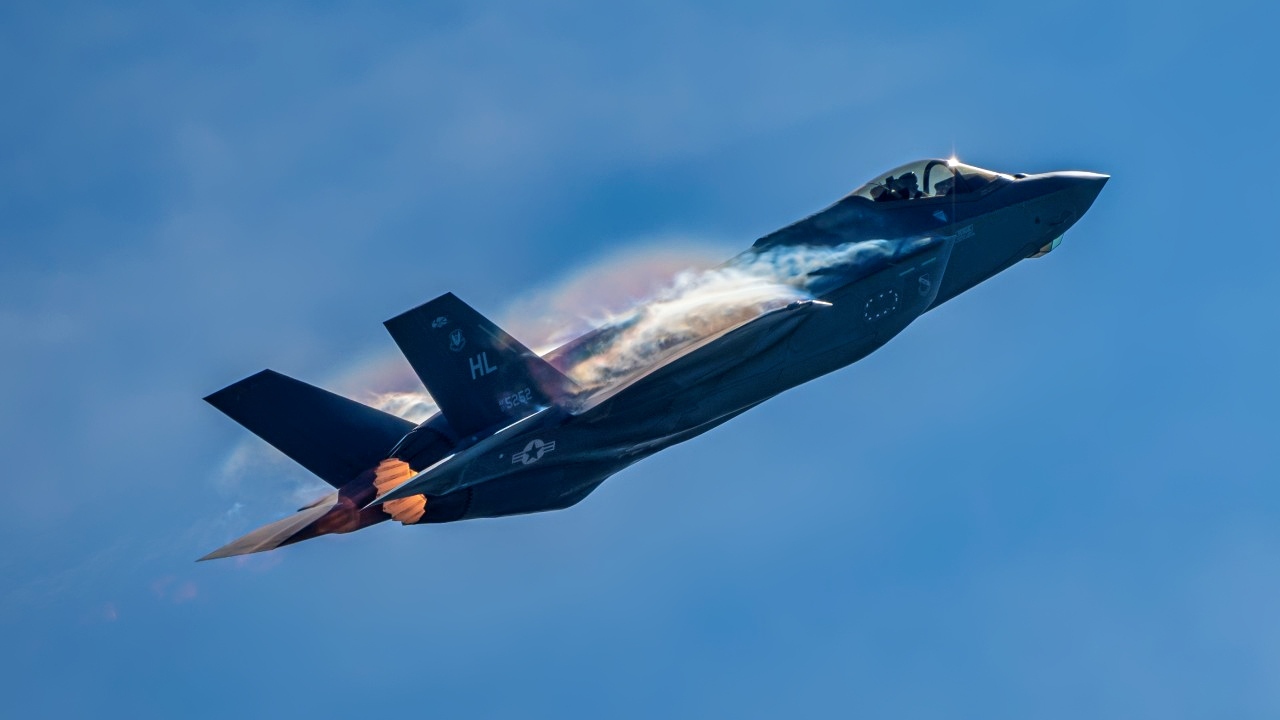
U.S. Air Force Maj. Kristin “BEO” Wolfe, F-35A Lightning II Demonstration Team commander and pilot, flies during a demonstration rehearsal at Hill Air Force Utah, April 28, 2021. The F-35A Lightning II Demonstration Team is part of the first operational F-35A wing for the Air Force, the 388th Fighter Wing, and flies over the Hill Air Force Base runway to practice and prepare for upcoming air shows around the world. (U.S. Air Force photo by Capt. Kip Sumner)
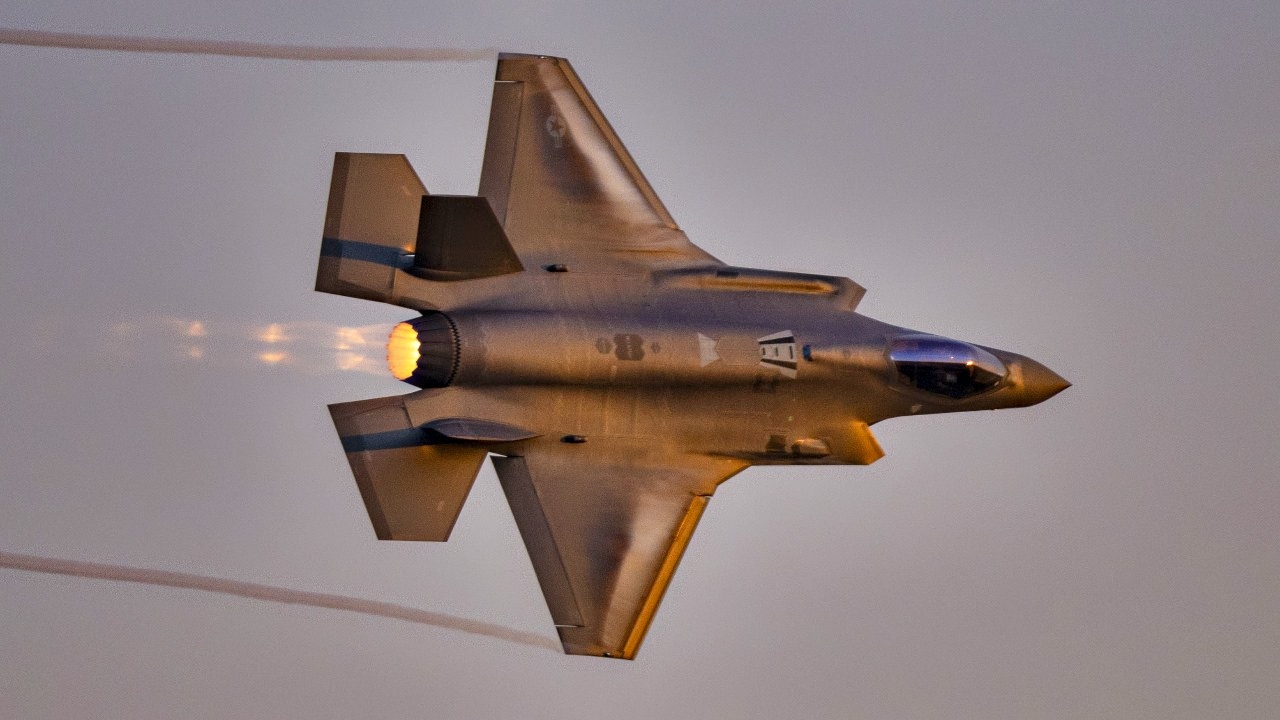
A U.S. Air Force F-35A Lightning II assigned to the F-35A Lightning II Demonstration Team performs at the Capitol Air Show over Sacramento, California, July 15, 2024. Innovations such as the F135 Smart Stacking Tooling Enhancement developed by the OC-ALC mechanics and engineers have significantly improved the rotor assembly process, increasing precision and enhancing the depot’s ability to produce the engine that powers the F-35 Lightning II. (U.S. Air Force photo by Staff Sgt. Zachary Rufus)
Roughly 40 aircraft and 1,000 personnel were involved. It was not a pure 1v1 dogfight environment but rather, in all likelihood, a scripted or constrained scenario.
What Happened Technically?
The video shows the Rafale radar acquiring the F-35. “Take the shot” is heard, simulating missile employment, suggesting a simulated “kill.”
However, there are some important caveats to keep in mind: we do not know the engagement parameters; the starting geometry is unknown; the altitude and speed are unknown; and the sensor and EMCON posture of the F-35 are unknown.
The F-35’s stealth advantage applies primarily to X-band radar detection and frontal aspect, so if the engagement occurred within-visual-range (WVR), then the stealth advantage diminishes. If the F-35 were not in its full low-observable configuration, the stealth advantage would diminish.
The Rafale has built-in advantages that should be acknowledged, such as the RBE2 AESA radar, the Meteor beyond-visual-range missile, the SPECTRA electronic warfare suite, and high-energy maneuverability that is vital for dogfighting.
It’s also possible that the Rafale employed offboard targeting (AWACS), infrared search and track (IRST), and networking to overcome stealth-detection challenges.
Technical Contrast F-35 vs. Rafale
The Rafale is a 4.5-generation fighter, highly agile with a delta-canard design. The EW integration is strong, and the long-range Meteor missile is lethal for BVR engagements. The jet is not stealthy, but optimized for electronic survivability.
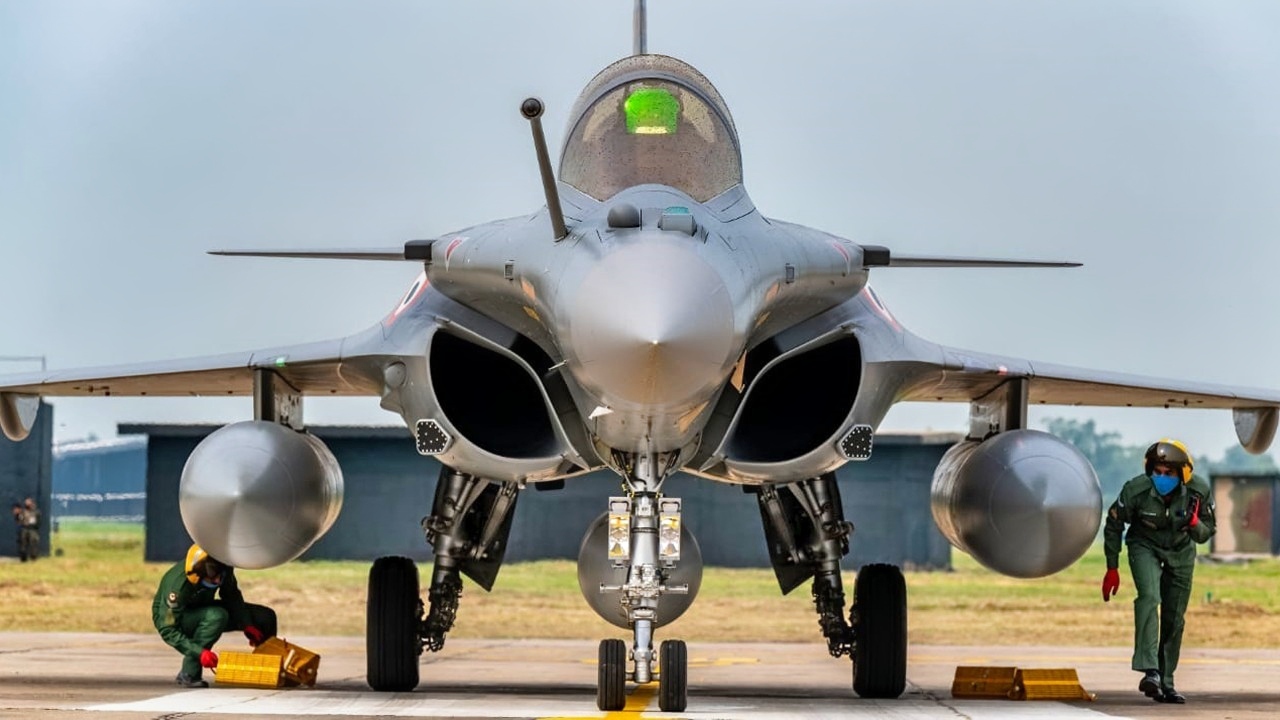
Dassault Rafale Fighter. Image Credit: Creative Commons.
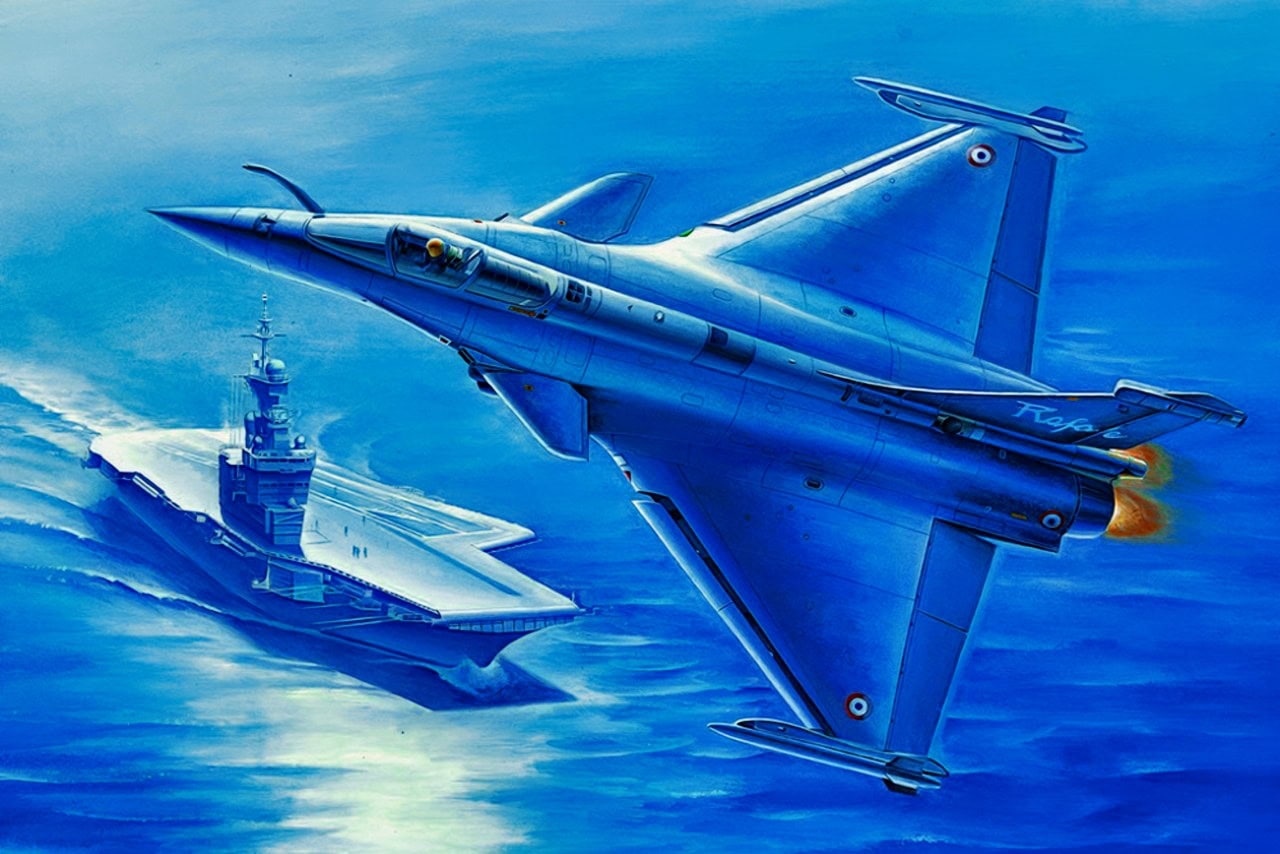
Dassault Rafale Fighter. Image Credit: Creative Commons.
The F-35A is a low-observable stealth aircraft, arguably the world leader in sensor fusion. The distributed aperture system (DAS) and AN/APG-81 AESA radar are state-of-the-art; the F-35 was designed to detect and engage first in BVR engagements.
In theory, the F-35 should see the Rafale first, engage at longer range, and avoid close-in engagements where the Rafale’s maneuverability becomes an advantage. The Rafale “kill” implies either scenario constraints, training objectives, or a WVR merge situation.
Historical Parallels
Similar claims surfaced in 2009 after the Rafale reportedly scored a “kill” against an F-22.
In this scenario, the F-22 was carrying external fuel tanks that degraded its stealth and was likely operating under constrained ROEs. Regardless, the combined incidents suggest a recurring pattern: the outcomes of tactical exercises are not full-spectrum war simulations; they test specific scenarios.
Tactically, these exercises are not intended to prove platform superiority.
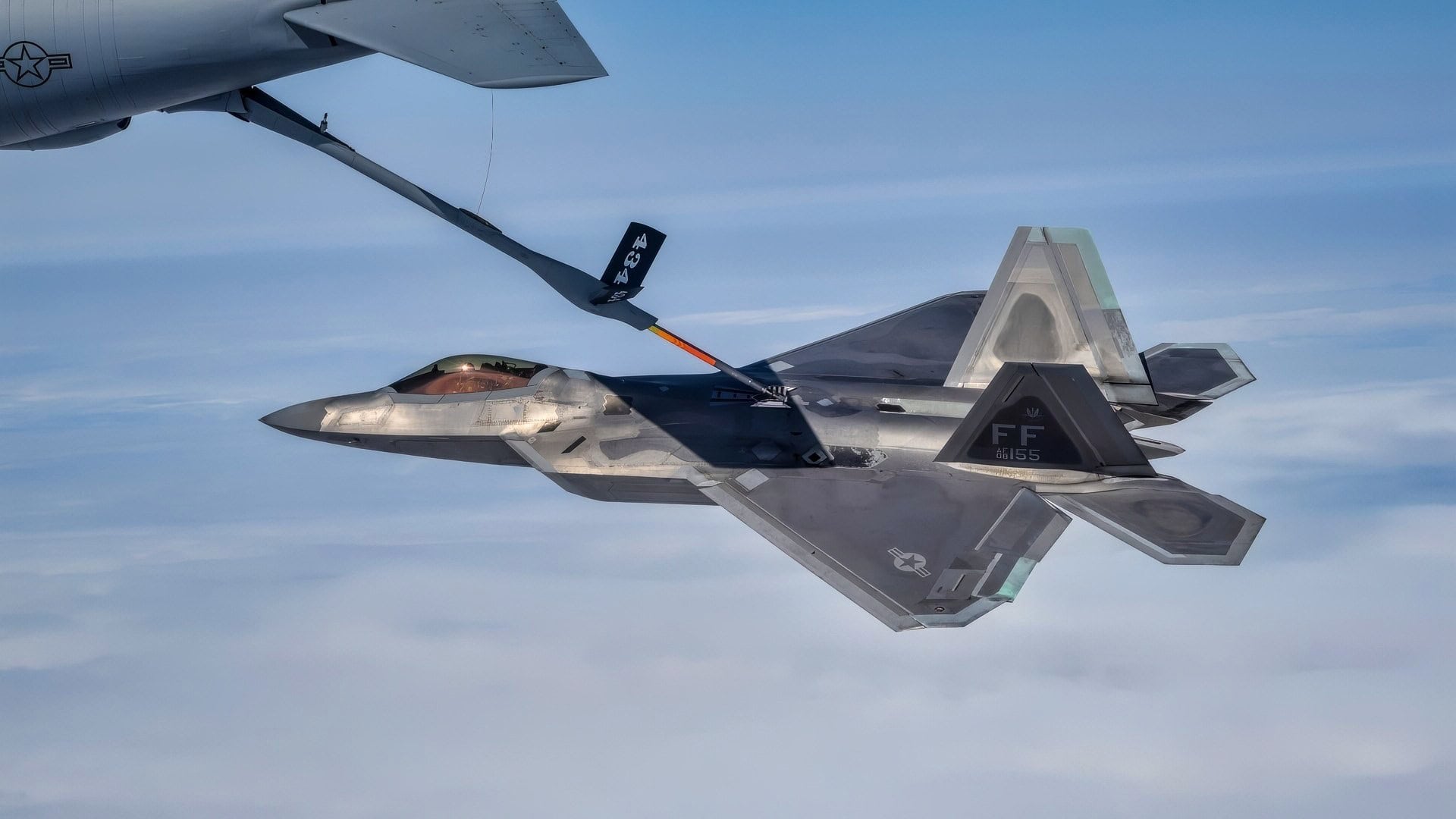
A U.S. Air Force F-22 Raptor and a KC-135 Stratotanker, assigned to the 434th Air Refueling Wing, Grissom Air Reserve Base, Ind., conduct aerial refueling over the continental United States, Aug. 21, 2018, during the Northern Lightning 18-2 exercise. Northern Lightning is one of seven Air National Guard joint accredited exercises held at a Combat Readiness Training Center and provides tailored, cost-effective and realistic combat training for participating units in a joint and multinational environment. (U.S. Air National Guard photo by Tech. Sgt. Mary E. Greenwood)
Instead, they test data-link integration, ROE discipline, pilot skill, and cross-platform coordination. A single simulated kill does not invalidate stealth doctrine—but it does reinforce that no aircraft is invulnerable, that situational awareness matters, and that electronic warfare can complicate the advantages of stealth.
The uncomfortable truth is that if the F-35 were forced into a WVR fight, it would lose some structural advantages, becoming more dependent on pilot and missile capabilities in an airframe not built for close-in maneuverability.
Strategic Implications: F-35 In Trouble?
The encounter confers a political benefit on France, validating the Rafale’s export narrative and reinforcing its credibility with buyers (India, UAE, Greece, Indonesia). Europe benefits as well, signaling the depth of NATO interoperability.
For the US, the encounter is a reminder that stealth does not confer blanket immunity; the fifth-generation advantage depends on effective tactics, network integration, and avoiding the visual merge.
The F-35 is a networked quarterback, not a traditional dogfighter.
However, one should not conclude that the Rafale is superior to the F-35 or that stealth is obsolete; nothing about the encounter invalidates U.S. airpower doctrine or superiority. Exercises frequently produce artificial constraints, training-specific goals, and scenario-driven results.
The fifth-generation advantage lies in the first look and first shot. If those advantages are degraded, the outcome likelihood shifts—as the Rafale “kill” suggests.
About the Author: Harrison Kass
Harrison Kass is an attorney and journalist covering national security, technology, and politics. Previously, he was a political staffer and candidate, and a US Air Force pilot selectee. He holds a JD from the University of Oregon and a master’s in global journalism and international relations from NYU.